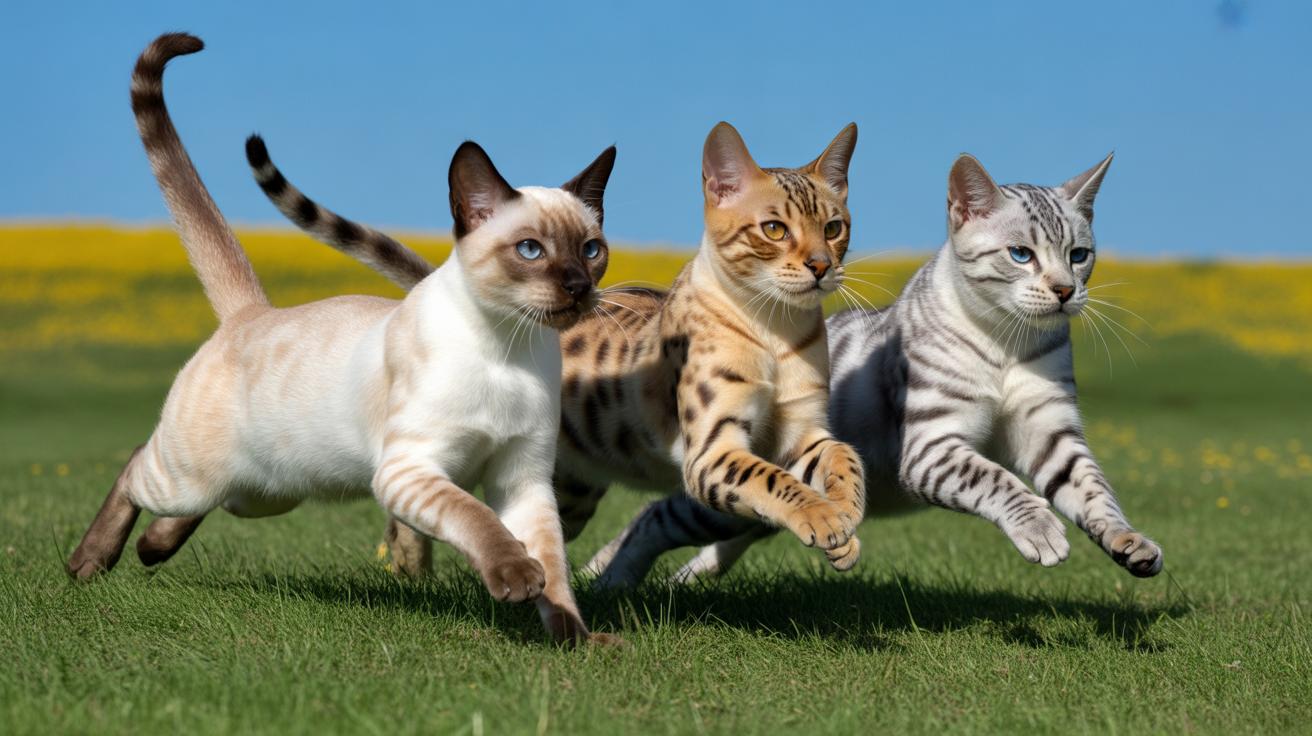
What Makes Certain Domestic Cat Breeds Faster Than Others
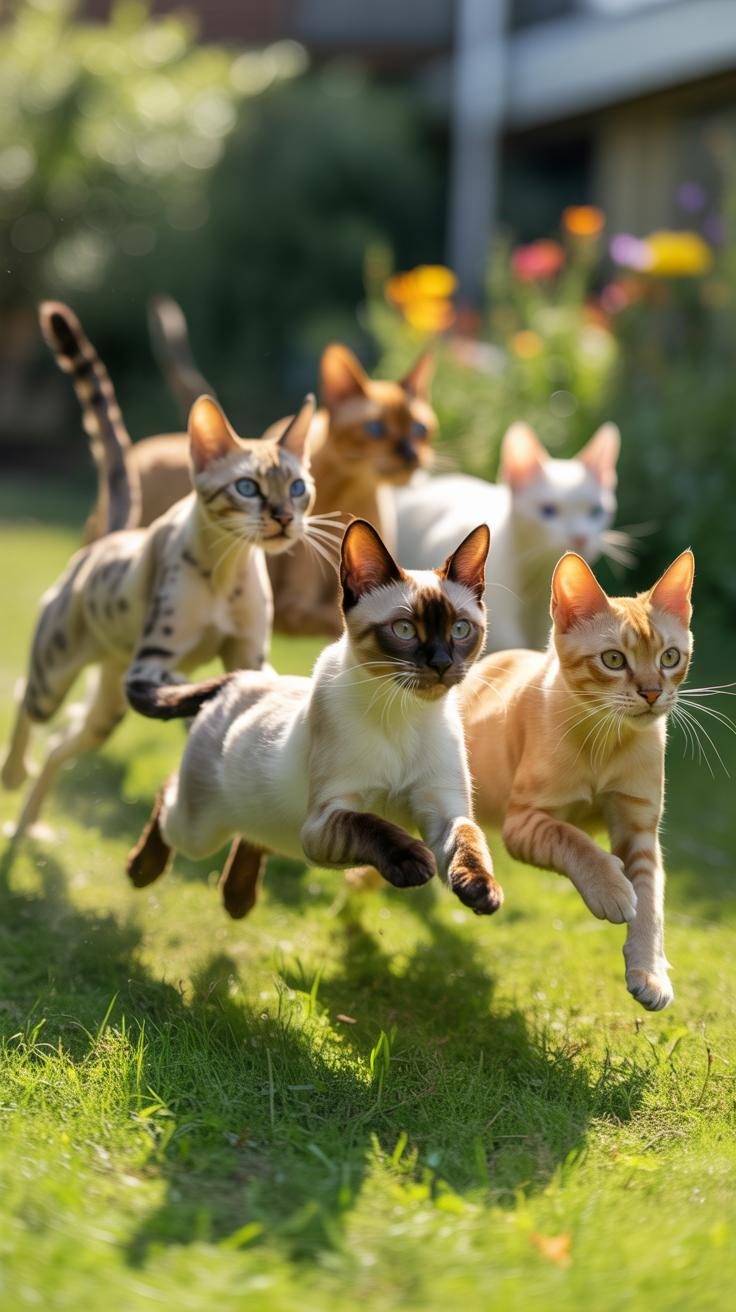
The Role Of Body Structure And Muscle Composition In Cat Speed
Fast domestic cat breeds rely on a specific skeletal build. Their bodies are lean and aerodynamic to reduce wind resistance. These cats have deep chests that house large hearts and lungs. This setup allows for rapid oxygen intake during a chase. A light frame ensures the cat does not waste energy moving excess weight. Every gram of body mass must serve a functional purpose.
Muscle composition is the primary driver of feline acceleration. Elite sprinters possess a high percentage of fast-twitch muscle fibers. These fibers contract rapidly to generate explosive bursts of power. This biological trade-off means the cats excel at high speeds but lack long-term endurance. Their rear leg muscles act as powerful springs. These muscles launch the cat forward with each stride to maintain maximum velocity.
How Leg Length, Spine Flexibility, And Paw Design Contribute To A Fast Domestic Cat
Leg length and spine physics determine the potential speed of a cat. Longer hind legs allow for a greater stride length. A highly flexible spine acts like a mechanical bow. It curves and stretches to increase the distance covered in a single leap. This flexibility allows the cat to tuck its body and then extend fully. Each cycle of extension adds more momentum to the forward motion.
Paw mechanics provide the necessary traction and shock absorption. Retractable claws act like running spikes on a track. They dig into the ground to prevent slipping during sudden turns. Thick paw pads cushion the impact of high-speed landings. This protects the joints and bones from heavy force. These anatomical features work together to create a stable platform for rapid movement. Precise paw placement ensures no speed is lost.
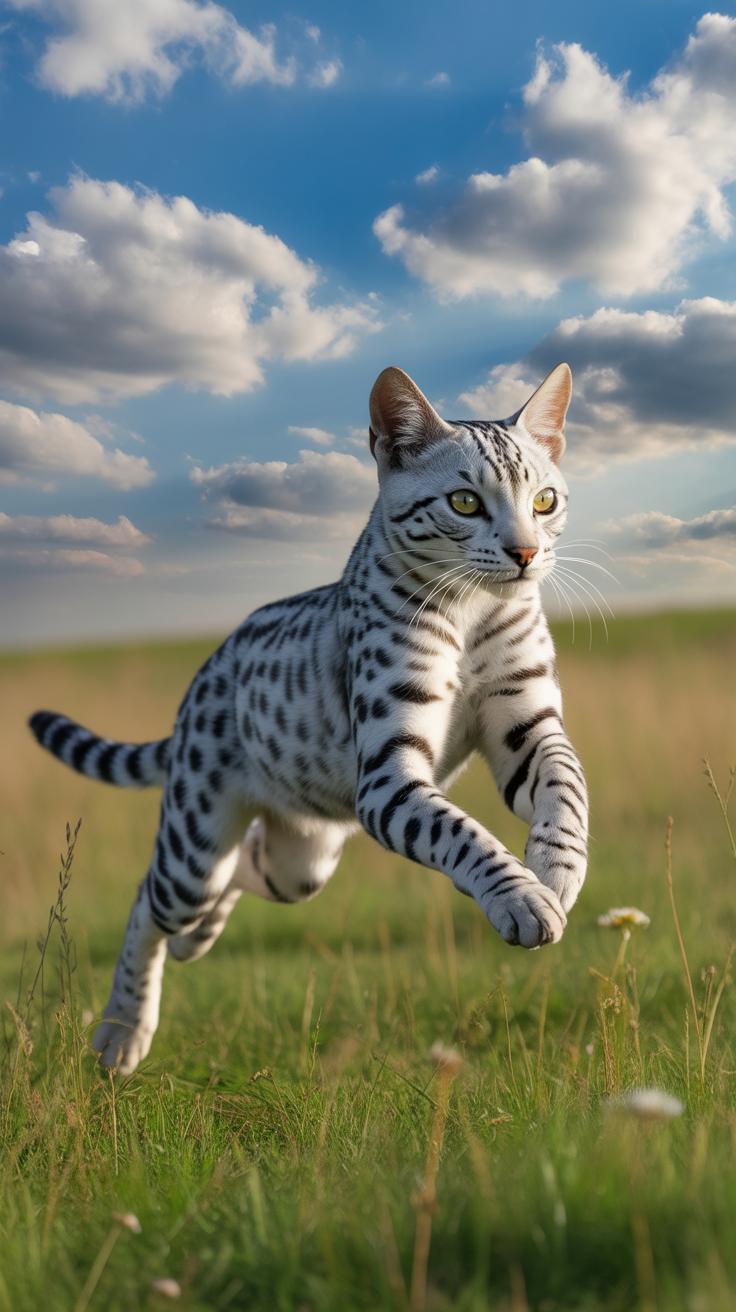
The Egyptian Mau The Fastest Domestic Cat Breed In The World
Egyptian Mau Cat Speed Facts: How Fast Can This Breed Actually Run
The Egyptian Mau holds the title of the fastest domestic cat. This breed clocks in at speeds up to thirty miles per hour. Most house cats reach about twenty-five miles per hour. The Egyptian Mau exceeds this average easily. It uses explosive power to reach top speed in seconds. This cat behaves more like a cheetah than a typical indoor pet.
Speed defines the survival history of this ancient breed. These cats need high velocity to hunt agile prey. Their acceleration remains unmatched in the feline world. You will see this speed during play or when they feel startled. They maintain high energy levels to support these bursts of movement. Owners must provide vertical space and long running paths to satisfy their needs.
The Unique Physical Traits Of The Egyptian Mau That Enable Its Record Breaking Pace
Specific anatomy allows the Egyptian Mau to run faster than other breeds. The most important feature is a loose skin flap. This primordial flap extends from the flank to the back knees. It allows the back legs to stretch further back during a stride. This increases the distance covered with every single jump. Greater extension leads directly to higher top speeds.

Strong hind legs provide the necessary propulsion for fast starts. These legs are longer than the front legs. This creates a powerful incline for jumping and sprinting. Their lean and muscular build reduces wind resistance. They have a flexible spine that acts like a spring. Every part of their body works together to maximize mechanical efficiency. This biology makes them natural athletes.
Abyssinian Cat Breed A Lean And Lightning Fast Domestic Cat
Origins And Athletic Build Of The Abyssinian That Make It One Of The Fastest Cat Breeds
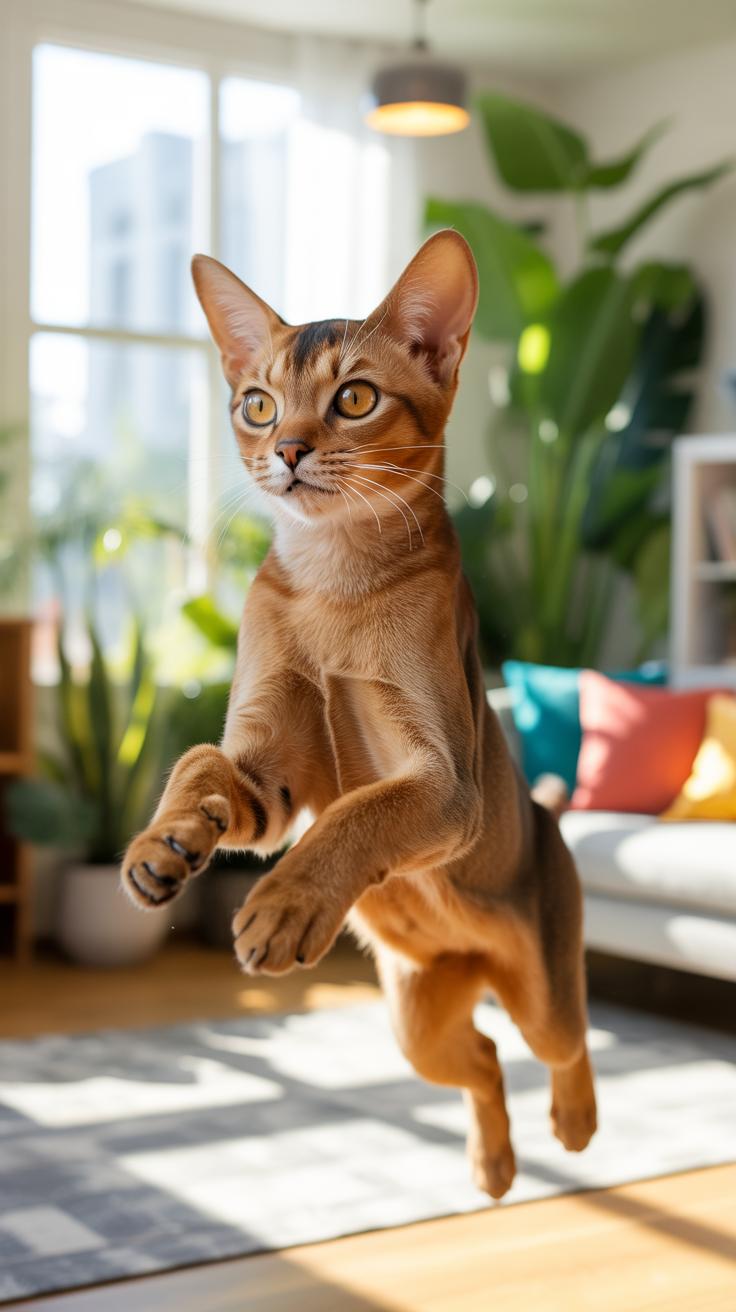
The Abyssinian traces its lineage back to the ancient cats of the Nile Valley. This breed evolved for survival in coastal regions and mountainous terrains. Natural selection favored cats with dense bone structure and high muscle density. These traits allowed the breed to hunt successfully in open spaces. Modern Abyssinians retain this wild phenotype which prioritizes raw power over decorative features.
The skeletal structure of the Abyssinian supports high-speed locomotion. Long legs and a compact body provide a high power-to-weight ratio. Thin ankles and large paw pads act like shock absorbers during rapid sprints. This physiological design allows the cat to reach top speeds almost instantly. Every muscle fiber in their core works together to drive forward momentum during a chase.
How The Abyssinians Agility And Energy Levels Compare To Other Fast Cats Breeds
Abyssinians exhibit higher metabolic rates than most domestic breeds. This energy fuels constant movement and quick bursts of speed. While the Siamese relies on a long frame for distance, the Abyssinian focuses on short-range acceleration. Their energy levels remain high throughout the day. This sustained intensity makes them more active than the average house cat or even some wild hybrids.

Agility sets the Abyssinian apart from larger fast breeds like the Bengal. They can change direction at full speed without losing balance. This mechanical efficiency comes from a flexible spine and strong hindquarters. They use their tail as a rudder to navigate tight turns. This combination of speed and precision makes them elite hunters. They dominate other breeds in vertical leaping and rapid ground movement.
Savannah Cat The Exotic Cat Breed Built For Speed And Distance
The Serval Heritage Behind The Savannahs Extraordinary Speed And Stride
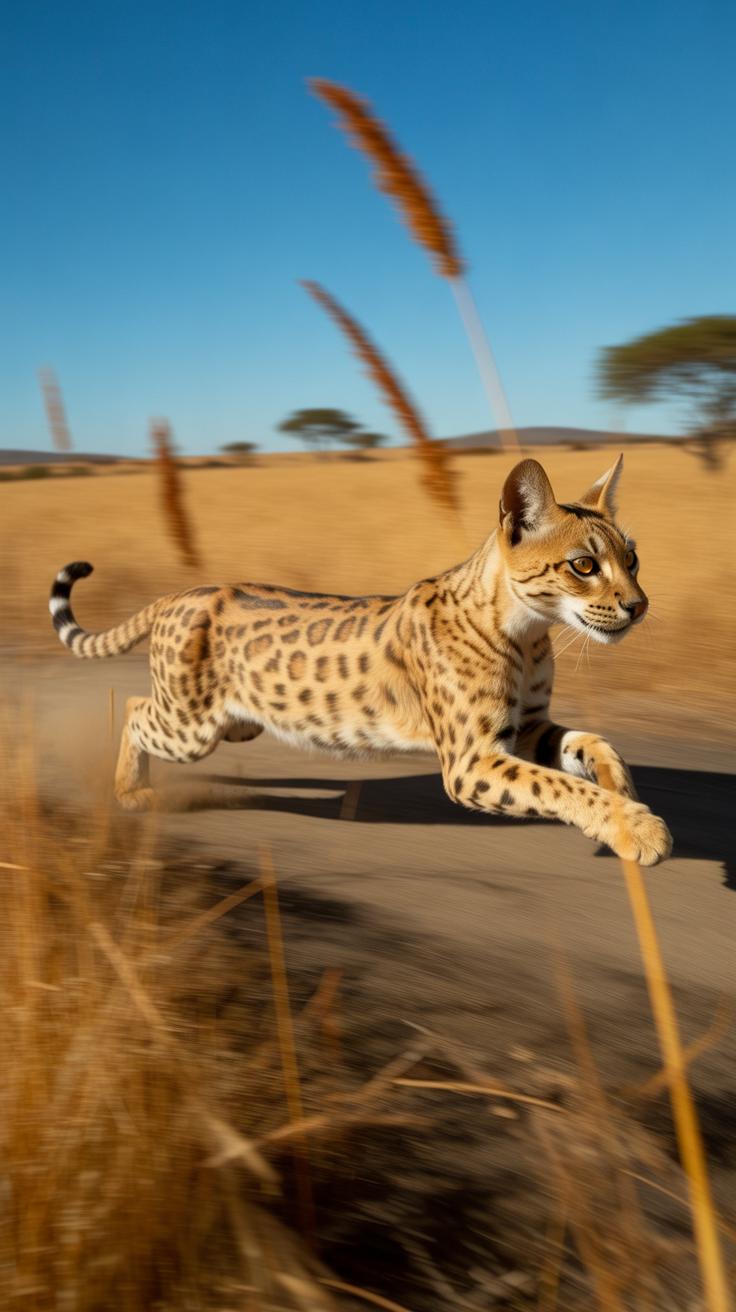
The Savannah cat inherits its locomotive power from the African Serval. This wild ancestor provides the foundation for several anatomical advantages. Servals are renowned for their long legs and large ears. These traits allow the Savannah to cover more ground with fewer steps. A longer stride translates directly into higher top speeds. This cat reaches up to thirty miles per hour with ease.
The musculoskeletal structure of the Savannah supports high velocity over distance. High percentage hybrids possess a leaner frame and larger heart. These physical assets improve cardiovascular efficiency during intense bursts of activity. The body acts as a mechanical lever. Each muscle group works to maximize thrust from the hindquarters. This heritage ensures the cat maintains its pace longer than standard breeds with shorter limbs.
To watch the blur of an Egyptian Mau in full flight is to witness a streak of ancient history racing toward the modern heart. These swift companions remind us that even the smallest feet can carry the speed of the wind.
What Sets The Savannah Apart From Other Exotic Cat Breeds In Terms Of Athletic Performance
Savannah cats dominate the speed category among domestic hybrids. Most domestic cats rely on short sprints. The Savannah leverages a specialized skeletal frame for sustained pursuit. Its height gives it a unique mechanical advantage. Unlike the circular movements of smaller breeds, the Savannah uses a linear, ground-covering trot. This efficiency reduces energy waste during high speed maneuvers. This breed handles sharp turns without losing velocity.

Athletic superiority also stems from their vertical leap capability. A Savannah can jump eight feet from a standing position. This vertical power complements their horizontal speed. They combine agility with raw distance capabilities better than the Bengal or Chausie. Their energy levels require consistent physical outlets. Owners must recognize that these cats do not just play. They perform at a level consistent with professional athletic standards.
Bengal Ocicat And Other Speedy Cat Breeds Worth Knowing
Bengal Cat Speed And Agility: A Wildcat Heritage In A Domestic Cat Body
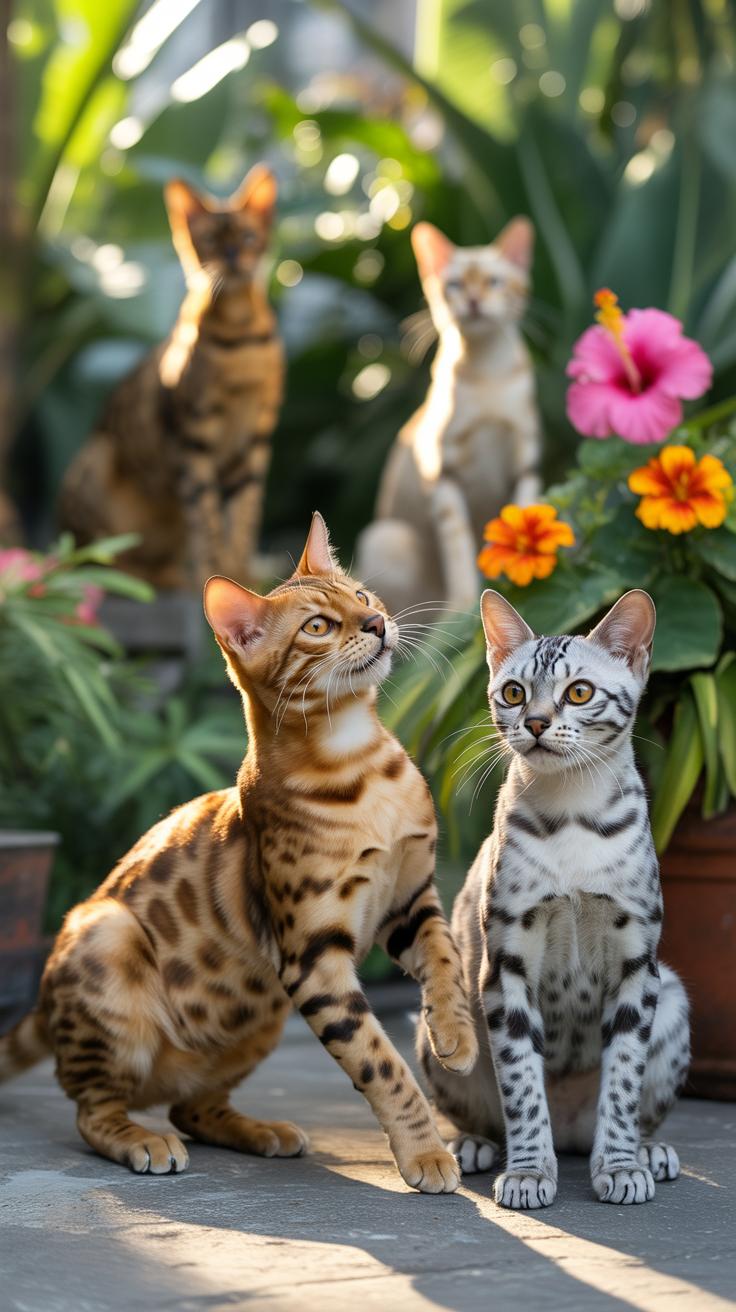
The Bengal cat comes from crossing domestic cats with the Asian Leopard Cat. This wild ancestry gives the breed a unique skeletal structure and powerful hind leg muscles. These physical traits allow Bengals to reach speeds up to 30 miles per hour. They do not just run fast. They also jump higher than most domestic cats. Their movement is fluid and efficient for hunting.
Strategic ownership requires understanding their need for vertical space and high-speed exercise. Bengals possess high metabolic rates and require daily physical outlets to prevent destructive behavior. They use their long tails for balance during sharp turns at full speed. This agility makes them superior athletes in the domestic world. Owners must provide large running wheels or open corridors to accommodate these explosive bursts of energy.
The Ocicat And Other Athletic Cat Breeds That Round Out The Cats Breeds Speed List
The Ocicat looks wild but contains only domestic DNA from Abyssinian, Siamese, and American Shorthair lines. Breeders selected for an athletic, large-boned frame that supports rapid acceleration. These cats utilize a powerful gait to chase prey across flat surfaces. While slightly slower than the Egyptian Mau, the Ocicat maintains high speeds over longer distances. Their muscular build provides the endurance needed for sustained play.

Other notable breeds like the Abyssinian and Savannah also rank high for domestic speed. The Abyssinian uses a lean, light frame to maximize quickness and change direction instantly. Savannah cats benefit from Serval genes, providing long legs that increase stride length significantly. Every breed in this category shares a common trait of high muscle density. These cats require consistent mental and physical challenges to maintain their peak physiological condition.
A Cat Breeds Chart Top Speeds Compared Across The Fastest Domestic Cats
How To Read A Cat Breeds Chart For Speed, Agility, And Physical Capability
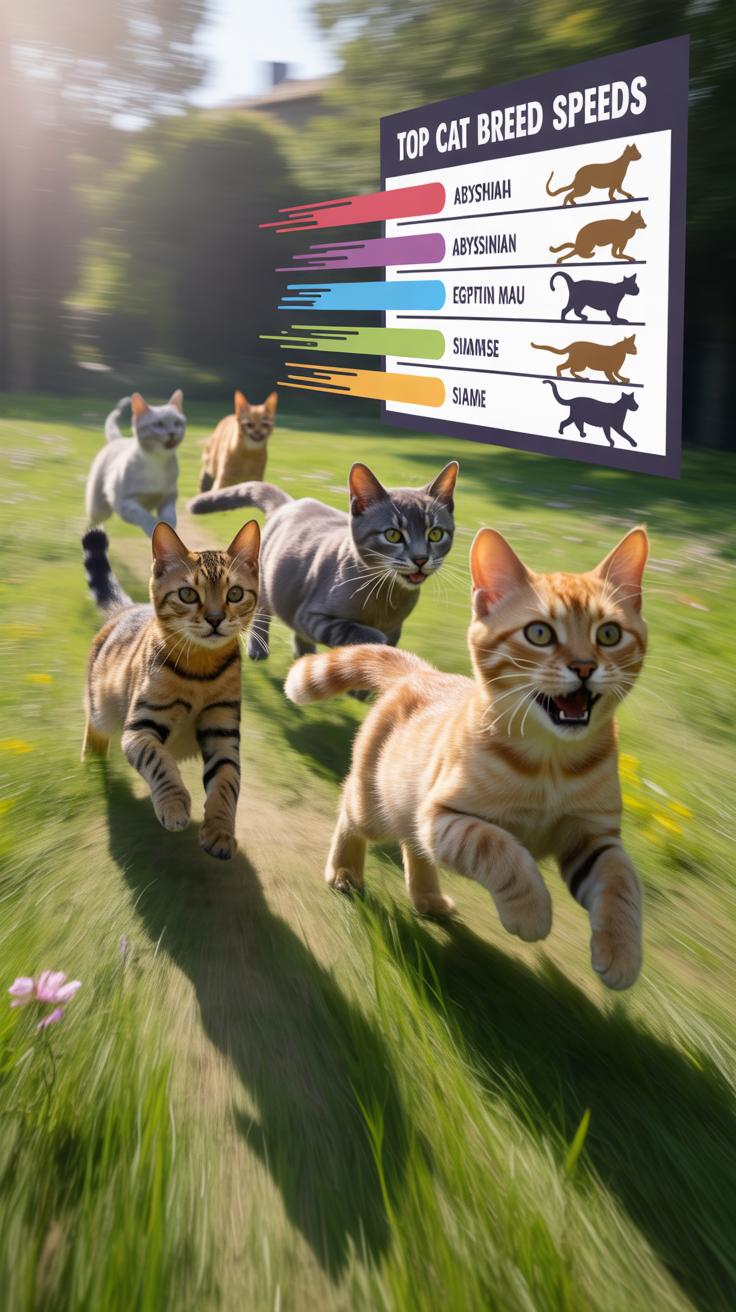
Velocity charts for felines must prioritize mechanical efficiency over simple leg length. You should look for breeds with high power-to-weight ratios. These cats possess specialized fast-twitch muscle fibers that allow for explosive acceleration. A chart focusing on speed measures how quickly a cat reaches its maximum pace. Proper data accounts for skeletal structure and spinal flexibility. Rigid spines limit stride length regardless of muscle mass.
Analyze the relationship between body weight and gait. Heavier cats often lose top-tier speed due to increased friction and wind resistance. Agile breeds feature a low center of gravity for sharp turns at high velocity. Speed is not just about straight lines. Tactical data includes how well a breed maintains momentum during a chase. Look for metrics that separate burst speed from sustained athletic endurance during active hunts.
Side By Side Speed Comparison Of The Top Fastest Domestic Cat Breeds
Domestic feline speeds vary based on ancestry and physiological design. The Egyptian Mau remains the standard for natural domestic sprinters due to a unique skin fold. This skin flap allows the hind legs to stretch further back during a sprint. Hybrid breeds also show significant performance gains. These cats inherit wild leg structures that facilitate longer strides and higher kinetic energy output per step.
- Egyptian Mau: This breed reaches thirty miles per hour because of its loose skin flap extending from the flank to the knee. This anatomical feature increases stride length and allows for maximum physical extension during high-speed chases across flat surfaces.
- Abyssinian: Known for high energy and lean muscle mass, this breed hits high speeds through sheer athletic persistence. Its body type mimics professional human sprinters, focusing on light bones and powerful hindquarters to maintain rapid pace over short distances.
- Somali: This long-haired variant of the Abyssinian shares the same muscular build and explosive power. Despite the longer coat, it maintains high agility and speed. Its muscular frame provides the necessary torque for quick directional changes while moving at a full run.
- Bengal: This hybrid breed uses its wild Asian Leopard Cat ancestry to achieve remarkable acceleration. Its hind legs are slightly longer than its front legs. This structural tilt acts as a natural spring, pushing the cat forward with immense force during every stride.
- Savannah: As a cross with a Serval, this cat possesses the longest legs in the domestic world. These vertical proportions translate directly to ground coverage. Its large frame allows it to cover more distance per second than standard house cats with minimal effort.

Compare these breeds by examining their skeletal leverage. The fastest cats always feature a combination of low body fat and high bone density. Charts should highlight the Egyptian Mau as the benchmark for pure speed. Other breeds may offer better jumping or climbing stats, but velocity requires specific hindlimb geometry. Use these metrics to determine which breed fits your specific requirements for an active and high-performance feline.
The Science Of Cat Running How Domestic Cats Move At High Speeds
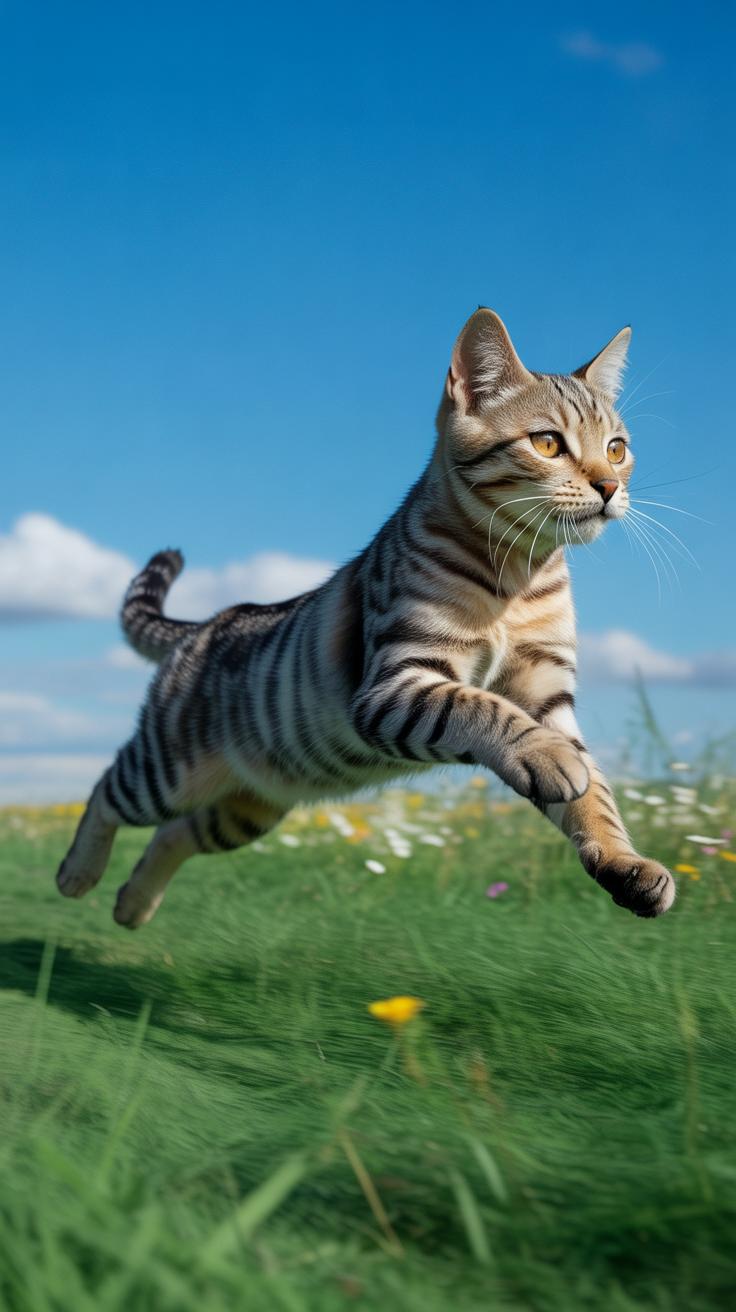
The Double Suspension Gallop: The Gait That Gives Fast Domestic Cats Their Edge
Domestic cats use a specific four-beat gait called the double-suspension gallop to reach maximum velocity. This movement involves two distinct phases where no paws touch the ground. First, the cat stretches its body fully in the air. Second, it pulls its legs under its chest while airborne. This sequence maximizes the distance covered in every single stride.
This gait relies on precise timing and powerful hind legs. The back legs provide the primary thrust to propel the cat forward. The front legs act as stabilizers and shock absorbers during the landing phase. By spending more time in the air than on the ground, the cat reduces friction. This efficient movement allows top breeds to maintain high speeds over short distances.
How A Cat’S Flexible Spine Acts Like A Spring To Maximize Running Speed
A cat possesses a highly flexible spine that functions like a mechanical spring. The vertebrae connect with loose cushions that allow for extreme bending and stretching. During a sprint, the spine bows upward to bring the hind legs far forward. It then snaps straight to launch the body forward. This rapid expansion creates a massive burst of kinetic energy.

This spinal elasticity increases the length of each stride without requiring longer legs. Muscles along the back store energy when the spine curves and release it during extension. This mechanism allows domestic cats to accelerate from a standstill to top speed in seconds. The anatomical design ensures that every muscle contraction translates into forward momentum. This structural advantage defines feline predatory success.
Cat Breeds List Which Fast Cat Breed Is The Right Fit For Your Home
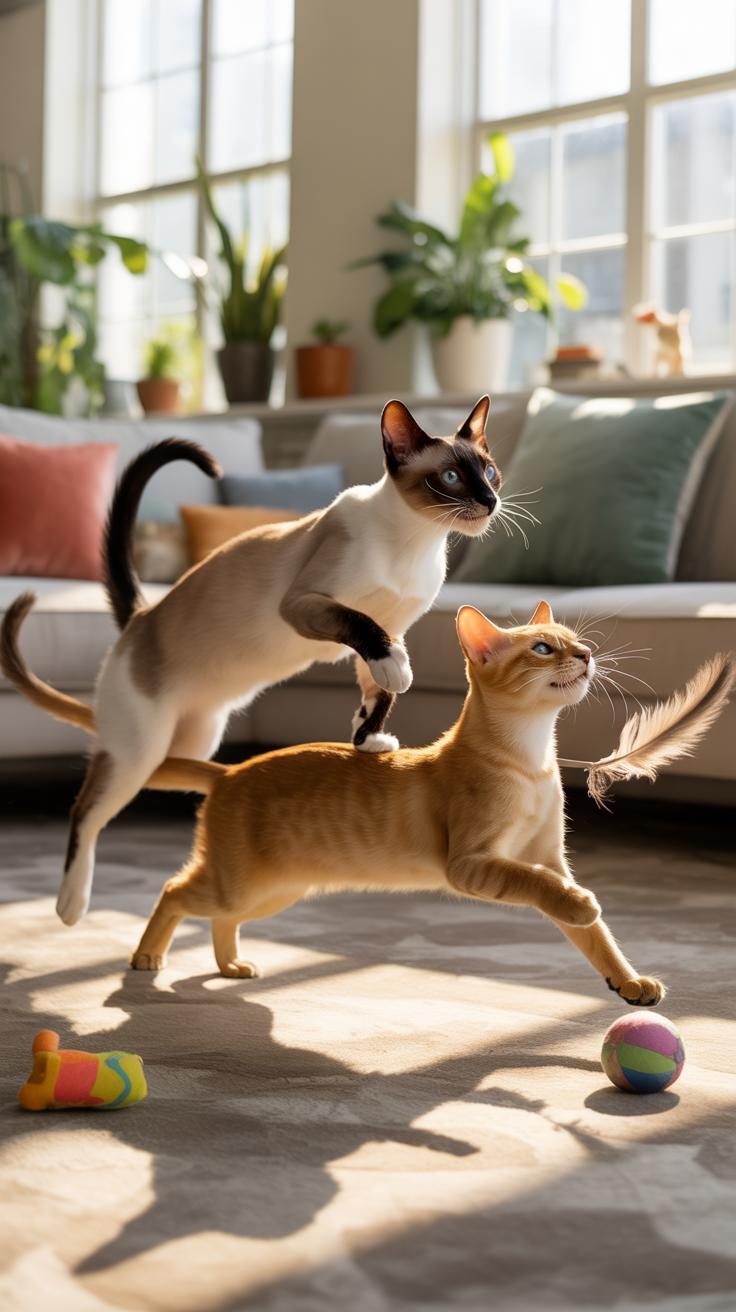
Matching A High Energy Fast Cat Breed To Your Lifestyle And Living Space
Owning a fast cat requires more than floor space. These breeds possess high metabolic rates and intense drive. You must evaluate your daily schedule before committing. A bored Savannah or Egyptian Mau will become destructive. Small apartments lack the runway these cats need for full sprints. Vertical territory like tall trees and wall shelves is mandatory for their safety and health.
Consider your existing household members carefully. High-speed cats often have strong prey drives. They might chase smaller pets or knock over small children during a sprint. You need a home environment where the cat can move without constant obstacles. Owners must provide consistent mental stimulation. If you work long hours away from home, these active breeds will likely develop behavioral problems or severe anxiety.
Care Tips And Enrichment Ideas For Keeping Fast Cat Breeds Happy And Healthy
Fast cats require specialized tools to burn energy. Standard toys will not suffice for breeds like the Abyssinian or Ocicat. You must provide outlets for their predatory instincts and physical speed. High-quality nutrition supports their lean muscle mass and heart health. Regular veterinary checks are vital to monitor joint health. These cats put significant strain on their limbs during high-speed maneuvers.
- Exercise Wheels: Large diameter wheels allow cats to sprint at top speeds safely indoors. This prevents obesity and reduces destructive behavior by providing a consistent outlet for pent-up physical energy and intense drive.
- Vertical Climbing Systems: Install floor-to-ceiling cat trees or modular wall units. High-speed breeds prefer to observe from height. Climbing builds necessary muscle strength and provides a safe retreat from floor-level activity in busy households.
- Interactive Food Puzzles: Force your cat to work for their meals using tactical puzzles. This mimics hunting behavior and slows down eating. Mental stimulation is just as important as physical exercise for these highly intelligent and fast breeds.
- High-Velocity Teasers: Use sturdy wand toys to initiate high-speed chases. Move the toy in unpredictable patterns to engage their fast-twitch muscles. This structured play strengthens the bond between the owner and the cat through shared activity.
- Scent Work Kits: Hide high-value treats around the home to engage their senses. Fast breeds often have sharp instincts. Searching for food provides a calm but engaging mental workout that balances their high-energy physical bursts during the day.

Safety is the priority during high-speed play. Clear the floor of rugs that might slide and cause injury. Use non-slip surfaces in primary running zones. Check your window screens daily to ensure they are secure. A fast cat can launch itself with significant force. Proper environmental management ensures these athletes stay healthy. Consistency in training and play keeps their minds sharp and bodies functional.
Fun Facts And Lesser Known Truths About The Fastest Domestic Cat Breeds
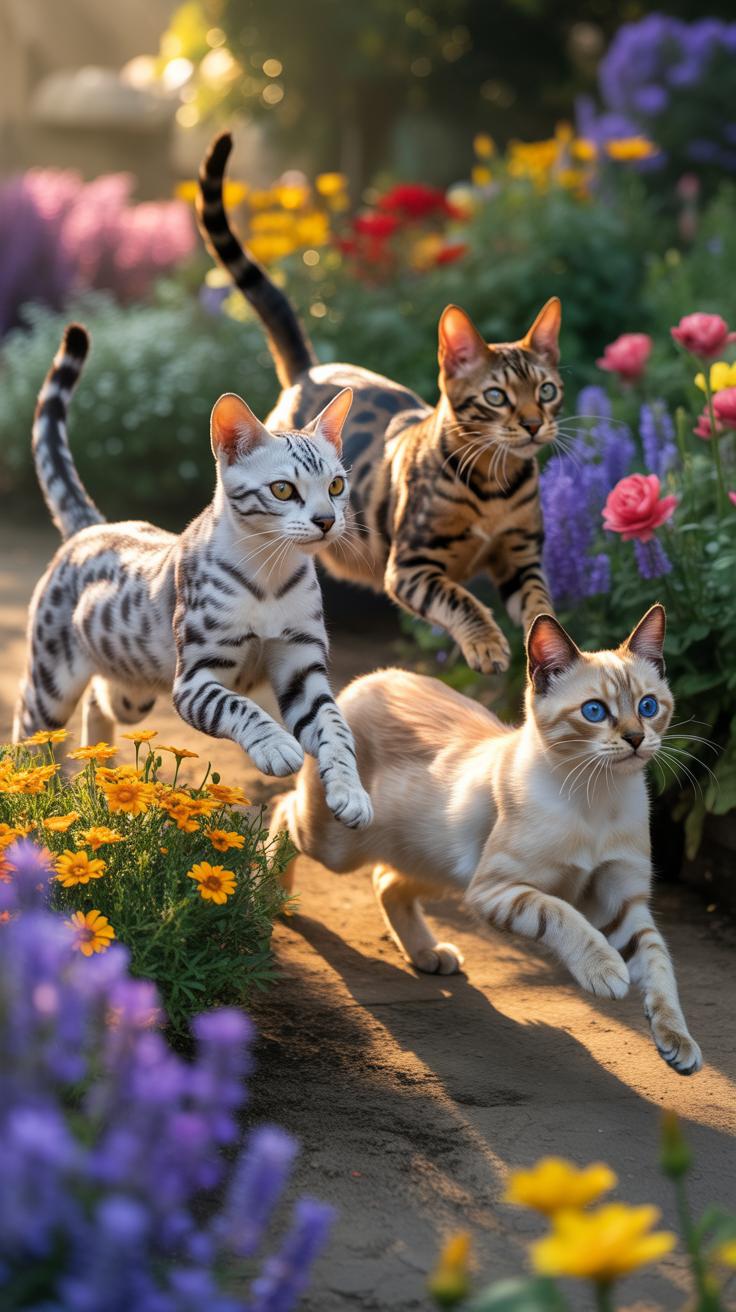
Surprising Speed Records And Historical Notes From The World Of Fast Domestic Cats
Egyptian Mau cats appear in ancient artwork dating back over three thousand years. These cats possess a unique skin flap that extends from the flank to the back knee. This anatomical feature allows for greater leg extension during full sprints. Most domestic cats lack this specific physical trait. It provides a distinct mechanical advantage for reaching top speeds of thirty miles per hour quickly.
Selective breeding creates the high velocity seen in modern hybrids like the Savannah. These cats carry DNA from the serval, a wild African cat. Breeders focused on maintaining the long limbs and lean frames of their wild ancestors. This history explains why certain breeds far outpace common house cats. These animals do not just run. They use specialized skeletal structures to maximize every stride they take.
How The Fastest Domestic Cat Breeds Compare To Wild Cats And Other Fast Animals
The fastest domestic cats reach thirty miles per hour. This speed matches the top performance of a white-tailed deer. However, it falls short of the cheetah, which hits seventy miles per hour. Domestic breeds rely on explosive bursts rather than sustained chases. Their smaller lung capacity limits long-distance running. They are tactical sprinters built for short distances and immediate impact within small environments.
Domestic cats outrun the average human easily. Usain Bolt reached nearly twenty-eight miles per hour at his peak. An Egyptian Mau can beat that speed without specialized training. Many small wild cats, like the caracal, share similar mechanics with domestic sprinters. Both groups use flexible spines to increase power. Understanding these comparisons proves that domestic cats remain elite predators in the mammalian world despite their smaller size.
Frequently Asked Questions

Which cat holds the title for being the quickest of all house cats?
When discussing the fastest domestic cat breeds, the Egyptian Mau is the undisputed champion. This stunning spotted feline can reach incredible sprinting speeds of up to 30 miles per hour. Their unique skin fold, stretching from the flank to the knee, allows for greater leg extension and agility. This biological advantage makes them exceptionally nimble, allowing them to outpace almost any other household pet during a high-speed chase.
How can I safely encourage my fast cat to exercise at home?
To keep the fastest domestic cat breeds healthy and engaged, you should provide vertical space and interactive play. Use feather wands or laser pointers to trigger their natural hunting instincts, allowing them to sprint in short bursts. Investing in a high-quality cat exercise wheel is also a practical way for high-energy breeds like Bengals or Abyssinians to reach top speeds safely indoors without crashing into furniture or wall corners.
Are high-speed cat breeds expensive to adopt and care for?
While rare breeds like the Savannah or Egyptian Mau can be quite costly from specialized breeders, you can often find athletic, high-energy cats at local shelters for a standard adoption fee. Look for “lean and leggy” mixed breeds that exhibit high activity levels. Regardless of the initial cost, remember that these active sprinters require a protein-rich diet and plenty of durable toys to satisfy their intense physical and mental needs.