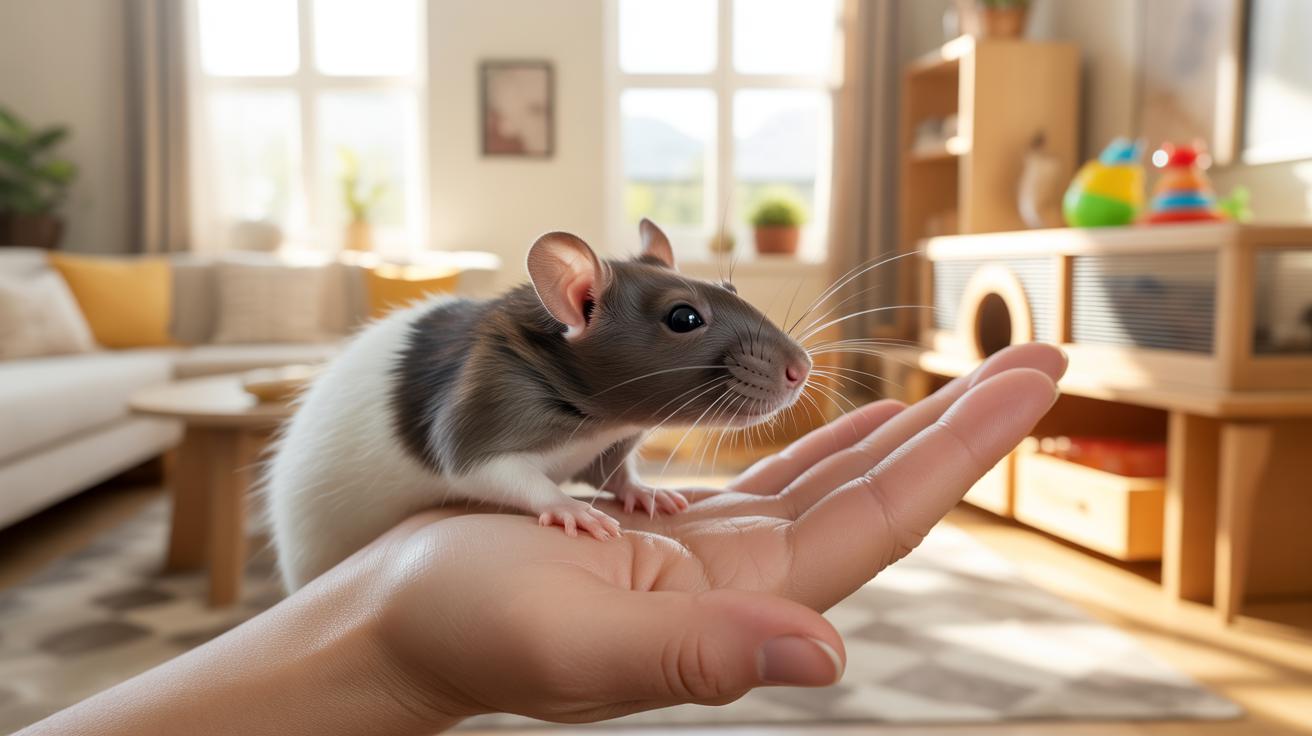
The Natural Instincts Of Rats And How They Shape Rat Behavior Around Humans

How Survival Instincts Drive The Way Rats Interact With People
Rats operate as prey animals first. Their primary driver is avoiding detection to stay alive. This instinct creates a behavior pattern called neophobia. Neophobia makes rats fear new things in their environment. Humans represent a large and unpredictable threat to them. Rats use their senses to track human movement from a distance. They prefer to stay in the shadows and near walls.
Survival needs also drive rats toward human resources. Humans provide heat, water, and food. Rats overcome their fear when the reward is high enough. This creates a cycle of risk assessment. A rat will watch human routines to find safe times to eat. They learn when people are asleep or away. This timing allows them to thrive in human spaces without direct confrontation or contact.
Why Rats Are Naturally Cautious Yet Curious Around Human Presence
Rat behavior relies on a balance between caution and exploration. This is known as the stimulus-response habit. While rats fear humans, they also possess high intelligence. They must explore their surroundings to find new food sources. They use their whiskers and nose to map out human homes. This curiosity helps them find entry points that people often overlook. It ensures their long-term colony survival.
Domesticated rats show this curiosity differently than wild ones. Selective breeding has reduced their natural fear response. Pet rats see humans as social partners rather than predators. However, the root instinct remains. Even a pet rat will startle at loud noises or fast movements. They still look for dark corners to feel secure. Understanding this caution is key to managing both pets and pests in any building.

Fascinating Rat Information The Social Nature Of Rats And What It Means For Human Interaction
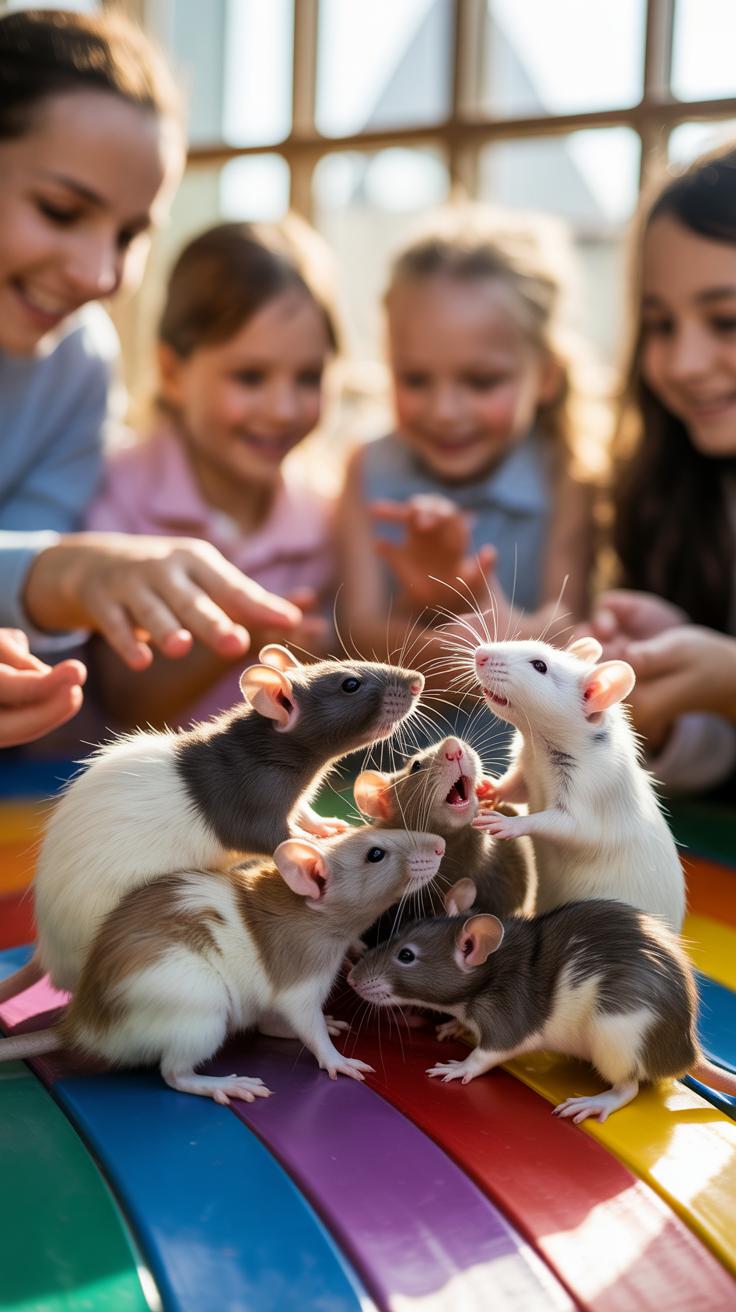
How Rats Use Social Hierarchies Within Their Groups
Rats operate within a strict linear hierarchy. Dominant males and females establish control through physical strength and social grooming. This structure prevents constant fighting within the colony. Every rat knows its place. Alpha rats get first access to food and the best nesting spots. Subordinate rats must wait or find secondary resources. This system ensures the overall survival of the entire group.
Social ranking remains fluid. Rats constantly test each other through play fighting and scent marking. A healthy colony relies on these clear boundaries to reduce stress. When the hierarchy breaks down, aggression increases. High ranking rats often protect the group from outside threats. Understanding this rank system is vital for anyone managing rat populations. Rats are not random actors. They follow a specific chain of command.
What Rat Social Behavior Tells Us About How They Bond With Humans
Rats view humans as part of their social circle. They apply their group instincts to human owners or handlers. Once a rat trusts a human, it treats them like a high ranking colony member. This includes grooming and seeking physical proximity. Their biological drive for social contact makes them highly responsive to consistent interaction. They do not just tolerate humans. They actively engage with them.

A rat uses its social intelligence to read human emotions and patterns. It learns when you provide food and when you offer play. This predictability builds a strong bond. If a rat feels safe, it will display relaxed behaviors like bruxing or boggling. These are signs of high social comfort. Owners must provide daily interaction to satisfy the rat. Neglect leads to social withdrawal and significant health decline.
Fun Facts About Pet Rats Signs That A Rat Trusts And Feels Comfortable Around You
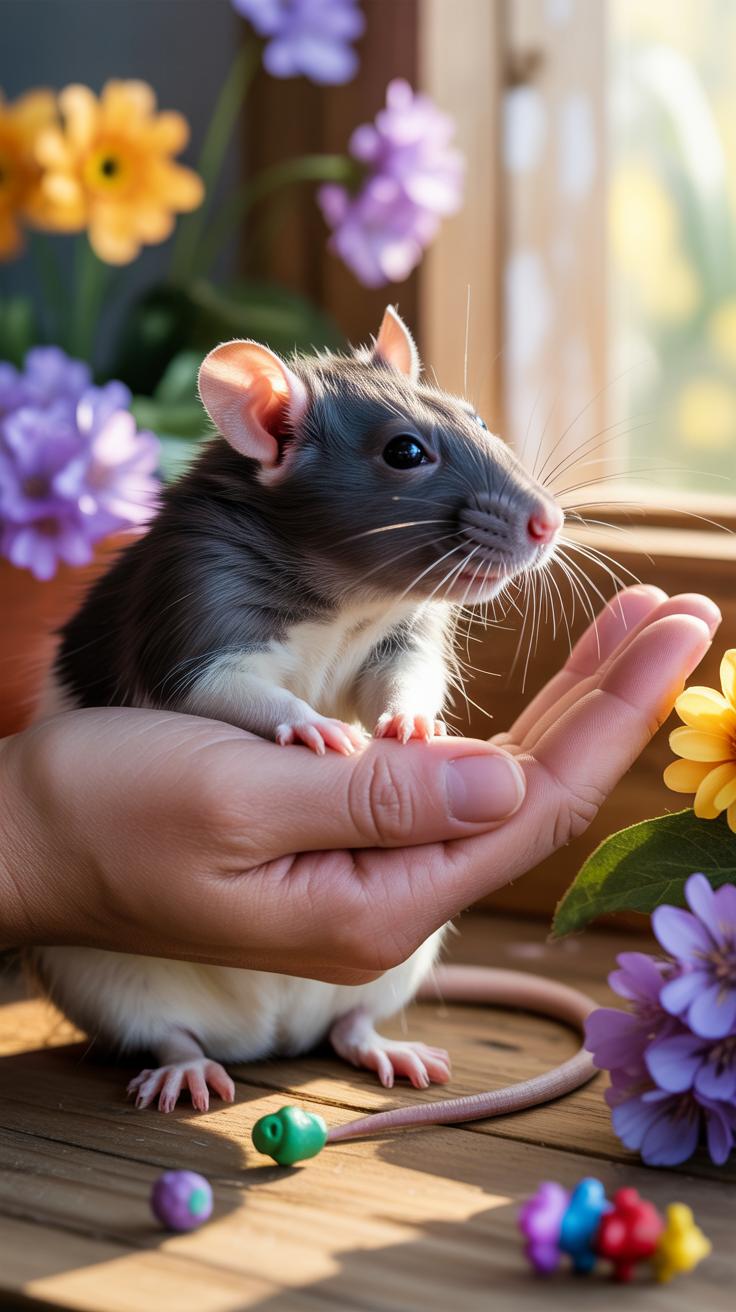
Reading Body Language Signals That Show A Rat Is Relaxed And Trusting
Rats indicate confidence through low body posture and slow movements. A trusting rat does not flee when you enter the room. Instead, it approaches the cage door or stays out in the open. They often sprawl their limbs out while resting. This vulnerability shows they do not fear a predator attack. Muscles remain soft and pliable rather than tense or ready for sudden flight.
Grooming is a primary social indicator for this species. A rat that grooms itself in your presence feels secure. It believes the environment is safe from immediate threats. If the rat licks your skin or nibbles your fingernails, it is grooming you. This behavior establishes you as a member of their social colony. They prioritize maintaining these social bonds through physical contact and constant interaction.
Bruxing, Boggling And Other Unique Behaviors That Signal A Happy Rat
Rats grind their incisors together to show contentment. This sound is called bruxing and resembles a cat purring. It wears down their teeth while signaling a state of peak relaxation. Rapid bruxing can cause the eyes to vibrate in their sockets. Owners call this boggling. The jaw muscles pass behind the eyes and pulses move the soft tissue. This indicates extreme emotional comfort.

Playful rats display quick jerky leaps known as popcorning. They jump and twist in the air when excited. This behavior happens during interaction with humans they trust. Rats also engage in hand wrestling. They flip onto their backs and allow you to tickle their bellies. This total exposure of their underside proves they view you as a friend. They feel no need to protect their vital organs.
Facts About Pet Rats How Pet Rats Communicate With Their Owners Every Day
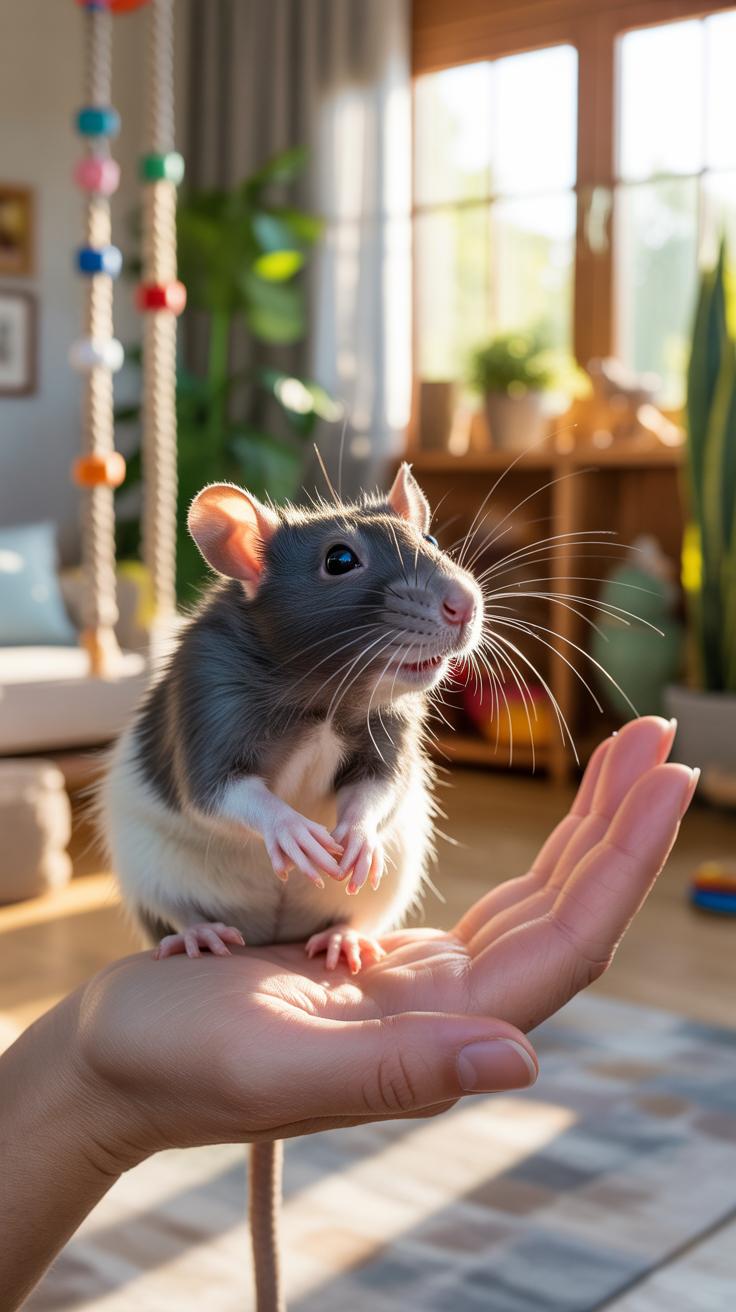
Vocalizations And Ultrasonic Sounds Rats Use To Communicate With Humans
Rats communicate primarily through frequencies humans cannot hear. They emit ultrasonic chirps at roughly 50 kilohertz when happy or playing. Research shows these high-pitched sounds represent a form of laughter. Owners cannot detect these noises without specialized equipment. However, observing a rat’s body language during these silent vocalizations reveals their emotional state. A playful rat often bounds or hops while emitting these sounds.
Rats also use audible sounds to signal distress or pain. A sharp squeak usually indicates immediate discomfort or a protest against rough handling. Bruxing occurs when a rat grinds its teeth together. This often signals contentment, similar to a cat purring. If the bruxing is intense, the rat’s eyes may vibrate. This is called eye boggling. These physical cues provide a direct link to the animal’s internal mood.
How Scent Marking And Physical Touch Play A Role In Rat Communication
Scent marking is a tactical tool for rats to identify their territory and owners. Rats possess scent glands and use urine to map their environment. They often leave small drops of urine on their owners’ hands or clothes. This behavior establishes familiarity and safety within the social group. It is not a lack of bladder control. It is a calculated method for maintaining social bonds through olfactory signals.

Physical touch reinforces the hierarchy and bond between the rat and the human. Rats use grooming to show affection and respect. When a rat licks your fingers, it is performing social grooming. This mirrors how rats interact in the wild to maintain colony cohesion. Nuzzling and sleeping in your hand are high-level indicators of trust. These actions prove the rat views the human as a safe member of its pack.
Cute Pet Rat Facts The Emotional Intelligence Of Rats Around The People They Know
Evidence That Rats Can Recognize Individual Human Faces And Voices
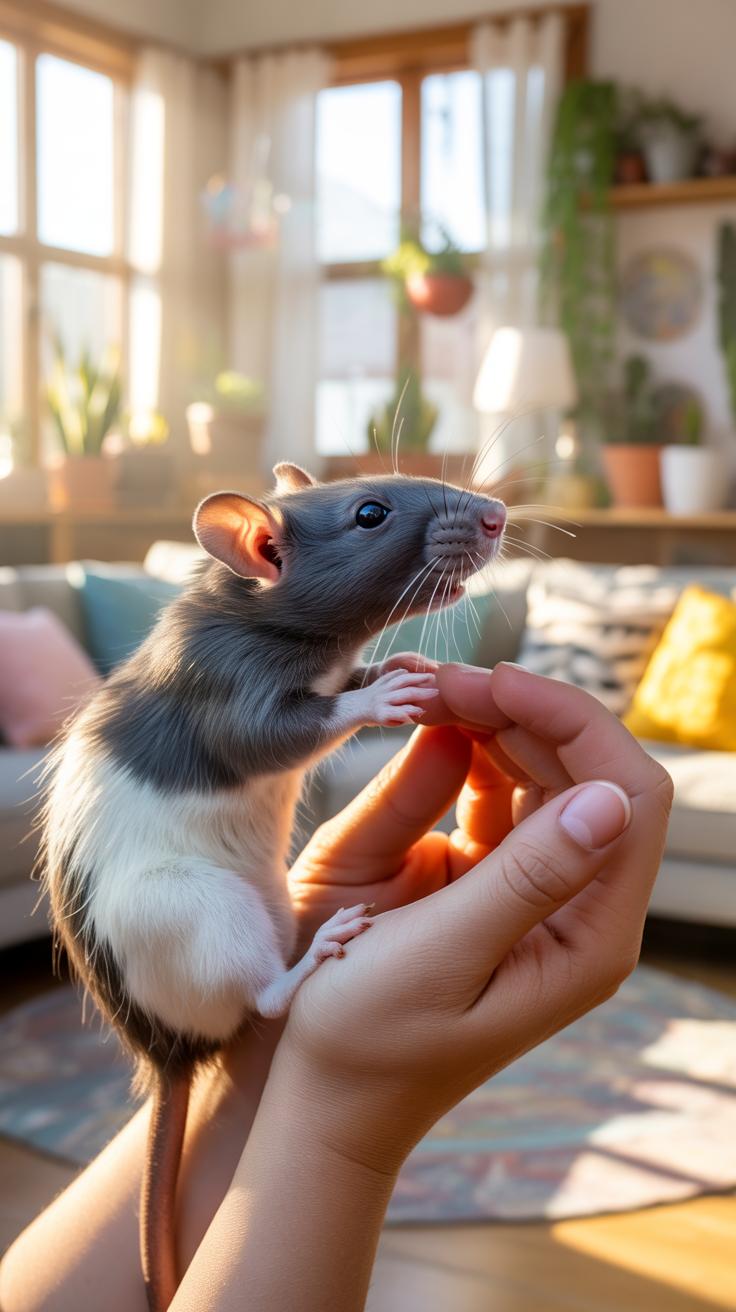
Rats possess highly developed sensory systems that allow them to distinguish between specific individuals. Laboratory studies confirm that rats use visual cues to identify human faces. They memorize unique facial features and contrast patterns. This ability helps them separate friendly caretakers from strangers. Rats also utilize acute hearing to recognize the pitch and frequency of a specific human voice.
Consistency in interaction strengthens this recognition. A rat will react differently when it hears a familiar voice versus an unknown one. They often approach the cage bars when their owner speaks. This behavior proves that rats do not just react to food. They associate specific people with safety and social bonding. Their brains process these social signals to navigate their environment effectively.
How Rats Show Empathy And Respond To Human Emotions
Rats exhibit pro-social behavior by mirroring the emotional states of those around them. Scientific experiments show that rats feel distress when they perceive others in pain. They will often abandon food to help a peer in trouble. Pet rats extend this emotional intelligence to their owners. They can sense changes in human heart rates and scent profiles caused by stress.

When a person is upset, a pet rat may offer grooming or physical contact. This action serves as a primitive form of comfort. They use physical touch to lower the cortisol levels of their companions. This behavior is not accidental or driven by hunger. It is a calculated response to social cues. Rats prioritize the well-being of their social group to ensure collective survival.
Rat Help Guide How To Build A Positive Relationship Between Rats And Humans
Step By Step Taming Process For Helping A New Rat Adjust To Human Contact
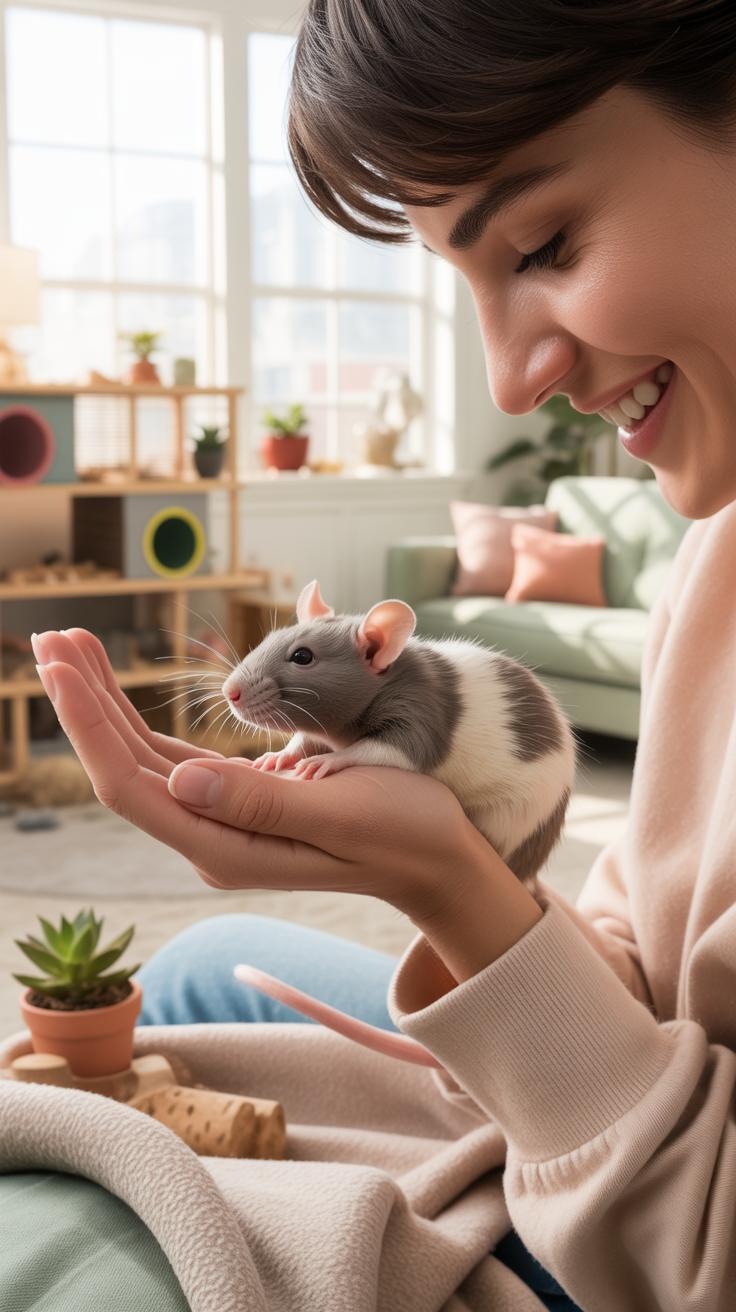
Taming requires precise repetition to override the natural prey response of the rat. Start by placing the cage in a high-traffic area so the animal habituates to your scent and movement. Avoid direct handling during the first forty-eight hours. Focus on passive presence to build a baseline of safety. Use consistent verbal cues and high-value food rewards to create positive associations.
- Scent Neutralization: Place an old cotton shirt you have worn inside the cage. This allows the rat to investigate your specific pheromones in a low-stress environment. The rat learns your scent does not represent a physical threat or a predatory presence in its immediate territory.
- Hand Feeding: Offer liquid treats like yogurt or baby food on a metal spoon. This prevents the rat from biting your fingers by mistake. It forces the animal to stay near your hand to consume the reward. This builds necessary proximity and trust through caloric incentive.
- The Forced Bond Method: Use a bonding scarf or a large sweatshirt to hold the rat against your body for set intervals. Physical warmth and heartbeat regulation help calm the animal. This technique bypasses the hesitation phase by proving that physical contact results in safety rather than harm.
- Controlled Exploration: Open the cage door and let the rat climb onto your arm at its own pace. Do not grab the animal from above as this mimics a bird of prey. Allow the rat to retreat to its cage whenever it feels overwhelmed to maintain a sense of control.
- Voice Conditioning: Speak in a low and steady tone whenever you approach the enclosure. Rats have sensitive hearing and quickly learn to distinguish between different human voices. Constant vocalization signals your arrival and prevents the animal from being startled by sudden movements or loud household noises.
Progress from passive interaction to active physical touch once the rat stops hiding upon your arrival. Stroke the back of the head and ears to mimic social grooming behaviors found in wild colonies. Always move slowly and keep your hands visible. Consistent daily sessions of fifteen minutes are more effective than long sessions once a week. Patience ensures a permanent bond.
Common Mistakes That Cause Rats To Fear Or Avoid Their Human Owners
A major tactical error is grabbing a rat by its tail or midsection from above. This action triggers a survival instinct because it simulates a hawk or owl attack. The rat will perceive you as a predator rather than a companion. Once this fear response is established, the animal will hide or bite to defend its life. Avoid sudden movements near the cage.

Do not use strong perfumes or chemical cleaners near the rats. Their olfactory system is highly developed and sensitive. Overpowering smells cause respiratory stress and physical discomfort. If the rat associates your presence with physical pain or breathing difficulty, it will avoid interaction. Maintain a neutral environment to ensure the rat feels secure during handling sessions. Keep noises low and movements predictable.
Facts About Rat Aggression When And Why Rats Show Defensive Behavior Toward Humans
Understanding The Root Causes Of Aggressive Or Fear Based Rat Behavior
Rats rarely attack humans without a clear reason. Most aggression stems from fear or territorial instincts. A rat feels trapped when a human blocks its only exit. This triggers a fight-or-flight response. If the rat cannot run, it will bite to create an escape path. Hunger or protecting a nest also drives this behavior. Mothers will defend their young with high intensity.
Predatory aggression does not exist between rats and humans. Rats see humans as large apex predators, not prey. Most bites occur when a human hand smells like food. The rat mistakes a finger for a snack. Territorial males may bite if a hand enters their cage too fast. Hormonal imbalances in domestic rats can cause sudden aggression. Proper handling reduces these risks significantly.
How To Safely De Escalate A Rat That Feels Threatened By Human Interaction
Stop all movement if a rat hisses or puffs its fur. These signs mean the rat is ready to strike. Back away slowly to give the animal space. Sudden movements or loud noises escalate the tension. Do not try to grab a defensive rat by the tail or body. This forced contact guarantees a bite. Let the rat find a dark hiding spot.

Lower your voice and avoid direct eye contact. Use a towel or a thick glove if you must move the animal. This protection prevents injury to both parties. Provide a clear exit route toward a corner or a box. Once the rat feels safe, its heart rate will drop. Patience is the best tool for calming a stressed rat. Wait for the animal to approach you later.
Rat Information For Homeowners How Wild And Pest Rats Behave Differently Around Humans
Key Behavioral Differences Between Domesticated Rats And Wild Pest Rats
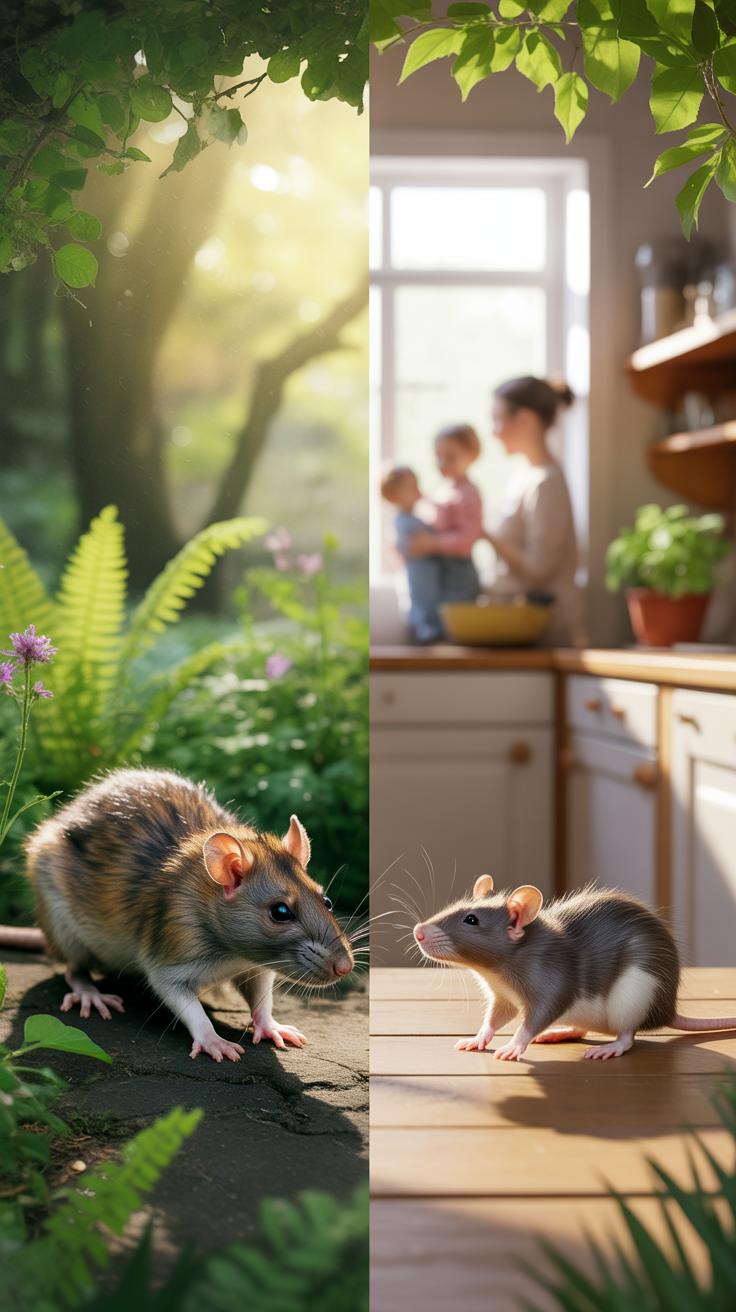
Domesticated rats result from centuries of selective breeding. These animals view humans as sources of food and social interaction. They lack the intense neophobia found in wild populations. Neophobia is the instinctual fear of new objects or changes in the environment. Pet rats approach humans with curiosity. They do not trigger the high-stress hormonal responses that wild rats experience during human contact.
Wild pest rats prioritize survival through avoidance. They are nocturnal and highly secretive. Their behavior revolves around staying hidden from predators. Unlike pets, wild rats see humans as a direct threat. They possess a flight-or-fight response that is permanently active. Domesticated rats allow handling and exhibit calm heart rates. Wild rats will bite or flee immediately when cornered. Environment drives these distinct survival strategies.
Whether seen as a tiny companion or a shadow in the pantry, their clever spirits remind us that every creature is simply trying to find its way home. Even the smallest heart seeks a hand to trust or a corner to call its own.
Warning Signs That Pest Rats Are Becoming Dangerously Comfortable Near Humans
Wild rats usually avoid open spaces and daylight. When they lose their fear of humans, it indicates a high population density. This behavior change is called habituation. It happens when rats realize humans are not an immediate physical threat. They start moving during the day to find food. This shift increases the risk of direct physical encounters and disease transmission.
- Daytime Sightings: Seeing a rat during the day is a critical warning sign. It suggests the nest is overcrowded and subordinate rats must forage while the dominant ones sleep.
- Ignoring Direct Noise: Rats normally flee when they hear loud sounds or footsteps. If a rat stays still or continues eating when you enter a room, it has become habituated to your presence.
- Bold Foraging Patterns: Rats that venture into the center of a room rather than hugging the walls show extreme confidence. They no longer feel the need to use structural cover for safety.
- Aggressive Territorial Display: Hissing or lunging when you approach a food source indicates the rat is defending its territory. This means the animal views the interior of your home as its own primary habitat.
- Nesting Near Sleeping Areas: Finding nesting materials like shredded paper or insulation inside closets or under beds shows a lack of fear. The rats feel safe enough to sleep in close proximity to humans.

Habituation leads to boldness and increased property damage. Once rats stop fleeing, they begin exploring more of the home. This leads to chewed electrical wires and contaminated food surfaces. You must take immediate action when rats stop hiding. If they no longer fear your movements, the infestation has reached a critical level. Tactical removal is the only way to restore safety.
Choosing A Pet Rat Guide What Rat Behavior Tells You Before You Bring One Home
How To Assess A Rat’S Temperament And Behavioral History Before Adopting
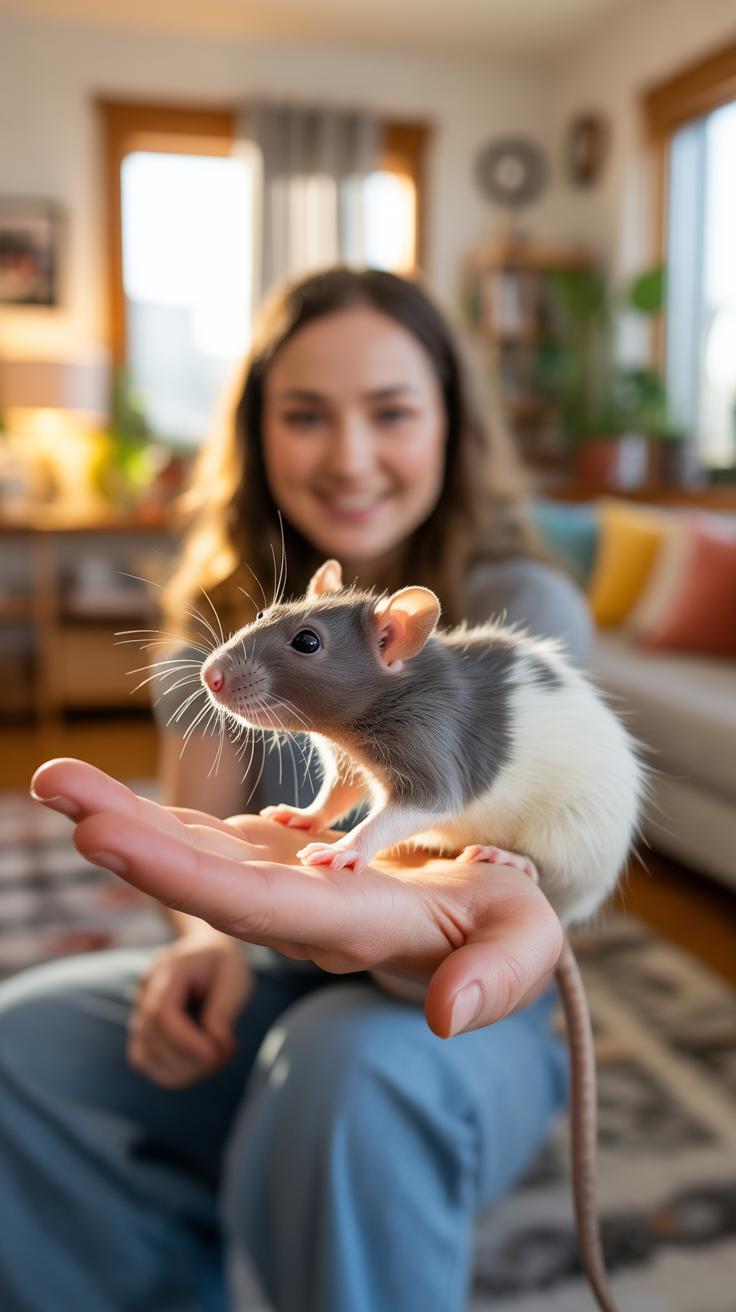
Observing a rat in its current environment reveals its core personality. Watch how the animal reacts to an open cage door. A confident rat approaches the hand immediately without hesitation. Avoid rats that cower in corners or shriek when touched. These behaviors indicate a lack of early handling. High stress levels in a young rat often lead to permanent fear based aggression.
Ask the breeder or shelter staff about the rat’s reaction to daily cleaning and feeding. Behavioral history matters because trauma or isolation leaves lasting marks. A rat that bites out of fear requires intense rehabilitation that most owners cannot provide. Look for bruxing or boggling during gentle handling. These physical signs show the rat feels comfortable and safe around human interaction.
Why Age, Socialization History And Breed Type Influence How Rats Behave With Humans
Age and early socialization dictate how a rat views humans. Rats have a critical socialization window during their first few weeks of life. If a breeder handles them daily from birth, they become bold and curious. Older rats without this foundation often remain skittish or defensive. You cannot easily undo the effects of early neglect. Juvenile rats learn social cues faster than unsocialized adults.
Breed type also plays a subtle role in general activity levels. Standard coat rats and Rex varieties show similar domestic traits. However, certain lab-descended lines may show higher docility due to generations of controlled breeding. Dumbo rats often appear calmer to some owners, though this is primarily physical. Focus on the individual rat’s history rather than coat color. Genetics and early environment create the final behavioral outcome.
Animals And Coexistence The Long Shared History Of Rats And Human Civilization

How Rats Evolved Alongside Human Settlements And Adapted To Human Environments
Rats shifted from wild foragers to commensal organisms when humans began farming. Permanent settlements provided stable heat and protection from natural predators. Early grain stores created a reliable calorie source that allowed rat populations to explode. These rodents learned to live near humans without needing direct contact. This evolution created a biological dependency on human infrastructure that exists to this day.
Modern rat behavior around humans relies on extreme physical adaptability. They move through plumbing and wall voids to reach food sources. They synchronize their activity cycles to avoid human movements. Rats use their keen senses to navigate urban environments efficiently. This survival strategy makes them the most successful mammals in human cities. They exploit our waste and architectural gaps for their own reproductive success.
How The Domestication Of Fancy Rats Changed The Human Rat Relationship Forever
Domestication began in the 18th and 19th centuries during the era of rat-baiting. Catchers kept unique specimens for breeding. This process changed the rat brain significantly over time. Domestic rats lost their neophobia, which is the fear of new things. They developed the ability to bond with humans and seek out social interaction. This shifted the rat from a pest to a companion.
Selective breeding focused on temperament and reduced the stress response of the animals. Pet rats, or fancy rats, show physiological differences compared to wild rats. They have smaller adrenal glands and do not react with the same flight response. These animals recognize individual human faces and respond to vocal cues. The change in biological makeup allows humans to handle them safely without triggering aggressive defensive behaviors.
Frequently Asked Questions

Are rats naturally aggressive toward people or are they more likely to hide?
Understanding internal rat behavior around humans is essential for both pet owners and homeowners. Generally, rats are neophobic and cautious, preferring to flee rather than fight. While a pet rat may show affection through grooming or “boggling,” a wild rat typically avoids contact unless cornered. Their natural instinct is to stay hidden in the shadows, emerging only when they feel a space is safe and quiet from human activity.
How can I safely bond with a pet rat to improve its comfort levels?
To improve pet rat behavior around humans, start with a process called “hand-taming.” Begin by offering treats through the cage bars, then progress to letting them sniff your open palm. Move slowly and speak in a soft, soothing voice to build trust. Consistent, gentle interaction helps your rat associate your presence with safety and rewards, eventually leading to a loyal bond where they actively seek out your companionship and play.
What are some low-cost ways to discourage wild rats from entering my living space?
Managing rat behavior around humans doesn’t require expensive technology. You can effectively deter them by sealing small cracks with affordable steel wool and caulk, which their teeth cannot easily penetrate. Additionally, keeping all food in airtight glass or metal containers removes the primary incentive for them to visit. These simple, budget-friendly lifestyle adjustments are often more effective at changing pest habits than buying high-end electronic repellents or specialized decorative deterrents.