What Is A Service Animal The Legal Definition Under The ADA
How The Americans With Disabilities Act Defines A Service Animal
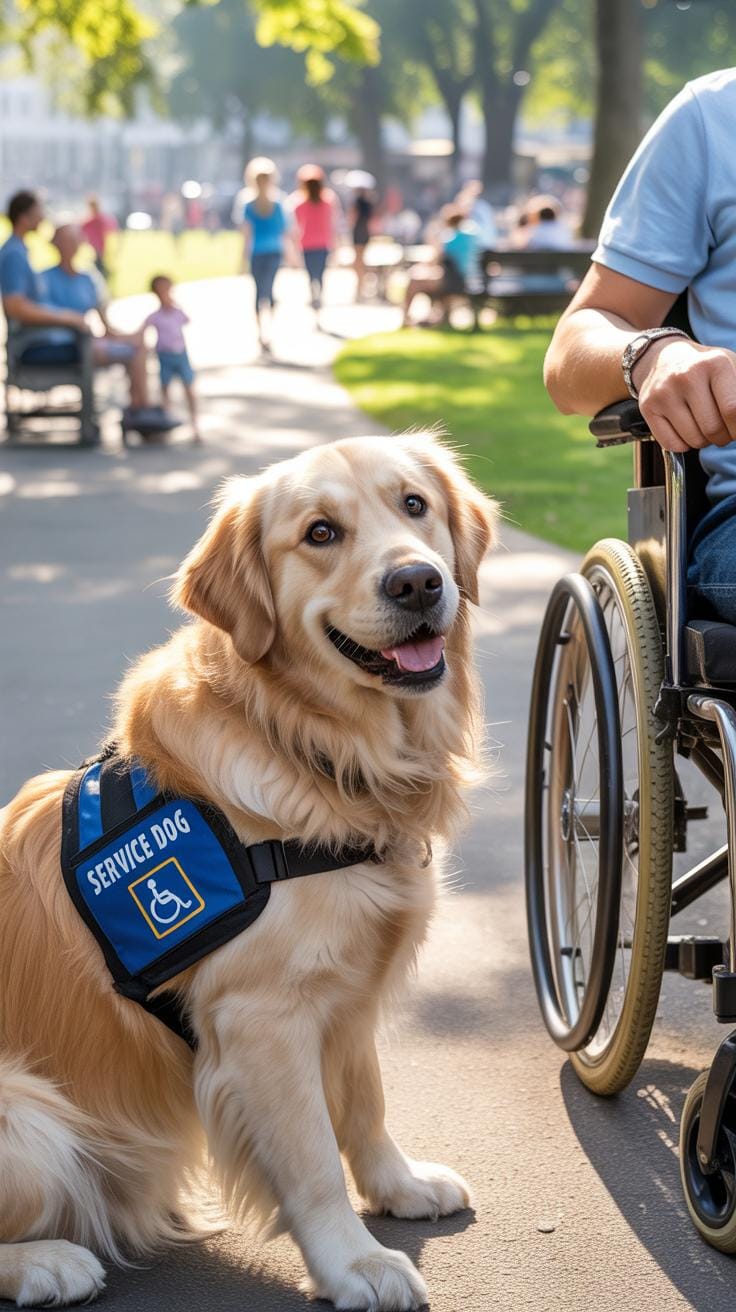
The Americans with Disabilities Act defines a service animal as a dog trained to do work or perform specific tasks for a person with a disability. The task must directly relate to the individual’s disability. This legal standard requires more than just a presence. The animal must take a specific action to assist the owner. Public entities must allow these animals in all areas.
Federal law distinguishes these animals from pets or support animals because of their specialized training. Providing emotional support or comfort does not qualify as a task under the ADA. A service animal must be under the control of the handler at all times. They usually stay on a harness or leash unless the disability prevents it. The law protects the right to bring these dogs into businesses.
Which Species Qualify As A Service Animal Under Federal Law
Only dogs qualify as service animals under the general ADA definition. This restriction narrowed in 2011 to exclude all other species of animals. You cannot claim a cat, bird, or reptile as a service animal regardless of their training level. Agencies and businesses only need to recognize dogs as meeting this legal requirement. This clarity helps business owners understand their specific legal obligations.
A separate provision exists for miniature horses that meet specific physical standards. They must be housebroken and under the owners control to gain access. Businesses must check if their facility can accommodate the horse’s type, size, and weight before allowing entry. Despite this exception, dogs remain the primary species used for service work. Most people will only encounter dogs used in this professional capacity.

What Is An Emotional Support Animal Rights And Limitations Explained

The Role Of An Emotional Support Dog In Mental Health Treatment
An emotional support animal provides comfort to a person with a mental health condition. Unlike service dogs, these animals do not perform specific tasks. Their mere presence helps alleviate symptoms of anxiety, depression, or certain phobias. Doctors recommend them as part of a broader treatment plan. They offer stability and companionship during periods of high stress or emotional distress for the owner.
The primary function of these animals is providing therapeutic benefits through contact. Federal law recognizes their importance in housing. However, they lack the specialized training required to assist with physical disabilities. They operate on an emotional level rather than a functional one. You must distinguish their role from that of a pet. They fulfill a specific medical need documented by a qualified healthcare professional.
How An Esa Letter Works And Who Can Legally Issue One
An ESA letter acts as the only legal proof of an animal status. A licensed mental health professional must write this document on official letterhead. The letter must state that the individual has a diagnosed disability. It also confirms that the animal is necessary for the patient’s mental health. Valid letters must include the provider’s license type, date of issue, and professional contact information.
Legally, only specific professionals can issue these documents. This includes psychiatrists, psychologists, clinical social workers, and licensed counselors. General physicians can also provide them if they treat the patient’s mental health. Avoid online registry websites that sell certificates or vests. Those documents carry no legal weight under the Fair Housing Act. Real letters depend on an established relationship between the patient and the healthcare provider.

ESA Vs Service Dog Rights A Side By Side Legal Comparison
Public Access Rights: Where Service Dogs Are Allowed Vs. ESAs
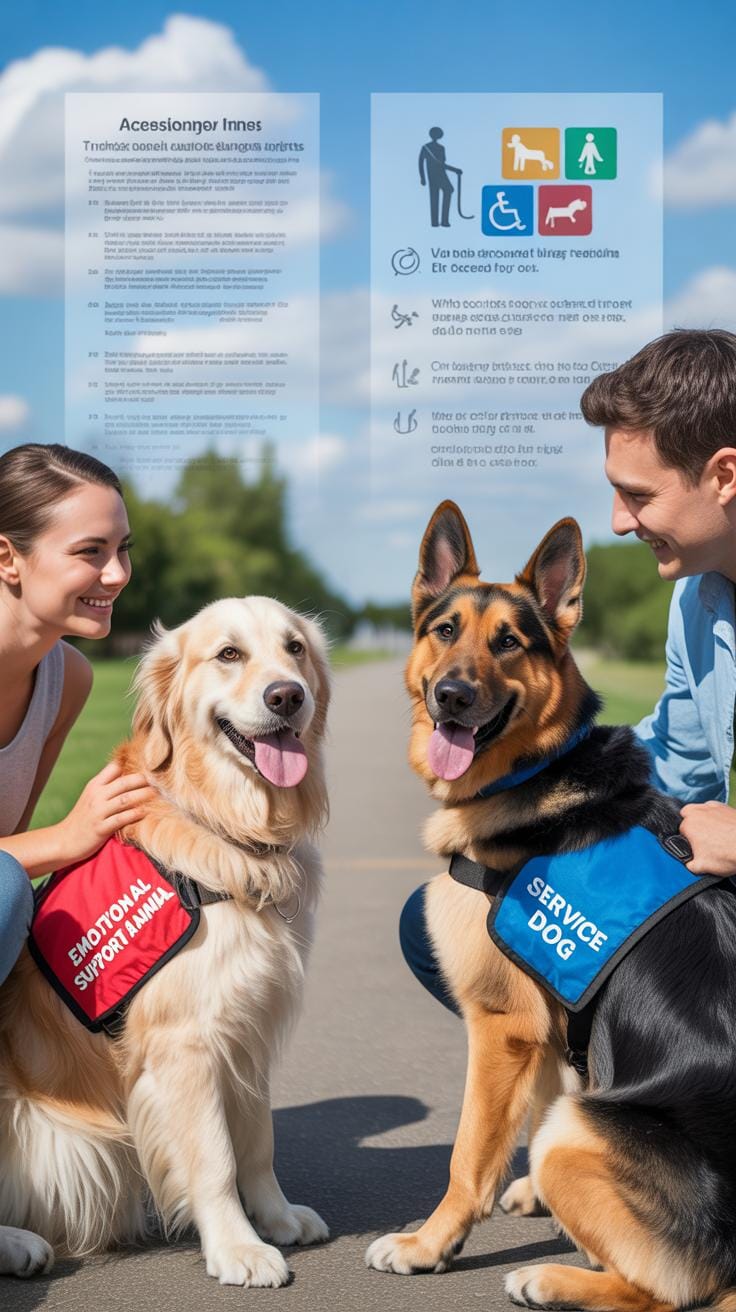
The Americans with Disabilities Act grants service dogs broad access to public spaces. These animals must perform specific tasks to mitigate a disability. You can take them into restaurants, hospitals, and stores. Business owners cannot demand documentation for service dogs. They can only ask if the dog is for a disability and what task it performs. This high level of access ensures mobility for disabled individuals.
Emotional support animals do not have public access rights under federal law. They provide comfort through presence alone rather than trained tasks. Most businesses treat them as pets rather than medical equipment. You cannot legally bring an ESA into a grocery store or theater if pets are banned. Local or state laws rarely override this federal distinction. Staff can legally ask you to leave if you bring an ESA inside.
Both the silent shadow that aids a task and the gentle heart that eases the spirit deserve their cherished place in our homes and laws. While one opens doors through duty and the other through devotion, both remind us that a loyal bond is a powerful medicine.
Housing Protections Under The Fair Housing Act For ESAs And Service Dogs
The Fair Housing Act protects both service dogs and emotional support animals. These animals are not pets under this law. They are reasonable accommodations for people with disabilities. Landlords must waive pet fees and breed restrictions for these animals. You must provide a letter from a licensed healthcare professional to prove your need for an ESA. This letter confirms your disability and the animal’s therapeutic benefit.

Landlords cannot deny housing based on the presence of a service dog or ESA. They cannot charge extra deposits for these animals. However, your animal must stay under control at all times. If the animal causes damage or threatens others, the landlord can seek its removal. You remain liable for any physical damage the animal does to the property. Compliance with this law protects your right to live with your support animal.
Understanding The Psychiatric Service Dog And Its Distinct Legal Standing

What Tasks Does A Psychiatric Service Dog Perform To Qualify Under The ADA
A Psychiatric Service Dog must perform specific work or tasks that directly relate to a person’s disability. These tasks are active and observable actions that mitigate symptoms. A dog might sniff out an oncoming panic attack or high cortisol levels. It provides deep pressure therapy to ground a handler during a dissociative episode. The animal acts as a medical tool rather than a pet.
The handler must train the dog to recognize and respond to environmental triggers. Typical tasks include room searches for individuals with PTSD or blocking others from getting too close in public. Grounding techniques during flashbacks are also common tasks. Because these dogs perform trained actions, they meet the Americans with Disabilities Act requirements. This training moves the animal from a companion to a necessary medical device.
How A Psychiatric Service Dog Differs From An Emotional Support Dog Legally

The primary legal distinction rests on trained behavior versus natural presence. A Psychiatric Service Dog requires rigorous training to execute specific commands that help a disabled person function. This training grants the dog access to public spaces like restaurants, stores, and airplanes. Federal law treats these animals exactly like guide dogs for the blind. They have full public access rights under the Americans with Disabilities Act.
In contrast, an Emotional Support Dog provides comfort simply by existing near the owner. No specific training is required for a dog to be an ESA. Therefore, law does not grant ESAs public access rights. They cannot enter non-pet-friendly businesses or cabins of aircraft under the Air Carrier Access Act. While ESAs have some housing protections, they lack the broad legal status and mobility afforded to service dogs.
Service Dog Training Requirements Vs ESA Standards
What Federal Law Says About Formal Service Dog Training Requirements
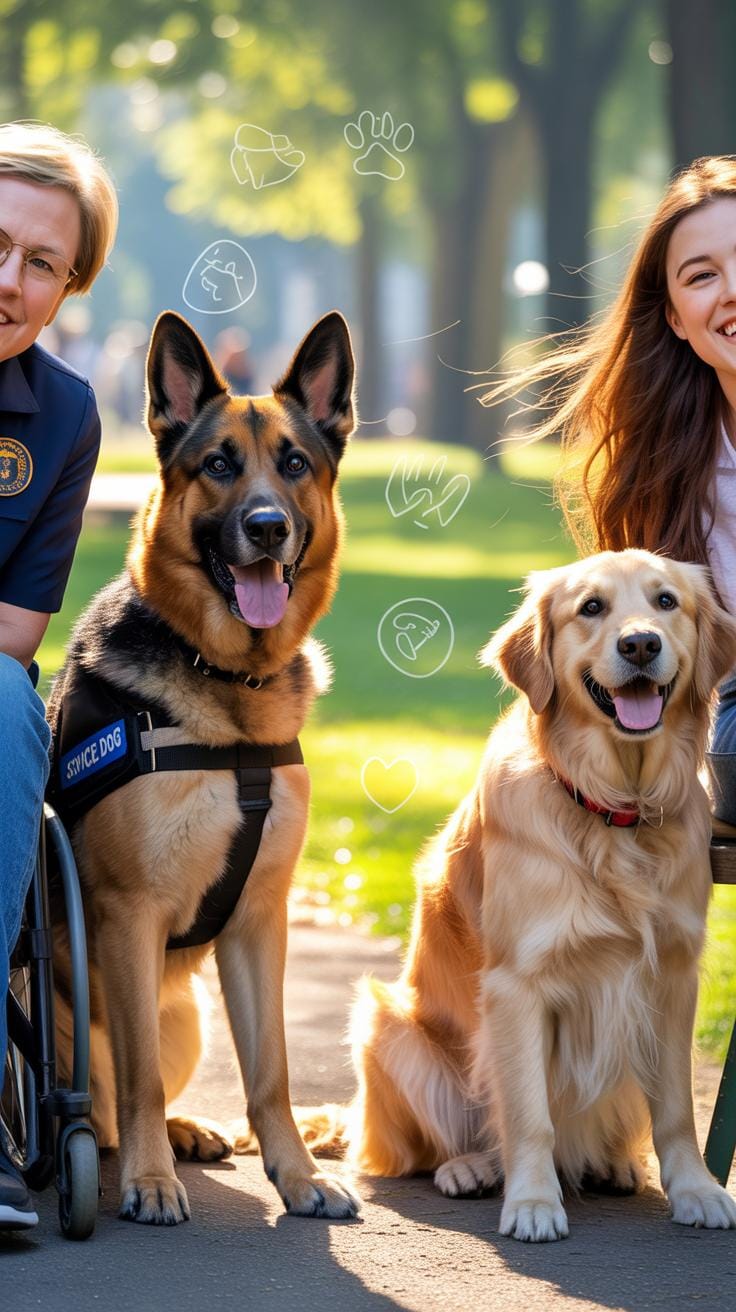
The Americans with Disabilities Act does not require professional training for service dogs. Federal law allows owners to train the animals themselves. There is no central registry or mandatory certification program in the United States. You do not need to show papers or badges to prove your dog is a service animal. This flexibility ensures that disabled individuals can afford and access necessary support without facing high commercial training costs.

Emotional Support Animals have no training requirements under federal law. They do not perform specific tasks related to a disability. Instead, their mere presence provides comfort to the owner. Because they lack specialized training, they do not have the same public access rights as service dogs. While service dogs must be under control at all times, ESAs are generally restricted to housing units under the Fair Housing Act.
Key Behaviors Every Service Dog Must Demonstrate In Public Settings
Service dogs must maintain professional behavior in all public environments to retain their legal protections. The dog must remain under the control of the handler at all times. This usually requires a leash or harness unless the disability prevents their use. The dog must focus entirely on the handler and ignore all external distractions, including food, people, and other animals, while working in stores or restaurants.
- Task Performance: The dog must perform a specific action that mitigates the handler’s disability. This includes picking up dropped items, alerting to seizures, or guiding the blind. The behavior must be a trained response, not a natural instinct common to all dogs.
- Housebreaking: A service dog must be fully housebroken to operate in public spaces. Any dog that urinates or defecates in a place of business can be legally excluded from the premises. This is a non-negotiable standard for maintaining public access rights under federal law.
- Quiet Demeanor: The animal must remain quiet and should not bark unless barking is part of a specific task. Aggressive barking, growling, or lunging at other patrons is grounds for removal. The dog stays calm and tucked away under tables or seating area when not active.
- Under Control: Handlers must maintain physical or voice control over the animal. The dog cannot wander away or interact with customers. If the dog behaves in an unruly manner and the handler fails to correct it, the business owner has the right to ask them to leave.
- No Soliciting Affection: A working dog does not seek attention from strangers. It must ignore people who try to pet or distract it. The dog remains in a heel position or a designated stay until the handler gives a specific command to move or perform a task.
Federal law allows business owners to ask two specific questions to verify a service animal. They may ask if the dog is a service animal required because of a disability. They can also ask what work or task the dog has been trained to perform. Staff cannot ask about the person’s disability or demand a demonstration of the task. Failure to meet behavioral standards voids the dog’s right to remain inside.
Psychiatric Services And Mental Health Conditions That Qualify For An ESA Or PSD

Mental Health Diagnoses That May Qualify A Person For An Emotional Support Animal

An Emotional Support Animal provides comfort to individuals dealing with specific mental health limitations. Common diagnoses include chronic anxiety, clinical depression, and post-traumatic stress disorder. A licensed mental health professional must document that the animal mitigates a symptom of the person’s disability. This documentation allows the owner to live with the animal in housing that typically restricts pets under federal law.
The ESA acts as a passive tool for emotional stability and regulation. It helps people managing panic attacks, social phobias, or mood disorders. Unlike specialized service dogs, these animals do not need training to perform specific tasks. Their mere presence serves the therapeutic purpose. Owners must maintain a valid letter from a provider to secure housing rights and avoid pet fees or weight restrictions.
When Psychiatric Services Require A PSD Rather Than An ESA
Psychiatric Service Dogs perform specific tasks that an owner cannot do alone. A person needs a PSD when their condition requires active intervention. This includes deep pressure therapy to stop a panic attack or room searches for individuals with PTSD. If the handler needs the dog to interrupt self-harming behaviors, an ESA is insufficient. Only a trained service dog meets these tactical needs.
The legal distinction centers on work versus presence. If you need a dog to navigate public spaces or mitigate symptoms through action, you require a PSD. These dogs have full access to stores, restaurants, and airplanes under the Americans with Disabilities Act. ESAs do not have these public access rights. Choose a PSD if your survival and daily function depend on a dog completing trained physical tasks.
Therapy Dogs Vs Emotional Support Animals Understanding The Difference


What Therapy Dogs Do And Why They Are Not Covered By The ADA
Therapy dogs provide comfort and psychological support to people in public settings like hospitals, schools, or nursing homes. Their primary job involves interacting with many individuals under the supervision of a handler. Unlike service animals, these dogs do not perform specific tasks for a single person with a disability. They rely on social temperaments to lower stress levels for groups of people.
The Americans with Disabilities Act excludes therapy dogs because they do not mitigate a specific disability for their owner. ADA protections only apply to animals trained to assist a person with a permanent impairment. Therapy dogs are guests in facilities and require explicit permission from management to enter. They have no legal right to enter private businesses or airplanes without following standard pet policies or fees.
How Therapy Dogs, ESAs, And Service Dogs Each Serve Different Purposes
Service dogs function as essential medical equipment for one specific individual. They undergo rigorous training to execute physical actions like guiding the blind or alerting to seizures. Emotional support animals do not require training but provide vital companionship to help a disabled owner manage mental health symptoms. Therapy dogs focus outward on the community. They offer generic comfort to third parties rather than personal aid.
You must differentiate these roles to avoid legal penalties and access denials. Misrepresenting a therapy dog as a service animal is illegal in many states. Service dogs have broad access to public spaces by federal law. Emotional support animals have limited rights mainly focused on fair housing. Therapy dogs have the least legal protection. They function effectively as pets with specialized training for social volunteering and institutional visits.

Air Travel Rights For Service Dogs And Emotional Support Animals Post 2021
How The DOT’S 2021 Rule Change Affected Emotional Support Animal Air Travel
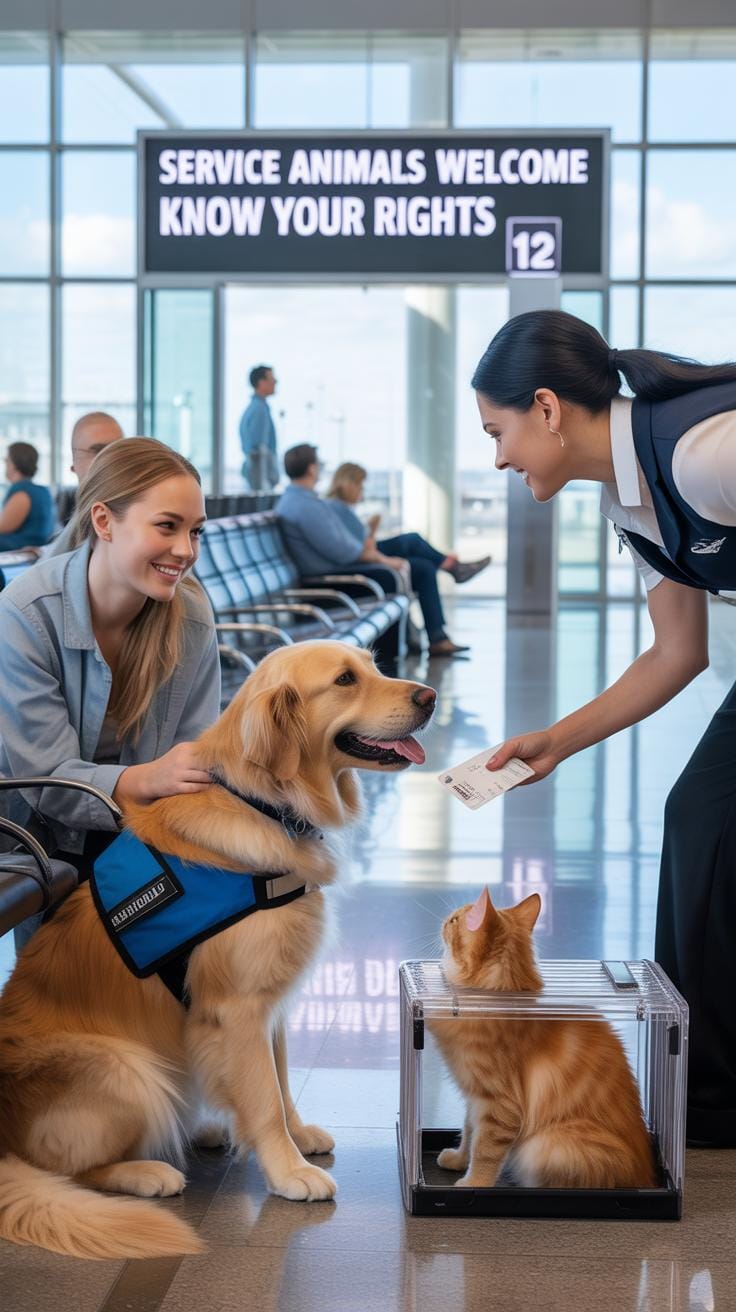
The Department of Transportation dramatically altered the landscape of air travel in January 2021. This ruling officially reclassified emotional support animals as pets rather than service animals. Airlines no longer have a legal obligation to accommodate these animals in the cabin for free. This change ended years of tension regarding animal behavior and vague documentation requirements that previously allowed untrained pets to fly.
Carriers now treat emotional support animals under their standard pet policies. This means owners must pay additional fees and keep animals in small carriers under the seat. Large dogs that once flew as emotional support animals must now travel in the cargo hold. The ruling aligns air travel laws with the Americans with Disabilities Act. It prioritizes the safety and space of all passengers over comfort animals.
What Documentation Airlines Now Require For Psychiatric Service Dogs In Cabin
Psychiatric Service Dogs still retain full cabin access under the updated federal rules. Unlike emotional support animals, these dogs perform specific tasks to mitigate a mental health disability. Airlines require handlers to submit specific forms before boarding. This process ensures the dog is healthy, trained, and capable of behaving in a cramped environment. You must provide these documents at least forty-eight hours before your flight.
- DOT Service Animal Air Transportation Form: This main document requires the handler to certify the dog’s health, training, and behavior. You must name the trainer or organization. It acts as a formal legal declaration that the dog will not cause a disturbance or safety hazard during the flight.
- DOT Service Animal Relief Attestation Form: This form is mandatory only for flights lasting eight hours or longer. It requires the handler to state the dog will not relieve itself in the cabin. If the dog must go, the handler must prove they can manage the waste in a sanitary manner.
- Task Description: Handlers must describe the specific work or tasks the dog performs. This confirms the animal is a service dog rather than a support animal. You do not need to disclose your specific medical diagnosis. Tactical clarity on what the dog does is the primary requirement here.
- Behavior Agreement: The documentation includes a signed agreement that the dog must remain under the handler’s control. Airlines can remove dogs that bark constantly or act aggressively. The animal must stay on a leash or in a tether at all times. Service dogs must fit within the handler’s foot space.
- Health Certification: While the DOT form covers basic health, some international carriers require extra veterinary records. You must certify the dog is free of fleas and ticks and has all current vaccinations. Providing false information on these federal forms carries potential legal penalties including fines or criminal charges.
Keep digital and physical copies of all paperwork during your travel. Airlines can deny boarding if the forms are incomplete or if the dog shows poor behavior at the gate. Recent rules allow airlines to limit one handler to two service animals. Proper documentation prevents delays and ensures you maintain your legal rights. Always check specific airline websites for their digital upload portals to streamline the check-in process.
Common Misconceptions About ESA Vs Service Dog Rights

Why A Vest Or ID Card Does Not Legally Certify A Service Animal
The Americans with Disabilities Act does not require service dogs to wear vests, tags, or specific harnesses. These items are strictly tools for public signaling. They do not grant legal status. Business owners often see a vest and assume it proves the dog’s training. This is incorrect. A vest is simply a piece of fabric purchased online. Real legal status comes from the animal being trained for a task.
Public access depends on the dog’s behavior and the handler’s disability needs. Federal law allows staff to ask if the dog is a service animal and what task it performs. They cannot demand to see a vest or specific ID card as proof of legitimacy. Relying on gear instead of behavioral standards creates confusion. True service dogs remain under control regardless of what equipment they wear in public spaces.
The Truth About Online ESA Registries And Service Dog Certification Sites
No official government registry exists for service dogs or emotional support animals. Online sites that sell certificates or registration numbers are scams. They have no legal standing under the ADA or the Fair Housing Act. These platforms exploit people by selling meaningless documents. They promise “legal protection” that does not exist. Paying for a digital badge does not turn a pet into an ESA or service animal.
Valid ESA documentation must come from a licensed mental health professional who treats you. For service dogs, the law requires individual task training, not a website entry. Fraudulent registries undermine legitimate handlers. They trick people into thinking a PDF replaces actual legal requirements. If a site guarantees instant rights for a fee, it is fake. You must follow federal guidelines to secure your housing or public access rights.
How To Choose Between An ESA And A Service Dog For Your Needs

Factors To Consider When Deciding Between Emotional Support And Service Dog Status
Deciding between an ESA and a service dog starts with your specific medical needs. Service dogs perform physical tasks to mitigate a disability. You must have a physical or psychiatric disability that impairs major life activities. These animals require hundreds of hours of training. They have full public access rights under the ADA. If you cannot provide rigorous training, a service dog is not feasible.
Emotional support animals provide comfort through their presence alone. They do not require specialized task training or public access rights. You only need an ESA if your goal is housing protections under the Fair Housing Act. Use this path if your condition responds to companionship rather than physical intervention. Consider your lifestyle and travel habits carefully. ESAs no longer have guaranteed access to commercial airline cabins.
Working With A Licensed Mental Health Professional To Determine The Right Path
Consult a licensed mental health professional to evaluate your treatment plan. Only a qualified provider can issue the required documentation for an ESA or service dog. They assess if an animal is a medical necessity for your recovery. This process ensures your legal protection in housing and employment settings. Avoid online registries or certificate mills. These documents hold no legal weight under federal law.
A therapist helps you define whether you need task-based assistance or emotional stability. If they identify specific symptoms that a dog can interrupt, they may recommend a psychiatric service dog. If your need is general comfort, they will write an ESA letter. Be honest about your ability to manage a working animal. Proper documentation protects your rights and ensures you follow the law. Professional guidance prevents legal disputes with landlords.
Frequently Asked Questions

What is the main difference between an emotional support animal and a service dog?
The primary distinction lies in their training and legal protection. Service dogs are specifically trained to perform tasks for individuals with disabilities, while emotional support animals provide comfort through their presence alone. When comparing esa vs service dog rights, it is important to note that service dogs are protected under the ADA for public access, whereas emotional support animals are generally restricted to housing settings under the Fair Housing Act.
How can I ensure my housing rights are protected for my assistance animal?
To protect your housing rights, you must provide a legitimate letter from a licensed mental health professional if you have an emotional support animal. If you have a service dog, landlords generally cannot require documentation, but the dog must be under control at all times. Understanding esa vs service dog rights ensures you can confidently advocate for your living situation while following the appropriate legal guidelines for reasonable accommodation.
Is there a high cost associated with getting a legitimate assistance animal?
Costs vary significantly depending on your needs. Professional service dogs can cost thousands due to specialized training, though some nonprofits offer them for free to veterans or those in need. Emotional support animals are more accessible, as any pet can qualify with a valid therapist’s letter. While registration sites may look official, they carry no legal weight, so focus your budget on professional healthcare consultations and proper training instead.