The Raw Numbers How Fast Can A Rat Actually Run
Top Speed Of A Common Rat In The Wild
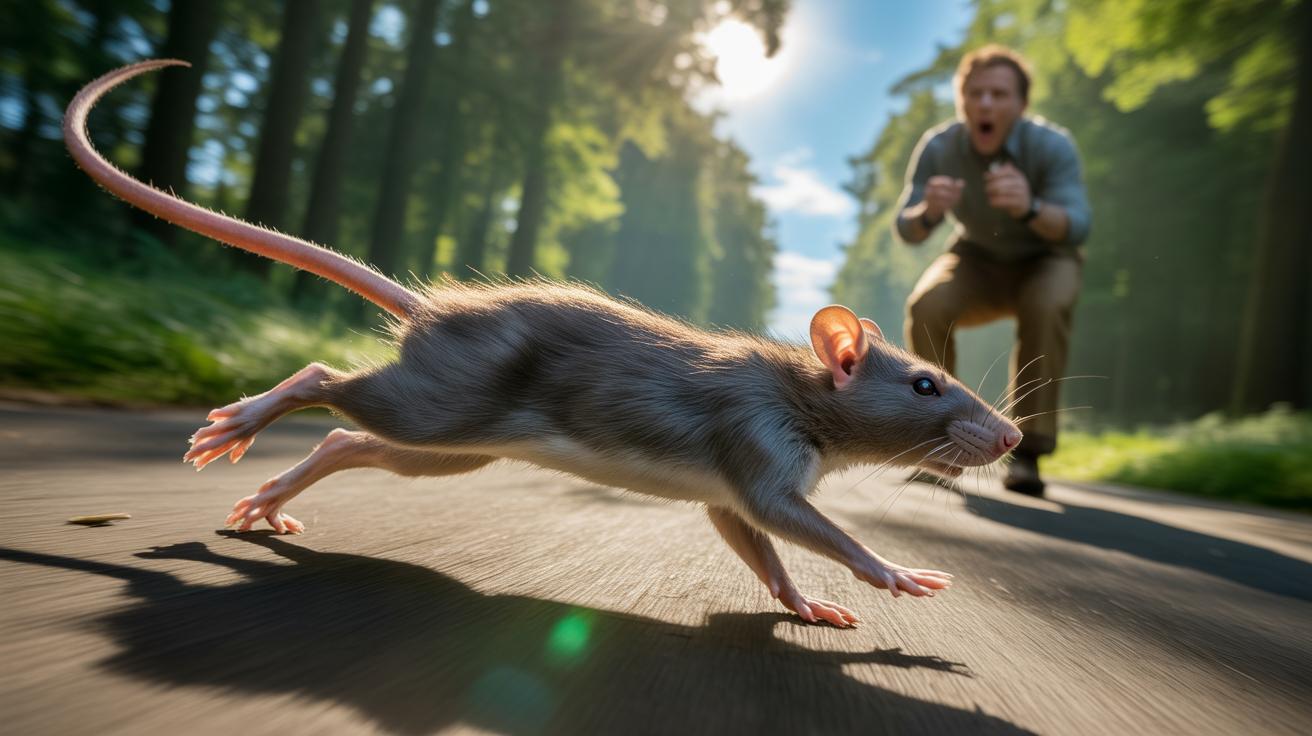
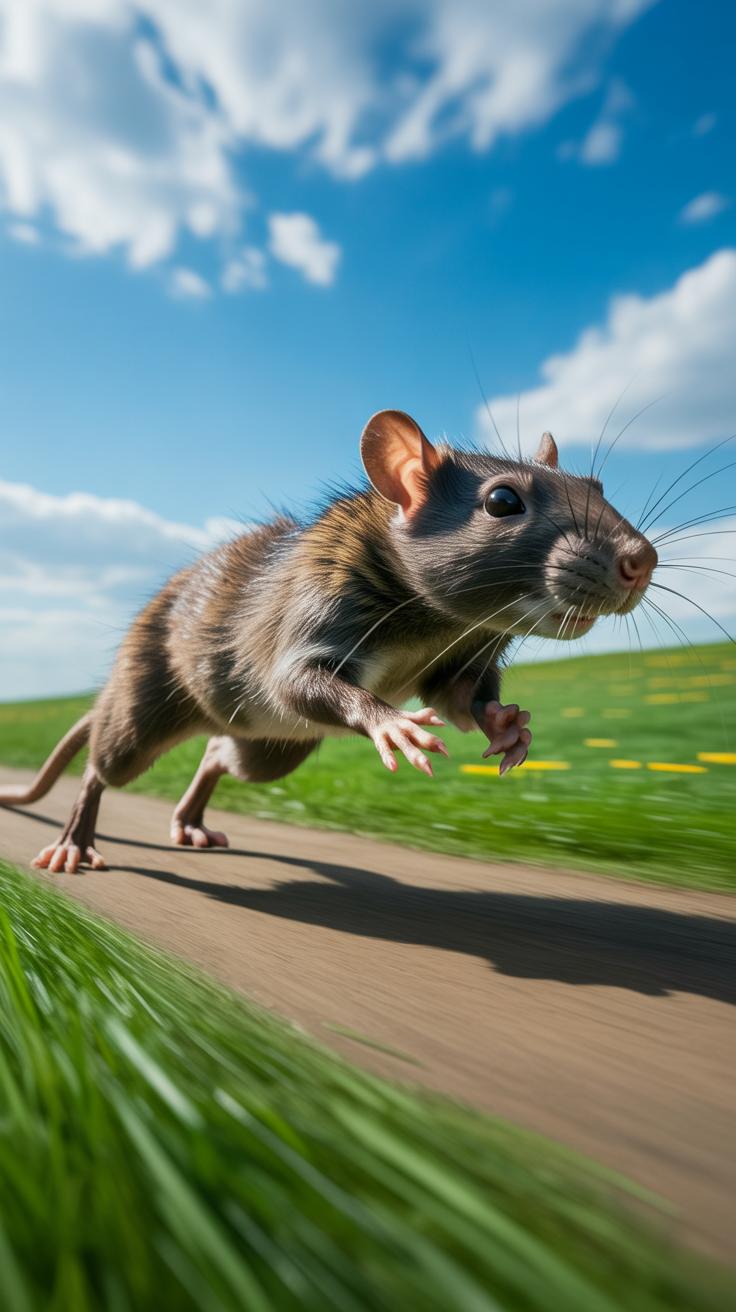
The common brown rat reaches a top speed of eight miles per hour. This velocity allows the rodent to cover nearly twelve feet per second. Rats rely on powerful hind legs to generate rapid acceleration. They reach maximum speed almost instantly when they detect a threat. This quick burst makes them difficult to catch in open spaces or tight corners.
Environmental factors influence these speeds significantly. A rat running on a flat surface maintains higher velocity than one navigating debris. Their skeletal structure allows for extreme flexibility during high-speed maneuvers. They use their tails for balance while making sharp turns at full tilt. This biological design ensures they remain agile during a chase. Precise foot placement helps them maintain grip on varying textures.
How Rat Running Speed Compares To An Average Human Jogger
An average human jogger moves at approximately five to six miles per hour. The rat outpaces this speed by two to three miles per hour. Most people cannot maintain a sprint in cramped or cluttered environments where rats thrive. While humans have higher absolute top speeds during a full sprint, the rat wins on acceleration. The rodent reaches its peak velocity much faster.
Size plays a critical tactical role in this comparison. A human requires more space to reach a high-speed stride. The rat operates with a lower center of gravity and higher stride frequency. It can maintain its eight-mile-per-hour pace through pipes and narrow gaps. Humans lose speed when they must navigate obstacles or change direction. The rat maintains its momentum through complex terrain without slowing down.

Rat Anatomy The Physical Secrets Behind Their Explosive Speed
How A Rat’S Leg Structure Gives It A Mechanical Advantage
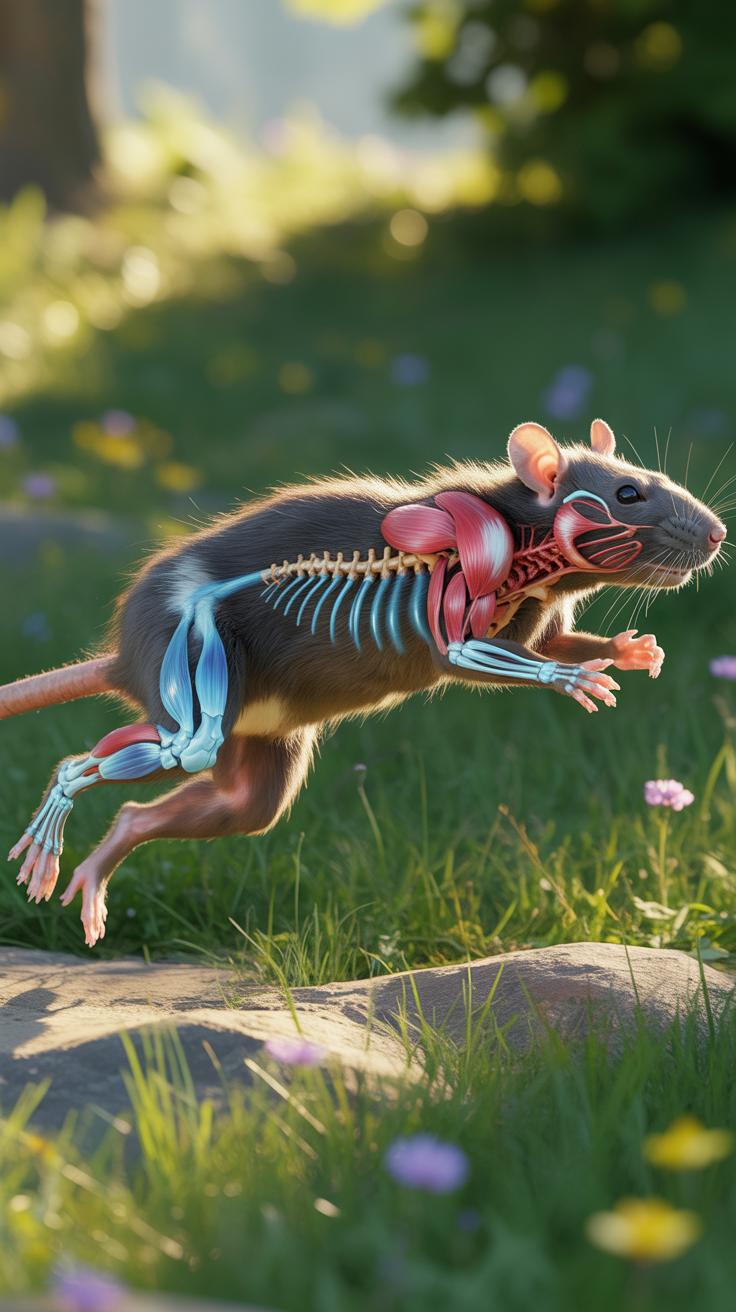
Rats utilize a digitigrade posture to maximize speed. This means they walk and run on their toes rather than their heels. This structure effectively adds an extra segment to the limb. It increases the stride length without requiring a larger body size. Longer limbs allow the rat to cover more ground with every single step they take during a chase.
The muscular attachment points on a rat’s skeleton favor high leverage. Their hind legs are significantly more powerful than their front legs. These back legs act as loaded springs that drive the animal forward. This mechanical setup allows for rapid acceleration from a dead stop. A rat hits top speed almost instantly because their bone structure prioritizes raw power and immediate explosive force.
Muscle Fiber Composition In Rats And Why It Matters For Speed
Rats possess a high density of fast-twitch muscle fibers in their skeletal muscles. These fibers contract much quicker than slow-twitch fibers found in endurance runners. This biological makeup allows rats to execute rapid bursts of movement. They can change direction in milliseconds to evade threats. Speed relies on these quick contractions to generate the force needed for “rat speed vs human running” comparisons.

Energy metabolism in these muscles is built for anaerobic performance. Rats burn fuel quickly to maintain high-intensity sprints over short distances. This system does not require immediate oxygen to function. While humans excel at long-distance cooling and pacing, the rat is a master of the short-range dash. Their muscles are specialized tools for survival that favor immediate tactical movement over sustained aerobic activity.
Rat Speed Vs Human Running A Side By Side Breakdown
Body Length To Speed Ratio: Where Rats Absolutely Dominate
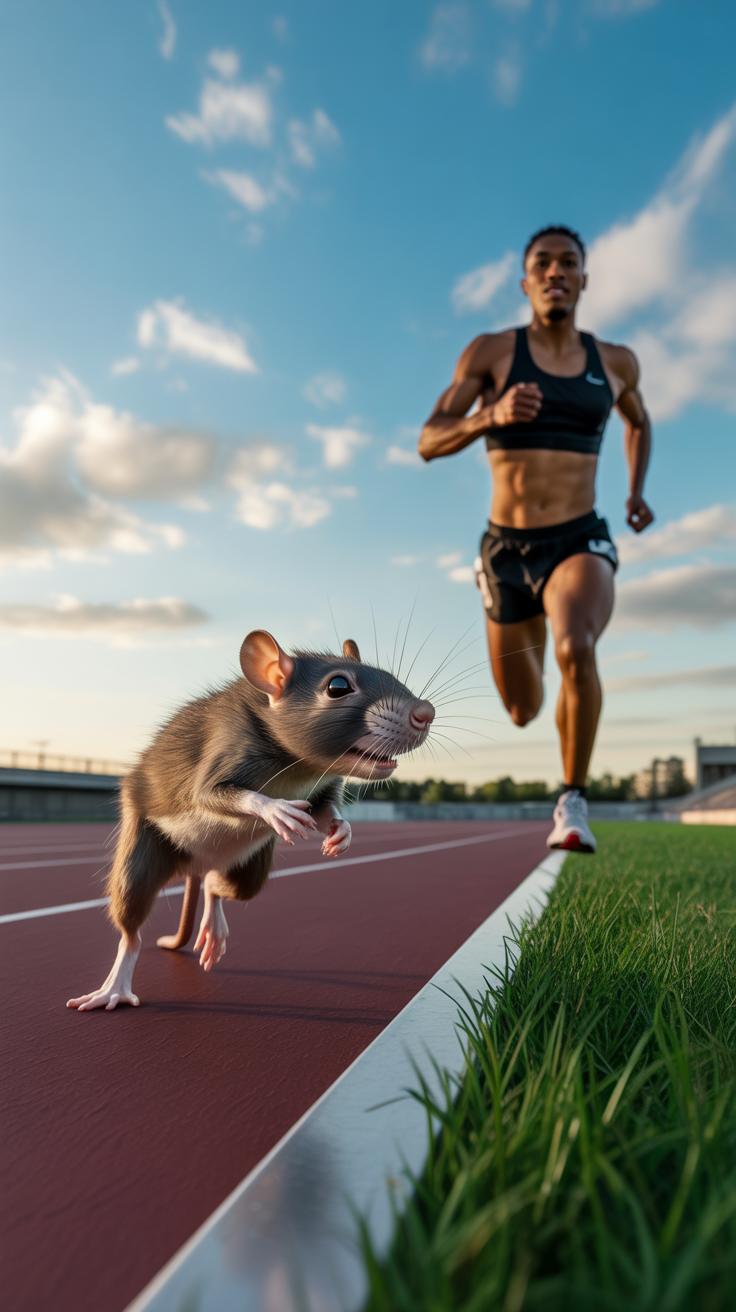
Rats move at roughly 8 miles per hour. This speed seems low compared to the average human sprint of 15 miles per hour. However, the rat is only about 10 inches long. When you calculate speed based on body lengths per second, the rat wins easily. It covers many times its own length in a single second. Humans cannot match this relative velocity during a sprint.
This physical advantage comes from their low center of gravity and powerful hind legs. Rats utilize a bounding gait that maximizes ground force. They can reach top speed in less than a second. While a human requires time to accelerate and reach a full stride, a rat is already at peak velocity. This makes them much more effective at navigating tight spaces and escaping threats quickly.
Sprint Endurance: Can A Human Outlast A Running Rat Over Distance?
Humans are built for long distance running. Our cooling systems and upright posture allow us to shed heat while moving. A rat cannot regulate temperature as efficiently during intense activity. In a short burst, the rat is agile and quick. Over any significant distance, the rat will overheat and stop. Human endurance is a tactical biological advantage that favors long chases over brief sprints.

The rat is a master of the short distance dash. It uses anaerobic energy for quick escapes into burrows or crevices. It does not have the aerobic capacity to sustain high speeds for miles. If a human follows a rat for several minutes, the rat will fatigue first. The human heart and lungs are optimized for steady output. This contrast defines the survival strategies of both different species.
The Science Of Running Mice And Rats What Lab Research Reveals

What Mouse Running Studies In Research Labs Tell Us About Rodent Locomotion
Lab researchers use high-speed cameras to track mouse movement. These studies show how rodents maintain balance at high speeds. Mice use their tails as a stabilizer during sudden turns. This allows them to keep their momentum while changing direction. Their low center of gravity prevents them from falling. These mechanical advantages make them harder to catch than humans expect.
Researchers found that mice use a specific gait to maximize efficiency. At top speed, they enter a gallop phase. Each limb moves independently to push off the ground. This mechanical strategy allows for rapid acceleration. A mouse can hit its top speed in less than one second. This explosive start gives them a massive lead over any human trying to react.
Nature has a special way of reminding us that even the smallest heart can race with the greatest spirit. In the grand marathon of life, there is no creature too tiny to show us the true meaning of quickness.
How Treadmill Tests On Rats Have Changed Our Understanding Of Exercise Science
Scientists use motorized treadmills to test rat endurance and speed. These tests reveal how rodent hearts handle intense physical stress. Most rats can maintain a steady run for long periods. Their muscles process oxygen more efficiently than human muscles. This data tells us why rats survive in harsh environments. They can outrun predators without getting tired too quickly.

Treadmill data shows that rats achieve speeds of eight miles per hour. This seems slow compared to Olympic runners. However, you must scale this speed to their body size. A rat moves many body lengths per second. Humans cannot match this relative velocity. The research proves rats have a biological edge in short-distance sprints. Their anatomy is built for quick escapes.
Meet The Jumping Mouse The Rodent That Leaps Beyond Expectations
What Are Jumping Mice And How Do Jumping Mice Move Differently From Rats?
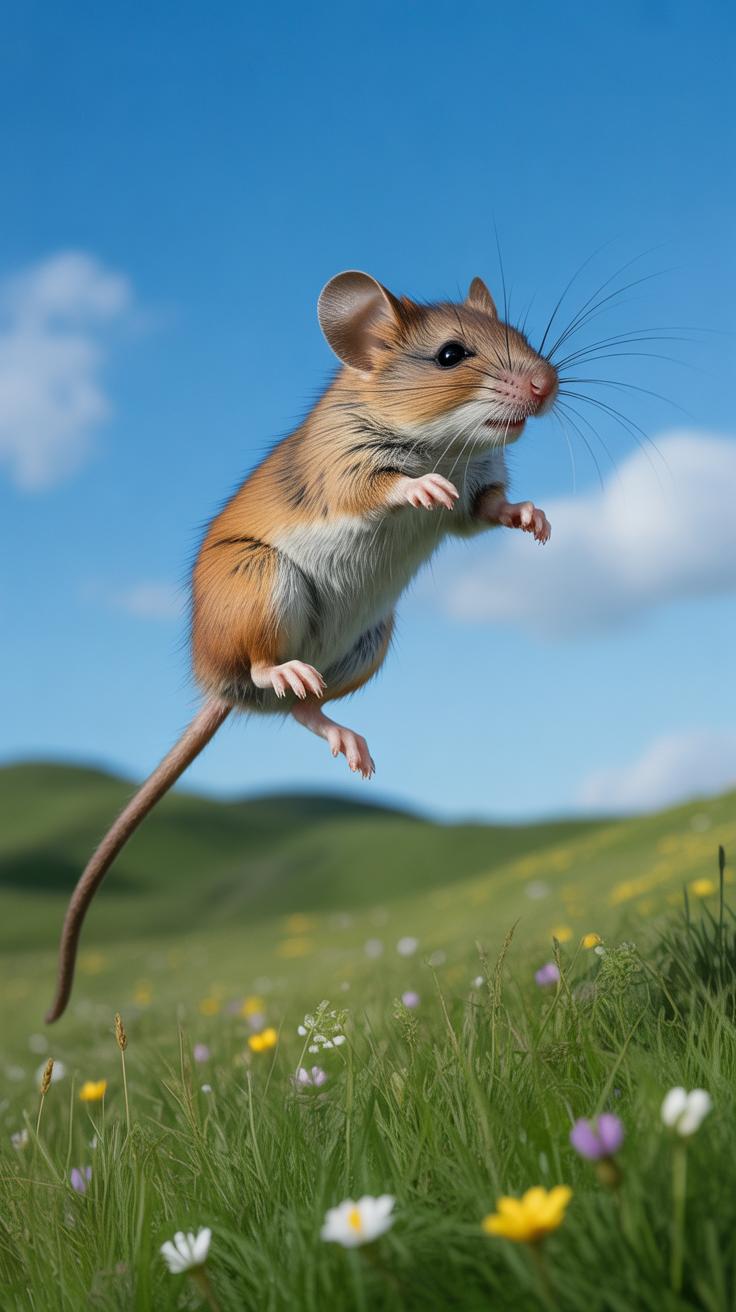
Jumping mice belong to the family Zapodidae. They differ from common rats because of their elongated hind legs and specialized skeletal structure. Rats move using a standard four-legged scuttle that maximizes ground contact. Jumping mice use a bipedal ricochetal gait. This allows them to change direction mid-air. It makes them much harder to track or catch than a standard brown rat.
Rat speed vs human running comparisons often focus on straight-line momentum. The jumping mouse ignores this rule. These rodents use their long tails for balance during high-velocity bounds. While a rat relies on muscle power for short bursts, the jumping mouse uses its tendons like springs. This mechanical advantage provides superior energy efficiency. They cover more ground with less effort than a standard rat or a human sprinter.
The Incredible Leap Distance Of A Jumping Mouse Relative To Its Body Size
A jumping mouse can leap up to thirteen feet in a single bound. This distance is massive compared to its three-inch body. If a human had this same power, they could clear a football field in three jumps. Physical size does not limit their range. Their power comes from concentrated force in the rear limbs. This allows for instant acceleration that exceeds the reaction time of most predators.

These rodents use jumping as a primary defense mechanism. A rat might dive for a hole, but a jumping mouse launches into the air. This vertical and horizontal travel creates a complex path for any pursuer. They hit the ground and immediately spring again without losing momentum. This tactical mobility is why they survive in high-risk environments. They use physics to overcome the size advantages of larger animals.
Rats In Urban Environments How City Life Has Sharpened Their Speed

How Urban Rats Have Evolved Faster Reflexes And Acceleration In Dense Cities
Urban rats live in fragmented habitats. These environments demand rapid bursts of speed to move between safe zones. City rats prioritize acceleration over long distance endurance. They must reach top speed in less than a second to avoid traffic or pedestrians. This constant pressure has selected for rats with high twitch muscle fibers. These muscles provide the explosive power needed for urban survival.
The physical layout of a city acts as a training ground for rat speed. Navigating vertical pipes and narrow crevices requires precise motor control. These rats develop superior spatial awareness and faster neural response times. A rat in the city makes split second decisions to change direction. This agility makes them harder to catch than their rural counterparts. Their speed is a direct result of their harsh environment.
The Role Of Predator Pressure In Keeping Rats Among The Fastest Small Mammals
Predators in the city focus on easy targets. Slow rats do not survive long enough to breed. Cats and raptors hunt by using speed and surprise. To survive these attacks a rat must be faster than the predator’s strike. This creates a high stakes arms race. Only the fastest and most reactive rats pass on their genes. This natural selection keeps the urban population at peak physical performance.

Human interaction also drives rat speed. People try to trap or hit rats in busy areas. These interactions force rats to maintain a high state of vigilance. Constant danger keeps their stress hormones high which prepares their bodies for immediate flight. A rat can run up to eight miles per hour when threatened. This raw speed is their primary defense mechanism against a hostile urban world.
Mouse Races And Rat Agility How Rodents Perform In Competitive Settings

A Brief History Of Mouse Races And What They Demonstrate About Rodent Speed
Organized mouse racing has historical roots in gambling and exhibition during the Victorian era. Spectators placed bets on rodents released into small wooden tracks. These events showed that rodents reach top speed almost instantly after the start. Humans require time to accelerate. A mouse overcomes inertia in a few strides. This rapid acceleration makes them hard to catch in small or tight spaces.
Modern rodent trials focus on agility and obstacle navigation rather than just flat speed. Researchers use these races to study motor skills and muscle coordination. These tests confirm that rodents maintain high speeds while making sharp turns. A mouse can pivot its body weight without losing momentum. This mechanical advantage allows them to navigate complex environments faster than a human could navigate a scaled version.
Key Factors That Influence Performance In Rat And Mouse Agility Trials
Agility trials measure how physical traits and environment impact tactical movement. A rat uses its whiskers and tail to gauge distance and balance at high speeds. This sensory input prevents collisions during rapid sprints. Physical health and age also dictate how long a rodent can maintain its maximum velocity. These trials prove that speed is not just about raw power but also precision.
- Body Mass and Weight: Smaller rodents carry less momentum into turns. This allows them to stop or change direction much faster than larger animals. Lower body weight reduces the impact of gravity during jumps and climbs.
- Tail Counterbalance: The tail acts as a dynamic rudder. It shifts weight to stabilize the rodent during sharp maneuvers. Without this balance, the rat would flip over when turning at its top recorded speed.
- Whiskers and Tactile Input: Whiskers provide constant spatial feedback. This allows the rodent to run at full speed in low light. It can detect walls and obstacles before the eyes process the visual information.
- Surface Traction and Substrate: Rodents perform best on porous or rough surfaces where their claws can grip. Slip happens on smooth metal or glass. Friction is necessary for the rodent to push off and reach maximum acceleration.
- Adrenaline and Stress Response: Predators or loud noises trigger a fight or flight response. This chemical surge increases oxygen flow to the muscles. A stressed rodent will always run faster than one moving through a calm environment.

Training and repetition improve performance in rodent agility courses. Rats learn the most efficient path through a maze after several attempts. They memorize the muscle movements required for each section. This spatial memory allows them to navigate at high speeds without hesitation. Efficiency in movement is why a conditioned rat often outperforms a wild rat in controlled racing environments.
The Rat Race Matrix Why Rats Are Built For Relentless High Speed Navigation

How The Rat Race Matrix Concept Reflects Real Rodent Movement Patterns In Nature
Rats utilize a low center of gravity to maintain stability at high speeds. Their four-legged stance distributes weight evenly across various surfaces. This mechanical advantage allows them to reach top speeds of eight miles per hour almost instantly. Humans require much more time and space to accelerate to their maximum velocity. Rats prioritize rapid bursts of energy over long distances to survive.
Natural selection favors rodents that can change direction without losing momentum. Their skeletal structure features flexible joints and a highly adaptable spine. These physical traits enable the rat to execute sharp turns that would cause a human to trip or fall. The rat race matrix describes this ability to process visual data and convert it into immediate skeletal movement. This makes them elite tactical runners.
Navigating Complex Terrain: Why Rats Outperform Humans In Obstacle Heavy Environments
Human running suffers in cluttered environments due to an upright posture and large foot size. We require clear paths to maintain speed safely. Rats thrive in dense cover and narrow passages because their bodies are narrow and pliable. They use their whiskers to sense gaps and boundaries before their eyes even process the image. This sensory input allows for full-speed navigation in total darkness.

The surface area of a rat paw provides superior traction on diverse materials like brick, wood, or metal. Humans lose significant speed when transitioning between different textures or slopes. A rat maintains its pace because it can grip vertical surfaces and scale walls with ease. This multi-dimensional movement profile gives them a massive advantage over ground-bound humans. They do not just run faster; they run smarter.
What Humans Can Learn From Rats About Speed Agility And Movement Efficiency
Biomechanical Lessons From Rat Locomotion Applied To Human Athletic Training
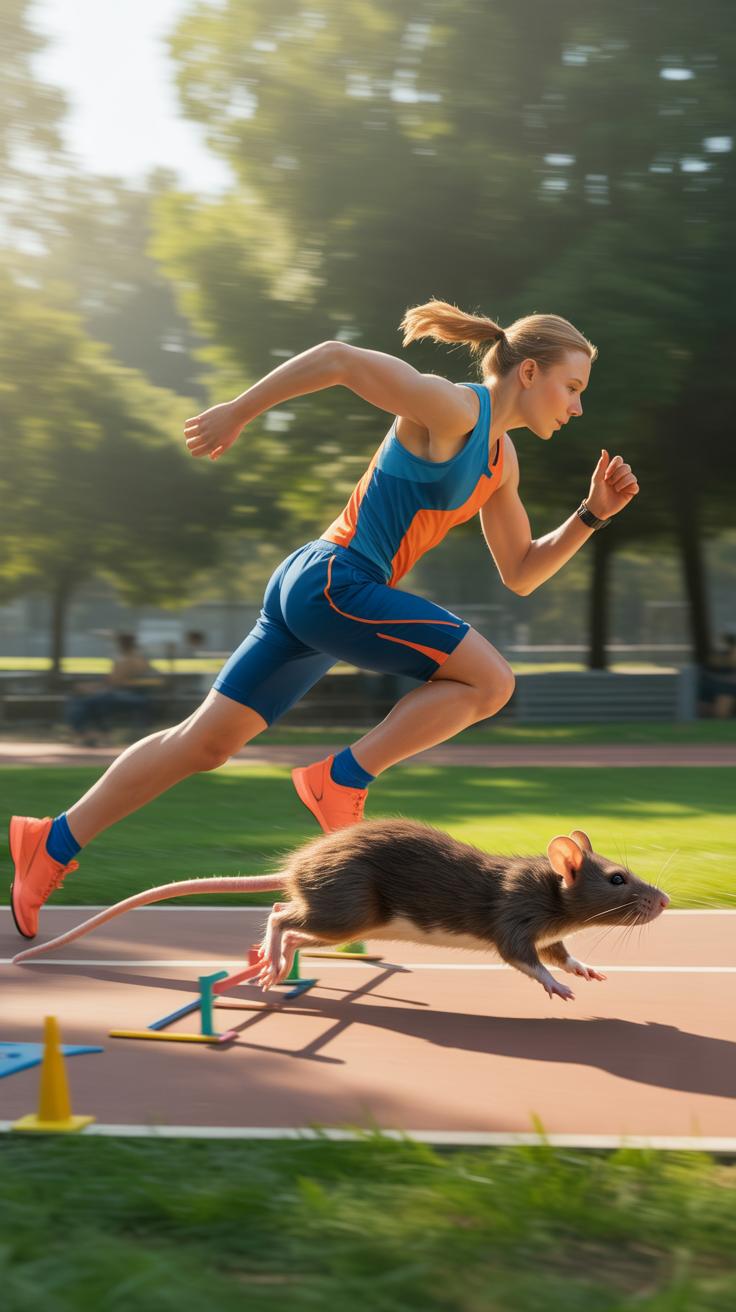
Rats utilize a crouched posture that keeps their center of gravity low and stable. This positioning allows for immediate force production in any direction. Human sprinters use a similar concept during the drive phase of a race. Staying low maximizes horizontal power and prevents energy waste. Athletes can study this ground-hugging mechanic to improve their initial acceleration and maintain better control during high-speed directional changes.
Rat skeletons prioritize flexibility over rigid structure to navigate tight spaces and uneven terrain. Their spine acts like a spring, storing and releasing kinetic energy with every stride. Human runners often suffer from stiff torsos that limit performance. Training for increased spinal mobility mimics the rodent’s ability to absorb impact and recycle force. This biomechanical efficiency reduces the metabolic cost of running and increases overall speed across various surfaces.
Training Tips Inspired By Rat And Rodent Movement Mechanics For Human Runners
Rodent movement rely on rapid foot turnover and a high power-to-weight ratio. Humans can adapt these mechanics through specific drills that focus on reactivity and nervous system speed. Rats do not hesitate when they move. They commit to a path and execute with full intensity. Implementing quick-twitch exercises helps humans bridge the gap between pure strength and usable speed for real-world athletic scenarios.
- Low Center Of Gravity Drills: Practice lateral shuttles and directional changes while keeping the hips deep. Maintaining a low profile mimics rat stability. This builds the quad and glute strength required for explosive bursts from a standstill.
- Spinal Elasticity Exercises: Incorporate dynamic rotational movements to improve trunk flexibility. A supple spine allows for better energy transfer between the upper and lower body. This reduces the mechanical strain on the limbs during long sprints.
- High Cadence Intervals: Focus on increasing step frequency rather than stride length. Rats move their limbs at incredible speeds to cover ground. Increasing your turnover decreases ground contact time and boosts your top-end speed and efficiency.
- Proprioceptive Surface Training: Run on varied, unpredictable terrain like grass or trails to challenge foot placement. Rodents possess elite sensory feedback from their limbs. This training develops the stabilizing muscles and reflexes needed to maintain high speeds safely.
- Explosive Plyometrics: Perform depth jumps and bounds to increase the stretch-shortening cycle efficiency. Like a rat jumping away from danger, these movements train the tendons to store energy. This results in more powerful push-offs with less muscular effort.
Efficiency is the primary goal for any high-performance mover. The rat survives by being quicker than its predators and more agile than its prey. Human runners should stop focusing solely on muscle mass and start focusing on mechanical optimization. Applying these rodent-inspired principles creates a more resilient and faster athlete. Use these tactics to refine your form and dominate your specific environment with superior tactical movement.
Fun And Surprising Facts About Rats That Most People Never Know

Remarkable Speed And Survival Records Documented In Wild And Domestic Rats
Rats reach top speeds of eight miles per hour. This velocity allows them to cover ground quickly in urban environments. They rely on explosive acceleration to escape predators. Their skeletal structure supports rapid changes in direction. This agility makes them difficult to catch by hand. They use their tails for balance during high speed maneuvers. Constant movement keeps them safe in dangerous areas.
Domestic rats maintain similar speeds but often lack the endurance of wild brown rats. Wild rats must run to find food and avoid death every day. They can jump nearly three feet in the air from a flat surface. This vertical leap combines with their running speed for total mobility. These rats navigate complex sewage systems and narrow pipes with ease. Their physical output remains high throughout their lives.
How Rats Compare To Other Small Mammals Like Mice Squirrels And Gerbils In Speed
Brown rats outrun most common household rodents like mice and gerbils. A mouse reaches about eight miles per hour but cannot maintain the pace. Rats have larger muscles and longer limbs for better stride efficiency. Gerbils use a hopping motion that is slower over long distances. Rats move with a steady gait that optimizes energy. This mechanical advantage allows them to dominate smaller rodent species.
Squirrels are faster than rats because they must climb and leap through trees. A squirrel can hit twenty miles per hour on open ground. However, rats are much faster in tight and dark spaces. Their bodies are built for ground speed and tunnel navigation. Small mammals use different strategies to survive. The rat relies on a mix of raw speed and smart environmental pathfinding to stay alive.
Frequently Asked Questions

How fast can a rat actually run compared to an average person?
When analyzing rat speed vs human running capabilities, the results are startling. While an average human runs about 8 miles per hour, a common brown rat can reach speeds of nearly 8 miles per hour. Because of their tiny stature, this translates to incredible agility and rapid acceleration. They can reach their top velocity almost instantly, making them appear much faster than a person in short, frantic bursts of movement across a room.
How can I measure a pet rat’s speed safely at home?
To test rat speed vs human running paces safely, set up a long, enclosed hallway with soft flooring. Use high-value treats at one end and time your rat as they transition from start to finish. Ensure the area is free of feline or canine scents to prevent stress. By recording the distance and time, you can calculate their feet-per-second velocity and compare it to your own jogging pace for a fun experiment.
Is it expensive to provide enough space for a high-speed rat to exercise?
Providing space for a fast-moving rat is surprisingly affordable. You don’t need a massive room; instead, focus on vertical space and interactive toys. Large exercise wheels, which are relatively inexpensive, allow rats to reach their top speeds safely within their enclosure. Additionally, using cardboard boxes to create DIY tunnels provides a budget-friendly way for them to practice their sprints and agility without requiring a dedicated or costly home renovation project.