Understanding Sheepadoodle Grooming What Makes This Breed Unique
The Coat Origins: Old English Sheepdog Meets Poodle
The Sheepadoodle inherits a complex coat from two distinct working breeds. The Old English Sheepdog provides a dense and shaggy double coat designed for insulation. This layer traps heat and repels water in harsh climates. The Poodle contributes a single layer of tight curls or waves. This hair grows continuously rather than shedding out like most breeds. These genetics create a hybrid coat that rarely drops hair on your floor.
Mixing these two coat types results in a texture that varies by individual dog. Most Sheepadoodles possess hair that traps loose fur within the coat instead of releasing it. This prevents dander from spreading but leads to rapid matting. You must manage this combination of a thick undercoat and curly topcoat. Failure to understand these origins leads to pelted fur. Pelting happens when hair tangles close to the skin.
Why Sheepadoodle Coats Require A Consistent Grooming Routine
High maintenance is the trade-off for a low-shedding dog. Because the hair does not fall out, dead fur stays stuck in the living coat. This creates small knots that quickly turn into large mats. Mats pull on the skin and cause pain or infections. A strict schedule prevents these issues. You must clear out dead hair before it twists around healthy strands. Neglect causes permanent coat damage.
Consistency also protects the health of the dog. Regular sessions allow you to check for skin irritations and pests. The Sheepadoodle coat hides many secrets because of its density. Only frequent brushing and clipping reveal what happens underneath the fur. You save money by avoiding expensive emergency grooming visits. A routine keeps the coat manageable and the dog comfortable throughout the year. Routine wins over sporadic effort.
How Often Should Sheepadoodle Grooming Actually Happen A Realistic Timeline
Daily And Weekly Grooming Tasks Every Owner Should Know
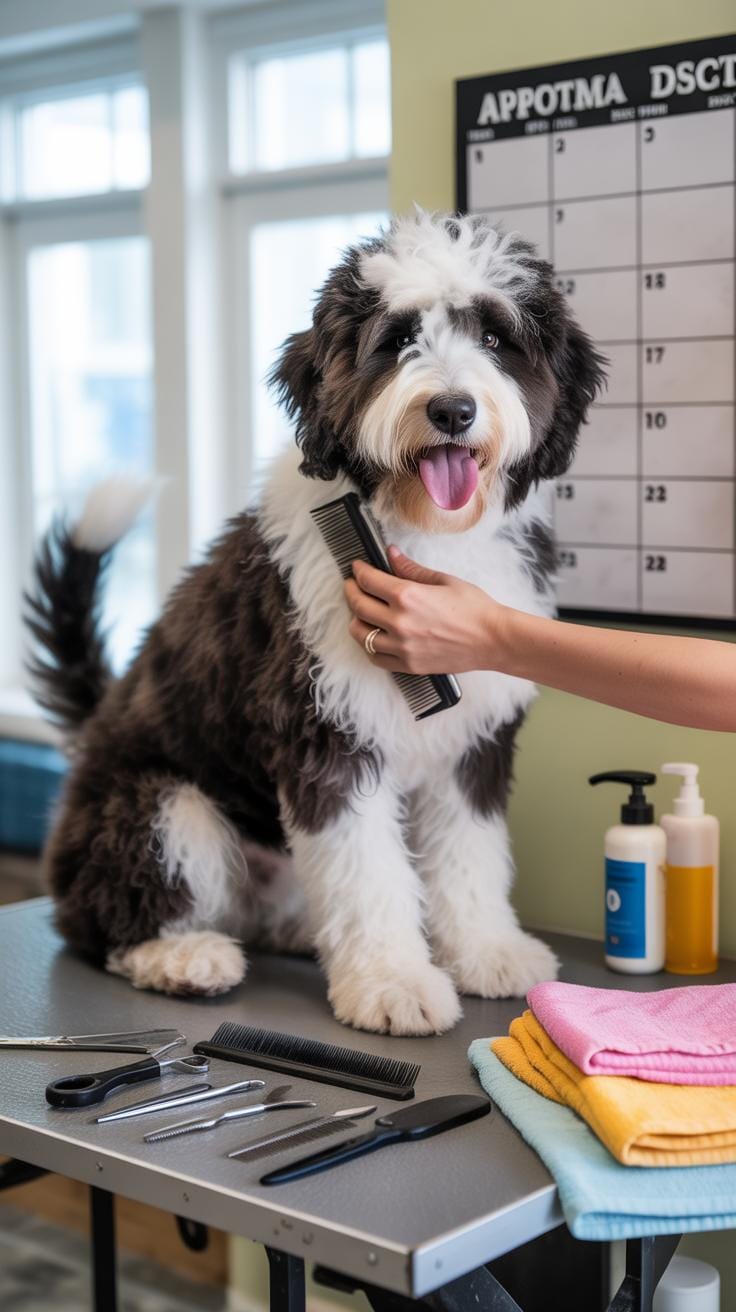
Sheepadoodles possess a dense double coat inherited from the Old English Sheepdog and Poodle. This hair traps loose fur instead of shedding it onto your floor. Without daily intervention, these trapped fibers twist around healthy hairs to create painful mats. Owners must commit to a rigorous maintenance routine at home to prevent skin infections and ensure the dog remains comfortable between professional visits.
- Line Brushing: Work through the coat in sections from the skin outward daily. Use a slicker brush to grab loose undercoat hair. This technique prevents deep mats that regular surface brushing misses.
- Metal Comb Check: Run a stainless steel greyhound comb through the fur after brushing. If the comb snags, a mat is forming. This tool acts as the final quality control for your grooming work.
- Sanitary Cleaning: Wipe the face and paw pads daily to remove moisture and debris. Bacterial growth thrives in damp fur around the eyes and mouth. Keeping these areas dry prevents staining and unpleasant odors.
- Ear Inspection: Check ears twice weekly for wax buildup or redness. Poodle-cross breeds often grow hair inside the ear canal which traps moisture. Regular cleaning prevents chronic infections and expensive veterinary bills.
- Nail Maintenance: Trim or grind nails every two weeks to prevent skeletal issues. Long nails force the paw to tilt, changing the dog’s gait. Short nails are essential for joint health and traction on hard floors.
Consistent home care reduces the time your dog spends on the grooming table. If you skip daily brushing, the coat will eventually felt. Felting is irreversible and requires a complete shave. You must treat grooming as a non-negotiable part of your daily ownership duties. High-maintenance coats demand high-level discipline from the owner to avoid health complications.
Professional Grooming Frequency: Every 6 To 8 Weeks Explained
A professional groomer must handle full-body hair clips every six to eight weeks. Sheepadoodle hair grows continuously and does not stop at a specific length. Waiting longer than eight weeks increases the risk of the coat becoming unmanageable. Professionals use industrial equipment to bathe, dry, and clip the dog. This interval ensures the coat stays at a functional, healthy length.

The six-week mark is the gold standard for maintaining a specific style like the teddy bear cut. Poodle-mix hair loses its shape quickly as it gains weight and length. At eight weeks, the hair often begins to collapse and tangle near the skin. Regular professional appointments allow the groomer to find small skin issues or lumps early. Staying on this schedule prevents the need for traumatic, short shaves.
Sheepadoodle Grooming Styles Choosing The Right Look For Your Dog
The Most Popular Sheepadoodle Haircut Styles And What Suits Each Coat Type
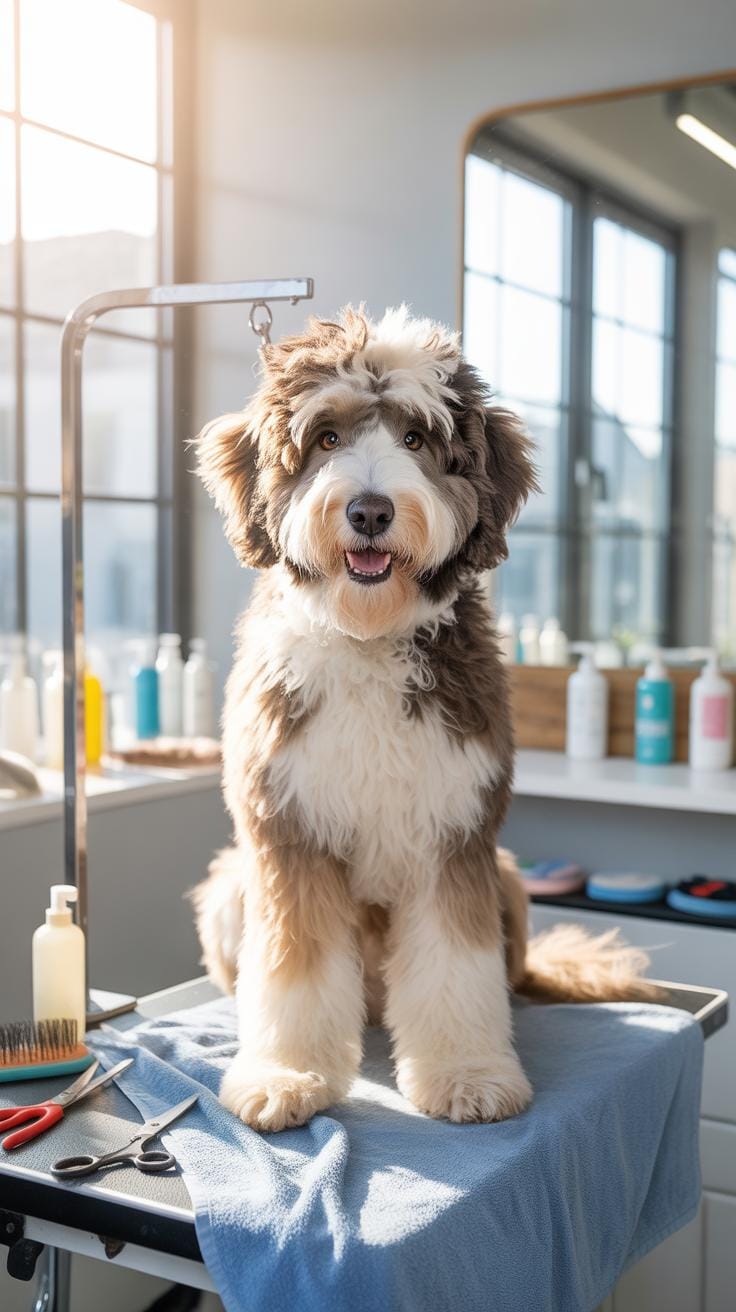
The puppy cut remains the standard for most Sheepadoodle owners. This style maintains the hair at a uniform length of one to two inches across the entire body. It preserves the soft appearance of the Poodle lineage while managing the density of the Old English Sheepdog coat. This style works best for wavy or curly coats that tend to mat near the skin.
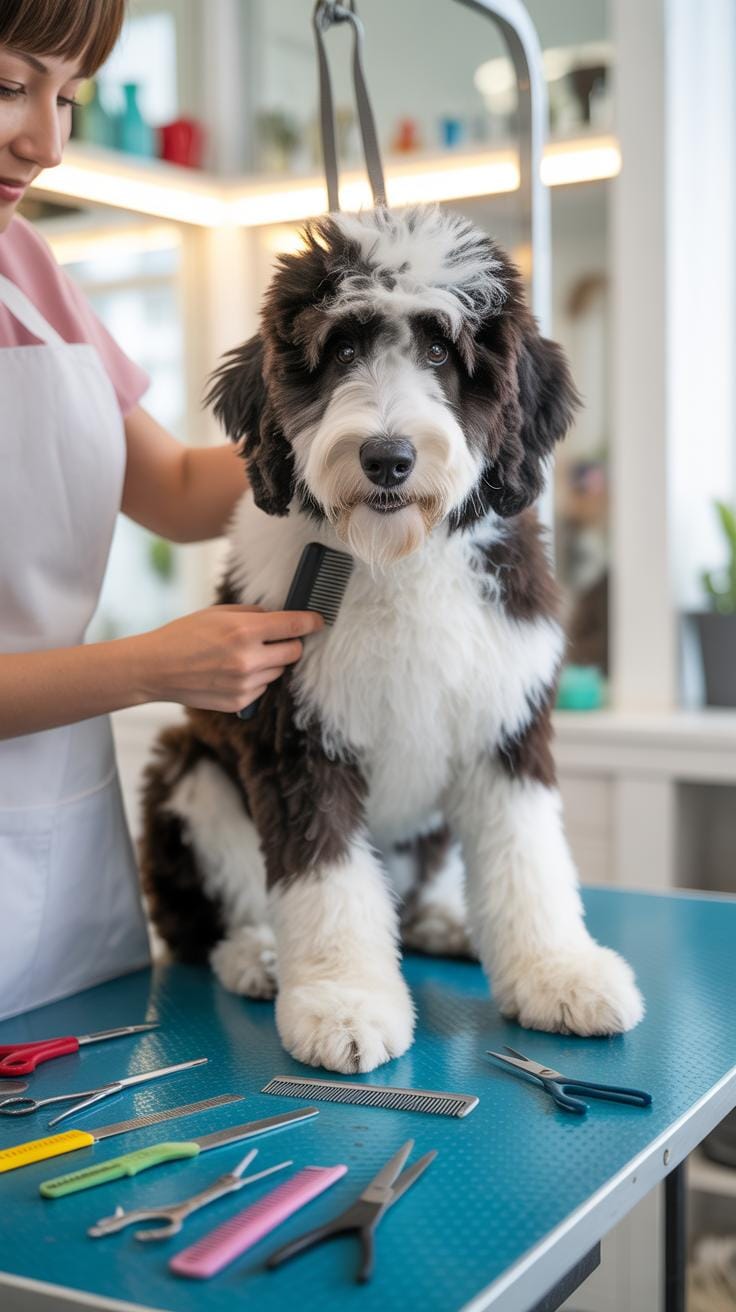
The teddy bear cut focuses on a rounded face and longer leg hair. It highlights the breed’s distinct facial features but requires a coat with enough structural integrity to hold the shape. If your dog has a straighter coat, this style often fails because the hair flops. Professional groomers use thinning shears to blend the head into the body for a balanced look.
The bond shared through a weekly brushing is a gentle reminder that love is found in the simple cadence of care. A well-groomed coat reflects the tenderness we give to our most faithful friends.
How Your Chosen Style Affects How Often You Need To Groom
Longer styles like the teddy bear cut demand a rigorous sheepadoodle grooming schedule. You must brush long hair down to the skin at least four times per week. Skipping sessions leads to painful pelted mats that require a complete shave. If you prefer this aesthetic, expect to visit a professional groomer every four to six weeks to maintain the specific shape.
Short utility clips or tight puppy cuts offer the most tactical advantage for active dogs. These styles reduce the frequency of professional visits to every eight or ten weeks. You will spend less time brushing and more time on exercise. A shorter coat also makes it easier to spot ticks or skin irritations. Choose a shorter length if you want to maximize the interval between grooming appointments.
Sheepadoodle Haircuts The Teddy Bear Puppy Cut And Beyond
Breaking Down The Teddy Bear Cut And Why It Is A Fan Favorite
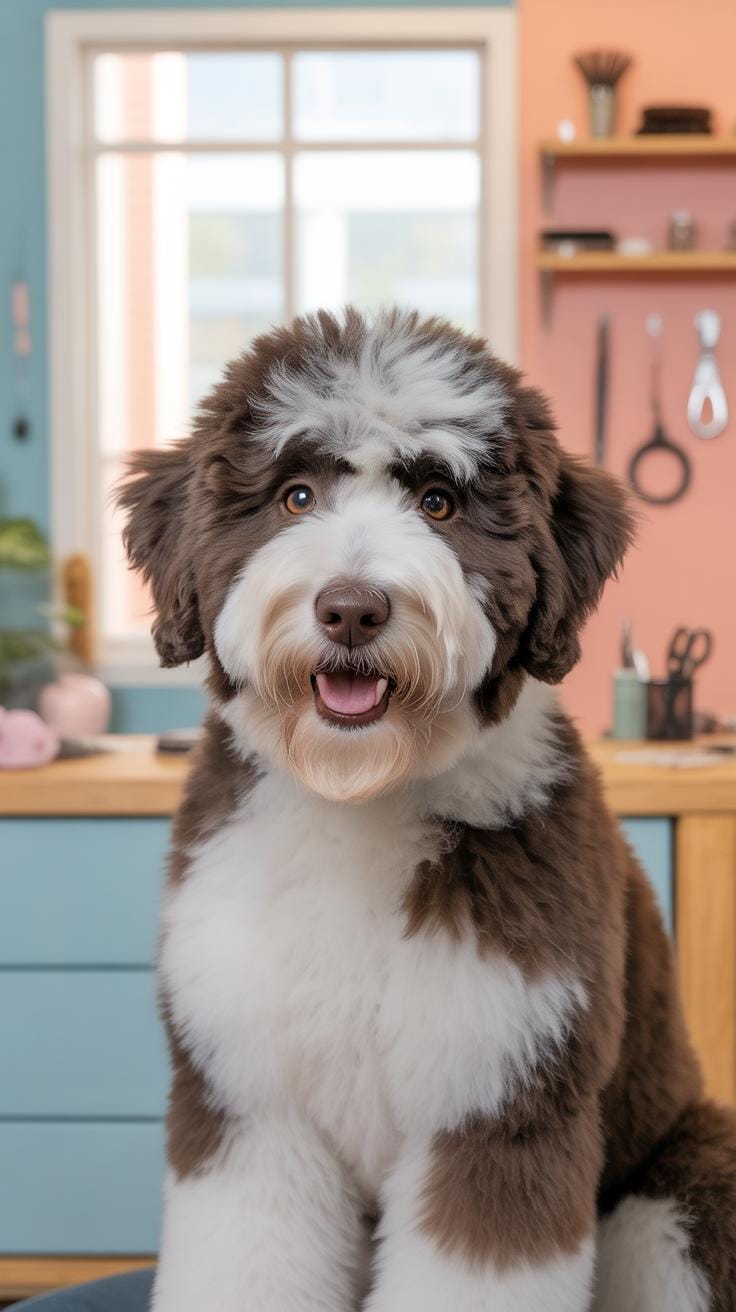
The Teddy Bear cut focuses on a rounded facial appearance to mimic a stuffed animal. Groomers leave the hair on the head and face longer while scissoring it into a circular shape. They typically trim the body hair to a length of one to two inches. This style requires significant hand-scissoring skills to achieve the signature soft look. Owners choose this cut to maintain the classic doodle aesthetic.
This cut demands high maintenance and daily brushing to prevent mats. Long facial hair traps food particles and moisture, leading to staining or odors if neglected. You must schedule professional grooming every six weeks to keep the shape. If you miss a brushing session, the long hair will tangle quickly. High-density coats require specific metal combs to reach the skin. This aesthetic choice trade-offs ease for visual appeal.
The Puppy Cut And Summer Clip: Low Maintenance Sheepadoodle Haircuts
The Puppy Cut uses a single blade length across the entire body. Groomers usually clip the hair to one inch or shorter from the neck to the tail. This uniform length simplifies home maintenance and reduces the time spent on daily brushing. It removes the bulk of the Old English Sheepdog influence while retaining Poodle utility. Most owners find this the most tactical choice for active dogs.
The Summer Clip is a shorter variation designed for heat management and skin health. Groomers take the coat down to less than half an inch to prevent overheating in warm climates. This short length allows you to spot ticks or skin irritations immediately. It effectively eliminates the risk of severe matting during outdoor activities. Use this cut if your dog swims frequently or spends significant time in brush.
Doodle Grooming DIY What You Can Safely Do At Home
Essential Tools For A Successful Doodle Grooming DIY Session
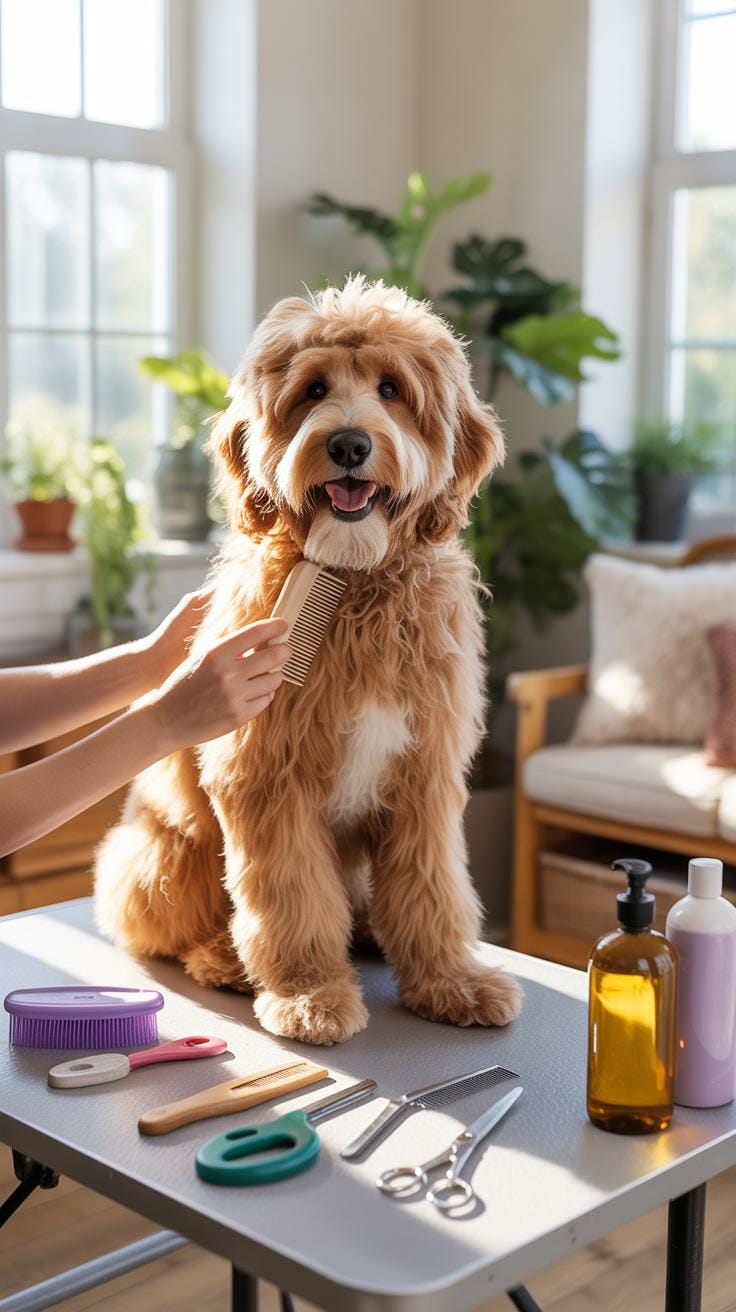
Maintaining a Sheepadoodle requires specific professional grade equipment to manage the thick double coat. Standard brushes for short hair dogs will not work here. You need tools that reach the skin to prevent painful matting. Quality steel and firm pins ensure you remove loose hair before it creates knots. Investing in the right gear saves money on emergency shave downs at the groomer.
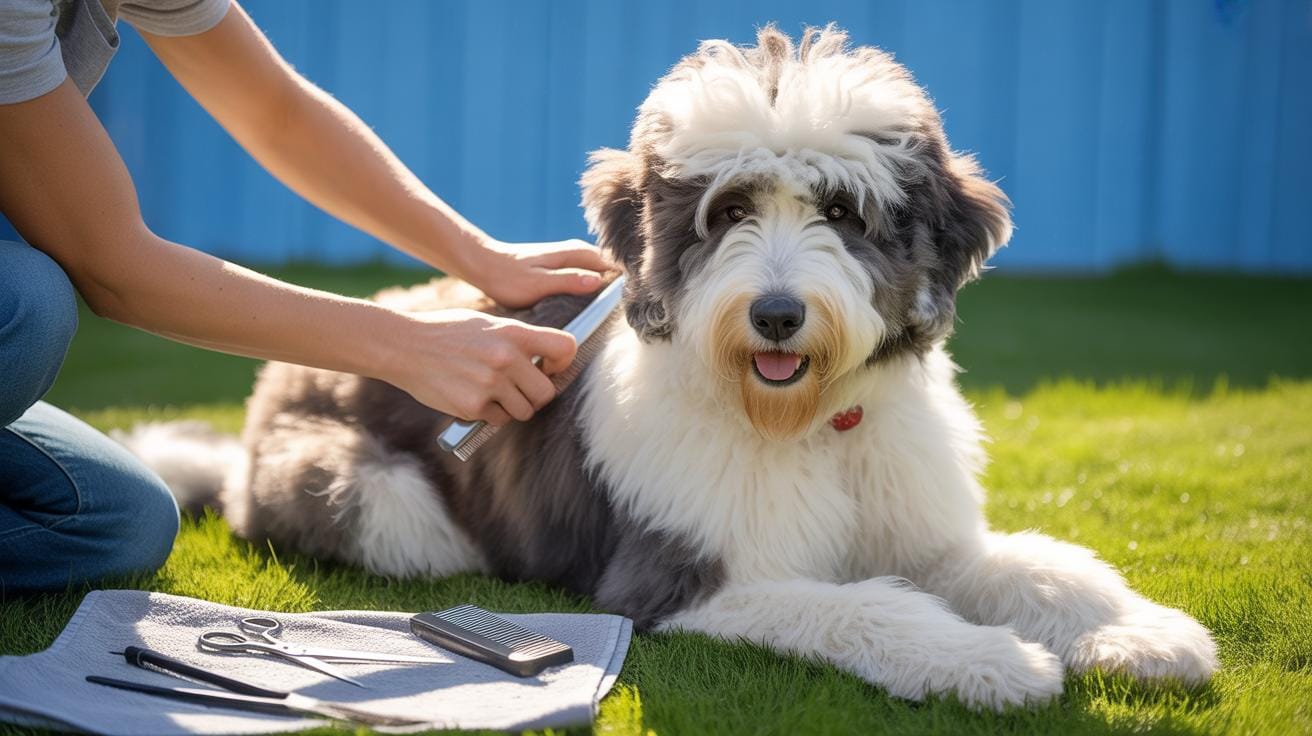
- Long Pin Slicker Brush: This tool is the foundation of your kit. The long pins penetrate deep into the dense Poodle and Old English Sheepdog mix coat. It breaks up surface tangles and removes trapped dross. Use a firm pad version to handle thick hair without bending the pins.
- Steel Greyhound Comb: A metal comb acts as your primary diagnostic tool. After brushing, run this comb through the coat from the skin outward. If the teeth snag, a mat is forming. It provides a foolproof way to verify that you have cleared the hair all the way to the base.
- Dematting Rake: This tool features sharpened blades designed to cut through stubborn knots. Use it sparingly on localized tangles that a slicker brush cannot resolve. It prevents the need to cut holes in the coat with scissors. Always hold the hair at the root to avoid pulling the skin.
- Blunt Tip Safety Scissors: Use these for quick trims around the eyes and paw pads. The rounded tips prevent accidental puncture wounds if the dog moves suddenly. This is critical for maintaining hygiene between professional visits. Focus only on areas where hair blocks vision or collects debris from the ground.
- High Velocity Dryer: Air drying a Sheepadoodle leads to coat compaction and matting. A high velocity dryer forces water out of the coat while straightening the hair fibers. This prevents the curly Poodle influence from shrinking and tangling as it dries. It also blows out loose dander and dust.
Keep your tools clean and sharp to ensure they function properly. Dull blades or bent pins pull the hair and cause the dog physical discomfort. Sanitize your brushes regularly to prevent skin irritations or fungal growth. Proper tool maintenance extends the life of your equipment and protects your dog. A well organized kit makes the grooming process faster and more efficient for everyone.
Brushing Techniques That Prevent Matting Between Grooming Appointments
Line brushing is the only effective method for a Sheepadoodle. You must work in small sections by pulling the hair up and brushing downward toward the skin. This technique ensures you do not just skim the surface. Most owners make the mistake of brushing only the top layer. This leaves a thick layer of felted hair against the skin that requires a total shave.
Consistency matters more than duration. You should brush high friction areas every day to stop mats before they start. Focus on the armpits, behind the ears, and where the collar sits. These spots rub constantly and tangle fast. Move the dog through a full body session at least three times a week. Frequent sessions keep the hair manageable and keep the dog calm during the process.
Sheepadoodle Puppy Grooming Styles Starting Your Dog Off Right
When To Schedule Your Sheepadoodle’S First Grooming Appointment
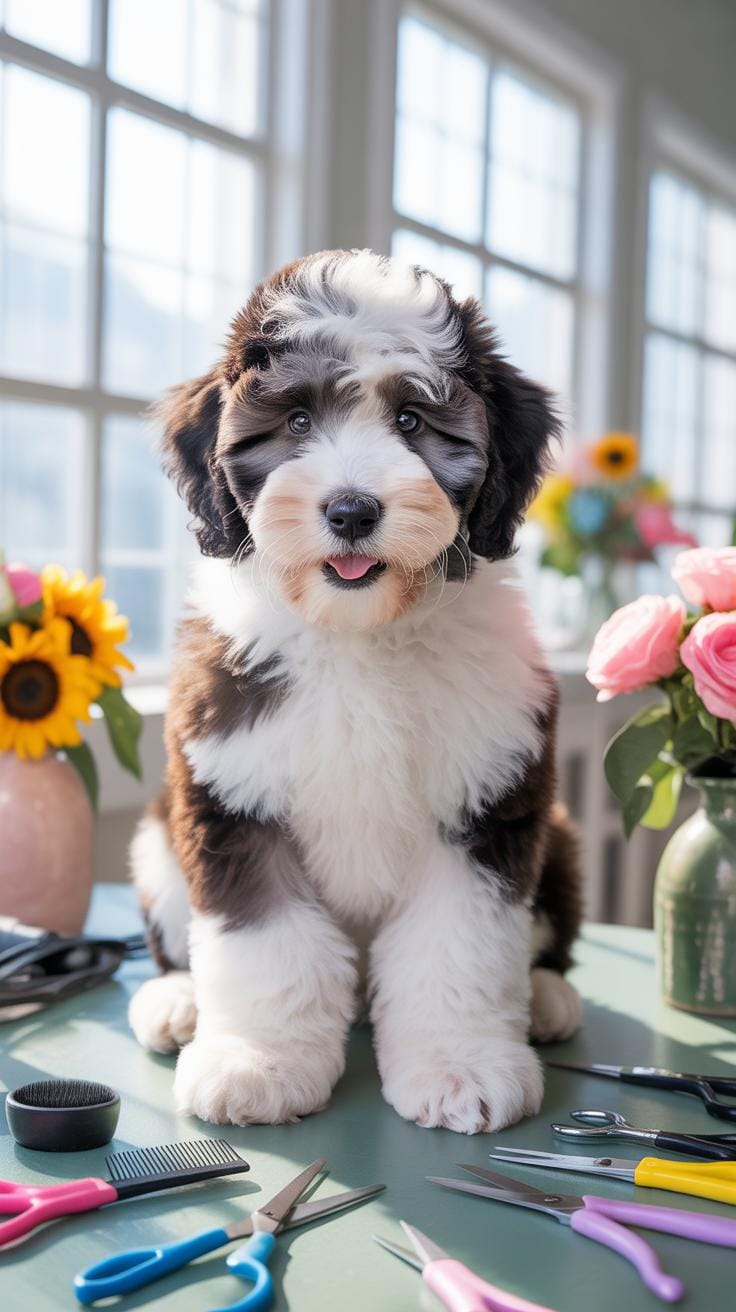
Schedule the first professional grooming session once the puppy receives all core vaccinations. This usually occurs between twelve and sixteen weeks of age. Early exposure prevents future anxiety and aggression during handling. Waiting too long allows the thick coat to mat near the skin. Professionals call this initial visit a puppy trim or a bath and brush. It introduces the dog to loud noises.
The first visit focuses on desensitization rather than a full haircut. The groomer handles the paws and ears to build trust. They use clippers near the face to get the dog used to vibrations. Consistent early visits establish a predictable sheepadoodle grooming schedule for the rest of its life. Short sessions prevent the puppy from becoming overwhelmed. High quality breeders often start this process before you take the dog home.
Gentle Puppy Grooming Styles That Protect Sensitive Skin And Soft Coats
The teddy bear cut is the standard choice for young Sheepadoodles. This style keeps the hair at a uniform length of one to two inches. It maintains the soft puppy texture while preventing tangles. Shaving a puppy too close can damage the developing coat and irritate thin skin. This length provides enough protection against sun and cold. It also allows for easier daily brushing at home.
Focus on the sanitary trim and face clearing during the first few months. Groomers trim the hair around the eyes so the dog can see clearly. They also clear the paw pads to prevent slipping on hard floors. These targeted trims keep the puppy clean without the stress of a full body shave. Keeping the coat manageable early on ensures the adult coat grows in healthy. Consistent maintenance prevents painful skin pulling from heavy mats.
Sheepadoodle Puppy Training For Grooming Tolerance Building Good Habits Early
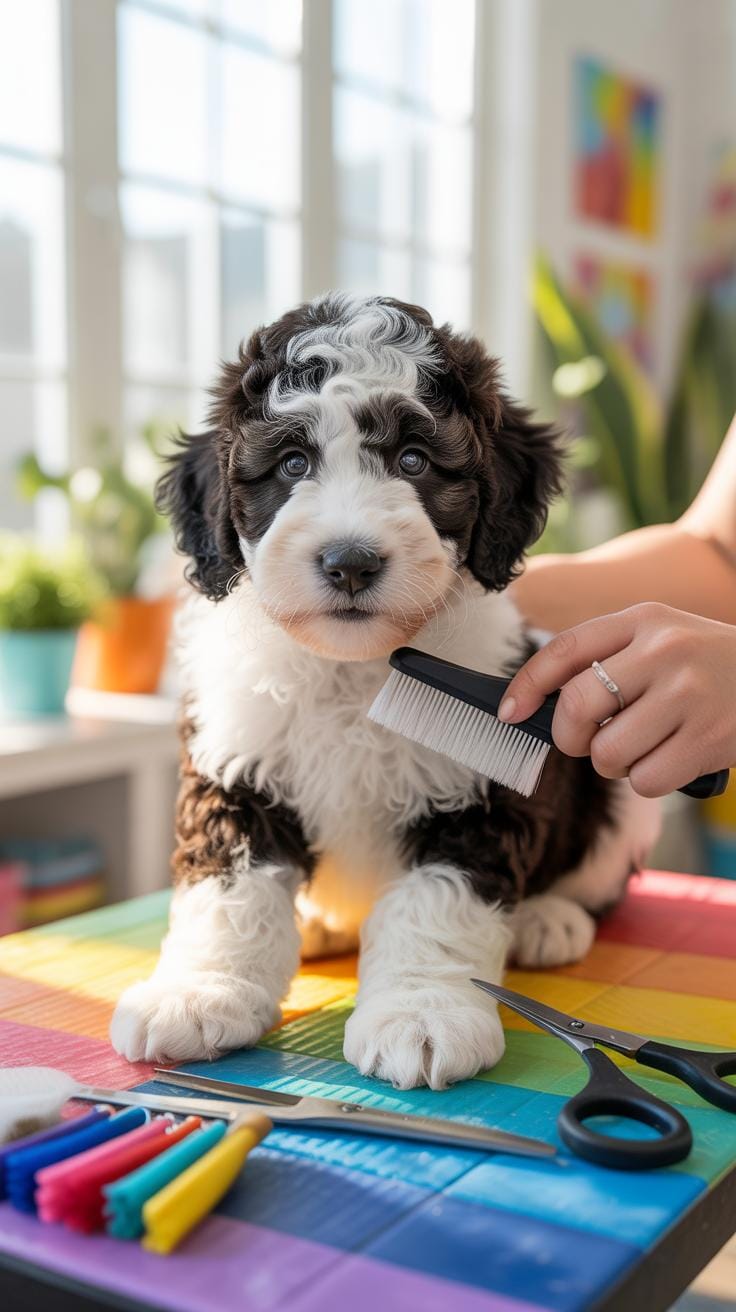
How To Desensitize Your Puppy To Brushes, Clippers, And Bath Time
Start handling your puppy immediately after they arrive home. Touch their paws, ears, and tail daily to mimic professional handling. Introduce the brush during calm periods when the dog is relaxed. Run the back of an electric clipper against their coat without turning it on first. Gradually increase exposure to the vibration and noise. This process prevents future fear responses during professional grooming sessions.
Introduce water and bath environments with no pressure. Place the puppy in a dry tub and offer high-value rewards. Slowly add lukewarm water to their feet. Keep sessions under five minutes to avoid overstimulation. Repeat these movements until the puppy shows no signs of stress or avoidance. Systematic desensitization ensures the dog remains still when the groomer uses sharp tools near their skin.
Positive Reinforcement Strategies That Make Grooming Stress Free
Use high-value treats to create a positive association with grooming tools. Reward the puppy every time they interact with a brush or comb. Timing is critical for effective reinforcement. Deliver the reward the exact moment the puppy accepts a touch or a sound. This builds a mental link between grooming and pleasant outcomes. Consistency dictates how quickly the dog develops tolerance for maintenance.

Establish a clear verbal cue to signal the start and end of grooming. Stop the session if the puppy becomes overly agitated or mouthy. Never pull the coat or force a terrified animal into compliance. Forcing the process creates a negative memory that leads to aggression or anxiety. Keep your movements deliberate and your energy calm. Success depends on small, incremental wins that prioritize the comfort of the animal.
Golden Doodle Grooming Tips That Translate Perfectly To Sheepadoodles
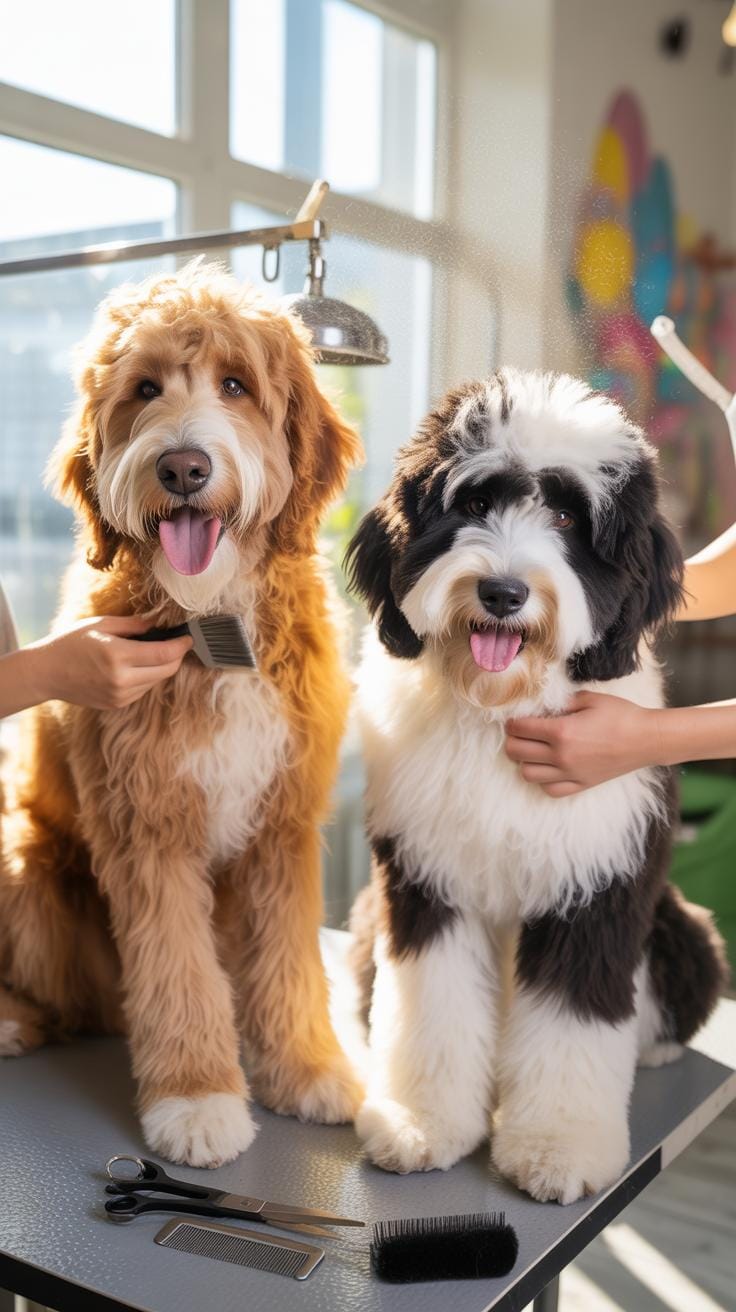
Shared Coat Traits Between Goldendoodles And Sheepadoodles And What That Means For Care
Both breeds share the poodle gene. This creates a non-shedding coat that grows constantly. These dogs do not lose hair like traditional breeds. Instead, dead hair traps against the skin. This leads to painful matting if you do not brush them. You must treat the sheepadoodle coat like wool or human hair. Regular maintenance is the only way to prevent total shaving.
The coat texture ranges from wavy to tightly curled. Curly coats trap more debris and dander. Goldendoodle owners have perfected the line-brushing technique to manage this growth. You should apply this same method to your sheepadoodle. Always reach the skin with your brush. If you only touch the top layer, mats will form underneath. Consistent care keeps the coat manageable and prevents skin infections caused by trapped moisture.
Bathing, Drying, And Detangling Tips Borrowed From The Doodle Community
Never bathe a sheepadoodle before removing all mats. Water shrinks hair knots and makes them impossible to remove. This is a common mistake that leads to forced shaving. Use a high-quality detangling spray before you start brushing. This reduces friction and prevents hair breakage. Goldendoodle experts recommend using a slicker brush and a metal comb. These tools work through the thickest coat layers efficiently.
Drying the dog is the most critical step. Air drying causes the hair to frizz and tangle immediately. Use a high-velocity dryer to blow water out of the coat. This tool also straightens the hair as it dries. Straight hair is much harder to mat than curly hair. Practice this routine every four to six weeks. Proper drying saves hours of work during your next grooming session.
Seasonal Sheepadoodle Groom Adjustments Adapting Your Schedule Year Round
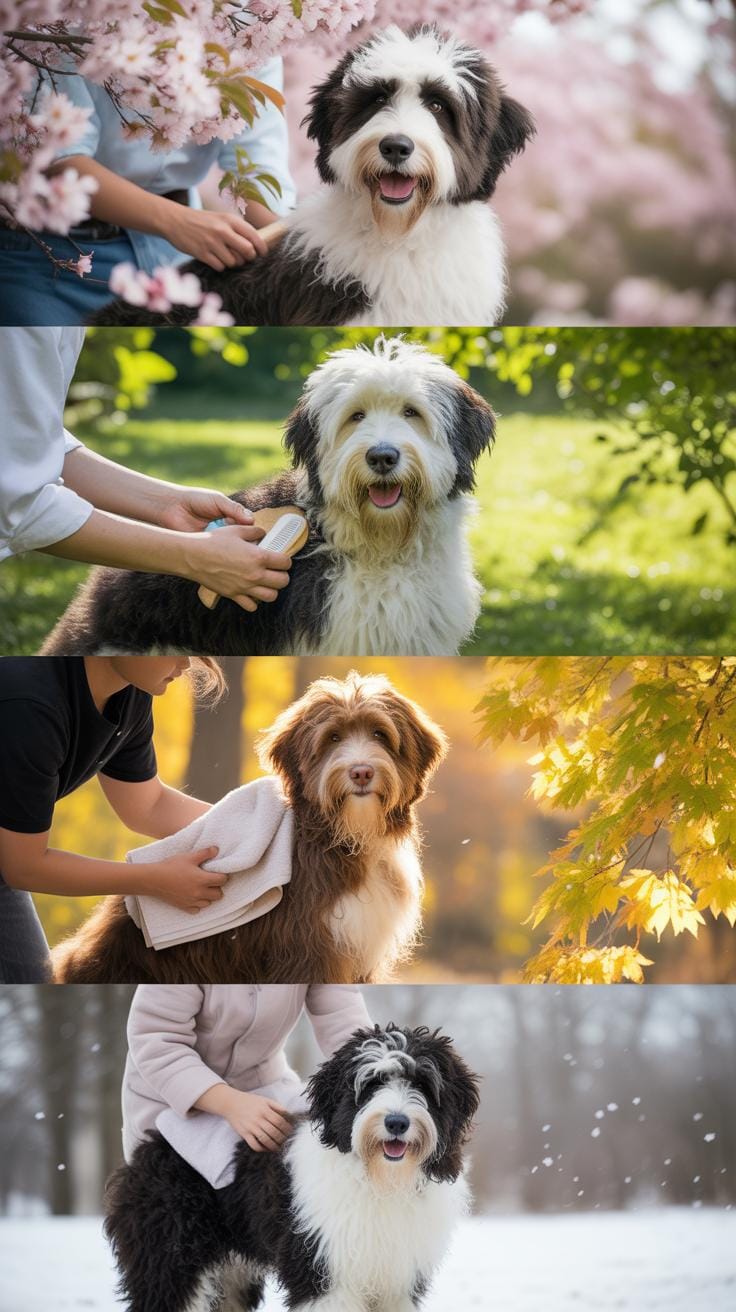
Summer Vs. Winter Grooming Needs: How The Seasons Change Your Approach
Temperature shifts dictate coat length and maintenance frequency. In summer, the danger is heat stroke. These dogs have thick hair from their Poodle and Sheepdog ancestors. You must clip the coat shorter to aid cooling. Aim for a one-inch length every six weeks. Monitor the skin for sunburn if you go shorter. UV rays penetrate thin hair and damage the skin quickly.
Winter requires a different strategy to prevent hypothermia and matting. Damp conditions from snow or rain cause the hair to clump. Long hair traps moisture against the skin and leads to infections. Keep the coat longer for warmth but increase brushing to daily sessions. Focus on the paws and legs. Dried mud and ice balls create painful tangles that require professional extraction later.
Signs Your Sheepadoodle’S Coat Is Telling You It Needs Immediate Attention
Physical indicators signal when you must break the regular schedule. Check for skin redness or a foul odor coming from the fur. These signs often mean moisture is trapped near the base of the hair. Matting acts like a sponge for bacteria. If you cannot slide a metal comb through the hair to the skin, the coat is already compromised.
Frequent scratching or biting at the skin indicates discomfort or pests. Tangles pull on the skin every time the dog moves. This tension causes irritation and bruising over time. Do not wait for the next scheduled appointment if you see these signs. Immediate intervention prevents the need for a total shave. Addressing small issues now preserves the coat and protects the health of the dog.
Frequently Asked Questions

How often does a Sheepadoodle actually need to be groomed?
Because Sheepadoodles inherit a thick, wavy, or curly coat from their Poodle and Old English Sheepdog parents, consistency is key. At a minimum, you should maintain a professional sheepadoodle grooming schedule every six to eight weeks. This interval prevents painful matting and keeps their hair at a manageable length. Between these appointments, daily brushing at home is essential to manage shedding and keep their unique black-and-white coats looking fluffy and healthy.
What is the best way to maintain my Sheepadoodles coat between professional appointments?
To keep your pup comfortable, establish a home routine that complements your sheepadoodle grooming schedule. Use a high-quality slicker brush and a metal comb to perform “line brushing,” ensuring you reach the skin where mats typically form. Focus on high-friction areas like the ears, armpits, and paws. Consistent brushing three to five times a week will significantly reduce the time and cost spent during your visits to the professional groomer.
Is professional grooming expensive, and can I groom my Sheepadoodle at home to save money?
Professional grooming for large, high-maintenance breeds like Sheepadoodles can be costly, often ranging from $80 to $150 per session. While you can perform basic trims and baths at home to save money, it requires a significant investment in specialized clippers, shears, and a high-velocity dryer. Most owners find that a hybrid approach—handling baths at home but sticking to a professional sheepadoodle grooming schedule for haircuts—is the most budget-friendly balance.