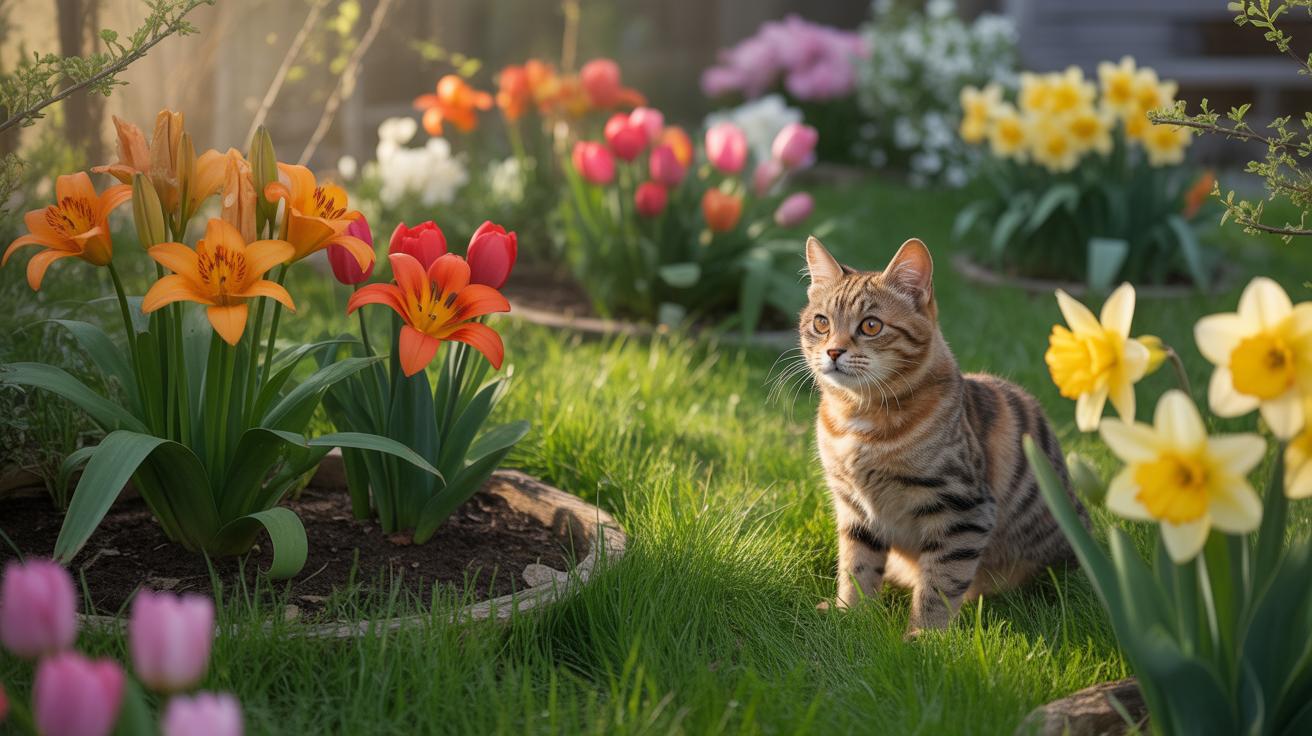
Why Spring Is The Most Dangerous Season For Toxic Plants For Cats
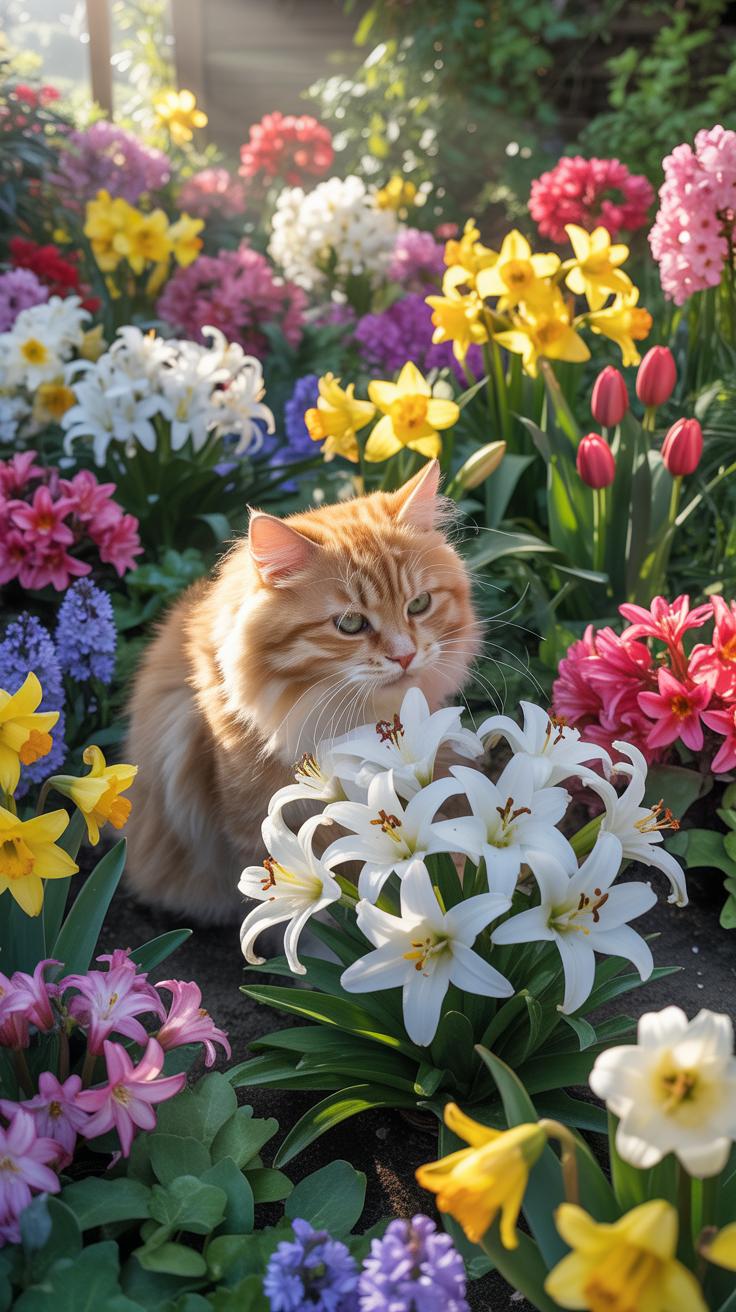
The Seasonal Surge Of Hazardous Plants Indoors And Outdoors
Spring brings a massive influx of toxic vegetation into domestic spaces. Gardeners plant bulbs like tulips and hyacinths that contain high concentrations of allergenic lactones. Inside the home, Easter traditions lead to a spike in lily sales. Lilies represent the highest risk level for feline kidney failure. Warm weather also encourages homeowners to refresh indoor decor with potted plants that often carry hidden chemical risks.
Outdoor cats face increased threats as dormant plants resume active growth cycles. New shoots and buds often contain higher toxin levels than mature leaves. Pet owners frequently apply fertilizers and pesticides during this period. These chemicals cling to plant surfaces and increase the overall toxicity of the garden. The combination of rapid plant growth and high chemical use makes the spring environment a primary source of emergency veterinary visits.
How Cats Are Exposed To Toxic Spring Plants And Flowers
Cats explore their environment using their mouths and paws. Indoor cats often chew on greenery out of boredom or a natural drive for roughage. When a cat bites a toxic stem, it releases sap or oils directly into the mouth. Some plants like lilies shed toxic pollen. This powder lands on the fur. Cats then ingest the poison while grooming. This accidental ingestion happens quickly and without warning.
Outdoor exposure occurs through direct contact with soil and ornamental beds. Cats walk through gardens where toxic bulbs grow. They lick their paws to stay clean. This behavior transfers concentrated toxins from the ground into the digestive system. Many cats also drink water from flower vases or outdoor runoff. This water frequently contains leached toxins from stems or fertilizers. Owners must realize that even small exposures lead to severe organ damage.

Toxic Flowers For Cats That Are Common In Spring Gardens
Lilies: The Most Lethal Spring Flower For Cats
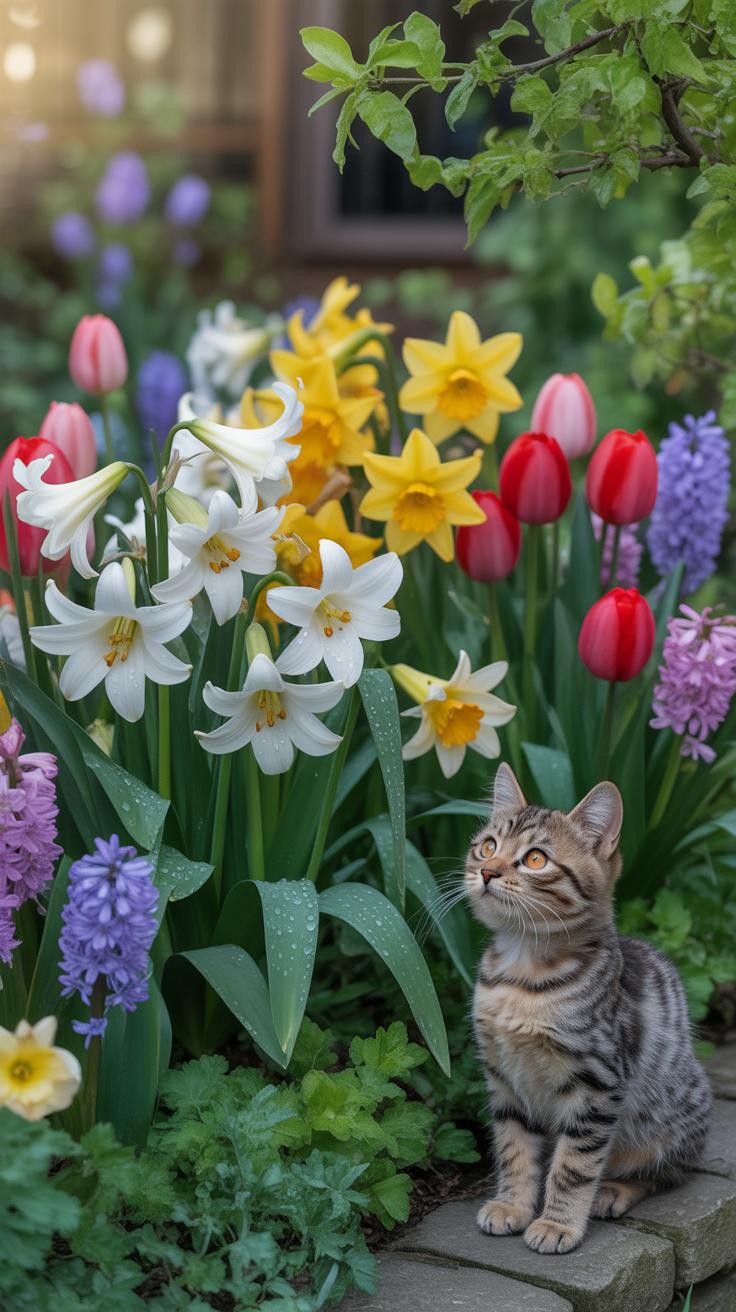
True lilies from the Lilium and Hemerocallis genera cause total kidney failure in cats. Even small exposures lead to death within days. Every part of the plant is poisonous. This includes the petals, leaves, stems, and pollen. Cats often ingest the pollen while grooming themselves. Drinking the water from a vase of lilies is enough to trigger a fatal reaction in most felines.
Prompt medical treatment is the only way to save a poisoned cat. Owners must act within eighteen hours of exposure. After this window, the damage to the kidneys becomes irreversible. Early signs of poisoning include vomiting, drooling, and loss of appetite. Dehydration and increased thirst follow quickly as the organs shut down. Do not keep these plants in a home with cats.
Tulips And Daffodils: Beautiful Blooms With Hidden Dangers
Tulips and daffodils contain allergenic lactones and alkaloids that irritate the digestive system. The highest concentration of these toxins sits in the bulbs. Cats that dig up and chew on the bulbs face the most risk. Ingestion causes intense drooling, nausea, and diarrhea. Large amounts lead to more severe issues like increased heart rate and gasping for breath.

Daffodils also contain lycorine, which triggers strong vomiting after consumption. The crystals in the outer layers of the bulbs cause tissue damage in the mouth and throat. While these flowers are less likely to cause death than lilies, they cause extreme pain and cardiac distress. Keep garden beds secure or choose safer alternatives to prevent accidental poisoning during the spring season.
Toxic Plants For Cats Found In Spring Indoor Arrangements And Bouquets
Hyacinths And Narcissus: Fragrant But Harmful To Your Cat
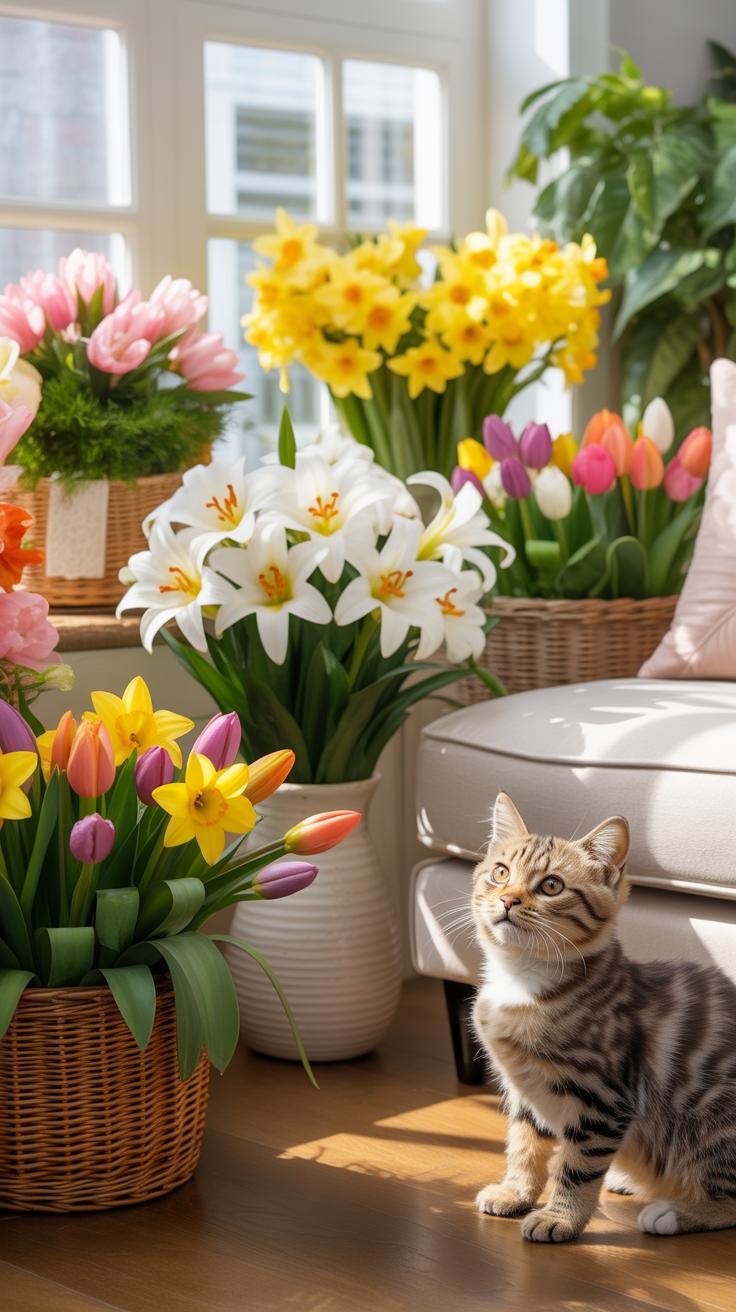
Hyacinths and narcissus species, like daffodils, contain allergenic lactones and toxic alkaloids. These plants concentrate their highest toxin levels in the bulbs. Cats that chew on these flowers or dig up bulbs face immediate oral irritation. This contact triggers profuse drooling and vomiting. Severe cases lead to cardiac arrhythmias or respiratory distress. You must keep these common spring stems out of reach.
Narcissus plants specifically contain lycorine, a potent crystalline alkaloid. This substance triggers the vomiting center in the brain quickly after ingestion. Beyond stomach upset, it causes a dangerous drop in blood pressure. Many floral arrangements feature these stems for their scent and color. Pet owners often overlook the danger in the water itself. Contaminated vase water also holds enough toxins to poison a cat.
Irises And Amaryllis: Spring Bouquet Staples That Threaten Feline Health
Irises contain the toxin irisin, mostly found in the underground rhizomes and stems. Feline contact with these popular bouquet fillers causes significant tissue irritation. Typical symptoms include abdominal pain and bloody diarrhea. While rarely fatal, the physical toll on a cat is high. Gardeners and cat owners should prioritize safety by selecting non-toxic alternatives. Do not assume a plant is safe because it is common.

Amaryllis bulbs are a staple in early spring indoor displays. These plants contain phenanthridine alkaloids that cause tremors and seizures in cats. Ingestion often leads to a rapid decline in feline health. The plant acts as a purgative, causing extreme gastrointestinal distress. Rapid medical intervention is necessary if a cat consumes any part of the flower or bulb. Remove these plants to ensure a safe home environment.
Recognizing The Symptoms Of Plant Poisoning In Cats
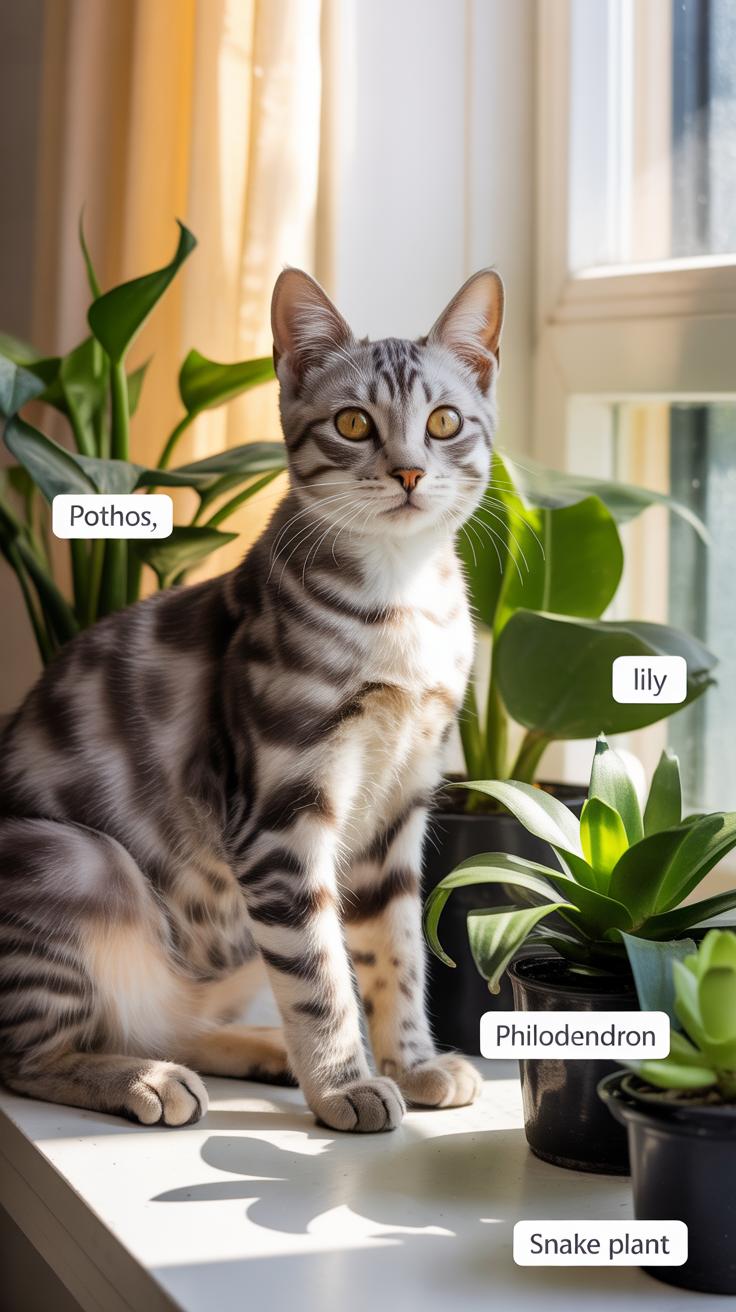
Early Warning Signs Your Cat Has Ingested A Toxic Spring Plant
Cats hide pain through natural instinct. You must monitor their physical behavior closely after they interact with spring greenery. Early symptoms often manifest as gastrointestinal distress or neurological shifts. Watch for sudden changes in appetite or unusual hiding patterns. These signs indicate the body is reacting to foreign toxins. Immediate identification prevents the poison from reaching the bloodstream or vital organs like the kidneys.
- Excessive Salivation: Ingesting irritating sap or crystals causes immediate oral discomfort. The cat will drool heavily as a reflex to flush the mouth. This often happens seconds after the cat bites into stems or leaves from lilies or tulips.
- Vomiting and Diarrhea: The digestive system attempts to expel toxic material rapidly. Check vomit for plant fragments to identify the source. Severe dehydration follows quickly if these symptoms persist. This reaction is common with most spring bulbs like daffodils and hyacinths.
- Lethargy: Toxins can depress the central nervous system or disrupt metabolic functions. A normally active cat becomes weak or unresponsive. This sign signals that the poison is affecting the internal systems beyond the stomach. It requires urgent attention to prevent organ failure.
- Oral Redness: Look for swelling or irritation on the gums and tongue. Pathogenic compounds in plants like Peace Lilies cause localized inflammation. The cat may paw at its mouth or struggle to swallow. This indicates chemical burns or severe mechanical irritation from the plant.
- Cardiac Irregularities: Certain plants like Lily of the Valley contain glycosides that affect heart rhythm. You may notice rapid breathing or a racing pulse. These symptoms are life-threatening and show the toxin is interfering with the electrical signals of the heart.
Behavioral changes provide critical clues for diagnosis. A cat might stop grooming or show sensitivity when you touch its abdomen. Do not wait for every symptom to appear before taking action. Even mild drooling warrants a thorough mouth inspection. Keep a sample of the suspected plant to help the veterinarian choose the correct treatment path. Early detection significantly increases the survival rate.
When To Seek Emergency Veterinary Care After Plant Exposure
Time is the most critical factor in treating feline poisoning. You must call a veterinarian immediately if you see your cat eating a known toxic plant. Do not wait for physical symptoms to develop. Some toxins like lily pollen cause irreversible kidney failure within hours. Rapid intervention through induced vomiting or activated charcoal can save the life of the animal.

Emergency care is mandatory if the cat collapses or has seizures. These signs indicate severe neurological damage or advanced organ distress. If the cat stops urinating, the kidneys have likely failed. Take the plant or a photo of it to the clinic. Professionals need to know the specific toxin to administer the correct antidote or supportive care. Do not attempt home remedies.
Safe House Plants And Cat Friendly Plants To Choose This Spring
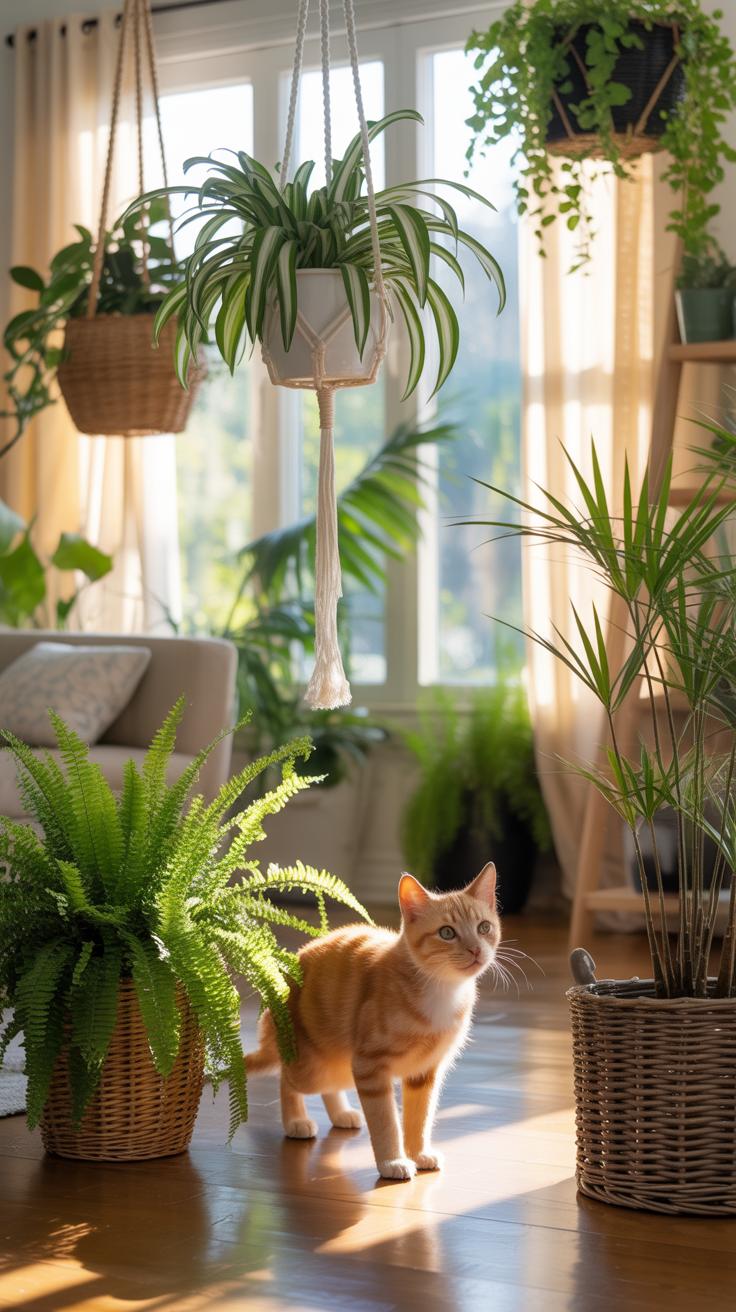
Top Non Toxic Flowering Plants That Are Safe For Cats Indoors
Spring brings a desire for color, but most common bulbs like lilies and tulips can kill cats. You must select species that the ASPCA confirms as non-toxic. These plants offer vibrant blooms without the risk of systemic poisoning or organ failure. Selection requires verifying the scientific name to avoid confusion with toxic lookalikes. Always confirm the plant genus before finalizing your purchase.
- African Violets: These compact plants bloom in various colors and thrive in indirect light. They contain no toxins harmful to feline systems. You can place them on low tables without worrying about accidental ingestion or skin contact reactions.
- Gloxinia: This Brazilian native provides large, bell-shaped flowers during the spring months. It serves as a safe substitute for toxic florist plants like azaleas. All parts of the plant, including leaves and stems, are entirely safe for your cat to touch.
- Orchids: Most common varieties like Phalaenopsis are safe for households with pets. They offer a sophisticated aesthetic without the heart-stopping risk of lilies. These plants require specific humidity but pose zero chemical threat to curious cats who might chew the petals.
- Christmas Cactus: Despite the name, this plant can bloom in spring and is non-toxic to cats and dogs. It lacks the sharp spines found on desert cacti that cause physical injury. It provides a safe, trailing green element for high shelves or hanging baskets.
- Gerbera Daisy: These bright flowers are safe alternatives to toxic daisies or chrysanthemums. They add intense spring color to any room while remaining chemically inert for felines. Ensure you buy them from organic sources to avoid any heavy pesticide residue on the leaves.
Smart owners prioritize these specific varieties to maintain a lively indoor environment. While these plants are non-toxic, ingestion can still cause mild stomach upset from fiber intake. Position your plants to minimize direct access, even when they are safe. This strategy prevents your cat from developing a habit of eating any greenery. Maintain a clear distinction between cat grass and decorative floral displays.
How To Create A Cat Friendly Indoor Garden Without The Risk
Strategic placement is the first line of defense in a pet-friendly home. Use heavy ceramic pots to prevent cats from tipping over your displays. Hanging planters or wall-mounted shelves keep greenery out of reach and save floor space. Use natural mulch like river stones to stop cats from digging in the soil. This prevents them from tracking dirt or accidentally eating fertilizers.

Consider growing dedicated cat grass or catnip in a separate area to satisfy grazing instincts. This redirecting tactic keeps your decorative plants intact and provides the cat with safe nutrients. Avoid using chemical pesticides or systemic tabs in the soil of any houseplant. These chemicals can leach into the water or coat the leaves. Stick to organic pest control methods like neem oil to ensure total safety.
Pet Friendly Plants Guide Building A Safe Outdoor Spring Garden

Plants Safe For Cats, Dogs, And Other Pets In Your Backyard
Successful garden design requires selecting hardy flora that lacks chemical defense mechanisms. Snapdragons and Zinnias offer vibrant spring color without the cardiothoracic or gastrointestinal risks associated with lilies or foxgloves. These species tolerate variable soil conditions and provide visual density. Homeowners can stabilize their landscape by choosing these non-toxic varieties. This strategy eliminates the risk of accidental ingestion during outdoor play sessions.
Sun-loving herbs like Rosemary and Thyme serve dual purposes in a feline-friendly garden. These plants resist common pests and withstand moderate foot traffic from roaming pets. Catnip and Catmint provide behavioral stimulation while remaining biologically safe for consumption. Research confirms these plants do not contain the alkaloids found in toxic spring bulbs. Use these species to create a lush environment that protects animal health.
Landscaping Strategies That Keep Toxic Spring Plants Away From Pets
Physical barriers prevent access to hazardous botanical zones. Use raised garden beds or tiered planters to elevate toxic spring bulbs above a cat’s reach. High-quality cedar or composite materials provide durable structures for these elevated zones. Secure the perimeter with hardware cloth or decorative fencing to discourage digging. Proper vertical placement utilizes horizontal space while keeping the ground level clear of fallen petals or seeds.

Strategic zoning separates pet activity areas from ornamental displays. Create a central “safe zone” using resilient turf or synthetic grass for exercise. Place toxic plants behind dense, thorny shrubs like Berberis to act as a natural deterrent. Use motion-activated sprinklers to keep cats away from specific garden boundaries. These tactical layers reduce the chance of contact with irritants. Effective landscaping relies on physical distance and reinforced boundaries.
Animal Safe Plants What Veterinarians Recommend For Multi Pet Households
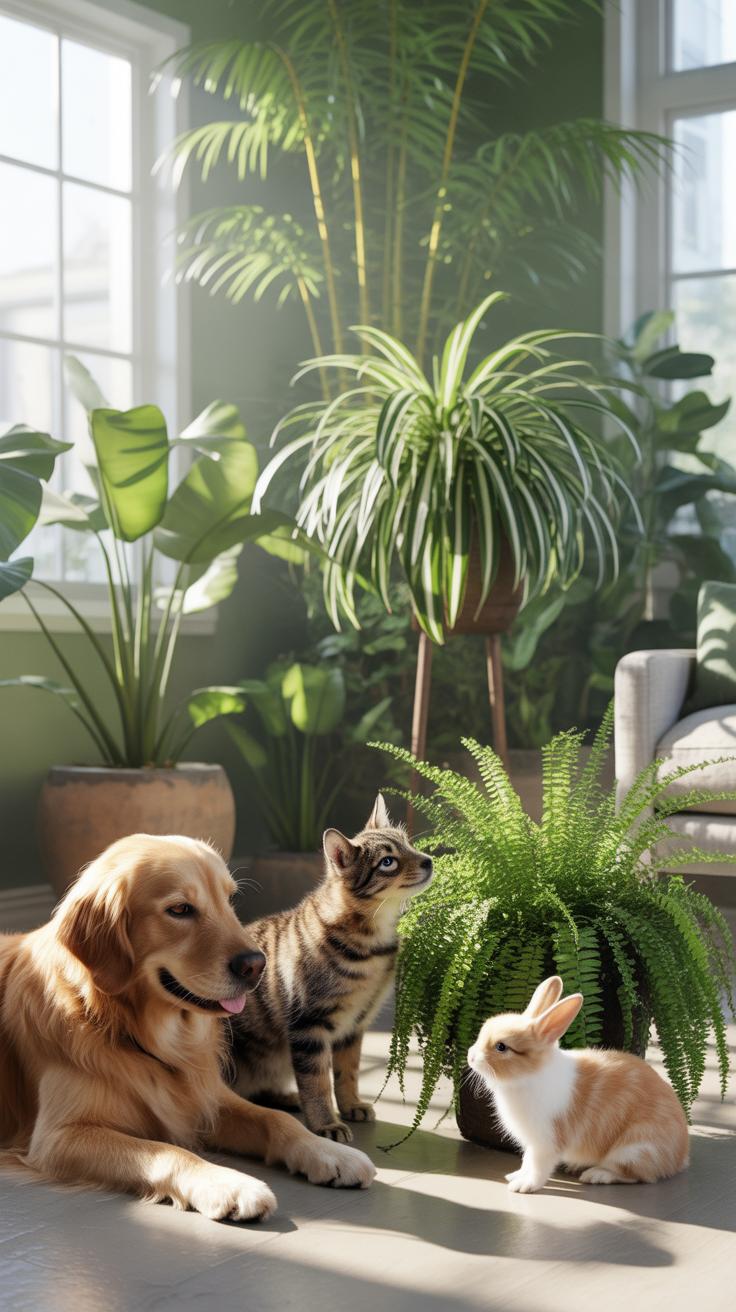
Dog Safe Plants And Cat Safe Plants That Work For Every Pet In The Home
Pet owners must select foliage that guarantees safety for both species. Many popular indoor plants pose unique risks to cats while remaining harmless to dogs or vice versa. To maintain a secure environment, you must choose plants that lack toxic alkaloids or irritating saps entirely. This crossover safety is essential for households where animals share living spaces. Strategic plant selection eliminates the risk of emergency veterinary visits.
The most resilient and safe options include the spider plant and various true ferns. These species offer lush greenery without the chemical compounds found in lilies or sago palms. You should verify the scientific name of every plant before purchase. Common names often mislead owners into buying dangerous lookalikes. Focus on species like Nephrolepis exaltata to ensure complete safety for your dogs and cats during the spring.
To nurture a garden is to protect the fragile lives within it. True love for nature means choosing blooms that keep our curious companions safe in the warming sun.
Vet Approved Tips For Selecting Non Toxic Spring Plants For All Pets
Veterinarians suggest checking the ASPCA toxic plant database before adding any new greenery to your home. You should prioritize plants that do not produce berries or heavy pollen. These biological features often cause digestive distress or allergic reactions in sensitive pets. Look for thick leaves that do not shatter easily if chewed. Physical durability reduces the chance of accidental ingestion of plant material by bored or curious animals.

Placement remains a critical factor in pet safety even with non-toxic varieties. High shelves and hanging baskets keep plants out of reach and prevent gastrointestinal upset from overconsumption. Do not use chemical fertilizers or systemic pesticides in indoor pots. These additives can turn a safe plant into a poisonous hazard if your pet nibbles the leaves. Stick to organic potting soil and natural pest control methods to protect your pets.
Practical Steps To Protect Your Cat From Spring Toxic Plants At Home

How To Cat Proof Your Home And Garden During The Spring Planting Season
Physical barriers provide the first line of defense against feline poisoning. Indoor cats require a strictly controlled environment where toxic spring bulbs like lilies and tulips remain out of reach. Place all floral arrangements on high shelves or inside glass cabinets that stay closed. Never assume a cat will avoid a plant based on its taste. Many toxic species do not trigger a natural aversion in domestic pets.
Garden safety requires a strategic layout to prevent accidental ingestion. Use wire mesh or fencing to block access to flower beds containing daffodils or hyacinths. Remove fallen petals and leaves immediately because these parts often contain high concentrations of toxins. Monitor your cat during all outdoor sessions to ensure they do not dig up bulbs. Replace toxic spring ormamentals with safe alternatives like snapdragons or zinnias to eliminate the risk.
Using The ASPCA Toxic Plant List And Other Trusted Resources To Stay Informed
Reliable data prevents medical emergencies. The ASPCA Animal Poison Control Center maintains a comprehensive database of toxic and non-toxic plants. This resource provides scientific names and specific symptoms for every entry. Use this list before purchasing any new greenery for your home. Cross-reference the database with the Pet Poison Helpline to confirm the level of toxicity. Identifying a plant correctly helps you act fast.

Instant access to expert information saves lives during a crisis. Keep the contact numbers for poison control centers typed and displayed on your refrigerator. Save these digital resources on your phone for quick reference while shopping at nurseries. Digital tools allow you to search for plants by leaf shape or flower type. Professional databases offer the most accurate guidance for pet owners. Trust these verified sources over unverified social media advice.
Frequently Asked Questions

Which common spring flowers are the most dangerous for my cat?
While many blooms emerge in March and April, the most dangerous spring toxic plants for cats are those in the Lilium family. Even a small amount of pollen or vase water from a True Lily can cause fatal kidney failure. Other popular but hazardous seasonal varieties include Tulips, Hyacinths, and Daffodils. Always double-check the species before bringing any fresh floral arrangements into a home with curious feline companions to keep them safe.
How can I identify if my cat has ingested a poisonous plant?
If you suspect your pet nibbled on spring toxic plants for cats, watch closely for sudden lethargy, vomiting, or drooling. Some toxins cause immediate oral irritation, while others affect internal organs over several hours. If you notice teeth marks on a leaf or see your cat acting uncharacteristically weak, take a photo of the plant and contact your veterinarian or an animal poison control center immediately for guidance on the next steps.
Are there any affordable, cat-friendly alternatives for spring decorating?
You can enjoy a vibrant home without spending a fortune or risking your pet’s health. Instead of expensive and risky lilies, opt for budget-friendly Gerbera daisies, Sunflowers, or Snapdragons, which are generally non-toxic to cats. Buying seeds or starter pots of cat grass and catnip is another very inexpensive way to add greenery to your space while providing a safe, designated “indoor garden” that your feline friend is actually encouraged to enjoy.