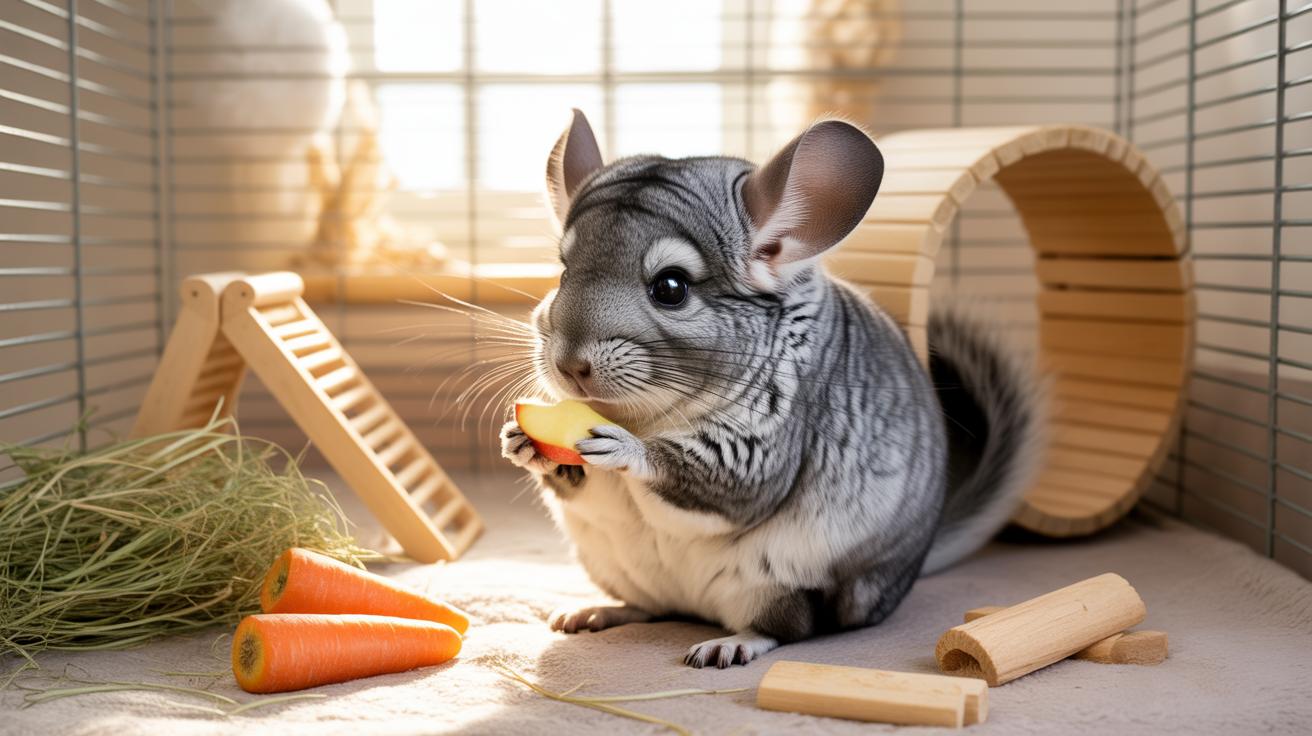
What Is A Chinchilla Understanding The Basics Of Chinchilla Care
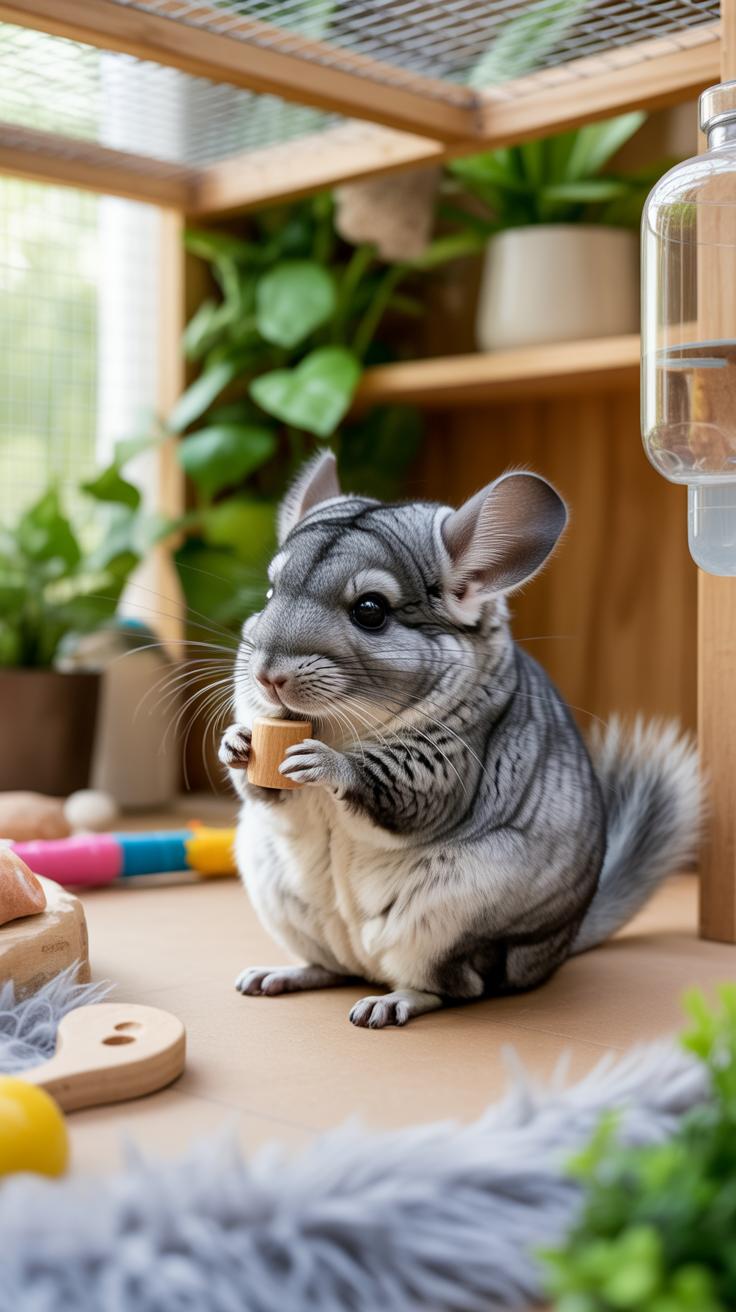
The Natural History And Origin Of Chinchillas
Chinchillas are rodents native to the Andes Mountains in South America. They live in high altitudes across Chile, Peru, Bolivia, and Argentina. These animals evolved to survive harsh, cold climates. Their thick fur is a primary adaptation for these freezing temperatures. Wild chinchillas live in large groups called herds. They seek shelter in rock crevices or underground burrows to hide from predators.
Humans once hunted these animals to near extinction for their dense pelts. Each follicle grows up to eighty separate hairs. This density prevents parasites like fleas but makes the animals sensitive to moisture. Today, two species exist: Chinchilla lanigera and Chinchilla brevicaudata. Most domestic pets are the lanigera variety. Understanding their mountain origins is vital for managing their temperature and humidity needs in your home.
Chinchilla Personality Traits And What To Expect As A New Owner
Chinchillas are crepuscular animals that are most active at dawn and dusk. They possess high energy levels and require significant space to jump and play. These rodents are often shy and take time to bond with humans. They do not enjoy being held or cuddled like dogs or cats. Owners must respect their boundaries to build trust. Consistency and patience are the best tools for socialization.
Expect a long-term commitment when you purchase a chinchilla. These pets live up to twenty years with proper care. They have sensitive digestive systems and require a strict diet of hay and pellets. Their environment must stay cool to prevent heatstroke. You will deal with dust and hay daily. If you want a low-maintenance or cuddly pet, a chinchilla is the wrong choice for your household.

Setting Up The Perfect Home A Beginner Chinchilla Care Guide To Housing
Choosing The Right Cage Size And Material For Your Chinchilla
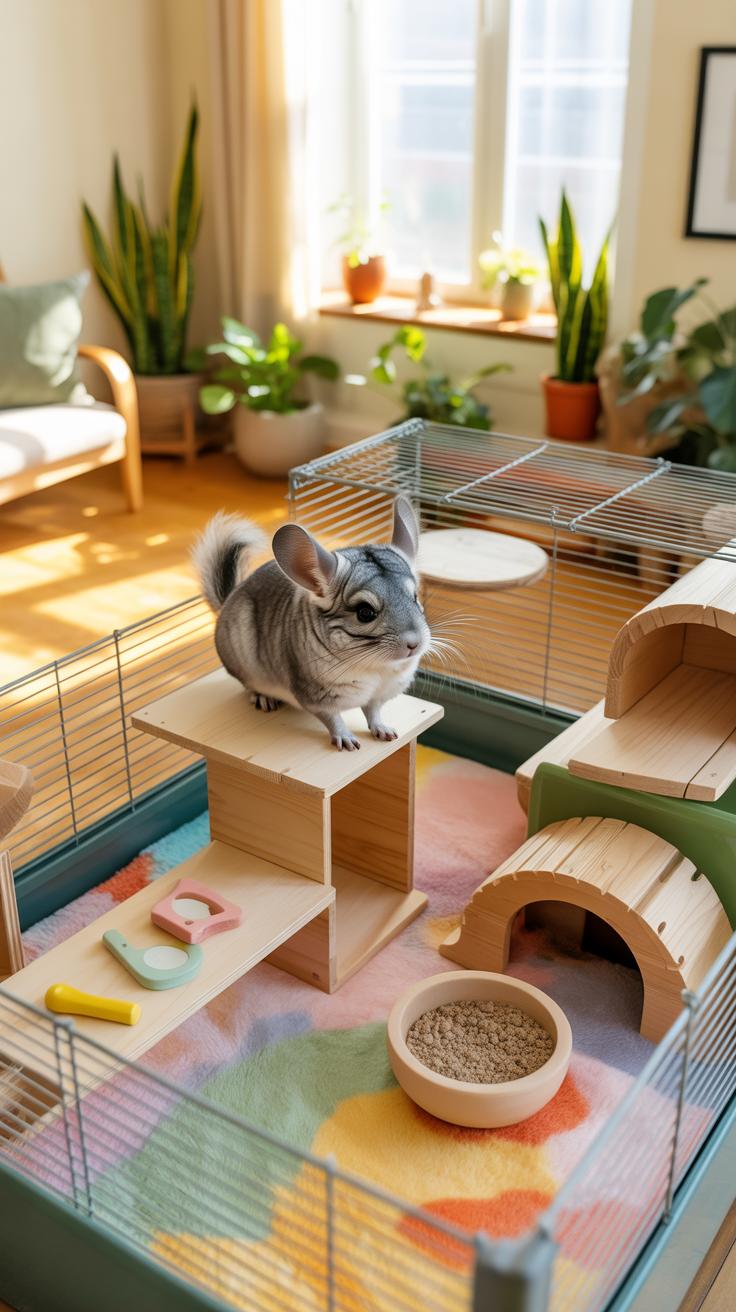
Chinchillas require vertical space to satisfy their natural jumping instincts. A single adult needs a cage at least three feet tall and two feet wide. You must use metal construction like powder coated wire. Plastic is dangerous because these rodents chew through it rapidly. Ingested plastic causes fatal intestinal blockages. Ensure the bar spacing is no wider than one half inch to prevent escapes or head injuries.
Select a cage with a solid metal floor rather than wire mesh. Constant pressure from wire floors causes ulcerative pododermatitis or bumblefoot. This painful condition leads to infections and costly vet visits. Avoid wood frames as they absorb urine and harbor bacteria. Metal surfaces allow for thorough disinfection and withstand aggressive chewing behaviors. Prioritize durability and ventilation over aesthetic designs to ensure long term animal health and safety.
How To Arrange And Enrich Your Chinchilla’S Living Space
Strategic interior layout prevents injury and reduces stress. Install kiln dried pine or granite ledges at varying heights to encourage exercise. Use solid ramps if you include levels to protect delicate limbs. Provide a wooden nesting box in a high corner where the animal feels secure. Chinchillas are prey animals and require a dark retreat to sleep during daylight hours. High spots mimic their natural rocky mountain habitats.
Control the environmental temperature strictly between sixty and seventy degrees Fahrenheit. Chinchillas have dense fur and cannot sweat. Overheating kills them quickly. Place the cage away from direct sunlight and drafty vents. Use paper based bedding or fleece liners on the solid floor. Avoid cedar or aromatic wood shavings because the oils irritate their respiratory systems. Proper placement and safe materials ensure a functional and healthy living environment.
Chinchilla Needs List Everything Required Before Bringing Your Pet Home
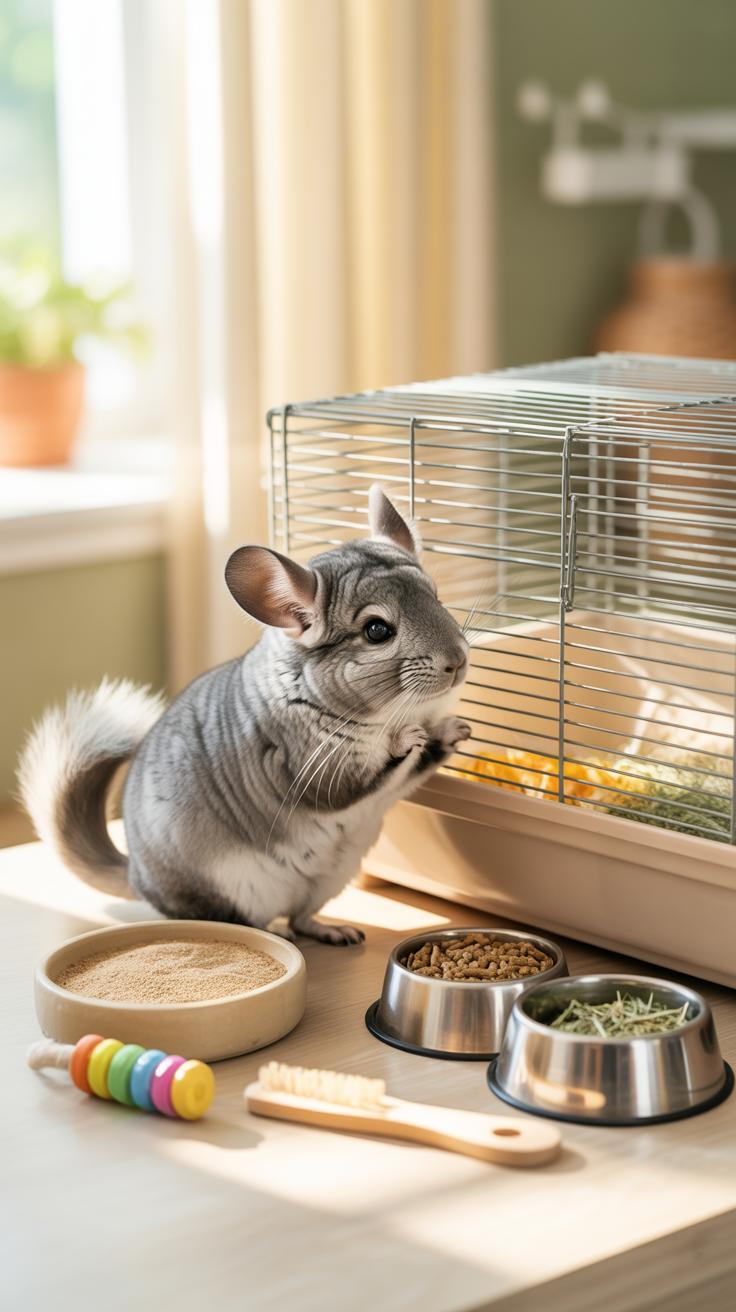
Essential Supplies Every New Chinchilla Owner Must Have Ready
You must prepare your home before the animal arrives to prevent stress and injury. Chinchillas have specialized biological needs rooted in their high-altitude Andean origins. They require specific equipment to manage their dense fur and sensitive digestive tracts. Failure to provide these items immediately results in rapid health decline. You must prioritize high-quality metal and wood over plastic materials to ensure safety.
- Large Multi-Level Wire Cage: Chinchillas need vertical space for leaping and proper ventilation to prevent heatstroke. Choose a solid metal floor rather than wire mesh to avoid foot injuries like bumblefoot. Avoid plastic components because chinchillas will chew through them and ingest toxic fragments.
- Dust Bath and Chinchilla Dust: Water ruins chinchilla fur and leads to fungal growth. Use volcanic ash or specialized dust twice a week to remove oils and dirt. A sturdy container keeps the dust contained while allowing the animal to roll and flip comfortably during the cleaning process.
- Oxbow or Timothy Hay: High-fiber hay is the primary component of their diet and is necessary for gut motility. Constant access to fresh hay also wears down their teeth, which grow continuously throughout their lives. Store hay in a dry location to prevent mold and bacterial contamination.
- Heavy Ceramic Food Bowl: A weighted bowl prevents the chinchilla from flipping its food onto the cage floor. Ceramic is easy to sanitize and resists chewing. This ensures the pellets remain clean and accessible. Position the bowl away from water sources to keep the food dry and crisp.
- Glass Water Bottle: Plastic bottles are vulnerable to chewing and can leak unexpectedly. A glass bottle with a metal sipper tube provides a reliable water source. Check the vacuum seal daily to ensure a steady flow. Fresh, filtered water is essential for maintaining internal temperature and kidney function.
Dietary consistency is the second pillar of basic care. Stick to high-quality pellets specifically formulated for chinchillas. Avoid mixes containing seeds, nuts, or dried fruit. These additives cause fatty liver disease and dental carries. Your setup must facilitate a routine that mimics their natural environment. Professional owners keep backup supplies on hand to avoid gaps in care. Proper preparation saves money on emergency vet bills.
Optional But Recommended Accessories That Improve Chinchilla Well Being
Environmental enrichment reduces boredom and prevents self-mutilating behaviors like fur chewing. High-capacity exercise wheels provide a necessary outlet for intense energy levels. You must select a wheel with a solid running surface at least fifteen inches in diameter. Small or wire wheels cause spinal curvature and broken limbs. Wooden ledges and jumping platforms mimic the rocky outcrops of their natural mountain habitat.

Safe chew toys made of kiln-dried pine or apple wood are vital for mental stimulation. These items allow the animal to practice natural foraging and gnawing instincts. Hideout houses provide a secure location for sleeping during daylight hours. Ceramic cooling stones help regulate body temperature during warmer months. These additions transform a basic enclosure into a functional living space. Investing in quality accessories extends the lifespan of your pet.
Feeding Your Chinchilla Core Chinchilla Needs For A Healthy Diet
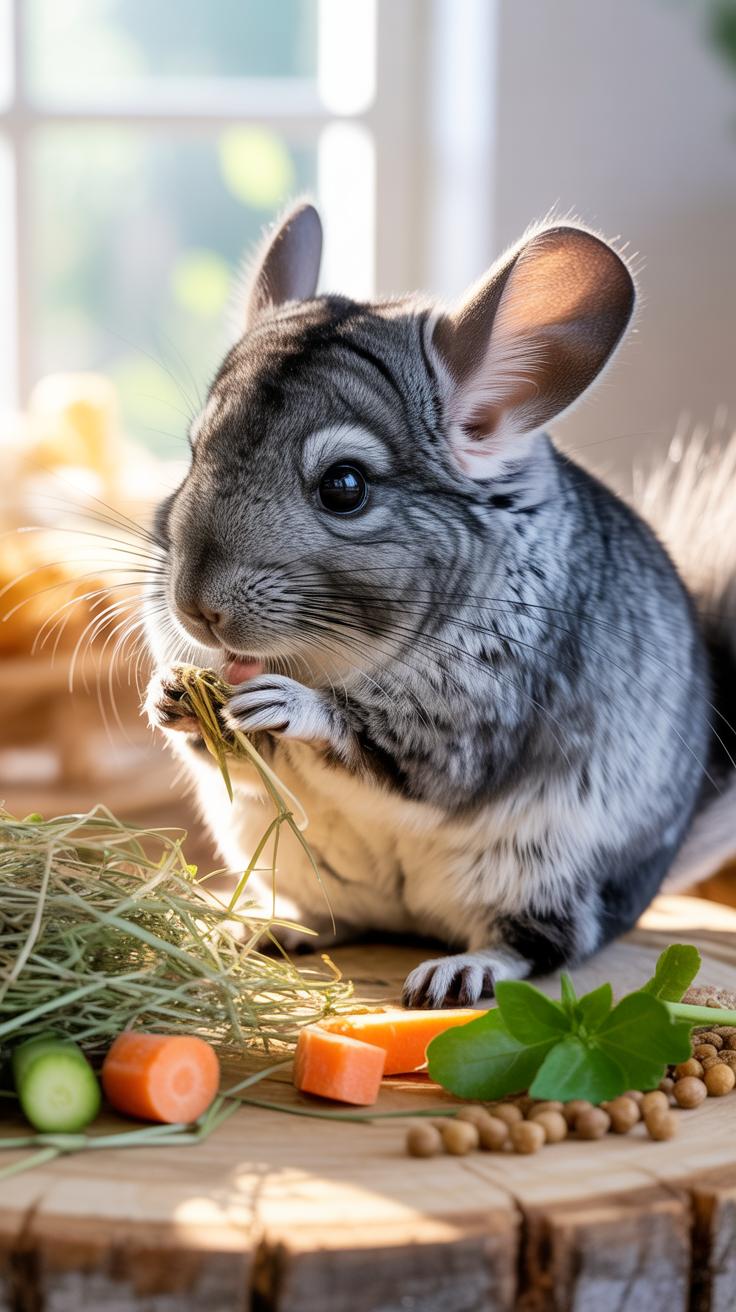
What Chinchillas Eat: Safe Foods, Hay, And Pellets Explained
Chinchillas possess a digestive system optimized for high fiber and low energy intake. Timothy hay is the most critical component of their diet. It must make up at least eighty percent of their daily food consumption. This roughage keeps the digestive tract moving and wears down teeth that grow constantly. High quality hay prevents dental disease and painful infections that can become fatal.
Supplement the hay with specific chinchilla pellets. These pellets provide essential vitamins and minerals that hay alone cannot offer. Avoid mixes containing seeds, nuts, or colorful pieces. Those items cause obesity and selective eating habits. Measure out two tablespoons of pellets daily to maintain a healthy weight. Always provide fresh, filtered water in a glass drip bottle to ensure proper hydration and kidney function.
Foods And Substances That Are Toxic Or Harmful To Chinchillas
Sugar is the primary enemy of chinchilla health. Their bodies cannot process glucose efficiently, leading to diabetes or fatty liver disease. Avoid all fruits, including raisins and apples, despite common misconceptions. Vegetables with high water content causes bloat and gas. Chinchillas lack the ability to pass gas effectively. This condition often results in a painful death without immediate veterinary intervention from a specialized exotic clinic.

Certain woods and plants contain toxic oils or resins that kill chinchillas. Never offer cedar, pine, or citrus woods for chewing. These materials contain phenols that damage the liver and irritate the respiratory system. Nuts and seeds contain too much fat for their sensitive livers. High fat diets lead to calcium imbalances and brittle bones. Stick to safe woods like apple or kiln dried pine to satisfy their natural urge to chew.
Chinchilla Grooming And Hygiene Key Pet Chinchilla Maintenance Practices
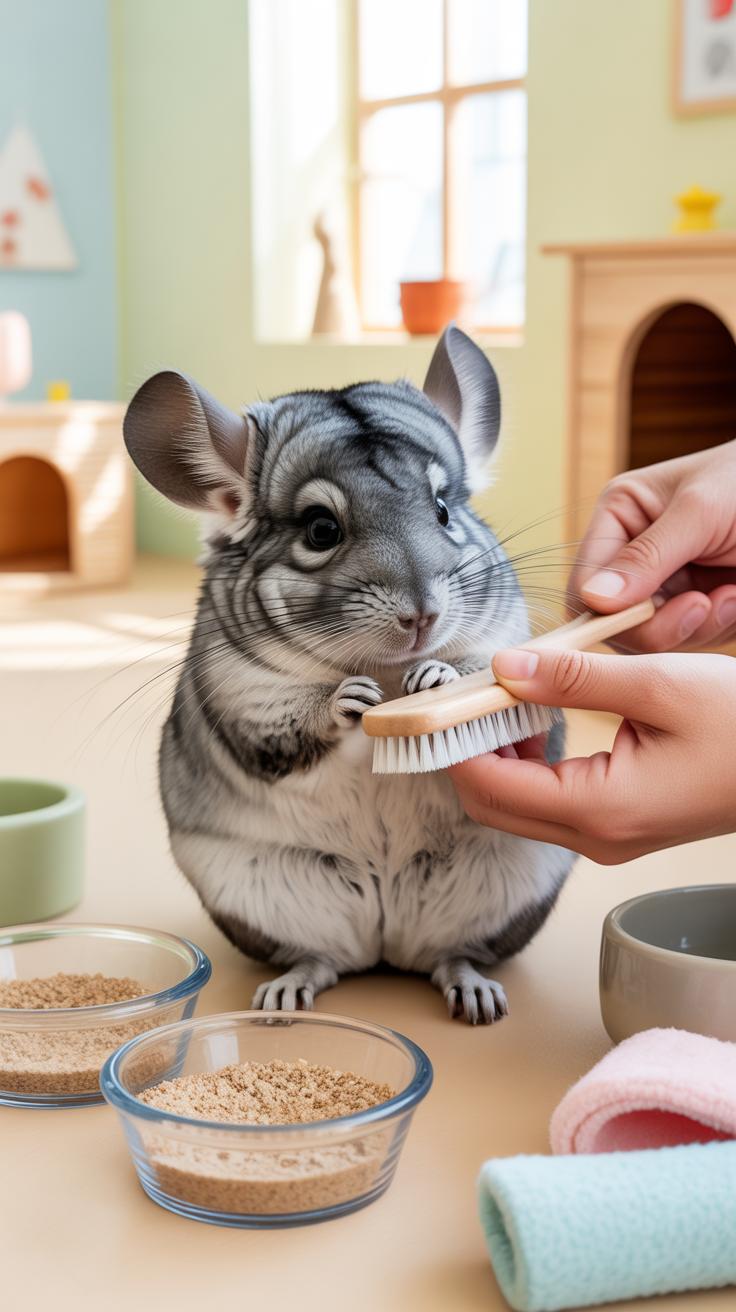
How And Why Chinchillas Use Dust Baths For Coat Health
Chinchillas possess extremely dense fur with up to eighty hairs per follicle. This density prevents water from evaporating quickly. Wet fur often leads to fungal growth and skin rot. Instead of water, these rodents use volcanic ash to clean themselves. The fine dust absorbs skin oils and removes dirt. This process mimics their natural behavior in the dry Andes Mountains where water is scarce.
Provide a dust bath two to three times per week for fifteen minutes. Excessive bathing dries out the skin and causes irritation. Use commercial chinchilla dust that mimics volcanic ash. Never use sand or dirt from your yard. These materials are too abrasive for their delicate skin. Monitor the coat for a matte finish. If the fur looks oily or flat, increase the bath frequency slightly.
Nail Trimming, Fur Checks, And Other Routine Grooming Tasks
Check chinchilla nails every month. Overgrown nails snag on fleece bedding or wire ramps. This leads to broken toes or torn skin. Use small animal clippers to remove the tips. Avoid the quick to prevent bleeding. If the nails look short and blunt, skip the trim. Most chinchillas wear down their nails through regular movement on kiln-dried pine or stone surfaces located within the cage.

Perform weekly fur checks to identify health issues early. Look for fur slips or bald patches caused by stress. Inspect the area around the base of the tail for knotted hair. Chinchillas do not require brushing because their fur is too dense. Excessive handling or improper brushing damages the coat. Keep the cage temperature below seventy-five degrees Fahrenheit. High heat causes fur biting and excessive shedding during seasonal changes.
Temperature Environment And Safety A Chinchilla Pet Maintenance Guide
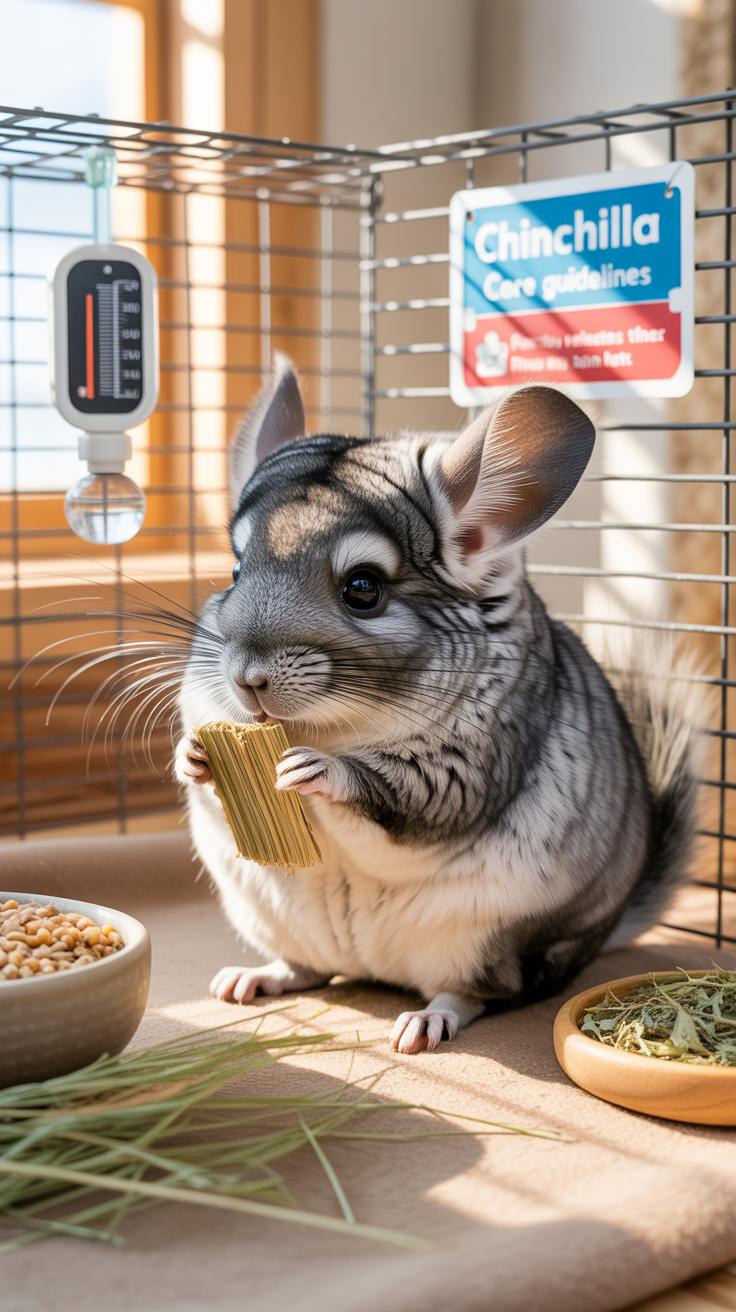
Why Chinchillas Are Highly Sensitive To Heat And Humidity
Chinchillas originate from the high Andes Mountains. This cold environment shaped their biology. They possess the densest fur of any land mammal with up to eighty hairs per follicle. This coat traps heat effectively but prevents cooling. Unlike humans or dogs, chinchillas cannot sweat or pant to release body heat. They rely solely on blood flow through their large ears to cool down.
High humidity levels stop moisture from evaporating off their skin. This makes heat even more dangerous. Temperatures above seventy-five degrees Fahrenheit can cause heatstroke or death. Owners must use air conditioning to maintain a stable climate. Keep the cage away from direct sunlight and heat vents. Use a digital thermometer to monitor the room. Precision in climate control is a non-negotiable requirement for survival.
Chinchilla Proofing Your Home For Safe Out Of Cage Playtime
Safe playtime requires a controlled environment. Chinchillas are natural chewers with teeth that grow constantly. They will gnaw on furniture, baseboards, and dangerous electrical wires. You must remove all plastic items from the floor. Use metal or solid wood barriers to block off restricted areas. Check for small gaps under appliances where a chinchilla could get stuck or injured. Only allow play in fully secured rooms.

Remove all toxic houseplants before releasing your pet. Chinchillas jump high and can reach tables or shelves easily. Secure loose rugs to prevent tripping or sliding. Keep other household pets like cats or dogs out of the room during this time. Supervise every second of the session to prevent accidents. If you cannot secure the entire room, use a large metal exercise pen. Proper preparation prevents expensive vet bills.
Health Monitoring And Vet Care Beginner Chinchilla Care Tips You Should Know

Common Chinchilla Health Problems And Early Warning Signs To Watch For
Chinchillas hide illness to survive in the wild. You must monitor their daily habits to catch problems early. Changes in eating, drinking, or waste production indicate immediate health risks. Small shifts in energy or posture often signal pain or internal distress. Watch the eyes, nose, and fur for discharge or matting. Early detection prevents minor issues from becoming fatal high-speed declines.
- Gastrointestinal Stasis: This condition stops the digestive tract from moving food. It occurs when a chinchilla stops eating or lacks fiber. You will notice small, hard droppings or no waste at all. Without immediate veterinary care, this condition is fatal within hours.
- Dental Malocclusion: Chinchilla teeth grow constantly throughout their lives. Misaligned teeth or lack of grinding surfaces cause painful spurs. Watch for drooling, watery eyes, and weight loss. These signs mean the teeth are piercing the cheek or tongue and require professional filing.
- Heat Stroke: Chinchillas cannot sweat and have extremely dense fur. Temperatures above seventy-five degrees Fahrenheit cause rapid organ failure. Look for red ears, panting, and lethargy. You must move the animal to a cool area and contact a vet immediately to save its life.
- Ringworm and Fungal Infections: Humidity and damp fur lead to skin issues. You will see circular bald patches and crusty skin, often around the nose or ears. This fungus is highly contagious to humans and other pets. Use antifungal powders and keep the cage dry during treatment.
- Respiratory Infections: Drafts and dust cause lung and sinus problems. Runny noses, sneezing, and wheezing are primary symptoms. Unlike humans, chinchillas can decline rapidly from a simple cold. Vet-prescribed antibiotics are necessary to clear the infection before it turns into lethal pneumonia.
Consistent observation remains your best defense against animal loss. Weigh your chinchilla weekly using a digital scale to track subtle changes. Loss of even twenty grams warrants a closer look at their diet and behavior. Inspect their feet for sores or redness every month to prevent bumblefoot. Routine checks transition from simple chores to life-saving habits that ensure long-term health and stability.
How Often Should You Take Your Chinchilla To The Veterinarian
Schedule a wellness exam once every twelve months with an exotic animal specialist. General vets often lack the training to handle sensitive chinchilla biology. The annual visit allows the doctor to check molar growth using specialized tools. They will also palpate the abdomen to ensure no blockages exist. These visits establish a health baseline for your pet before emergencies occur.

The first vet visit should happen within one week of bringing the animal home. This initial exam screens for pre-existing conditions and parasites. It also verifies the sex of the animal to prevent accidental breeding. Keep clear records of every visit and weight measurement. Regular professional oversight identifies issues that the untrained eye misses during daily routines. Follow advice strictly to maintain health.
Socialization And Bonding Trusted Pet Care Advice For Chinchillas
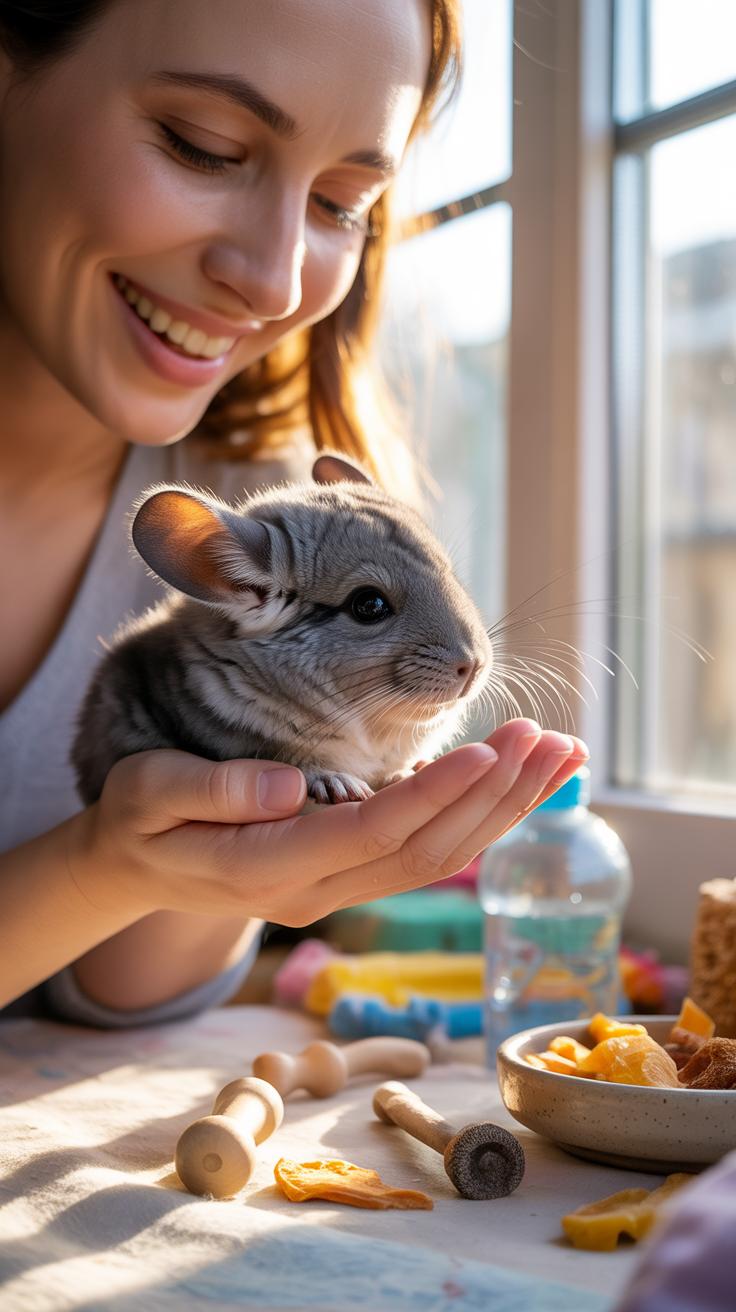
How To Build Trust With Your Chinchilla Through Gentle Handling
Chinchillas are prey animals with a high flight response. Build trust by staying at their eye level. Avoid reaching from above as this mimics a bird of prey. Sit on the floor near the cage and let them approach you. Speed is your enemy here. Let the animal sniff your hand before attempting any physical contact. Patience establishes a solid foundation for bonding.
When you handle them, use a firm but gentle grip. Support the entire body including the hindquarters and feet. Never grab a chinchilla by the tail or the scruff of the neck. They can release patches of fur as a defense mechanism called a fur slip. Limit early sessions to fifteen minutes to avoid stress. Consistent daily interaction creates a predictable environment for the animal.
Small treasures require the greatest of care to truly flourish in our homes. Taking the time to understand their delicate world is the first step in a lifelong friendship.
Should You Keep One Chinchilla Or A Pair? Understanding Social Needs
Chinchillas are social creatures that live in large colonies in the Andes Mountains. They benefit greatly from the company of their own kind. Same-sex pairs usually work best to prevent breeding and fighting. A solitary chinchilla requires significantly more human interaction to prevent depression. If you work long hours, a pair is necessary for their mental health.

Introducing two adults is a high-risk process. They are territorial and may fight for dominance. Use the cage-in-cage method to let them smell each other safely first. Watch for aggressive lunging or barking sounds. Once they groom each other through the bars, you can attempt a neutral ground meeting. If they bond successfully, they will sleep together and live longer, less stressful lives.
Long Term Responsibilities Sustainable Chinchilla Care For Dedicated Owners
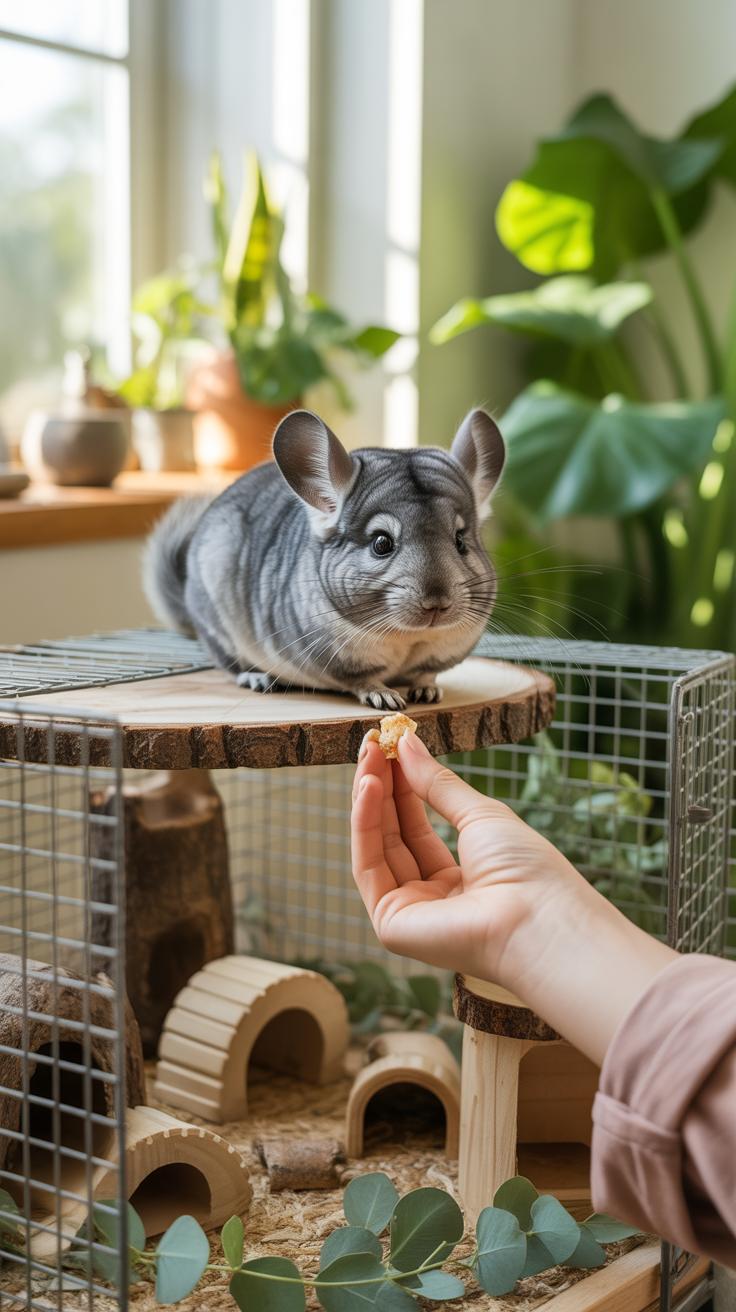
Understanding The Long Lifespan And Commitment Chinchillas Require
Chinchillas live for fifteen to twenty years in captivity. This lifespan exceeds most other small rodents like hamsters or rats. Owners must plan for two decades of consistent care and financial costs. You cannot treat these animals as temporary pets for young children. They require a stable environment and a handler who understands their unique biological needs over many developmental stages.
The long-term commitment involves specialized veterinary care and strict climate control. Chinchillas originate from the high Andes Mountains and cannot survive high heat or humidity. You must run air conditioning throughout the summer months for the life of the animal. If your living situation or budget cannot support twenty years of cooling costs and emergency vet visits, do not purchase a chinchilla.
Daily, Weekly, And Monthly Chinchilla Care Routines That Keep Pets Thriving
Daily care centers on nutrition and hygiene. You must provide fresh Timothy hay and high-quality pellets every morning. Remove any soiled hay or standing water to prevent mold growth. Active time outside the cage is necessary for physical health and mental stimulation. Owners must also offer a dust bath several times a week. This process removes skin oils and keeps the dense fur clean and dry.
Weekly and monthly tasks maintain the habitat integrity. You must deep clean the cage once a week using vinegar or pet-safe disinfectant. Remove all bedding and scrub the solid surfaces to prevent respiratory infections. Every month, inspect the cage for chewed plastic or loose wires that pose safety risks. Regular maintenance prevents medical emergencies and extends the life of the enclosure. Consistency ensures the animal remains healthy and stress-free.
Frequently Asked Questions

Is a chinchilla a good pet for a first-time small animal owner?
While they are charming and long-lived, these sensitive rodents require specific environmental conditions to thrive. This chinchilla care guide emphasizes that they are best for owners who can provide a quiet space and a consistent routine. They are high-energy crepuscular creatures, meaning they are most active at dusk and dawn. If you are prepared for a decade-plus commitment and gentle handling, they make incredibly rewarding and unique companions.
How do I properly set up a habitat for a new chinchilla?
Safety and vertical space are your top priorities when following a chinchilla care guide. Choose a tall, multi-level wire cage with solid flooring to protect their sensitive feet. Fill the space with kiln-dried pine shavings or paper bedding, and provide plenty of wooden ledges for jumping. You must also include a high-quality water bottle, a hay rack, and a ceramic bowl for their specialized pellets to ensure a healthy home environment.
What are the ongoing monthly costs of owning a chinchilla?
After the initial investment in a cage, monthly expenses are relatively modest and predictable. You will need to budget for high-quality Timothy hay, specialized pellets, and fresh dust for their weekly baths. Additionally, you should set aside funds for chew toys and wooden blocks, as their teeth grow continuously and require constant grinding. Regular bedding changes and occasional healthy treats rounded out the typical recurring costs for a happy, healthy pet.