
What Makes A Hedgehog Pet So Unique Compared To Other Small Animals

The Natural Personality And Temperament Of A Hedgehog
Hedgehogs are solitary animals that do not require social interaction with other species to survive. They possess a defensive temperament rooted in their natural biology. Most individuals remain cautious around new people. They rely primarily on scent rather than sight to identify their owners. You must invest time in handling them daily to build any level of trust.
These animals react to threats by curling into a tight ball and extending their quills. This involuntary muscle reflex distinguishes them from social rodents like rats or guinea pigs. They do not bite often to defend themselves. Instead, they use their sharp spines as a physical barrier. Patience is necessary because a hedgehog only uncurls when it feels completely safe.
Why Hedgehogs Are Growing In Popularity As Companion Animals
Many owners choose hedgehogs because they fit a modern lifestyle. They are nocturnal and remain active while people sleep. This schedule works well for professionals who are away from home during daylight hours. Unlike dogs, they do not require outdoor walks or constant attention. They live in controlled enclosures that take up minimal space in apartments or small homes.
Low dander production makes them a viable option for people with allergies. They do not Have fur like cats or rabbits. Their quills are modified hairs and do not shed in large amounts. They also lack the strong scent common in many small cage animals. Owners appreciate the quiet nature of the hedgehog. They rarely make loud noises that disturb neighbors.

Essential Hedgehog Facts Every New Owner Should Know Before Buying

Hedgehog Lifespan, Size, And Physical Characteristics
Most domesticated hedgehogs are African Pygmy hybrids. They live between four to six years on average. Some reach eight years with elite genetics and strict diets. These animals grow to weigh between nine and eighteen ounces. Their length typically stays between six and eight inches. They possess thousands of stiff keratin quills. These quills serve as a primary defense mechanism.
Hedgehogs are solitary mammals with specialized physical traits. They have weak eyesight but possess an acute sense of smell and hearing. Their feet feature four toes on the back and five on the front. This configuration aids in digging and climbing. They are nocturnal and stay active during the night. Their bodies require a consistent temperature between 72 and 80 degrees Fahrenheit to prevent dangerous hibernation.
Are Hedgehogs Legal To Own Checking Local Laws And Regulations
Legality varies by state and municipality. Several regions ban hedgehogs entirely due to concerns about invasive species or disease transmission. California and Georgia strictly prohibit private ownership. Hawaii bans them to protect local ecosystems and wildlife. Various cities in Nebraska and New York also have specific bans. You must verify local ordinances before purchasing. This prevents legal seizure and animal euthanasia.

Permit requirements differ across international borders. Some areas classify hedgehogs as exotic animals. This classification requires a specific license to possess them. Always contact your local fish and wildlife department. Do not rely on pet store claims about legality. Owners moving between states must recheck laws at their new destination. Failing to comply can lead to heavy fines. Strict adherence to local law ensures long term safety.
Setting Up The Ideal Hedgehog Pet Cage For Comfort And Safety
Choosing The Right Cage Size, Material, And Ventilation For Your Hedgehog
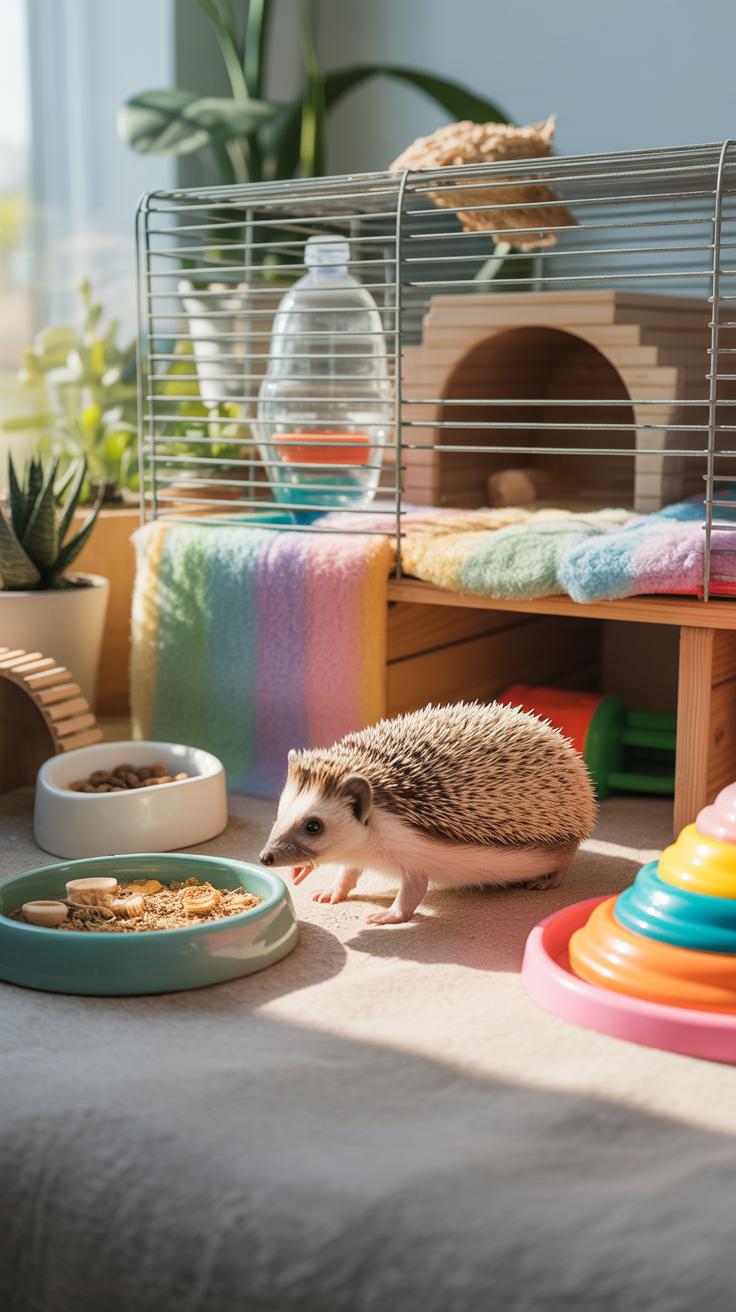
Hedgehogs require a minimum of four square feet of floor space to remain healthy. Choose a solid bottom cage to prevent foot injuries and bumblefoot. Avoid wire flooring or multi-level cages with steep ramps. Hedgehogs have poor eyesight and can fall easily. Visual depth perception is a known weakness for this species. A flat single level floor provides the safest environment for movement.
Plastic bins or professional PVC enclosures offer the best heat retention. Hedgehogs need a consistent temperature between 74 and 80 degrees Fahrenheit. Large glass tanks often restrict airflow and lead to respiratory issues. Ensure the cage has a secure mesh top for ventilation. High walls prevent the hedgehog from climbing out. Select materials that are easy to sanitize with a mild vinegar solution or specialized pet cleaner.
Must Have Cage Accessories: Exercise Wheels, Hides, And Bedding Options
The exercise wheel is the most critical accessory in the enclosure. Use a solid surface wheel with a diameter of at least 12 inches. Wire or mesh wheels catch toes and break legs. Hedgehogs run several miles every night to manage weight and stress. Place the wheel on a stable base to prevent tipping. Keep the wheel clean to avoid fecal paste buildup on the running surface.

Provide at least two hiding spots to reduce animal anxiety. Use plastic igloos or fabric snuggle sacks for sleeping areas. Avoid cedar or pine shavings because they contain toxic oils that irritate the lungs. Opt for kiln-dried aspen, paper bedding, or fleece liners. Fleece is the most cost effective and safe choice for sensitive feet. Check all fabric items daily for loose threads that could wrap around hedgehog limbs.
Designing The Perfect Hedgehog Room Temperature Lighting And Environment

Optimal Room Temperature Range And Why It Prevents Hibernation Attempts
Hedgehogs require a stable environment between 72 and 80 degrees Fahrenheit. Temperatures below this range trigger a biological survival response known as a hibernation attempt. Domesticated African Pygmy hedgehogs lack the body fat to survive these states. Their metabolic rate drops and their immune systems fail. You must monitor the room using a digital thermometer to ensure the air remains within this safe zone.
Consistency serves as the primary defense against illness. Fluctuating temperatures stress the animal and lead to digestive issues or respiratory infections. If the room feels cool to a human, it is likely dangerous for a hedgehog. Use dedicated space heaters or ceramic heat emitters connected to a thermostat. This hardware automates safety. It prevents the environment from dipping into the lethal zones that cause lethargy and death.
Lighting Cycles And Noise Levels That Support A Hedgehog’S Nocturnal Nature
Proper lighting regulates the internal clock of a hedgehog. They need a clear distinction between day and night to maintain healthy activity levels. Provide 12 to 14 hours of bright light during the day. Natural sunlight or 60-watt bulbs work effectively. Do not leave the animal in a dark room all day. This confusion stops them from eating and running on their wheels during the night hours.

Noise control is equally vital for this species. Hedgehogs have sensitive hearing and rely on sound to navigate. High-traffic areas with loud televisions or barking dogs cause chronic stress. Place the enclosure in a quiet corner of the home. Use heavy curtains to dampen external street noise. A calm environment ensures the hedgehog sleeps deeply during the day. This rest allows for peak energy once the lights go out.
How To Take Care Of A Hedgehog Feeding And Nutrition Basics

What Do Hedgehogs Eat? Safe Foods, Portion Sizes, And Feeding Schedules
Hedgehogs are insectivores that require high protein and low fat. The foundation of their diet must be a high quality hedgehog precision kibble or a premium indoor cat food. Ensure the protein content stays above 30 percent and fat stays below 15 percent. Provide one to two tablespoons of kibble daily. Adult hedgehogs gain weight easily so monitor their body condition constantly.
Feed your hedgehog once per day in the evening when they become active. Supplement their main diet with live or gut loaded insects like mealworms or crickets two or three times weekly. Always provide fresh water in a shallow bowl rather than a drip bottle to prevent dental damage. Proper hydration aids digestion and prevents kidney issues. Adjust portion sizes if you notice significant weight gain.
The kindness that a child or a beginner shows to a small, prickly creature remains a soft part of their heart forever.
Foods That Are Toxic Or Dangerous And Should Never Be Fed To A Hedgehog
Hedgehogs possess sensitive digestive systems that cannot process many human foods. Certain items cause immediate toxicity or long term internal damage. Do not experiment with unknown snacks. Stick to proven safe options or veterinarian recommendations. Avoid all dairy products because hedgehogs are lactose intolerant. These foods trigger severe diarrhea and dehydration. Hard foods also pose physical risks like choking or mouth injuries.
- Dairy Products: Hedgehogs lack the enzyme to break down lactose found in milk, cheese, and yogurt. Consuming these items causes severe gastrointestinal distress and painful bloating. Long term exposure leads to malnutrition and chronic dehydration.
- Grapes and Raisins: These fruits contain unknown toxins that cause acute renal failure in many small mammals. Even small amounts can destroy kidney function within hours. Never offer these as treats under any circumstances.
- Avocados: This fruit contains persin which is toxic to most small pets. The high fat content also contributes to fatty liver disease. It is a dual threat that impacts both heart health and metabolic stability.
- Chocolate and Caffeine: These stimulants contain methylxanthines that overstimulate the central nervous system. Ingestion leads to rapid heart rate, tremors, and potential seizures. Small animals have very low tolerance for these chemical compounds.
- Raw Meat and Eggs: Raw animal products carry salmonella and other dangerous bacteria. These pathogens cause lethal infections in captive hedgehogs. Always cook meat thoroughly without adding any salt, butter, or spices if you choose to offer it.

Eliminate all pits and seeds from safe fruits like apples or melons before feeding. These often contain trace amounts of cyanide which build up in small bodies quickly. Avoid sticky foods like peanut butter or dried fruits that get lodged in the roof of the mouth. Check the ingredients of any commercial treats for artificial preservatives or high sugar content. Consistent restriction prevents most common health crises.
Hedgehog Care Hygiene Grooming And Bathing Your Hedgehog Properly

How To Safely Bathe A Hedgehog And Clean Their Quills Without Causing Stress
Fill a sink or basin with two inches of warm water. Test the temperature with your elbow to ensure it is not too hot. Place a small towel on the bottom of the basin to provide traction. This prevents the hedgehog from slipping and reduces panic. High stress levels lead to balling up, which makes cleaning the quills and underbelly impossible.
Use a soft toothbrush and mild, fragrance free oatmeal soap to scrub the quills. Always brush in the direction of quill growth from head to tail. Rinse thoroughly with warm water to remove all soap residue. Soap left on the skin causes severe dryness and irritation. Wrap the hedgehog in a dry towel immediately after the bath until they are completely dry.
Nail Trimming, Ear Cleaning, And Preventing Common Skin Issues
Long nails cause foot injuries and mobility issues in captive hedgehogs. Trim the nails every few weeks using small animal clippers or human baby nail trimmers. Avoid the quick, which is the pink vein inside the nail. If bleeding occurs, apply styptic powder or cornstarch immediately. Regular trimming prevents the nails from curling back into the sensitive foot pads.

Examine the ears for wax buildup or discharge during every grooming session. Clean only the outer ear with a damp cotton swab. Never insert anything into the ear canal. Check the skin for flakes or orange crust, as these indicate mites or fungal infections. Diet and environment impact skin health. Use a drop of flaxseed oil in their food to maintain skin elasticity.
Hedgehog Health Care Common Illnesses And Vet Visits Explained

Most Common Health Problems In Pet Hedgehogs Including Wobbly Hedgehog Syndrome
Hedgehogs hide illness to survive in the wild. You must monitor weight and behavior daily. Wobbly Hedgehog Syndrome is a fatal neurological disease. It causes progressive paralysis starting at the back legs. There is no cure for this genetic condition. Most hedgehogs also struggle with obesity and fatty liver disease. High fat diets cause these issues. You must control portions to prevent organ failure.
External parasites like mites are frequent issues. Mites cause quill loss and flaky skin. Treat these immediately with kitten strength medicine. Oral tumors and squamous cell carcinoma are also common in older hedgehogs. Check the mouth for swelling or bleeding during bonding time. Respiratory infections happen if the cage is too cold. Keep the environment stable at seventy five degrees Fahrenheit to avoid pneumonia.
When To See A Vet And How To Find An Exotic Animal Specialist Near You
Standard dog and cat vets cannot treat hedgehogs. You need an exotic animal specialist with specific small mammal training. These vets have the right tools and diagnostic knowledge. Locate a qualified vet before you bring your pet home. Use the Association of Exotic Mammal Veterinarians database to find specialists. Local rescues often know which clinics actually handle African Pygmy hedgehogs correctly.

Emergency signs include lethargy and refusing food for over twenty four hours. Green stool or blood in the urine requires an immediate visit. Hibernation attempts are also medical emergencies. If your hedgehog feels cold and remains balled up, seek help fast. Schedule wellness exams once every year. These visits establish a health baseline. Early detection of tumors or kidney issues saves money and saves your pet.
Socializing And Handling Your Hedgehog Care Routine For A Happier Pet
How To Build Trust With A Shy Or Defensive Hedgehog Over Time
Hedgehogs rely heavily on scent to identify their surroundings and potential threats. Start by placing a used t-shirt that smells like you inside the cage. This method introduces your scent without the stress of direct contact. Keep the fabric free of loose threads to prevent injuries. Consistent exposure to your unique smell helps the animal associate your presence with a safe and stable environment.
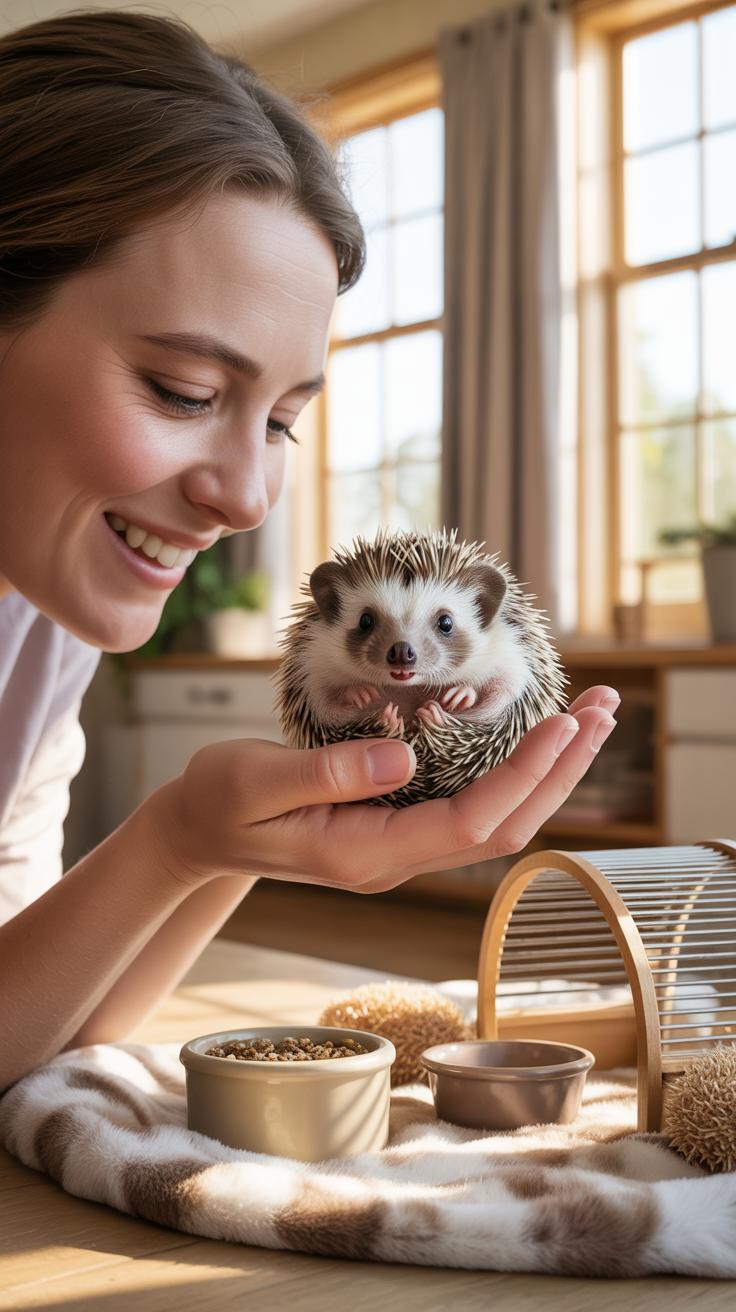
Patience is the primary tool for building trust with a defensive animal. Avoid grabbing a curled hedgehog from above as this mimics a predator attack. Sit near the cage and speak softly to habituate the pet to your voice. Offer small treats from your hand once the hedgehog stops huffing or clicking. These actions reinforce a positive connection. Progress requires daily interaction over several weeks or months.
Safe Handling Techniques And Daily Interaction Tips For New Owners
Correct handling requires confidence and steady hands. Slide your palms under the hedgehog belly while it is flat. Lift the animal slowly to avoid triggering its natural curling defense. Never wear gloves because they block your scent and prevent the animal from recognizing you. If the hedgehog curls into a ball, wait quietly for it to unroll. Keep your movements predictable and avoid any sudden loud noises.

Schedule handling sessions for the evening when the hedgehog is naturally awake and active. Aim for at least thirty minutes of interaction every day to maintain tameness. Use a bonding scarf or a snuggle sack to hold the pet while you watch television or read. This passive interaction builds comfort without forcing direct physical play. Consistent daily contact prevents the hedgehog from reverting to a feral and defensive state.
The Complete Hedgehog Care Guide Using A Hedgehog Care Checklist Daily
Daily, Weekly, And Monthly Hedgehog Care Checklist For Responsible Owners
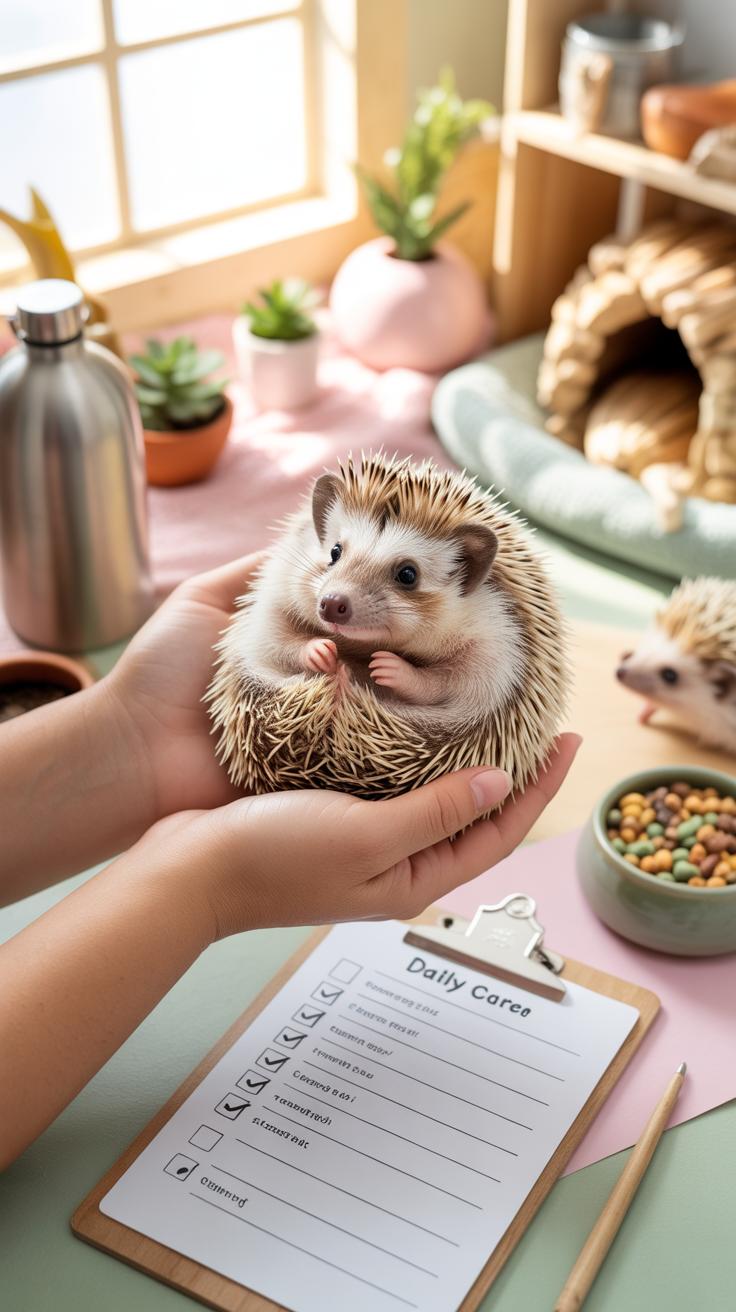
Hedgehogs require strict maintenance routines to prevent disease and stress. You must manage their environment every single day to ensure survival in captivity. Neglect leads to rapid health decline because these animals hide symptoms until they are critical. Use a structured checklist to stay consistent. This process removes guesswork and keeps your hedgehog safe in a controlled domestic setting.
- Daily Food and Water: Provide fresh water and high-protein kibble every evening. Clean the bowls with hot water to prevent bacteria growth. Remove any uneaten wet food or insects from the previous night immediately to avoid spoilage in the warm cage environment.
- Daily Spot Cleaning: Remove feces and wet bedding from the cage every morning. This practice reduces ammonia levels and keeps the hedgehog’s feet clean. Checking the wheel for waste is vital because hedgehogs often defecate while running, creating a mess that requires instant removal.
- Weekly Wheel Scrubbing: Deep clean the exercise wheel with a pet-safe disinfectant once a week. Grime builds up quickly on the running surface. A dirty wheel causes foot infections and skin irritation. Rinse the equipment thoroughly to ensure no chemical residue remains before returning it to the cage.
- Weekly Bedding Change: Strip the entire cage and replace all substrate or fleece liners weekly. Scrub the base of the enclosure to kill lingering pathogens. Use unscented cleaners to avoid respiratory distress. Fresh bedding prevents mite infestations and controls the natural odors associated with small animal waste.
- Monthly Deep Sanitation: Perform a complete teardown of the habitat every thirty days. Soak all hideouts, tunnels, and toys in a diluted bleach solution or vinegar mixture. Inspect the cage for damage or sharp edges that may have developed. This monthly reset ensures the long-term hygiene of the living space.
Consistent care depends on following these intervals without fail. Skipping a daily task creates a snowball effect of poor hygiene. Smaller tasks prevent large-scale health crises later. You must treat these steps as non-negotiable obligations. A checklist ensures you meet the physical needs of your pet. This discipline separates successful owners from those who struggle with preventable illnesses.
Tracking Your Hedgehog’S Weight, Behavior, And Health Changes Over Time
Weight monitoring is the most effective way to detect early illness in hedgehogs. These animals are prey species and will mask pain or weakness. Use a digital gram scale to weigh your pet weekly at the same time. A loss of ten percent of body weight indicates a serious medical issue. Record these numbers in a dedicated log to identify trends.
Behavioral changes provide critical data regarding your hedgehog’s mental and physical state. Note changes in wheel activity, eating habits, or sudden aggression. A hedgehog that stops running or hides constantly may be cold or sick. You must track these shifts to provide accurate information to an exotic vet. Documentation allows for faster diagnosis and targeted treatment plans when emergencies occur.
Hedgehog Care Guide For Long Term Ownership Costs Commitment And Bonding
Breaking Down The Real Costs Of Owning A Hedgehog: Setup, Food, And Vet Bills
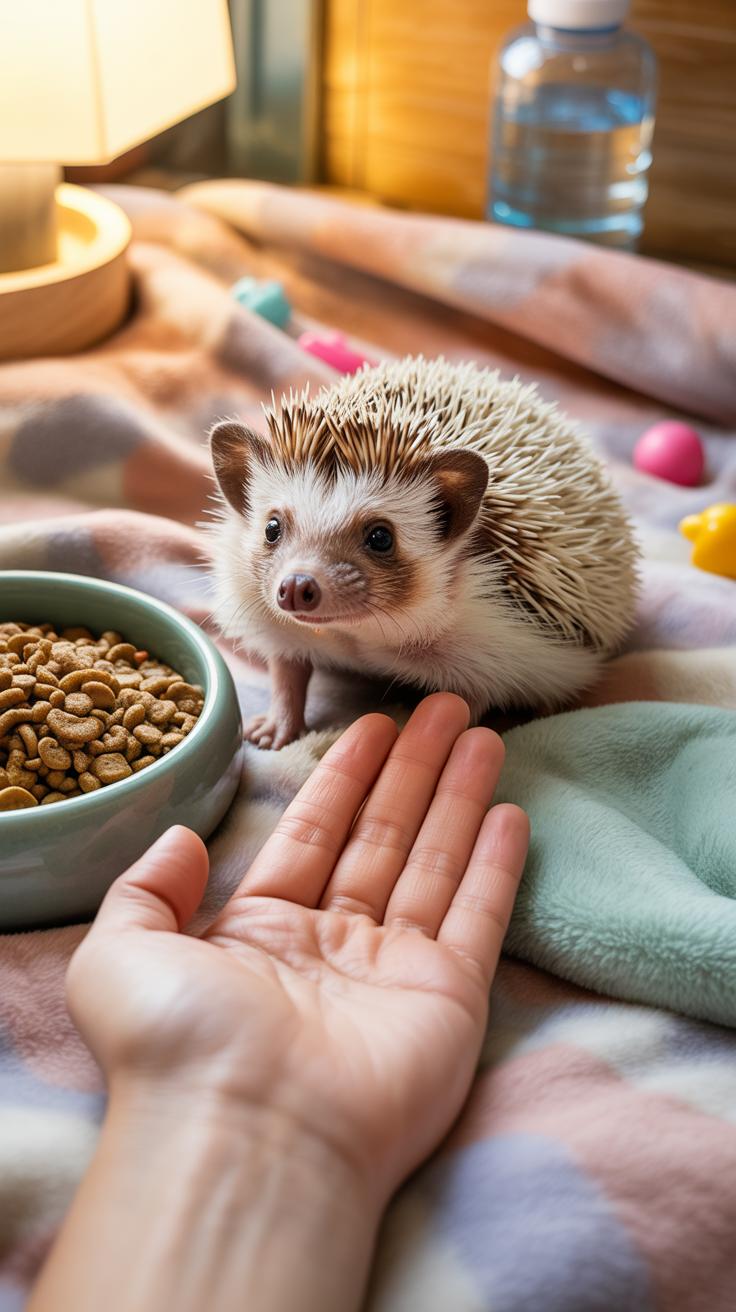
Initial setup requires significant capital for a proper enclosure and heat management. You will spend several hundred dollars on a large cage, a silent wheel, and a thermostat-controlled heating system. High-quality ceramic heat emitters are mandatory to prevent hibernation attempts. Do not cut corners on the wheel or heat source. These items ensure the survival and physical health of your animal.
Recurring costs include high-protein kibble, live insects, and bedding materials. Exotic vet bills represent the largest financial risk for owners. Many hedgehogs develop cancer or wobbly hedgehog syndrome as they age. You must set aside an emergency fund for diagnostic imaging and specialized treatments. Routine checkups are more expensive than those for cats or dogs because you need an exotic specialist.
Building A Lifelong Bond With Your Hedgehog Through Consistency And Patience
Hedgehogs are solitary prey animals. They do not have a natural desire for human contact. You must earn their trust through daily scent recognition and gentle handling. Spend at least thirty minutes every night sitting with your hedgehog. Use a fleece Bonding bag to let the animal sleep near you. This allows the hedgehog to associate your specific scent with safety and warmth.
Avoid sudden movements or loud noises during your bonding sessions. Consistency is the only way to reduce defensive balling and hissing behaviors. Do not use gloves when handling your pet. Gloves block your scent and prevent the animal from learning who you are. Focus on calm interactions and offer occasional mealworm rewards. This tactical approach turns a defensive animal into a relaxed companion over several months.
Frequently Asked Questions

Are hedgehogs good pets for first-time owners?
While unique and charming, these insectivores require specific commitment and patience. This hedgehog as pet care guide recommends them for owners who appreciate a quiet, nocturnal companion. Because they are solitary animals, they don’t crave constant social interaction like dogs do. However, with gentle daily handling, they can form wonderful bonds with their owners, making them a rewarding choice for those ready to learn their unique behavioral cues.
How do I properly set up a habitat for my new hedgehog?
Creating a comfortable home is a vital part of your hedgehog as pet care guide checklist. You will need a solid-bottom enclosure of at least four square feet to protect their sensitive feet. Essential supplies include a large, solid-surface exercise wheel, a hiding hut, and a consistent heat source like a ceramic heat emitter with a thermostat. Maintaining a warm environment between 74 and 80 degrees Fahrenheit is crucial for their health.
What are the ongoing costs associated with owning a pet hedgehog?
Beyond the initial setup, you should budget for high-quality kibble, live insects, and bedding. A significant portion of your budget should be reserved for specialized exotic vet care, as standard veterinarians often do not treat them. While daily food costs are relatively low, unexpected medical expenses can be high. Being prepared for these financial aspects ensures your prickly friend receives the best possible care throughout its four to six-year lifespan.