What Is An Endangered Species List And Why Does It Matter
How The IUCN Red List Classifies Animals At Risk
The International Union for Conservation of Nature maintains the Red List. It serves as the global authority on extinction risk. This system uses strict criteria to group species into categories. These include Least Concern, Vulnerable, Endangered, and Critically Endangered. Scientists track population size reductions and geographic ranges. They also look at trade threats and habitat loss. This data drives international law and conservation funding.
A species moves to the Endangered category when it faces a very high risk of extinction in the wild. This status triggers legal protections under treaties like CITES. The process relies on peer reviewed evidence and rigorous field observation. Accurate classification prevents total population collapse. It tells governments where to focus their resources immediately. Without this clear hierarchy, wildlife protection would lack necessary precision and tactical urgency.
Why Many Unusual Species Are Overlooked On The Endangered Species List
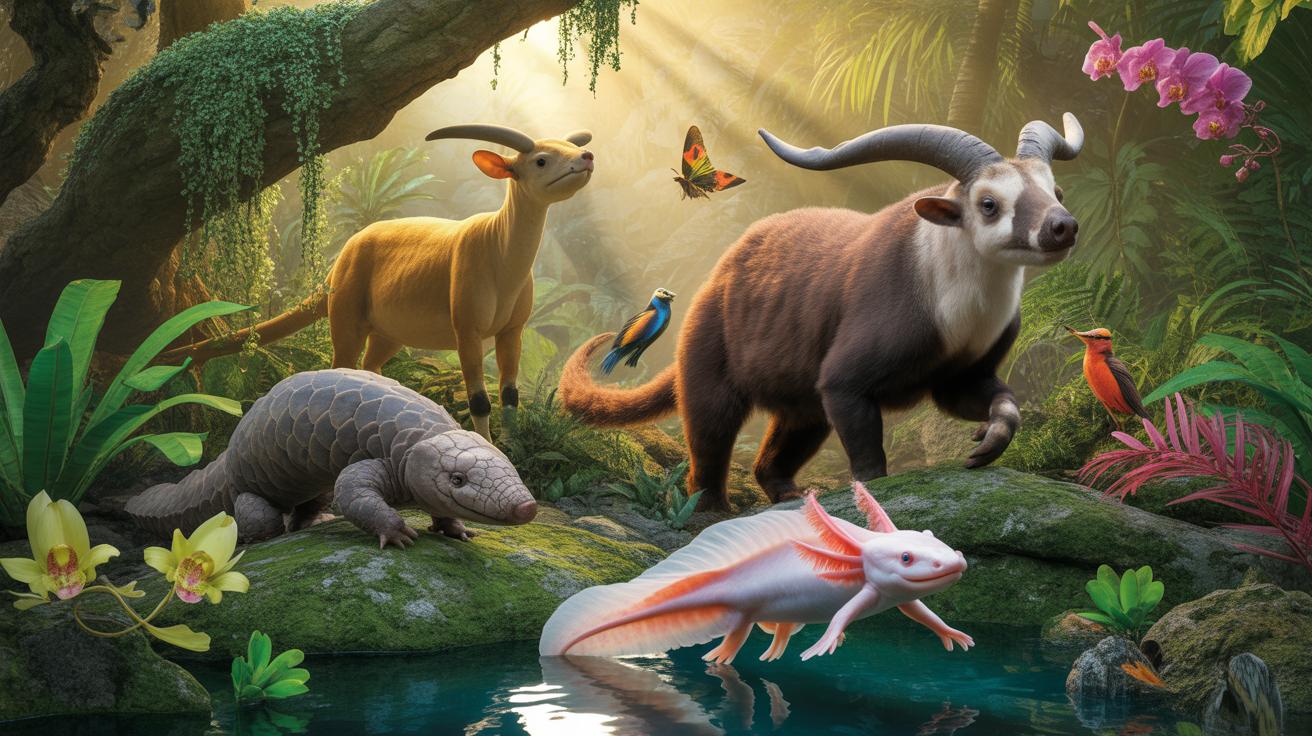
Charismatic megafauna like pandas and tigers receive the most public attention. This bias creates a gap in funding for less attractive animals. Unusual species often live in isolated or extreme environments. They lack the visual appeal needed for major fundraising campaigns. Because they are rare or hard to find, researchers struggle to collect enough data. This lack of visibility keeps them off the main priority lists.
Taxonomic bias favors mammals and birds over amphibians or invertebrates. Many strange creatures do not fit standard conservation profiles. They may have odd biological traits that make them difficult to study in captivity. If an animal is not well known, it rarely receives protected status until it is too late. Public awareness dictates policy more than raw biology. This leaves many unique evolutionary lines at risk of silent extinction.

What Are The 7 Endangered Animals Most Conservation Campaigns Focus On
The Flagship Species Problem: Why Famous Animals Get All The Attention
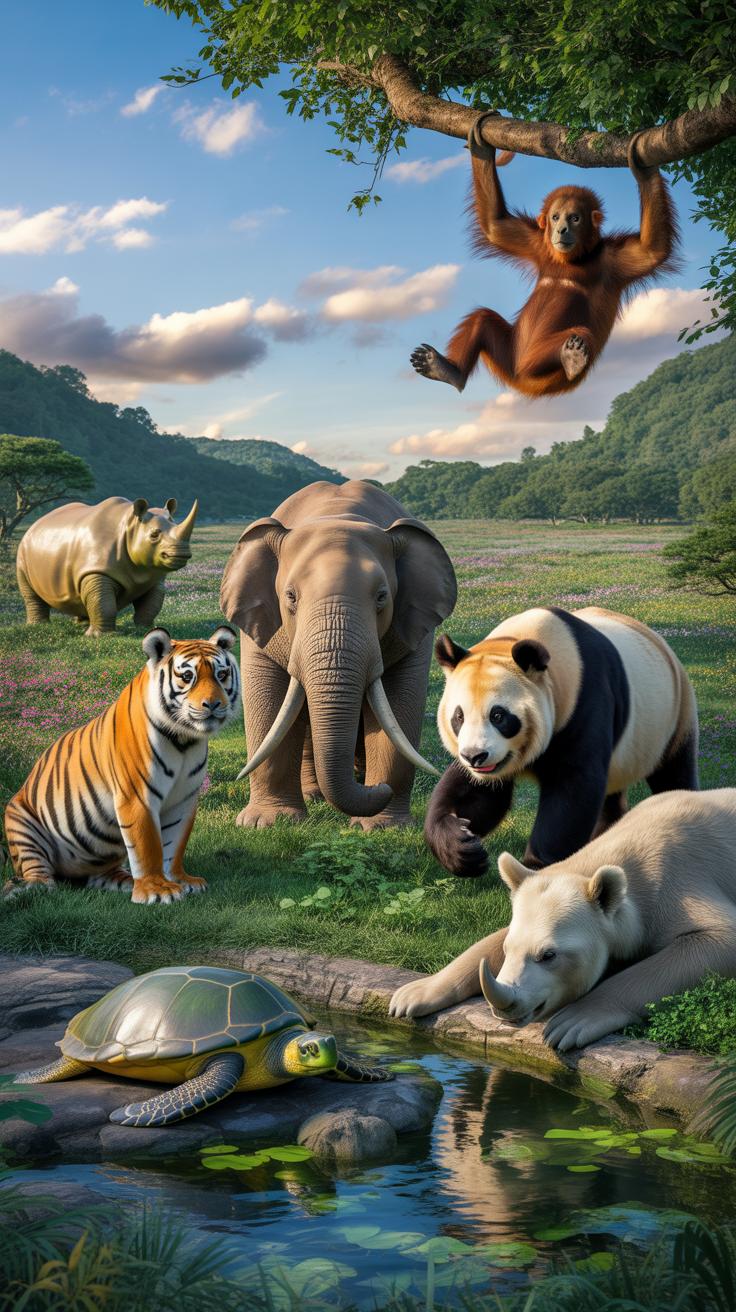
Conservation groups use flagship species to drive fundraising and public interest. These animals usually include the giant panda, tiger, African elephant, blue whale, mountain gorilla, snow leopard, and polar bear. Organizations pick these animals because they have high visual appeal. People donate more money when they see a cute or powerful animal. This strategy creates a massive funding gap for less attractive or smaller species.
Focusing on these seven animals helps protect entire ecosystems. When you save a tiger, you also save the forest where it lives. This halo effect protects thousands of other plants and insects. However, this method relies on marketing rather than biological priority. Many critical species lack the charisma needed to attract global donors. This leaves many animals on the unusual endangered animals list without the resources they need to survive.
Lesser Known Animals That Deserve Equal Conservation Urgency
Many animals face extinction without any public recognition. The vaquita porpoise and the saola are two examples of species on the brink. These animals do not have large marketing budgets or famous logos. They often live in remote areas or under the water where people cannot see them. Conservation urgency should depend on extinction risk rather than how an animal looks on a poster.

Redirecting funds to obscure species prevents total ecosystem collapse. Small amphibians and insects often play bigger roles in nature than large mammals. They pollinate crops and clean water sources. Ignoring these creatures creates a weak link in the food chain. Scientists want a more balanced approach to funding. They aim to shift the focus from famous icons to the high-risk animals that maintain the planet’s health.
What Are The 10 Most Endangered Animals YouVe Never Seen In A Documentary
The Saola: Southeast Asia’S Mysterious ‘Asian Unicorn’
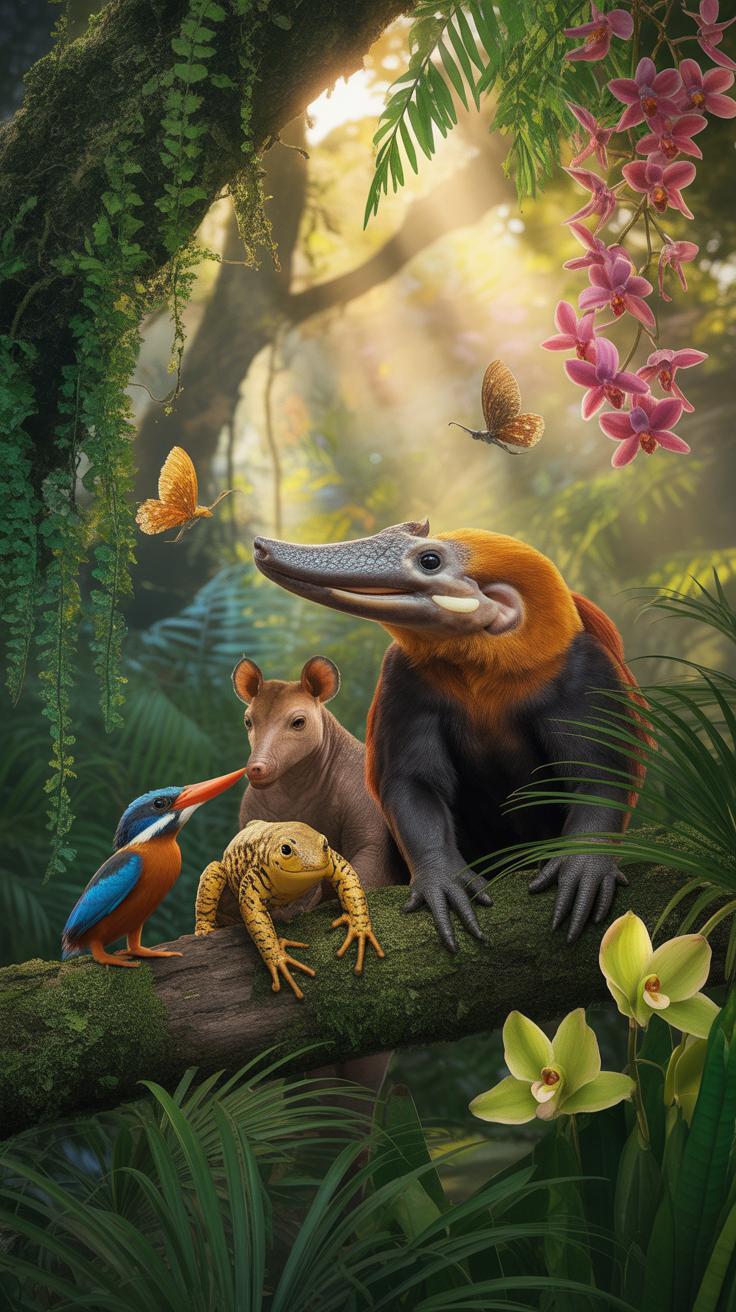
Scientists first identified the saola in 1992. This discovery occurred in the Annamite Mountains of Vietnam and Laos. The species remains elusive because it lives in dense forests. It has two long parallel horns. It looks like an antelope but shares DNA with wild cattle. No biologist has seen a saola in the wild. This lack of sightings makes tracking very difficult.
The saola faces extinction due to illegal hunting and habitat loss. Poachers set wire snares to catch other animals for the meat trade. These traps kill saolas by accident. Experts believe fewer than a few hundred exist today. Conservationists focus on protecting forest corridors. They must stop poaching to save this bovine. Success depends on local government enforcement and patrols.
The Vaquita: The World’S Most Critically Endangered Marine Mammal
The vaquita is a small porpoise found only in the northern Gulf of California. It has dark rings around its eyes and mouth. This marine mammal grows to about five feet long. It thrives in shallow waters near the coast. Fishermen do not target the vaquita intentionally. Instead, the animals die in gillnets meant for catching the totoaba fish.

Recent surveys show only about ten vaquitas remain on earth. This number represents a catastrophic decline over the last decade. Illegal fishing for totoaba bladders fuels this crisis. The Mexican government banned gillnets in the area. However, enforcement remains a major challenge on the water. Without total removal of illegal nets, the vaquita will vanish from the wild soon.
Endangered Animals List For Kids Strange And Surprising Species To Teach Young Learners About
The Aye Aye: Madagascar’S Peculiar Primate That Looks Like Science Fiction
The aye-aye is a rare lemur found only in Madagascar. It has huge ears and a very long middle finger. This animal uses that finger to tap on trees. It listens for the sound of grubs moving under the bark. This method is called echolocation. Scientists find this behavior unique among primates. Most people think it looks like a creature from a movie.
Local legends often label the aye-aye as a bad omen. This belief leads people to kill them on sight. Habitat loss also threatens their survival. Farmers cut down the forests where these primates live. Losing the forest means they have no place to find food. We must protect their environment to stop them from going extinct. Education helps people understand their value to the ecosystem.
Fun And Factual Ways To Introduce Children To Unusual Endangered Animals
Teachers can use specific species to grab a child’s attention. Start with animals that have strange physical features. Focus on how these traits help the animal survive in the wild. Use photos and videos to show them in action. This approach makes the concept of extinction feel real and urgent. Comparing these animals to fictional monsters keeps kids engaged during science lessons.
- Axolotl: This Mexican salamander stays in its larval form throughout its entire life. It can regrow lost limbs and even parts of its brain. Kids love their smiling faces and feathery pink external gills.
- Saiga Antelope: This animal has a large nose that looks like a trunk. It filters out dust during dry summers and warms cold air in the winter. It lives in the grasslands of Central Asia and faces habitat loss.
- Kakapo: This is the world’s only flightless parrot and it lives in New Zealand. It is heavy and walks on the ground like a dog. It makes a booming sound to find friends in the dark forest.
- Pangolin: This mammal has hard scales made of keratin which is the same material as human fingernails. It rolls into a tight ball when it feels scared. It eats millions of ants and termites every year.
- Vaquita: This tiny porpoise lives in the Gulf of California and is the rarest marine mammal. It has dark circles around its eyes that look like glasses. Only a few individuals remain in the wild today.

Organize a classroom project where students pick one animal from the list. Have them draw the creature and list three facts about its diet. Kids learn better when they can visualize the problem. Explain that humans have the power to save these species through conservation. Practical steps include recycling and supporting wildlife parks. Small actions lead to big changes for the planet’s most unusual inhabitants.
Endangered Animals Pictures With Names Faces Behind The Unusual Endangered Animals List
The Pangolin: The World’S Most Trafficked Mammal You Rarely See Pictured
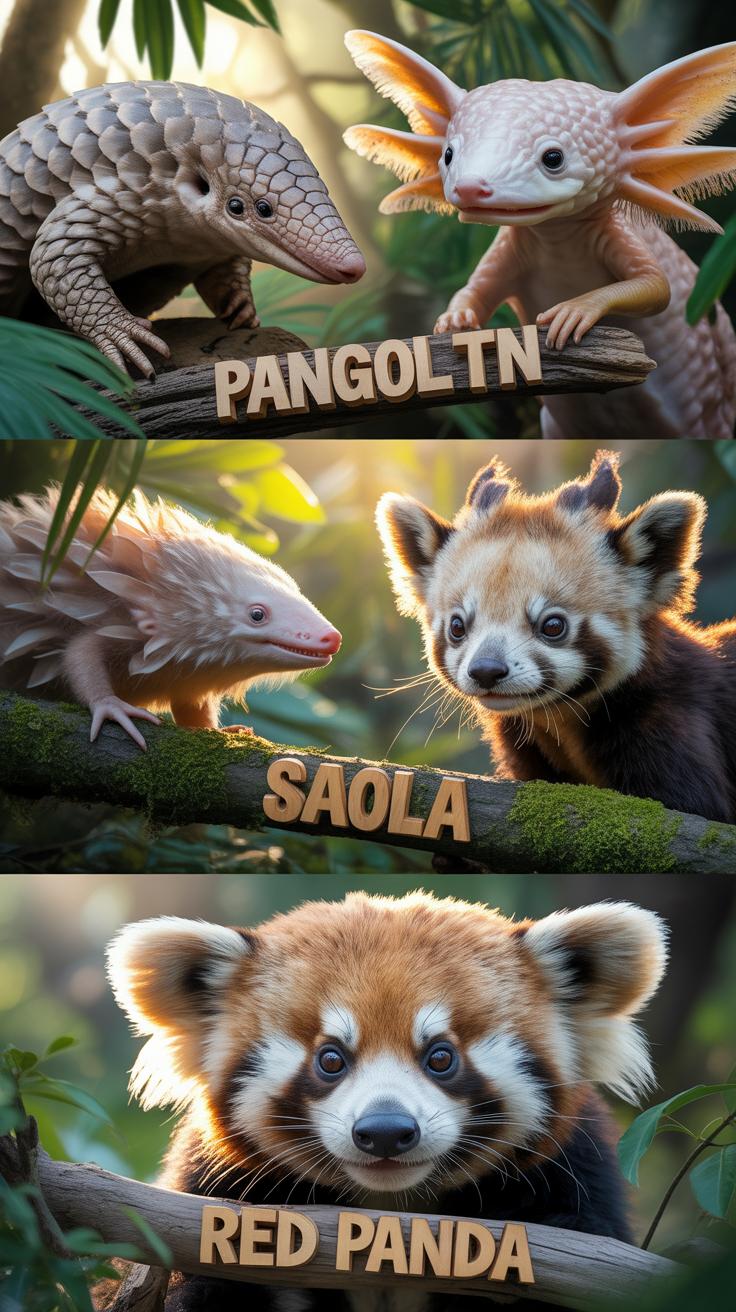
Pangolins are the only mammals covered in hard keratin scales. These scales provide a natural armor against predators like lions. When threatened, the animal rolls into a tight ball. This defense mechanism fails against human poachers. Hunters simply pick them up and place them in bags. This vulnerability makes them a top priority on the unusual endangered animals list.
Poachers target pangolins for their meat and scales. These parts trade heavily on the black market in Asia. Traditional medicine practitioners believe the scales cure various ailments despite no scientific evidence. Habitat loss further shrinks their remaining territory in Africa and Asia. All eight species face extinction. Conservationists now use satellite tracking and heavy ranger patrols to protect the remaining wild populations.
It is only when we truly know these forgotten, strange creatures that we can begin to love them as our long-lost kin.
The Kakapo: New Zealand’S Flightless, Nocturnal Parrot Clinging To Survival
The Kakapo is a large, flightless parrot native to New Zealand. It is the heaviest parrot species in the world. It evolved without land predators, so it lost the ability to fly. Instead, it uses strong legs to climb forest floors and trees. It has a distinct moss-green color that helps it blend into the foliage. Humans introduced invasive species that nearly wiped them out.

Today, the entire population lives on predator-free islands. Scientists manage every single bird. They use smart transmitters to monitor health and breeding habits. The birds breed only when the rimu tree produces heavy fruit. This happens every few years. Artificial incubation and hand-rearing help increase chick survival rates. This intensive management is the only reason the species still exists in the modern world.
Endangered Species Chart Understanding Population Numbers Behind The Rarest Animals
How To Read An Endangered Species Chart And What The Numbers Really Mean
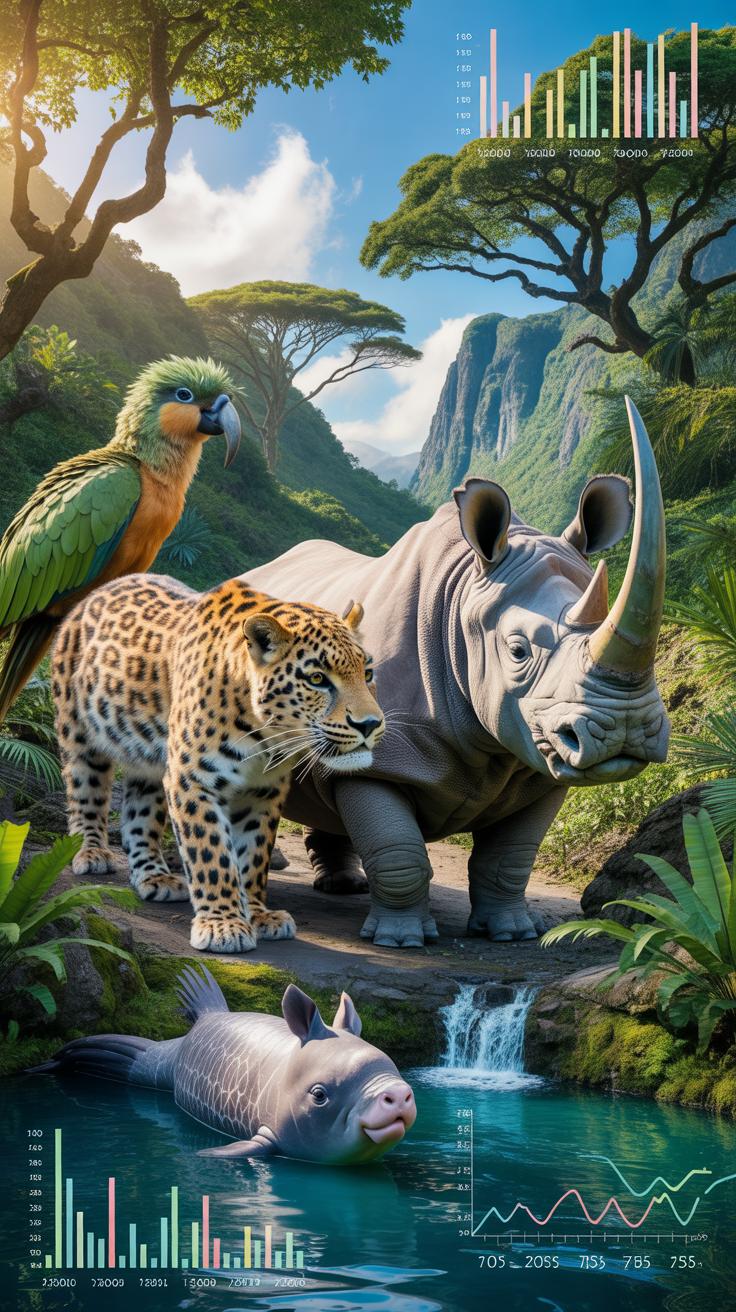
Conservationists use specific data categories to track survival. The IUCN Red List provides the global standard for these metrics. A population count alone does not tell the full story. You must look at the rate of decline and geographic fragmentation. A species with one thousand members in one spot is more vulnerable than one spread across a whole continent.
Charts often display the effective population size rather than the total count. This number represents individuals capable of breeding. Genetic diversity drops when this number falls too low. Low diversity leads to inbreeding and extinction through disease or climate shifts. Always check if the trend is stable, increasing, or decreasing. Static numbers often hide a looming collapse in the gene pool.
Shocking Population Figures For Animals On The Unusual Endangered Animals List
Numbers for the world’s most obscure creatures are reaching a critical breaking point. These figures reflect decades of habitat loss and illegal trade. Conservation groups monitor these survivors closely to prevent a total loss of the species. When a population drops below a certain threshold, natural recovery becomes nearly impossible without human intervention. The following data points highlight the severity of the current situation.
- Vaquita Porpoise: Fewer than ten individuals remain in the Gulf of California. This small marine mammal faces extinction due to illegal gillnet fishing. It is the rarest marine mammal on the planet today.
- Javan Rhino: Roughly seventy-five individuals exist in a single national park in Indonesia. Scientists worry that a natural disaster or disease outbreak could wipe out the entire species overnight due to this geographic concentration.
- Kākāpō: There are approximately two hundred and fifty of these flightless parrots left in New Zealand. Intensive management and island sanctuary programs keep them alive. Every single bird has a name and an electronic tracker.
- Saola: This forest-dwelling bovine is so rare that researchers cannot provide an exact count. Sightings occur so infrequently that experts call it the Asian Unicorn. Estimates suggest local populations are in the low hundreds or fewer.
- Addax: Fewer than one hundred of these white antelopes remain in the wild across the Sahara. Habitat destruction and civil unrest have decimated their numbers. Most surviving members now live in managed captive breeding programs.

Small populations create a high risk of total extinction. A single event can destroy the remaining members of a specialized group. These figures serve as a tactical warning for environmental planners. We must protect the remaining habitats immediately to avoid losing these unique genetic lines. Data shows that once a species reaches these low digits, every individual survivor becomes vital to the global ecosystem.
Endangered Animals Map Where In The World Are These Unusual Species Disappearing
Biodiversity Hotspots: Regions Where Unusual Endangered Animals Are Concentrated
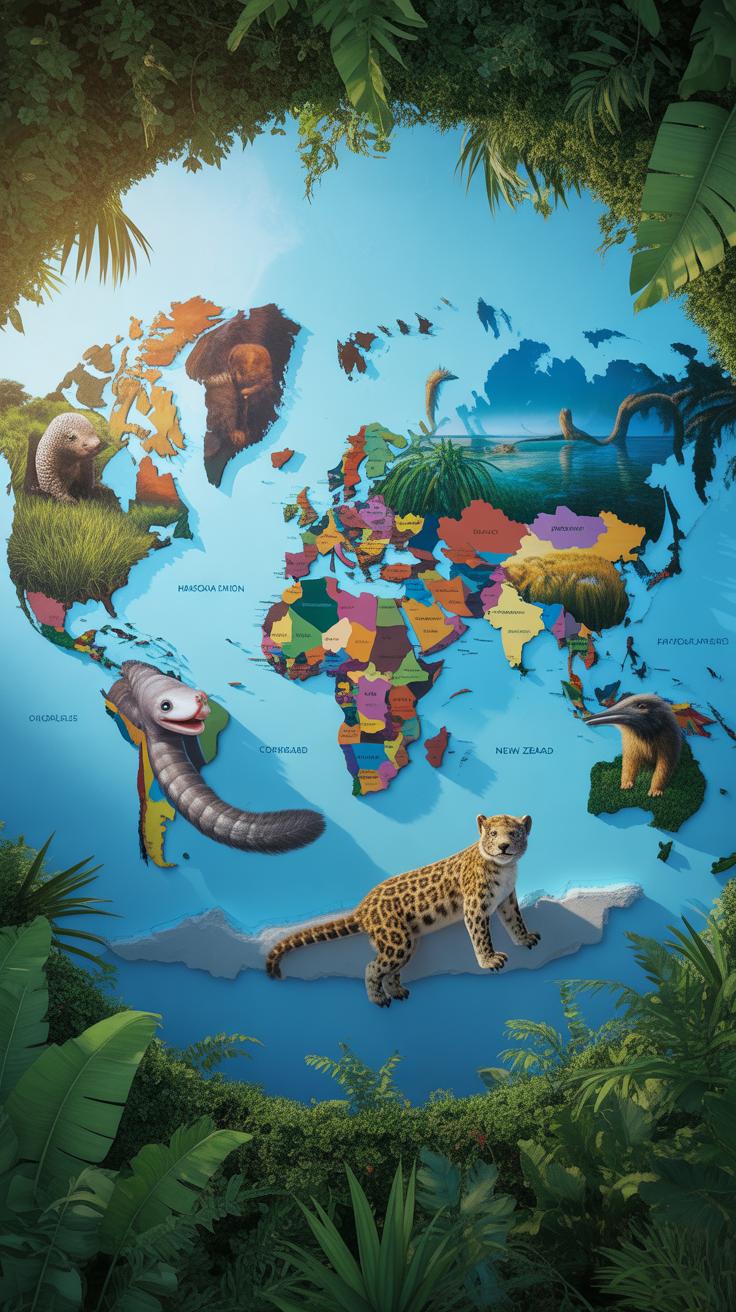
Specific geographic regions hold most of the world’s rarest wildlife. Scientists call these areas biodiversity hotspots. These zones cover only a small part of the Earth’s surface. However, they contain over half of all plant and animal species found nowhere else. Madagascar and the Tropical Andes lead this list. High human activity in these spots creates a fast extinction rate for local species.
Habitat loss drives the crisis in these concentrated regions. Agriculture and urban growth destroy the natural homes of unusual animals. Most of these species cannot adapt to new environments. Their survival depends on very specific climates and food sources. When humans change the land, these animals have nowhere to go. Conservationists focus on these map coordinates to save the most species with limited funds.
The Yangtze Finless Porpoise And China’S Freshwater Extinction Crisis
The Yangtze Finless Porpoise lives only in the Yangtze River system. It is one of the world’s few remaining freshwater cetaceans. This species is famous for its mischievous smile and high intelligence. Overfishing and heavy ship traffic have pushed it to the brink of extinction. Illegal sand mining also destroys the river bottom where these porpoises find food. Only about one thousand individuals remain.

China’s rapid industrial growth has turned the Yangtze into a dangerous environment. Toxic runoff and plastic waste poison the water daily. Hydroelectric dams block the natural movement of the porpoise and its prey. The government recently banned fishing in the river to help the population recover. This move is a desperate attempt to avoid losing another species after the Baiji dolphin went extinct years ago.
Endangered Species Map Tracking Habitat Loss And The Fight To Save Hidden Species
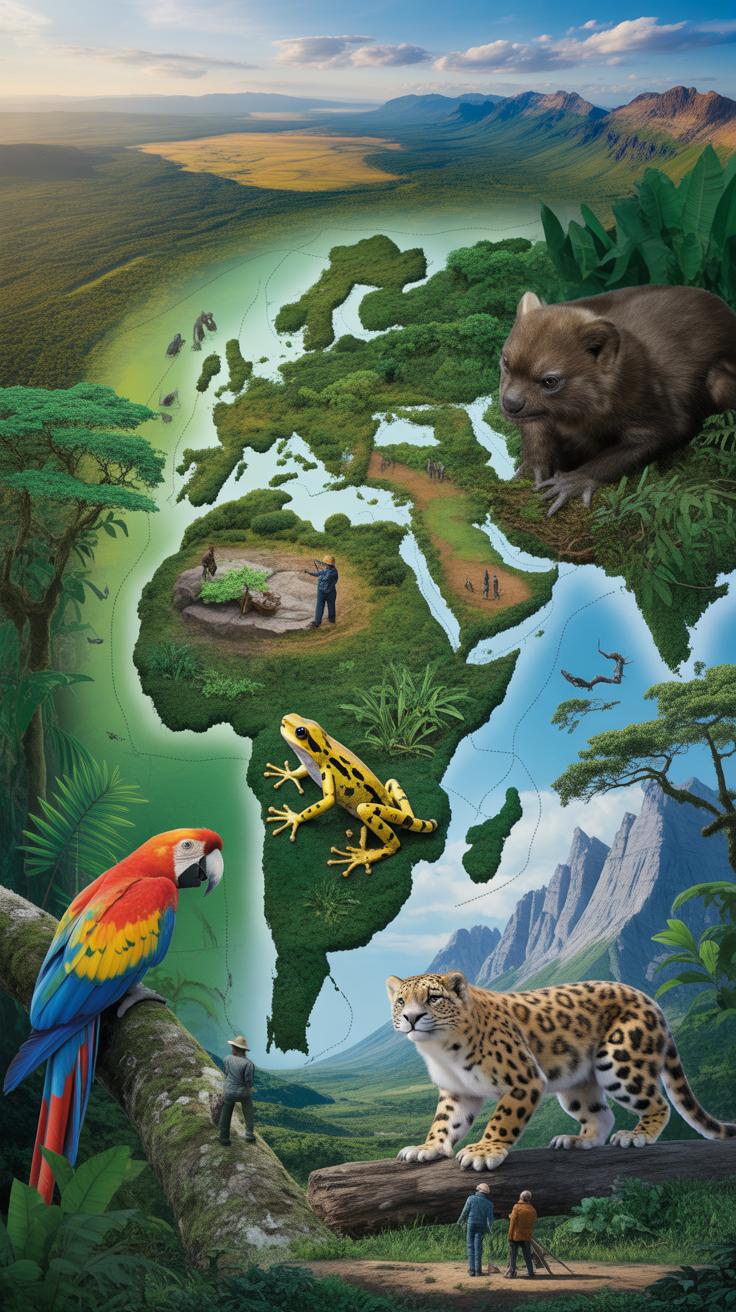
How Habitat Destruction Is Silently Erasing Animals From The Endangered Animals List With Pictures
Habitat loss remains the primary driver of extinction for obscure species. Agriculture and urban sprawl fragment territory. This isolates small populations. When a forest or wetland vanishes, the specialized animals inside cannot relocate. They lack the biological flexibility to survive in new environments. Humans often focus on large mammals. Smaller and more unusual creatures die out without public notice or recorded documentation.
Mapping these losses reveals a grim pattern of ecosystem collapse. Developers drain swamps and log remote jungles for raw materials. These actions destroy the specific microclimates required by rare amphibians and insects. Pictures of these animals help scientists track population density. Visual data proves that habitat fragmentation accelerates genetic drift. This process weakens a species until it can no longer reproduce. Intervention must happen before the land is cleared.
Conservation Success Stories: Unusual Animals Pulled Back From The Brink
Strategic intervention works when based on hard data. Conservationists have saved several obscure species by protecting specific breeding grounds. They use captive breeding programs to stabilize numbers. Once the population grows, they reintroduce the animals into the wild. Success requires local government cooperation and strict anti-poaching laws. We see results through rising population counts in protected zones. This proves that focused effort can reverse damage.

The Lord Howe Island stick insect provides a clear example of recovery. Experts thought it was extinct until a small group was found on a sea stack. Recovery teams gathered individuals for a massive breeding project. They cleared invasive predators from their native island. Now, the species is returning to its original habitat. This tactical approach works for many obscure animals. It requires identifying the exact cause of decline and removing it immediately.
Frequently Asked Questions

What exactly qualifies a creature for an unusual endangered animals list?
To qualify for an unusual endangered animals list, a species must face a high risk of extinction while possessing rare physical traits or behaviors that most people find surprising. These animals often live in isolated habitats, making them less familiar to the public than iconic species like pandas. Understanding their unique survival challenges is the first step toward appreciating the vast biodiversity of our planet and the importance of niche conservation efforts.
How can I help protect rare species if I don’t live near their natural habitats?
You can support an unusual endangered animals list by donating to specialized conservation organizations or adopting a niche species through reputable wildlife foundations. Spreading awareness on social media and choosing sustainably sourced products also makes a significant impact. By reducing your carbon footprint and avoiding products that contribute to habitat destruction, you provide indirect support for these fragile ecosystems, ensuring that even the most obscure creatures have a fighting chance at survival.
Are there affordable ways to learn about and support these obscure animals?
Absolutely! You do not need a large budget to make a difference for rare wildlife. Most ecological preserves and digital libraries offer free educational resources and virtual tours that highlight lesser-known species. Additionally, participating in community-led citizen science projects or signing petitions for habitat protection are powerful, cost-free ways to contribute. Staying informed and educating others is one of the most valuable resources you can provide for global conservation efforts.