The Quokka The WorldS Happiest Animal And Its Famous Smile
Why The Quokka Happy Animal Expression Is More Than Just A Cute Face
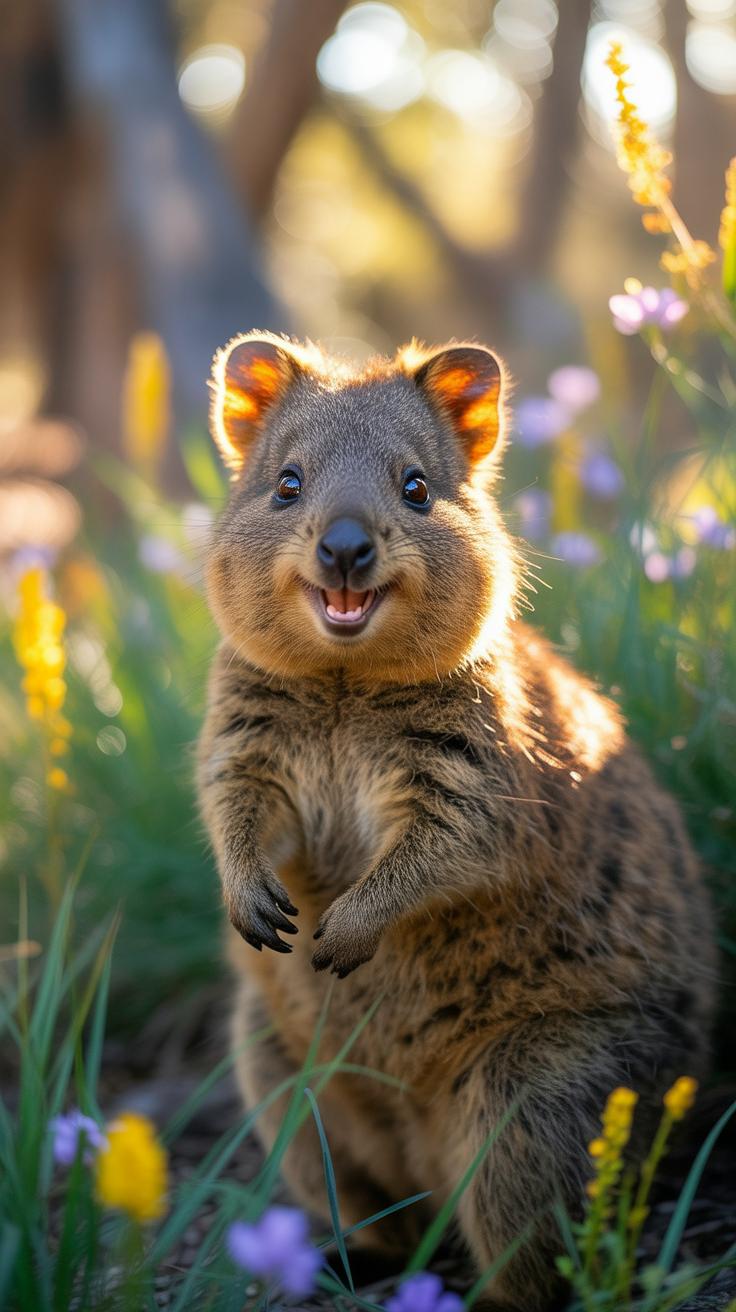
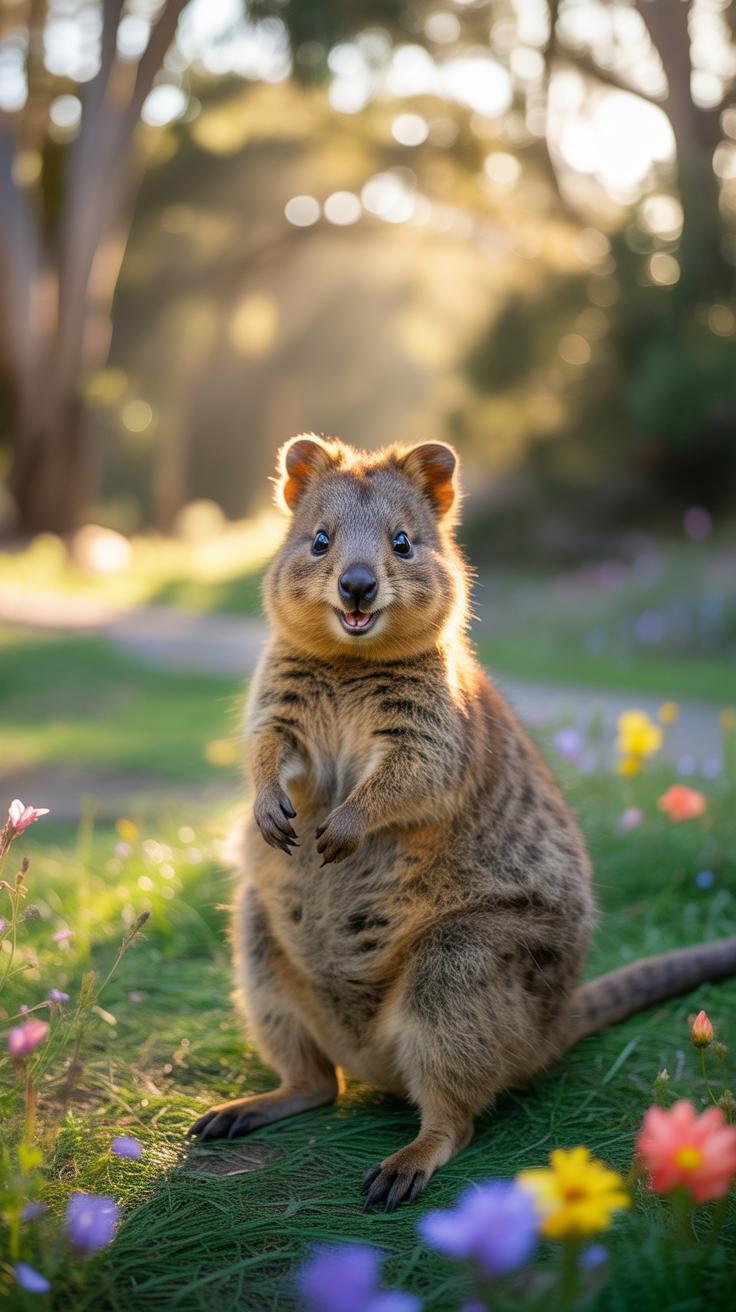
The quokka earns its reputation as the happiest animal in nature through a biological quirk. Its smile is not an emotional response. This facial structure facilitates thermoregulation. The animal opens its mouth and tilts its head to pant and cool down. Evolution shaped their jaw muscles and bone structure in a way that pulls the corners of the mouth upward permanently.
Strategic survival dictates this appearance. The set of the jaw allows for efficient grinding of tough, fibrous vegetation found in their harsh scrubland habitats. This physical trait creates a visual illusion of joy for human observers. Researchers confirm that while the look is iconic, it serves purely functional purposes. The quokka uses this anatomical configuration to process nutrients and manage body heat.
Where Quokkas Live And Why Rottnest Island Is Their Natural Stronghold
Quokkas occupy a specific niche in Western Australia. Most of the global population lives on Rottnest Island. This location acts as a biological fortress. The island lacks natural predators like foxes or feral cats that decimated mainland populations. This isolation allows the species to thrive in high densities. They dominate the local ecosystem because they face zero competition for resources.
Rottnest Island provides the exact environmental conditions these marsupials require. They prefer dense vegetation for cover and proximity to permanent water sources. The island’s geography prevents the encroachment of urban development. This protection ensures the population remains stable and genetically diverse. While small groups exist on the mainland, the island’s lack of predators remains the primary factor for their continued survival.
The Science Behind Animal Smiles Do Animals Actually Feel Happy
What Behavioural Science Says About Positive Emotional States In Animals
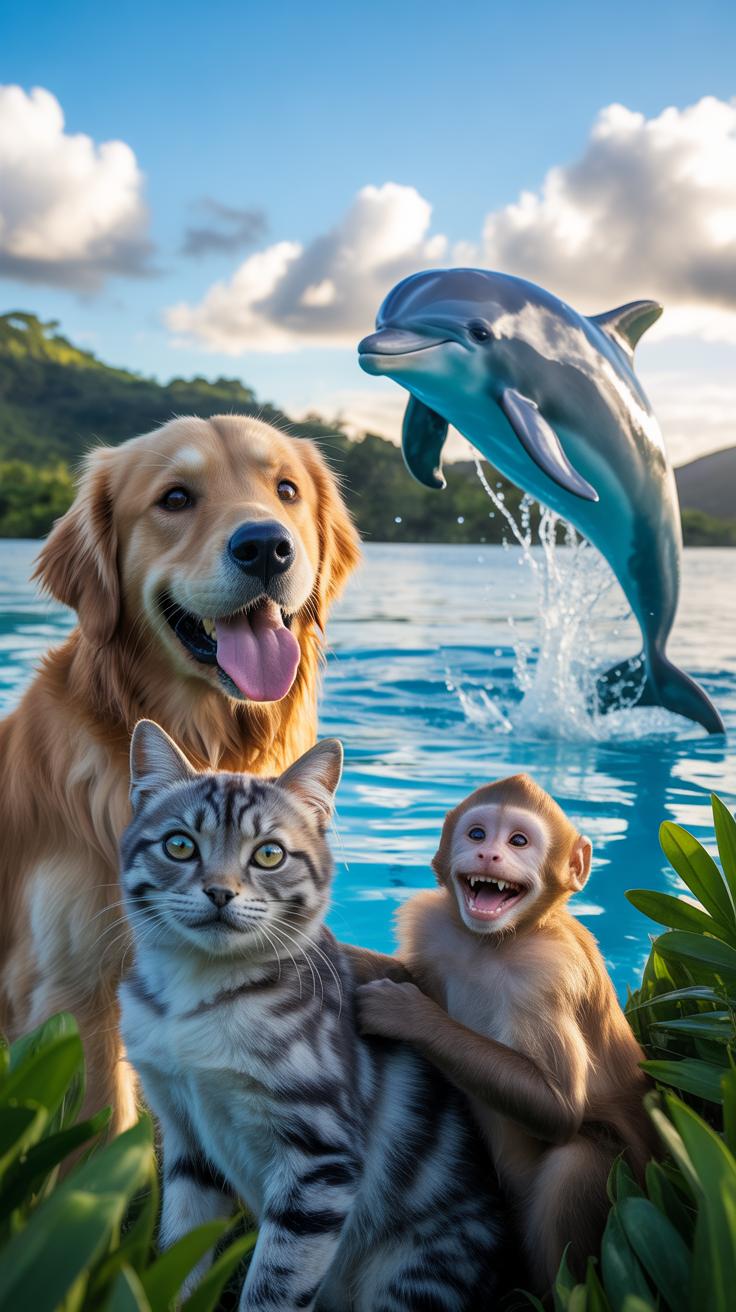
Ethologists use objective markers to measure animal pleasure. They track dopamine levels and heart rate variability to confirm positive states. Play behavior serves as a primary indicator of animal welfare. When animals engage in social play, they demonstrate safety and health. Science confirms that mammals share similar brain structures for processing emotions. These biological systems trigger comfort and satisfaction during social bonds.
Researchers avoid projectng human feelings onto animals. Instead, they focus on species-specific rituals that signal contentment. Purring in cats or tail-wagging in dogs represents clear communication of internal states. These signals facilitate group survival by reducing tension among peers. Happy animals explore their environments and interact with others frequently. Understanding these cues requires looking at body language rather than just facial expressions.
How Facial Muscle Structure Creates The Illusion Of Smiling In Wild Animals
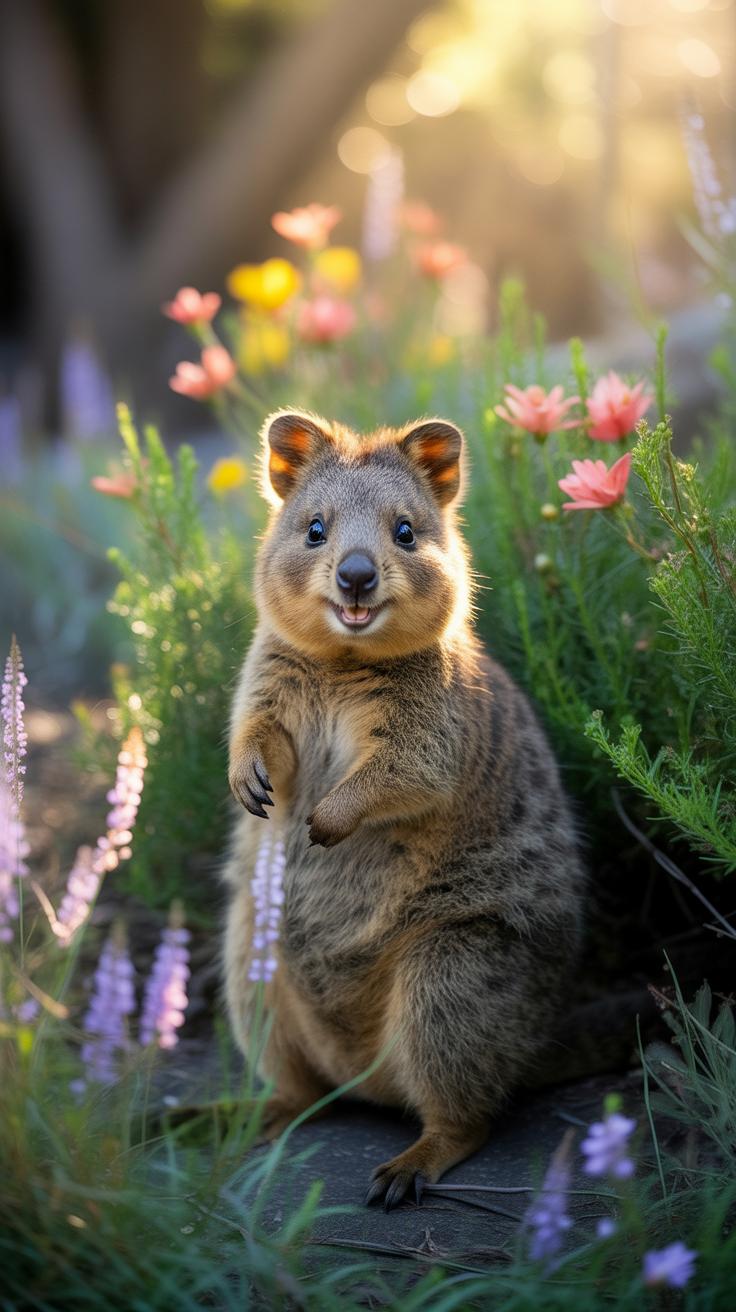
Facial anatomy often tricks the human eye into seeing a smile. Many animals lack the complex muscles required to express happiness through their mouths. For example, the quokka has a jaw structure that remains open and curved. This physical trait helps with thermoregulation and panting. Humans interpret this fixed shape as a grin due to pareidolia. This cognitive bias makes us see faces in random patterns.
Dolphins also appear to smile because of their skeletal makeup. Their lower jaw protrudes forward to accommodate sonar and feeding needs. This permanent curve does not change based on their mood or social interactions. Most wild animals use ear position or eye tension to show true emotion. Focusing on the mouth leads to inaccurate conclusions about animal psychology. Effective observation requires separating physical bone structure from actual behavioral intent.
Cute Quokka In Nature A Closer Look At Their Daily Life And Behaviour
What Quokkas Eat And How They Forage Across Their Natural Habitat
Quokkas are herbivorous marsupials that focus on high energy plant matter. They primarily consume native grasses, shrubs, and succulent leaves. On Rottnest Island, they adapt to seasonal changes by eating different plant species. They prefer young green shoots because these contain more nutrients. Their digestive system works like a sheep or cow. They ferment tough plant fibers in a specialized stomach to extract energy.
Foraging occurs mainly at night to avoid heat and conserve water. Quokkas do not dig for food like other marsupials. Instead, they browse on vegetation up to one meter above the ground. They can climb small trees to reach fresh leaves. This flexibility allows them to survive in environments with poor soil quality. They require very little water and get most moisture from the plants they eat.
Quokka Social Behaviour And How They Interact With Humans In The Wild
These animals generally live in small family groups or loose colonies. They are not highly territorial except when defending prime resting spots. Males establish a dominance hierarchy to gain access to the best shelter during the day. Despite their social nature, they forage alone to reduce competition for food. They use a range of vocalizations and scent marking to communicate boundaries and find potential mates.
Human interaction is common on Rottnest Island due to high tourist traffic. Quokkas lack natural predators on the island, so they show little fear of people. They often approach humans out of curiosity or to find easy food sources. This behavior is dangerous because human food makes them sick. Forcing an interaction for a photo stresses the animal. Professional guidelines state that people should maintain a safe distance at all times.
The Dolphin A Marine Animal With A Permanent Grin Built Into Its Anatomy
Understanding The Bottlenose Dolphins Fixed Jaw Structure And Why It Looks Like A Smile
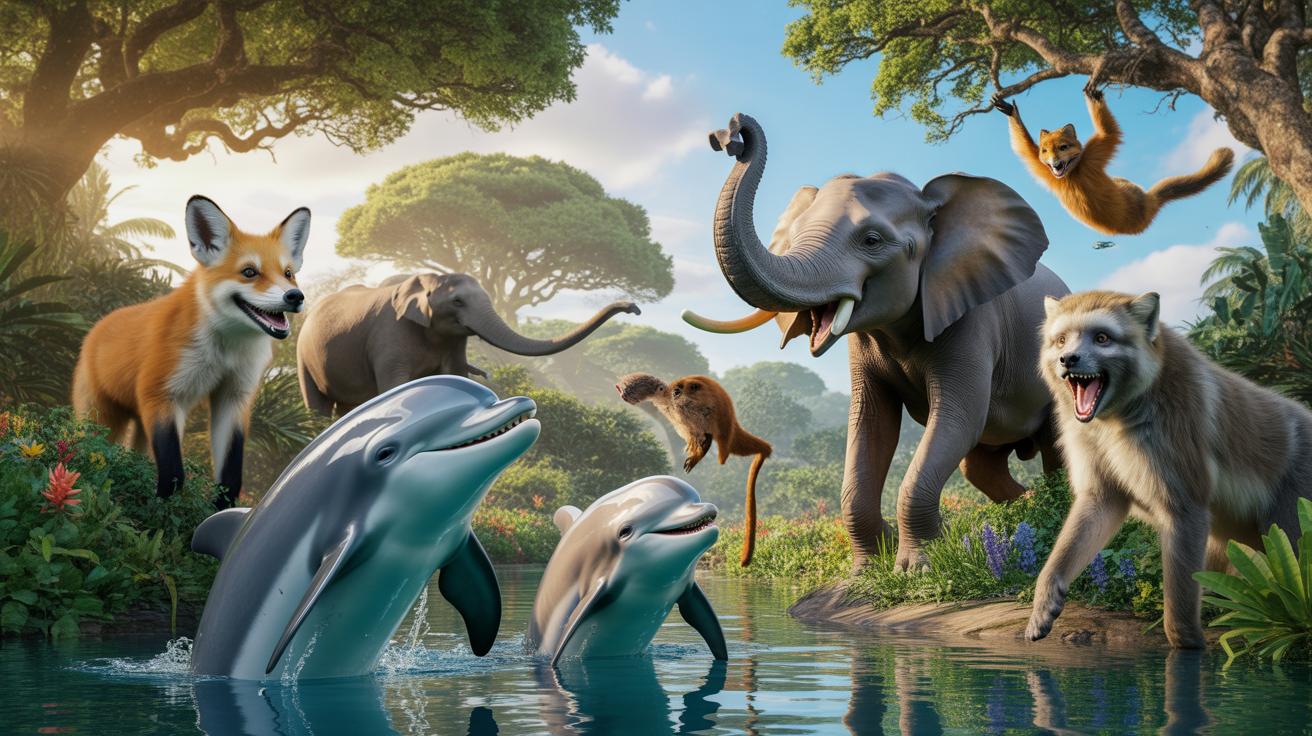
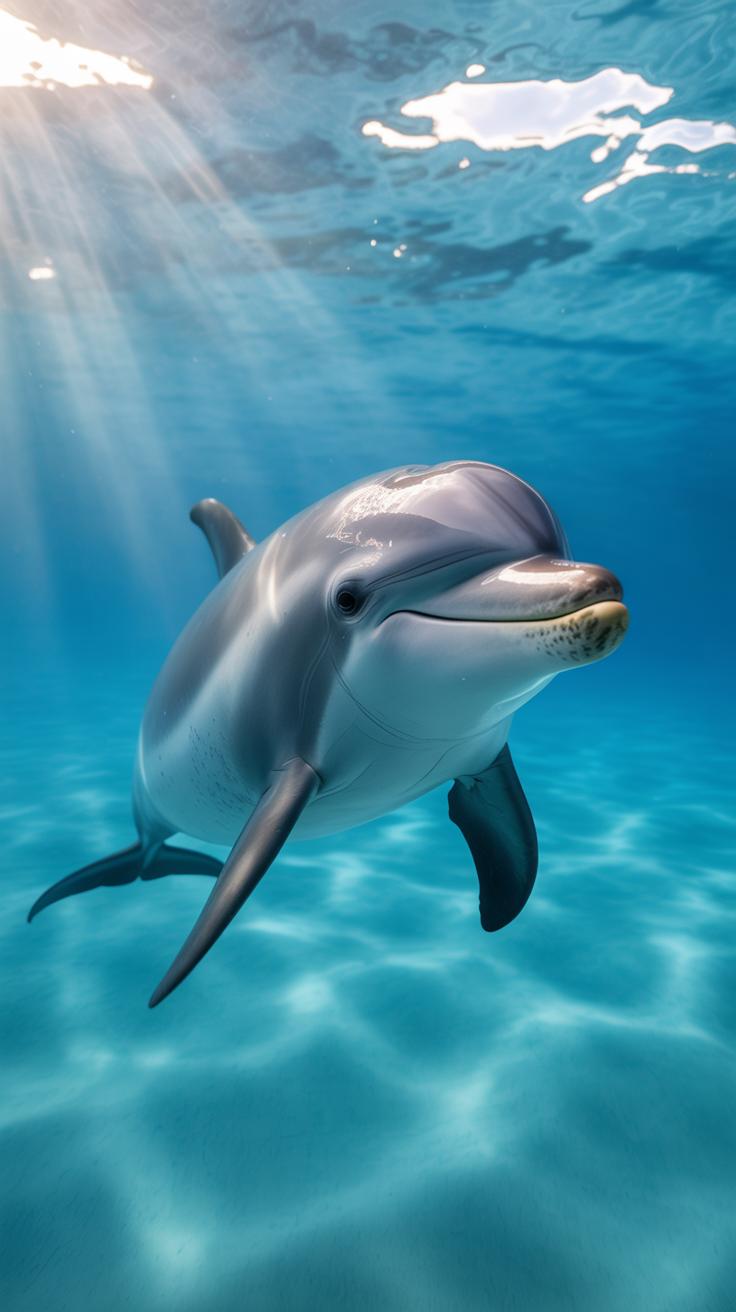
Dolphin facial expressions result from physical evolution rather than emotional state. The bottlenose dolphin possesses a fixed skeletal structure in its lower jaw. This bone curves upward at the corners. This shape creates a visual illusion of a smile. Humans interpret this curve as happiness. In reality, the dolphin cannot move these facial muscles to change its expression or stop smiling.
The anatomy serves functional purposes unrelated to mood. This jaw structure helps the dolphin stream water efficiently while swimming at high speeds. It also provides a wide gap for catching prey. The skin around the mouth remains taut and lacks the flexibility found in primate faces. Dolphins communicate using sound and body language. They do not use facial movements to signal their internal feelings to others.
Nature’s true joy is written in the gentle curves of a dolphin’s mouth and the quiet warmth of a quokka’s gaze. These cheerful spirits remind us that the simplest reason to smile is the sheer wonder of being alive.
Evidence Of Play And Positive Emotions In Wild Dolphin Populations
Scientists observe complex play behavior in wild dolphin pods. These animals engage in social games without immediate survival rewards. They toss seaweed to one another or ride waves created by boat bows. These actions release dopamine and indicate high levels of cognitive stimulation. Play acts as a tool for social bonding. It helps younger dolphins develop the physical skills needed for hunting and defense.
Dolphins also demonstrate empathy and collective joy during group activities. They perform synchronized leaps and coordinated hunting maneuvers. Researchers track these behaviors to measure pod health and social stability. While the facial expression is a permanent biological feature, their actions prove they experience genuine positive states. Their intelligence allows for curiosity and advanced social interactions. This makes them one of the most active participants in nature.
Happy Quokka With Open Mouth What It Signals And When It Happens
The Open Mouth Expression In Quokkas During Panting, Feeding, And Rest
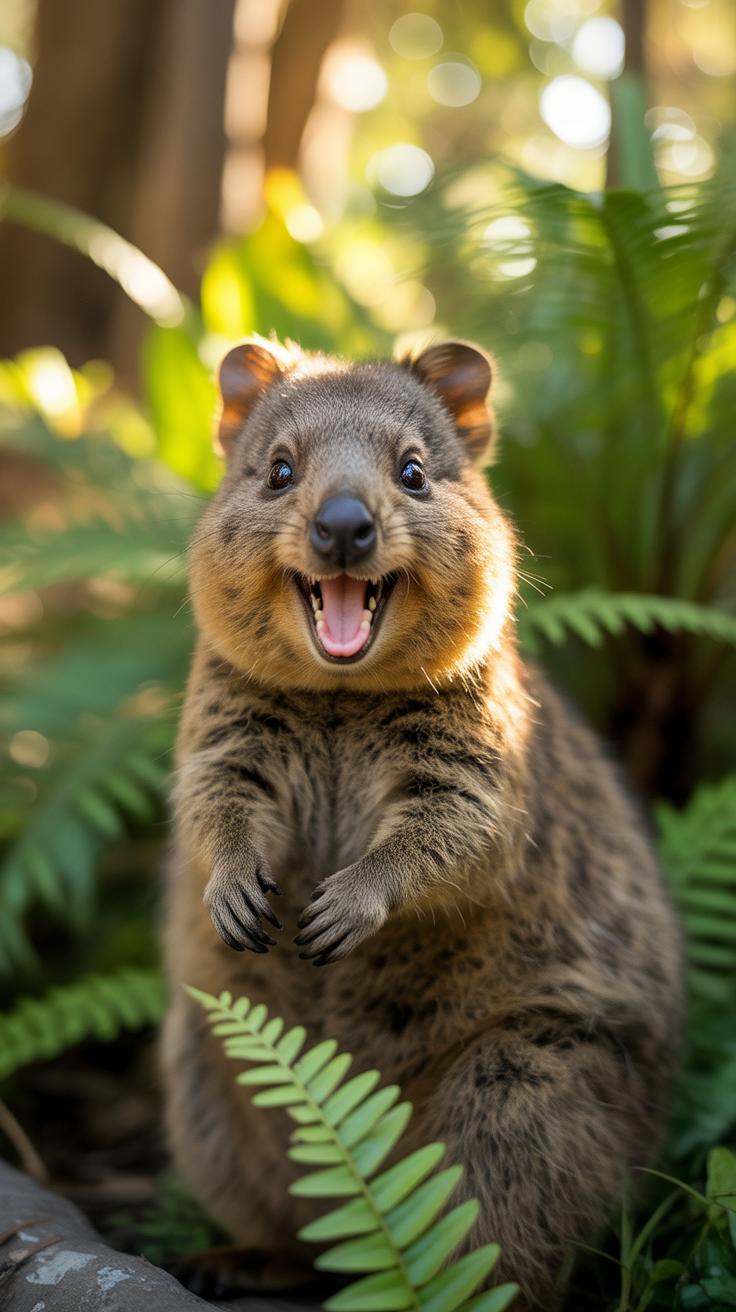
The quokka open-mouth look results from biological needs rather than emotional joy. These marsupials lack sweat glands across most of their bodies. They must pant to regulate their internal temperature in the Australian heat. This action lowers their jaw and pulls back their facial muscles. It creates a shape that humans mistake for a wide smile. The mouth stays open to maximize airflow and cool the blood.
Feeding and resting also trigger this specific facial posture. Quokkas have prominent front teeth and jaw structures designed for grinding tough vegetation. When they manipulate food or relax their facial muscles during rest, the jaw drops naturally. This physiological trait is a common feature of their anatomy. It serves a functional role in survival and digestion. It has nothing to do with the animal feeling happiness or amusement in that moment.
Why Quokka Nature Photography Captures This Expression So Frequently
Photographers target the quokka because of its unique jaw structure. When a quokka looks up at a camera lens, the angle emphasizes the curved line of its mouth. This perspective makes the open-mouthed cooling reflex look like a deliberate grin. Most viral photos happen during the day when the sun is high. The heat forces the quokka to pant more often. This timing ensures the mouth stays open for the shot.
Social media trends drive the high volume of these specific images. Tourists flock to Rottnest Island to capture the quokka selfie. They wait for the animal to look up or start panting before taking the picture. Humans have a tendency to project feelings onto animals based on facial shapes. This biological reflex has turned the quokka into a global symbol of cheer. The frequency of these photos reinforces a false narrative about the animal’s mood.
Other Happiest Animals In Nature That Rival The Quokkas Cheerful Look
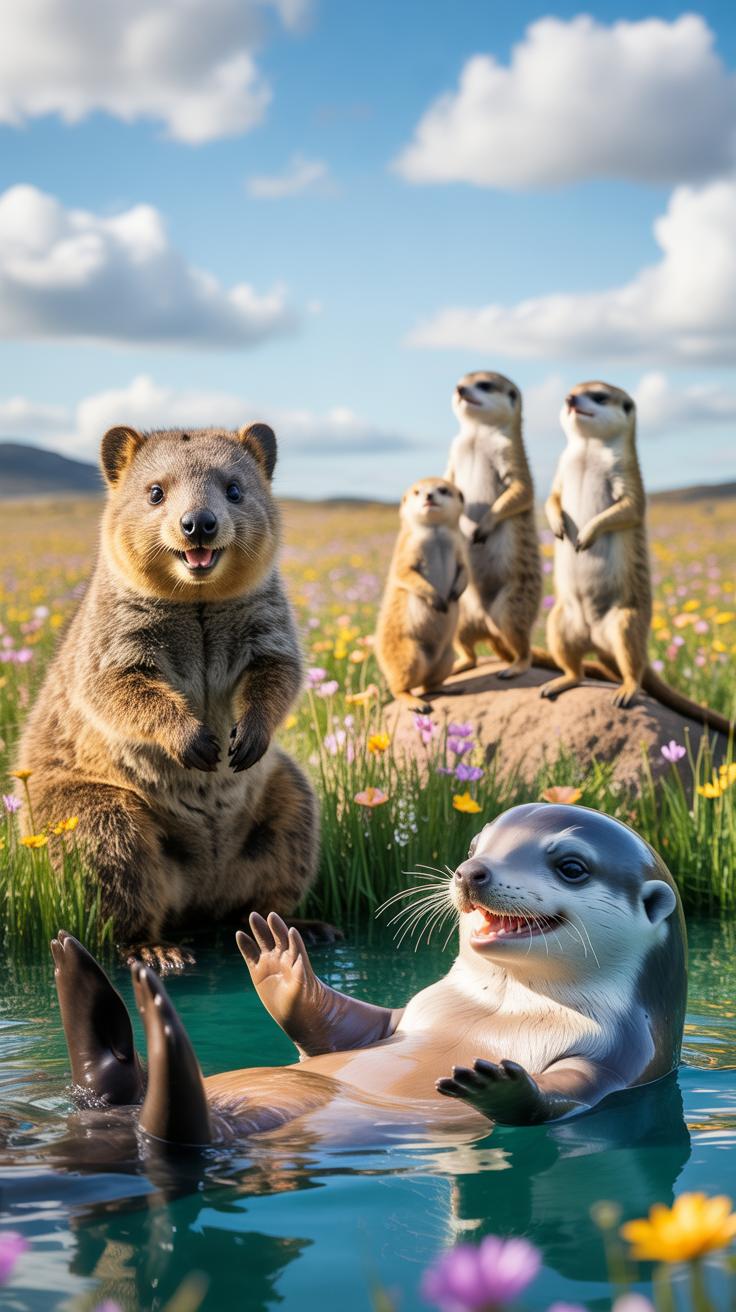
The Kookaburra, The Wombat, And The Saiga Antelope: Natures Other Smiling Faces
The kookaburra has a beak structure that mimics a wide grin. This physical trait helps the bird consume large prey like snakes and lizards. Its distinctive call sounds exactly like human laughter. This vocalization marks its territory and communicates with its family group. People perceive the sound as joy, but it serves a strictly strategic and defensive purpose in the wild.
The saiga antelope and the wombat also display facial structures that humans interpret as smiles. The saiga has a large, flexible nose that hangs over its mouth. This snout filters out dust and warms cold air before it reaches the lungs. The wombat has a short, broad face with a mouth shape that curves upward. These features evolved for survival, not for expressing a specific emotional state.
Top Animals Around The World Known For Their Naturally Joyful Appearances
Various species possess facial anatomy that resembles human expressions of happiness. Jaw alignment and muscle placement often create these visual illusions. Environmental pressures dictate these shapes over millions of years. Predators and prey alike have developed these features to facilitate breathing, eating, or sensory input. We associate these looks with joy despite their purely functional origins.
- Short Beaked Echidna: This monotreme has an elongated snout and a mouth that appears to curve upward. The shape helps it forage for ants and termites in various Australian environments. Its small eyes and rounded body contribute to its friendly appearance.
- Beluga Whale: The flexible neck and bulbous forehead of this whale allow for a wide range of facial movements. Its mouth naturally curves into what looks like a permanent grin. This structure facilitates complex vocalizations and helps the animal navigate icy arctic waters.
- Sloth: This mammal has dark facial markings that frame its eyes and mouth. These markings create the appearance of a perpetual smile. This look is actually a result of its skull structure and slow muscle movements. It helps the animal stay camouflaged in the rainforest canopy.
- Axolotl: This aquatic salamander retains its larval features throughout its entire life. It has wide-set eyes and a broad mouth that stays open slightly. This gives the creature a constant smiling expression. Its external gills look like flower petals, adding to its charismatic visual appeal.
- Japanese Macaque: These primates often look relaxed and happy while bathing in hot springs. Their red faces and soft fur create a peaceful appearance to observers. Their social grooming habits and facial expressions resemble human interactions. This behavior strengthens group bonds and reduces stress for the entire troop.

Scientists use the term anthropomorphism to describe these human interpretations. People see happiness in a dolphin or a stingray because the mouth shape matches our own smile. These animals use these features to hunt or breathe. Understanding the biological reason for these shapes provides a clearer view of animal health. Reliable data shows that a smiling appearance does not always mean the animal is content.
Exotic Animals Quokka Why This Marsupial Has Captured The WorldS Attention
How The Quokka Selfie Trend Went Viral And Transformed Wildlife Tourism In Australia
The quokka became a global digital sensation through the quokka selfie trend. This movement started on social media platforms like Instagram. Users shared photos of the animal’s facial structure which mimics a human smile. High-profile celebrities later boosted this exposure. This visibility turned Rottnest Island into a primary destination for international travelers. Digital engagement drove massive growth in local tourism sectors.
The surge in visitors changed how Western Australia manages wildlife interactions. Authorities focus on strict guidelines to protect the animals from human interference. Tourists must not touch or feed the marsupials. These rules ensure the animals remain wild while supporting the economy. The trend proves that viral content can dictate regional tourism strategy. It also highlights the power of animal morphology in digital marketing.
Conservation Status Of The Quokka And The Threats They Face In The Wild Today
The International Union for Conservation of Nature lists the quokka as a vulnerable species. While they thrive on Rottnest Island, mainland populations have declined sharply. The main cause is habitat loss due to agricultural expansion and urban development. Invasive predators like foxes and feral cats also decimate small groups. These factors shrink the animal’s natural range across the southwestern part of Australia.

Environmental changes pose a significant risk to the remaining quokka populations. Frequent bushfires destroy the dense vegetation they need for cover and food. Droughts limit their access to freshwater sources on the mainland. Conservationists use fenced enclosures to protect mainland colonies from predators. Maintaining genetic diversity across isolated groups remains a critical challenge for biologists. Effective land management is the only way to ensure their survival.
Quokka Animal Pictures Tips For Photographing Smiling Wildlife Responsibly
Best Practices For Ethical Wildlife Photography Without Disturbing Natural Behaviour
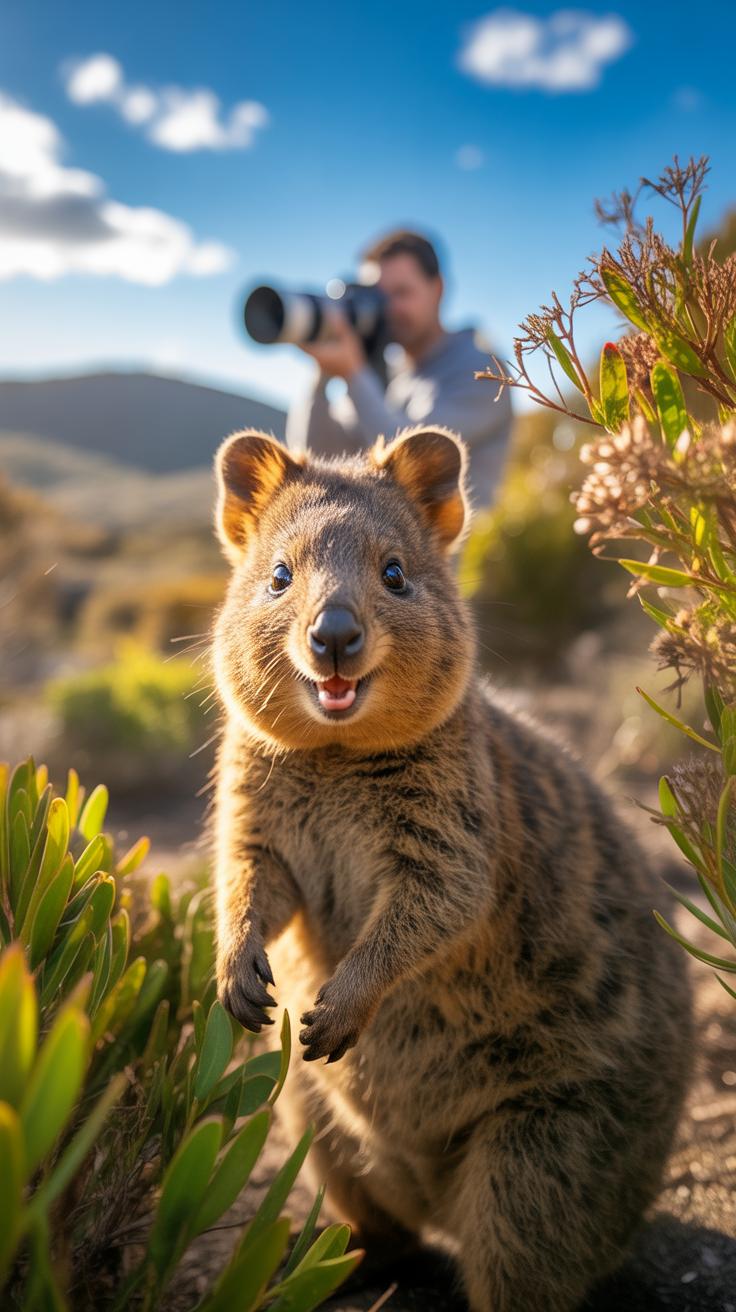
Capturing the quokka requires strict adherence to conservation laws. These marsupials live in fragile ecosystems where human interference causes high stress. You must maintain a physical distance of at least two meters at all times. Federal laws protect these animals from harassment or handling. Violations result in heavy fines. Your goal is to capture natural movements without baiting or touching the wildlife.
- Zero Touch Policy: Physical contact transmits human bacteria to the quokka and disrupts their skin health. Avoid all petting or handling to protect their immune systems and keep them wild.
- Prohibit Feeding: Human food causes severe malnutrition and dental issues for quokkas. Never use snacks to lure them into a shot. Natural foraging behavior ensures their long term survival in the island habitat.
- Low Angle Approach: Drop your body level to the ground instead of leaning over the animal. This perspective makes you look less like a predator. It also places the camera at eye level for better shots.
- Silent Operation: Use electronic shutters to eliminate camera noise. Sudden sounds startle the animals and cause them to flee. Quiet movements allow you to document genuine interactions without altering their typical daily routine.
- Stick To Paths: Stay on designated trails to avoid crushing native vegetation and burrows. Off-trail movement destroys the specific plants quokkas need for food and cover. Professional photographers respect the boundaries of the park.
Ethical photography prioritizes the animal over the image quality. If a quokka moves away, do not pursue it. Rapid movements signal a threat to the creature. High stress levels can impact their breeding and survival rates. Focus on patience rather than manipulation. Good shots come from waiting for the animal to enter your frame naturally. Respecting their space ensures they remain approachable for others.
The Best Locations And Times Of Day To Photograph Quokkas In Their Natural Environment
The primary location for quokka photography is Rottnest Island in Western Australia. These animals are nocturnal by nature but have adapted to daytime activity in high traffic areas. Look for them near the settlement area or under shade trees during the afternoon. They congregate where water and food are available. Coastal scrub zones provide the most authentic backdrops for professional grade images.

Timing is critical for lighting and animal activity levels. Early morning and late afternoon offer the best golden hour light. Harsh midday sun creates deep shadows on their faces. Quokkas become most active as the temperature drops toward dusk. This period provides soft light that highlights their fur texture. Plan your shoot around these peak hours for the highest quality tactical results.
Happy Quokka Smiling What Their Expressions Teach Us About Animal Wellbeing
How Animal Welfare Research Uses Positive Indicators Like The Quokka Expression
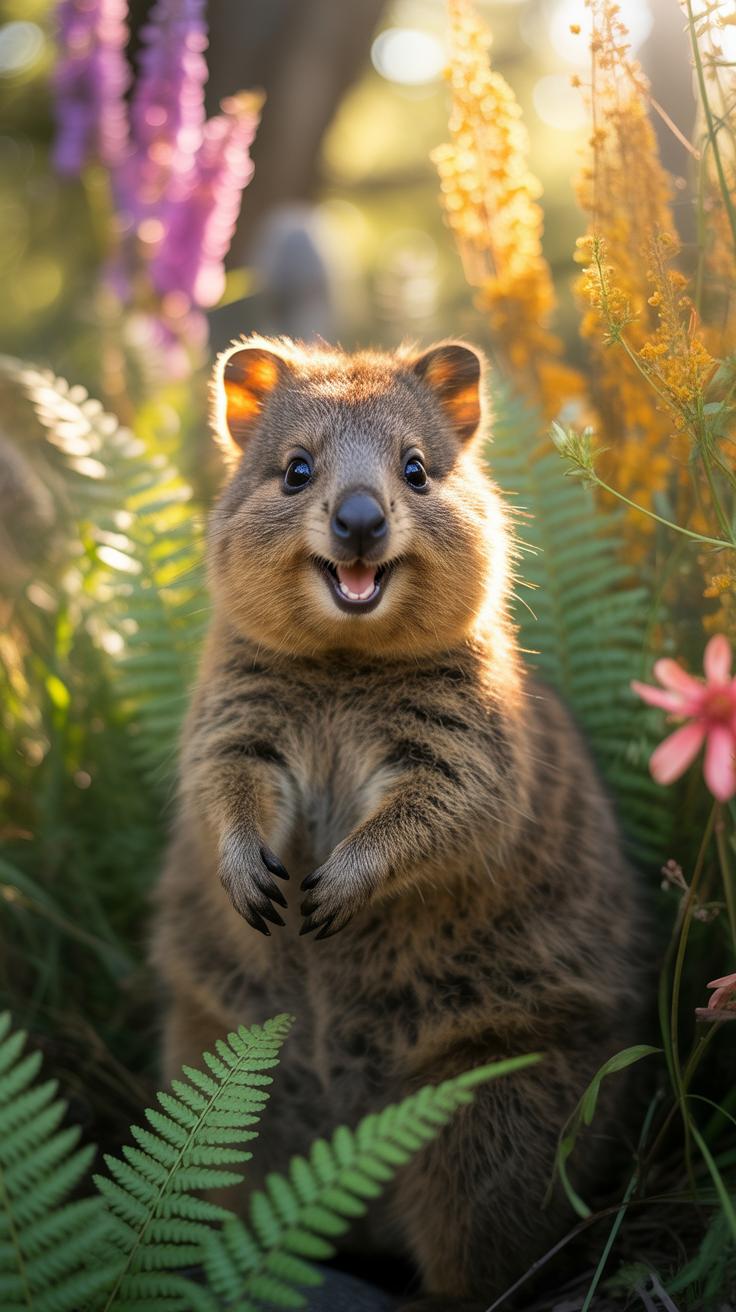
Biologists use facial markers to measure animal emotions. The quokka smile is a fixed anatomical trait, not a mood indicator. Researchers call these positive indicators. They look for relaxed muscle tension and ear positions. These physical signs help scientists track stress levels in wild populations. Identifying these traits allows teams to build better conservation zones. Accurate data on animal comfort improves long-term survival rates.
Ethologists now focus on positive welfare states rather than just avoiding pain. They study how animals interact with their environment when they feel safe. The quokka teaches us that appearance can be misleading. Observation must go deeper than surface looks. Scientists set up remote cameras to watch natural behaviors without human interference. This method provides a clear picture of how these marsupials truly thrive in the wild.
What Humans Can Learn About Happiness And Wellbeing From The Happiest Animals In Nature
The quokka survives by adapting to a specific niche on Rottnest Island. Its calm nature comes from a lack of natural predators in its habitat. This demonstrates how environmental security dictates behavior and stress. Humans can learn that health depends on a safe and stable surroundings. When the basic needs for food and safety are met, social interactions increase. Community stability creates the foundation for overall wellbeing.
Natural resilience is a core lesson from these animals. Quokkas have survived harsh climate shifts and limited water sources for centuries. They focus on immediate resources and social bonding to stay alive. This teaches us that survival requires both physical stamina and group cooperation. High wellbeing is not accidental. It is the result of efficient energy use and local adaptation. Consistent habits lead to better health outcomes over time.
Frequently Asked Questions

Which species are considered the happiest animals in nature?
While many species appear cheerful, the Quokka is widely regarded as the leader of the happiest animals in nature due to its permanent, upturned grin. Other contenders include the resilient Axolotl and the playful Bottlenose Dolphin. It is important to remember that while these facial structures mimic human smiles, they often serve biological purposes like helping with breathing, thermoregulation, or simply the unique bone structure of the animal’s jaw.
How can I capture high-quality photos of smiling wildlife safely?
To photograph the happiest animals in nature, focus on patience rather than proximity. Use a telephoto lens to maintain a respectful distance, which ensures the animal remains relaxed and displays natural behaviors. Research their active hours to find them when they are most energetic. Always follow local wildlife guidelines and avoid using food to lure them, as a truly happy animal is one that feels safe and undisturbed in its habitat.
Are there affordable ways to see these cheerful animals without traveling abroad?
You don’t need an expensive international flight to enjoy cheerful wildlife. Many local wildlife rescues, accredited sanctuaries, and botanical gardens house species known for their friendly appearances. Visiting local wetlands or state parks can also reveal joyful sights, like sunbathing turtles or playful river otters. These accessible locations offer a budget-friendly way to connect with nature’s beauty while supporting conservation efforts right in your own backyard or regional community.