Why Learning How To Trim A Yorkie Face At Home Is Worth It
The Real Cost Savings Of DIY Yorkie Grooming
Professional grooming for a Yorkshire Terrier costs significant money every four to six weeks. These small dogs require frequent maintenance because their hair grows continuously like human hair. High-end shops charge premium rates for facial work due to the precision required. Handling this task at home eliminates the recurring service fee. Over a single year, the total savings often cover the price of professional shears and thinning scissors.
Long-term financial benefits extend beyond the appointment price. You save money on fuel and travel time to the salon. You also avoid the common upcharges for dematting or behavioral issues that some groomers apply. Controlling the schedule means you do not pay for last-minute emergency trims when hair blocks the dog’s vision. Mastery of this skill turns an expensive lifelong liability into a manageable and free household task.
How Regular Face Trimming Supports Your Yorkies Health And Comfort
Proper facial hygiene prevents medical issues that common Yorkie hair growth causes. Long hair around the eyes frequently leads to chronic irritation and infection. Excessive hair traps moisture and bacteria against the skin which creates painful hot spots. Regular trimming keeps the area dry and clean. You stop tear staining before it becomes a permanent issue. A clear face allows your dog to see obstacles and navigate surroundings safely.
Hygiene near the mouth is equally critical for your dog’s daily comfort. Long facial hair often dips into food bowls and water dishes. This creates a damp environment where fungi grow and produce foul odors. Wet hair also attracts dirt and debris from the floor. Trimming the mustache and chin area keeps the mouth clean during meals. A well-groomed face reduces the risk of dental complications and promotes better overall skin health.
Essential Tools You Need Before You How To Trim A Yorkie
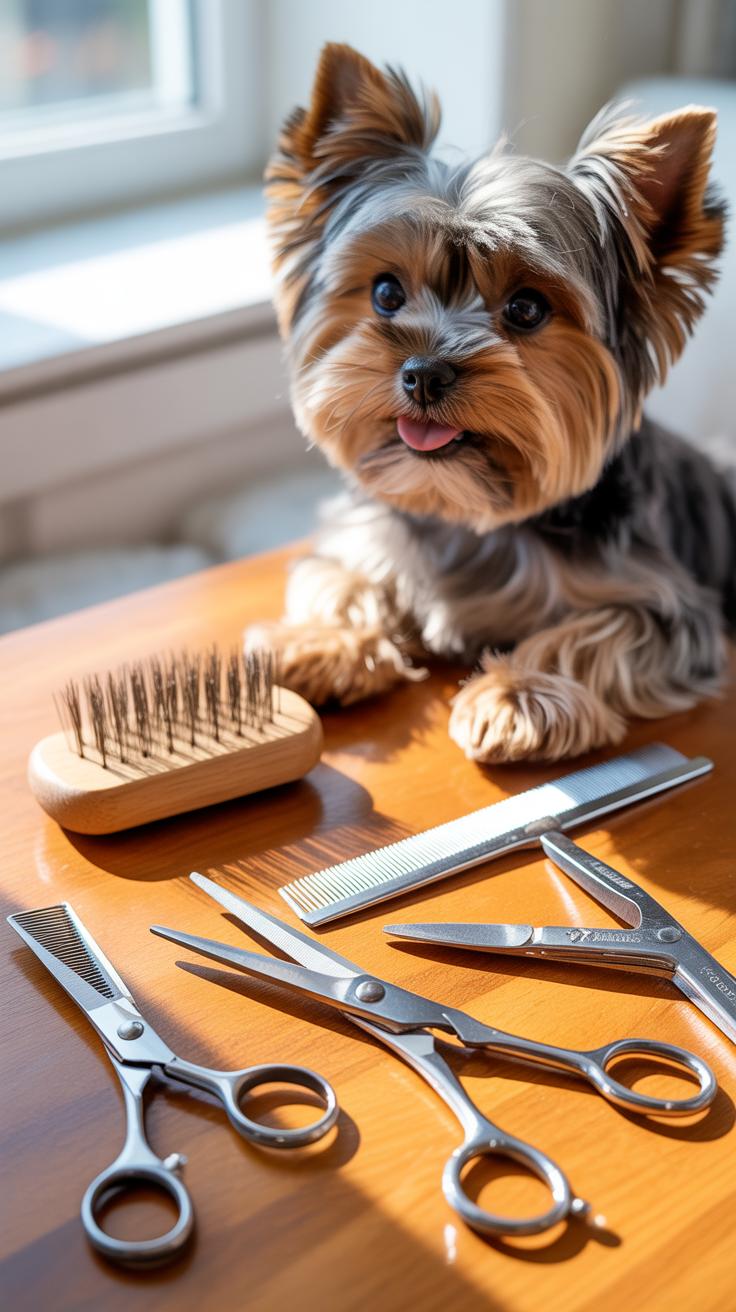
Choosing The Right Scissors Clippers And Combs For A Yorkie Fine Coat
Yorkshire Terriers possess a unique single-layer coat that resembles human hair rather than traditional fur. This fine texture requires specific tools to prevent pulling or tearing the delicate strands. Using standard household scissors will lead to uneven cuts and possible skin injuries. High-quality stainless steel tools ensure clean lines and safety. You must select equipment designed for precision work around sensitive areas like eyes and ears to achieve professional results.
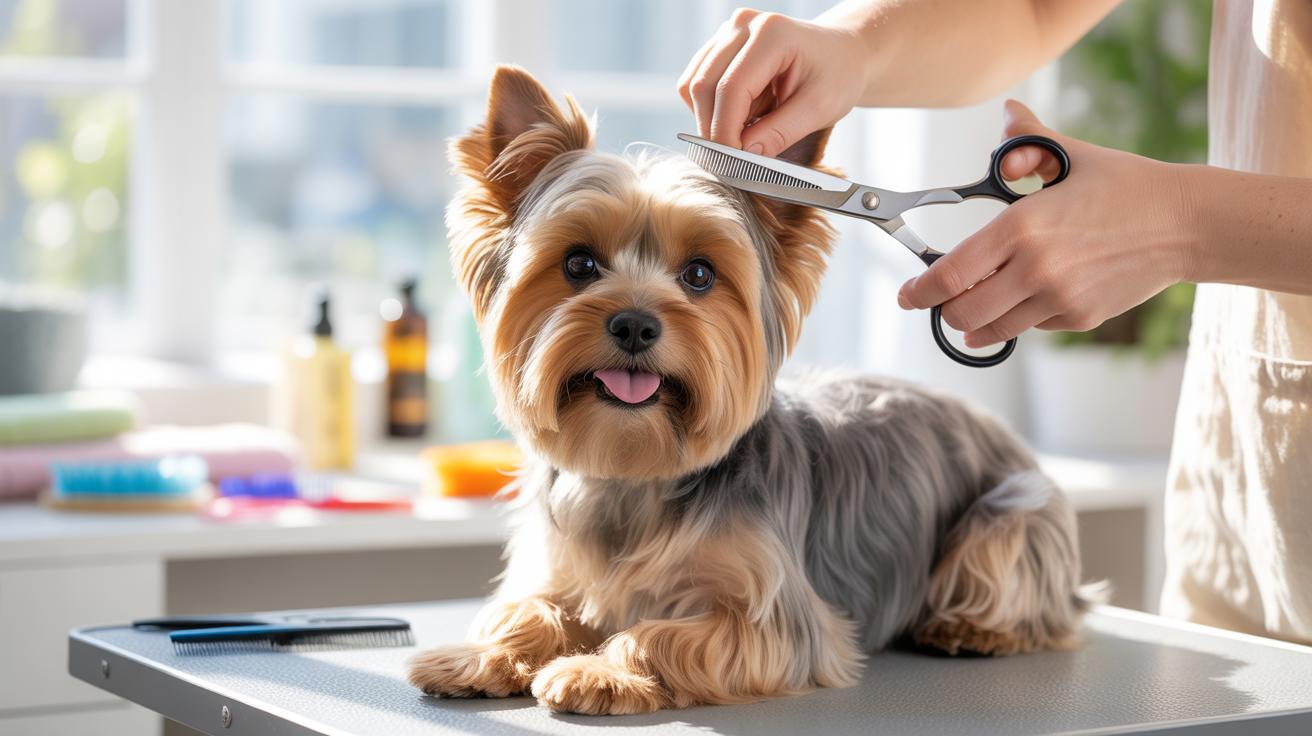
- Safety Round-Tip Scissors: Use these for trimming hair near the eyes and muzzle. The blunt ends prevent accidental puncture wounds if the dog moves suddenly. These are mandatory for novice groomers working on high-risk facial areas.
- Thinning Shears: These blades feature teeth that remove only a portion of the hair. They blend layers and soften harsh lines around the face. They help correct mistakes by making uneven cuts look intentional and natural.
- Fine-Toothed Metal Comb: Often called a Greyhound comb, this tool lifts hair away from the skin before cutting. Metal tines glide through fine Yorkie hair without creating static. It identifies small mats that scissors might otherwise pull.
- Small Detail Clippers: Choose a cordless, quiet trimmer with a narrow blade head. These are essential for clearing hair from the ear tips and the bridge of the nose. Low vibration models keep the dog calm during the process.
- Electric Blade Wash: Maintain your tools by using a disinfecting lubricant. This spray cools the blades and removes trapped hair and skin oils. Clean tools stay sharp longer and prevent the spread of bacteria on the dogs face.
Proper maintenance of your toolkit determines the quality of the final trim. Dull blades snag the hair and cause the dog discomfort or panic. Inspect your scissors for alignment and sharpness before every session. Store your tools in a dry case to prevent rust or damage. Investing in professional grade equipment saves money over time by reducing the need for corrective grooming visits and professional sharpening services.
Setting Up A Safe And Comfortable Grooming Space At Home
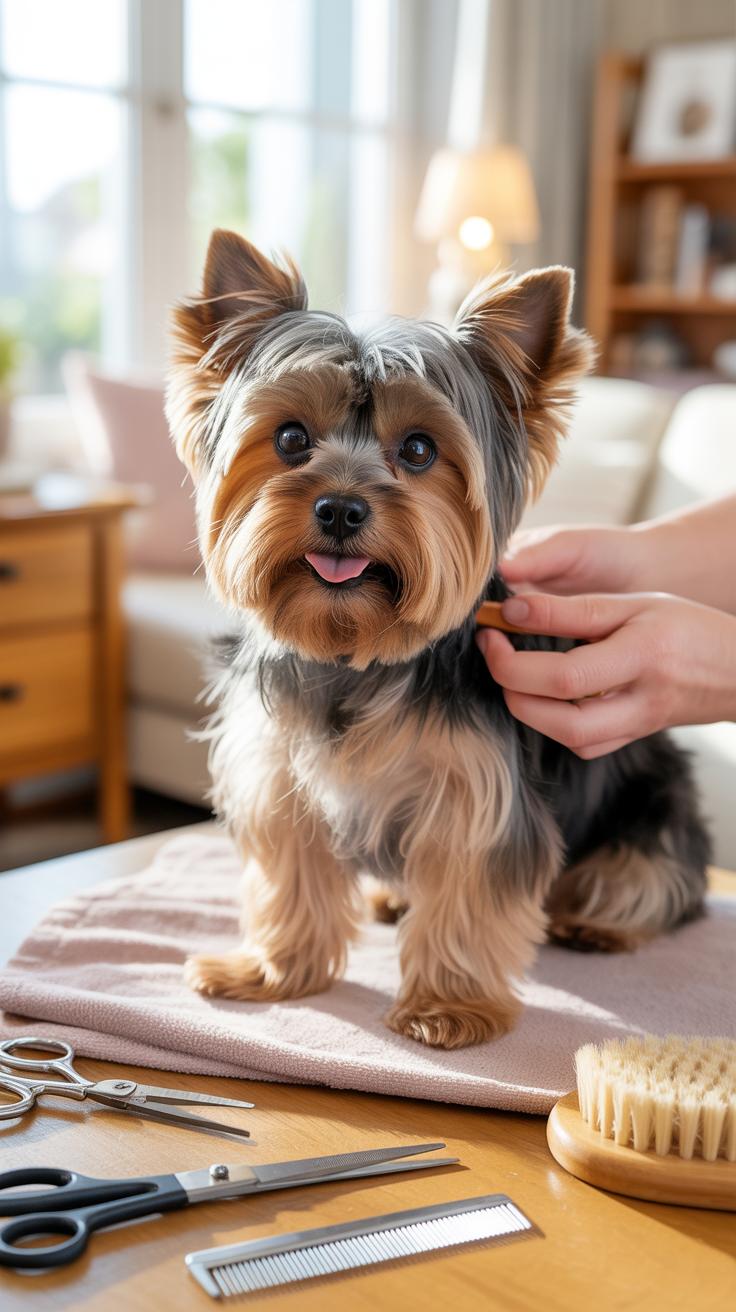
Position your grooming station in a well-lit area with a non-slip surface. Yorkies are small and agile, making a secure footing essential for their safety. Use a rubber mat on a sturdy table to prevent the dog from sliding. Proper lighting allows you to see the fine hairs around the eyes clearly. Eliminate distractions like other pets or loud noises to keep the dog focused on staying still.

Secure the dog using a grooming loop or a secondary person to hold the head steady. Control is the most important factor when using sharp tools near the face. Keep all your equipment within arm’s reach so you never leave the dog unattended on the table. Constant physical contact provides the dog with reassurance while allowing you to feel for sudden muscle movements. A controlled environment prevents accidents and ensures a fast, efficient trim.
How To Cut Yorkie Face Hair Without Causing Stress Or Injury
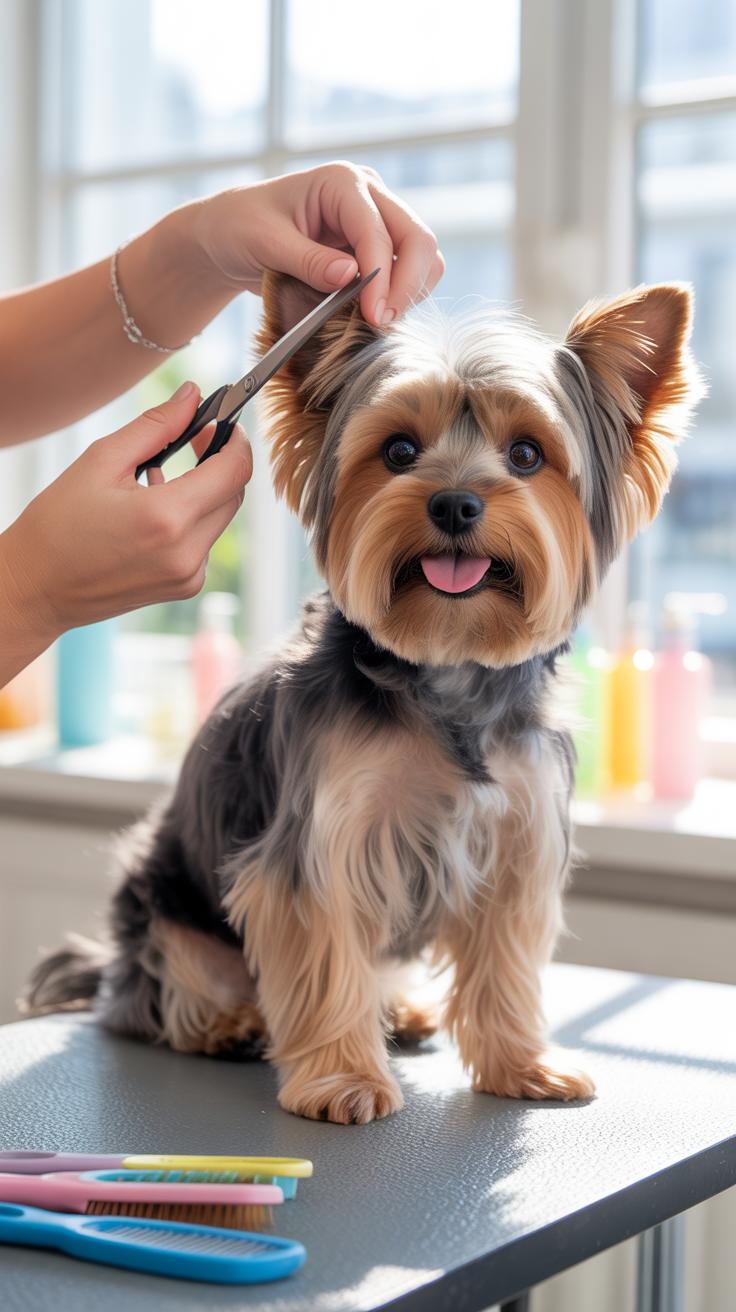
Calming Techniques To Keep Your Yorkie Still During A Face Trim
Control the environment to reduce sensory overload. Place your Yorkie on a non-slip surface at waist height. This prevents the dog from sliding and gives you mechanical leverage. Do not chase the dog with scissors. Maintain a firm but gentle grip on the chin hair to steady the head. This physical anchor provides security and limits sudden movements during the process.
Use short grooming sessions to build tolerance. Reward stillness with immediate praise but keep your own energy low. High-frequency talking distracts the animal and increases movement. If the dog struggles, stop cutting but do not release the hold until they relax. This teaches the dog that stillness leads to the end of the session. Consistency creates a predictable and safe routine.
Understanding The Sensitive Zones Around A Yorkies Eyes, Ears, And Muzzle
The eyes and muzzle contain high concentrations of nerve endings and tactile hairs called vibrissae. These whiskers provide the dog with spatial data. Cutting them too short can cause temporary disorientation. Keep your scissor tips pointed away from the globe of the eye at all times. Use blunt-nosed safety shears for the inner corners to prevent accidental puncture wounds if the dog flinches.
The ears are highly vascular and prone to bleeding if nicked. Always place your thumb over the edge of the leather to mark the actual skin line. This barrier prevents your blades from contacting the flesh. The muzzle area requires a steady hand because the nose is wet and sensitive. Clear the hair away from the nostrils to ensure unobstructed breathing and prevent hair from entering the airway.
Step By Step Guide To Grooming Yorkies Faces For A Clean Polished Look
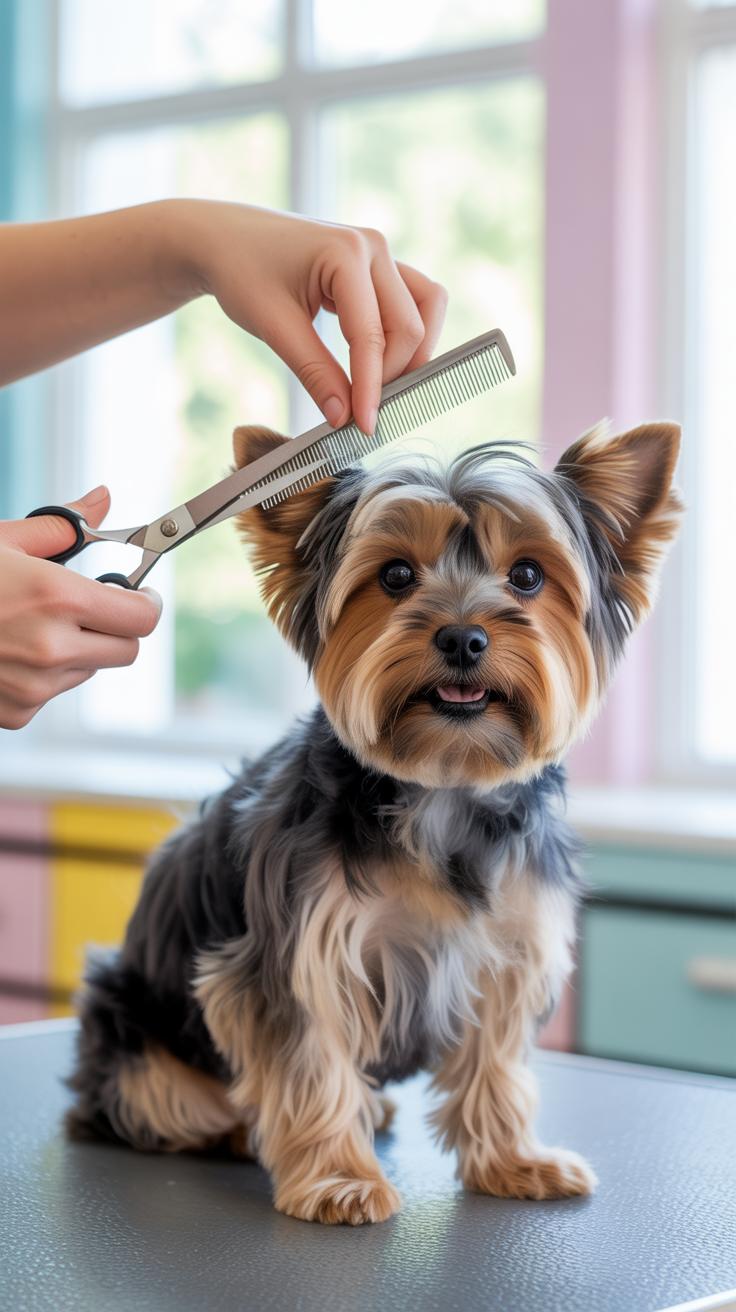
How To Trim The Hair Around The Eyes Safely And Evenly
Safety starts with a stable dog. Hold the muzzle firmly with one hand to prevent sudden head movements. Use blunt-nosed safety shears or a small detail trimmer for this sensitive area. Identify the long hairs growing from the inner corners of the eyes. These often cause irritation or staining. Trim these flush with the bridge of the nose to open the field of vision.
Angle your scissors away from the eyeball at all times. Cut small amounts of hair at a pace that allows for corrections. Comb the hair upward and outward to check for uneven strands. Consistent trimming prevents hair from poking the cornea. This reduces tear production and eye infections. Focus on the stop area where the forehead meets the nose. Clear this space to ensure a bright expression.
There is a special kind of love found in the gentle snip of shears and the quiet trust of a dog who knows your hands. Every trim is not just a grooming session, but a way to reveal the sparkling eyes of your best friend once again.
Shaping The Muzzle And Beard Area For A Neat Finish
Define the beard by combing the facial hair downward. Most owners prefer a rounded or straight-cut beard. Use professional straight shears for a sharp line or thinning shears for a natural look. Cut the hair along the jawline first. Follow the natural bone structure to maintain symmetry. Keep the length uniform on both sides to avoid a slanted appearance. Ensure the mouth remains clear of stray hairs.
Shorten the hair around the lips to prevent food trapping and odor. Use a fine-tooth comb to pull hair forward before cutting. This technique reveals hidden length. Trim the mustache area so it does not hang into the mouth. Blend the beard into the neck hair for a seamless transition. Regularly checking your work from the front view ensures the face looks balanced. Precision here defines the classic Yorkie silhouette.
Popular Yorkie Hairstyles That Start With A Great Face Trim
The Classic Puppy Cut Vs. The Show Cut: What Works Best For Your Yorkie
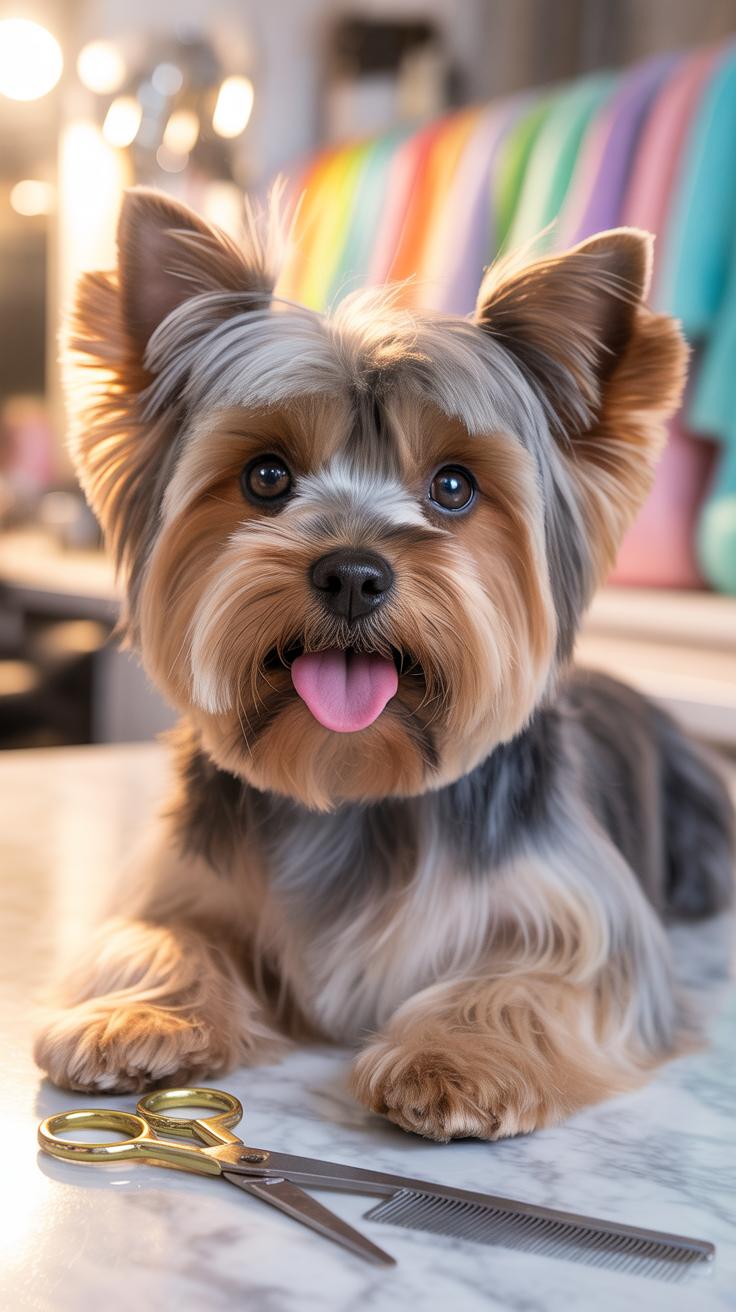
The Puppy Cut focuses on utility and comfort. You trim the facial hair to a uniform short length. This prevents food and debris from sticking to the beard. It creates a rounded appearance that mimics a younger dog. Owners choose this for easy maintenance. You spend less time brushing and more time on activities. It reduces the mechanical risk of eye irritation.
The Show Cut follows strict breed standards for the Yorkshire Terrier. This style requires long and floor-length hair. You must grow the facial hair long enough to secure it in a topknot. Use specialized latex bands to keep hair away from the eyes. This look demands daily brushing and oiling to prevent breakage. It suits owners who prioritize traditional aesthetics over low-effort maintenance and daily outdoor play.
Seasonal And Lifestyle Based Yorkie Face Styling Options
Weather conditions dictate your choice of facial trim length. High heat and humidity require a shorter cut to prevent skin infections. Moisture trapped in a long beard leads to fungal growth and odor. Shortening the hair around the mouth and eyes increases airflow. This keeps the dog cool and dry during summer. It also makes cleaning the face faster after walks in wet weather.

Active dogs benefit from a functional face trim. Long facial hair catches burrs and dirt if the dog spends time outdoors. A short trim around the jawline eliminates these hazards. You should prioritize visibility over length for safety. Clear sightlines help the dog navigate stairs and obstacles. Match the trim to your schedule. Choose a style that fits your ability to provide daily grooming care.
How To Groom A Yorkie Face Pro Tips Groomers Actually Use
The Correct Angles And Scissor Techniques For A Rounded Face Shape
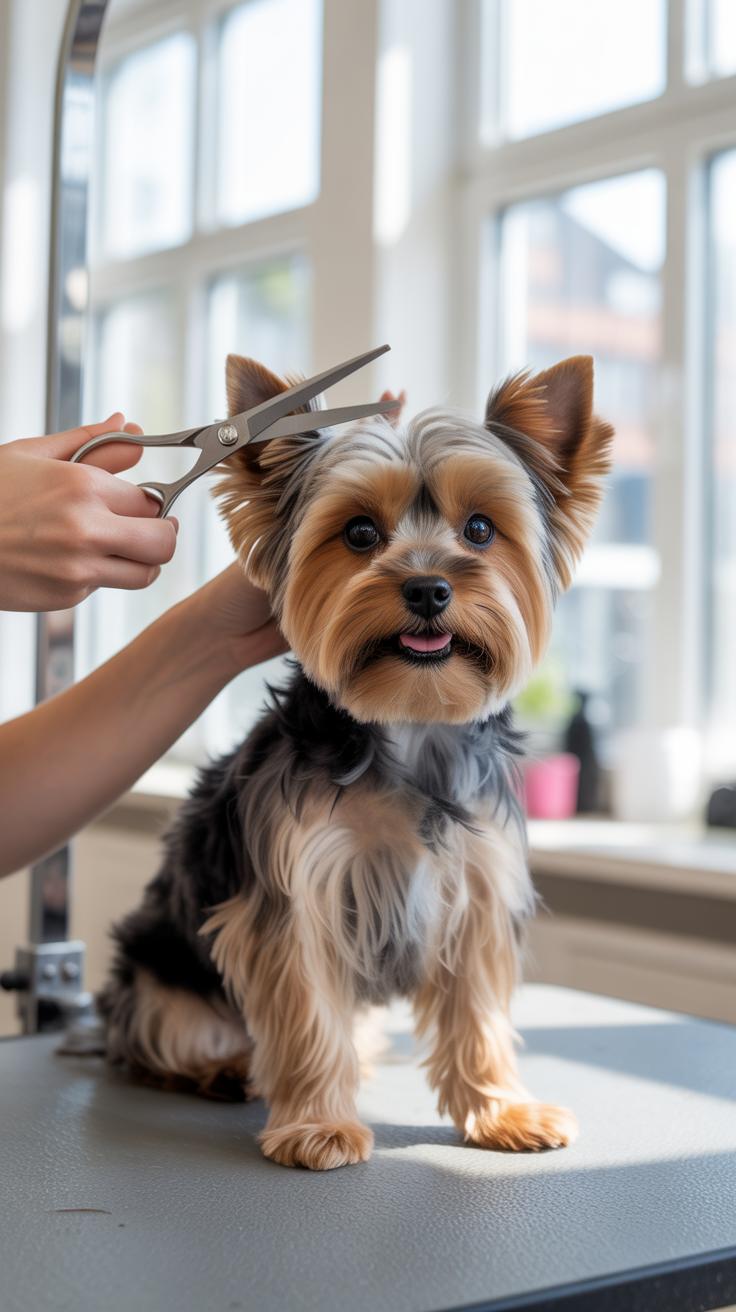
Groomers use curved shears to create a circular finish on a Yorkie face. You must hold the shears with the curve facing toward the dog. This mimics the skull shape. Start at the outer corner of the eye and trim downward toward the chin. Keep the blades moving constantly. This prevents choppy edges or sharp lines. Always point your scissor tips away from the eyeballs.
Control the head by holding the chin hair or beard firmly. This stabilizes the target area for precise cutting. Work in small sections to maintain symmetry on both sides of the muzzle. Check your work frequently by combing the hair forward. This reveals uneven lengths that need additional blending. Use thinning shears at the end. These soften harsh lines and create a professional plush look.
How Professional Groomers Handle Tear Staining And Coat Discoloration
Tear staining results from moisture trapping bacteria in the facial hair. Professionals address this by trimming the hair very short at the inner eye corners. Use a fine-tooth flea comb to remove dried debris daily. This prevents the buildup of hardened gunk that irritates the skin. If the hair stays dry it will not stain. Keep this area clear to improve airflow and hygiene.
Chemical cleaners often irritate the sensitive skin around a Yorkie eye. Stick to saline solutions or specialized eye wipes for regular maintenance. Groomers avoid using heavy bleaches because they damage the hair shaft and cause breakage. Trimming the stained hair away is the only permanent fix. Consistent hygiene stops the red yeast from growing back. Focus on keeping the muzzle dry after the dog drinks water.
How To Cut A Yorkie Hair Beyond The Face Blending For A Seamless Look
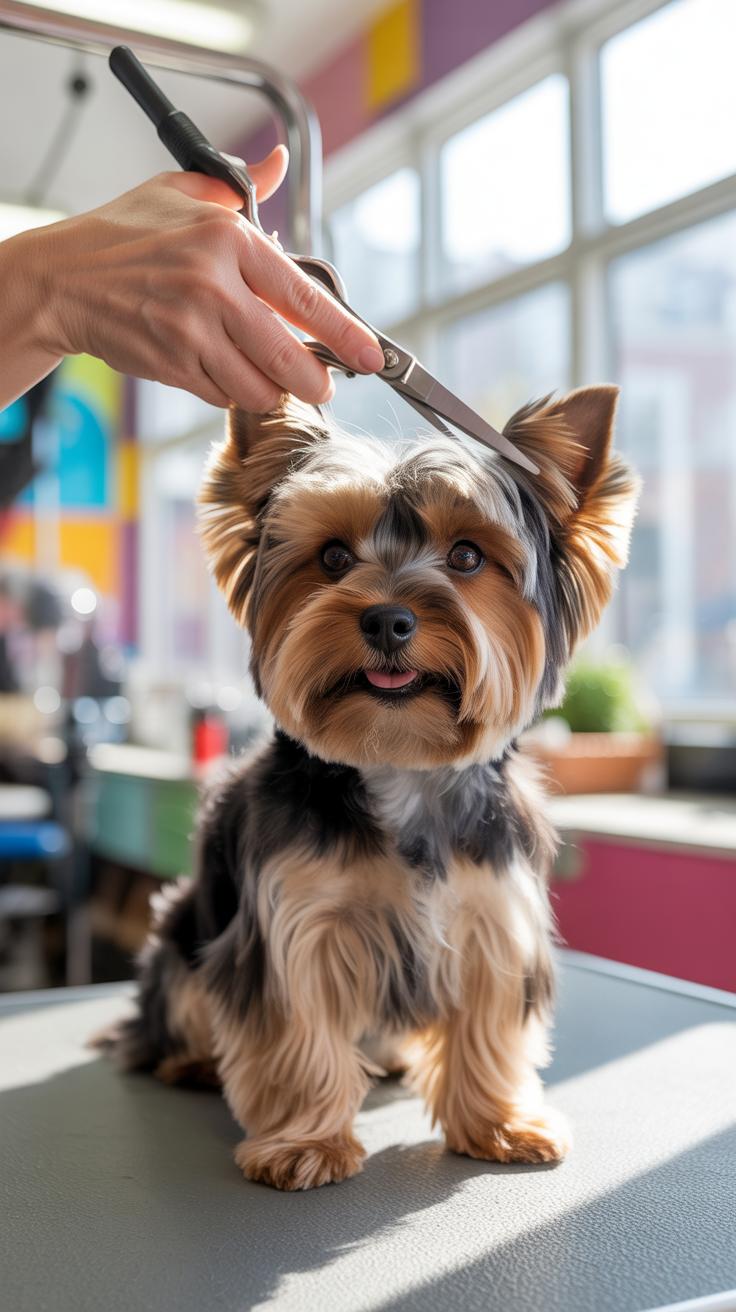
Blending The Face Trim Into The Neck And Ear Hair Naturally
Blending prevents harsh lines between the face and the body. Use thinning shears to soften the transition area under the jaw and along the neck. Hold the shears at a downward angle following the direction of hair growth. Snip once or twice then comb the hair out to check the progress. This technique removes bulk without creating visible chop marks or short gaps.
The ears must connect to the head shape without looking detached. Use a safety comb attachment on your clippers to taper the hair behind the ears. Switch back to thinning shears to merge the long ear fringe with the shorter neck hair. Professional groomers call this softening the transition. It ensures the dog looks symmetrical from every angle when moving their head or neck.
Keeping The Top Knot Tidy: Grooming The Crown And Forehead Area
The top knot requires a stable base on the forehead and crown. Comb the hair forward toward the eyes to identify stray hairs overhanging the brow. Use straight shears to clip a small inverted V shape between the eyes. This opens up the field of vision and sets the boundary for the top knot. Keep the forehead hair short enough to prevent irritation.
Secure the remaining long hair on the crown with a small latex band. Position the band directly between the ears to maintain balance. Trim the ends of the ponytail to a uniform length if you prefer a rounded look. If you keep the hair short, use clippers with a long guard to level the crown. Consistent tension during the cut ensures the hair lays flat.
Grooming Yorkies Faces At Every Life Stage Puppies To Adults
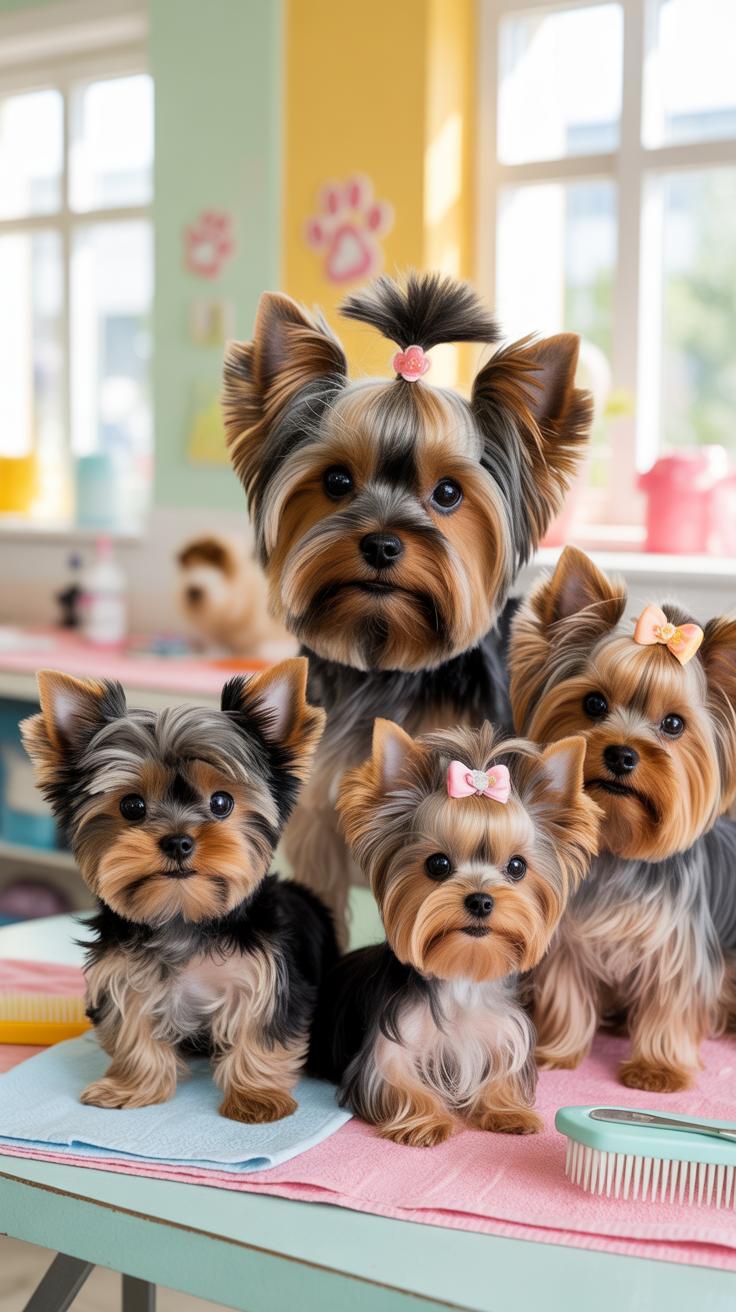
Yorkie Puppy Haircuts: How To Introduce Face Trimming To Young Dogs
Start grooming training as soon as the puppy arrives home. The first sixteen weeks represent a critical socialization window for handling. You must desensitize the dog to the sound of motor vibrations and the sensation of steel against the skin. Keep sessions short to prevent stress. Focus on building trust through repetition rather than achieving a perfect aesthetic result during these initial stages.
- Tool Familiarization: Allow the puppy to sniff the shears and clippers while they are turned off. Reward calm behavior with immediate positive reinforcement. This prevents the dog from developing a fear response toward grooming equipment later in life.
- Touch Desensitization: Hold the puppy’s muzzle firmly but gently every day. Rub your fingers around the eyes and chin to mimic the movement of scissors. This prepares the dog for the physical restriction required during a precise facial trim.
- Noise Exposure: Run electric clippers near the puppy without making contact. The high-pitched hum can trigger anxiety if not introduced gradually. Start at a distance and move closer as the puppy shows signs of relaxation and comfort.
- The Sanitary Trim: Use blunt-nosed safety shears to remove small amounts of hair from the inner corners of the eyes. This simple task keeps the puppy clean and prevents tear staining. It also teaches the dog to remain still during high-stakes work.
- Positive Association: Use high-value rewards only during grooming sessions. If the puppy associates face trimming with a specific treat, they will cooperate more readily. Consistency in rewarding stationary behavior is the key to managing a squirming puppy during trim work.
Transition to full face trims only after the puppy masters basic handling. Use a grooming hammock or a rubber mat to provide stability. If the puppy becomes overwhelmed, stop the session immediately to avoid a negative experience. Your goal is to create a dog that views grooming as a routine part of life. Patience now ensures safety when you use sharp tools near their eyes later.
How A Yorkies Coat Changes With Age And What That Means For Face Grooming
Yorkshire Terriers are born with black and tan coats that transition to steel blue and gold. This color change often coincides with a texture shift from thick puppy fuzz to fine, silky adult hair. Adult coats lack an undercoat and behave like human hair. This means the hair on the face will grow continuously and requires more frequent structural trimming to maintain visibility and hygiene.

Senior Yorkies often develop thinning hair or skin growths that complicate facial grooming. Warts and skin tags are common in older dogs and require slow, careful scissor work to avoid injury. The hair may also become more brittle or prone to matting as the dog ages. Adjust your technique by using more moisturizing products and shorter styles that reduce tension on the skin while maintaining the classic breed silhouette.
Maintaining The Results How To Groom A Yorkie Face Between Full Trim Sessions
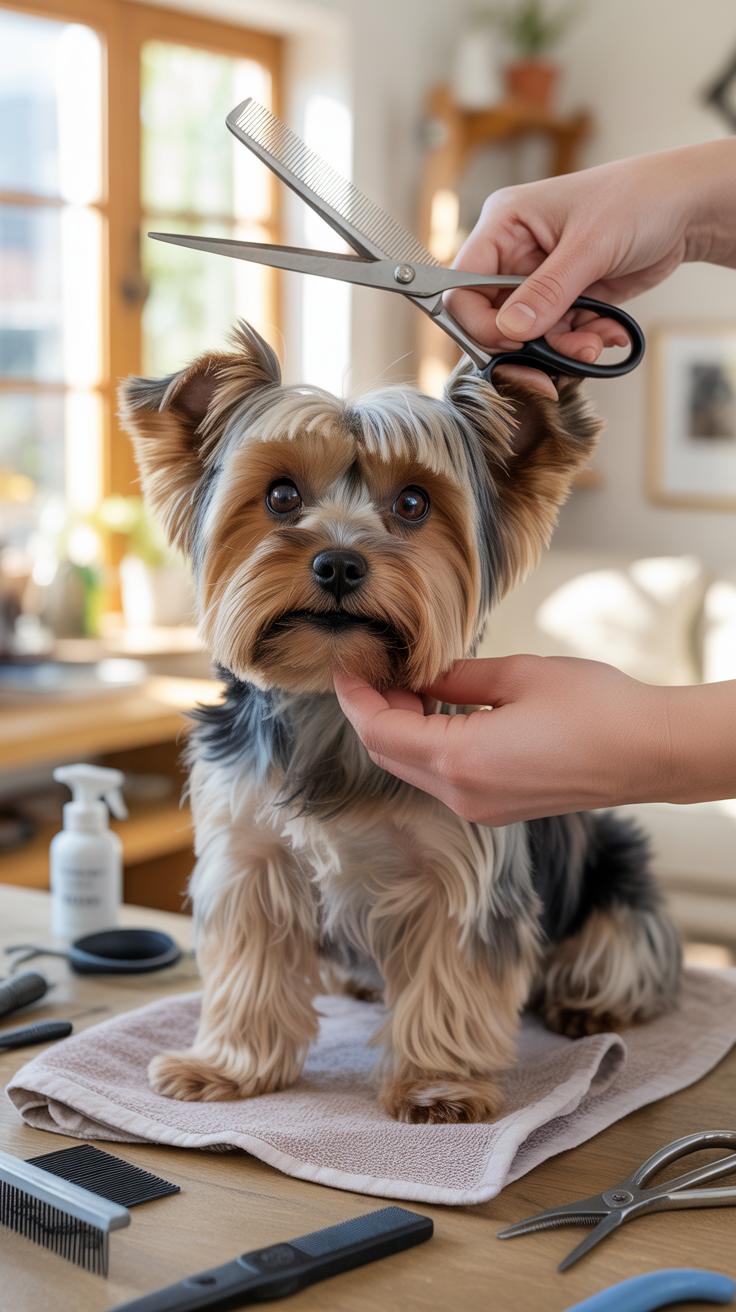
Daily Brushing And Spot Cleaning Routines That Extend Your Trims Freshness
Daily brushing prevents oil and debris from matting the fine facial hair. Use a small metal face comb to work through the mustache and beard area every morning. Start at the roots and pull gently toward the ends. This removes food particles and dried saliva before they harden. Regular combing keeps the hair aligned and prevents the ragged look that occurs when strands clump together.
Spot-cleaning focuses on the eye area to prevent tear staining and bacterial growth. Use a damp soft cloth or specialized eye wipes to clear discharge daily. Dry the area immediately with a clean towel to stop moisture from souring the hair. Keeping the skin dry reduces the risk of irritation and smell. This simple habit preserves the shape of your trim by stopping hair from sticking together.
How Often Should You Trim A Yorkies Face And Signs Its Time For A Touch Up
Most Yorkies require a face touch-up every two to three weeks to maintain a professional look. Hair grows at a consistent rate and quickly obscures the eyes. You must monitor the bridge of the nose and the inner corners of the eyes. When hair starts to poke the eyeballs or curl into the mouth, perform a maintenance trim. Do not wait for a full grooming session.
Visual cues signal the need for immediate action. Look for stray hairs blocking the vision or drooping over the lip line. If the topknot starts falling into the face despite styling products, the length is too heavy. Check the ear tips for heaviness that pulls the ear leather down. Trimming these specific areas takes ten minutes and keeps the dog comfortable. Consistent small edits prevent the need for drastic corrections later.
Frequently Asked Questions

Is it safe for beginners to trim their Yorkie’s face at home?
Yes, it is entirely safe as long as you prioritize patience and the right tools. Many owners feel nervous initially, but following a structured yorkie face trim tutorial makes the process manageable. Always ensure your dog is calm and use blunt-tip safety shears to prevent accidental nips. Taking it slow and offering plenty of praise ensures a positive experience for both you and your pup while maintaining their adorable appearance.
How do I achieve a clean, rounded look around my Yorkie’s muzzle?
To get that professional rounded finish, start by combing the facial hair downward and outward. Use your grooming shears to trim in a soft semi-circle pattern following the natural jawline. By following a detailed yorkie face trim tutorial, you can learn to blend the chin hair seamlessly into the cheeks. Always keep the shears pointed away from the eyes and use short, controlled snips to ensure a symmetrical and polished look.
Do I need expensive professional equipment to groom my Yorkie’s face?
You don’t need a high-end salon setup to achieve great results at home. A basic, affordable kit containing stainless steel thinning shears, blunt-nosed safety scissors, and a fine-toothed metal comb is sufficient for most owners. Investing in these few essential tools will save you significant money on professional grooming fees over time. Focus on quality basics that feel comfortable in your hand to ensure steady, precise movements during your grooming sessions.