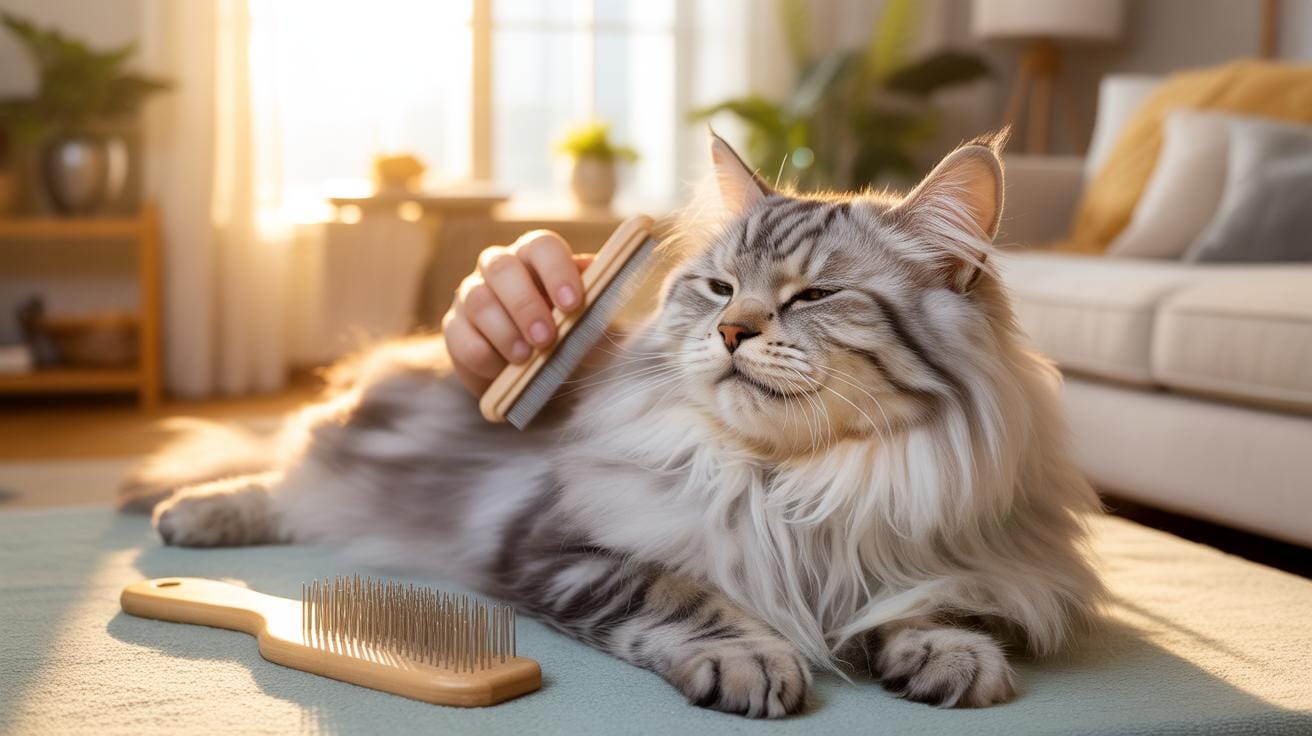
Understanding Why Long Haired Cats Are Prone To Matted Hair
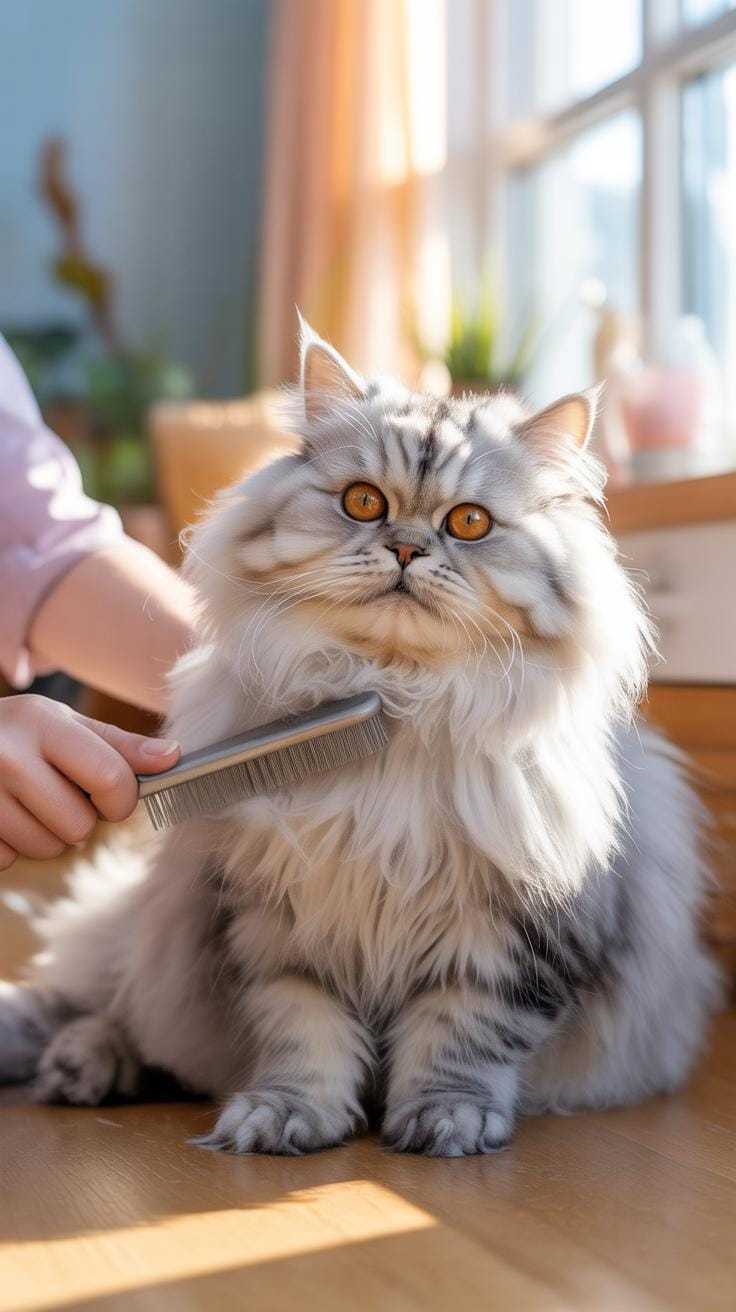
How The Structure Of Long Haired Cat Fur Leads To Tangles
Long-haired cats possess a triple-layer coat consisting of guard hairs, awn hairs, and a dense downy undercoat. The undercoat grows faster and sheds more frequently than the outer layers. Dead hair often stays trapped against the skin instead of falling away. This creates a structural lattice. Friction and movement compress these loose fibers into tight knots. Static electricity further pulls loose strands together.
The actual shafts of feline hair feature microscopic scales called cuticles. In long-haired breeds, these scales catch on each other like Velcro when hairs rub together. Moisture from humidity or saliva expands the hair shaft. This makes the scales stand up and interlock more aggressively. Without manual intervention, these small snags escalate into solid felted masses. These masses eventually restrict skin airflow and cause physical pain.
Common Areas On Long Haired Cats Where Mats Form First
Specific anatomical zones experience more friction and require closer monitoring. The armpits and groin see constant movement as the cat walks or jumps. These high-friction areas compress the undercoat into mats rapidly. The hair behind the ears is exceptionally fine and oily. This combination causes thin strands to clump together after basic grooming. These spots often go unnoticed until the mats sit flush.
The belly and the back of the hind legs also face high risk. Gravity pulls dirt and debris into the long fur on the underside. Moisture from litter boxes or outdoor grass sticks to the leg fur. This dampness binds the fine fibers into dense nests. Tail bases and the ruff around the neck collect food or skin oils. You must inspect these friction points daily to stop clumping.
Building A Daily And Weekly Cat Care Grooming Routine
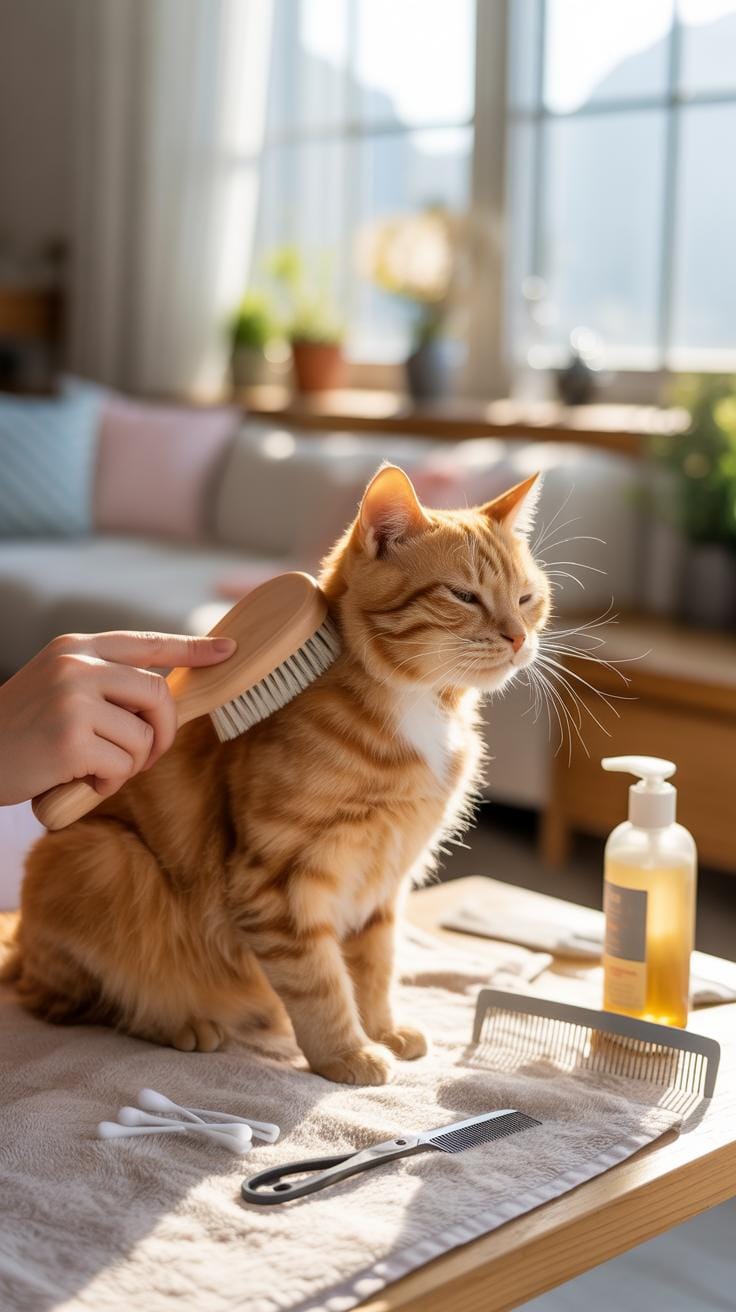
How Often You Should Brush Your Long Haired Cat To Prevent Mats
Daily brushing is the minimum requirement for long-haired breeds like Persians or Maine Coons. These cats possess dense undercoats that shed year-round. Loose fur traps against the skin and creates knots within twenty-four hours. You must focus on high-friction areas like the armpits and behind the ears every single day. Consistent intervention stops small tangles from becoming tight pelts that require medical shaving.
Weekly sessions demand a deeper level of maintenance than daily surface brushing. Set aside time once per week to use a stainless steel comb to reach the skin. This frequency ensures you catch developing clumps that a standard brush misses. Skipping even three days allows oils and dander to bind loose hair into hard mats. Stick to a rigid schedule to maintain coat health and avoid painful pulling.
The grooming of a long-haired cat is a slow conversation between two friends, where a gentle hand today prevents the tangles and troubles of tomorrow. True patience in care transforms a simple routine into a quiet moment of trust that lingers in the heart.
The Best Brushing Techniques To Keep Cat Fur Tangle Free
Effective grooming requires a systematic approach starting from the rear of the cat. Begin at the tail and work forward toward the head in small sections. Always brush in the direction of hair growth to avoid skin irritation. Use a slicker brush to remove loose surface hair first. This initial pass clears the way for deeper tools and prevents the cat from feeling overwhelmed by heavy pulling.

The line-brushing technique is the industrial standard for preventing mats. Part the fur with one hand until you see the skin clearly. Use the other hand to brush small amounts of hair down from the part. Work through the entire coat layer by layer until the comb glides through without resistance. This method guarantees you treat the thick undercoat where most painful mats actually form and settle.
Choosing The Right Tools For Long Haired Cat Care Tips That Work
Combs, Slicker Brushes, And Dematting Tools Every Owner Should Have
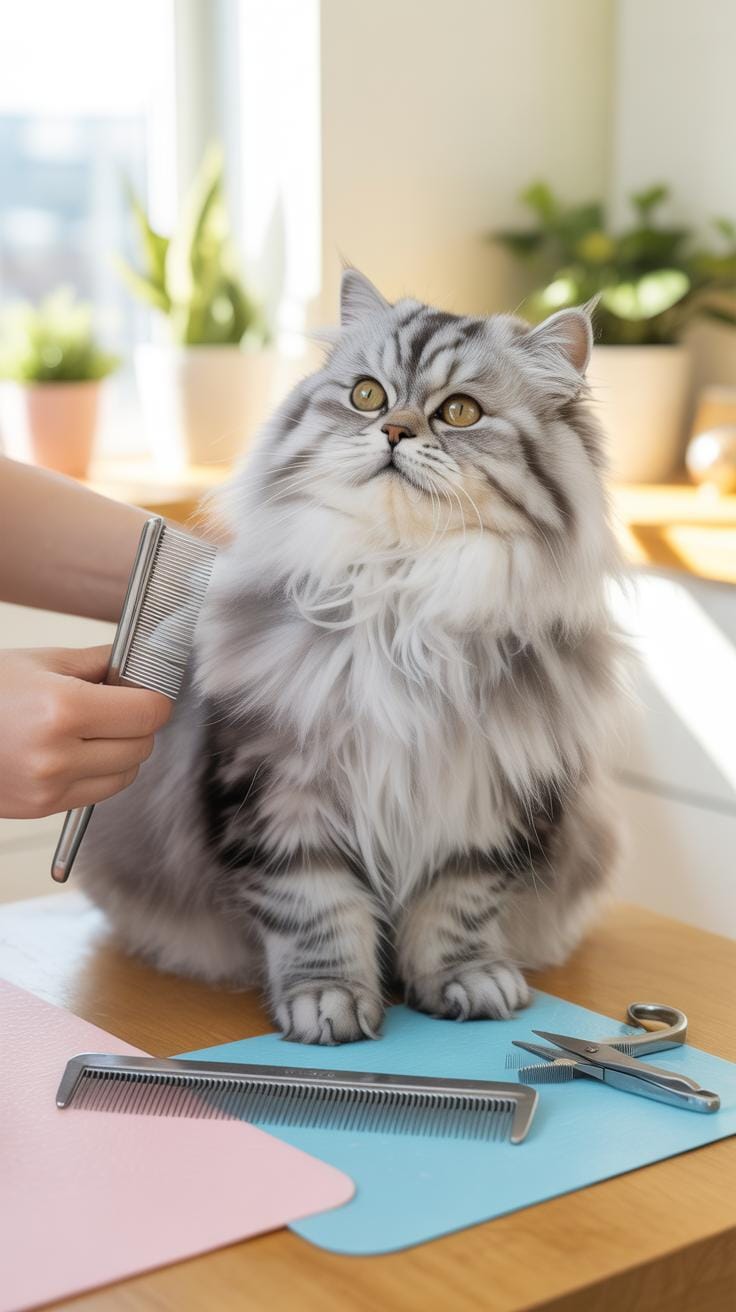
Long haired cat matting prevention requires a specific mechanical kit. You cannot rely on a single plastic brush for a dense double coat. Effective grooming starts with tools that reach the skin rather than sliding over the top layer of fur. Professional groomers use high grade stainless steel and ergonomic handles to ensure deep penetration and consistent results without causing skin irritation or discomfort.
- Stainless Steel Greyhound Comb: This tool is the foundation of long hair care. Use the coarse teeth for initial passes and the fine teeth to check for hidden knots. It reaches the undercoat where most mats begin to form.
- Soft Slicker Brush: This brush features fine wire bristles that grab loose hair from the top coat. It removes debris and dead fur before it tangles. Choose one with coated tips if your cat has sensitive or thin skin.
- Dematting Rake: This tool utilizes sharp recessed blades to cut through existing knots. It targets the core of a mat without pulling the skin. Use this sparingly and only on localized tangles that a comb cannot penetrate.
- Undercoat Rake: This tool uses a single or double row of metal tines. It pulls out the thick dead undercoat that sheds seasonally. Removing this bulk is the most effective way to prevent large scale pelt formation.
- Bristle Brush: Use a natural boar bristle brush for the final finishing step. It distributes natural skin oils along the hair shaft. This coating makes the fur smoother and significantly less likely to snag or stick to itself.
Each tool serves a tactical purpose in the grooming cycle. The slicker brush removes surface debris while the comb identifies deep tangles. You must use these daily to manage the shedding cycle effectively. Consistent tool usage reduces the need for aggressive dematting later. High quality metal tools last longer and provide better feedback through the handle when hitting a snag.
What To Look For When Selecting A Brush For Long Cat Fur

Pin length determines the effectiveness of any grooming tool. Short pins only groom the guard hairs and leave the undercoat to tangle. Ensure the teeth are long enough to reach the skin surface. Look for rounded tips on all metal pins. Sharp, unfinished points scratch the skin and create a negative association with grooming. This makes the cat resist future sessions.
Quality materials matter for durability and hygiene. Professional grade stainless steel resists rust and stays smoother than plastic. Smooth surfaces prevent friction that causes hair breakage. Look for comfort grips to maintain control during long grooming sessions. A heavy handle offers better leverage when working through thick fur. Avoid brushes with flimsy wire pads that bend or lose pins after a few uses.
How To Get Mats Out Of Cat Hair Safely At Home
Step By Step Method For Working Out A Small Mat Without Hurting Your Cat
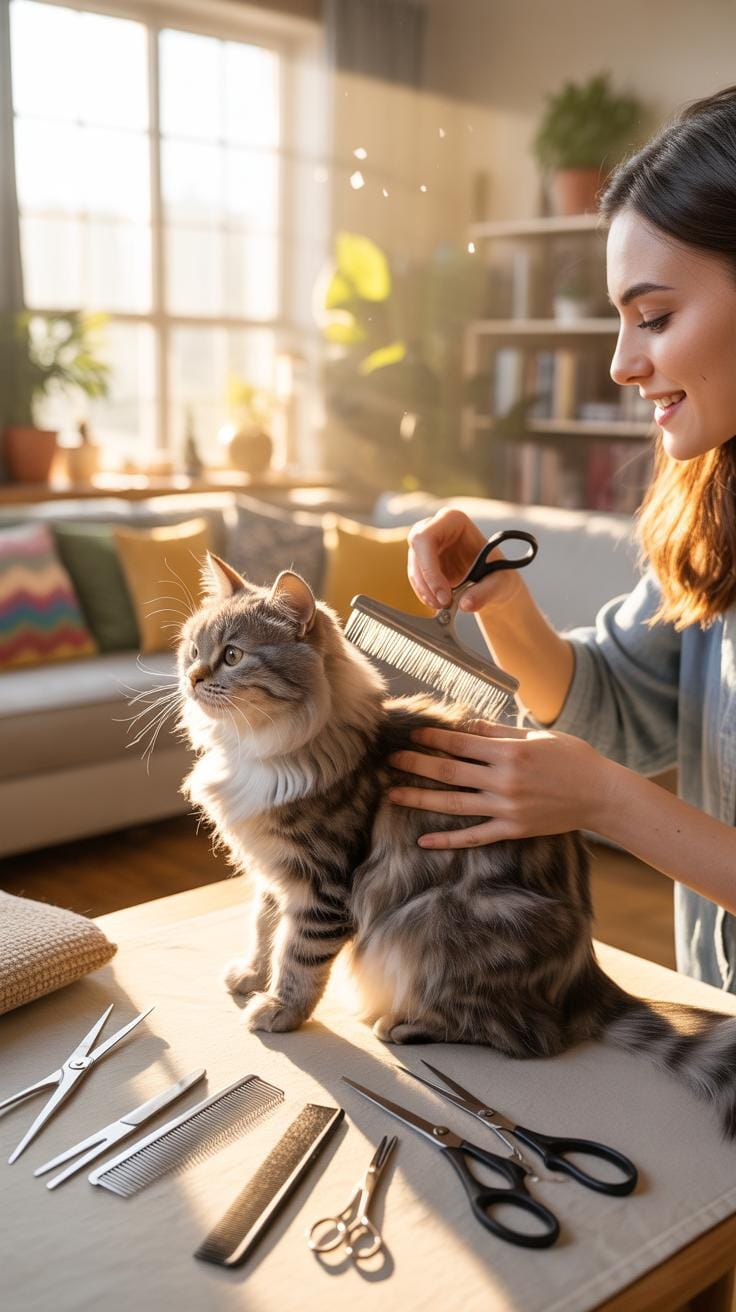
Removing small mats requires patience and the right tools. Never pull the skin when working on a knot. You must isolate the mat from the base of the hair to prevent tension on the nerves. Use your fingers to loosen the outer fibers before applying any metal tools. This approach keeps the cat calm and prevents painful skin tears during the grooming process.
- Cornstarch Application: Apply a small amount of cornstarch directly to the knot. This powder neutralizes oils and provides enough slip to slide hairs apart without friction. Work the powder into the center of the mat using your fingertips before you attempt to use any grooming tools.
- Finger Teasing: Use your thumbs and index fingers to pull the mat apart horizontally. Do not pull away from the body. Instead, pull from the center of the knot outward to create gaps in the hair. This manual loosening makes the subsequent combing process much faster and significantly less painful for the cat.
- Blunt-End Scissors Technique: Insert one blade of a blunt-end pair of scissors into the mat, pointing away from the skin. Cut into the mat to break the structural clump. Only use this method if you can clearly see the skin. Never cut across the mat. Vertical snips divide the mass into smaller sections.
- Metal Greyhound Comb: Use the wide-tooth end of a metal comb to pick at the separated fibers. Start at the very ends of the hair and move toward the skin. This bottom-up approach prevents the comb from getting stuck. Hold the base of the hair with your other hand to absorb the tension.
- Slicker Brush Finishing: Run a soft slicker brush over the area once the mat is gone. This removes the loose dead hair you just detached from the knot. Clearing these fibers ensures they do not wrap around neighboring hairs to form a new mat immediately. Frequent brushing in this spot prevents the return of the knot.

Always stop the session if the cat shows signs of aggression or extreme distress. Long haired cat matting prevention depends on positive associations with grooming. If you force the process, the cat will hide during future sessions. Keep these sessions under ten minutes. Focus on one small area at a time. Reward the cat with high-value treats once the mat is fully removed from the coat.
When Home Dematting Is No Longer Safe And You Need Professional Help
Safety must come before aesthetics when dealing with severe hair clumps. Mats that sit flush against the skin create a breeding ground for bacteria and moisture. You cannot see the skin under these tight masses. Attempting to cut these out at home often results in deep lacerations. Cats have paper-thin skin that tears easily under the pressure of scissors or dull blades.
Professional groomers or veterinarians have the high-grade electric clippers needed for pelted coats. These experts use specialized guards to safely remove hair without nicking the skin. If a mat is wider than your thumb or feels hard like felt, stop immediately. Attempting to fix a pelted cat at home causes unnecessary pain. Seek professional intervention to ensure a safe, clean slate for your cat.
How To Remove Matted Cat Fur Without Causing Stress Or Pain
Calming Techniques To Use Before And During The Grooming Session

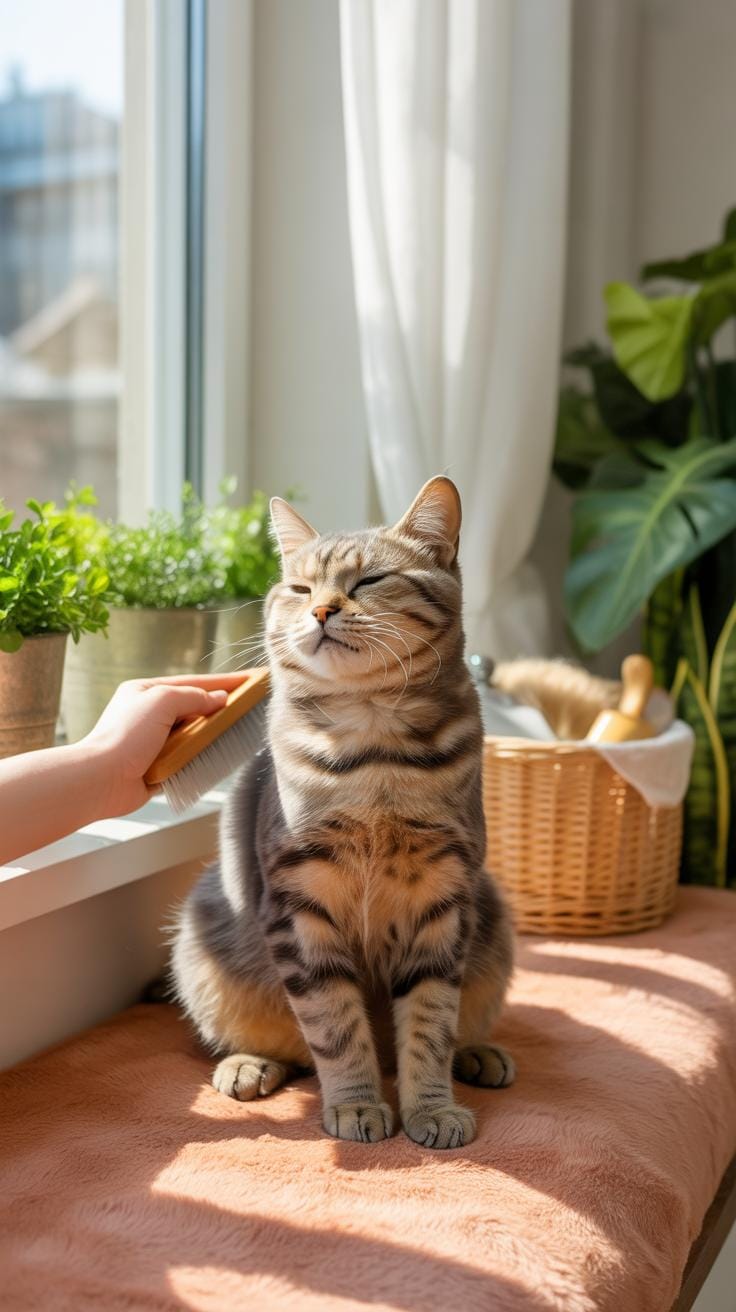
Preparation dictates the outcome of any grooming task. Start by choosing a quiet room with solid footing to prevent the cat from slipping. Use synthetic feline pheromone sprays on your hands and tools twenty minutes before starting. This mimics natural scent markers and lowers the animal’s cortisol levels. Keep sessions short and stop immediately if the cat displays signs of agitation or extreme skin twitching.
Tactical handling requires a soft touch and high-value rewards. Offer small amounts of wet food or lickable treats during the process to create a positive association with the grooming tools. Focus on the most sensitive areas like the belly and armpits only after the cat relaxes. Maintaining a calm and neutral voice helps prevent the cat from sensing your frustration. Pressure must remain light to avoid pulling on the skin.
Why You Should Never Use Scissors To Cut Matted Hair Off A Cat
Using scissors on matted fur creates an immediate risk of severe injury. A cat’s skin is thin and stretches easily into the base of a knot. You cannot see the line where the hair ends and the skin begins when a mat is tight. One small slip often results in a deep laceration that requires expensive surgical staples or stitches. Professional groomers and veterinarians strictly forbid this dangerous practice.
Reliable alternatives provide safety and efficiency without the risk of cutting the animal. Use a dedicated dematting tool or electric clippers with a guarded blade to shave under the mat. These tools put distance between the sharp edge and the skin. If a mat is too close to the surface for clippers, seek professional help. Your primary goal is maintaining the thermal layer and skin integrity of the cat.
Nutrition And HydrationS Role In Healthy Cat Fur And Skin

How A Balanced Diet Supports A Coat That Resists Matting
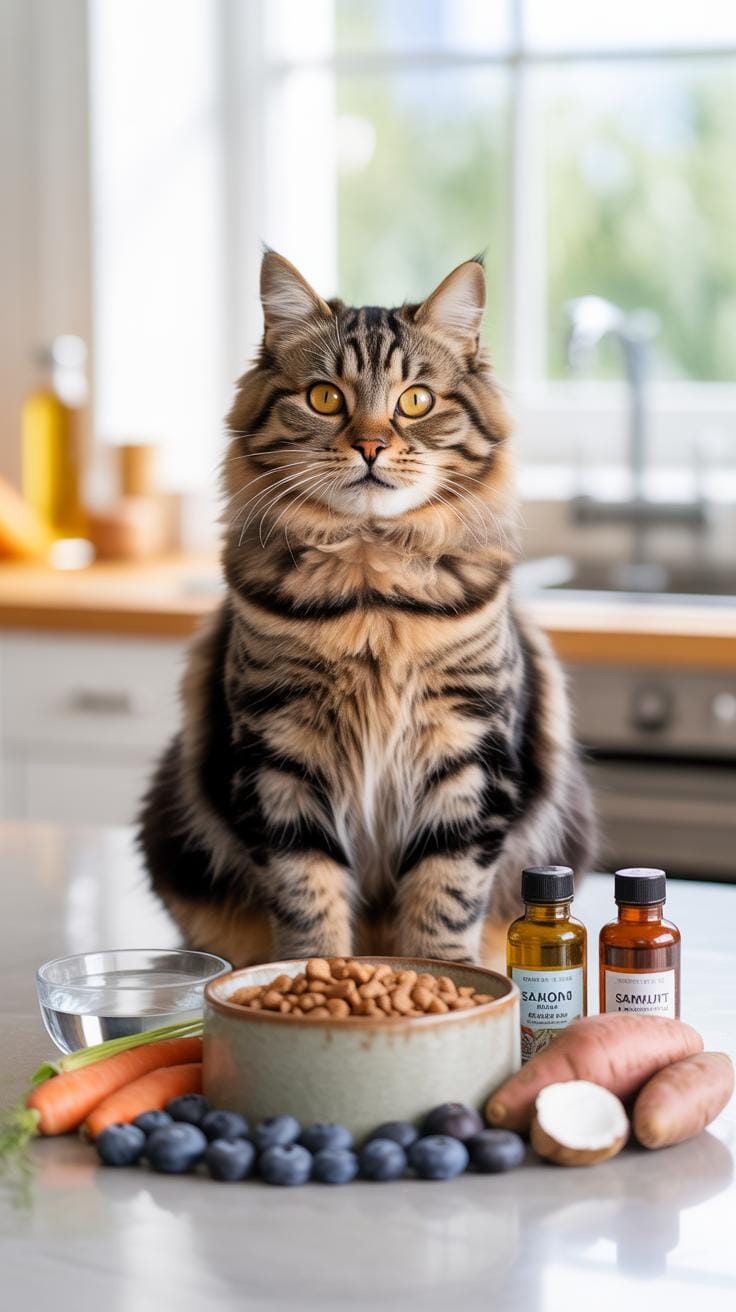
A balanced diet builds the biological foundation for a healthy coat. Long haired cat matting prevention starts inside the body. High quality protein provides the amino acids needed for hair growth. Without these building blocks, the fur becomes brittle and dry. Brittle fur breaks easily and creates friction. This friction leads to knots that eventually turn into painful mats.
Proper nutrition also supports the skin barrier. Healthy skin produces natural oils that coat each hair shaft. These oils act as a lubricant to prevent individual hairs from sticking together. A cat with a poor diet has dull and coarse fur. Coarse fur is difficult to brush and prone to tangling. Feed your cat nutrient dense food to ensure the coat remains slick and manageable.
Key Nutrients That Promote Strong, Smooth Cat Fur In Long Haired Breeds
Omega-3 and Omega-6 fatty acids are critical for maintaining a smooth coat. These essential fats reduce skin inflammation and promote a glossier texture. Smooth hair slides against other strands instead of catching. Biotin and Zinc also play vital roles in keratin production. Keratin is the primary protein found in cat hair. Stronger hair shafts resist the fraying that leads to severe matting.
Hydration is just as important as solid nutrients for skin elasticity. Dehydrated skin becomes flaky and sheds excessively. These dead skin cells and loose hairs get trapped in the coat. This buildup creates the core of a mat. Ensure your cat drinks enough water to keep the skin supple. Wet food or water fountains help maintain the moisture levels needed for a healthy and tangle free coat.

Cat Care Tips For Bathing Long Haired Cats To Minimize Matting
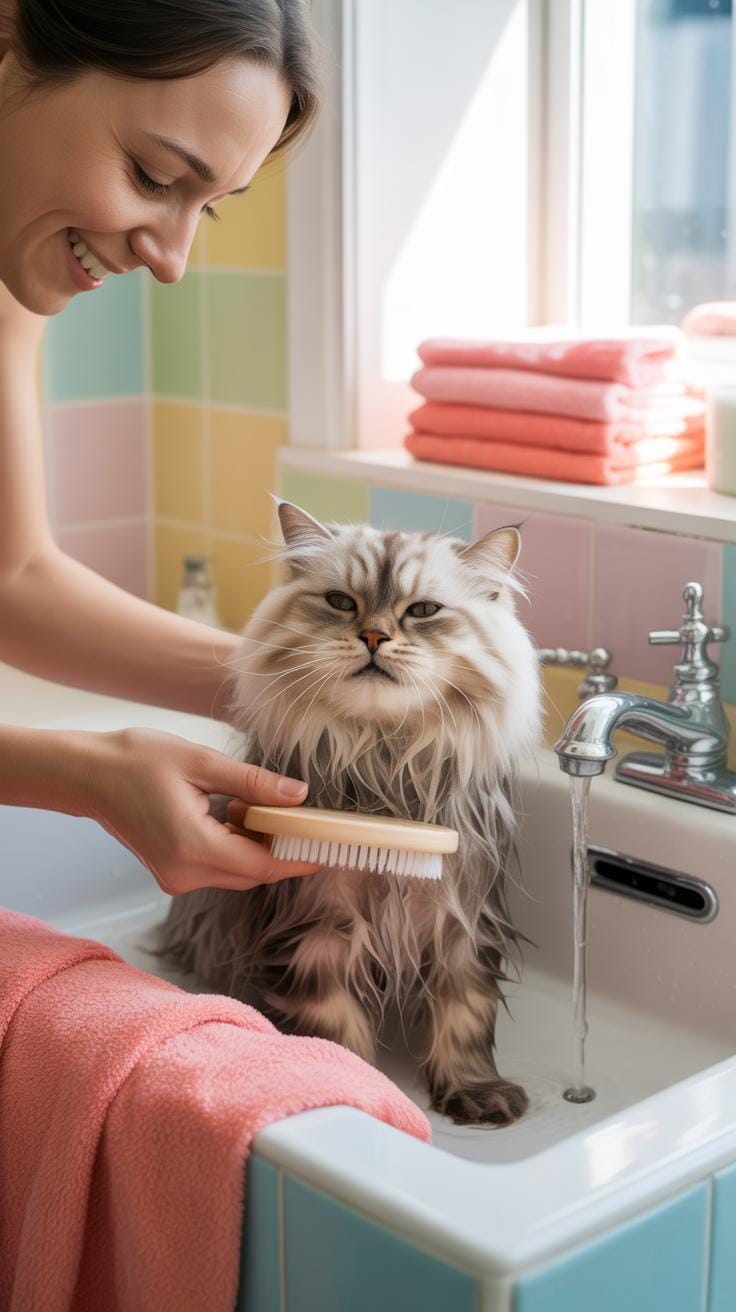
How To Bathe A Long Haired Cat Without Making Matting Worse
Brush the cat thoroughly before the water touches the fur. Water acts as a binding agent that tightens existing knots into solid felt. You cannot wash a mat out of long hair. Removing every tangle first ensures the shampoo cleans the skin without trapping debris in fiber clumps. Use a wide tooth comb to verify the coat is clear from root to tip.
Apply shampoo using a downward stroking motion rather than a circular scrubbing technique. High friction movements create new tangles by twisting long hair shafts together. Work the soap into the coat following the natural direction of hair growth. Rinse with lukewarm water until the coat feels squeaky. Proper rinsing prevents sticky residue from attracting dirt which causes future mats to form quickly.
Drying Techniques That Protect Long Cat Fur After A Bath
Pat the fur with a microfiber towel to remove excess moisture. Do not rub the coat vigorously with a towel. Rubbing creates friction that breaks the hair cuticle and causes immediate tangling. Press the fabric against the skin to soak up water. This method keeps the hair shafts aligned and flat. Constant alignment is the best defense against post bath matting issues.

Use a professional pet dryer on a cool setting while combing the fur. Airflow should move from the base of the hair toward the ends. Static electricity often builds up during the drying process and attracts dust. A high quality grooming spray neutralizes this charge. Ensure the undercoat is completely dry before finishing. Damp hair settles into tight knots once the cat starts moving and grooming.
When To See A Vet Or Professional Groomer For Severe Matted Hair
Health Risks That Can Develop Underneath Severe Matted Hair On Cats
Severe matting creates a physical barrier that traps moisture and bacteria against the skin. This environment leads to painful infections and hot spots. You cannot see these issues beneath the thick hair. Tight mats also pull the skin constantly and cause bruising or open sores. Heavy matting limits a cat’s movement and hides parasites like fleas or ticks that thrive in protected areas.
Neglected mats often lead to hematomas when the blood vessels under the skin rupture from constant tension. If the matting covers the rectal area, it blocks the cat from eliminating stool properly. This causes extreme distress and physical illness. You must check the skin regularly for redness or foul odors. Professional intervention becomes necessary when the mats are too tight to lift safely with a comb.
What To Expect From A Professional Grooming Session For Long Haired Cat Care
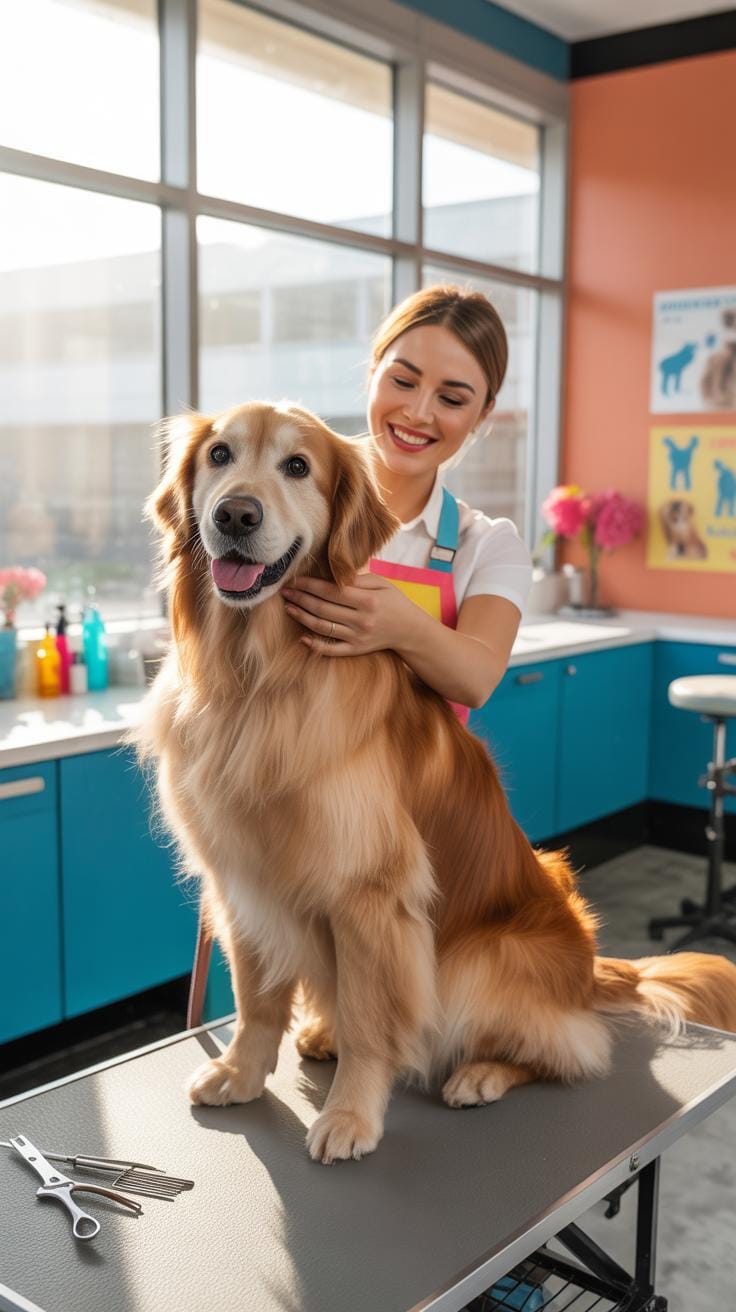
Professional groomers use specialized electric clippers and surgical blades to remove severe mats. They do not use scissors because cat skin is paper thin and tears easily. A groomer will likely perform a shave down or a lion cut if the pelt is close to the skin. This process prioritizes health and comfort over aesthetic appearance. Expect your cat to look significantly different after this procedure.
Veterinary groomers may recommend sedation if the cat is highly aggressive or in significant pain. Sedation ensures the cat remains still so the groomer can work safely near sensitive skin. After the removal, the skin often appears red or irritated from the lack of airflow. The professional will provide guidance on topical treatments or a schedule for future maintenance. Regular professional sessions prevent the need for drastic measures.
Frequently Asked Questions

Why does my long-haired cat get knots so easily?
Long-haired breeds have fine undercoats that naturally shed and become trapped against the skin. Without regular intervention, these loose hairs twist around healthy fur, creating painful clumps. Understanding long haired cat matting prevention starts with recognizing that high-friction areas, like the armpits and behind the ears, are most prone to tangles. Constant movement and moisture from grooming can accelerate this process, making a proactive daily brushing routine absolutely essential.
How can I brush my cat if they hate being groomed?
To ensure effective long haired cat matting prevention without causing stress, use “low-intensity” sessions. Start by offering high-value treats and only brushing for thirty seconds at a time while your cat is relaxed. Gradually increase the duration as they build positive associations with the brush. Focusing on one small section of the body per day helps keep the coat manageable and prevents the cat from feeling overwhelmed or overstimulated during the process.
Can I prevent mats using affordable household items?
You do not need expensive professional equipment to keep a coat smooth. A simple metal greyhound comb is one of the most effective and affordable tools for deep grooming. Additionally, applying a small amount of plain cornstarch to a beginning tangle can provide enough “slip” to gently tease it apart with your fingers. These accessible methods make daily maintenance easy for any budget while keeping your feline friend comfortable and knot-free.