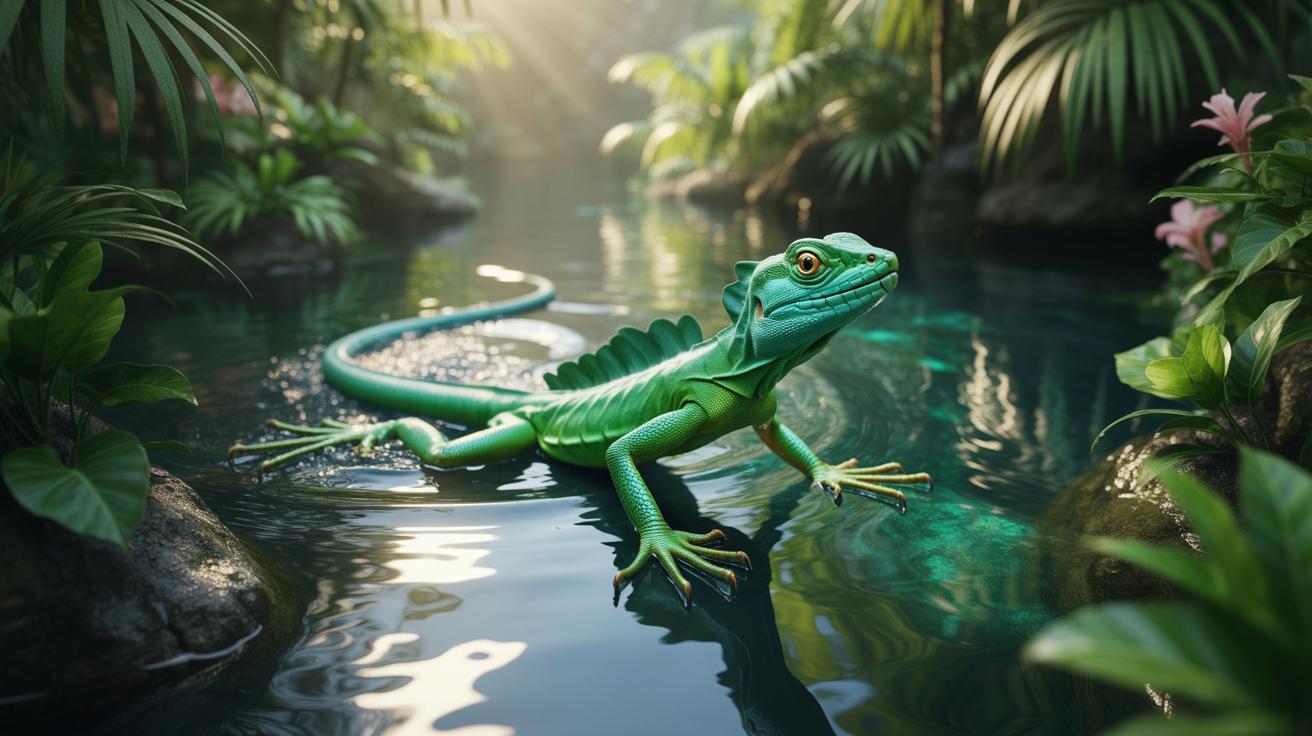
The Marine Iguana The Only True Ocean Swimming Lizard On Earth
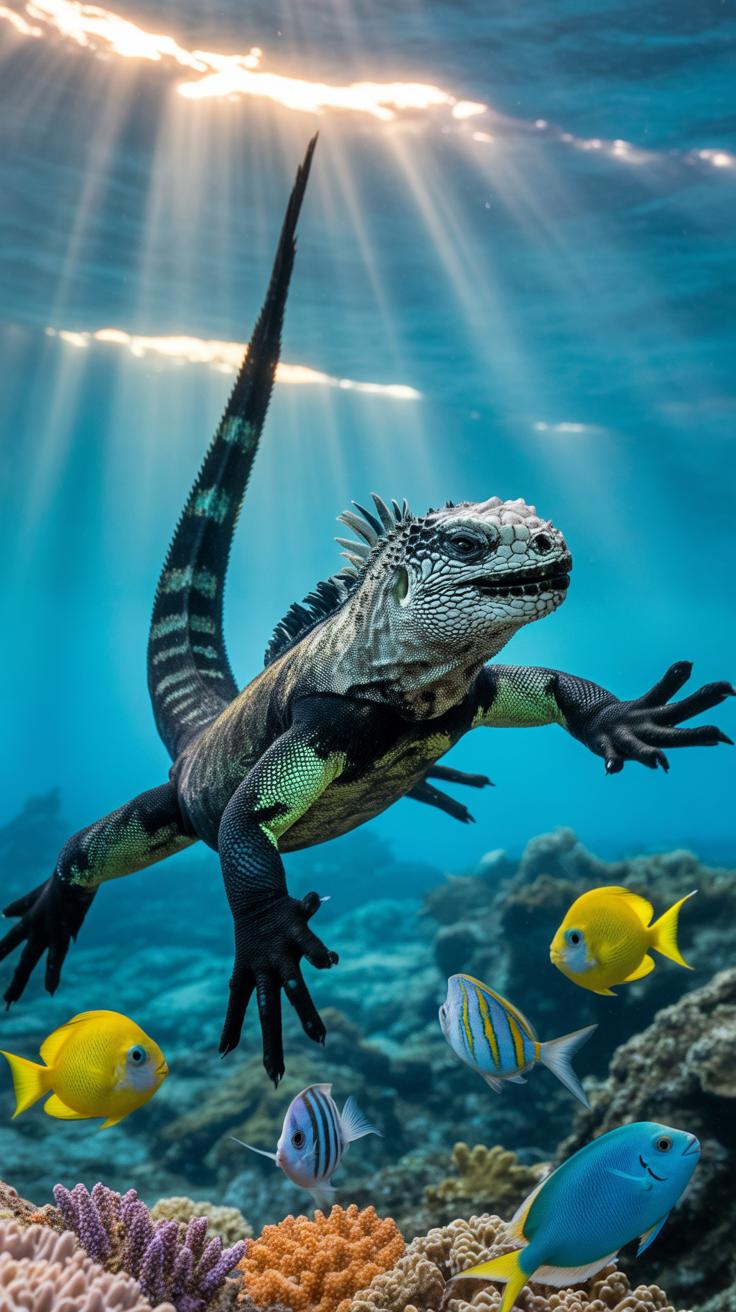
How The Marine Iguana Evolved To Swim In Saltwater On The Galapagos Islands
Marine iguanas reached the Galapagos Islands millions of years ago. Food on land was scarce. These lizards adapted to survive by targeting the rich algae in the ocean. This shift forced a major biological change. They are the only modern lizards that forage in the sea. This evolution allows them to occupy a niche that no other reptile can fill.
Survival in salt water requires specialized biology. These lizards ingest high amounts of salt while feeding underwater. They developed glands to solve this problem. These glands filter salt from their blood. The iguana then sneezes the concentrated salt out through its nostrils. This tactical adaptation prevents dehydration and maintains their internal balance. This process makes their unique lifestyle possible in harsh conditions.
What Makes Marine Iguana Swimming Physically Possible: Anatomy And Adaptations
Anatomy dictates performance in the water. The marine iguana has a laterally flattened tail. This shape works like a powerful rudder. It provides the thrust needed to navigate strong ocean currents. They tuck their legs against their sides to reduce drag. This streamlined profile allows them to move with high efficiency. Their physical build is a masterclass in aquatic engineering.
Efficient temperature management is critical for their survival. The ocean water is cold. Marine iguanas have dark skin to absorb maximum heat from the sun. This heat storage allows them to dive deep for food. They also have sharp claws to grip slippery rocks on the sea floor. These features combine to make them effective hunters. Every part of their body serves a specific purpose for swimming.

Marine Iguana In Water How Deep And How Long Can They Actually Dive
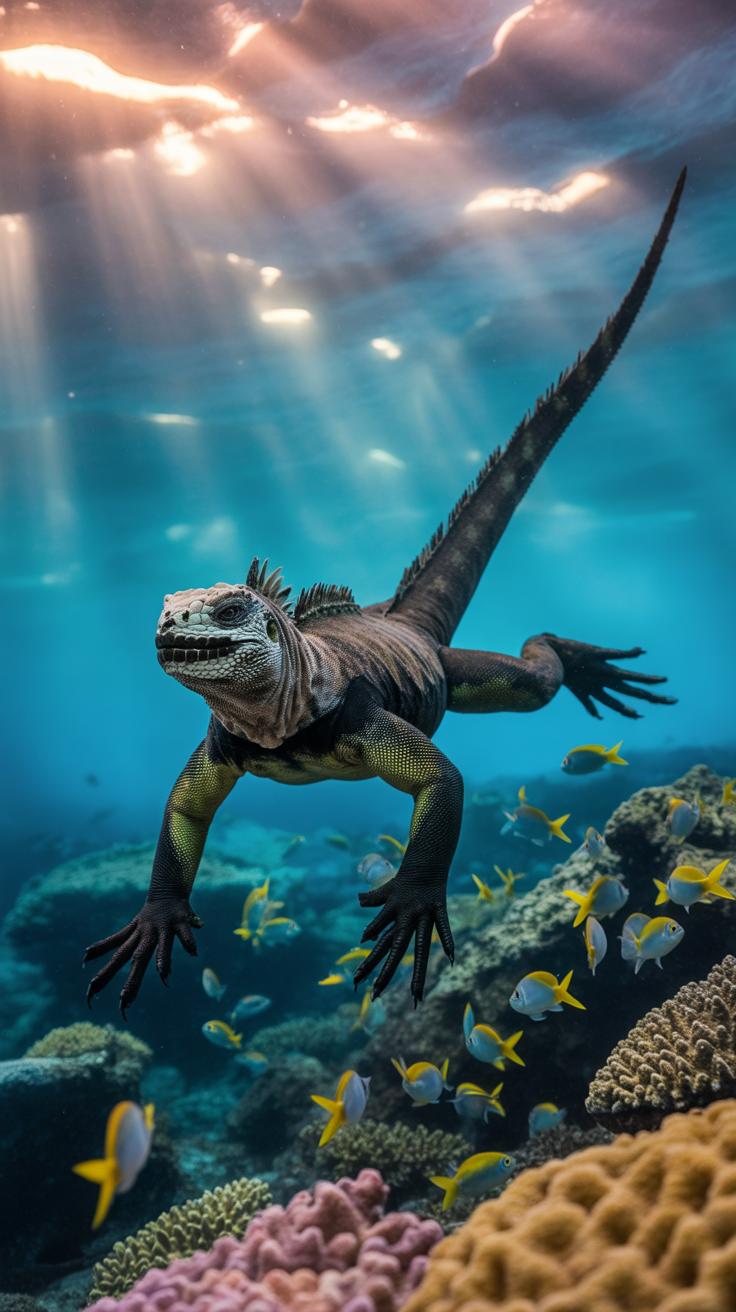
Recorded Dive Depths And Breath Holding Abilities Of The Sea Iguana
Marine iguanas are the only modern lizards that forage in the ocean. Most dives remain shallow to keep body heat stable. They usually graze on algae at depths of one to five meters. Larger males can push much deeper when food is scarce. Reliable records show these lizards reaching depths of thirty meters. They use powerful tails to swim and sharp claws to grip rocks.
Breath control is a vital survival tactic for this species. A typical foraging dive lasts five to ten minutes. However, these lizards can stay submerged for much longer if they feel threatened. Researchers have documented them holding their breath for nearly an hour under specific conditions. They lower their heart rate to conserve oxygen while underwater. This physiological shift allows them to maximize every dive for food.
How Marine Iguanas Regulate Body Temperature After Diving In Cold Pacific Waters
The Galapagos waters are cold and drain heat from the lizard quickly. Marine iguanas are ectotherms and rely on external sources for warmth. During a dive, their body temperature can drop by ten degrees Celsius. This loss of heat slows their movement and digestion. They must return to land immediately after feeding to prevent total physical shutdown. Thermal regulation is their most critical daily task.

Once back on shore, the lizards use dark volcanic rocks to absorb sunlight. They flatten their bodies against the stone to maximize surface area contact. This behavior is called basking and it restarts their metabolism. They also sneeze out excess salt through specialized glands to maintain chemical balance. High body heat is necessary for them to digest the tough algae they consume. Without this recovery period, they cannot survive.
Iguana Swimming In Shallow Water Green Iguanas And Their Freshwater Habits
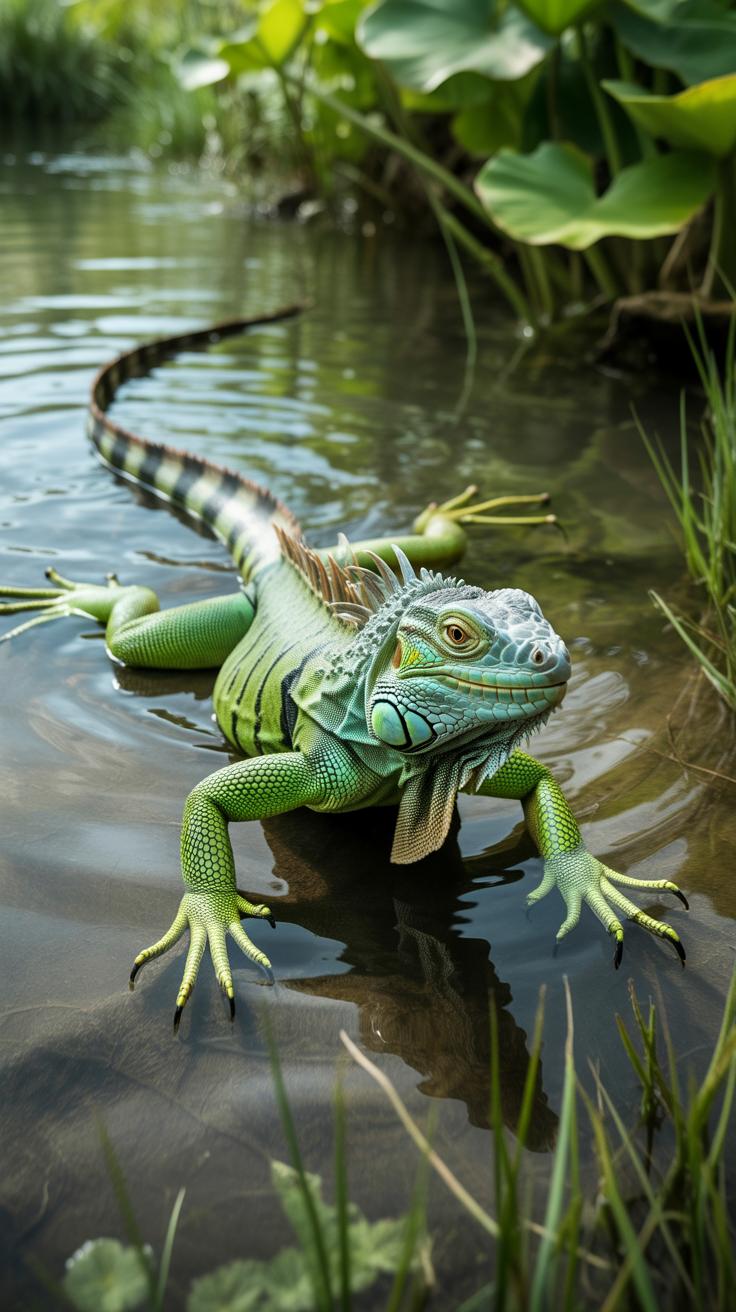
Why Green Iguanas Are Strong Swimmers Despite Living Primarily In Trees
Green iguanas spend most of their time in high canopy layers near water sources. They possess a long and laterally compressed tail that acts as a powerful sculling oar. This anatomical feature allows them to propel themselves through freshwater with high efficiency. They tuck their limbs against their sides to reduce drag. This streamlined shape helps them move much faster in water than on land.
These lizards use a sinusoidal movement pattern similar to crocodiles. Their lung capacity allows them to remain submerged for up to thirty minutes without surfacing for air. This physiological adaptation is critical for crossing wide rivers or moving between feeding grounds. High glycogen stores in their muscles support the anaerobic bursts needed for rapid swimming. They transition from climbing to swimming with zero hesitation when high temperatures or threats occur.
Just as the marine iguana bravely trusts the vast ocean, we must remember that we were born with the strength to navigate any tide. Life is a beautiful current that carries us exactly where our spirits are meant to go.
How Green Iguanas Use Rivers And Flooded Areas To Escape Predators
Rivers serve as the primary escape route for green iguanas under threat. When a predator like a hawk or snake approaches a tree branch, the iguana drops directly into the water below. They can survive falls from heights of forty feet into shallow or deep water. Once they hit the surface, they immediately dive to the bottom or swim away from the bank to evade land-based animals.

Flooded forests provide these lizards with a tactical advantage during the rainy season. They use submerged roots and vegetation as cover to hide from predators. Shallow water allows them to stay partially submerged while keeping their nostrils perched just above the surface. This tactic makes them nearly invisible to any threats patrolling the shoreline. They prioritize water proximity because it offers a three-dimensional escape path that ground terrain cannot provide.
Beyond Iguanas Other Lizard Swimming Species Found Around The World
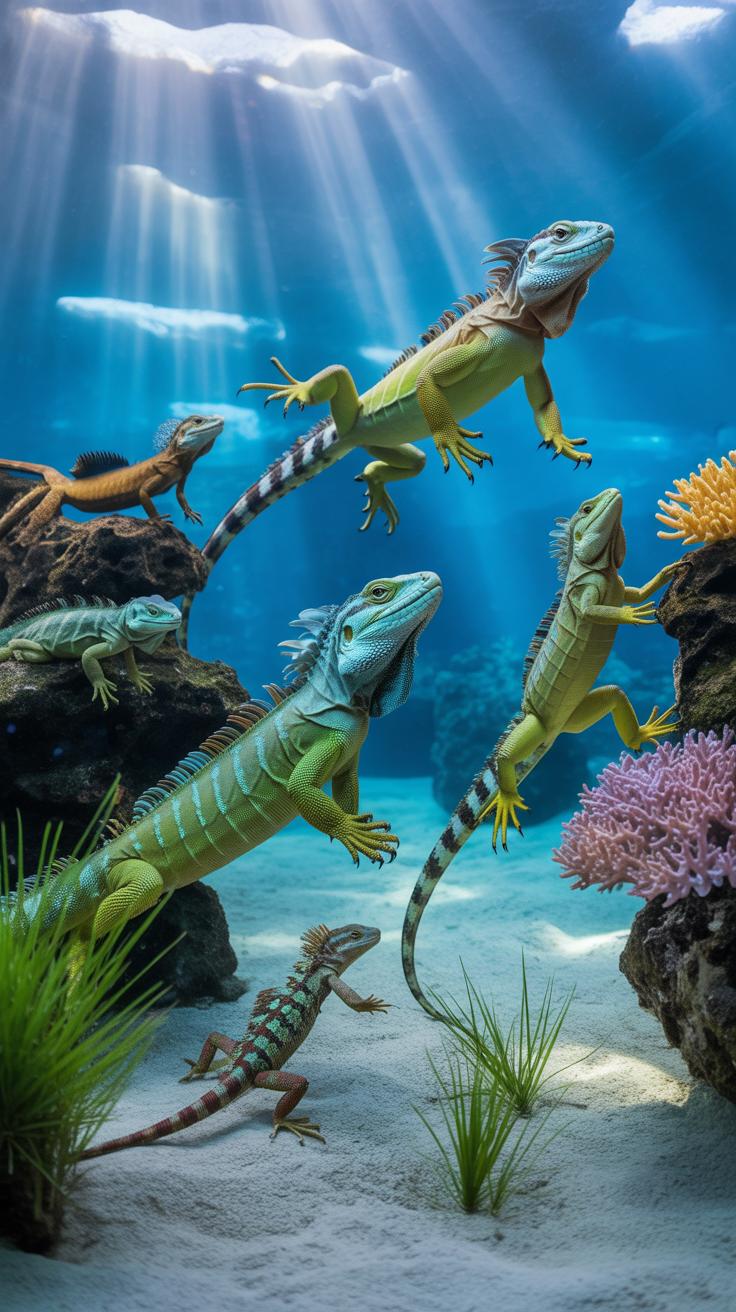
Water Monitor Lizards: Powerful Swimmers Of Asia And Australia
Water monitors represent the peak of semi-aquatic lizard evolution. These reptiles use a long laterally compressed tail to generate forward thrust in rivers and coastal marshes. This physical trait mimics an oar for efficient movement. They dive deep to hunt fish or escape land predators. Their nostrils sit high on the snout to allow breathing while the body stays mostly submerged during long swims.
Muscular coordination allows these monitors to cross large bodies of open water between islands. They maintain high speeds by tucking their limbs against their sides to reduce drag. This streamlined posture conserves energy during long distance travel. Their skin serves as a waterproof barrier against salt and freshwater environments. These lizards are apex predators in many wetland ecosystems because they dominate both land and water.
The Basilisk Lizard: Running On Water And Swimming Beneath It
Basilisk lizards use specialized rear feet to move across the surface of the water. Long toes and skin fringes create air pockets that provide lift during rapid locomotion. This behavior serves as a primary defense mechanism to evade predators. They must maintain a specific speed to stay above the surface. Once momentum slows the lizard sinks and transitions into a standard swimming stroke to reach cover.

Beneath the surface basilisk lizards are competent swimmers and divers. They can stay underwater for over thirty minutes by slowing their heart rate and holding their breath. This tactical advantage allows them to hide on the bottom of streams while threats pass overhead. Their slender bodies and powerful hind legs enable quick turns in tight aquatic spaces. They rely on dense vegetation near water for total safety.
Animals That Swim Alongside The Marine Iguana In The Galapagos Islands
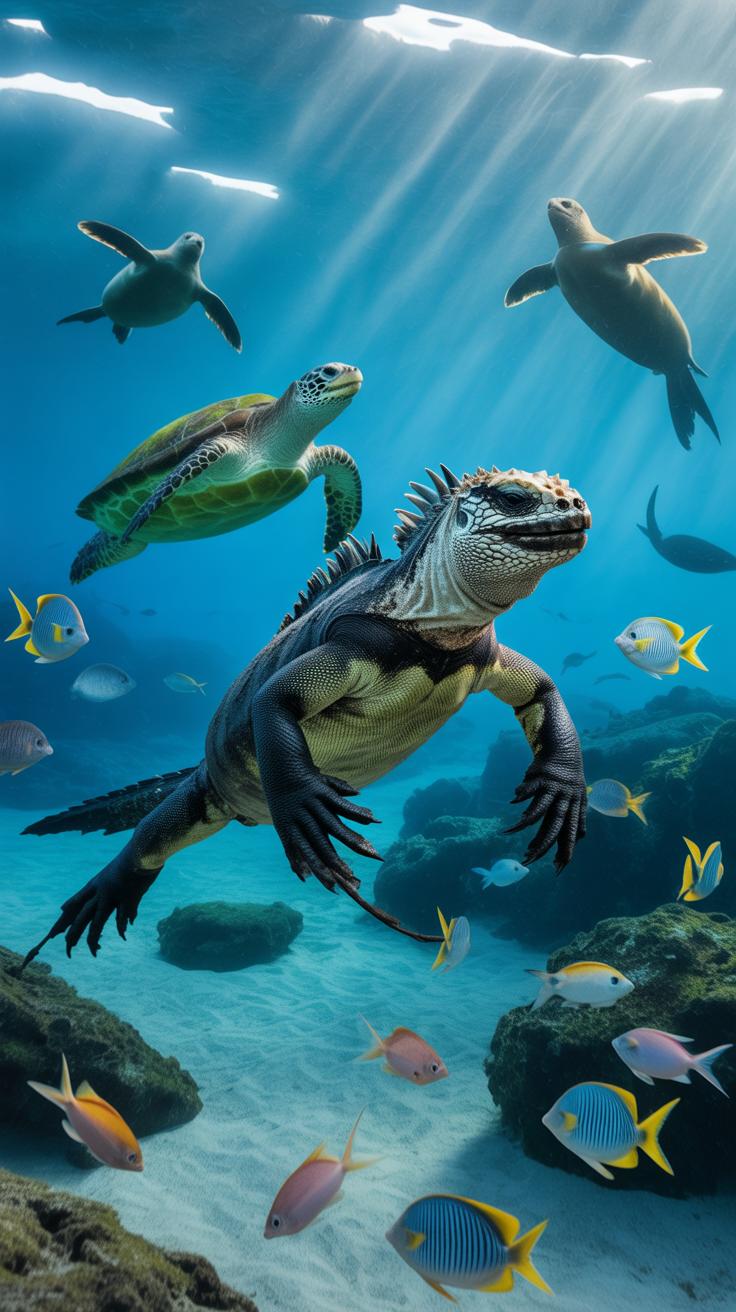
Shared Aquatic Habitats: What Other Species Coexist With The Sea Iguana Underwater
Marine iguanas share the nearshore waters with several predatory and non-predatory species. Galapagos green sea turtles often feed on the same macroalgae beds. Galapagos sea lions occupy the shallow rocky zones where iguanas enter the water. These mammals use the same underwater channels to move between haul-out sites. White-tip reef sharks and various ray species patrol the sandy bottoms just below the foraging depth of the iguanas.
The underwater environment demands high efficiency for all inhabitants. Iguanas navigate heavy surge alongside schools of yellowtail surgeonfish and sergeant majors. These fish often graze on the same volcanic rocks. Galapagos penguins occasionally transit these shallow areas to hunt small fish. While the iguana is the only lizard present, it competes for space with diverse marine life. This shared habitat requires precise timing to avoid predators like sharks in deeper water.
How Marine Iguana Swimming In Water Fits Into The Galapagos Ecosystem
The marine iguana plays a specific role as a primary consumer in the marine food web. It grazes on red and green algae that grow on submerged volcanic substrate. This grazing helps regulate algae growth rates in the intertidal zone. By consuming marine nutrients and depositing waste on land, these lizards transfer energy between the ocean and the terrestrial environment. No other reptile performs this specific ecological function here.

This swimming behavior also provides a food source for large marine predators. Sharks and occasionally sea lions target iguanas during their transit from the shore to the feeding grounds. The lizard’s ability to dive up to thirty feet allows it to reach food sources unavailable to land-based herbivores. This creates a unique niche that supports the high biodiversity of the archipelago. Their presence sustains both the marine nutrient cycle and the local predator population.
A Look Back At The Prehistoric Marine Reptile Underwater Ancient Ancestors Of Swimming Lizards
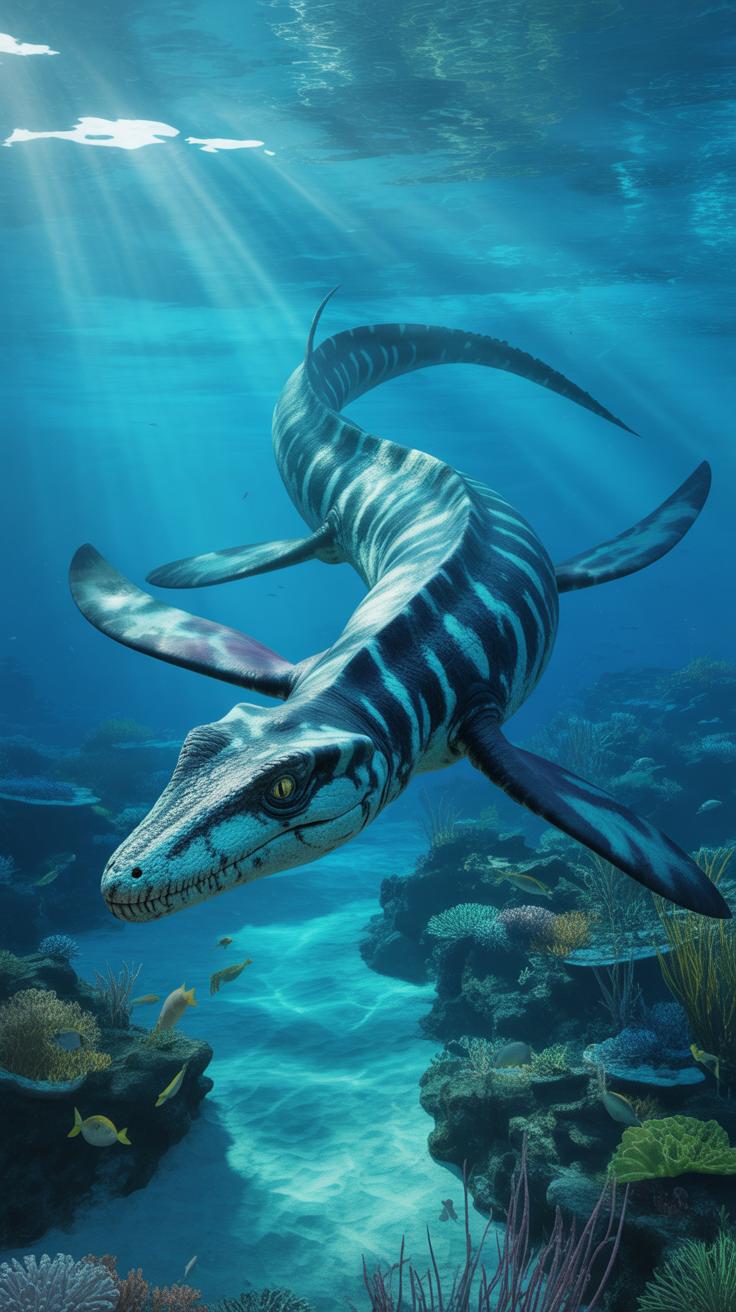
Mosasaurs And Prehistoric Swimming Reptiles That Dominated Ancient Seas
Mosasaurs were the ultimate marine lizards of the Late Cretaceous period. They were not dinosaurs but squamates closely related to modern monitor lizards and snakes. These predators evolved from small land dwellers into massive sea hunters. Their bodies changed to meet the demands of the water. They swapped walking legs for powerful paddles. They used a long tail for propulsion to hunt fish and ammonites.
Successful aquatic life requires specialized anatomy. Mosasaurs developed streamlined bodies to reduce drag while swimming. Their skulls were flexible and allowed them to swallow large prey whole. Heavy bones helped them maintain buoyancy in deep water. This transition shows that lizard biology is highly adaptable. Ancient oceans provided a niche for reptiles that could move from the shore into the open sea for survival.
What The Fossil Record Tells Us About The Evolution Of Aquatic Lizard Behavior
Fossils provide direct evidence of how lizards adapted to the water over millions of years. Scientists find these remains in ancient marine sediments. The bones show a clear progression from semi-aquatic lifestyles to fully pelagic existence. Early ancestors had standard lizard limbs but lived near coastlines. Over time, their finger bones lengthened to support skin webs. This structural shift allowed for more efficient movement in high currents.

The transition to water changed how these reptiles reproduced and breathed. Fossil evidence suggests some large marine reptiles gave birth to live young instead of laying eggs on land. This move decoupled their life cycle from the shore. It allowed them to colonize far reaches of the ocean. Modern swimming lizards like the marine iguana use similar lateral tail movements. The fossil record links ancient giants to the survival tactics of today.
Key Physical Traits That Allow Certain Lizard Species To Swim Effectively
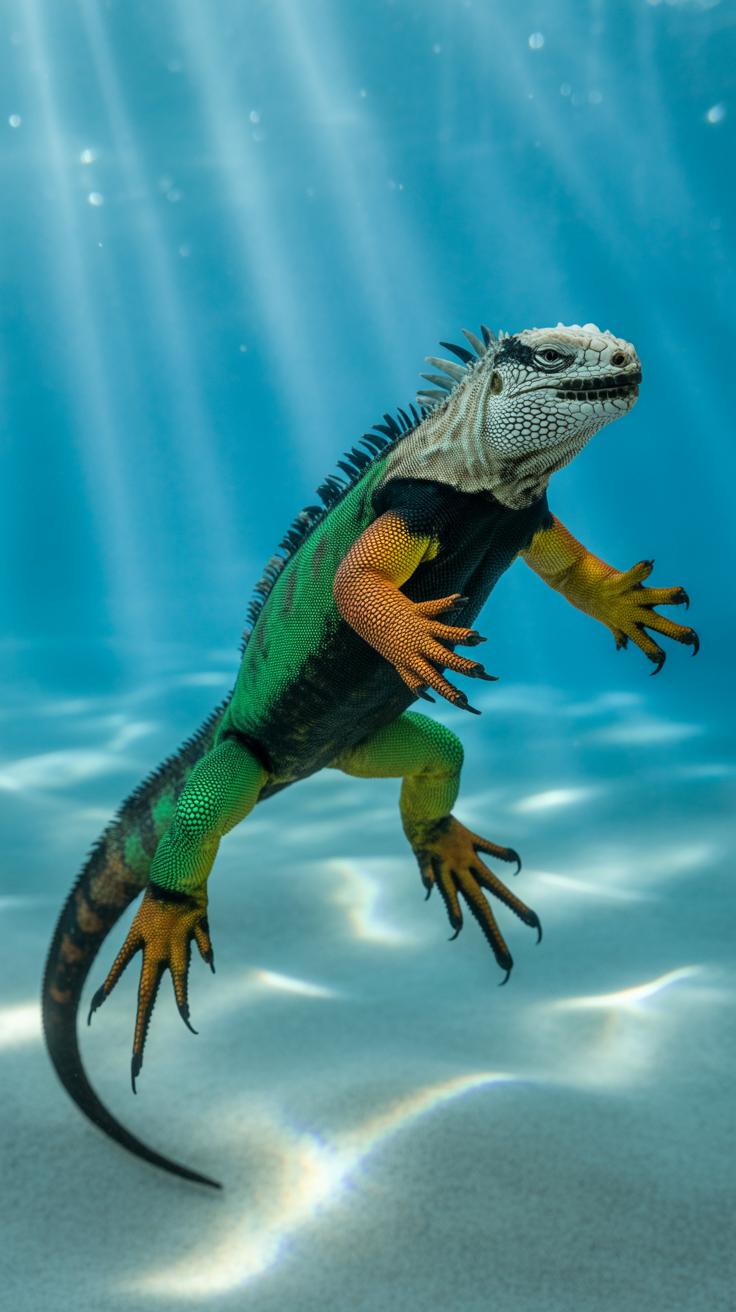
Tail Shape, Limb Structure, And Skin: How Lizard Bodies Are Built For Water Movement
A lateral compression of the tail serves as the primary engine for aquatic propulsion. Species like the Asian water monitor use this flattened structure to displace water and create forward thrust. This mechanical design mimics the function of a boat rudder. It allows for high-speed maneuvering and precise directional control. Without this specific skeletal geometry, lizards struggle to maintain a straight path against active currents.
Limb placement and skin texture also dictate aquatic efficiency. Agile swimmers often tuck their legs against their flanks to reduce surface drag while moving. Granular scales help break water tension and move fluid across the body more smoothly. These physical traits minimize energy loss during long dives. Many species also possess valve-like nostrils that seal tight to prevent water from entering the respiratory system under high pressure.
Top Physical Adaptations Shared Across The Best Lizard Swimming Species
The most successful aquatic lizards share a specific set of mechanical blueprints. These features allow them to exploit underwater niches for hunting and escape. Every adaptation serves to increase speed or extend dive times. Evolution favors these traits in riparian habitats where terrestrial movement is too slow.
- Laterally Compressed Tails: This structural shape provides a large surface area for pushing against water. It functions exactly like a paddle or a fish fin. This trait is essential for generating the torque required to swim against strong river currents or ocean waves.
- Nasal Valvular Closures: Specialized fleshy flaps seal the nostrils shut when the lizard enters the water. This prevents drowning and protects the internal airway from parasites. It allows the animal to remain submerged for extended periods without risking fluid intake into the lungs.
- Long Claws and Strong Limbs: Powerful legs assist in both swimming and exiting the water. Sharp claws allow the lizard to grip slippery rocks or submerged logs. This provides the traction necessary to launch into a swim or climb out quickly to avoid aquatic predators.
- Oar-Like Feet: Some specialized species have flattened toes or skin folds that expand in the water. This increase in surface area transforms the foot into a functional oar. It improves propulsion during the power stroke and allows for more efficient treading in deeper pools.
- Streamlined Body Profiles: A low-drag body shape reduces the effort needed to glide through the water. Reduced scales and tucked limbs prevent turbulence. This hydrodynamics allows the lizard to maintain high velocity with minimal caloric expenditure during long-distance travel or rapid hunts.

These combined traits transform a standard lizard into a high-performance aquatic machine. Specialized skin helps shed water immediately upon surfacing to prevent cooling through evaporation. This thermal management is vital for cold-blooded hunters. Successful aquatic lifestyles depend on these mechanical advantages to outpace competitors. Structural efficiency determines survival in the water.
How To Safely Observe Swimming Lizards In The Wild Tips For Wildlife Watchers
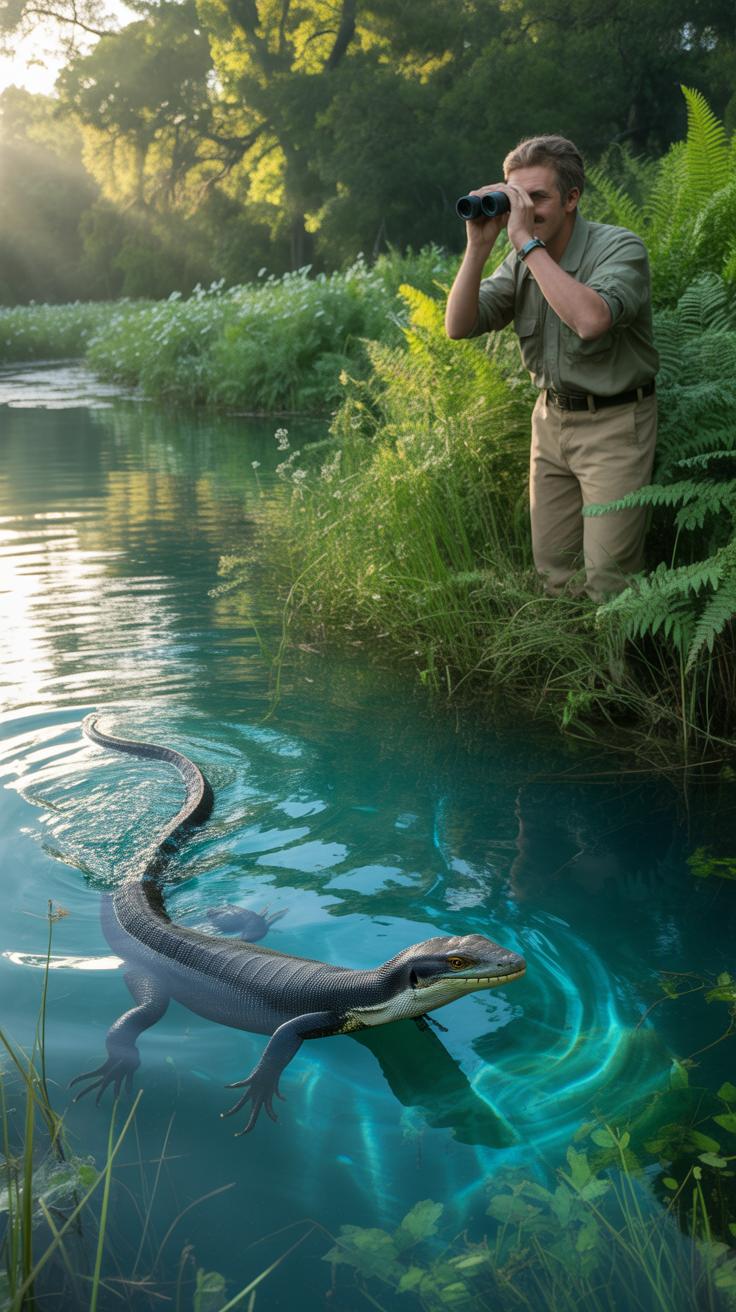
Best Locations Around The World To Watch Lizards Swimming In Their Natural Habitat
The Galapagos Islands remain the premier site for observing lizard swimming species in high concentrations. You will find marine iguanas foraging in the cold Pacific waters near the rocky coastlines. Visit during the low tide to see these reptiles dive for algae along the seabed. Fernandina and Isabela islands provide the most consistent opportunities to witness this unique behavior in person.
In Southeast Asia, the river systems of Thailand and Indonesia host large populations of Asian water monitors. These lizards utilize strong tails to navigate canals and mangroves with high efficiency. Check the edges of Lumpini Park in Bangkok or the thick jungles of Borneo. You should watch for movement near the water surface where these large reptiles hunt for fish and carrion.
Responsible Wildlife Watching Guidelines When Observing Marine Iguanas And Other Swimming Lizards
Observing aquatic lizards requires strict adherence to ethical distance standards to prevent animal stress. Human presence often disrupts basking and thermoregulation cycles critical for survival. Most swimming species are cold blooded and must maintain specific body temperatures after exiting the water. Approach quietly and remain at least three meters away from any basking reptile to ensure the safety of the animal.
- Keep Distance: Maintain a minimum gap of ten feet from any lizard on land or in water. Getting too close triggers a flight response that burns precious energy reserves. This is vital for marine iguanas that just finished a cold dive in the ocean.
- Avoid Eye Contact: Do not stare directly at the lizards for extended periods of time. Many reptiles perceive direct eye contact as a predatory threat or a challenge. Use peripheral vision or look through a camera lens to reduce the perceived pressure on the animal.
- No Feeding: Never offer food to wild lizards to lure them into the water for a photo. Human food disrupts their natural gut bacteria and creates dangerous dependencies. Natural foraging behaviors provide the best data for researchers and a more authentic experience for the wildlife watcher.
- Path Adherence: Stay on marked trails and boardwalks to avoid crushing lizard burrows or nesting sites. Many swimming species lay eggs in soft sand or dirt near the water edge. Stepping off the path can destroy future generations before they even hatch from their eggs.
- Use Zoom Lenses: Utilize high power telephoto lenses to capture close up shots without physical proximity. Digital zoom or physical lenses allow you to see fine details like salt crystals on an iguana nose. This tactic ensures you get the shot without disturbing the natural behavior of the species.

Effective observation requires you to be a silent spectator in the lizard habitat. Fast movements or loud noises startle swimming reptiles and cause them to submerge prematurely. If a lizard stops its current activity to look at you, you are too close. Back away slowly and wait for the creature to resume its normal routine before continuing your observation.
Frequently Asked Questions

Can all pet lizards swim if they fall into water?
While many reptiles possess an instinctive ability to paddle, not every lizard swimming species is built for the water. Some desert-dwelling reptiles, like bearded dragons, can float and move their limbs to stay above the surface, but they aren’t true swimmers. It is essential to research your specific pet’s biology, as some species are prone to exhaustion or drowning if they cannot quickly find a dry exit point.
How can I safely introduce my semi-aquatic lizard to a swimming area?
To safely accommodate a lizard swimming species like a Chinese Water Dragon, start with a shallow container that allows them to stand comfortably. Gradually increase the water depth while ensuring the temperature stays between 80-85°F. Always provide a sturdy, non-slip ramp or semi-submerged rock so they can exit the water easily. Constant supervision is vital to ensure your pet does not become overly stressed or chilled during their swim time.
What are some affordable lizard species that enjoy swimming for beginners?
If you are on a budget, the Long-tailed Grass Lizard is an excellent, accessible choice. While they are primarily terrestrial, they are surprisingly agile in shallow water and generally cost less than $20. For those with a bit more space, Green Basilisks are fascinating to watch, though they require a larger initial investment for a proper semi-aquatic setup. Always prioritize a quality filtration system to keep their swimming environment clean and safe.