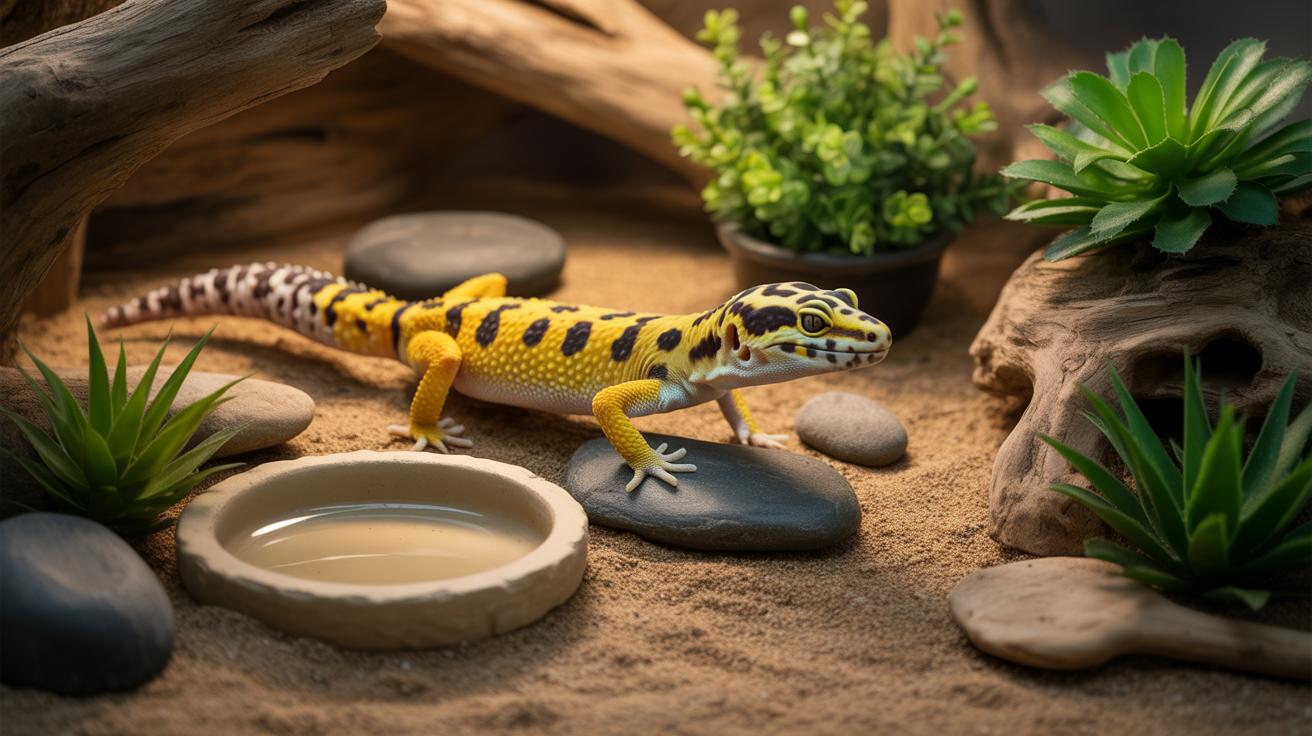
Understanding The Natural Gecko Habitat Before You Build
Where Leopard Geckos Come From In The Wild
Leopard geckos originate from the dry, rocky grasslands of South Asia. They live primarily in parts of Afghanistan, Pakistan, northwest India, and Iran. This region features hard-packed clay soils mixed with gravel and rocks. It is not a sandy desert like the Sahara. You must understand this geography to avoid common dangerous mistakes. Most beginners assume they live on shifting sand dunes.
The climate in these regions fluctuates between extreme heat and cold. Geckos survive by retreating into rocky crevices and underground burrows. These underground spaces maintain higher humidity levels than the outdoor air. This moisture is vital for their skin health and shedding process. They emerge at dusk when the ground remains warm but the sun is no longer intense. Your build must mimic these specific cycles.
How Wild Conditions Should Influence Your Enclosure Design
Your enclosure design must prioritize thermal gradients and secure hiding spots. Wild geckos use rocks to regulate body temperature. They absorb heat from sun-warmed stones long after sunset. You should use slate or stone in your setup to store heat effectively. This mimics the natural rocky outcrops of their homeland. Avoid loose sand which can cause lethal intestinal blockages if swallowed.
The natural environment dictates the need for a humid microclimate. Even in dry regions, these lizards find moisture in burrows. You must provide a dedicated humid hide to prevent respiratory issues and stuck shed. This replicates the damp subterranean pockets found in the wild. Focus on creating a transition from a hot, dry zone to a cool, moist area. This strategy gives the animal total control over its biology.

Choosing The Right Gecko Enclosure Size And Style
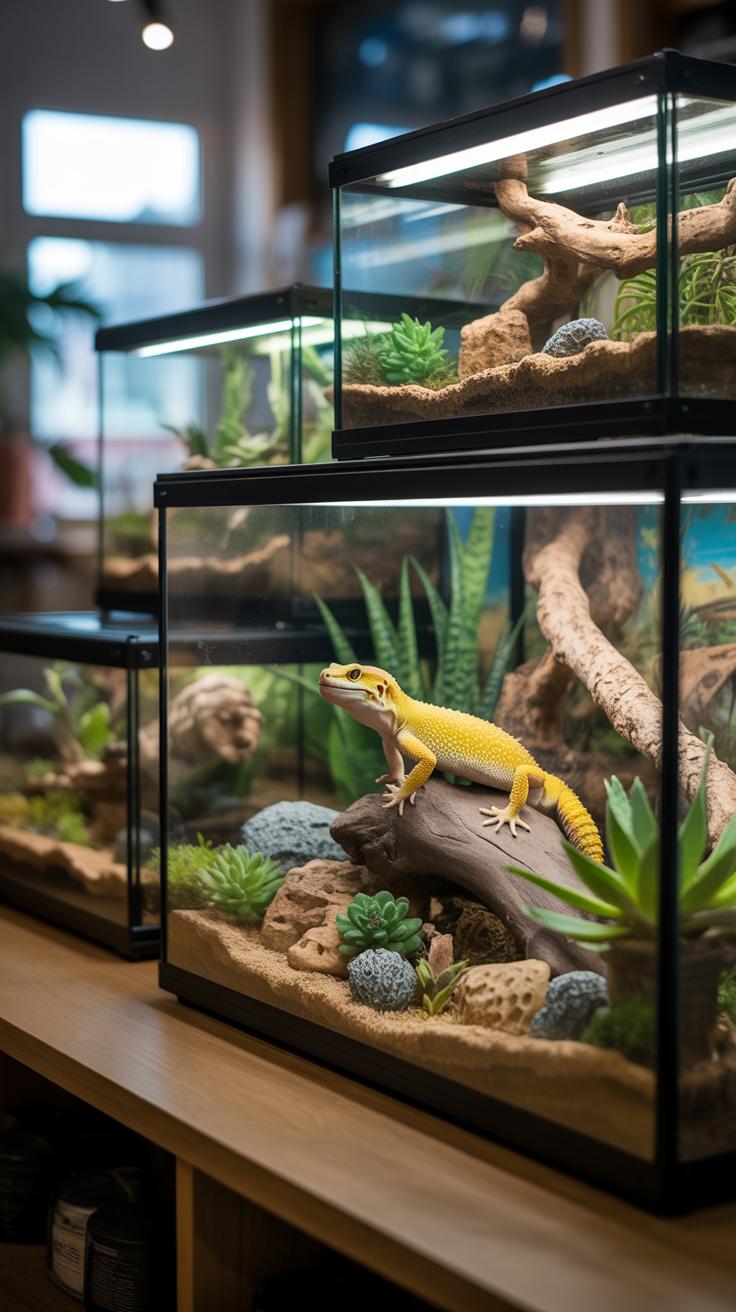
Glass Vs. PVC Vs. Screen Enclosures: Which Is Best For Leopard Geckos
Glass tanks remain the industry standard because they provide clear visibility and durability. Most owners prefer front-opening glass terrariums over top-loading fish tanks. These allow for easier access and reduce stress during handling. Glass holds heat well but does not insulate as effectively as other materials. You must ensure the lid is secure screen mesh to allow for proper ventilation and overhead heating.
PVC enclosures are the superior choice for maintaining stable thermal gradients. This material is lightweight and retains heat better than glass. Solid walls reduce external visual stressors for the gecko. Avoid screen enclosures entirely for this species. Screen cages fail to hold the heat these desert reptiles require. Low humidity is a risk in screen cages. Stick to glass or PVC to ensure a controlled environment.
Minimum And Recommended Tank Dimensions For One Or More Geckos
Standard care guidelines have shifted from twenty-gallon tanks to forty-gallon breeders. A forty-gallon tank measures approximately thirty-six inches long by eighteen inches wide. This floor space allows for a proper heat gradient from the hot side to the cold side. Leopard geckos are terrestrial animals that value horizontal roaming area over vertical height. Always prioritize floor square footage when selecting your enclosure to promote natural movement.

Never house multiple leopard geckos in the same enclosure. These animals are solitary and highly territorial by nature. Cohabitation leads to physical injury, resource competition, and chronic stress. Even if they appear to get along, they are competing for heat and food. Provide one dedicated enclosure per gecko to ensure health and safety. Larger enclosures like fifty-gallon or sixty-gallon tanks offer even better space for enrichment and exercise.
Is A 10 Gallon Leopard Gecko Tank Setup Enough For Your Pet
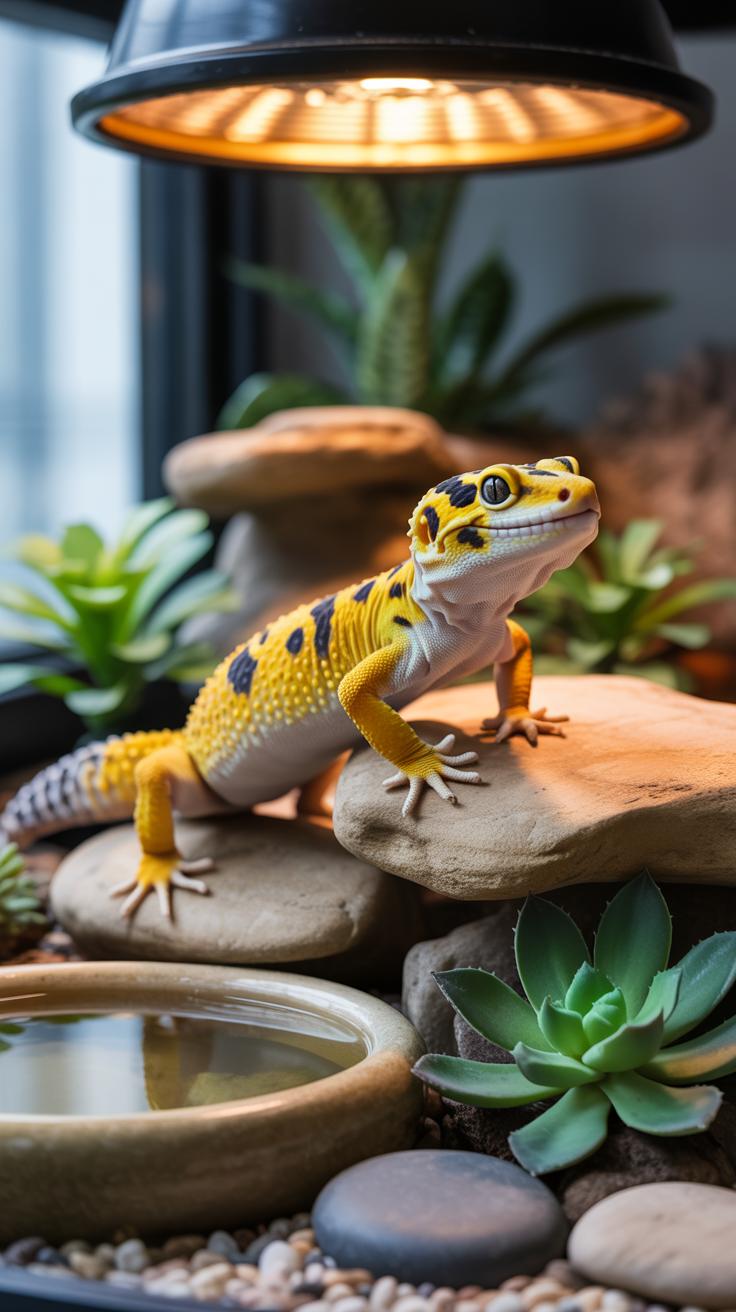
The Truth About 10 Gallon Tanks For Juvenile Vs. Adult Leopard Geckos
A 10 gallon aquarium is suitable only for hatchlings and very young juveniles. These small enclosures allow young geckos to find their food easily. However, this size becomes a liability within months. The limited floor space prevents the gecko from moving naturally as it grows. You cannot maintain a proper thermal gradient in a 10 gallon tank. This failure to regulate temperature leads to metabolic stress.
Standard 10 gallon tanks measure 20 inches long. This distance is too short to separate heat sources from cool zones. An adult gecko reaches 8 to 10 inches in length. It cannot turn or explore without hitting the walls. Keeping an adult in this setup is outdated and cruel. It restricts physical activity and causes long term health issues. Most experts now reject 10 gallon enclosures for any gecko older than six months.
When To Upgrade And What Tank Sizes Work Better Long Term
Upgrade your leopard gecko to a larger enclosure once it exceeds five inches. This change usually happens around the six month mark. A 20 gallon long tank was the previous industry standard. It provides more floor space than a 10 gallon unit. However, modern husbandry standards now recommend a 40 gallon breeder tank for all adults. This larger footprint allows for better environmental enrichment and thermal regulation.

A 40 gallon breeder tank measures 36 inches by 18 inches. This size provides enough room for three distinct hides and a proper temperature spread. You must prioritize floor area over vertical height. Leopard geckos are terrestrial and do not require tall climbing spaces. Investing in the correct size early saves money on lighting and heating equipment. A larger tank ensures your pet remains active and healthy for its twenty year lifespan.
Selecting The Best Substrate For Your Leopard Gecko Tank
Safe Substrate Options That Mimic A Natural Gecko Habitat
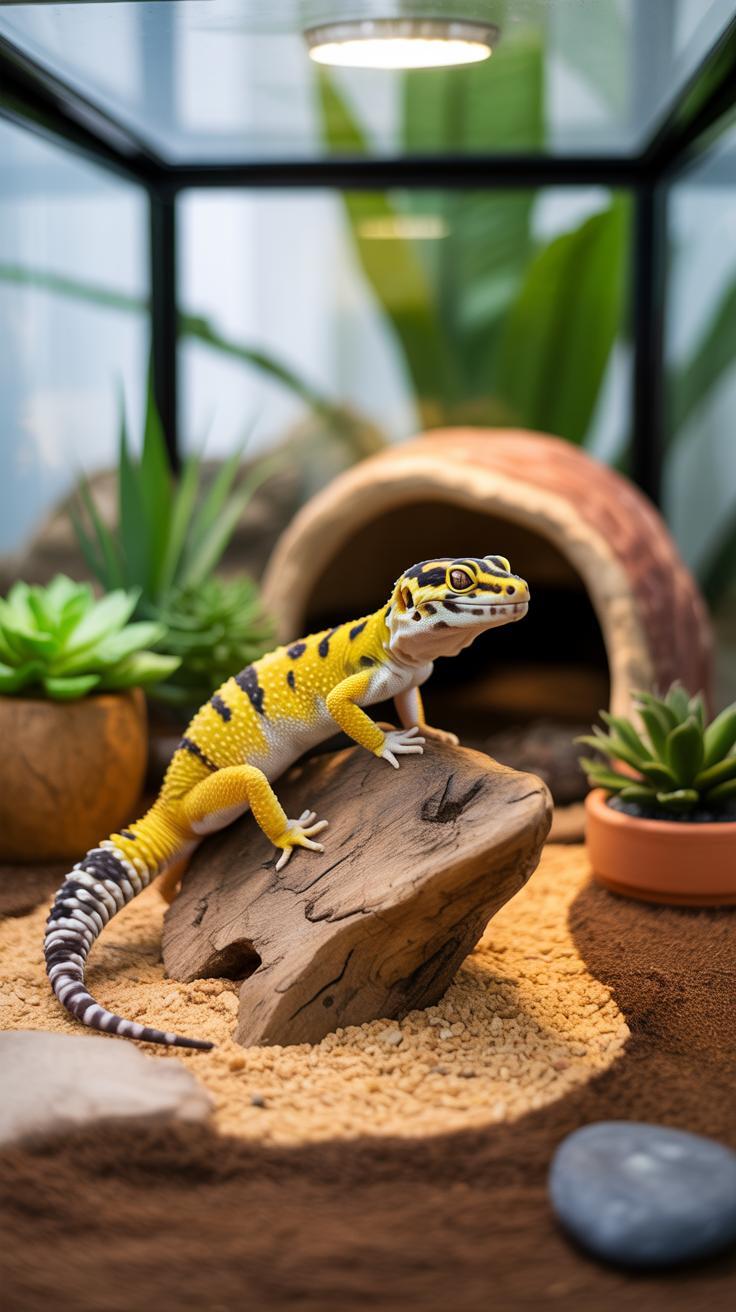
Leopard geckos live in rocky, dry grasslands in the wild. They do not live on loose sand. You must select a substrate that provides traction without risking accidental ingestion. Bioactive mixes or solid surfaces work best for these animals. These materials support the health of the joints and prevent skin issues. Proper choices allow for easy cleaning while maintaining the natural look of the enclosure.
- Paper Towels: These provide the safest option for new or sick geckos. They allow for easy monitoring of waste and health issues. You can replace them quickly to maintain high hygiene standards in the tank.
- Slate Tile: This material mimics the natural rocky terrain of the gecko habitat. It absorbs heat from under-tank heaters and overhead lamps efficiently. Tiles help wear down claws naturally and are very easy to sanitize with water.
- Excavator Clay: This substrate allows you to mold tunnels and hills that harden when dry. It provides a firm walking surface that reduces the risk of impaction. It creates a very realistic environment that encourages natural digging behaviors.
- Bioactive Soil Mix: A blend of topsoil and play sand creates a firm and naturalistic floor. This mix supports live plants and keeps humidity stable in specific areas. It works best when managed by experienced keepers who use clean-up crews like isopods.
- Paper Based Liners: These solid liners offer a soft surface that is easy to remove and wash. They do not have loose fibers that can snag on the lizard’s teeth or claws. They provide a middle ground between functionality and a clean aesthetic.
Solid substrates eliminate the risk of digestive blockages during feeding. If you use a soil mix, ensure it remains packed down and firm. Check the floor weekly for trapped moisture or bacteria growth. Maintaining a dry and solid surface prevents many common health problems. Always prioritize the physical safety of the animal over the visual style of the tank setup.
Building a sanctuary for these gentle creatures begins with a single stone, carefully placed to mirror the wild world they call home. When we design their habitat with love and precision, we are not just setting up a tank but crafting a lifetime of companionship.
Substrates To Avoid And Why They Pose A Health Risk
Loose substrates like calcium sand and corn cob bedding kill leopard geckos. These animals use their tongues to explore their environment and often swallow their bedding. Once inside the body, sand clumps together and blocks the digestive tract. This condition is called impaction and often requires expensive surgery to fix. Avoid any material that flows like liquid or has small grains.

Wood shavings and walnut shells also cause significant physical trauma. These materials have sharp edges that can puncture the mouth or scratch the eyes. Many wood types like cedar contain oils that are toxic to reptiles. These chemicals can cause respiratory infections or skin irritation over time. Stick to solid or firm surfaces to ensure your gecko lives a long and healthy life.
Setting Up The Ideal Leopard Gecko Vivarium Ideas For Heating And Lighting
Creating The Right Temperature Gradient With Under Tank Heaters And Heat Mats
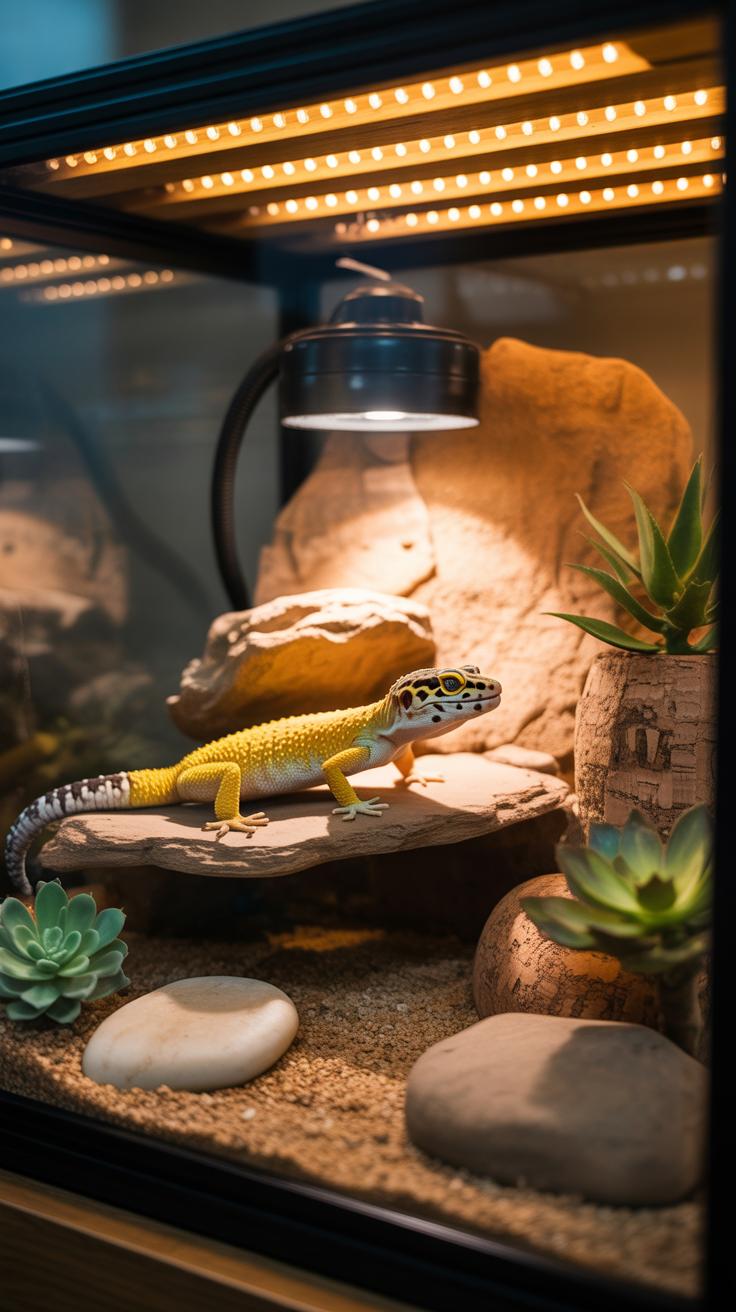
Leopard geckos are ectothermic and rely on external heat for digestion. You must create a thermal gradient across the enclosure. Place the heat mat under one third of the tank. This allows the gecko to move between a warm zone and a cool zone. Aim for a surface temperature of ninety degrees Fahrenheit on the warm side. Use a digital thermometer to track these levels.
You must connect every heat source to a thermostat. Unregulated heat mats can crack glass or burn your reptile. These mats provide infrared C radiation which warms the belly. While older methods focused only on under-tank heat, modern standards suggest adding overhead sources for deep tissue penetration. Keep the cool side at room temperature to prevent heat stress and allow for natural cooling.
Do Leopard Geckos Need UVB Lighting And What The Science Says
Science shows leopard geckos benefit from low-level UVB lighting even though they are crepuscular. They use ultraviolet rays to synthesize Vitamin D3 naturally. This process helps them absorb calcium and prevents metabolic bone disease. Without UVB, you must provide synthetic D3 through food supplements. Providing light mimics their natural environment in the wild. It also helps regulate their daily sleep and wake cycles.

Use a linear T5 bulb with a five percent output for the best results. Compact coil bulbs do not provide a consistent spread and can damage gecko eyes. Position the light on the warm end of the cage. Ensure the gecko has hiding spots to escape the light when needed. Turn the lights off at night to maintain a proper day and night rhythm for the animal.
Designing The Layout With Creative Leopard Gecko Tank Setup Ideas
Guidance On How To Arrange Hides Climbing Surfaces And Open Space Effectively
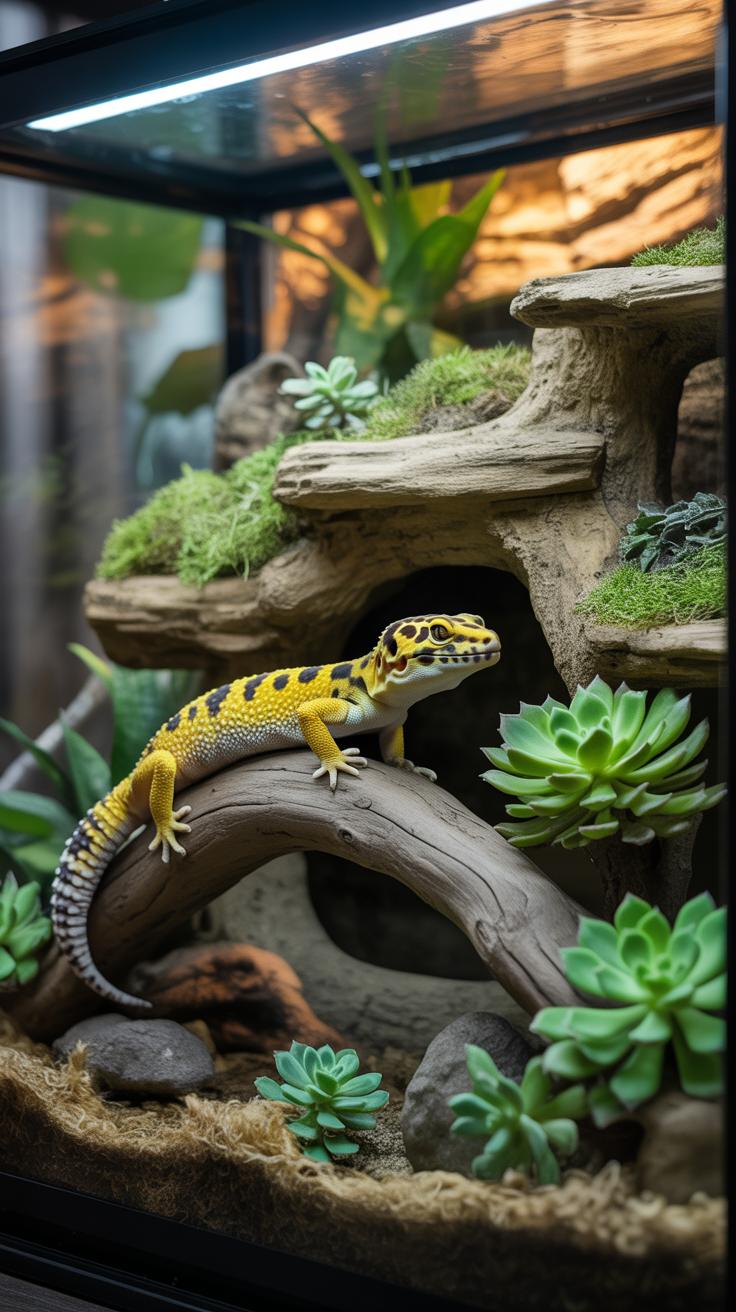
Place three distinct hides to manage the thermal gradient effectively. Put the warm hide directly over your heat source. Position the cool hide at the opposite end of the tank. Place the humid hide in the middle to facilitate proper shedding. This layout forces the gecko to move across the enclosure. Movement promotes physical health and prevents obesity in captive reptiles.
Maximize vertical space with low climbing structures like slate stacks or wood ramps. Leopard geckos are semi-arborial and utilize elevation to survey their territory. Keep climbing surfaces under twelve inches to prevent fall injuries. Leave the center of the floor clear for unobstructed hunting. Open space allows the gecko to reach top speeds when chasing live prey items during feeding cycles.
Using Rocks Cork Bark And Artificial Plants To Enrich The Environment
Use natural stone and cork bark to create a complex tactile environment. Sandstone and slate hold heat well and provide abrasive surfaces for shedding. Cork bark tubes offer lightweight security and satisfy the animal’s instinct to squeeze into tight crevices. Arrange these materials to create sightline breaks. These breaks reduce stress by making the gecko feel hidden from predators outside the glass.

Integrate artificial silk plants to add cover without the maintenance of live flora. Place dense clusters near the hide entrances to provide extra security. Avoid plastic plants with sharp edges that can scratch delicate belly scales. Strategic foliage placement creates microclimates with varying light levels. These dark zones allow the gecko to remain active during the day while feeling protected from bright overhead lights.
Adding Hides And Humid Zones To Your Terrarium Gecko Leopard Setup
Why Leopard Geckos Need At Least Three Hides And Where To Place Them
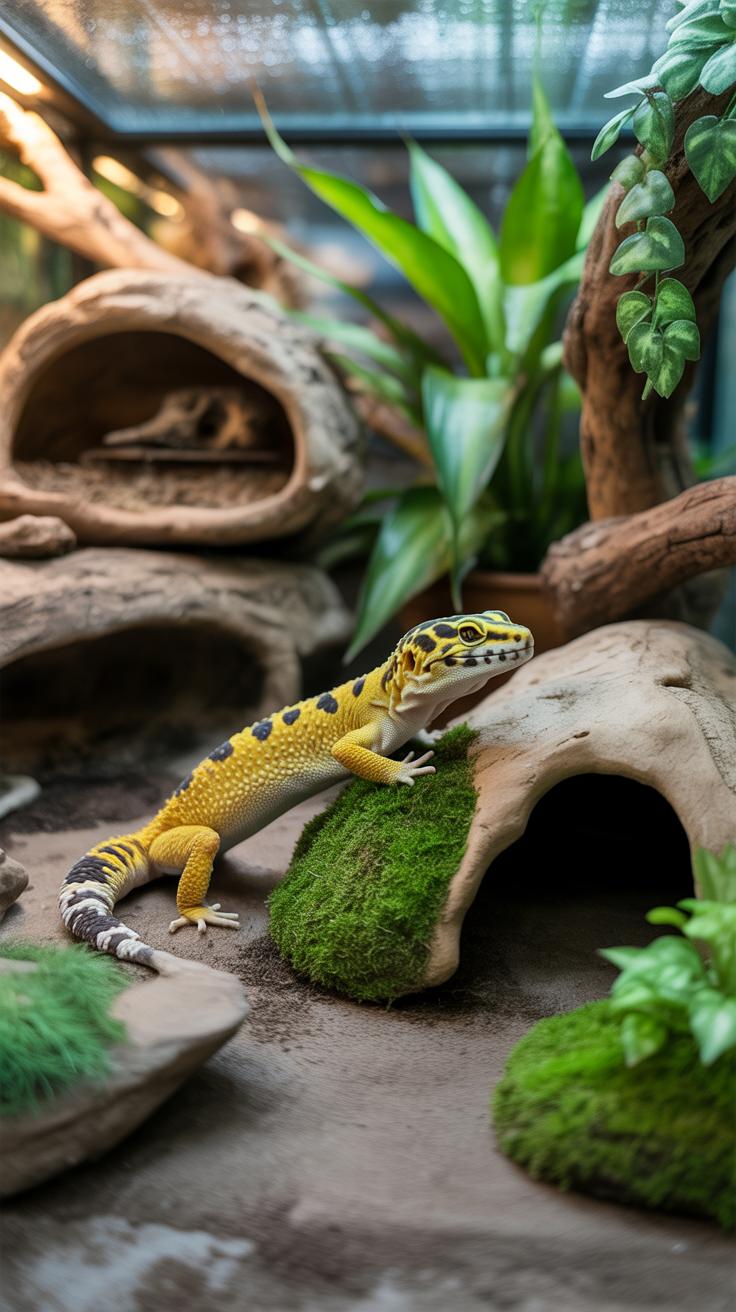
Leopard geckos are crepuscular prey items in the wild. They require security to regulate stress and metabolic functions. You must provide a minimum of three distinct hides to facilitate natural behaviors. Place one hide on the hot side of the enclosure directly over the heat source. Place the second hide on the opposite cold side. This layout allows the gecko to choose its temperature without feeling exposed.
Proper placement dictates the success of your thermal gradient. The hot hide supports digestion and energy levels. The cool hide prevents overheating and dehydration. Total enclosure coverage reduces cortisol levels in the reptile. Ensure each hide has only one entrance to maximize the sense of safety. Solid walls are better than transparent materials. Do not skip these zones if you want a healthy animal.
How To Build Or Buy A Moist Hide To Support Healthy Shedding
The moist hide is the third essential structure in your setup. It provides a localized zone of high humidity. This zone is critical for the shedding process. Without it, skin sticks to the toes and eyes of the gecko. This leads to infection or permanent tissue loss. Position this hide in the middle of the temperature gradient. The warmth creates the necessary evaporation for a humid microclimate.

You can buy commercial caves or build one using a plastic container. Cut a smooth hole in the lid of a Tupperware box for access. Fill the base with damp sphagnum moss or paper towels. Check the moisture levels daily to prevent mold growth. Use non-toxic materials that can withstand constant dampness. A functional moist hide ensures every shed is clean and complete. Replace the substrate weekly to maintain hygiene.
Water Humidity And Ventilation In Your Leopard Gecko Tank Setup Ideas
Maintaining The Correct Humidity Range And Why It Matters For Leopard Geckos
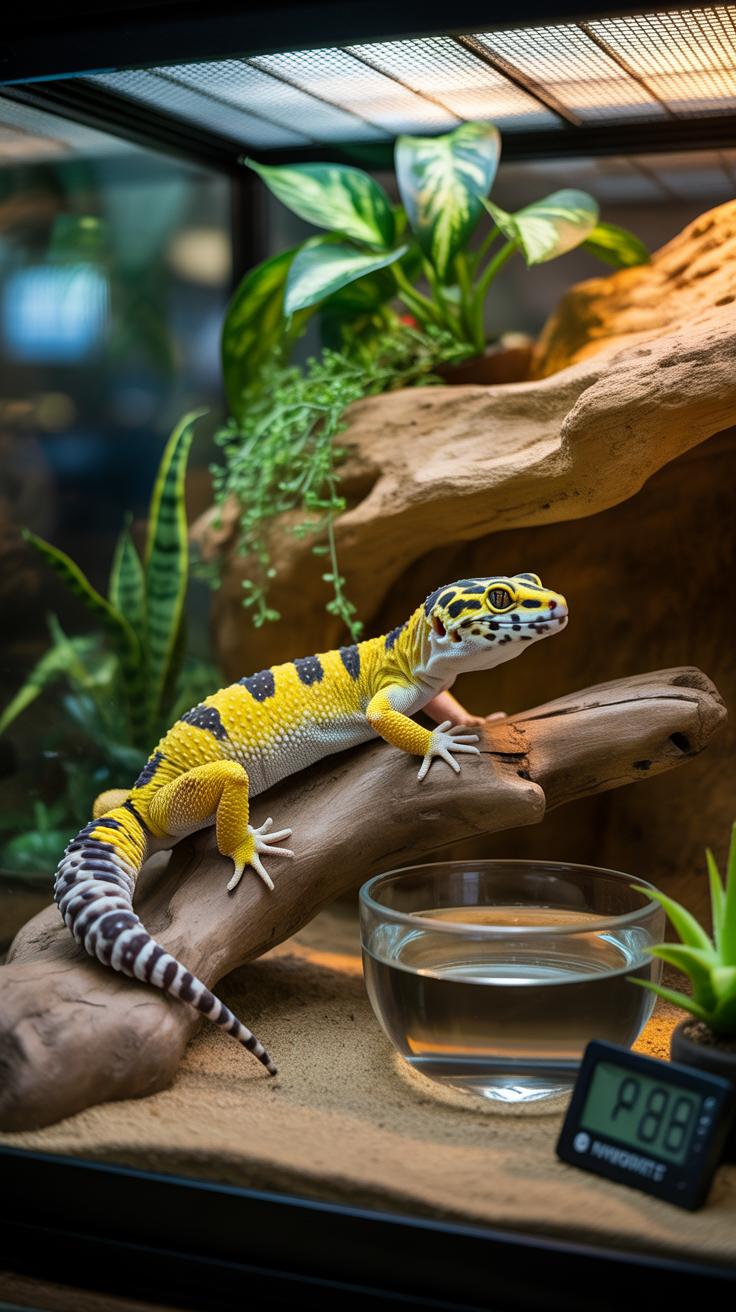
Leopard geckos require a specific humidity range between 30 and 40 percent. This level mimics their natural arid environment in South Asia. High humidity causes skin infections and bacterial growth inside the tank. Low humidity leads to dysecdysis or poor shedding. You must monitor these levels using a digital hygrometer. Place the sensor in the middle of the enclosure for accurate data.
A humid hide is the only exception to the dry rule. This enclosed space contains damp moss or paper towels. It provides a microclimate with high moisture. Geckos use this area to loosen old skin during the shedding cycle. Without this localized moisture, skin sticks to toes and eyes. This leads to tissue loss or blindness. Keep the rest of the tank dry to ensure respiratory health.
Proper Ventilation Practices That Prevent Respiratory Issues
Stagnant air kills reptiles. Proper ventilation depends on a screen top that allows gas exchange. This setup lets heat rise and pulls fresh air into the tank. Cross-ventilation is also helpful in PVC enclosures. Small side vents create a steady airflow. This movement prevents the buildup of ammonia from waste. Constant fresh air keeps the lungs of your gecko clear and functional.

Avoid using solid glass or plastic lids. These materials trap moisture and heat. Trapped humidity creates a breeding ground for fungi and bacteria. High moisture levels often lead to upper respiratory infections. Geckos with these infections struggle to breathe and stop eating. Ensure your mesh top is secure but open to the room. Effective airflow maintains the dry environment these desert lizards need to thrive.
Inspiring Leopard Gecko Tanks Ideas To Personalize Your Gecko Enclosure
Desert Themed Vs. Bioactive Enclosure Styles: Pros And Cons For Beginners
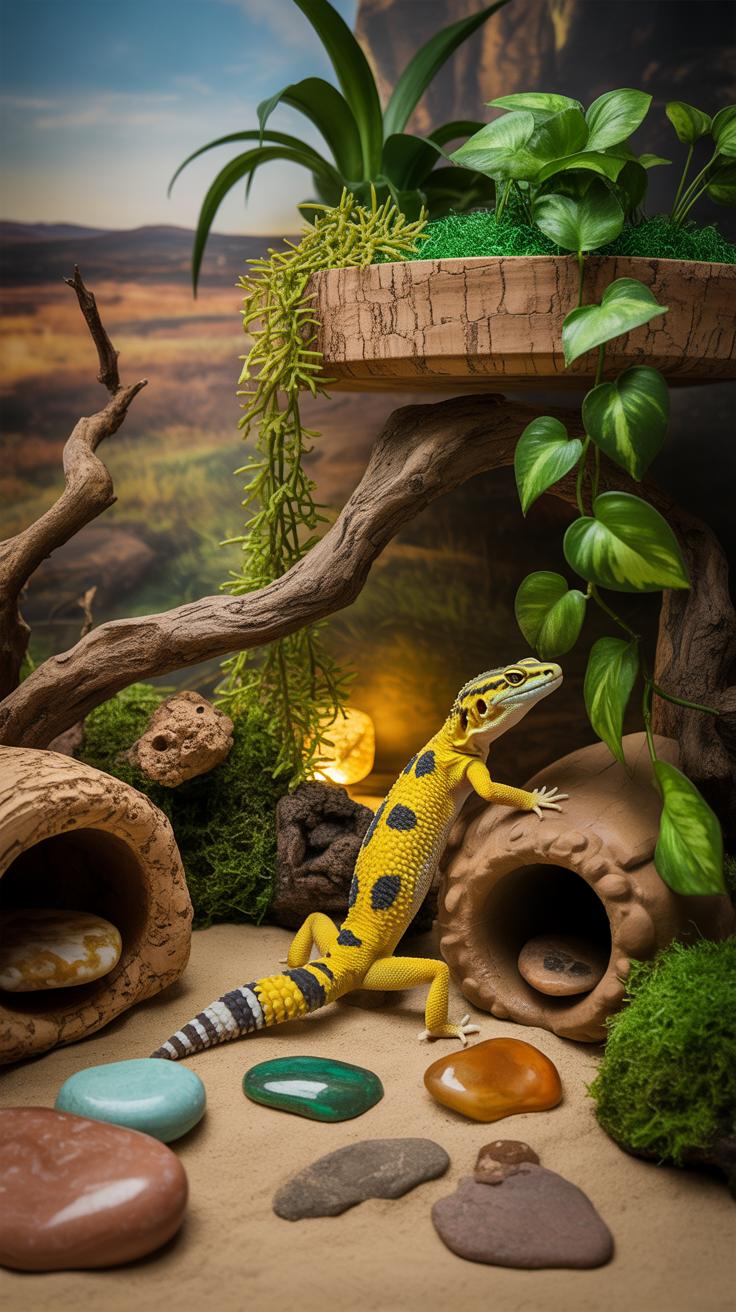
Desert themes use slate, stone, and excavator clay to mimic the arid rocky steppes of Pakistan and India. These setups offer high durability and easy sanitation for new keepers. You can clean surfaces quickly and monitor waste easily. Beginners thrive with this style because it eliminates the risk of high humidity or soil ingestion. It provides a sterile environment where you control every variable.
Bioactive enclosures utilize live plants, specialized soil mixes, and a cleanup crew of isopods and springtails. This style creates a self-sustaining ecosystem that breaks down waste naturally. However, bioactive setups require precise humidity management to keep plants and insects alive without harming the gecko. Maintain a balance between soil moisture and air dryness. This method costs more upfront but reduces long-term manual cleaning tasks.
Budget Friendly Gecko Terrarium Ideas That Still Meet All Care Requirements
Maximize your budget by choosing functional materials over branded pet store decor. Reptile safety depends on heat resistance and lack of toxins rather than price tags. Use natural sandstone or slate from landscape suppliers to build basking platforms. These materials hold heat better than plastic alternatives. Ensure all heavy items sit directly on the floor of the tank to prevent your gecko from digging underneath and getting crushed.
- PVC Pipe Tunnels: Cut standard PVC piping into six-inch lengths to create durable hides. Sand the rough edges to prevent skin abrasions. These pipes are waterproof, easy to disinfect, and cost pennies compared to realistic resin rock caves.
- Paper Towel Substrate: Use layers of plain white paper towels as an effective floor covering. This material is the cheapest option for maintaining hygiene. It allows you to monitor health by making droppings easy to see and provides zero risk of accidental impaction.
- Stackable Slate Tile: Purchase individual slate tiles from hardware stores to create elevated basking spots. Use aquarium-safe silicone to glue them into stable structures. Natural stone absorbs heat efficiently from overhead lamps or heat mats to provide a consistent thermal gradient for digestion.
- Repurposed Glass Jars: Clean large glass jars and coat them in dark non-toxic paint or wrap them in moss. These provide excellent humid hides when filled with damp paper towels. The glass holds moisture well while providing a secure, dark space for the shedding process.
- Sterilite Tub Enclosures: Use a large plastic storage bin as a primary enclosure if glass tanks exceed your budget. Drill ventilation holes along the sides for airflow. Bins hold heat well and offer massive floor space at a fraction of the cost of retail terrariums.
Customizing on a budget requires a focus on utility. Do not sacrifice thermal gradients or UVB penetration for aesthetics. Spend your money on high-quality thermostats and light fixtures first. Use the saved funds from DIY decor to purchase a digital infrared thermometer. This tool ensures your low-cost materials reach the correct temperatures. Smart planning allows you to provide expert-level care while keeping your total setup costs extremely low.
Step By Step Checklist For Completing Your Leopard Gecko Habitat Setup
Cycling And Testing Your Enclosure Before Introducing Your Gecko
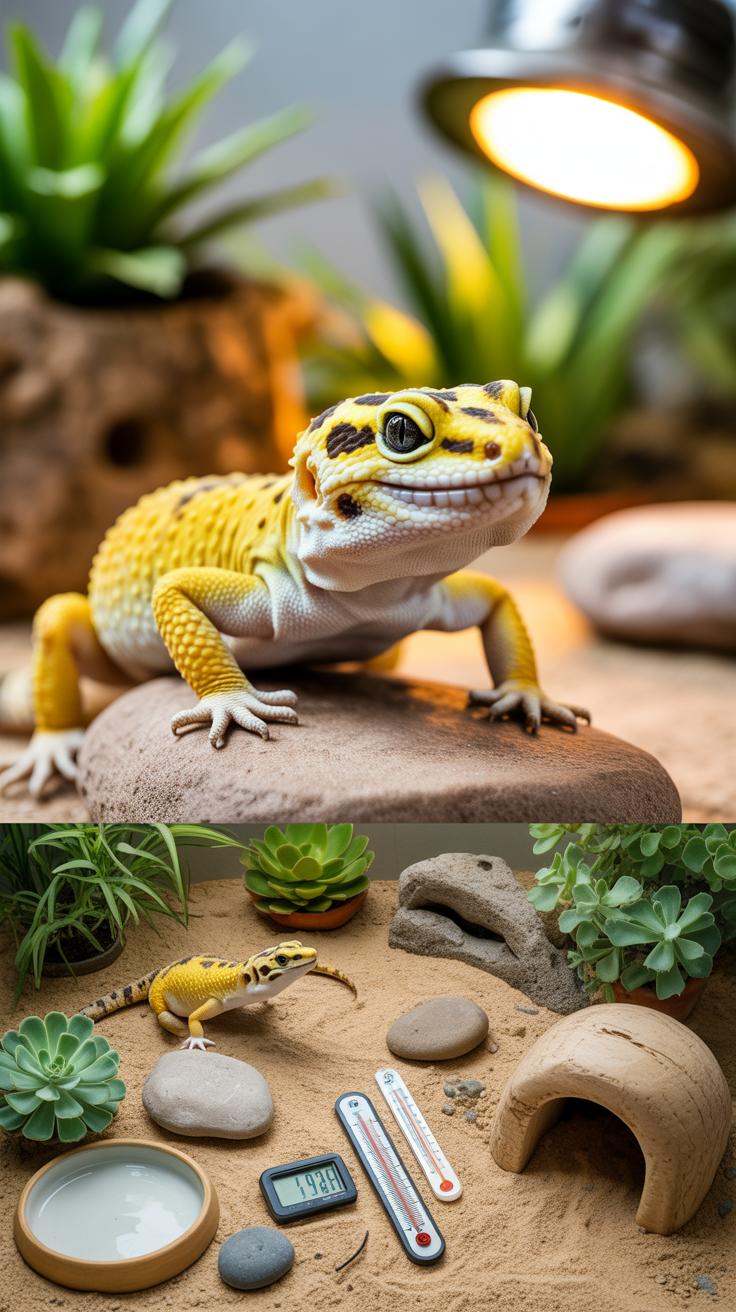
Run your full heating and lighting system for forty-eight hours before the gecko arrives. You must verify that your thermostat maintains the warm side at ninety degrees Fahrenheit. Use a digital infrared thermometer to check floor temperatures. Test the cool side to ensure it stays in the mid-seventies range. Consistent heat prevents digestive failure and ensures the reptile survives the transition period.
Monitor the hygrometer to confirm humidity levels stay between thirty and forty percent. Mists or spills can cause spikes that lead to respiratory infections. Ensure the moist hide stays damp without soaking the substrate. This testing phase reveals technical flaws in your equipment before they harm the animal. Adjust the placement of heat lamps or deep heat projectors until the thermal gradient is stable.
Ongoing Maintenance Routines That Keep The Habitat Safe And Clean
Remove waste and uneaten insects every single day to prevent bacterial growth. Spot cleaning stops ammonia buildup and parasitic spread within the enclosure. Replace the water in the bowl daily to keep it fresh and free of debris. Wipe down any surfaces where you see urates or feces immediately. Cleanliness is the primary factor in preventing skin infections and eye problems.
Perform a deep clean of the entire habitat once every month. Remove all substrate and soak every hide in a safe reptile disinfectant. Scrub the glass walls to remove mineral deposits and organic film. Inspect all electrical wires and heat sources for damage or wear. Routine maintenance extends the life of your equipment and protects the long-term health of your leopard gecko.
Frequently Asked Questions

What are the absolute essentials for a leopard gecko habitat setup?
To create a healthy environment, your leopard gecko habitat setup requires a 20-gallon long tank, a heat mat with a thermostat, and three distinct hides. You will also need a solid substrate like paper towels or slate, a shallow water dish, and a small bowl for calcium powder. Monitoring tools like digital thermometers and hygrometers are vital to ensure your pet remains comfortable and safe in their new home.
How do I create a proper temperature gradient within the enclosure?
Achieving the right temperature gradient is a crucial part of your leopard gecko habitat setup. Place your heat source on one far side of the tank to create a warm zone of 88-92°F, while leaving the opposite side unheated to provide a cool retreat around 75°F. This allows your gecko to thermoregulate naturally by moving between the two areas, which is essential for their digestion and overall metabolic health.
Can I create a high-quality habitat on a limited budget?
Absolutely! You can save money by repurposing safe household items into functional decor. Use plastic food containers with smooth edges for affordable hides and paper towels as a sterile, low-cost substrate. Shopping for second-hand glass enclosures can also significantly reduce your initial costs. As long as you prioritize a high-quality thermostat and proper heating equipment, your gecko can thrive in a simple, budget-friendly environment without sacrificing care quality.