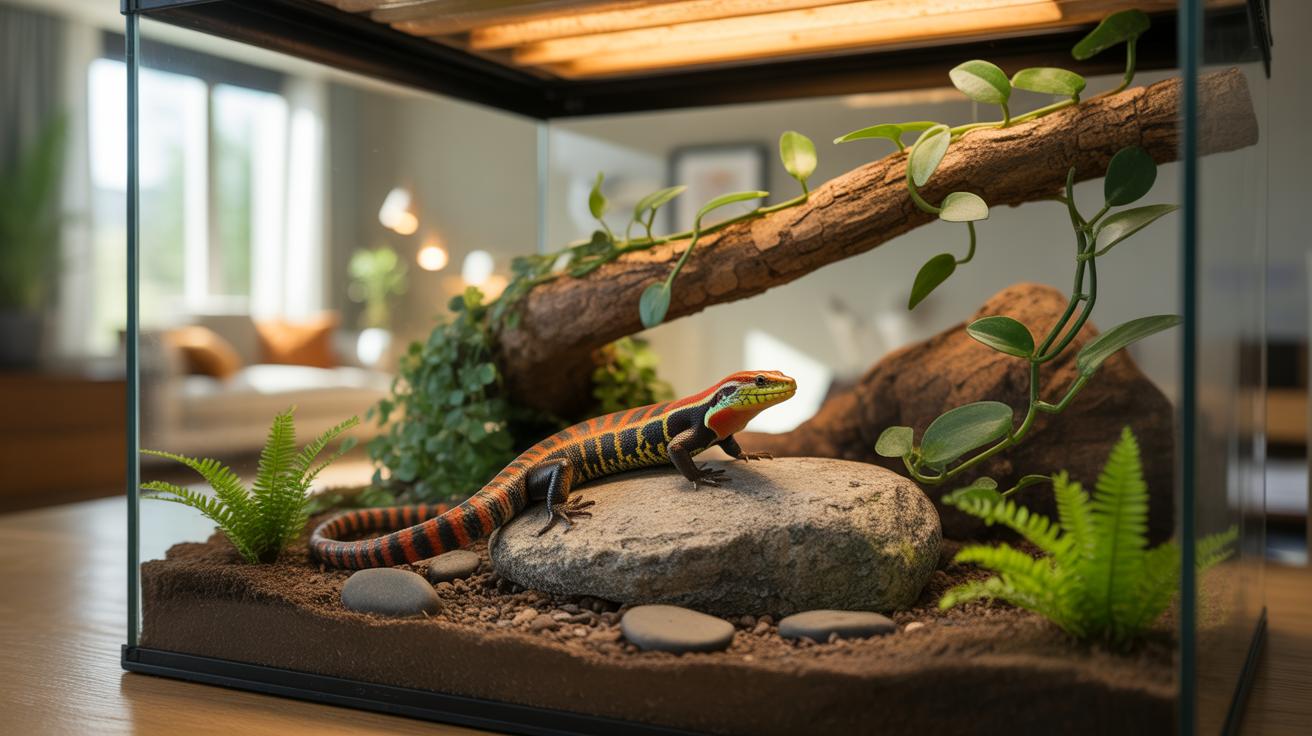
What Is A Fire Skink Lizard And Why Do They Make Great Pets

Understanding The Natural Habitat And Origin Of The Fire Skink Lizard
The fire skink lizard hails from West Africa. Its range covers countries like Ghana, Guinea, and Togo. These lizards thrive in tropical and subtropical regions. They prefer humid forests and coastal scrublands. You will find them under leaf litter and fallen logs. This environment provides high moisture and protection from predators. Mimicking this dense ground cover is essential for a healthy fire skink tank setup.
These lizards are fossorial by nature. They spend most of their time burrowing in moist soil. The African climate provides consistent heat and high humidity levels. Fire skinks rely on this damp earth to regulate their body temperature. They are not arboreal and rarely climb high. Your habitat design must focus on floor space and deep substrate. Deep soil allows them to express natural instincts found in the wild.
Temperament And Behavior Traits That Make Fire Skinks Rewarding To Keep
Fire skinks are shy but curious reptiles. They lack the aggression found in other lizard species. Most individuals stay hidden for several days while they acclimate to a new home. Once they feel secure, they become active and visible. They quickly learn to associate their owners with food. This makes them more interactive than typical skittish lizards. They generally tolerate occasional handling if you move slowly.
These lizards exhibit fascinating hunting behaviors. They move with high speed when they spot prey. Watching them forage through the substrate provides great entertainment. They are hardy and resilient pets for those who maintain proper humidity. Their vivid red and gold scales offer immense visual appeal. They do not require constant social interaction to stay healthy. This independence makes them a top choice for busy keepers seeking a low-stress pet.

Choosing The Right Skink Tank Size And Enclosure Type
Minimum And Recommended Tank Dimensions For A Healthy Fire Skink
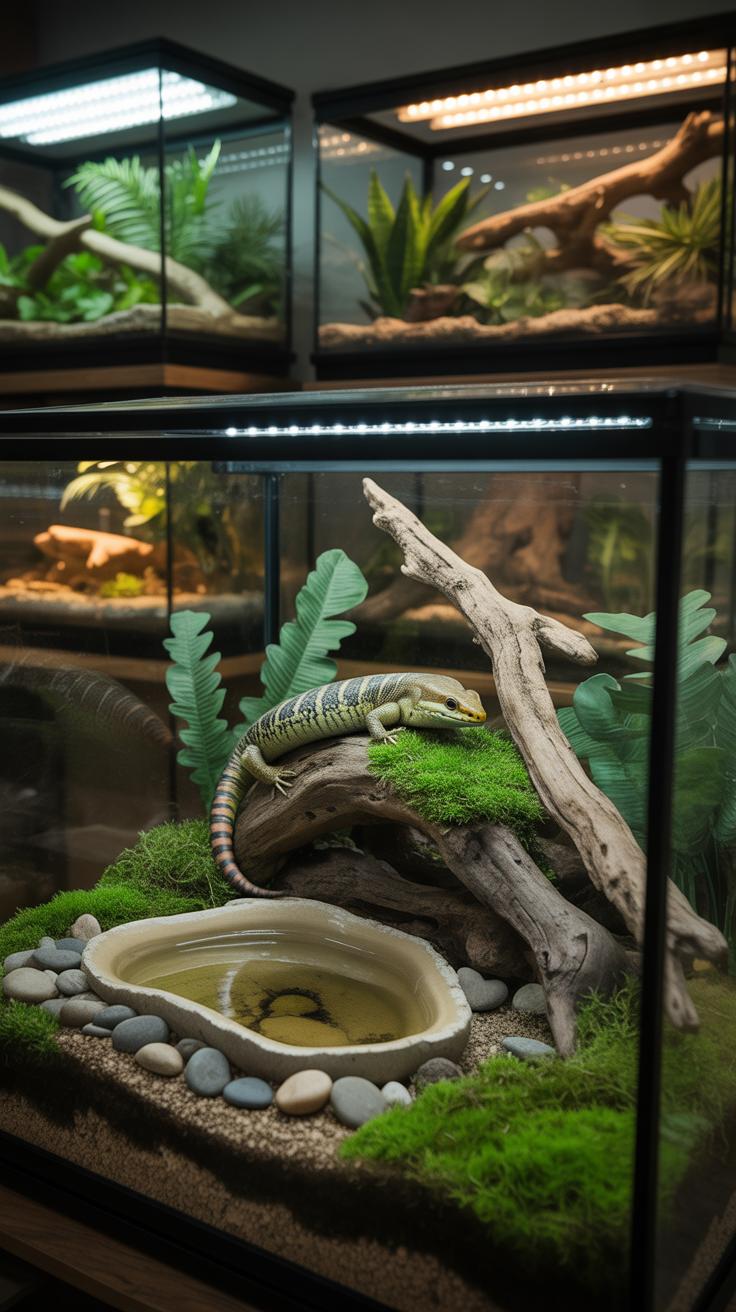
Fire skinks are active lizards that require sufficient floor space for natural movement. A twenty-gallon long tank is the absolute minimum for a single adult. This footprint provides roughly thirty inches by twelve inches of space. Smaller enclosures restrict physical activity and prevent the creation of a proper thermal gradient. You must prioritize floor surface area over vertical height for this species.
A thirty-gallon or forty-gallon breeder tank is the gold standard for long-term health. These larger footprints allow for deeper substrate and more hiding spots. Fire skinks spend most of their time burrowing or foraging on the ground. Increased space reduces stress and prevents obesity by encouraging hunting behaviors. Always choose an enclosure that measures at least thirty-six inches in length for the best results.
Glass Vs. PVC Enclosures: Which Skink Tank Material Works Best
Glass tanks remain the most common choice for many keepers. They are easy to clean and allow for excellent visibility. However, glass loses heat quickly and does not hold humidity well. Fire skinks require high humidity levels to shed their skin properly. You will need to cover most of the screen top with foil or plastic to trap moisture inside a glass enclosure effectively.

PVC enclosures are the superior strategic choice for maintaining stable environments. The plastic walls insulate heat much better than glass. This material also holds humidity with significantly less effort from the keeper. PVC units usually feature front-opening doors which make maintenance easier. These enclosures prevent the skink from seeing its reflection, which reduces territorial stress. High-grade PVC remains the professional standard for tropical burrowing reptiles.
Best Substrate Options For Your Fire Skink Tank Setup
Why A Deep, Moisture Retaining Substrate Is Essential For Fire Skinks
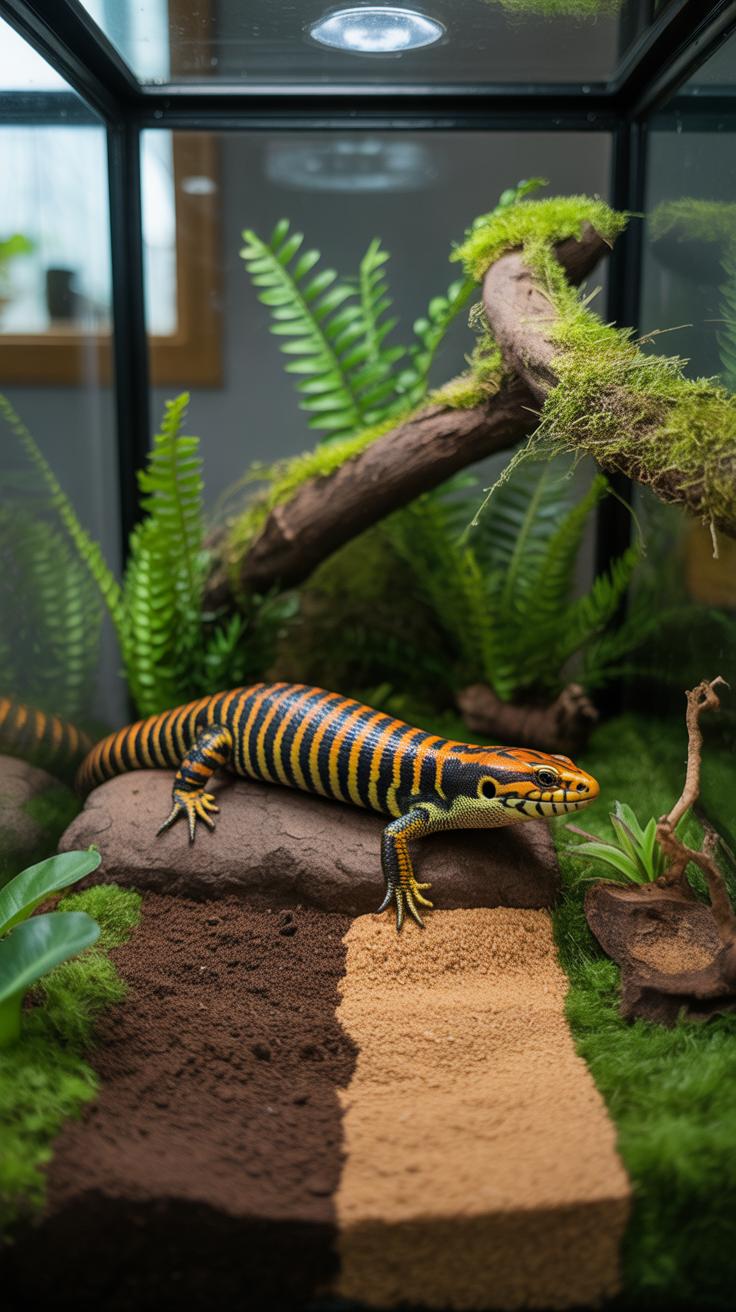
Fire skinks are fossorial lizards that spend most of their lives underground. You must provide a substrate depth of at least four to six inches to allow for natural tunneling. This behavior reduces stress levels and provides a sense of security. Without adequate depth, the skink cannot thermoregulate effectively or perform its primary biological functions. Shallow soil leads to a stressed and defensive animal.
Moisture control is the second critical factor for your substrate choice. African fire skinks require a humidity level between sixty and seventy percent to shed skin properly. A high-quality substrate absorbs water and releases it slowly into the air. This prevents respiratory infections caused by dry dust. You must maintain moist lower layers while keeping the surface slightly drier to prevent belly rot or fungal growth.
Top Substrate Materials To Use And Avoid In A Fire Skink Enclosure
The best substrate for a fire skink mimics the tropical forest floor. You need a mix that holds structure for tunnels but remains loose enough for easy movement. Organic soil bases work best because they do not contain harmful chemicals or fertilizers. Avoid using sand alone or gravel, as these materials do not hold humidity and can cause fatal impactions if the skink swallows them.
- Coconut Husk Fiber: This material holds moisture exceptionally well and resists mold growth. It provides a soft texture for burrowing and remains affordable for deep setups. You can mix it with other soils to increase the overall drainage and aeration.
- Organic Topsoil: Clean topsoil offers the most natural experience for your reptile. It supports live plants and holds tunnel shapes better than loose fibers. Ensure the soil is free from synthetic fertilizers, pesticides, and perlite to keep your lizard safe and healthy.
- Sphagnum Moss: Mixing this into the soil increases water retention significantly. It creates pockets of high humidity within the burrows which helps the skink during shedding cycles. Use long-fiber versions to prevent the lizard from accidentally eating small loose particles during feeding.
- Cypress Mulch: This wood-based option is excellent for maintaining humidity without compacting too tightly. Use it as a top layer or mix it in to provide physical variety in the ground texture. Ensure the mulch is high quality and contains no sharp or jagged pieces.
- Leaf Litter: Adding dried oak or magnolia leaves creates a functional top layer. This provides hiding spots and mimics the natural forest floor of West Africa. The leaves eventually break down and provide nutrients if you decide to run a bioactive enclosure.
Never use cedar or pine shavings in your setup. These woods contain volatile oils and phenols that are toxic to reptiles. They cause neurological damage and respiratory failure over time. Stick to the recommended organic mixes to ensure long-term health. Regularly check the bottom layers to ensure the soil remains damp but not muddy. Proper substrate management is the foundation of a successful fire skink habitat.
Heating And Temperature Gradients Lessons From Blue Tongue Skink Vivarium Setup
Setting Up A Proper Thermal Gradient In Your Fire Skink Tank
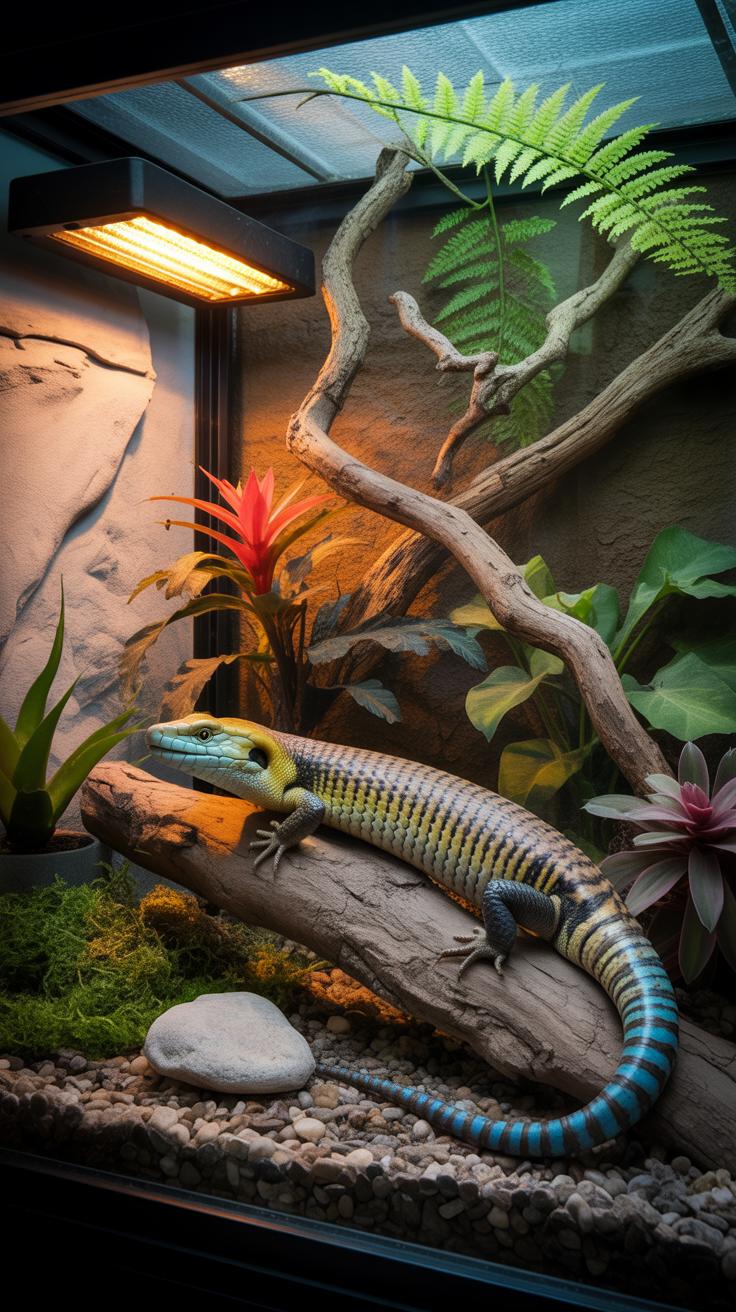
Fire skinks require a distinct temperature range to regulate their metabolism. You must create a hot side and a cool side in the enclosure. The basking spot should reach between 90 and 95 degrees Fahrenheit. This concentrated heat allows the lizard to digest food and maintain its immune system. Without this thermal peak, the animal will become lethargic and eventually fall ill.
The cool end of the tank must stay between 75 and 80 degrees Fahrenheit. Fire skinks spend much of their time burrowing in moist substrate to cool off. Use digital thermometers at both ends of the tank to monitor these zones constantly. Analog gauges often fail or provide inaccurate readings. Precise control prevents overheating, which is fatal for these reptiles in a confined vivarium environment.
Best Heating Equipment Options Including Under Tank Heaters And Basking Lamps
Overhead halogen heat lamps are the most effective tool for fire skinks. They mimic natural sunlight by providing infrared A and B radiation. These wavelengths penetrate deep into the muscle tissue of the lizard. Position the lamp at one end of the enclosure to establish the hot zone. Use a dimming thermostat to manage the output and prevent the glass from cracking.

Under-tank heaters offer a secondary heat source but lack the power to warm ambient air. If you use a heat mat, place it under only one-third of the tank. It must connect to a thermostat to avoid burning the skink through the glass. Fire skinks are burrowers, so deep substrate can block heat from reaching the surface. Rely on overhead heat as your primary tactical solution.
Humidity And Moisture Control Inside A Fire Skink Vivarium

Why High Humidity Levels Are Critical To Fire Skink Health And Shedding
Fire skinks are native to the tropical regions of West Africa. They require a constant humidity range between 60% and 70% to function. This moisture level mimics their natural forest floor habitat. When humidity drops too low, these reptiles face immediate health risks. Dry air pulls moisture from their bodies. This leads to chronic dehydration and organ stress over long periods of time.
Proper moisture levels directly impact the shedding process known as ecdysis. Fire skinks rely on external humidity to loosen their old skin. Low humidity causes retained shed, especially around the toes and tail tip. This stuck skin constricts blood flow and can lead to infections or limb loss. Maintaining high humidity ensures the skin peels away in clean pieces. This keeps the animal mobile and healthy.
Practical Methods To Maintain Consistent Humidity In Your Skink Enclosure
Substrate selection is the most effective way to control internal moisture. Use a thick layer of coconut husk, cypress mulch, or topsoil mix. These materials hold water without becoming muddy or growing mold. Pour water directly into the bottom layers of the substrate once a week. This creates a moisture gradient. The top stays dry while the bottom remains damp for burrowing skinks.

Misting the enclosure daily provides necessary spikes in surface humidity. Use a hand sprayer or an automated system twice per day. Evaporation from a large, shallow water bowl also adds moisture to the air. You can reduce ventilation by covering a portion of the screen top with glass or foil. This traps humid air inside. Always use a digital hygrometer to monitor these levels for accuracy.
Lighting Requirements And UVB Setup Compared To A Leopard Gecko Set Up
Does A Fire Skink Need UVB Lighting And What The Research Suggests
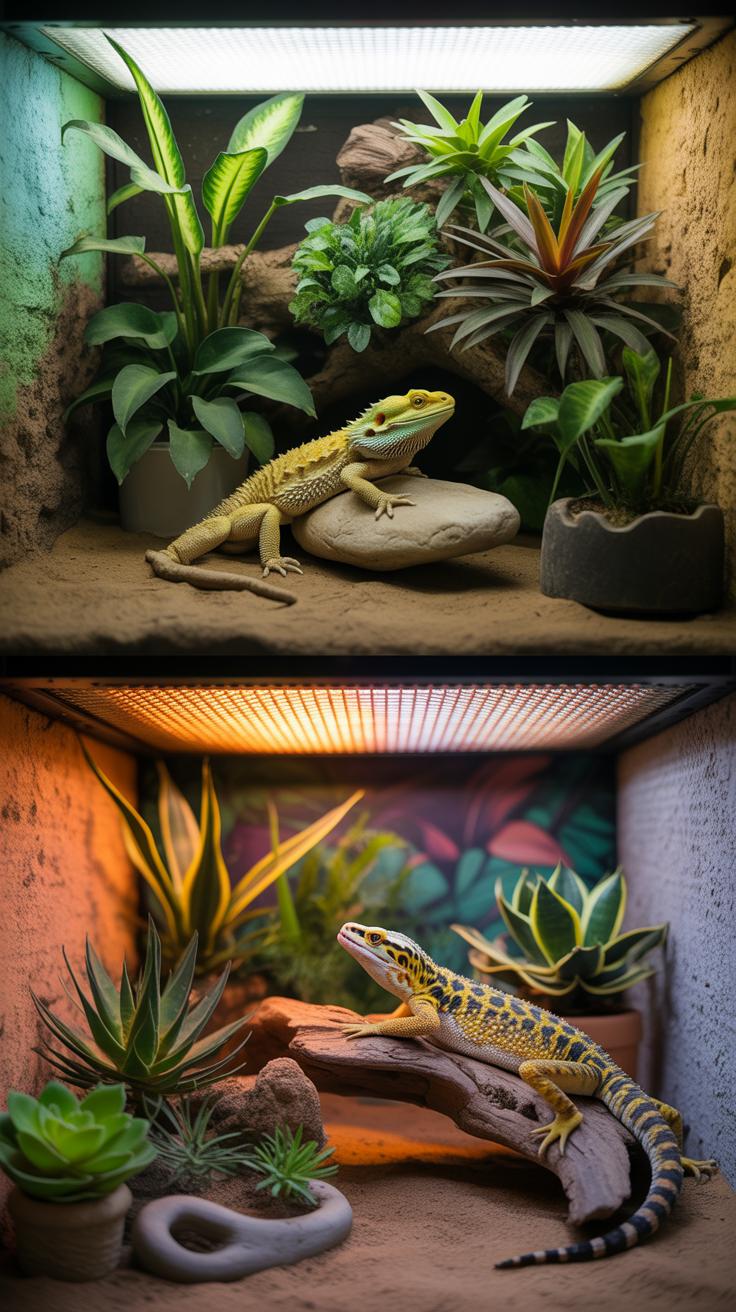
Fire skinks survive without UVB if you provide dietary Vitamin D3, but research favors UVB access. This species stays hidden under leaf litter frequently. However, they are cathemeral and emerge for sunlight. UVB helps stabilize their immune system and supports bone health. It mimics their natural West African habitat. Leopard geckos are crepuscular and require lower Ferguson Zone 1 lighting. Fire skinks need stronger Ferguson Zone 2 levels.
You must install a linear T5 HO fluorescent bulb for effectiveness. Coil bulbs do not provide enough spread for an active skink. Place the light over the warm end to create a gradient. This allows the lizard to regulate its intake. Unlike leopard geckos that absorb heat through their bellies, fire skinks utilize overhead radiation. Proper UVB prevents Metabolic Bone Disease and improves their red coloration. High quality lighting is a mandatory investment.
Creating a home for a living creature is a way of honoring the ancient beauty of the natural world. Building a sanctuary for a fire skink allows us to keep a small, glowing piece of the earth’s heart right in our own living rooms.
Creating A Natural Day And Night Light Cycle In Your Fire Skink Tank
A strict light schedule regulates the internal clock of your lizard. Maintain twelve hours of light followed by twelve hours of darkness. Use a digital timer to automate this process. Consistency prevents stress and keeps the reptile on a steady feeding path. Leopard gecko setups often use dim red or blue night lights. Avoid these for fire skinks. Any light at night disrupts their sleep and causes long term health issues.
The transition between day and night must be total. Fire skinks thrive when they experience a clear drop in both light and temperature. Use a ceramic heat emitter if you need nighttime warmth without light. This maintains the dark cycle while keeping the tank safe. Ensure the day bulbs provide a bright visible spectrum. Intense light encourages natural behaviors like digging and hunting. A dim tank leads to a lethargic and unhealthy fire skink.
Decorating And Enriching The Tank Hides Plants And Climbing Features
How To Arrange Hides And Burrow Areas To Replicate Wild Conditions
Fire skinks are shy, fossorial lizards that require extreme security. You must place hides at both the warm and cool ends of the enclosure. Use flat cork bark or heavy ceramic caves that sit directly on the enclosure floor. This prevents the lizard from being crushed if it digs underneath the decor. Half logs work well if you bury them partially in the substrate.
Create a moisture gradient by stuffing one hide with damp sphagnum moss. This mimics the humid microclimates these lizards find in West African leaf litter. Deep substrate is the primary enrichment tool for this species. Pack the soil at least six inches deep. Add dried leaf litter on top to create a natural visual barrier. This allows the skink to move unseen across the floor.
Safe Live And Artificial Plants That Work Well In A Fire Skink Vivarium
Live plants help maintain the high humidity levels required for fire skink health. Select sturdy species that can withstand the weight of a burrowing lizard. Avoid delicate ground covers that the skink will easily uproot. Use pots to protect the root systems from constant digging. Artificial silk plants are a viable alternative if you prioritize easy cleaning over natural humidity regulation.
- Pothos: This vine is incredibly hardy and grows fast. It thrives in low light and high humidity. The thick leaves provide excellent cover for the skink. You can let it trail across the floor or climb the background.
- Snake Plants: These plants have very stiff leaves and strong root systems. They take up vertical space without crowding the floor. They tolerate the occasional digging movements of the skink well. Use smaller varieties to fit the tank height.
- Dracaena: These tropical plants mimic the natural scrubland and forest edges of West Africa. They provide solid vertical structure for the lizard to hide behind. They handle moist soil conditions without rotting. They add significant aesthetic value to the setup.
- Spider Plants: These are safe and non-toxic for reptiles. They create dense clumps of foliage that offer great hiding spots. They grow quickly in the humid environment of a skink tank. The hanging plantlets provide extra ground cover.
- Leadwort: This ground cover is durable and handles the heat well. It spreads across the substrate to create a natural carpet. It helps hold the soil together during burrowing. The dense growth protects the lizard from feeling exposed.

Position taller plants toward the back and sides of the tank to create a sense of depth. Ensure any artificial plants have no sharp plastic edges or exposed wires. Wash all live plants thoroughly to remove pesticides or fertilizers before planting them. Secure heavy decor items so they cannot shift. A well planted tank reduces stress and encourages the fire skink to explore more frequently.
Feeding Your Fire Skink Diet Schedule And Nutritional Needs
What Fire Skinks Eat In The Wild And How To Replicate That In Captivity
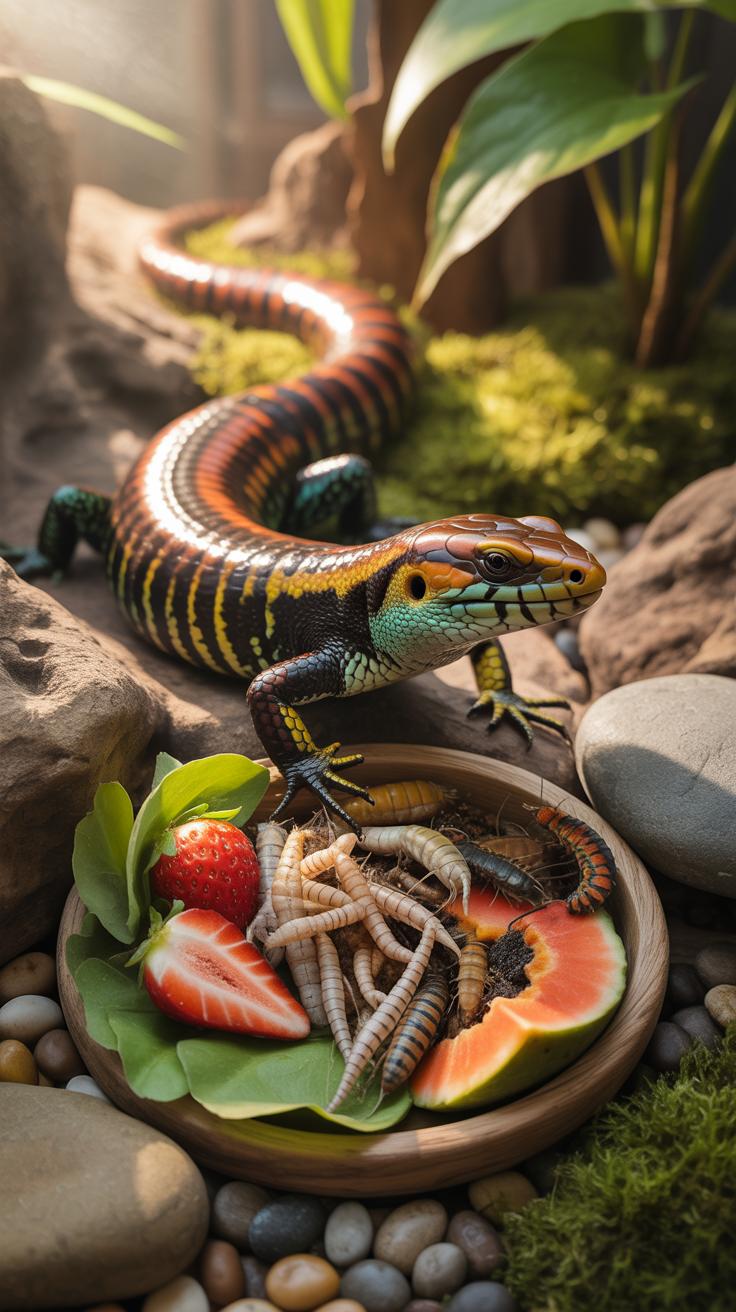
Fire skinks are opportunistic insectivores. In their native West African habitats, they hunt various invertebrates found in moist leaf litter and soil. Captive setups must mirror this high-protein diet to ensure growth and energy. Relying on a single feeder insect leads to nutritional gaps. You must provide a rotation of live prey to simulate the variety found in the natural world.
Crickets and dubia roaches serve as reliable primary feeders. Incorporate occasional earthworms, silkworms, and hornworms to add moisture and fat. Avoid feeding wild-caught insects because they often carry parasites or pesticides. Feed adults every two to three days. Juveniles require daily feeding to support rapid bone and tissue development. Target prey size should not exceed the width between the skink’s eyes.
Gut Loading, Dusting, And Supplementation To Keep Your Fire Skink Healthy
Insects alone lack the calcium and vitamin profile required for long-term health. You must gut-load all feeder insects for twenty-four hours before offering them to your skink. Feed the insects nutrient-dense vegetables like carrots, squash, and leafy greens. This process turns the insect into a delivery vehicle for essential vitamins. Without these steps, your skink will likely develop metabolic bone disease or other preventable conditions.
Apply a high-quality calcium powder with Vitamin D3 to every other feeding. This is vital because fire skinks spend much of their time burrowed away from light sources. Use a multivitamin supplement once a week to cover trace mineral needs. Lightly coat the insects by shaking them in a plastic bag with the powder. Consistent supplementation ensures strong bone structure and successful shedding throughout the life of the reptile.
Cleaning Maintenance And Long Term Care Of Your Fire Skink Tank Setup
Daily And Weekly Maintenance Routines To Keep Your Fire Skink Tank Hygienic
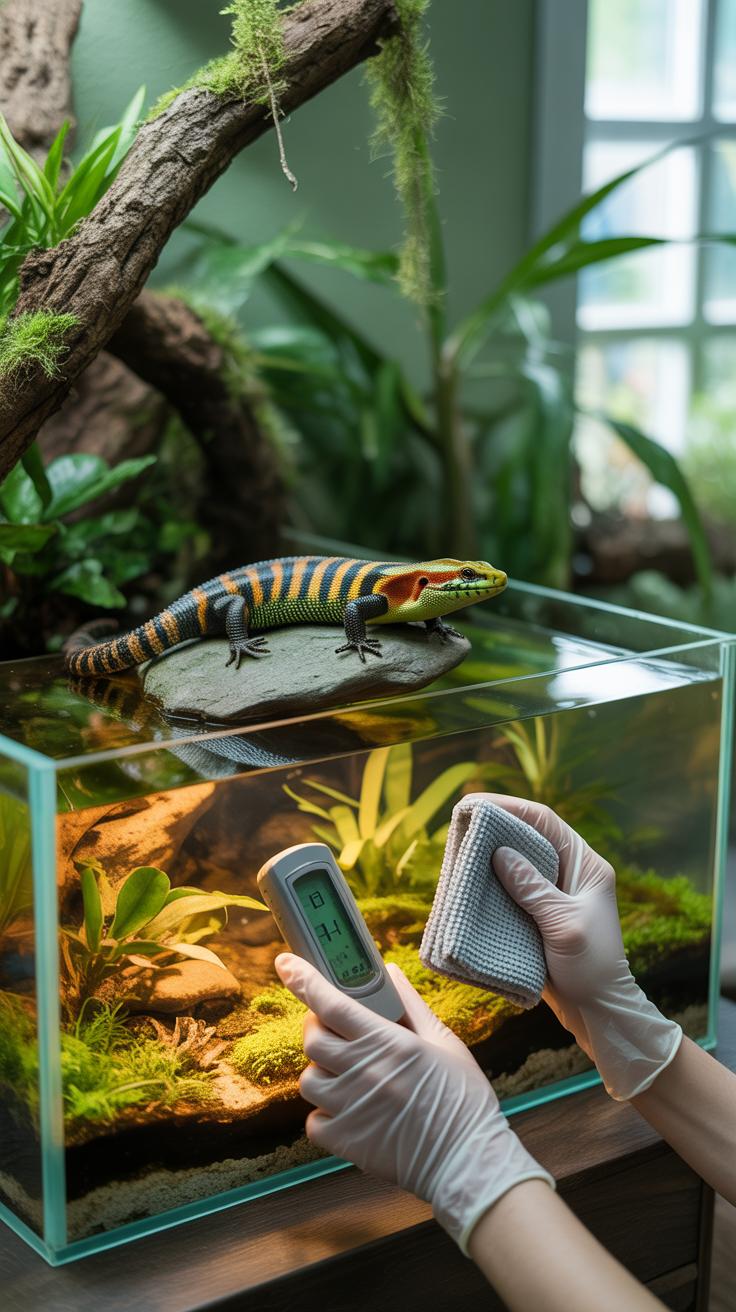
Daily maintenance focuses on waste removal and water quality. Spot clean the substrate by removing feces and uneaten insects immediately. This prevents bacterial growth in the warm, humid environment. Scrub the water bowl every day and refill it with fresh, dechlorinated water. Fire skinks often track dirt into their bowls, which degrades water safety quickly. Monitor the hygrometer to ensure levels stay between sixty and seventy percent.
Weekly tasks involve deeper sanitation and equipment checks. Wipe down the glass walls with a reptile-safe cleaner or a vinegar solution to remove water spots and grime. Stir the top layer of substrate to prevent anaerobic pockets from forming in the soil. Check all heat lamps and UVB bulbs for proper function. Use a digital thermometer to verify that the temperature gradient remains stable across the warm and cool zones.
Common Health Warning Signs To Watch For And When To Consult A Reptile Vet
Watch for physical changes that signal underlying health issues. Lethargy or a sudden loss of appetite often indicates stress or infection. Sunken eyes and wrinkled skin suggest chronic dehydration which requires immediate humidity adjustment. Look for stuck shed around the toes and tail. If the skink develops labored breathing or mucus around the nose, it likely has a respiratory infection. These conditions require professional medical intervention.
Monitor the appearance of the waste and the condition of the mouth. Runny or bloody stools suggest internal parasites. Swollen limbs or a soft jaw indicate metabolic bone disease caused by a lack of calcium or UVB light. If the skink keeps its mouth open or has yellow crust inside, it has mouth rot. Do not attempt home remedies for these issues. Contact a qualified reptile veterinarian to begin a targeted treatment plan immediately.
Frequently Asked Questions

What size enclosure do I need for a beginner fire skink tank setup?
For a single adult, the minimum recommended size is a 20-gallon long tank, though a 40-gallon breeder is much better for these active reptiles. Since they are terrestrial and love to burrow, floor space is more important than height. A proper fire skink tank setup should focus on length and depth to accommodate thick substrate and plenty of hiding spots, ensuring your new pet feels secure and enriched in its environment.
How do I maintain the correct humidity and temperature in the enclosure?
Maintaining a gradient is essential for your fire skink tank setup. Use a heat lamp to create a basking spot of 90-95°F, while keeping the cool side around 75-80°F. Because they are tropical lizards, aim for 60-70% humidity. You can achieve this by using a moisture-retaining substrate like coconut husk or cypress mulch and misting the enclosure daily to keep the soil damp but never soaking wet.
Is it possible to create a budget-friendly habitat without sacrificing quality?
Absolutely! You can save money by repurposing secondhand glass terrariums, provided they are thoroughly disinfected. Instead of expensive store-bought decor, use sanitized driftwood, flat rocks, and leaf litter found in nature. Focus your budget on essential electronics like a high-quality UVB tube light and a reliable thermostat. These critical components ensure your skink stays healthy while you use affordable, DIY solutions for the rest of the habitat’s aesthetic elements.