Understanding The Hermit Crab Diet A Hermit Crab Food Guide For New Owners
What Do Hermit Crabs Eat In The Wild?
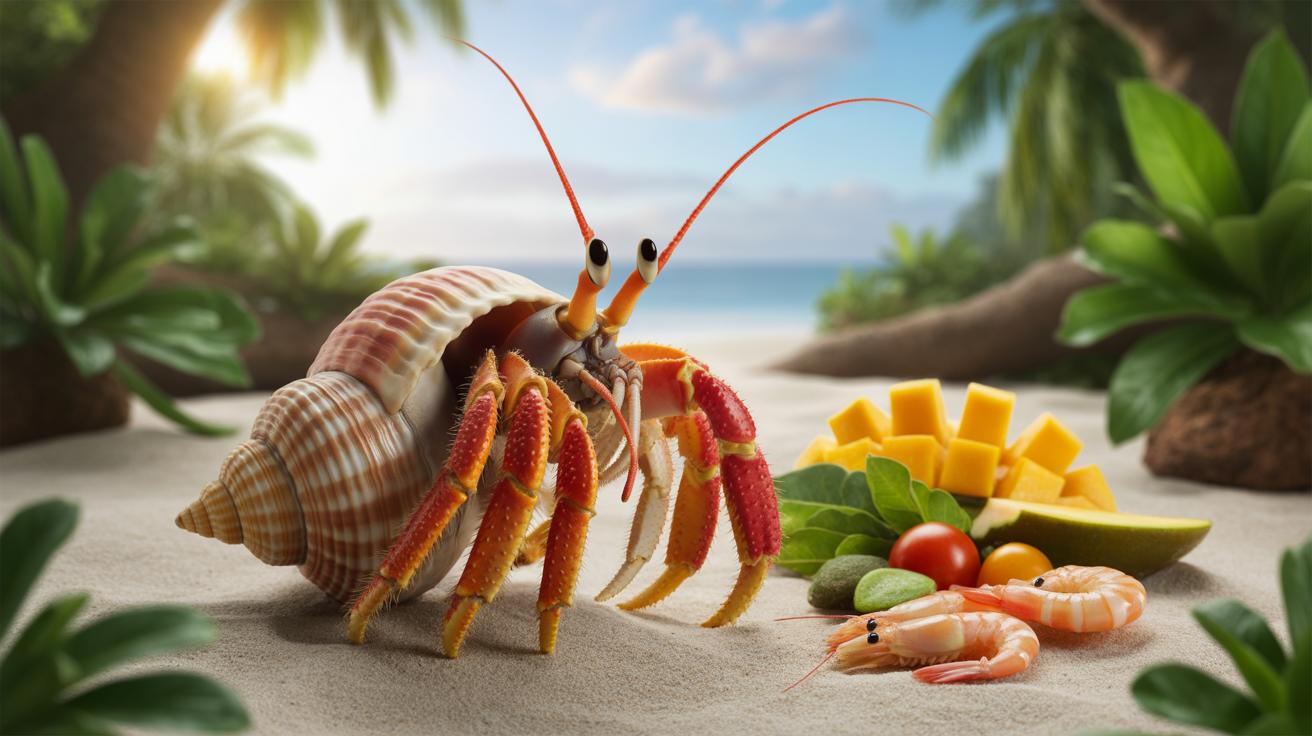
Wild hermit crabs operate as nocturnal scavengers and opportunistic omnivores. They graze across tropical shorelines to find decaying organic matter. Their natural diet consists of fallen fruits, leaf litter, and wood. They also consume washed-up carrion and dried seaweed found along the tide line. These crabs use their small pincers to pick apart fibrous materials and transport food bits to their mouths efficiently.
Access to diverse resources provides these decapod crustaceans with essential minerals. They seek out calcium sources like crushed shells or fish bones to maintain exoskeleton health. They also consume insect remains and animal droppings to meet protein requirements. This varied intake ensures they receive the micronutrients necessary for successful molting. Survival in the wild depends on their ability to process both plant and animal tissues daily.
Why A Varied Diet Matters For Captive Hermit Crabs
Captive hermit crabs require a complex nutritional profile to thrive long term. If you provide the same food daily, your crabs will experience sensory move-on. This means they stop eating the repetitive offering regardless of its quality. Owners must rotate food groups to prevent nutritional deficiencies and lethargy. A stagnant diet often leads to muscle weakness and failed molts in the crabitat environment.
Strategic feeding involves balancing proteins, lipids, and carbohydrates in every meal. Crabs need chitin and carotene to maintain their vibrant coloration and structural integrity. Without these specific components, the crab cannot harden its new shell after shedding. High-quality fats provide the energy needed for digging and underground molting cycles. You must view dietary variety as a biological requirement rather than a luxury for your pets.

How Often Should You Feed Your Hermit Crab Building Your Hermit Crab Feeding Chart
Daily Versus Every Other Day Feeding: What The Research Says
Hermit crabs are nocturnal scavengers that require fresh nutrients every single night. These animals possess a keen sense of smell to locate food sources in the wild. If you leave food in the tank for more than twenty-four hours, it will likely spoil or mold. Mold growth creates a toxic environment that threatens the health of your colony and attracts unwanted pests.
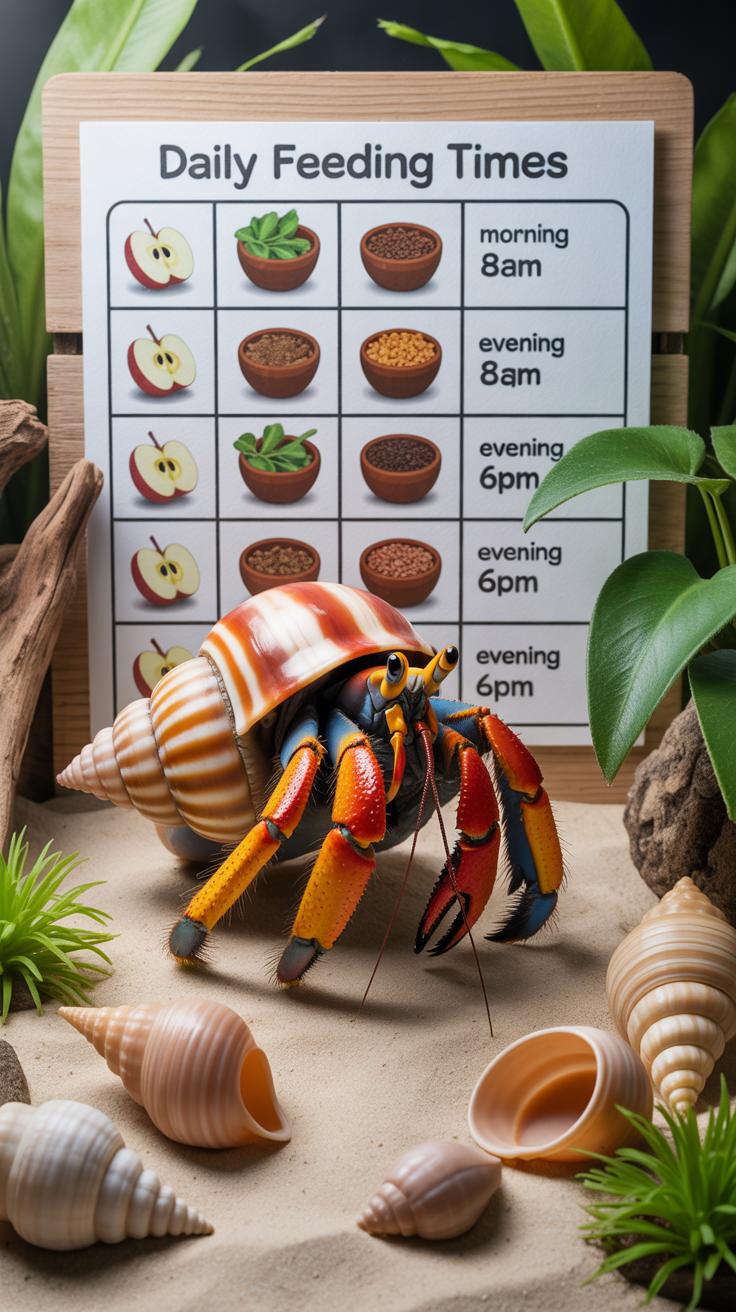
Experts recommend a daily feeding schedule to mimic natural foraging patterns. You must remove all uneaten portions and replace them with new items before sunset. This consistency prevents the crabs from eating decaying organic matter. Fresh food provides the necessary energy for metabolic processes. A regular routine ensures your crabs remain active and healthy. It also simplifies your tank maintenance and hygiene protocols.
How Portion Size Affects How Frequently You Should Feed
Portion size dictates the cleanliness of your substrate and the efficiency of your schedule. Hermit crabs have small stomachs and eat very little at once. If you provide too much food, the crabs will bury the excess. Buried food rots underground and causes dangerous bacterial blooms. You should offer small amounts of various items. This strategy reduces waste while ensuring every crab gets fed.

Monitor how much your crabs consume over a single night. If the bowl is empty, increase the portion size by a small margin. If most of the food remains, reduce the amount you provide the next day. Adjusting portions based on consumption rates keeps the enclosure safe. Proper sizing allows you to maintain a daily schedule without creating a mess. Focus on nutrient density over sheer volume for better results.
The Best Foods To Offer Hermit Crab Food Ideas That Support Healthy Growth
Fresh Fruits, Vegetables, And Protein Sources Hermit Crabs Love
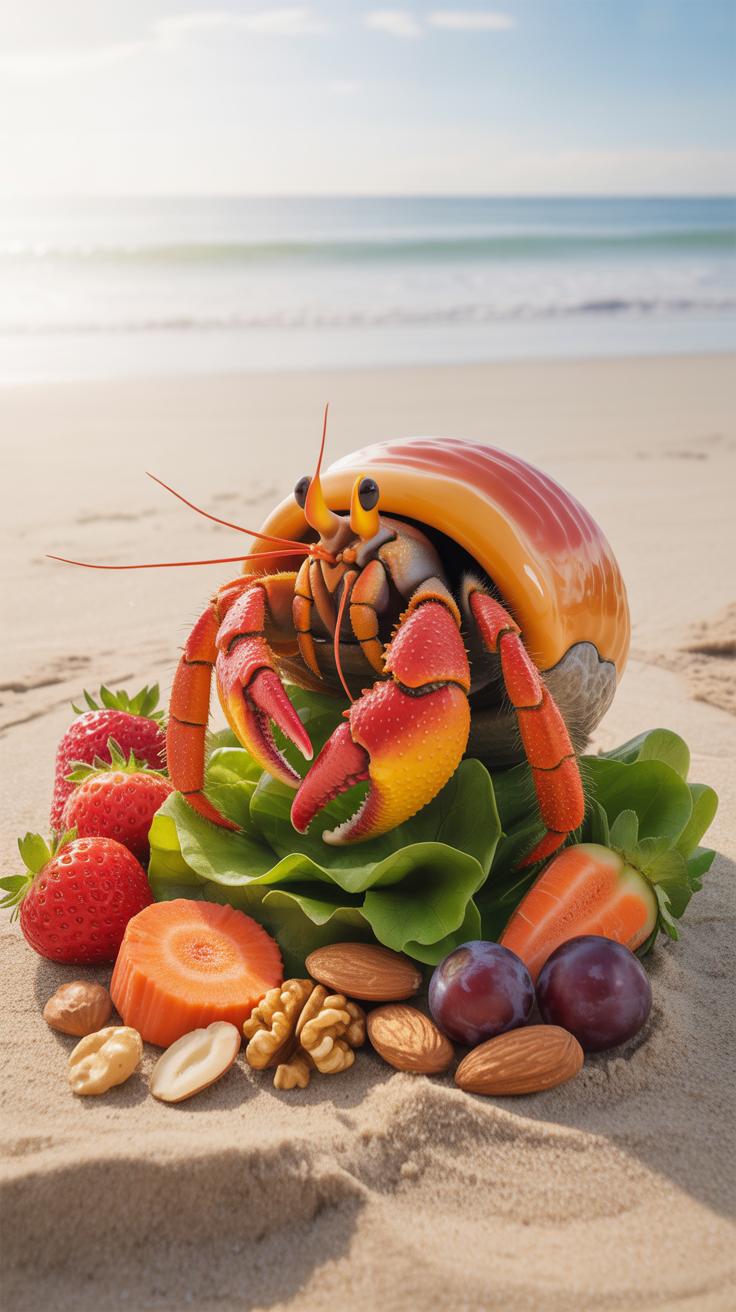
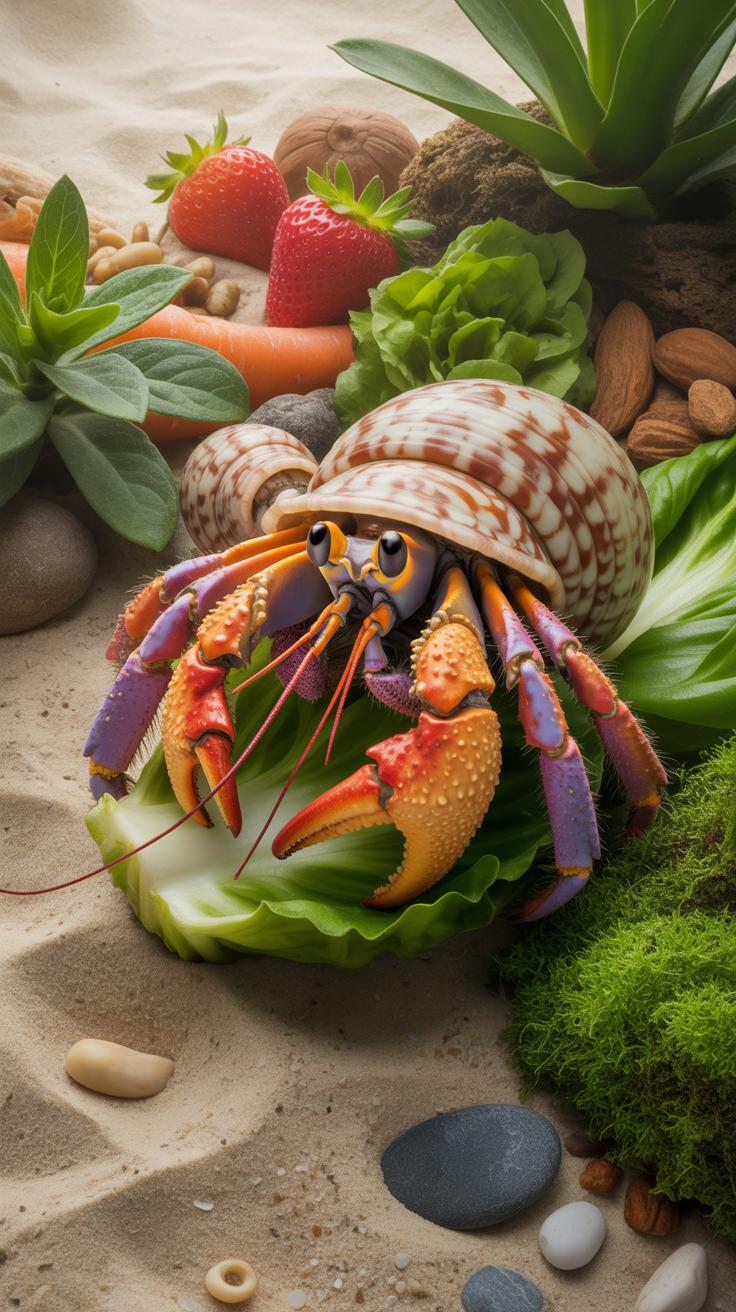
Hermit crabs require a diverse diet to support molting and energy levels. Offer animal proteins like shrimp, krill, and unseasoned chicken daily. These provide essential chitin for exoskeleton development. Incorporate leafy greens such as kale or spinach for vital minerals. Fresh fruits like coconut, mango, and papaya deliver necessary vitamins. Always choose organic produce to avoid harmful pesticide residues that damage crustacean health.
Strategic feeding involves rotating food groups to prevent nutritional deficiencies. Land hermit crabs are natural scavengers that seek varied nutrients in the wild. Calcium is a critical component for shell health and growth. Crush eggshells or provide cuttlebone to ensure consistent calcium intake. Provide wood like cork bark or cholla for additional cellulose. This high-fiber material supports healthy digestion and mimics the natural foraging environment of the crab.
Foods You Should Never Feed Your Hermit Crab
Avoid any processed human foods containing seasonings or preservatives. Many commercial additives act as neurotoxins to small invertebrates. Salt must come from marine salt mixes, not table salt with iodine. Onions, garlic, and citrus fruits contain compounds that irritate or harm the respiratory systems of crabs. These items disrupt the delicate biological balance required for long-term survival in captivity.
- Table Salt: Most table salts contain iodine and anti-caking agents that harm land hermit crabs. Only use specialized marine grade salt mixes for their water and nutritional needs.
- Onions and Garlic: These pungent vegetables contain chemical compounds that act as natural insecticides. Ingesting even small amounts can cause immediate toxicity and death in your pet colony.
- Processed Sugars: Refined sugars and artificial sweeteners have no place in a crab diet. These chemicals interfere with metabolic processes and can lead to lethargy or failure to molt properly.
- Citrus Fruits: High acidity in lemons, limes, and oranges can be overly harsh for the digestive tract. While some crabs tolerate them, the risk of internal irritation outweighs any potential nutritional benefit.
- Pesticide-Treated Produce: Non-organic skins often carry residual chemicals designed to kill insects. Since hermit crabs share similar biological structures with insects, these chemicals are lethal even in small doses.
Eliminate any exposure to evergreen wood like cedar or pine. These woods release resins and oils that damage the modified gills of the hermit crab. Always check ingredient labels on commercial pellets for copper sulfate or ethoxyquin. These common preservatives are toxic to crustaceans and appear frequently in cheap pet store brands. Stick to whole, single-ingredient foods to ensure the safety and longevity of your tank.
Reading A Land Hermit Crab Food Chart Matching Foods To Nutritional Needs
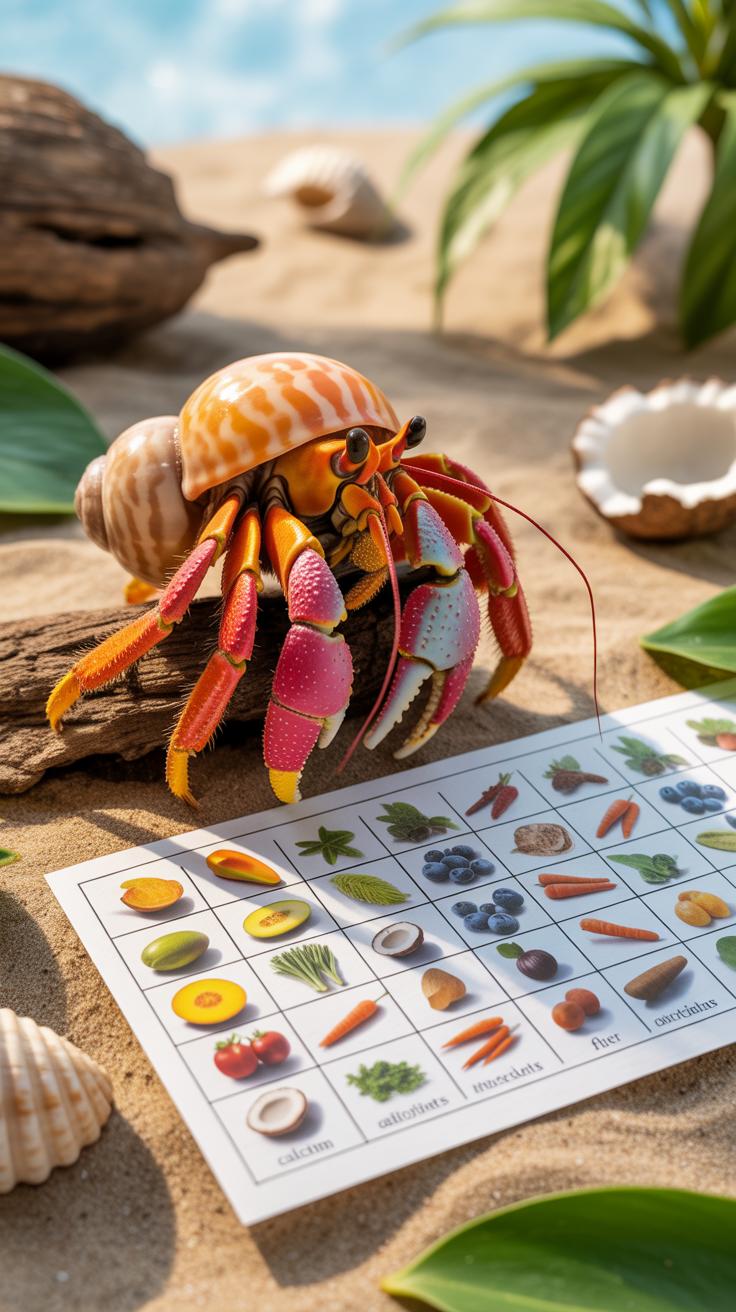
How To Interpret A Hermit Crab Nutritional Food Chart
A standard nutrition chart categorizes items by their chemical composition and biological utility. You must view these charts as a checklist for daily survival. Crabs are scavengers but require specific molecules to maintain their exoskeleton and internal organ function. Look for charts that divide foods into proteins, lipids, carbohydrates, and minerals. Each category serves a distinct physiological role in the crab life cycle.
Identify the primary nutrient in each food item before placing it in the tank. High-quality charts highlight which foods provide chitin and cellulose. These fiber sources are non-negotiable for digestive health and shell hardening. Ignore branding and focus on the raw chemical profile. A successful feeding strategy uses the chart to avoid nutritional gaps. If your chart lacks mineral data, find a more technical source immediately.
Balancing Calcium, Protein, And Carotenoids In Their Weekly Rotation
Calcium must be available at all times to ensure successful molting. Crabs store this mineral in their bodies to create a new, hard shell. Protein provides the energy necessary for muscle growth and limb regeneration. You should provide animal-based and plant-based proteins every single day. A lack of protein leads to lethargy and aggression among tank mates. This balance keeps the colony stable and healthy.

Carotenoids are essential for maintaining the vibrant pigment in a crab skin. These antioxidants help the crab manage environmental stress. Integrate bright vegetables and specific algae into the rotation to meet this need. Change the food variety every twenty-four hours to mimic natural scavenging patterns. Consistent rotation prevents sensory boredom and ensures the crab receives all essential vitamins. Precise nutrient management directly correlates to a longer lifespan.
Setting Up Feeding Stations Essential Hermit Crab Supplies List For Mealtime
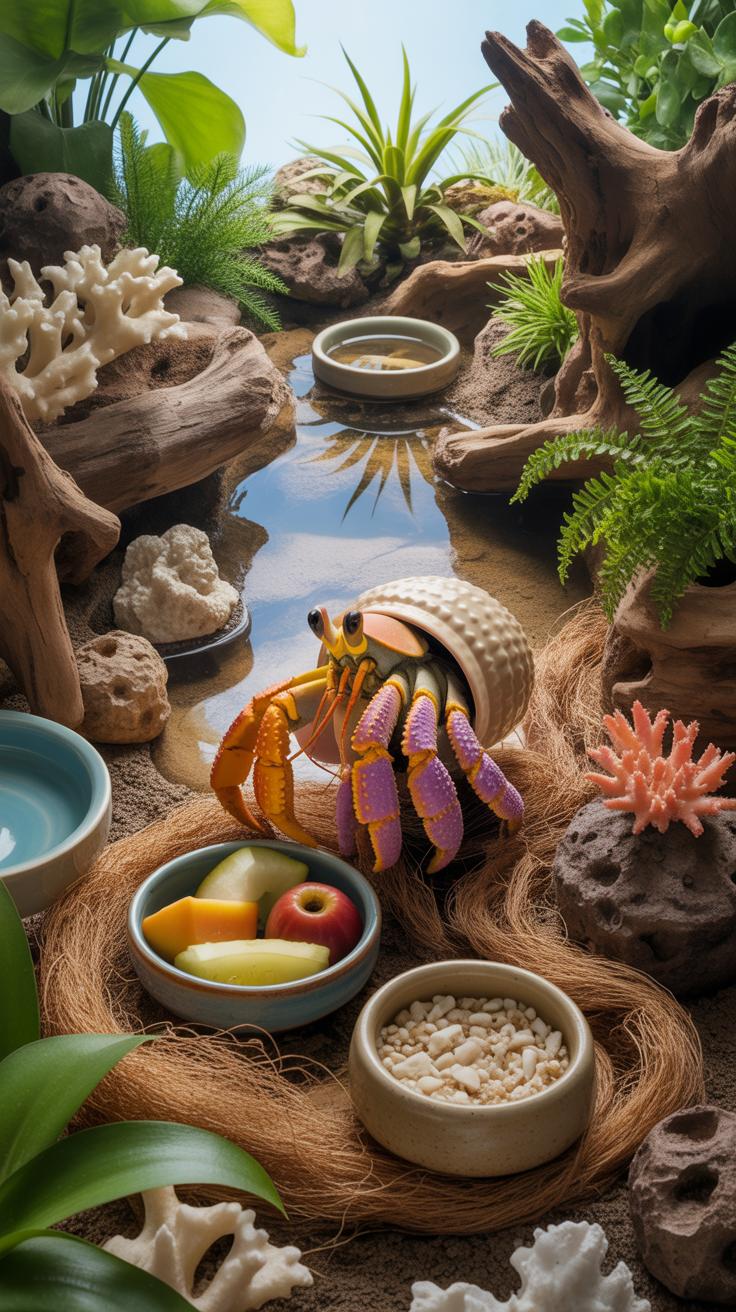
Choosing The Right Food And Water Dishes For Your Hermit Crab Tank
Hermit crabs require shallow dishes to prevent drowning. Use non-porous materials like ceramic, heavy plastic, or glass. Do not use metal bowls. Metal reacts with salt water and leaches toxins into the environment. Choose heavy dishes that crabs cannot tip over. Crabs climb over everything in the tank. Large substrate particles often end up in the food. Secure dishes prevent waste and keep the enclosure clean for longer periods.
Deep water pools must include exit ramps. Crabs need to fully submerge to hydrate their gills but cannot swim. Use pebbles or plastic mesh to create traction. This allows the crab to climb out safely. Place food dishes away from the heat source to prevent rapid spoilage. Fresh food rots quickly in high humidity. Proper placement extends the life of the meal. Solid surfaces make cleaning easier during your weekly maintenance routine.
Recommended Feeding Supplies Every Hermit Crab Owner Should Have
Standard feeding equipment must handle high humidity without degrading. You need tools that allow for precise portioning and hygiene. Crabs are scavengers but require a balanced diet of proteins, lipids, and minerals. Proper tools ensure you provide these nutrients without contaminating the substrate. Keeping supplies organized allows you to maintain a strict feeding schedule. Use dedicated tools to avoid cross-contamination from human kitchen gear.
- Shallow Ceramic Ramekins: These dishes are heavy and resist tipping. The glazed surface prevents bacteria growth and makes scrubbing simple. Use separate dishes for dry food, fresh produce, and protein sources to prevent premature spoilage.
- Natural Sea Sponges: Place these in water dishes to increase humidity levels. Although not for drinking, they provide a climbable surface for smaller crabs. Replace or sanitize them frequently to prevent mold and bacterial buildup in the warm tank.
- Plastic Feeding Tongs: Use these to place fresh meat or fruit without touching the substrate. This prevents oils from your skin from reaching the crabs. Tongs also help you remove uneaten food scraps quickly before they begin to rot.
- Mortar and Pestle: Crabs eat small amounts and prefer crushed food. Use this tool to grind eggshells, dried shrimp, or nuts into a manageable powder. Smaller particles allow multiple crabs to share the same food source without aggressive competition.
- Digital Gram Scale: Accuracy matters when tracking food consumption. Weighing fresh portions helps you determine how much your crabs actually eat. This prevents overfeeding and reduces the amount of waste you have to clear from the enclosure daily.

Clean all feeding equipment with hot water and white vinegar. Avoid dish soap or chemical cleaners. Residue from commercial soaps can harm the delicate gills of the crab. Storage containers for dry food should be airtight. This keeps pests like ants or mites out of the crab supplies. Dedicate a specific shelf for these items to ensure they stay dry. Methodical organization leads to better care and healthier crabs.
Hermit Crab Feeding Tips Practical Advice To Improve Every Mealtime
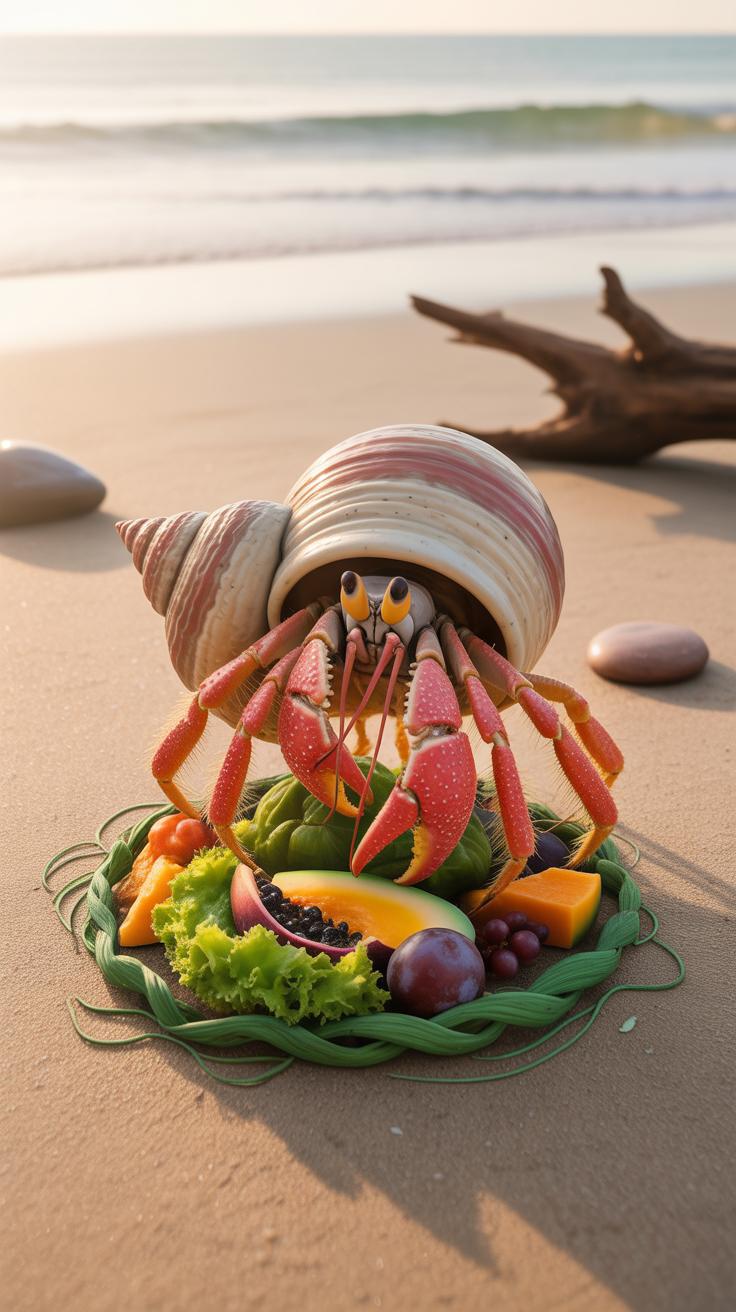
The Best Time Of Day To Feed Your Hermit Crab
Hermit crabs are nocturnal scavengers. They remain inactive during the day to avoid heat and predators. Their peak activity begins at dusk and continues through the night. You should refresh the food dish shortly before the lights go out. This ensures the food is at its peak nutritional value when the crabs emerge. Serving food in the evening prevents early spoilage.
Fresh food left under heat lamps all day loses moisture. It becomes unappealing and loses essential vitamins. By feeding at night, you mimic their natural environment. Crabs prefer to forage in the dark when humidity levels are higher. This timing helps maintain their natural circadian rhythm. Consistent evening feedings establish a routine that reduces stress in the colony. Proper timing ensures maximum consumption.
The daily ritual of nourishment is a quiet act of love that transforms a simple creature into a lifelong friend. To care for even the smallest among us every day is to tend to the very heart of nature.
How To Prevent Mold And Bacterial Growth In The Food Dish
High humidity is necessary for crab health but speeds up food decay. Mold can develop within hours in a warm tank. You must remove all uneaten fresh food every twenty-four hours. Leaf litter and dry foods can stay longer if they remain dry. Check the substrate around the bowl daily. Crabs often drag food away to hide and eat it later.

Use non-porous dishes like ceramic or heavy glass. These materials do not absorb bacteria or organic waste. Clean the bowls with hot water and white vinegar during every food change. Avoid chemical soaps that leave toxic residues. Keep the food dish away from the misting system or water pools. Excess moisture in the dish triggers rapid fungal growth. Maintaining a clean feeding station prevents respiratory issues.
Hermit Crab Care Sheet Combining Feeding Habits With Overall Daily Care
How Feeding Fits Into Your Hermit Crab’S Daily Care Routine
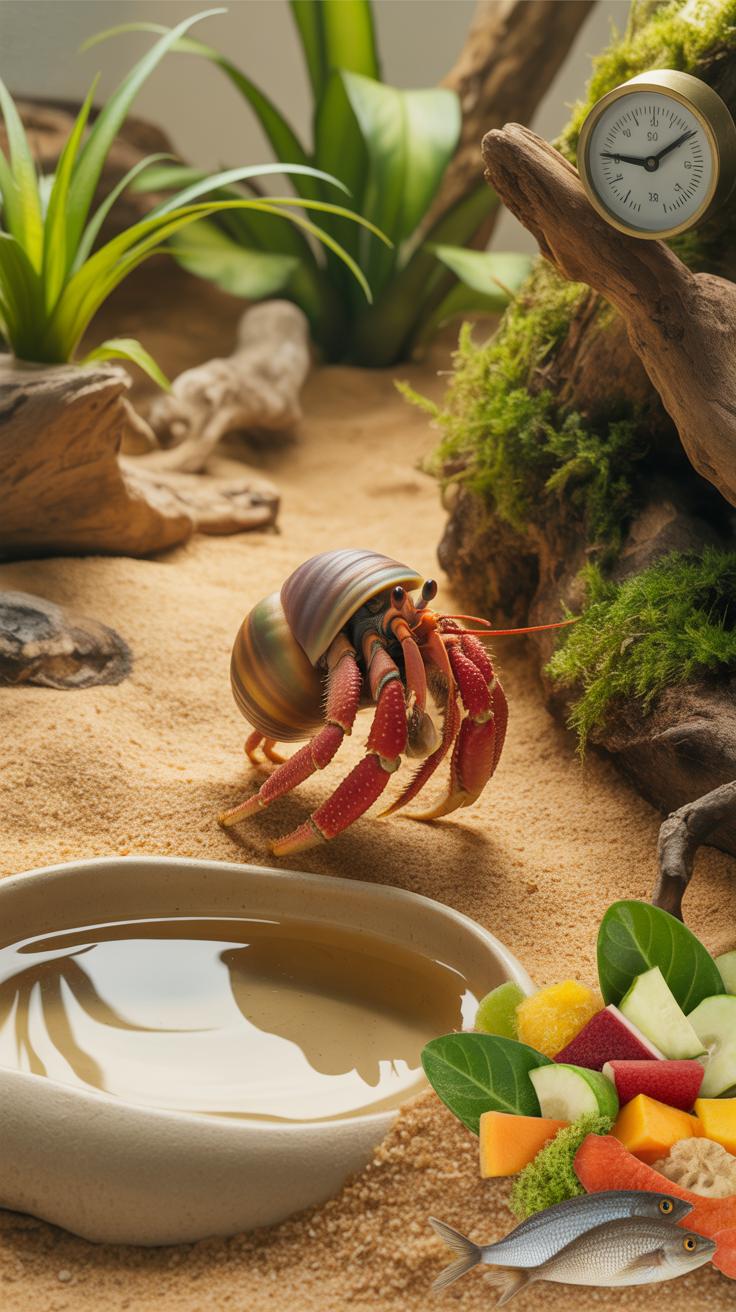
Feeding is a core part of the daily maintenance cycle. You must replace fresh food every twenty four hours to prevent mold and bacteria growth. Hermit crabs are nocturnal scavengers. They prefer to eat under the cover of darkness when they feel safe from predators. Set a strict time each evening to place new food in the enclosure for the best results.
Daily feeding must coincide with water maintenance. Check both freshwater and saltwater pools during every feeding session. Ensure the pools are clean and dechlorinated. Remove any buried food scraps from the substrate to keep the environment sterile. Consistent timing helps you monitor your crab’s activity levels. If a crab ignores food for several days, it may be preparing for a molt.
Humidity, Temperature, And Feeding: How Environment Affects Appetite
Environmental conditions dictate the metabolic rate of your hermit crab. These animals are ectotherms and rely on external heat. If the tank temperature falls below seventy five degrees Fahrenheit, their digestion slows down significantly. They will stop eating and become lethargic. Maintaining a consistent temperature between eighty and eighty five degrees ensures they have the energy required to forage and process nutrients.

Humidity is equally critical for feeding success. Hermit crabs breathe through modified gills that must stay moist. Maintain humidity levels between seventy five and eighty five percent. If the air is too dry, the crab will focus on survival rather than eating. Desiccated gills cause extreme stress and physical pain. High humidity keeps the food from drying out too quickly and allows the crab to smell the meal.
Feeding During Molting Season What Every Hermit Crab Care Sheet PDF Should Tell You
Why Hermit Crabs Eat Less During The Molting Process
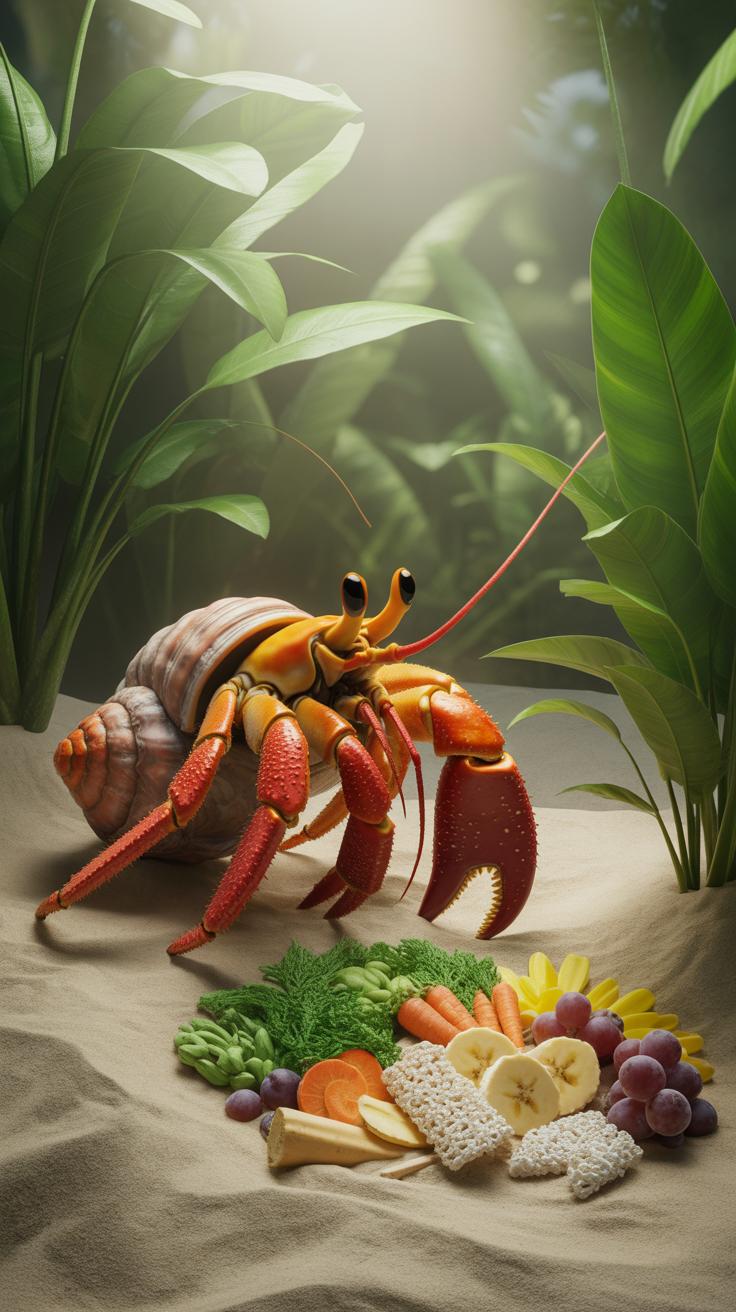
Hermit crabs stop eating days or weeks before they shed their exoskeleton. This behavior occurs because the crab focuses its energy on hormonal changes and water intake. They swell their bodies with water to crack the old shell. During this pre-molt phase, the crab seeks isolation and loses interest in standard food. Owners often mistake this for illness, but it is a natural biological cycle.
While underground, the crab does not consume external food at all. It relies on stored fat and water reserves located in its abdomen. These energy stores sustain the crab throughout the entire shedding process. Once the old skin falls off, the crab eats its own discarded exoskeleton. This provides essential calcium needed to harden the new shell. External feeding remains unnecessary until the crab finishes consuming its old casing.
How To Adjust Food Offerings Before, During, And After A Molt
Adjust your feeding strategy the moment you notice lethargy or heavy digging. Increase calcium and protein offerings before the crab disappears into the substrate. Focus on crushed eggshells, chitin, and marine proteins to build nutrient reserves. These elements ensure the crab has enough strength to survive weeks without a fresh meal. Keep the water bowls full and clean as hydration needs spike during this critical preparation time.

Do not place fresh food inside the tank if the crab is underground and alone. Rotting food creates mold and attracts pests that threaten a vulnerable, soft crab. Wait for the crab to emerge from the sand before resume normal portions. Offer soft, nutrient-dense foods like honey or mashed fruits for the first few days. Gradually reintroduce hard solids as the new exoskeleton fully cures and the crab regains its strength.
Water And Hydration The Often Overlooked Part Of Any Hermit Crab Care Basics Infographic
Why Hermit Crabs Need Both Fresh And Saltwater Access At All Times
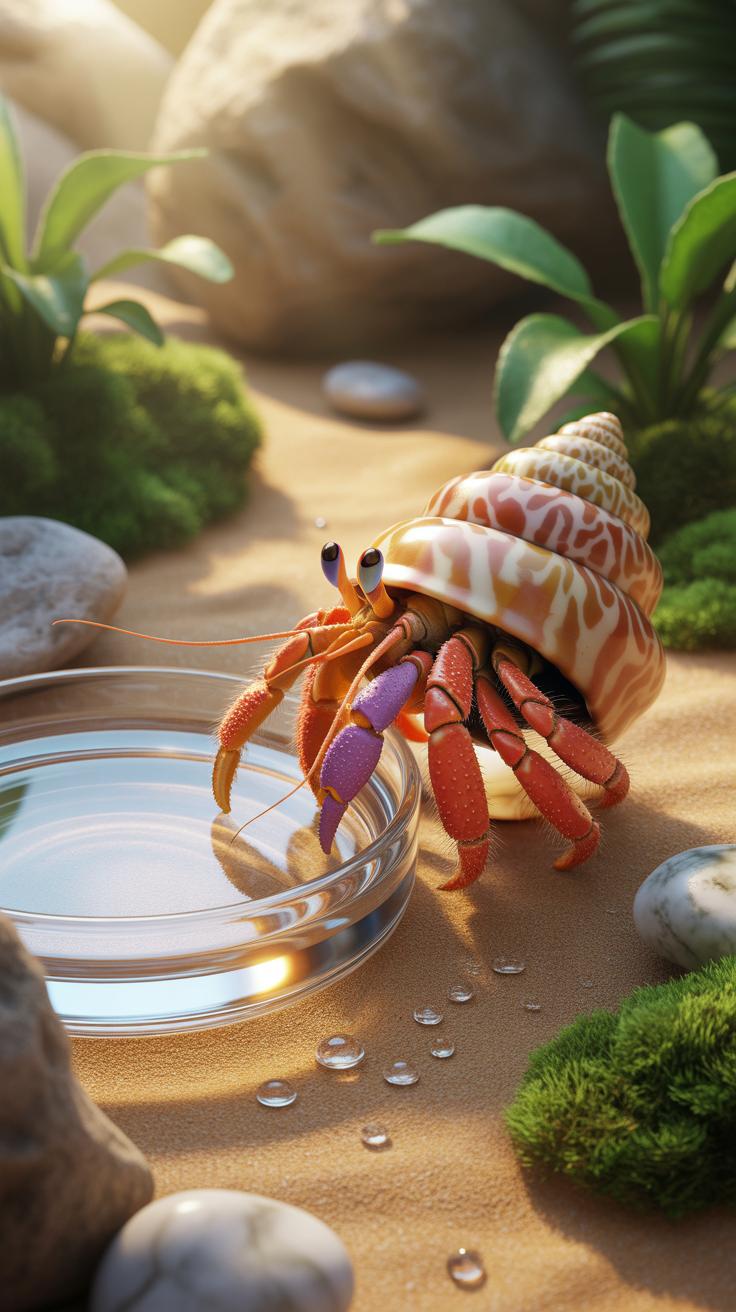
Hermit crabs require two distinct water sources to survive. Fresh water maintains their internal hydration and cellular function. Saltwater provides essential minerals like sodium and calcium for long-term health. Use a marine grade salt mix for the saltwater pool. Standard table salt contains iodine and anti-caking agents that harm their respiratory systems. Crabs mix these waters in their shells to create a specific salinity level.
Both pools must be deep enough for the crab to submerge completely. This allows them to replenish the water reserves stored in their shells. If they lose this supply, their gills dry out and they suffocate. Change the water frequently to prevent bacterial growth. Clean water ensures the crab can regulate its salt levels effectively. Proper water access is just as vital as food for their survival.
How Proper Hydration Directly Supports Healthy Digestion And Feeding Behavior
Proper hydration levels dictate how well a hermit crab digests its food. These animals use moisture to break down organic matter in their digestive tracts. If the crab is dehydrated, its metabolic rate drops significantly. It will stop seeking food to conserve energy and moisture. High humidity in the tank also helps keep their gills moist so they can breathe while eating.
Hydrated crabs move more and show better appetite. When you provide clean water sources, the crab processes nutrients more efficiently. This leads to successful molting cycles and stronger exoskeletons. Consistent moisture levels prevent the crab from becoming lethargic. Active crabs eat more often and maintain better health. Do not neglect water quality if you want your hermit crab to follow a regular feeding schedule.
Troubleshooting Feeding Problems When Your Hermit Crab Stops Eating
Common Reasons Hermit Crabs Refuse Food And How To Respond
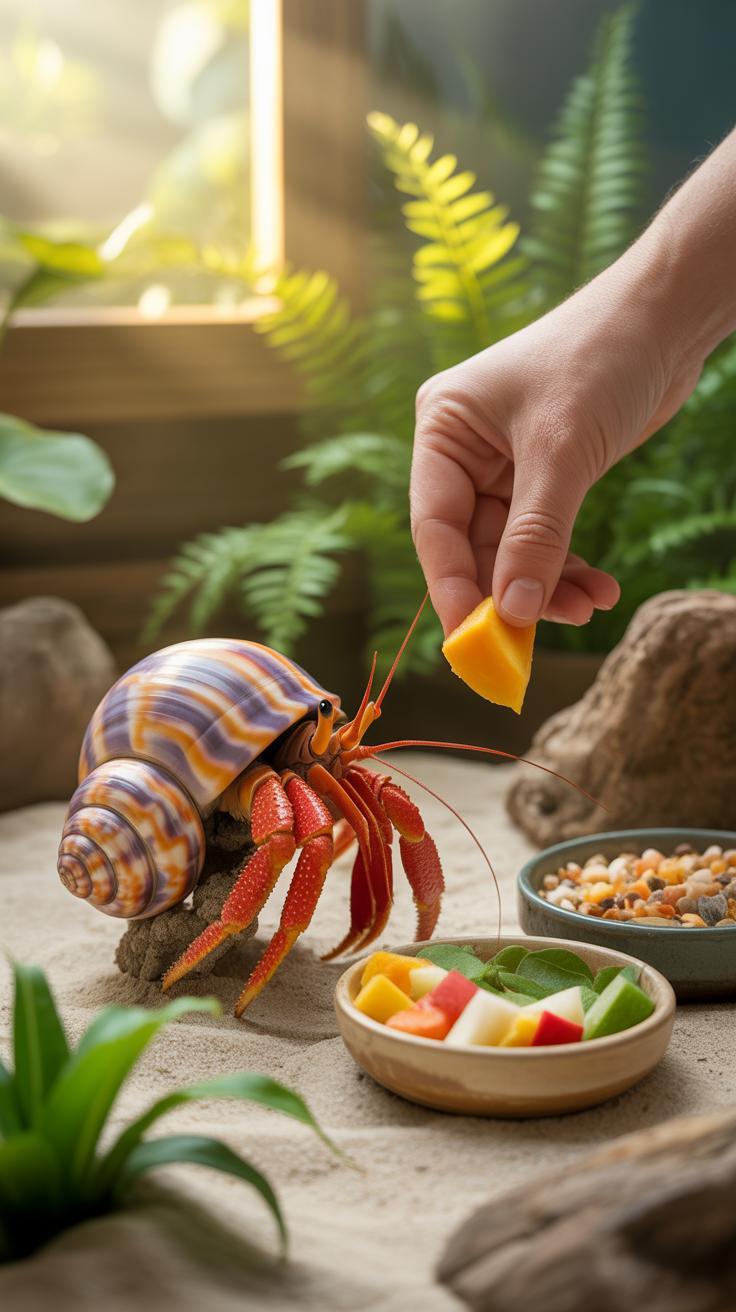
Hermit crabs often stop eating during the pre-molt phase. They store fats and water to survive weeks underground. Do not force feed or dig up a buried crab. This behavior is a biological necessity. Environmental stress also kills appetite immediately. Check your gauge for heat and humidity. Crabs require high humidity to breathe. If they cannot breathe well, they will not eat.
Inconsistent food quality or spoilage will turn crabs away from the dish. These scavengers have a keen sense of smell. They avoid rotting or chemically Treated items. Low tank temperatures slow their metabolism. This makes them lethargic and uninterested in meals. Keep the tank between eighty and eighty-five degrees Fahrenheit. Correct the environment first before assuming the crab is sick or dying.
When To Be Concerned And How To Get Your Hermit Crab Eating Again
Monitor your crab for lethargy outside of the molting cycle. If the crab remains above ground but ignores food for three days, check water salinity. Crabs need both fresh and marine salt water to balance their bodies. Lack of minerals causes internal failure. Offer highly aromatic foods like sardines or organic honey to trigger a feeding response. These scents travel fast through humid air.
Ensure the feeding area is dark and quiet. Hermit crabs are nocturnal prey animals. They will not eat if they feel exposed or threatened by bright lights. Remove any moldy substrate near the food bowl. Freshness is the key to recovery. If multiple crabs stop eating, recalibrate your hygrometer. Most feeding issues stem from poor humidity levels. Fix the air to fix the appetite.
Frequently Asked Questions

How often should I provide fresh food for my new hermit crab?
For beginners, the best hermit crab feeding schedule is providing fresh food once every 24 hours. These nocturnal scavengers are most active at night, so it is ideal to replenish their bowls in the evening. Removing uneaten leftovers daily is essential to prevent mold growth and odors within the habitat, ensuring your pets have access to safe, nutrient-dense options like leafy greens and calcium-rich supplements every single night.
What is the best way to set up a consistent feeding routine?
To maintain a successful hermit crab feeding schedule, try to offer a diverse rotating menu at the same time each evening. Start by providing a base of dry proteins and grains, then add a small portion of fresh fruit or vegetables. Consistency helps you monitor their appetite levels. If you notice food disappearing quickly, slightly increase the portions, but always clear away perishable items the following morning to maintain a clean environment.
Can I feed my hermit crabs using affordable items from my own kitchen?
Absolutely! Feeding hermit crabs does not have to be expensive. You can offer budget-friendly scraps like eggshells for calcium, unseasoned popcorn, or small pieces of organic chicken and shrimp. Even the tops of strawberries or bits of bell pepper make excellent meals. Just ensure everything is free of salt, sugar, and pesticides. Using kitchen leftovers is a wonderful, low-cost way to provide the variety they need to thrive.