Understanding How To Clean A Fish Tank Without Disrupting Your Fish
Why Stress Is A Real Threat To Fish During Tank Cleaning
Stress kills fish by suppressing their immune systems. When fish get scared, their bodies release cortisol and adrenaline. These hormones redirect energy away from vital functions like fighting off parasites and bacteria. A messy cleaning process triggers this physiological response. If the stress lasts too long, the fish will likely develop illnesses like Ich or fin rot shortly after you finish.
Professional keepers manage stress to maintain livestock health. Environmental changes happen rapidly during a poorly executed fish tank cleaning routine. Sudden shifts in water chemistry or temperature shock the internal organs of the fish. You must maintain stability to prevent mortality. A calm fish lives longer and stays vibrant. Your goal is to keep the biological balance steady while removing physical waste from the system.
How Fish Perceive Environmental Disturbances In Their Habitat
Fish rely on a lateral line system to detect movement and pressure changes in the water. This sensory organ makes them highly sensitive to vibrations and splashing. To a fish, a vacuum gravel cleaner looks like a large predator invading their space. Rapid hand movements and clanging equipment create intense acoustic pressure. These disturbances cause fish to dart frantically, which can lead to physical injury.
Lighting and water clarity also change fish behavior. Removing large amounts of water suddenly alters the light refraction and pressure within the tank. Fish perceive these shifts as a threat to their safety. They may hide or stop eating if the environment feels unstable. You must work slowly to minimize these sensory inputs. Understanding these perceptions allows you to clean the tank while keeping the inhabitants calm.

Building A Consistent Aquarium Maintenance Schedule That Works
How Often Should You Clean A Freshwater Vs. Saltwater Aquarium
Freshwater systems typically require a fifteen to twenty percent water change every two weeks. This interval prevents the buildup of nitrates and replenishes vital minerals. Smaller tanks accumulate waste faster than large ones due to lower water volume. You must monitor your water parameters to dictate the exact timing. High bio-loads from aggressive feeding or overstocking will require a stricter weekly cleaning schedule.
Saltwater aquariums demand higher precision because reef environments are chemically sensitive. You should perform a ten percent water change weekly to maintain stable alkalinity and calcium levels. Evaporation increases salinity rapidly in marine tanks. Constant monitoring is necessary because salt does not evaporate with the water. Use a refractometer to check levels daily. Stability is the primary goal for keeping corals and marine fish alive.
There is a gentle rhythm to the tides and the cleaning of a quiet pool. The best way to care for your small water world is with a slow, steady hand that honors the peace of its inhabitants.
Daily, Weekly, And Monthly Aquarium Maintenance Tasks Explained
Daily tasks focus on observation and hardware checks. You must verify that the heater and filter function correctly every morning. Feed your fish only what they can consume in three minutes to prevent decaying matter. Wipe away any external salt creep or water spots on the glass. Prompt action on these small tasks prevents large system failures. Simple daily habits keep the nitrogen cycle stable.

Weekly and monthly tasks involve deep mechanical cleaning. Every week you should scrape algae from the glass and vacuum the substrate. Monthly maintenance includes inspecting the filter media and rinsing it in removed tank water. Never use tap water for rinsing media because chlorine kills beneficial bacteria. Replace chemical filtration like carbon every four weeks. Consistent mechanical upkeep ensures your equipment lasts longer and the water stays clear.
The Right Tools And Supplies For Fish Tank Cleaning
Essential Equipment Every Fish Keeper Needs Before Starting A Clean
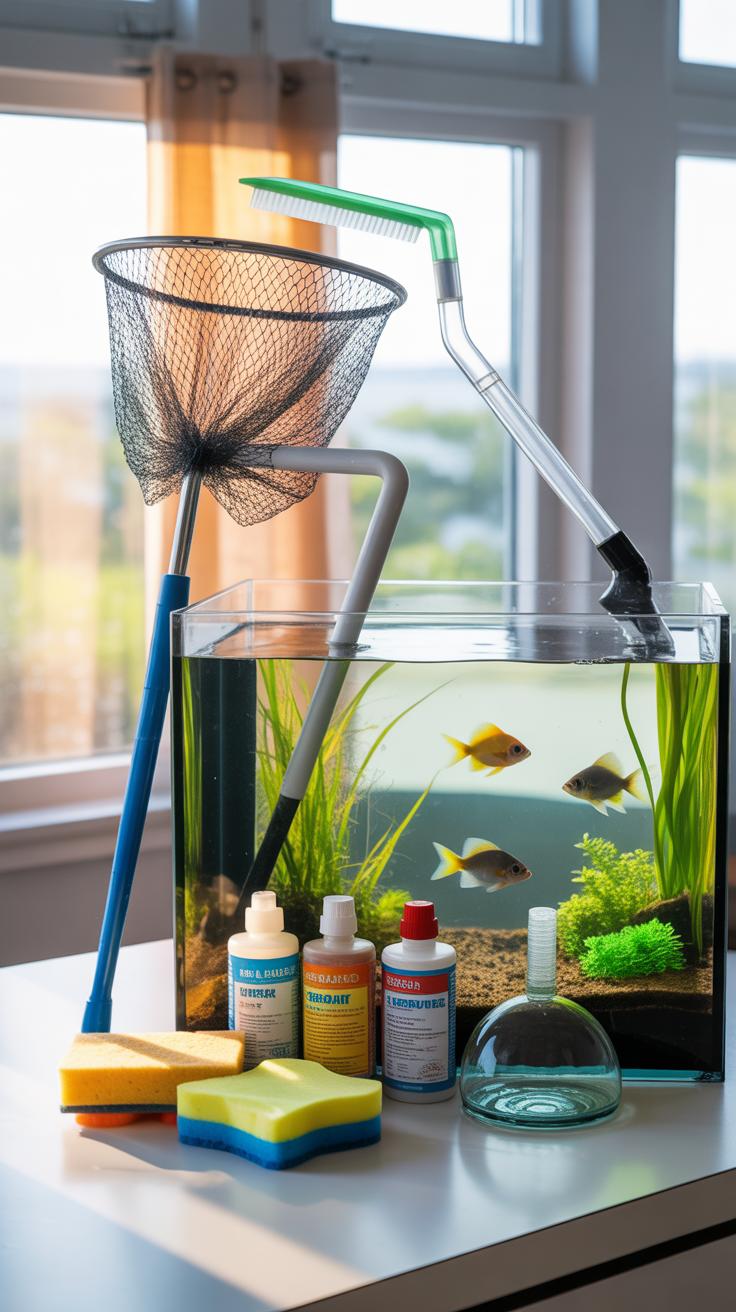
Successful maintenance requires the correct physical tools before you touch the water. You must collect these items to avoid stopping mid-task. Efficiency prevents temperature drops and reduces the time fish spend in a disturbed environment. High-quality gear lasts longer and protects the biological balance of the aquarium. Procrastination in gathering supplies leads to sloppy work and poor fish health outcomes.
- Siphon Gravel Vacuum: This tool uses a hose and plastic cylinder to pull debris from the substrate. It removes heavy waste while draining water. Choose a size that matches your tank height for maximum flow control.
- Algae Scrubber or Magnet: These tools remove film from the glass surfaces. Use felt-covered magnets for glass and plastic blades for acrylic tanks. Do not swap them or you will scratch the surface and ruin visibility forever.
- Dedicated Water Bucket: Use a bucket that has never touched soap or household chemicals. Label it for aquarium use only. Reserving a specific bucket prevents accidental poisoning of your entire aquatic ecosystem during routine water changes.
- Dechlorinator and Water Conditioner: Tap water contains chlorine and chloramines that kill fish and beneficial bacteria. Use a concentrated conditioner to neutralize these toxins instantly. This step is non-negotiable for every single water change you perform.
- Clean Microfiber Cloth: Use this for wiping down the exterior glass and light fixtures. Avoid paper towels that leave lint behind. Ensure the cloth is free of any laundry detergent or fabric softener to keep the environment safe.
Organize your equipment in a portable bin for fast access. Check the integrity of hoses and valves before you begin. Leaks cause property damage and stress the operator. Verify that your thermometer is functional to match new water temperatures. Proper preparation ensures the fish tank cleaning routine stays under thirty minutes. Systematic tool management is the hallmark of a professional-grade fish keeper.
Why Using The Wrong Cleaning Products Can Harm Your Fish
Standard household cleaners contain ammonia, bleach, and synthetic fragrances that are lethal to aquatic life. Fish breathe through their gills, making them highly sensitive to airborne particles and chemical residues. Even a small amount of glass cleaner can cause mass mortality events in minutes. These toxins disrupt the internal organs of the fish and kill the beneficial bacterial colonies living in your biological filter.

Never use sponges or brushes from your kitchen for aquarium maintenance. Used sponges carry food oils and soap film that enter the water column easily. These substances create a surface slick that prevents oxygen exchange. If oxygen cannot enter the water, your fish will suffocate. Stick to tools manufactured specifically for aquarium use. Safety in fish keeping depends on total chemical isolation from the rest of your home.
How To Do A Partial Water Change To Keep Healthy Fish
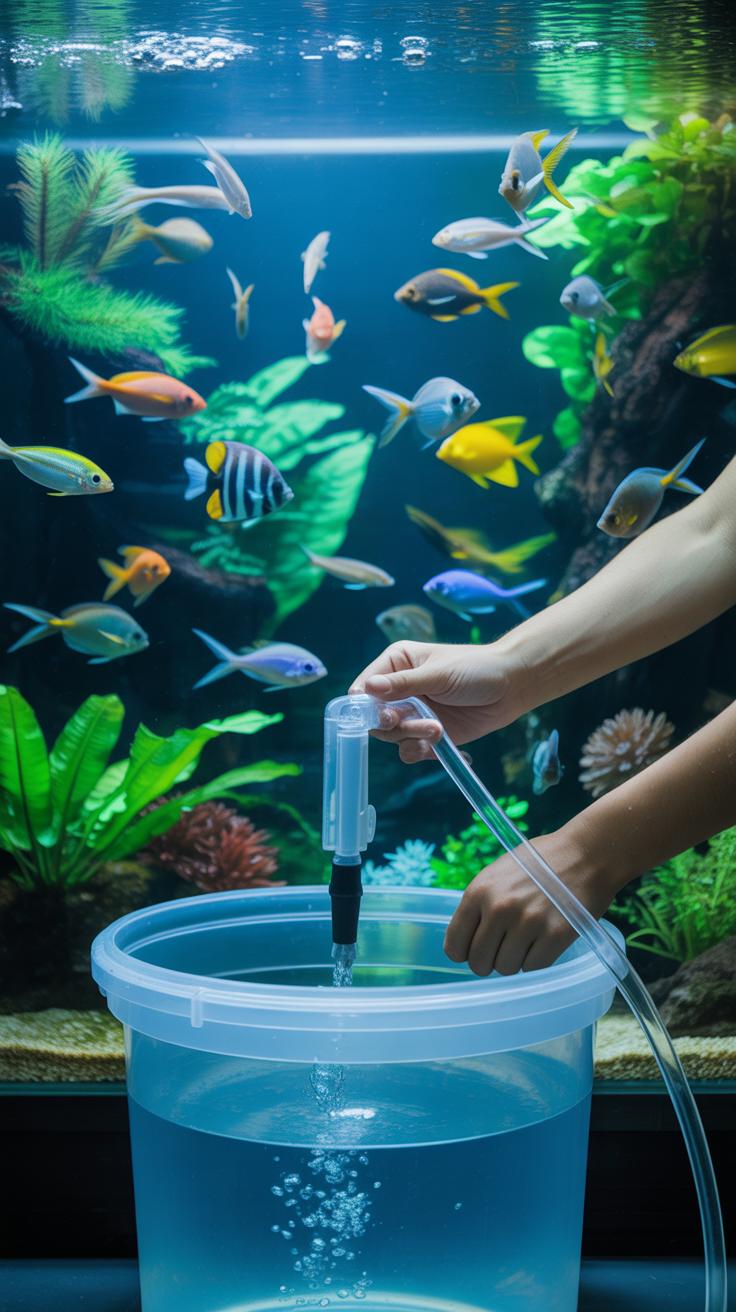
The 10 To 25 Percent Rule: Why Partial Water Changes Protect Fish Health
A fish tank cleaning routine focuses on stability rather than total sterilization. Swapping ten to twenty-five percent of the water removes nitrates and organic waste without shocking the system. Total water changes destroy beneficial bacteria colonies. These bacteria live on surfaces and filters to process toxic ammonia. Removing too much water shifts the chemistry too fast. This causes osmotic stress and kills your livestock.
Frequent small changes outperform rare large changes. Aim for a weekly or bi-weekly schedule to keep parameters steady. This consistency prevents the buildup of growth-inhibiting hormones and dissolved organic compounds. Large volume shifts trigger emergency responses in fish immune systems. Stick to the twenty-five percent limit to maintain a biological equilibrium. Predictable environments lead to lower disease rates and longer lifespans for all aquatic species.
How To Match Water Temperature And PH Before Adding It To The Tank
Temperature shock is a primary killer of aquarium fish. Use a digital thermometer to ensure new water matches the tank temperature within one degree. Cold water drops the fish metabolic rate and suppresses the immune system. Hot water reduces dissolved oxygen levels and causes immediate respiratory distress. Always mix and test your replacement water in a clean bucket before pouring it into the main display.

Chemical consistency is just as vital as heat management. Test the pH of your tap water after it sits for twenty-four hours. This allows dissolved gases to escape and the pH level to stabilize. Use a water conditioner to neutralize chlorine and chloramines immediately. Rapid pH swings cause acidosis or alkalosis. Match these levels to your current tank water to ensure a seamless transition during the refill process.
Cleaning The Substrate Walls And Decor During Your Aquarium Setup Refresh
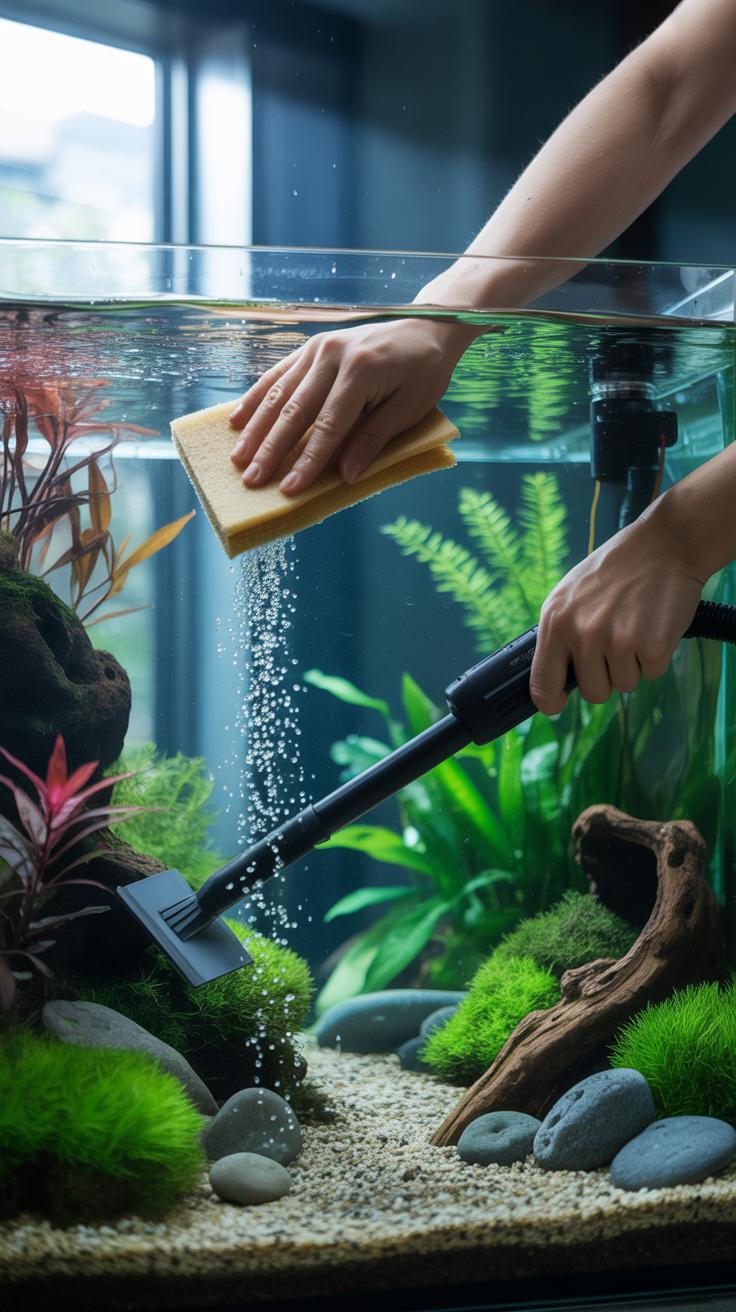
How To Vacuum Gravel And Sand Without Sucking Up Fish Or Beneficial Bacteria
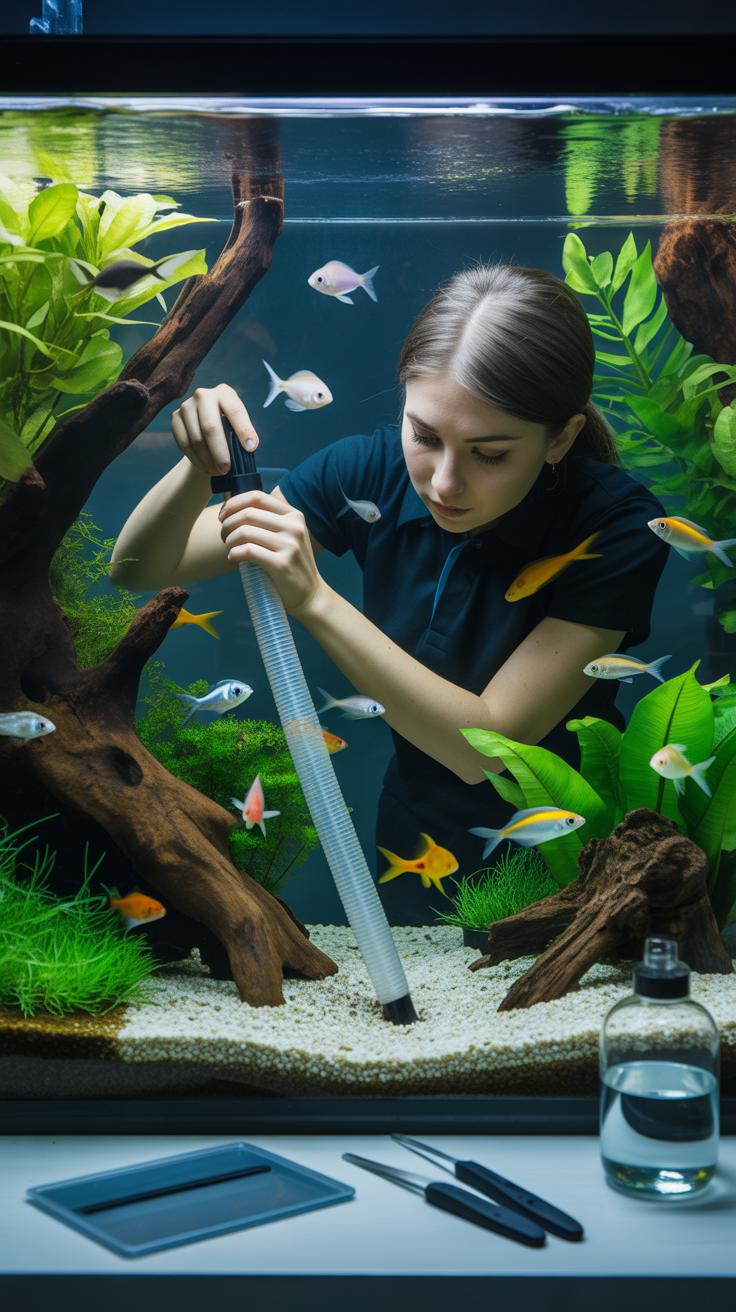
Push the siphon tube deep into the gravel to pull out trapped waste and uneaten food. Gravity creates the suction needed to lift debris while the heavy stones fall back down. Move the tube in a grid pattern to cover the entire floor. Keep your eyes on the intake to ensure small fish stay away. Kink the hose to stop flow if a fish gets too close.
Sand requires a different approach to avoid draining your substrate. Hover the siphon one inch above the sand surface. Swirl the tube in small circles to lift fish waste into the water column. This technique prevents the vacuum from pulling in the fine grains. Never stir the sand too aggressively. Deep layers of substrate house beneficial bacteria that keep the nitrogen cycle stable for your fish.
Safely Scrubbing Algae Off Tank Walls Without Scratching The Glass
Check your tank material before you start scrubbing. Glass tanks handle razor blades or stainless steel scrubbers well. These tools remove stubborn green spot algae quickly. Acrylic tanks scratch easily and require soft sponges or plastic scrapers. Use side-to-side motions rather than circular patterns to keep the surface clear. Stop near the substrate line to avoid catching sand grains under your cleaning tool.

Always rinse your scrubbing tools in old tank work before use. Never use kitchen sponges or soaps because chemical residues kill fish instantly. If algae buildup is heavy, clean only one wall per day. This prevents a sudden spike in decaying organic matter. Clean surfaces allow light to reach live plants. Regular maintenance stops algae from taking over the view and locking onto the silicone seals.
Filter Maintenance The Most Overlooked Part Of Fish Care
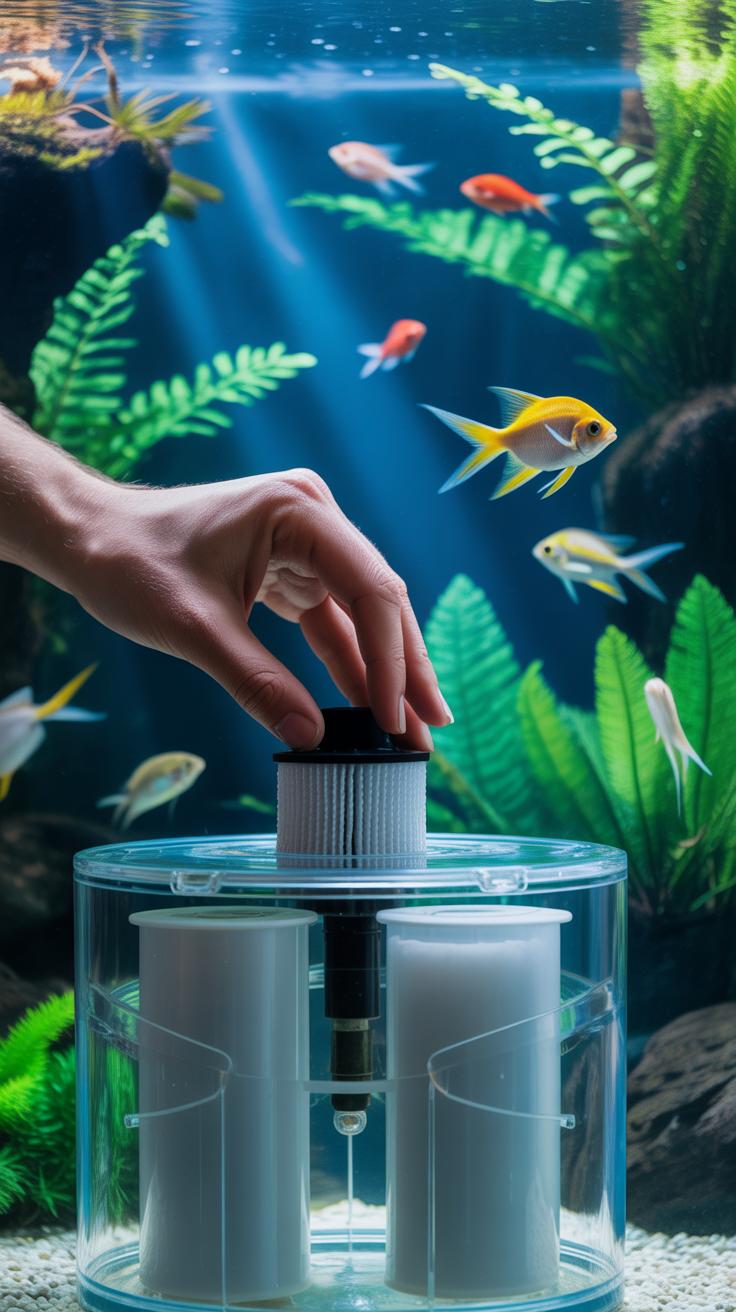
Why You Should Never Rinse Your Filter Media Under Tap Water
Tap water contains chlorine and chloramines. These chemicals exist to kill bacteria in drinking water. In an aquarium, your filter holds beneficial bacteria that process toxic fish waste. Rinsing your filter media under a faucet destroys these colonies instantly. This mistake breaks the natural waste processing loop. Without these bacteria, ammonia levels rise quickly and can kill your fish.
Always clean your filter components in a bucket of used tank water. This water lacks the harsh chemicals found in tap supplies. Swishing the sponge or ceramic rings in old tank water removes solid debris while keeping the bacteria alive. This technique preserves the biological balance of your system. It ensures the environment remains stable after your fish tank cleaning routine is finished.
How To Clean Or Replace Filter Media Without Crashing Your Nitrogen Cycle
Physical debris clogs filter intake tubes and sponges over time. This reduces water flow and oxygen levels. Clean your filter media only when the flow visibly slows down. Do not clean every part of the filter at once. If your filter has multiple sponges or cartridges, clean only half during one session. This strategy keeps a backup population of bacteria active at all times.

Replace mechanical media like fine floss only when it starts to fall apart. Biological media such as ceramic rings should almost never be replaced. If you must replace a cartridge, slide the new one next to the old one for two weeks. This allows bacteria to jump from the old surface to the new one. Never prioritize a sparkling clean filter over a biologically stable one.
Special Fish Tank Considerations For Betta Fish Care
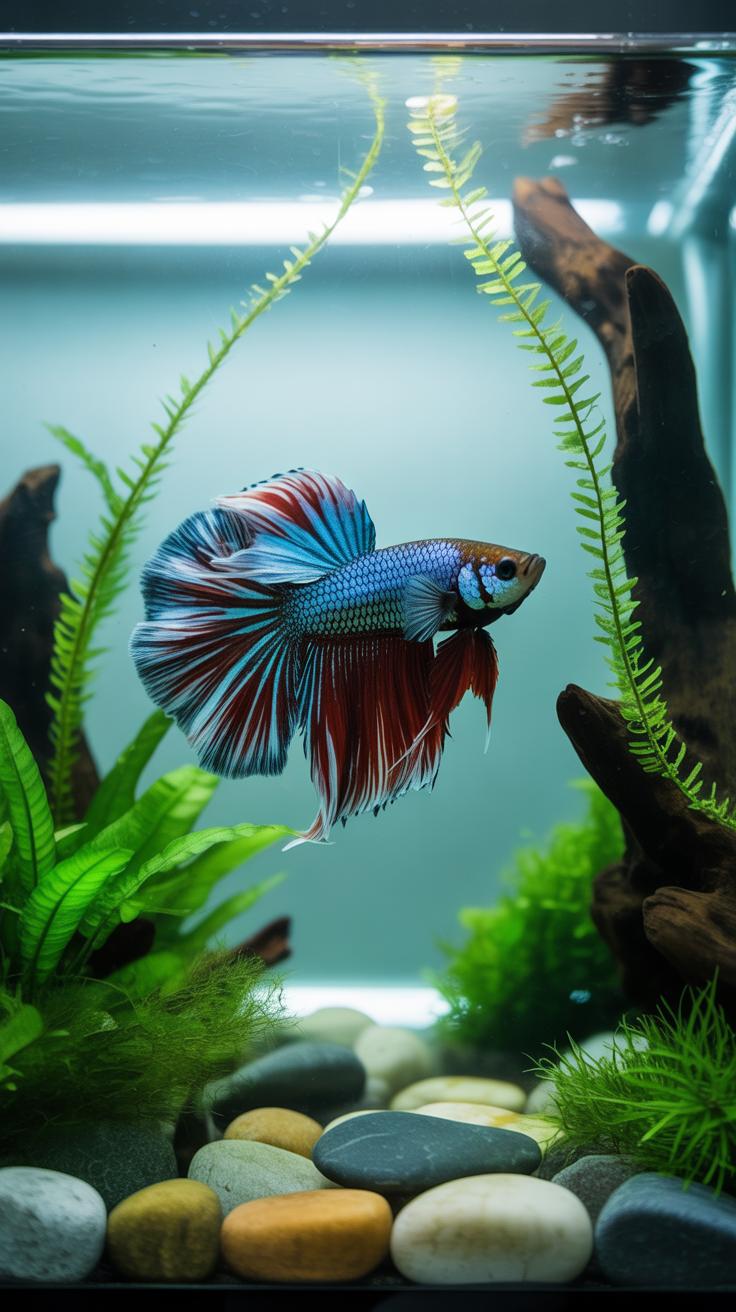
Why Betta Fish Are Particularly Sensitive To Water Quality Changes
Betta fish possess a specialized labyrinth organ. This organ allows them to breathe atmospheric air from the surface. However, this biological trait does not make them immune to dirty water. Ammonia and nitrite spikes cause immediate damage to their delicate fins and gill tissues. Bettas have evolved to survive in slow moving waters, making them highly susceptible to sudden shifts in water chemistry.
Many owners keep bettas in small tanks that lack water volume. Small volumes of water concentrate toxins very quickly. Even a tiny amount of waste creates a dangerous environment in a five gallon tank. Temperature fluctuations also strike bettas harder than other tropical fish. You must maintain stable parameters to prevent immune system failure. Rapid changes often lead to lethal conditions like fin rot or velvet disease.
Step By Step Cleaning Tips Tailored Specifically For Betta Fish Tanks
Standard cleaning routines can easily overwhelm a betta fish. These fish prefer calm environments with minimal currents. You must execute your cleaning tasks with precision to avoid triggering their fight or flight response. Focus on removing physical waste while preserving the beneficial bacteria found on silk plants and substrate. Always treat the new water before adding it back into the tank system.
- Vacuum the Substrate: Use a small gravel vacuum to pull waste from the floor. Do not disturb more than one third of the gravel at once. This protects the bacteria colony living in the tank bed.
- Monitor Water Temperature: Check that the new water matches the tank temperature within one degree. Bettas suffer from temperature shock if the replacement water is too cold. Use a reliable digital thermometer for accuracy.
- Condition the Water: Always add a high quality dechlorinator to tap water before use. Chlorine and chloramine will burn a betta’s gills and skin instantly. Mix the conditioner thoroughly in a separate clean bucket.
- Limit Surface Disturbance: Pour water back into the tank slowly over a clean plate or your hand. This prevents heavy splashing and preserves the betta’s bubble nests. Rapid water flow stresses the fish and ruins his habitat.
- Inspect Fin Health: Use the cleaning time to look for signs of fin fraying or discoloration. Early detection of rot allows you to adjust your routine before serious illness occurs. Healthy fins should look smooth and move easily.

Avoid deep cleaning every decoration during a single session. Scrubbing every surface removes the nitrogen cycle bacteria that keep your fish alive. Only wipe down one or two items if they show heavy algae growth. Consistency matters more than a deep scrub. Perform small weekly changes rather than one large monthly overhaul. This strategy keeps the environment stable and ensures your betta thrives long term.
Common Mistakes People Make When Cleaning Fish Tank Environments
Why Cleaning The Entire Tank At Once Is One Of The Worst Things You Can Do
Ripping apart an entire aquarium setup destroys the biological stability of the system. You must avoid scrubbing every surface and replacing all the water simultaneously. This scorched-earth approach removes the beneficial bacteria that process toxic fish waste. Without these microbes, ammonia levels spike immediately. This chemical surge burns fish gills and causes rapid death. You are not just cleaning a box of water; you are managing a living ecosystem.
Total sterilization creates a sterile environment that cannot support life. High-density bacterial colonies live on the gravel and decorations. When you bleach or boil these items, you reset the nitrogen cycle to zero. The fish then swim in their own untreated waste. Professional maintenance relies on staggered cleaning schedules. You should clean one area at a time to keep the biological filter intact and ensure the water stays safe.
How Overcleaning Can Be Just As Harmful As Neglecting The Tank
Excessive maintenance disrupts the natural equilibrium of the aquarium. Many hobbyists scrub away harmless brown algae or replace filter media because it looks dirty. This is a mistake. Professional fish keepers know that dirty-looking filter sponges actually hold the most beneficial bacteria. Replacing them with brand-new pads removes your primary filtration source. Frequent water changes exceeding fifty percent also shock the fish by rapidly altering water chemistry and temperature.

Polishing every surface to a shine creates unnecessary stress for the inhabitants. Fish thrive in stable environments with consistent hormone and mineral levels. Overcleaning forces the fish to adapt to new conditions constantly. This weakens their immune systems and makes them vulnerable to diseases like ich. Stick to a light, consistent fish tank cleaning routine. Your goal is waste removal, not complete sterilization. Maintenance should support the biology, not fight against it.
How To Monitor Water Quality After Cleaning A Fish Tank
What Water Parameters To Test After Every Fish Tank Cleaning Session
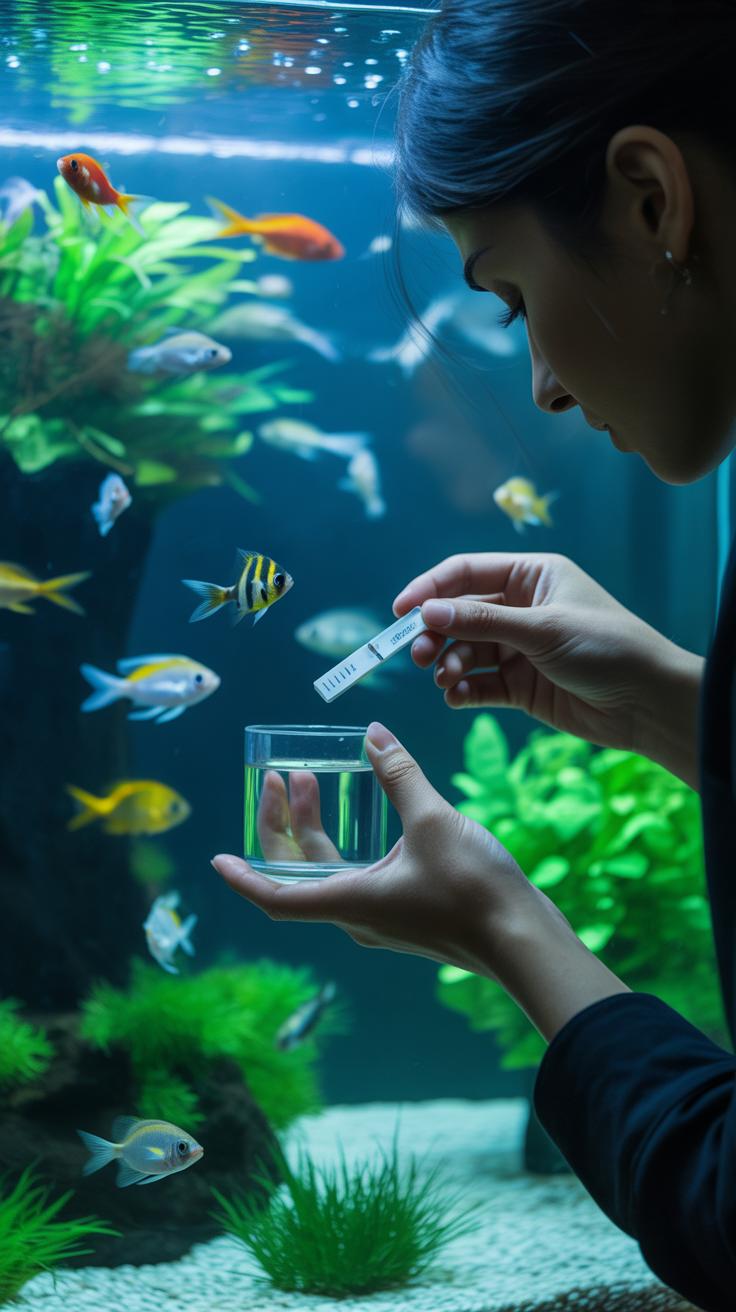
Testing water immediately after maintenance verifies that your new water matches the tank environment. You must track ammonia, nitrites, and nitrates to confirm the nitrogen cycle remains intact. Sudden shifts in pH levels can shock sensitive fish. Use a liquid reagent kit for the most accurate results. Reliable data prevents silent collapses of your biological filter after a major water change.
Consistency in your testing schedule ensures long term success. Evaluate the carbonate hardness and general hardness if you keep specialized species. Large volume changes can strip essential minerals from the water column. If your tap water chemistry fluctuates, your tank will follow. Regular tracking allows you to spot trends before they become lethal. Keep a written log of every result to detect slow drifts.
How To Read And Respond To Ammonia, Nitrite, And Nitrate Levels In Your Tank
Ammonia and nitrite levels must always stay at zero parts per million. Any reading above zero indicates a failed biological filter or decaying organic matter. If you detect these toxins after cleaning, perform an immediate partial water change. Use a high quality water conditioner to neutralize the remaining toxins. This protects the gills of your fish from chemical burns and stress.
Nitrates represent the end stage of the nitrogen cycle. Keep these levels below twenty parts per million for most freshwater setups. If your nitrate levels spike, increase the frequency of your water changes. High nitrates stunt fish growth and encourage aggressive algae blooms. Do not replace all filter media at once as this kills beneficial bacteria. Only rinse sponges in old tank water to preserve life.
Frequently Asked Questions

How often should I perform maintenance to keep my fish healthy?
Preventing grime buildup is the best way to reduce stress for your aquatic pets. For most setups, a bi-weekly fish tank cleaning routine is ideal. This involves replacing about 15-20% of the water and debris removal. Consistency prevents major chemical spikes that frighten fish. By sticking to a regular schedule, you ensure the environment remains stable, making each session a quick, low-stress refresh rather than a jarring, massive overhaul.
What is the best way to clean gravel without removing the fish?
You should use a specialized gravel vacuum or siphon during your fish tank cleaning routine. Gently push the vacuum into the substrate to suck up trapped waste while leaving the fish in place. Move slowly to avoid startling them with sudden shadows or splashes. This method effectively cleans the floor of the tank while preserving the beneficial bacteria colonies that live in the gravel, ensuring your ecosystem stays balanced and safe.
Can I clean my aquarium using household items to save money?
Absolutely! You don’t need expensive gadgets for a sparkling tank. A clean, new sponge or a simple microfiber cloth works wonders for scrubbing algae off the glass. For stubborn mineral deposits on the exterior, a mixture of white vinegar and water is a safe, budget-friendly solution. Just ensure any tool you use is dedicated solely to your aquarium to avoid introducing harmful soap residues or chemicals into your fish’s home.