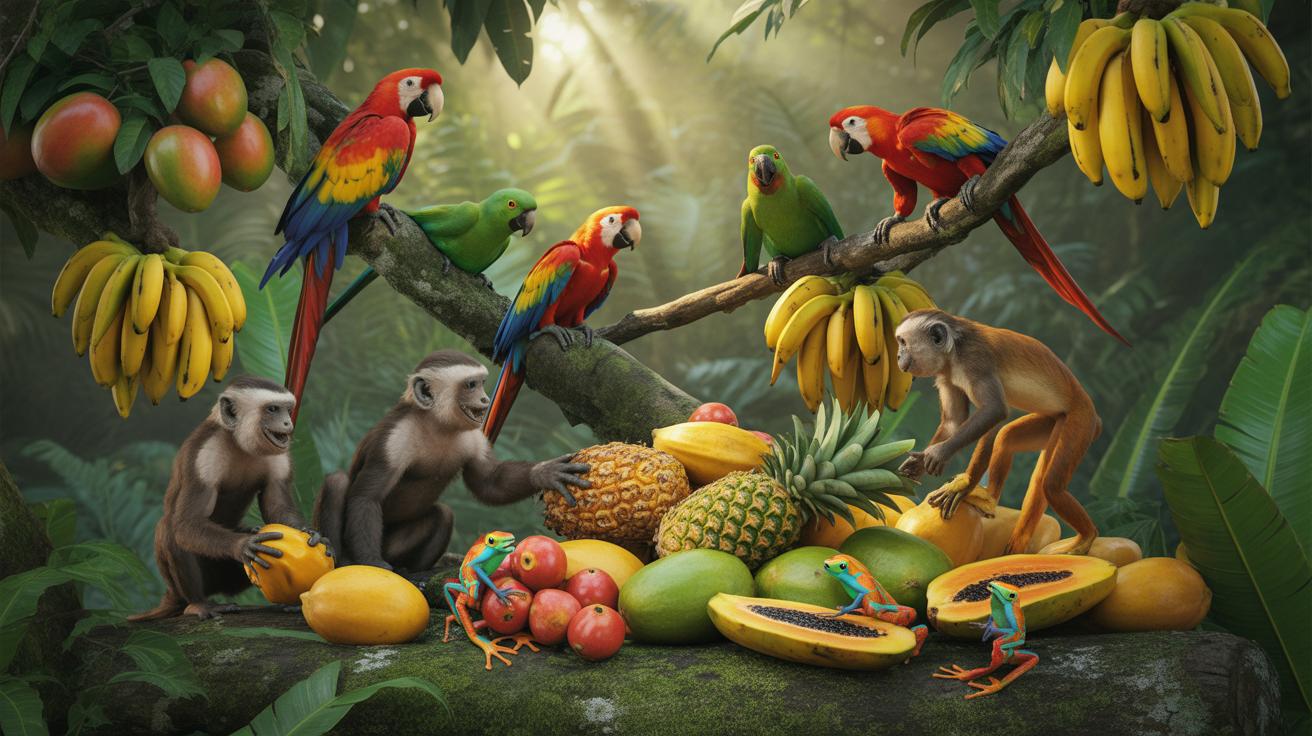
Why Tropical Animals And Fruit Go Hand In Hand
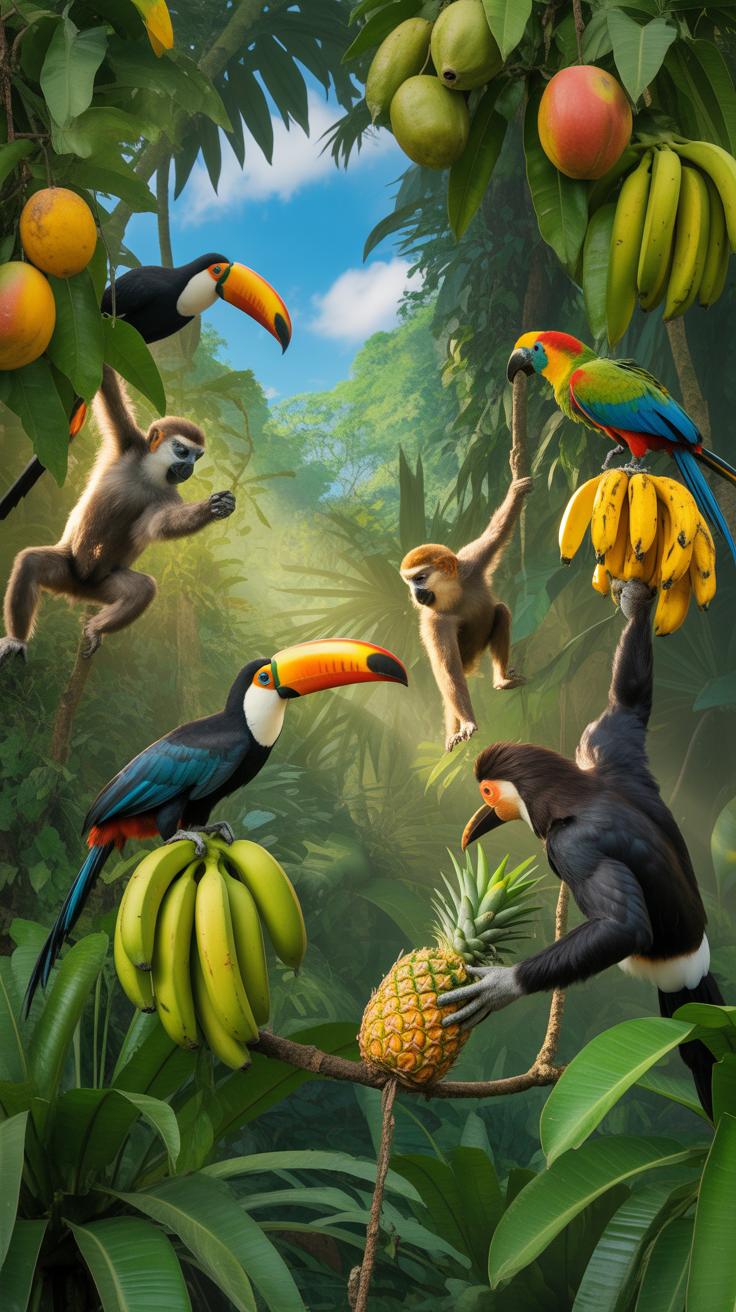
The Evolutionary Bond Between Fruit And Tropical Wildlife
Plants and animals formed a survival pact millions of years ago. Tropical trees produce sugary fruits to attract specific mobile species. These animals consume the fleshy pulp and transport seeds away from the parent tree. This process prevents local resource competition and ensures the plant species spreads across the forest. The animals receive high-energy fuel while the plants gain a reliable method of reproduction.
Natural selection favored animals with specialized traits for finding sugar. Many tropical species developed advanced color vision to spot ripe fruit against green foliage. Others evolved dexterous hands or specialized beaks to access protected seeds. This biological feedback loop shaped the anatomy of modern primates, birds, and bats. The partnership is a fundamental driver of biodiversity within these warm ecosystems. Animals and plants now depend on each other.
How Tropical Rainforests Became The Worlds Biggest Fruit Bowl For Animals
The tropical climate provides constant warmth and high rainfall throughout the year. These stable conditions allow trees to produce fruit in staggered cycles. Unlike temperate forests, the tropics do not have a barren winter season. This creates a perpetual food supply that supports large populations of fruit-eating animals. The intense competition for sunlight forces trees to invest heavily in attractive, nutrient-dense rewards for their dispersers.
Resource density in the rainforest dictates animal behavior and territory. High-energy fruit allows animals to spend less time foraging and more time on social structures or reproduction. Large canopy trees act as central feeding hubs for dozens of different species at once. This abundance supports complex food webs where fruit is the primary currency. The geography of the tropics makes large-scale fruit production the most efficient biological strategy for survival.
Fruit Animals Of The Rainforest NatureS Most Dedicated Frugivores
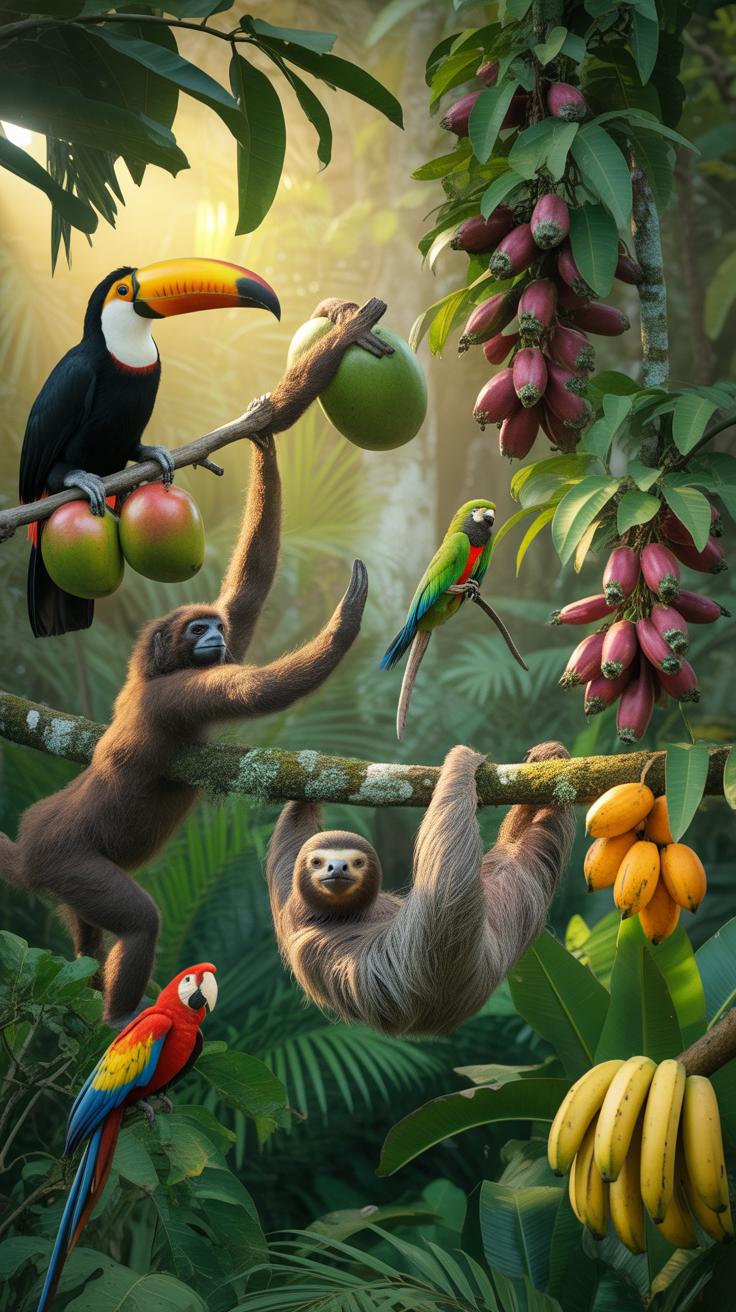
What Is A Frugivore And Which Tropical Animals Qualify?
A frugivore is an animal that thrives mostly on raw fruits. These creatures play a vital role in tropical ecosystems. They eat the pulp and disperse seeds across the forest floor. This process ensures the survival of many tree species. While many animals eat fruit occasionally, true frugivores depend on it for their primary energy. Their digestive systems handle high sugar content and fiber.
Tropical regions host the highest density of these specialists. Mammals like fruit bats and many primates fall into this category. Large birds such as hornbills also qualify. These animals have evolved specific physical traits to access fruit. Some have specialized beaks for cracking hard shells. Others have complex guts to process tannins. The tropical animals fruit diet is a high-stakes strategy for survival in competitive jungle environments.
Like the sun-drenched macaws of the jungle, we find our greatest joy in the simplest, sweetest treasures nature provides. Life is meant to be spent chasing the golden ripeness of every fleeting dream.
Top Frugivores Of The Tropics And Their Favorite Fruit Species
The tropical rainforest provides a constant supply of sugar-rich resources for dedicated feeders. Competition is fierce among these species. Different animals target specific trees based on height and ripeness. For example, large mammals focus on fallen fruit or low branches. Birds and nimble primates claim the high canopy. These preferences prevent total resource depletion and allow diverse species to coexist within the same geographical territory.
- Orangutans: These great apes spend most of their lives in the canopy searching for wild durian and rambutans. They track the fruiting cycles of hundreds of tree species to maintain their high-calorie requirements for strength.
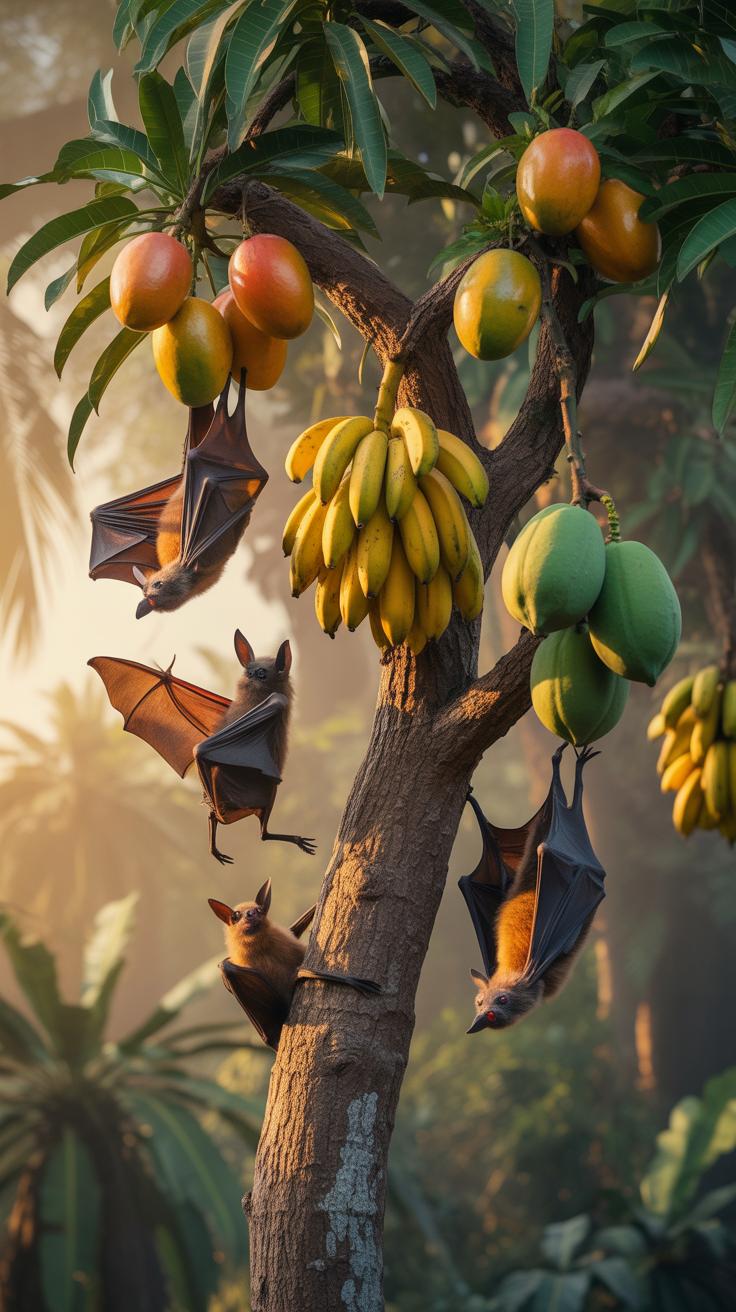
- Fruit Bats: These flying mammals target high-sugar fruits like mangoes, bananas, and guavas. They are essential for forest regeneration because they defecate seeds while flying, spreading plant life over vast distances during their nightly foraging.
- Toucans: These birds use their long, lightweight beaks to pluck small berries and figs from thin branches. They swallow the fruit whole and regurgitate the large seeds, which helps the forest grow without damaging the plant embryos.
- Spider Monkeys: These primates use their prehensile tails to reach fruit at the ends of fragile limbs. They favor lipid-rich fruits from the mahogany family, providing them with the necessary fats to sustain their high-energy lifestyle.
- Hornbills: These large-bodied birds specialize in consuming lipid-rich figs. They possess a unique digestive tract that processes the fruit quickly. Their movement patterns across the rainforest make them primary drivers of tree diversity in Southeast Asia.
Frugivores must adapt to the seasonal availability of certain plants. When favorite fruits are scarce, these animals switch to secondary food sources like flowers or nectar. However, their primary biological drive remains the search for high-energy fruit. This obsession shapes their daily movement patterns and social structures. Understanding these feeding habits is critical for conservation efforts. Protecting fruit-bearing trees is the only way to save these specialized tropical animals.
Toucans And Hornbills The Animals That Live For Tropical Fruit
How The Toucan’S Iconic Bill Is Perfectly Designed For Eating Fruit
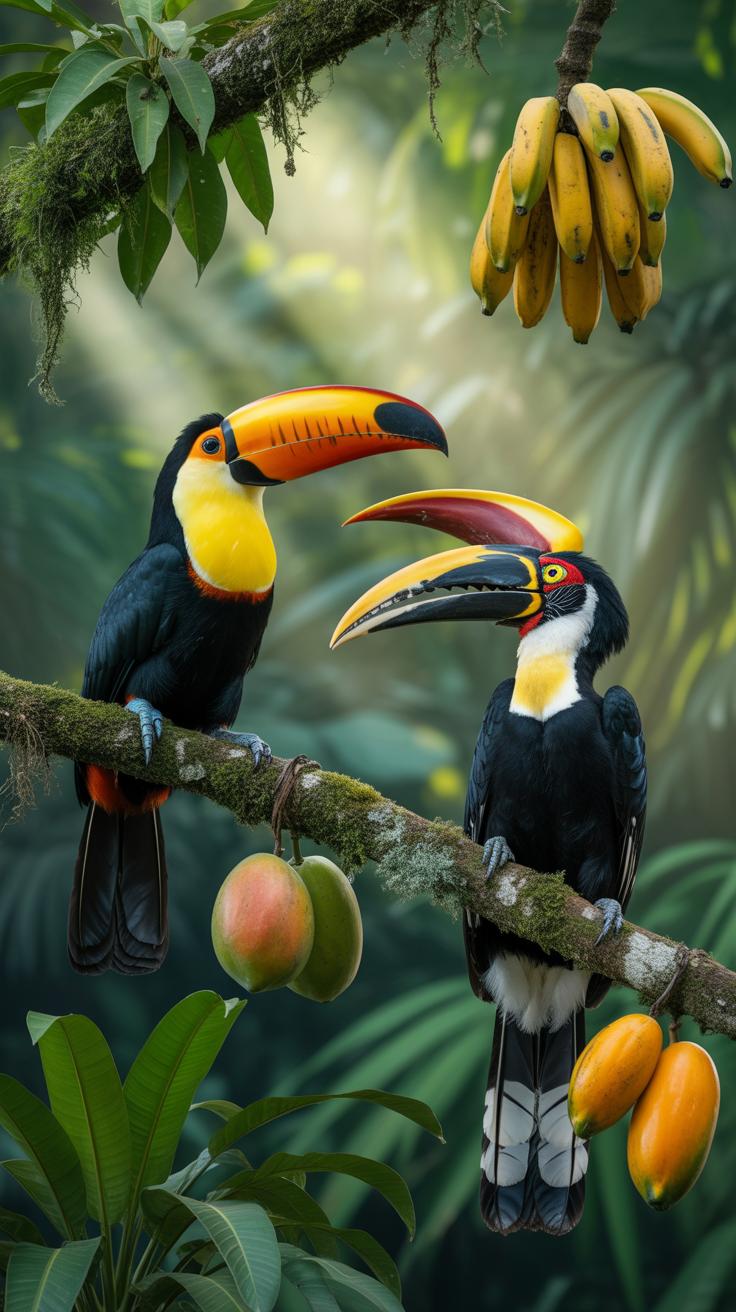
The toucan bill is a precision tool for fruit consumption. High vascularization allows the bird to regulate body heat while foraging in dense canopies. Its length provides a massive reach. This lets the bird pluck fruit from thin branches that cannot support its body weight. The serrated edges act like a saw to grip and tear through tough outer skins of tropical produce.
Muscle structure at the base of the bill generates significant leverage. Toucans use a toss and swallow technique to move food quickly. They flip the fruit back into the throat with high speed. This method bypasses the need for complex chewing. The bill is strong but remarkably light because it contains a protein foam called keratin. Weight reduction is critical for flight efficiency between fruiting trees.
Hornbills In Southeast Asia And Their Role As Tropical Fruit Dispersers
Hornbills are the primary engineers of Southeast Asian rainforests. Their diet consists almost entirely of wild figs and drupes. These birds travel vast distances between feeding sites every day. They have large gizzards but do not grind seeds during digestion. This leaves the seeds intact and ready for germination. They deposit these seeds far from the parent tree in nutrient rich droppings.
Effective seed dispersal prevents local overcrowding of plant species. Hornbills specifically target larger fruits that smaller birds cannot handle. This makes them essential for the survival of heavy seeded tree species. Without these birds, the forest structure would collapse over time. Their movement patterns dictate the genetic diversity of the jungle. They bridge gaps between fragmented forest patches by carrying seeds across open spaces.
Primates And Their Amazing Food Platters Of Wild Tropical Fruit
How Chimpanzees And Orangutans Seek Out And Select Ripe Fruit Daily
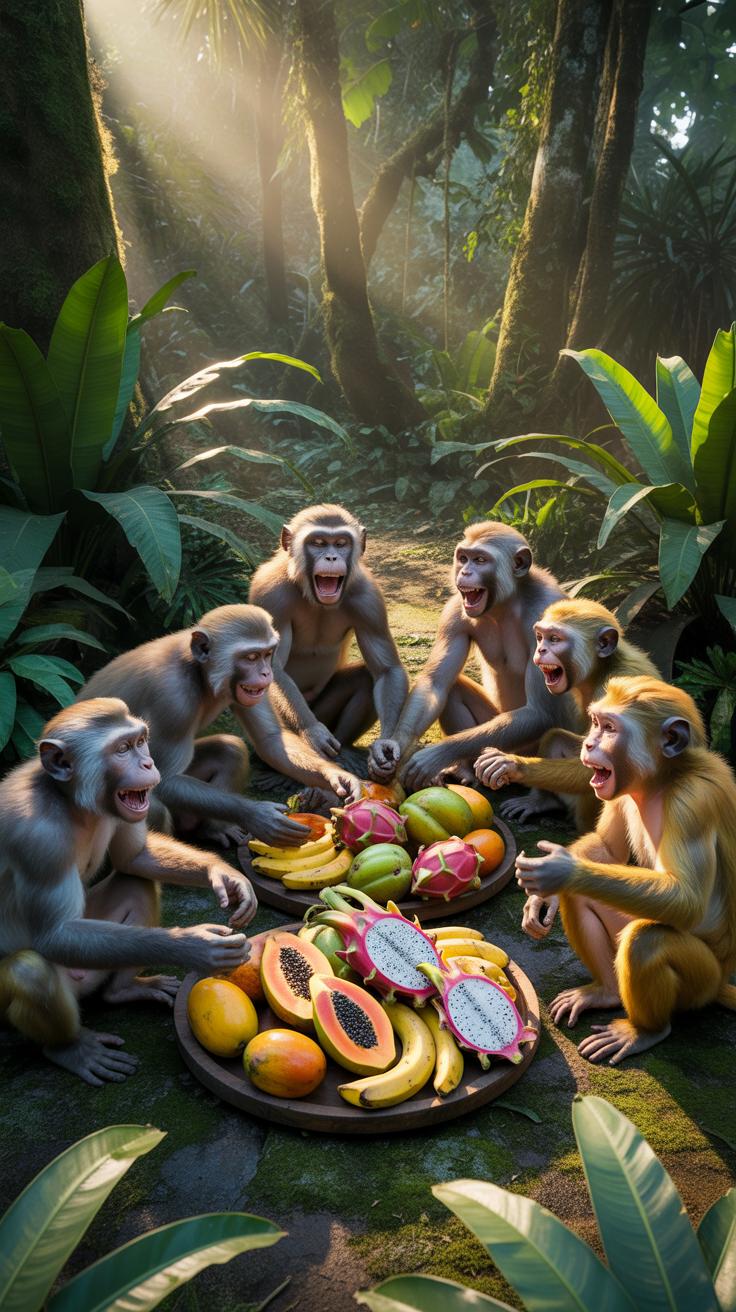
Chimpanzees and orangutans utilize complex mental maps to find fruit. They track the locations of specific trees across vast forest territories. These primates monitor seasonal cycles to predict when fruit will ripen. They prioritize high-sugar options like wild figs to maximize energy intake. This strategic foraging ensures they reach the best food sources before competitors arrive. Accurate spatial memory is their main tool for survival.
Selection involves physical inspection and learned techniques. Great apes use touch, smell, and color cues to judge ripeness. Orangutans often peel tough rinds using their teeth and hands to access the pulp. Chimpanzees may use tools to crack hard-shelled fruits or reach high branches. This behavior reduces energy waste on low-quality or unripe choices. They focus on nutrient density to support their large brain functions and daily movement.
Spider Monkeys: The Tropical Primate With The Highest Fruit Diet Percentage
Spider monkeys maintain a diet consisting of nearly eighty to ninety percent fruit. Their digestive systems are built to process large quantities of fleshy drupes and berries quickly. These primates act as critical seed dispersers within the tropical canopy. They favor lipid-rich fruits that provide immediate fuel for their high-speed brachiation. This specialized diet makes them more dependent on stable forest health than most other primate species.
High fruit consumption shapes their social structure and movement. Spider monkeys split into small groups to forage efficiently and reduce competition at single trees. Their long, prehensile tails allow them to reach fruit on thin outer branches. They swallow seeds whole and track them across the forest floor through their waste. This relationship benefits the ecosystem by planting new trees. They remain the most specialized fruit eaters among New World monkeys.
Fruit Bats The Misunderstood Animals Behind Every Tropical Fruit Tree
The Vital Role Fruit Bats Play In Pollinating And Spreading Tropical Fruit Trees
Fruit bats act as the primary engines for forest regeneration in tropical ecosystems. They consume large quantities of fruit and fly long distances every night. Unlike birds, bats often defecate while flying. This process scatters seeds across wide areas, including cleared lands where other animals do not travel. Their digestive systems help break down seed coats, which speeds up the germination process significantly.
These mammals also serve as critical pollinators for many night-blooming plants. They possess long tongues designed to reach nectar deep inside large flowers. As they feed, pollen sticks to their fur and moves to the next tree. This genetic exchange maintains the health of the rainforest. Without this movement, many tree species would face local extinction. Their mobility ensures that tropical forests remain diverse and resilient.
Which Tropical Fruits Would Disappear Without Fruit Bat Activity?
Several major fruit crops depend entirely on bats for their survival. Durian, often called the king of fruits, relies on bats for pollination. The flowers of the durian tree open only at night. Bats are the only animals with the size and flight patterns to visit these blooms effectively. Without them, the commercial durian industry would collapse. The fruit would fail to develop without this specific interaction.
Wild bananas and mangoes also trace their lineage back to bat-driven pollination and seed dispersal. While many commercial varieties are now cloned, their wild ancestors require bats to maintain genetic diversity. Bats also support the growth of guavas and agave plants. These animals sustain the food chain that humans and other tropical animals rely on for daily nutrition. Protecting bat populations is a strategic necessity for global food security.
The Turtle Fruit Bowl Of Nature How Tortoises And Turtles Feast On Fallen Fruit
Aldabra And Galapagos Tortoises And Their Documented Love Of Tropical Fruit
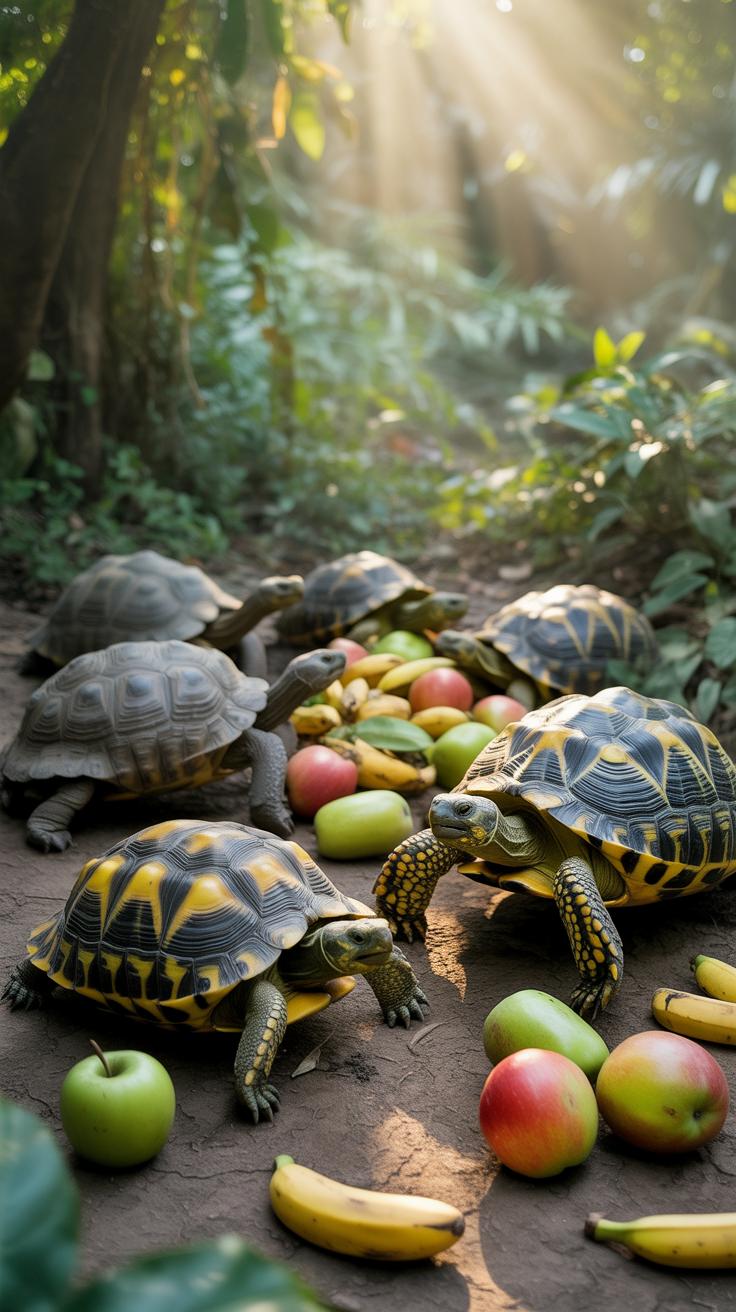
Giant tortoises on the Aldabra and Galapagos islands rely on fallen fruit for energy. These massive reptiles track seasonal changes to find high-calorie meals. They consume fallen guava, passion fruit, and cactus pears. This fruit provides essential hydration in arid environments. Tortoises prioritize fruit because it offers more sugars than dry grasses. They use their sense of smell to locate rotting fruit from a distance.
These animals possess strong jaws but no teeth. They crush soft fruit against their palates to swallow it whole. This eating habit allows them to process large volumes of food quickly. Research shows that tortoises will travel miles to reach a single fruiting tree. They compete with other tortoises for the best fallen specimens. This dietary habit ensures they maintain enough fat stores to survive long periods without fresh water.
How Fruit Eating Tortoises Act As Slow But Effective Seed Dispersers
Tortoises play a critical role in forest regeneration. They swallow seeds whole while eating fruit. These seeds pass through the digestive tract over several days or weeks. Stomach acids break down tough seed coats. This chemical process improves the chances of germination once the seed exits the body. Tortoises move slowly but cover large territories. They deposit seeds far from the parent tree in nutrient-rich manure.

The survival of certain tropical plant species depends entirely on tortoise digestion. Some seeds cannot sprout without the scarification process found in the tortoise gut. Scientists call this relationship an ecological partnership. Because tortoises live for over a century, they maintain forest structures for generations. They act as long-term gardeners for their island habitats. Their slow movement ensures a wide and even distribution of new plant growth across various terrains.
Tropical Birds Beyond Toucans A Colorful Animal Fruit Tray Of Avian Frugivores
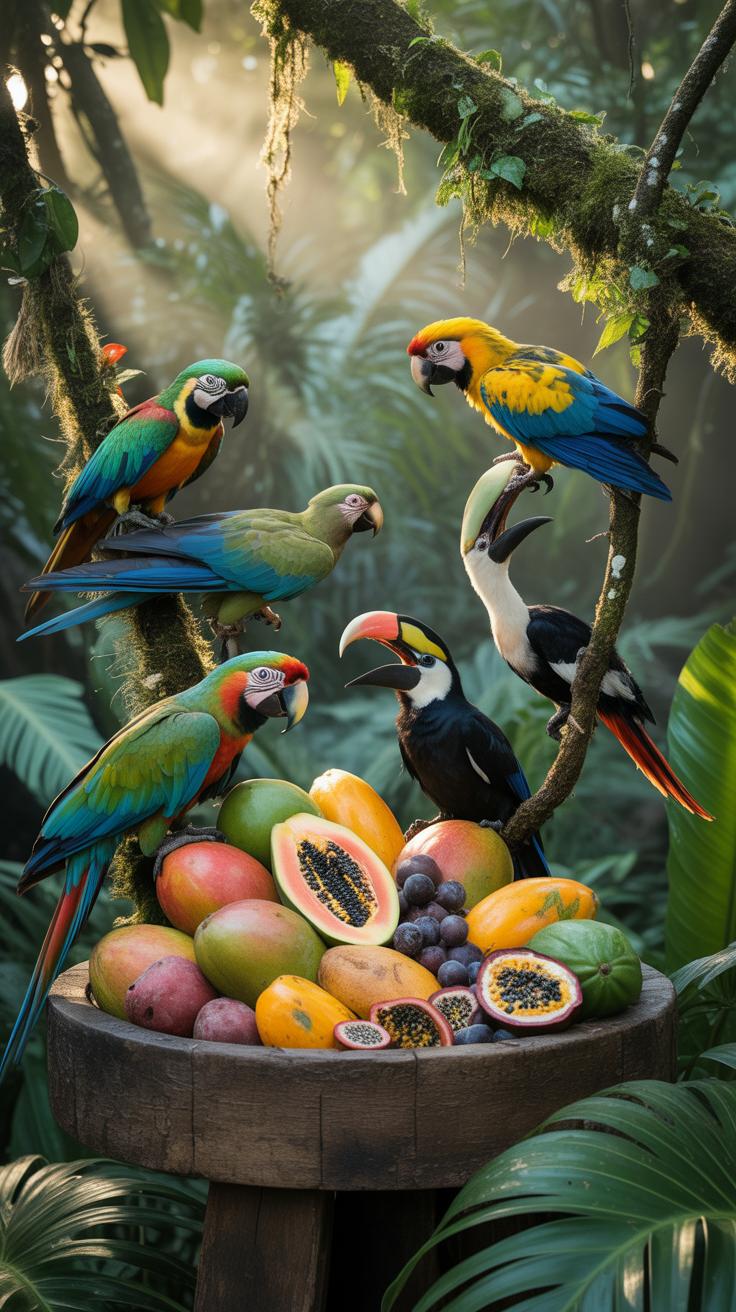
Cotingas, Manakins, And Birds Of Paradise: Tropical Birds Built Around A Fruit Diet
Cotingas and manakins rely on high-energy fruits to fuel their intense mating displays. These birds have wide gapes and short digestive tracts. This physical design allows them to swallow large drupes whole. They strip the nutrient-dense pulp and quickly regurgitate the heavy seeds. This strategy maximizes calorie intake while reducing flight weight. It is a tactical adaptation for survival in the dense canopy.
Birds of paradise also specialize in lipid-rich fruits from specific tree families. They target nutmeg and mahogany relatives for their high fat content. This specialized diet allows males to dedicate hours to complex dances. Without these reliable fruit sources, their energy-intensive lifestyle would fail. Their digestive systems process fruit faster than most other birds. This efficiency keeps them active and mobile throughout the day.
How Fruit Eating Birds Shape The Structure Of Tropical Forests Over Time
Frugivorous birds act as primary seed dispersers for thousands of tropical tree species. They fly long distances between feeding and nesting sites. This movement patterns the forest by depositing seeds far from the parent tree. This process prevents local overcrowding and reduces competition among seedlings. It also helps trees colonize new areas of the jungle. Without these birds, the forest would lose its biological diversity.

These birds determine which tree species dominate the landscape over decades. They select fruits based on size, color, and nutritional value. Trees that produce attractive fruit for birds have a higher chance of reproduction. This evolutionary pressure shapes the physical traits of the forest canopy. The birds and trees exist in a tight functional loop. Their interaction sustains the entire ecosystem and ensures forest regeneration.
Tropical Fish And Reptiles With A Surprising Fruit Diet Connection
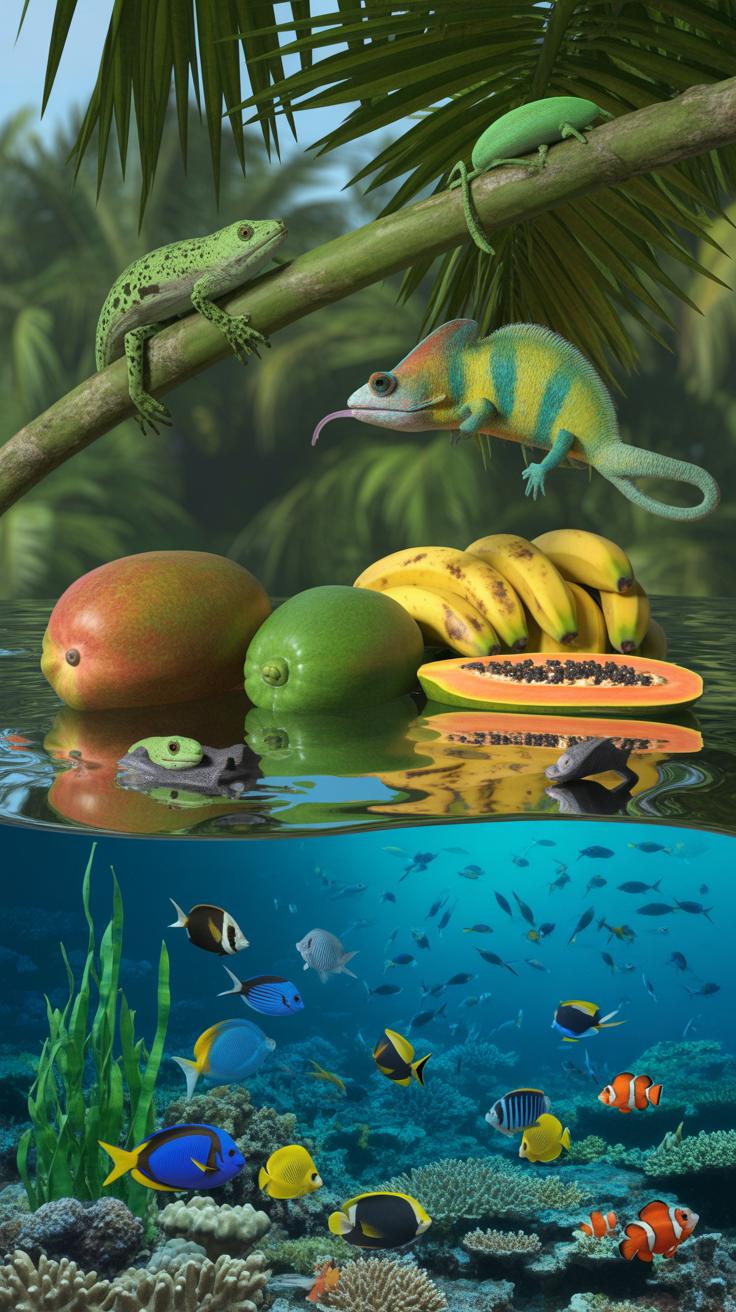
Pacu Fish Of The Amazon: The River Dwelling Animals That Eat Fallen Fruit
The Pacu fish plays a critical role in the Amazon basin ecosystem. These relatives of the piranha possess square, human like teeth designed for crushing hard materials. They migrate into flooded forests during the wet season to scavenge for food. They wait beneath trees for calorie dense fruits and seeds to drop into the water. This behavior provides the fish with essential fats and nutrients for survival and growth.
This relationship drives forest regeneration through a process called ichthyochory. The Pacu consumes the fruit but does not digest the seeds. Instead, the fish swims long distances before excreting the seeds in new locations. This mechanism allows plants to colonize downstream areas. Scientists track these fish to understand how deforestation impacts river health. Without these fish, many tropical tree species would struggle to spread across the vast Amazonian plains.
Iguanas And Fruit Eating Lizards Found Across Tropical Ecosystems
Green iguanas and blue spiny lizards are primary consumers of plant matter in tropical jungles. These reptiles are strict herbivores in their adult stage. They seek out bright colors like red and yellow to identify ripe fruits. This diet provides the hydration and sugar necessary for high energy displays during mating seasons. They climb to the highest canopy branches to access the freshest growth and avoid ground based predators.

Reptiles lack the complex molars of mammals but use sharp serrated teeth to shear through tough fruit skins. Their gut bacteria break down cellulose and extract energy from fibrous pulp. This digestive process makes them efficient seed dispersers across rocky terrains and islands. They often deposit seeds in nutrient rich waste which acts as a natural fertilizer. Their survival depends on the seasonal availability of native tropical fruits like figs and berries.
Kids Meals Inspired By Tropical Animals And Their Fruit Diets
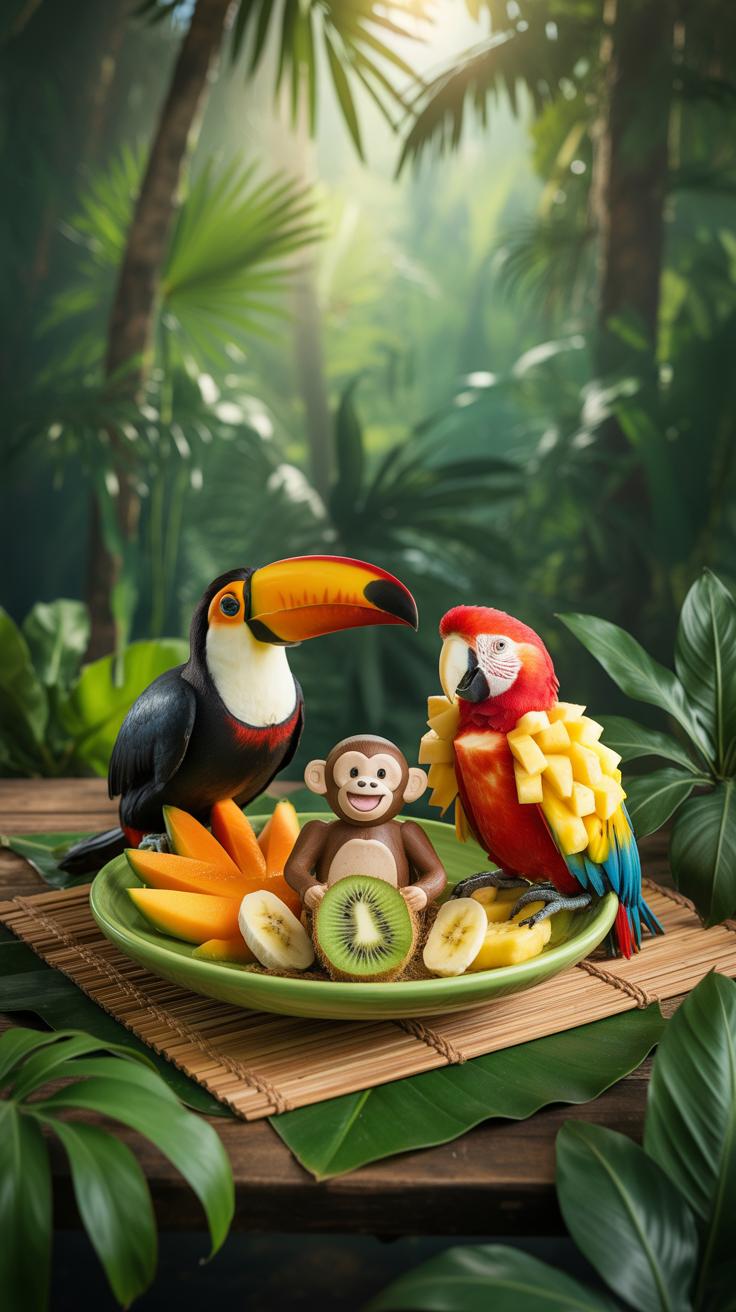
Creative Animal Themed Fruit Platters And Strawberry Food Art Ideas For Children
Strategic meal design uses visual cues to increase food acceptance in children. You can mimic the vibrant colors of the rainforest to make healthy snacks appealing. Use structural techniques like layering and carving to build recognizable animal shapes. This method transforms high-fiber fruits into engaging educational tools. Focusing on specific fruit anatomy helps kids identify the diet patterns of tropical species while eating.
- Strawberry Tree Frogs: Slice strawberries lengthwise to create the body of a Central American Red-Eyed Tree Frog. Use thin green grape slices for the limbs and small blueberry bits for the eyes. This design teaches kids about amphibians that live in fruit-bearing forest canopies.
- Mango Toucan Beaks: Cut large wedges of ripe mango to represent the oversized bill of a Toco Toucan. Pair the mango with blackberries for the body and white banana slices for the chest. This demonstrates how birds utilize specialized beaks to consume large tropical seed-bearing fruits.
- Pineapple Lion Manes: Arrange triangular pineapple chunks in a circular pattern to mimic the mane of a golden lion marmoset. Place a round citrus slice in the center for the face. These primates rely heavily on nectar and sweet fruit pulp for their daily caloric intake.
- Banana Monkey Boats: Peeling a banana halfway provides a sturdy base for a fruit-filled boat. Top the exposed fruit with diced papaya and kiwi to represent the forage found by spider monkeys. Monkeys often drop seeds while eating, which helps the tropical forest grow and regenerate.
- Mandarin Citrus Butterflies: Use mandarin segments to create wings and a celery stick for the body. Many tropical butterflies feed on the juices of fermenting fallen fruit on the forest floor. This platter highlights the relationship between insects and the natural decomposition cycle of sugary tropical produce.
Precision in food art requires sharp tools and firm produce. Select strawberries with consistent conical shapes for better symmetry in your designs. Maintain structural integrity by using natural binders like nut butters or Greek yogurt to hold fruit pieces together. Professional presentation encourages children to interact with the food. These tactics simplify the introduction of complex tropical flavors to a child’s developing palate.
Teaching Kids About Tropical Wildlife Through Fun And Nutritious Fruit Based Meals
Mealtime provides a tactical opportunity to explain the symbiotic relationship between animals and plants. Tropical animals act as seed dispersers when they consume fruit. Explain how the seeds inside a papaya pass through an animal to grow new trees. Kids learn that their meal choices mirror the natural survival instincts of creatures like bats and iguanas. This context makes the nutrition more relevant.
Connect the high energy of sugary fruits to the active lifestyles of rainforest animals. Explain that the fructose in a mango provides the fuel a parrot needs for long flights. Use physical evidence like the tough skin of a pineapple to discuss how animals evolve specialized teeth. These facts move the conversation beyond simple taste. You turn a standard lunch into a data-driven lesson on biology and environmental science.
How The Tropical Animals Fruit Diet Keeps Entire Ecosystems Alive
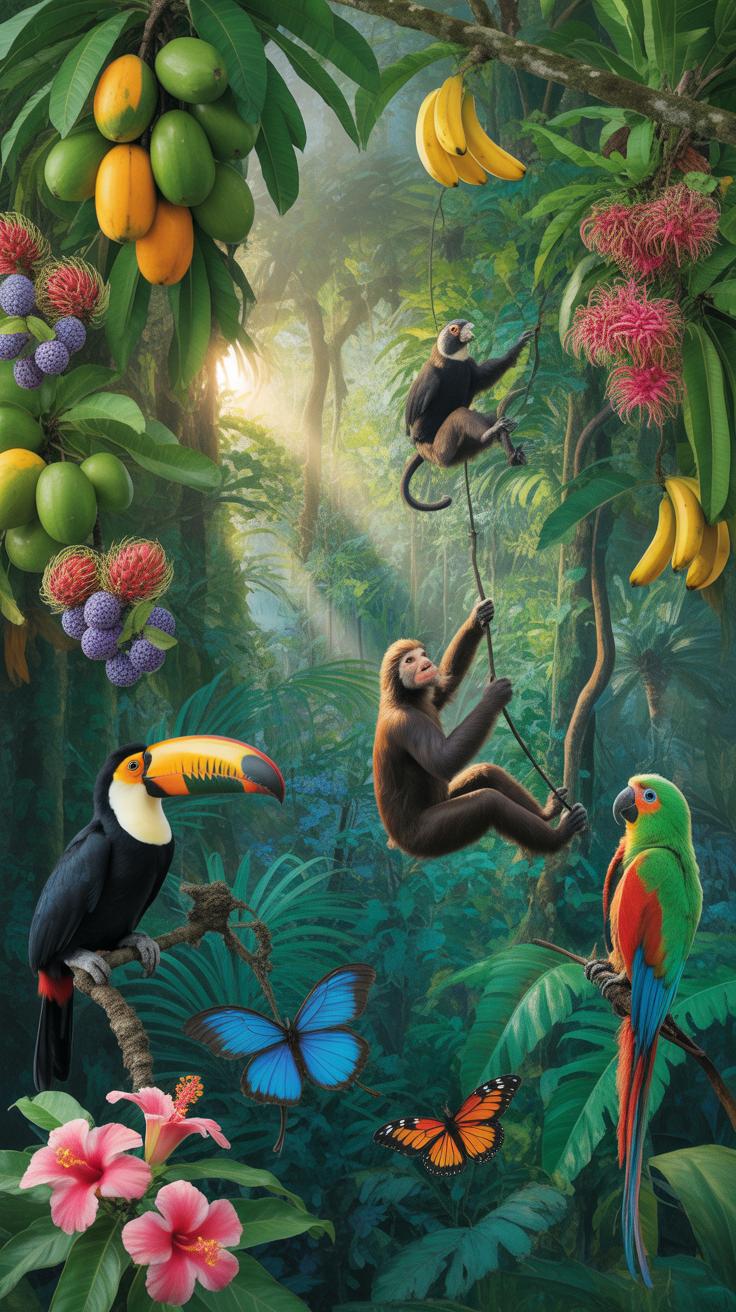
Seed Dispersal By Frugivorous Animals And Its Impact On Forest Regeneration
Frugivorous animals act as the primary engines for forest growth. These species consume fleshy fruits and transport seeds far from the parent tree. This movement prevents seedling competition and reduces the risk of seed predation. Animals like hornbills and primates possess large digestive tracts that can handle substantial seeds. Their gut passage often prepares the seed for faster germination once excreted into the soil.
Effective seed dispersal creates a mosaic of plant diversity across the landscape. Animals drop seeds in nutrient-rich waste, which provides a natural fertilizer for the emerging plant. Without this tactical transport, heavy seeds would simply fall and rot beneath the mother tree. Natural forest regeneration relies on these mobile links to maintain genetic flow between distant patches of trees. This process ensures the long-term survival of the tropical canopy.
What Happens To Tropical Forests When Fruit Eating Animals Disappear?
The loss of fruit-eating animals triggers a collapse in forest structure known as empty forest syndrome. When hunters or habitat loss remove large frugivores, the recruitment of new trees stops. Only small-seeded plants dispersed by wind or small rodents survive. This shift changes the entire composition of the jungle. Large, carbon-dense hardwood trees fail to reproduce because no animals remain to move their heavy, specialized seeds.
The ecosystem loses its ability to store carbon and support diverse life forms. Smaller trees and shrubs take over, leading to a thinner and less resilient forest. This degradation happens silently over decades as old trees die without replacements. Ecosystem services like water regulation and climate cooling decline rapidly. The absence of a fruit-driven diet among local fauna eventually transforms a lush rainforest into a low-value scrubland.
Frequently Asked Questions

Which species are most known for having a specialized fruit-based diet?
Many people are surprised to learn that beyond monkeys, animals like the keel-billed toucan and many species of fruit bats rely almost exclusively on sugary forest offerings. These creatures are vital to the ecosystem because a tropical animals fruit diet facilitates seed dispersal across large distances. By consuming diverse varieties of figs and berries, these animals ensure the lush rainforest canopy continues to flourish and expand year after year.
How can I create a wildlife-friendly garden that supports these fruit-loving creatures?
To support a tropical animals fruit diet in your own backyard, focus on planting native fruiting trees like guava, papaya, or mango. Avoid using pesticides, as these can be harmful to the birds and mammals visiting your space. Provide a consistent water source and allow some overripe fruit to remain on the branches. This attracts local species naturally, providing them with essential nutrients while offering you a front-row seat to nature.
Are there affordable ways to observe these animals in their natural habitats?
You don’t need an expensive private safari to see these fascinating creatures in action. Many public botanical gardens and national parks offer low-cost entry and provide ideal environments for spotting fruit-obsessed wildlife. Visiting during the harvesting season of local fruits can increase your chances of sightings for just the cost of a park pass. Carrying a pair of basic binoculars is a budget-friendly way to enhance your viewing experience significantly.