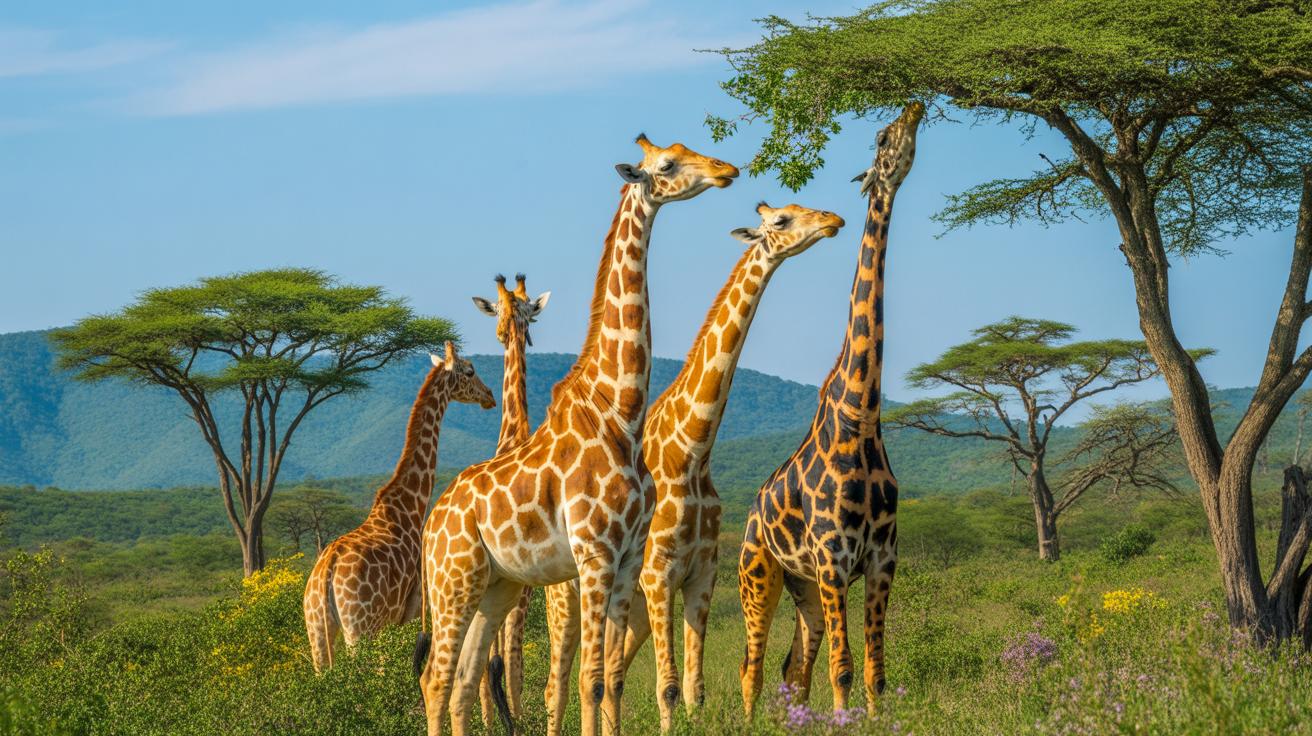
Understanding Tallest Animals Neck Adaptations And Why They Matter In Nature
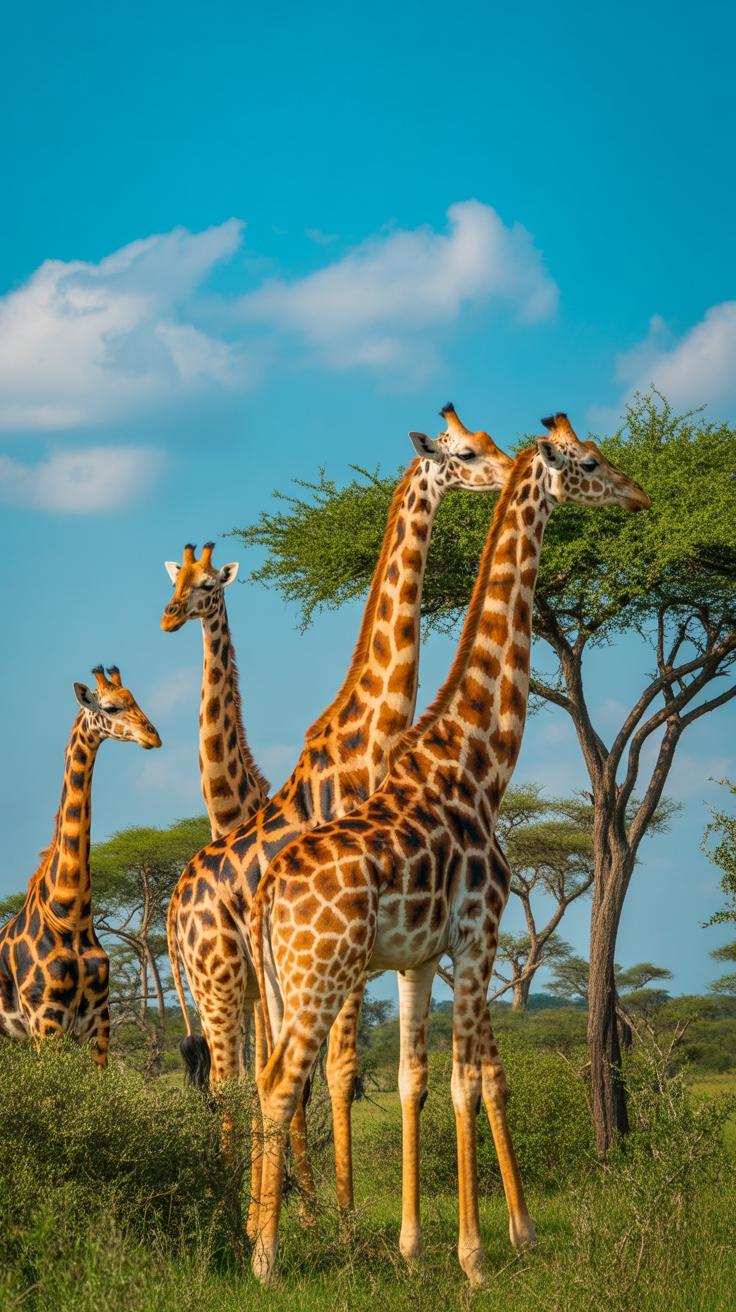
What Makes A Neck Adaptation Extraordinary In The Animal Kingdom
Extraordinary neck adaptations involve complex structural engineering rather than simple growth. Most mammals possess seven cervical vertebrae regardless of their size. Tall animals like giraffes elongate these specific bones to extreme lengths. This requires specialized joints to maintain stability and range of motion. Supporting this weight demands massive ligament systems and powerful neck muscles. These biological systems work together to manage heavy mechanical loads.
Pressure control is the second half of this adaptation. Moving blood several feet upward against gravity requires a high-pressure heart. Specialized valves in the neck veins prevent sudden blood surges when the animal lowers its head. Without these valves, the animal would suffer brain damage from high pressure. These engineering solutions allow large herbivores to function safely while maintaining an extreme physical profile in harsh environments.
How Neck Length Directly Influences An Animal’S Survival And Daily Behavior
Neck length dictates how an animal interacts with its environment every day. It provides exclusive access to food sources located high in the canopy. This reduces direct competition with shorter herbivores for limited resources. A long neck also acts as a lookout tower. It allows the animal to spot predators from great distances across flat plains. Early detection is the primary defense for these large creatures.
Social behavior also relies heavily on neck structure. Many species use their necks as weapons during combat to establish dominance. This physical utility makes the neck a multi-purpose tool for survival. Beyond feeding and fighting, the neck helps regulate body temperature by increasing surface area for heat loss. Every inch of length serves a specific tactical purpose for the animal. Efficient energy use and safety remain the core drivers of this evolution.

Why Do Giraffes Have Long Necks The Science Behind The Most Iconic Adaptation
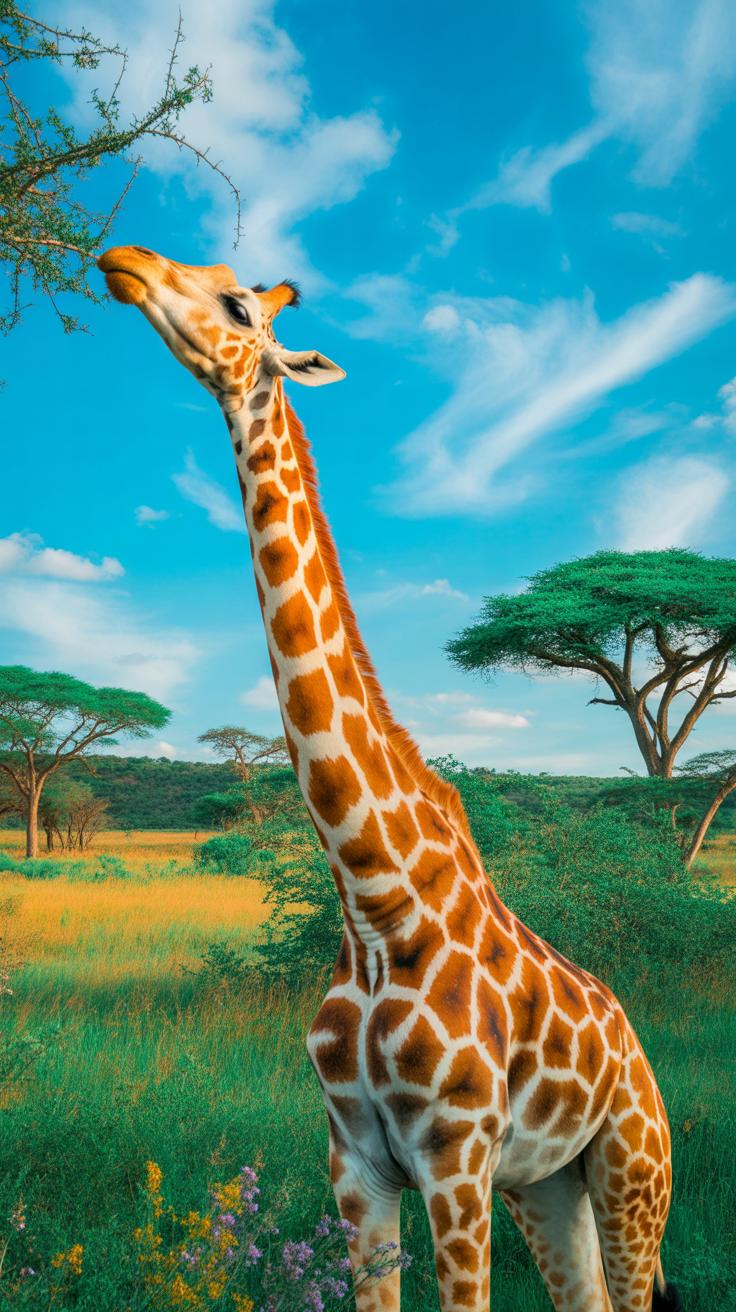
The Foraging Advantage Theory: Reaching Food That Other Animals Simply Cannot
Giraffes dominate the high canopy by accessing foliage beyond the reach of competitors. This niche allows them to feed on nutrient dense acacia leaves during dry seasons. Most herbivores graze at ground level or mid-height bushes. Giraffes eliminate this resource competition by utilizing their stature. Their long necks provide a clear vertical advantage. This specific survival strategy ensures a steady food supply when low level vegetation dies.
Height also expands the field of view for spotting predators across the savanna. Evolution favored individuals that could feed efficiently without moving constantly. Long necks reduce the energy spent walking between sparse trees. Giraffes use their prehensile tongues and height to strip branches quickly. This efficiency supports their massive body weight. The foraging theory remains a primary explanation for this extreme biological development in tallest animals neck adaptations.
Sexual Selection And Neck Fighting: How Male Giraffes Use Their Necks To Compete
Male giraffes use their necks as heavy weapons during combat. This behavior is called necking. They swing their heads to deliver powerful blows to an opponent’s ribs or legs. Success in these fights determines social hierarchy and mating rights. Larger and thicker necks provide more momentum and force during impact. Over generations, females selected males with the strongest necks. This process drove the radical elongation of the species.

Physical dominance translates directly to reproductive success in giraffe populations. Heavy skulls act like clubs at the end of the long neck lever. This mechanical advantage allows males to defend territory and displace rivals. Research shows that neck mass continues to increase in males even after they finish growing in height. This data supports the theory that sexual competition played a critical role in shaping the modern giraffe anatomy.
Giraffe Anatomy A Deep Dive Into The Physical Structure Of The Worlds Tallest Animal
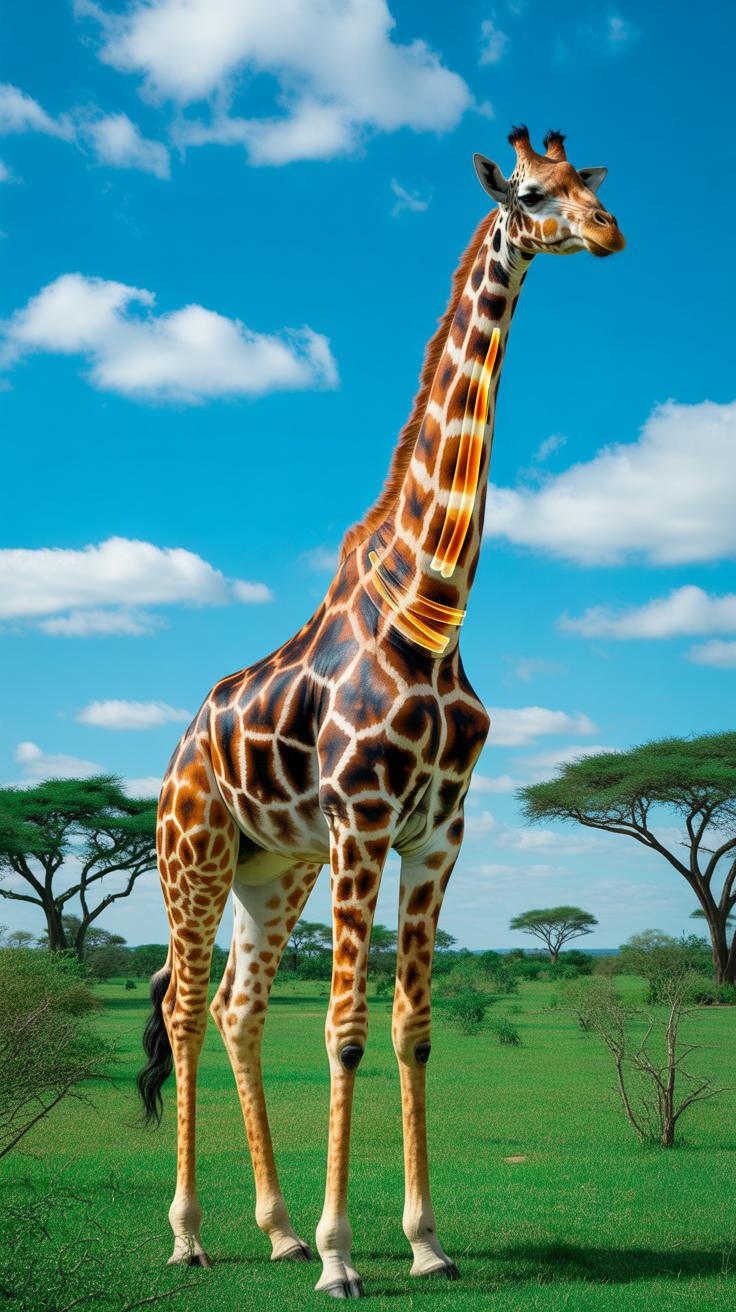
The Seven Cervical Vertebrae: Why Giraffes Share The Same Neck Bone Count As Humans
Giraffes possess exactly seven cervical vertebrae. This count matches humans and most other mammals. Evolution did not add more bones to create length. Instead, each individual bone grew significantly longer. A single neck bone can measure over ten inches in length. This setup provides a rigid but stable frame. It supports the heavy weight of the head while maintaining essential vertical reach.
The joints between these bones use a ball and socket design. This mechanical structure allows for a wide range of motion. It enables the animal to tilt its head back or reach down to water. Specialized ligaments keep the structure tense without using muscle energy. Large attachment points on the spine anchor the heavy muscles. This biological engineering ensures the neck remains functional despite its extreme size.
How The Giraffes Cardiovascular System Powers Blood Flow Up Its Towering Neck
Gravity fights blood flow in a six foot neck. To solve this, the giraffe has a massive heart. It weighs up to twenty five pounds. This organ generates double the blood pressure of a human. High pressure is necessary to push oxygenated blood upward against gravity. The heart walls are thick to handle this intense internal strain without failing or bursting.

Complex valves in the neck veins prevent blood from rushing back down. When the giraffe lowers its head to drink, these valves close. A specialized network of capillaries called the rete mirabile absorbs the pressure surge. This prevents brain damage during sudden head movements. These technical adaptations ensure the brain receives constant blood flow. The system manages extreme pressure changes with mechanical precision and total reliability.
Diagram Of A Giraffe What The Internal Architecture Reveals About Neck Evolution
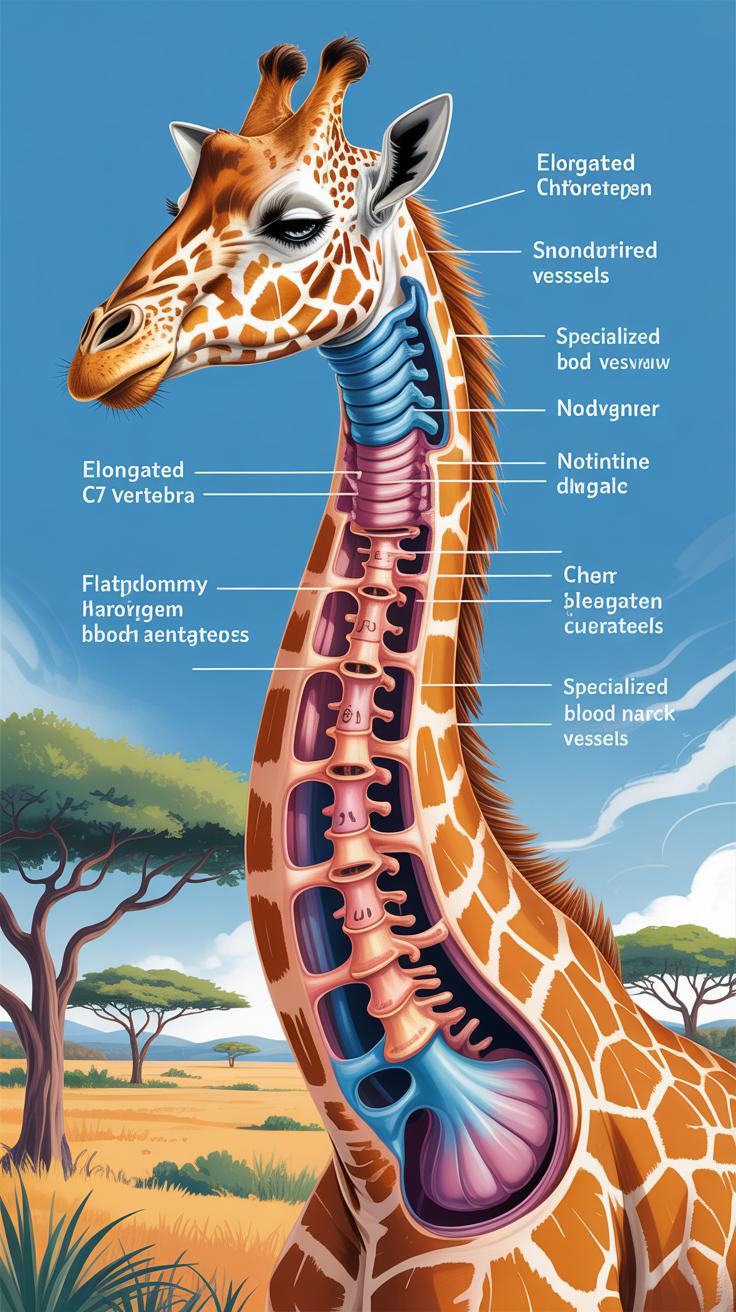
Mapping The Muscles, Ligaments, And Bones That Support A Neck Up To Six Feet Long
The giraffe neck contains seven cervical vertebrae. This matches the count found in most mammals. Evolution elongated these specific bones rather than adding new ones. Each vertebra can measure over ten inches in length. These large bones provide the essential framework for the neck. Deep ball and socket joints connect the vertebrae. These joints allow for a wide range of motion during feeding and combat.
Strong muscles wrap around this skeletal core. The splenius and complexus muscles provide the power needed to lift the head. These muscles must move a skull that weighs nearly thirty pounds. Thick connective tissues anchor these muscles to the thoracic spine. This setup creates a massive lever system. This mechanical advantage allows the giraffe to swing its head with lethal force during intraspecific fights.
The Nuchal Ligament: The Elastic Structural Cable That Makes The Long Neck Possible
The nuchal ligament acts as a biological shock absorber. This yellow elastic band runs from the back of the skull to the thoracic vertebrae. It stores mechanical energy like a heavy duty spring. This tension supports the weight of the neck without constant muscle contraction. Constant muscular effort would burn too many calories. The ligament allows the giraffe to keep its head high while resting.

This structure also assists in movement. When the giraffe lowers its head to drink, the ligament stretches. This stretching stores potential energy. When the animal raises its head, the ligament snaps back. This recoil does most of the heavy lifting. This efficiency is a critical adaptation for survival. It reduces the metabolic cost of maintaining such a massive appendage in a harsh environment.
Giraffe Species Comparison How Neck Length And Structure Vary Across Populations
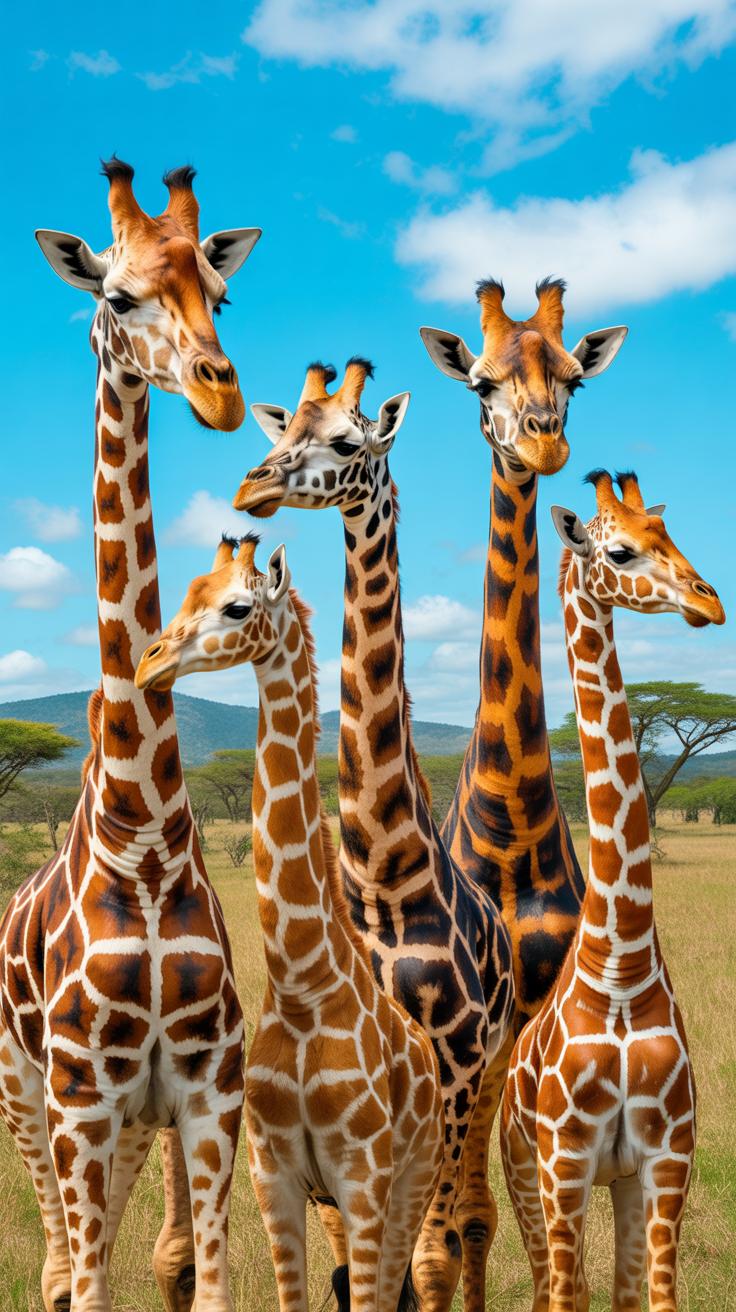
Northern Vs. Southern Giraffe: Key Differences In Size, Habitat, And Neck Proportions
Northern giraffes often inhabit more arid environments compared to their southern counterparts. These dry habitats force animals to reach higher into acacia trees for moisture. As a result, certain northern populations exhibit leaner builds and highly efficient neck musculature. These physical traits help them dissipate heat more effectively. A taller frame allows for better airflow over the skin. Constant heat stress drives these specific structural evolutionary choices.
Southern giraffes occupy more diverse woodlands and savannas. Their necks and bodies tend to be thicker and more robust than northern varieties. This extra mass supports larger fat reserves and stronger ligament attachments. These physical differences allow them to handle cooler seasonal temperatures. While both species share the same seven cervical vertebrae, the bone density and muscle thickets vary. Environmental pressure dictates the literal weight of their vertical reach.
How Geographic Isolation Has Shaped Distinct Neck Traits Across Giraffe Populations
Rivers and mountain ranges act as hard barriers for giraffe movement. When a population cannot mix, it develops unique traits. Isolated groups in West Africa show different height averages than those in East Africa. These differences arise from the specific vegetation available in each zone. Genetic drift fixes these neck proportions over thousands of years. The isolated gene pools prioritize traits that ensure survival in those specific niches.

Foraging competition also drives neck variation between distinct populations. In areas with high animal density, giraffes require longer reaches to access untouched food sources. This creates a functional feedback loop in the population. Shorter individuals cannot compete and fail to pass on their genes. Therefore, isolated groups in high-competition zones evolve more extreme neck lengths. Geography dictates the available food and the physical structure needed to consume it.
Giraffe Species And Subspecies Chart Classifying The Tallest Land Animal By Lineage
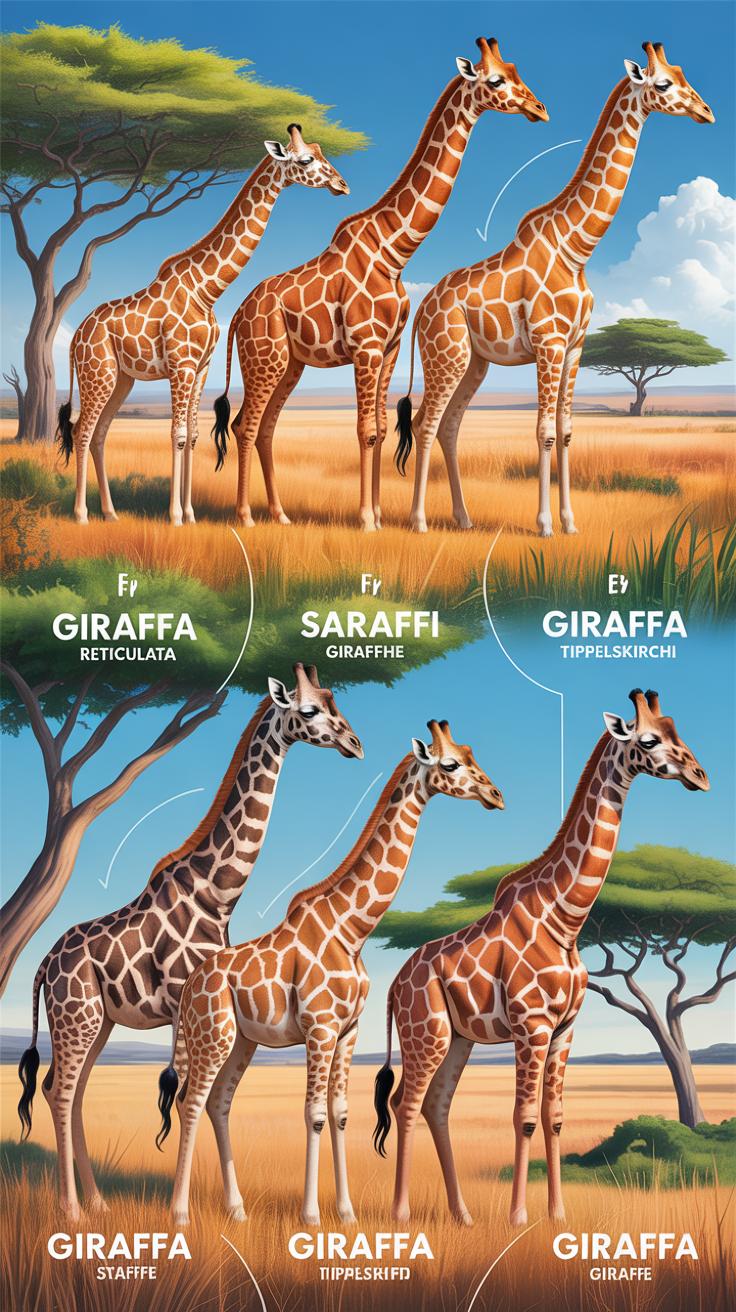
The Four Recognized Giraffe Species And Their Distinct Ecological Ranges In Africa
Modern genetic analysis identifies four distinct giraffe species rather than a single group. These animals occupy separate geographic regions across the African continent. Each species has adapted its neck and feeding habits to local vegetation. Isolated populations rarely interbreed in the wild today. This separation ensures that each lineage maintains unique genetic traits and physical characteristics suited for their specific environment.
- Masai Giraffe: Native to southern Kenya and Tanzania. It is the largest species and features jagged, leaf-shaped spots. Their height allows them to reach the highest foliage in the East African savannah.
- Northern Giraffe: Found in isolated pockets across North and Central Africa. This group includes the West African, Kordofan, and Nubian subspecies. They survive in diverse habitats ranging from dry scrublands to more humid woodlands.
- Reticulated Giraffe: Located primarily in northern Kenya, Somalia, and southern Ethiopia. They possess a striking coat pattern with large polygonal spots. This species remains a distinct lineage with high visibility in open, arid landscapes.
- Southern Giraffe: Inhabits South Africa, Namibia, and Botswana. This group includes the Angolan and South African subspecies. They are the most populous group and thrive across a wide range of protected parks and private reserves.
Conservationists use these four categories to direct resources where they are most needed. Protecting one species does not help another if they live thousands of miles apart. Accurate classification ensures that narrow gene pools stay viable. Managers now track population health based on these specific lineages. Understanding these boundaries is critical for preventing the silent extinction of the tallest animals.
Nature stretched the reach of the gentle giraffe so it might touch the sun-drenched canopy and find a feast where others saw only the sky. It reminds us that our greatest transformations are simply the heart’s way of reaching for what it needs most.
How Taxonomic Reclassification Changed Our Understanding Of Giraffe Diversity
Scientists previously classified all giraffes as one species with several subspecies. They based this on physical coat patterns and geographic proximity. New DNA sequencing proved this model was wrong. Genetic data shows that the four main lineages have not exchanged genes for over a million years. This discovery forced a total shift in how biologists approach giraffe evolution and neck adaptation.

The reclassification reveals that giraffe diversity is much lower than once thought. Treating them as a single group hid the rapid decline of individual species. Some groups are now listed as critically endangered because their specific numbers are very low. This tactical shift in taxonomy allows for more precise legal protections. It also helps researchers study how different environments drove the evolution of the giraffe neck.
Giraffe Anatomy Infographic Visualizing The Key Systems That Sustain A Towering Neck
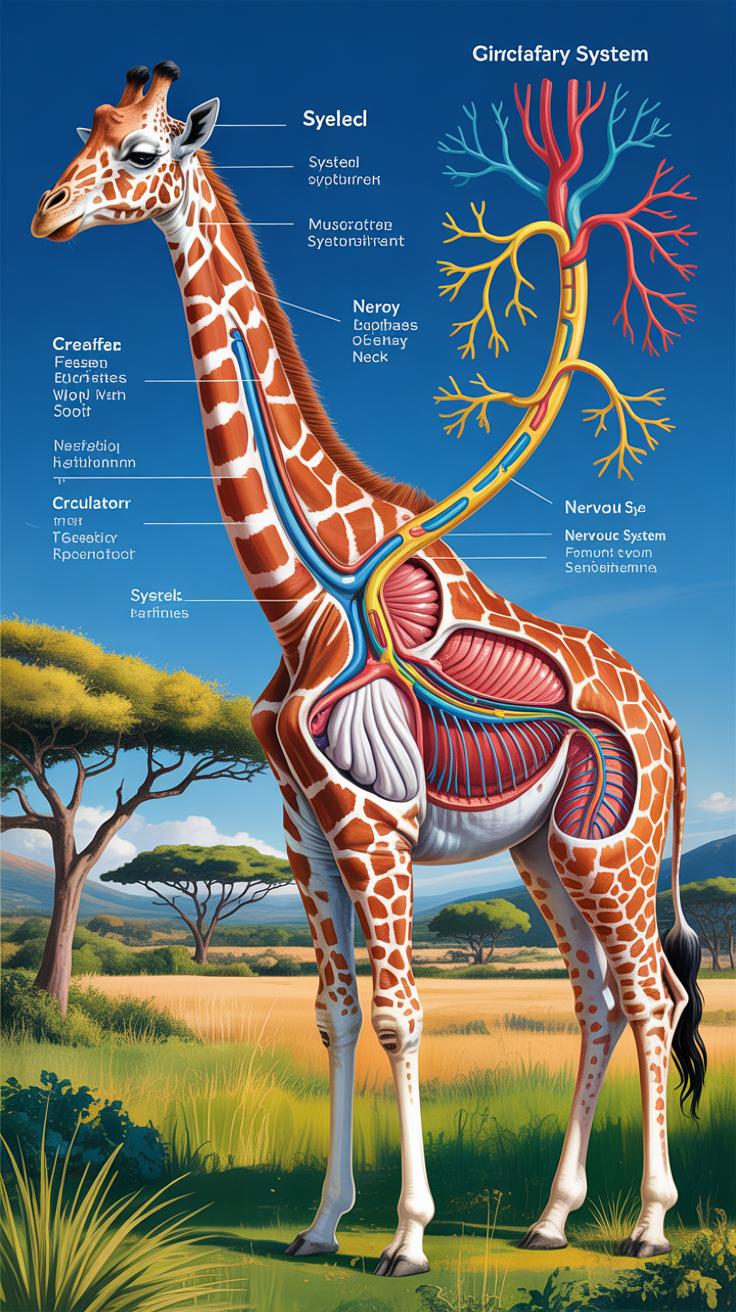
The Nervous System Challenge: How The Recurrent Laryngeal Nerve Travels The Full Neck Length
The giraffe nervous system faces an efficiency problem due to its anatomy. The recurrent laryngeal nerve controls the voice box and larynx. In most mammals this nerve follows a short path. In giraffes it must travel from the brain down the entire neck. It loops around the aorta near the heart. Then it climbs all the way back up to the throat.
This specific nerve path reaches lengths of nearly fifteen feet in adult males. Evolution did not create a direct route for this signal. The long distance creates a slight delay in nerve impulses. However the nerve fibers have a thick diameter to help speed up the signal. This design is a clear example of evolutionary baggage. Nature adapts existing blueprints rather than starting over from scratch.
Drinking Posture And Biomechanics: The Engineering Problem A Long Neck Creates At Ground Level
Drinking water is a high risk activity for the giraffe. Its long neck is too short to reach the ground while standing normally. The animal must splay its front legs wide or bend its knees deeply. This posture is awkward and highly unstable. It makes the giraffe vulnerable to predators like lions. The biomechanics of this position require significant muscular effort to maintain balance.

Gravity poses another threat when the head is low. Blood rushes toward the brain with immense force and pressure. A complex network of blood vessels called the rete mirabile prevents brain damage. One way valves in the neck veins also stop the backflow of blood. When the giraffe lifts its head quickly these systems must adjust instantly. This prevents the animal from fainting or losing its vision.
Animal Adaptations Matching Worksheet Concepts Comparing Neck Adaptations Across Tall Species
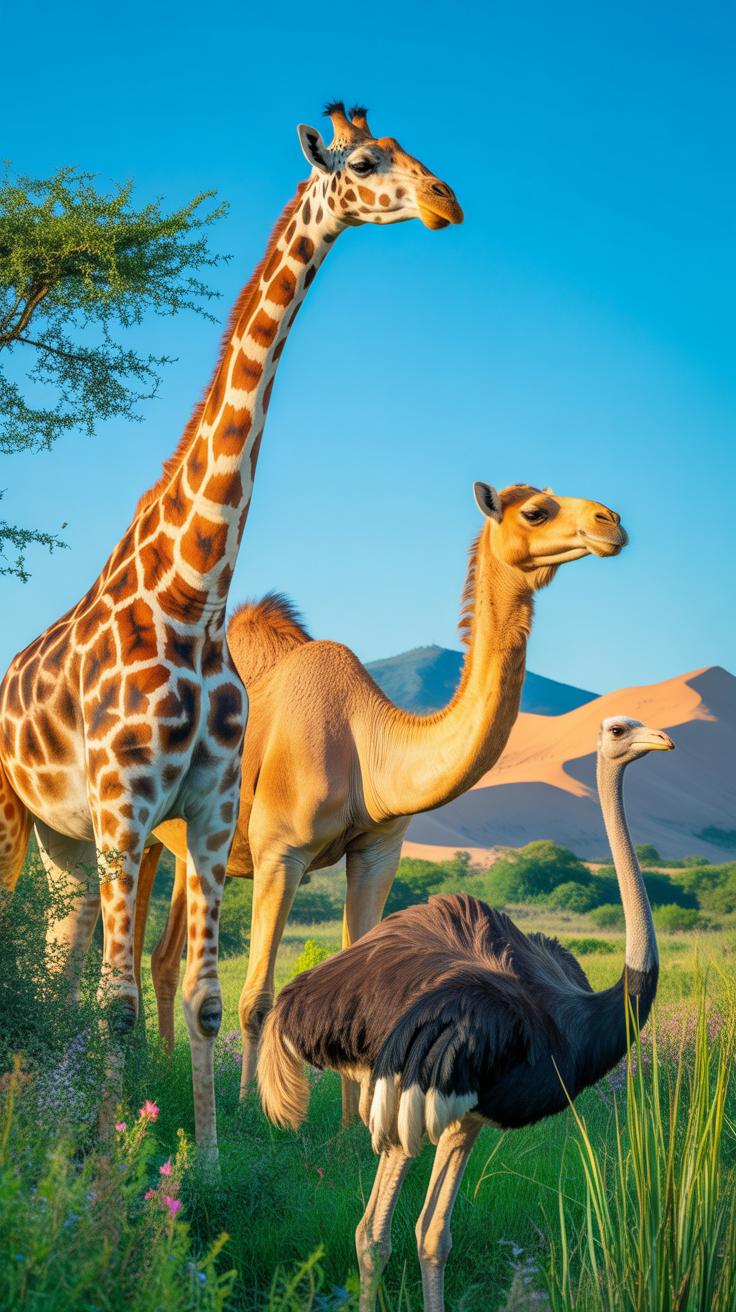
Beyond The Giraffe: How Ostriches, Camels, And Llamas Also Evolved Elongated Necks
The ostrich uses its long neck to scan for predators over tall grass. It possesses nineteen cervical vertebrae which provide extreme flexibility. This skeletal structure allows the bird to reach food on the ground while keeping its head high to watch for danger. Its neck also functions as a radiator to dump body heat. This dual purpose ensures survival in harsh and open environments where shade is scarce.
Camels and llamas evolved long necks to reach high vegetation and browse efficiently. They utilize seven cervical vertebrae like most mammals but with elongated distal ends. This length helps them navigate uneven terrain by shifting their center of gravity. Long necks also facilitate better thermoregulation in desert climates. These animals manage water loss while maintaining a clear view of their surroundings. Their neck anatomy serves both nutrition and safety.
Convergent Evolution: Why Unrelated Animals Independently Developed Similar Neck Structures
Convergent evolution occurs when different species face the same environmental pressures. Tall animals separately developed long necks to solve the problem of food competition. Both birds and mammals adapted their skeletal frames to access high foliage or detect threats early. This proves that biological demand for height dictates form across diverse linaeges. Nature repeats successful designs like elongated necks across unrelated groups to ensure maximum resource extraction.

Strong muscles and specialized circulatory systems support these elongated structures. Each species must prevent blood pressure spikes when lowering their heads to drink. This requires thick walled arteries and valves regardless of the animal species. Unrelated creatures show similar mechanical solutions because physics and gravity apply to everyone equally. Evolution favors these traits because height increases the chance of survival and reproduction. Efficient browsing and predator detection remain the primary drivers of this trait.
Animal Adaptations Worksheet For Kids Teaching Children Why Tallest Animals Evolved Long Necks
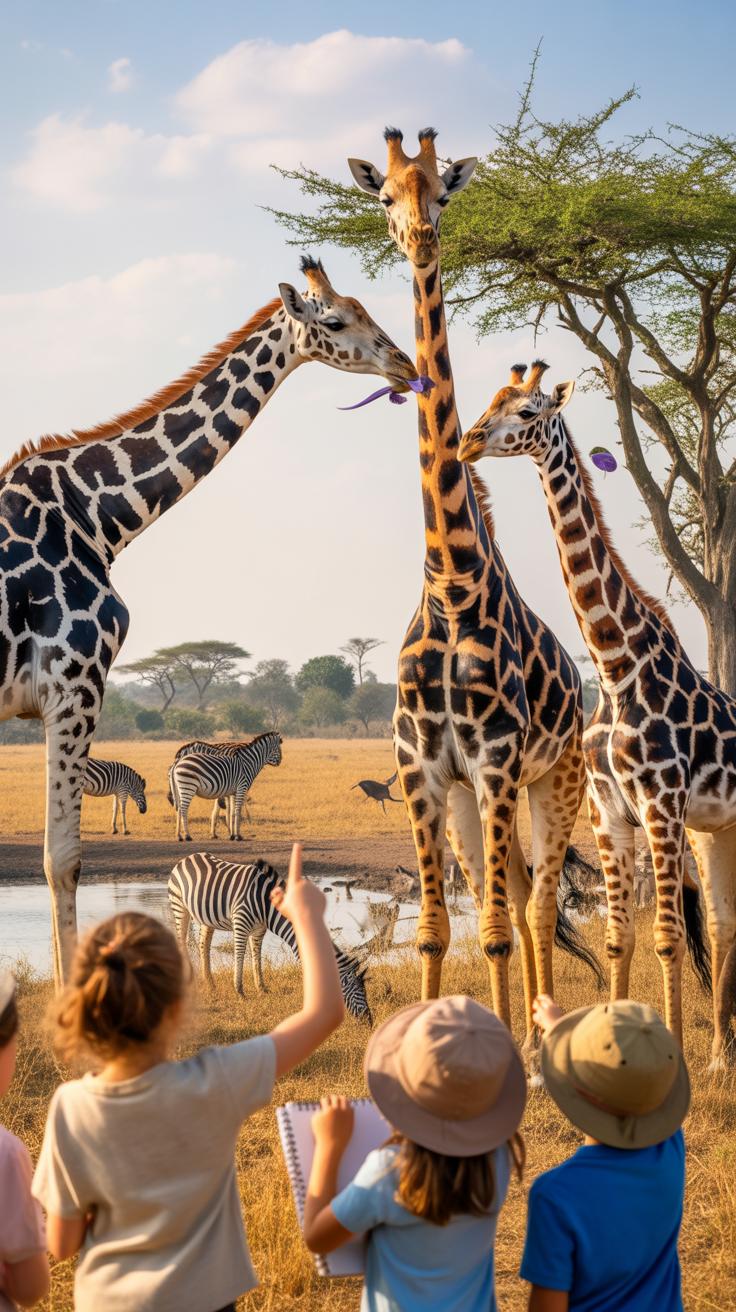
Simple Ways To Explain Neck Evolution And Natural Selection To Young Learners
Start with the feeding advantage. Explain that long necks allow animals to reach food others cannot touch. Use the example of the giraffe. Long ago, some giraffes had shorter necks. They struggled to find enough leaves on low branches. Giraffes with slightly longer necks ate more. They stayed healthy and lived longer. These survivors had babies with long necks too.
Describe how nature selects the best traits over many years. This process is called natural selection. Frame it as a survival race. Only the animals that fit their environment succeed. A long neck is a tool for finding food and spotting danger. It is not a choice made by the animal. It is a slow change that happens over many generations.
Fun Classroom Activities And Key Facts About Tall Animal Adaptations For Kids
Use physical activities to show how height works in nature. Ask students to reach for high objects without jumping. This demonstrates why a long neck is a biological tool. Students can compare the giraffe to other animals like the ostrich or the okapi. These comparisons help children see different ways animals solve the problem of finding food in high places.
- The Reach Test: Place paper leaves at different heights on a wall. Have students try to reach them using only their arms. This shows that the tallest animals get the best food. It proves that height is a major survival advantage in the wild.
- The Heart Pump: Explain that a giraffe has a very strong heart. It must push blood all the way up a long neck to the brain. Students can jump in place to feel their own hearts beating faster. This shows how much work the body does.
- Bone Counting: Teach kids that giraffes have Seven neck bones. This is the same number as humans. Their bones are just much larger and longer. This fact surprises kids and makes the concept of skeletal structure easy to understand.
- Lookout Game: Have one student stand on a chair to act as the giraffe. Other students stay low to the ground. The giraffe can see predators coming from far away. This activity explains how tall animals use their height to stay safe from danger.
- Neck Flexibility: Show pictures of giraffes drinkng water. They must spread their front legs wide to reach the ground. This demonstrates that a long neck has challenges too. It helps kids understand that every adaptation requires a balance in how the animal moves.
Focus on the mechanics of the body to keep the lesson practical. Discuss how the skin on a giraffe leg acts like a compression sock. This prevents blood from pooling at the bottom. These specific facts turn a simple biology lesson into a study of engineering. Kids learn that every part of the animal has a specific purpose for staying alive.
Frequently Asked Questions

Why do some animals have such long necks compared to others?
Genetic evolution is driven by survival needs, primarily the search for food and mating advantages. For instance, giraffes developed their height to bypass competition and reach nutrient-rich foliage in high tree canopies. These tallest animals neck adaptations also play a crucial role in sexual selection, as longer, stronger necks often signify dominance during combat, ensuring that these distinctive traits are passed down through successive generations within the African savannah.
How can I identify different neck adaptations in wildlife while on a safari?
When observing wildlife, look closely at how the animal moves and feeds to understand its unique physiology. You can identify the tallest animals neck adaptations by watching for specialized valve systems in their veins, which prevent blood from rushing to the brain when they lean down. Bring a high-quality pair of binoculars to spot these subtle movements and notice how vertebrae structure differs between browsers that reach upward and grazers that remain low.
Are there affordable ways to learn about these biological wonders without traveling?
You don’t need an expensive safari to study these creatures. Many world-class museums and local zoos offer budget-friendly or even free educational webinars and digital exhibits. Exploring online biology archives and documentaries is a great way to see the tallest animals neck adaptations up close. Additionally, many public libraries provide access to high-definition nature series that detail the skeletal structures and evolutionary history of these magnificent species at no cost to you.