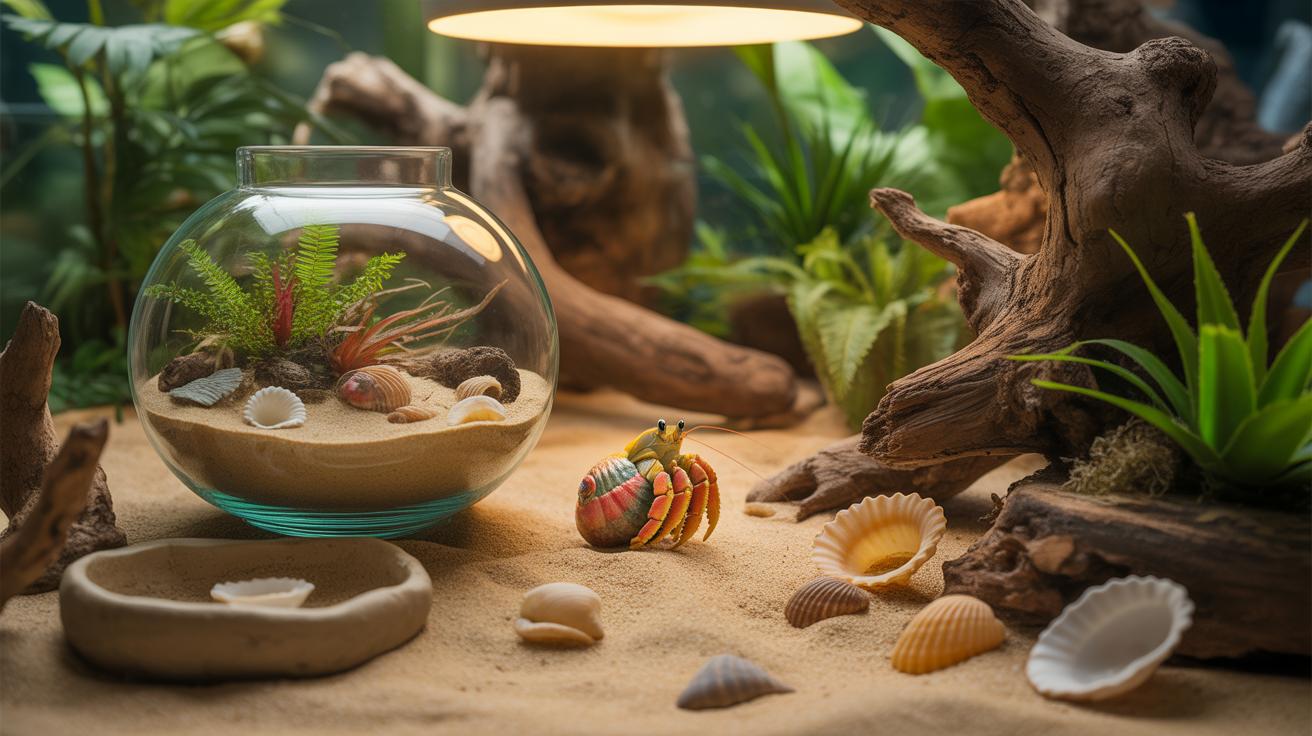
Choosing The Right Hermit Crab Enclosure For Beginners
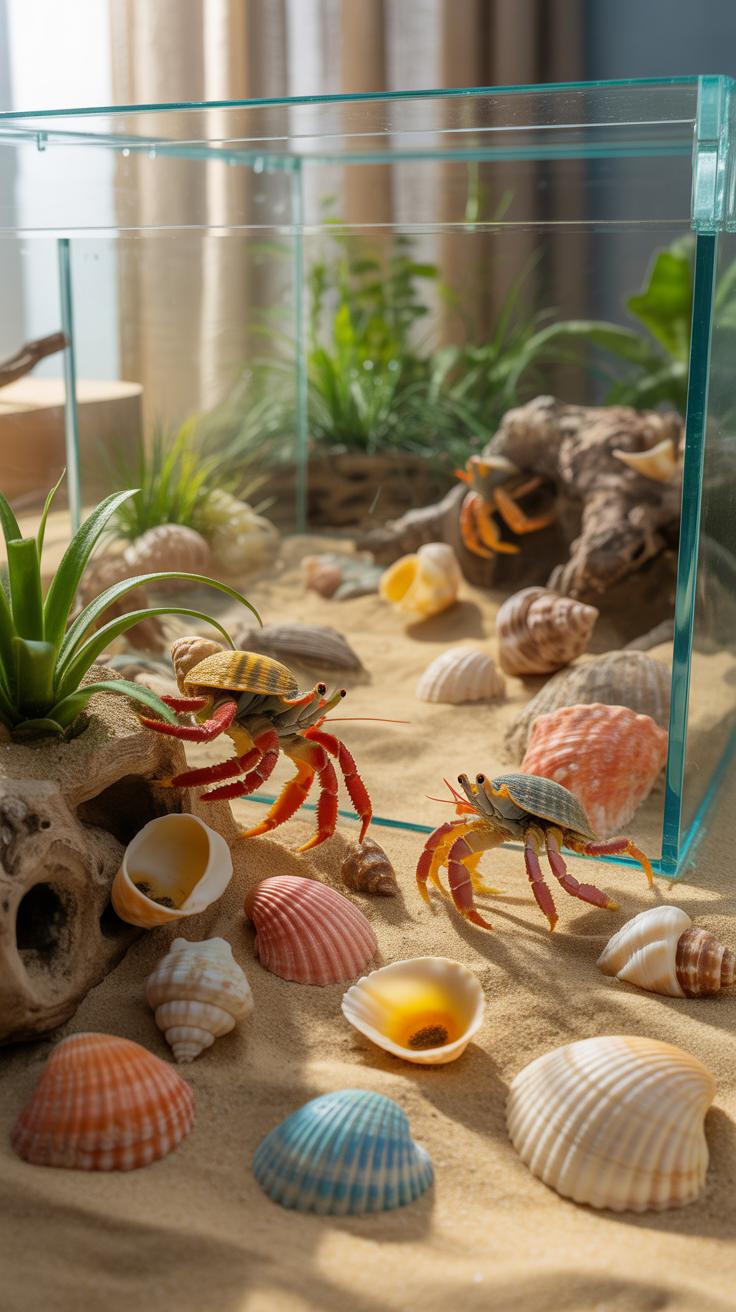
Glass Vs. Plastic Tanks: What Works Best As A Hermit Crab Enclosure
Glass aquariums outperform plastic bins and wire cages for long term care. These crabs require high humidity levels between seventy and eighty percent to breathe through modified gills. Glass walls retain moisture and heat while resisting damage from heating pads. Plastic enclosures often warp under heat or lack the structural integrity to hold heavy substrate. Secure glass lids prevent escapes and keep the air moist.
Wire mesh cages cause hermit crabs to die slowly from suffocation. These animals need a tropical microclimate that only solid walls can provide. Plastic critter carriers work for short trips but fail as permanent homes. You must choose a glass tank with a sealed top to maintain environmental stability. This setup protects the crabs from cold drafts and prevents the substrate from drying out over time.
Minimum Tank Size Requirements To Keep Hermit Crabs Healthy
A ten gallon aquarium is the absolute minimum size for two small hermit crabs. However, twenty gallon long tanks provide better floor space for movement and molting. These crabs are social and need room for deep substrate and multiple water pools. Cramped conditions lead to stress and aggressive behavior over resources. Larger tanks allow for better temperature gradients so crabs can regulate their own body heat.
Standard height tanks often fail because they lack room for deep sand. Aim for a tank that allows at least six inches of substrate while still leaving climbing room above. Small plastic kits sold in malls are lethal traps with insufficient space. Professional setups prioritize horizontal surface area over vertical height. Always plan for the adult size of the crab to avoid frequent and costly tank upgrades later.

Essential Hermit Crab Tank Ideas To Get Your Setup Started
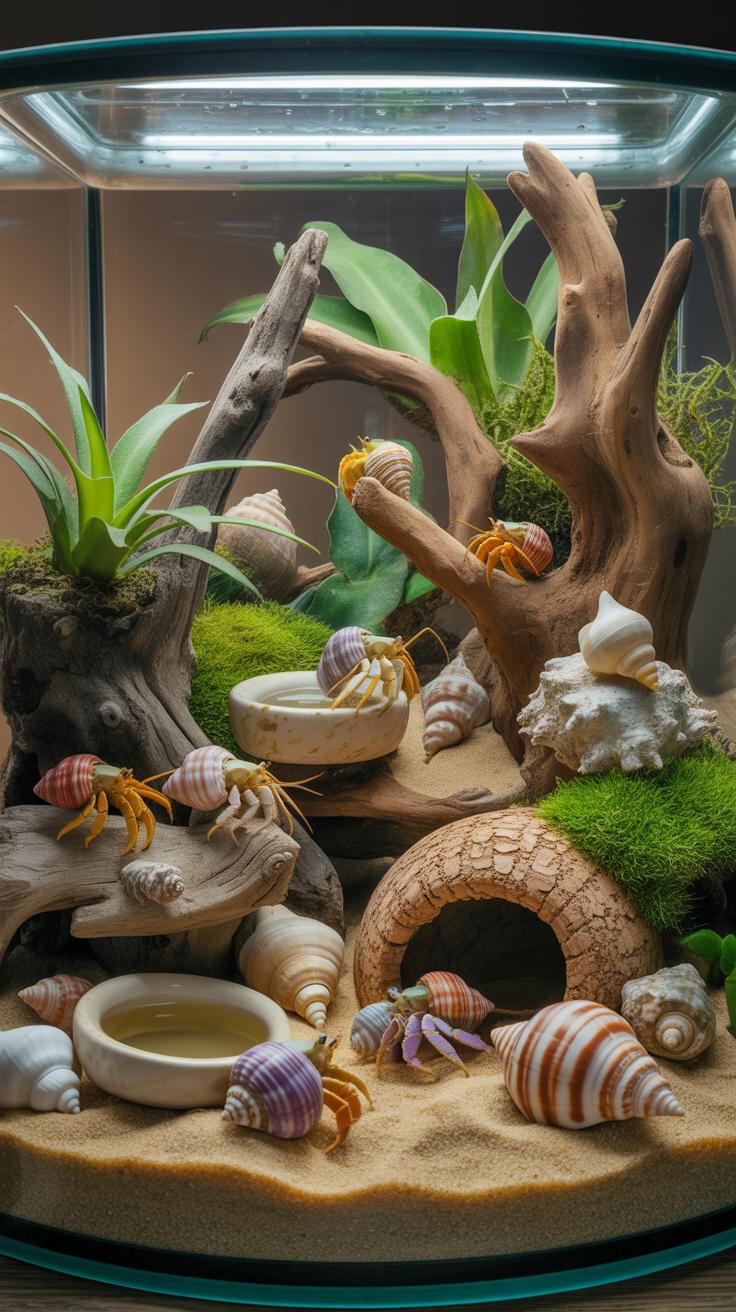
Guidance On How To Arrange The Interior Of Your Hermit Crab Tank For Comfort And Activity
Internal tank layout must prioritize burrowing and climbing. Hermit crabs require a substrate depth of at least six inches or three times the height of your largest crab. Use a mix of five parts play sand to one part coconut fiber. This ratio mimics natural coastal soil. It allows crabs to dig stable molting tunnels. Pack the substrate firmly to prevent tunnel collapse and ensure safety.
Crabs need vertical space to exercise and regulate their body temperature. Place choya wood or cork bark against the glass to create climbing paths. Position these items away from the water bowls to prevent flooding. Add dried leaf litter like sea grape or almond leaves on the surface. This provides natural foraging opportunities and mimics the tropical forest floor. Proper placement reduces stress and encourages healthy movement.
Lid And Ventilation Options That Keep Humidity Stable In The Tank
Humidity control starts with the tank lid. Screen lids are standard but fail to hold moisture alone. You must seal the mesh to maintain an eighty percent humidity level. Use glass or acrylic sheets to cover the top completely. This prevents evaporation and keeps the air saturated. Moist air is vital for hermit crab health because they breathe through modified gills.

Ventilation must be minimal but present. Leave a small gap of less than half an inch at the edge of the lid. This allows enough oxygen exchange without drying out the substrate. Avoid using mesh lids with wet towels as they grow mold quickly. Solid lids like polycarbonate are better for heat retention. A sealed environment ensures your heating equipment works efficiently and your crabs stay hydrated.
Understanding The Ideal Hermit Crab Habitat Ideas For A Starter Setup
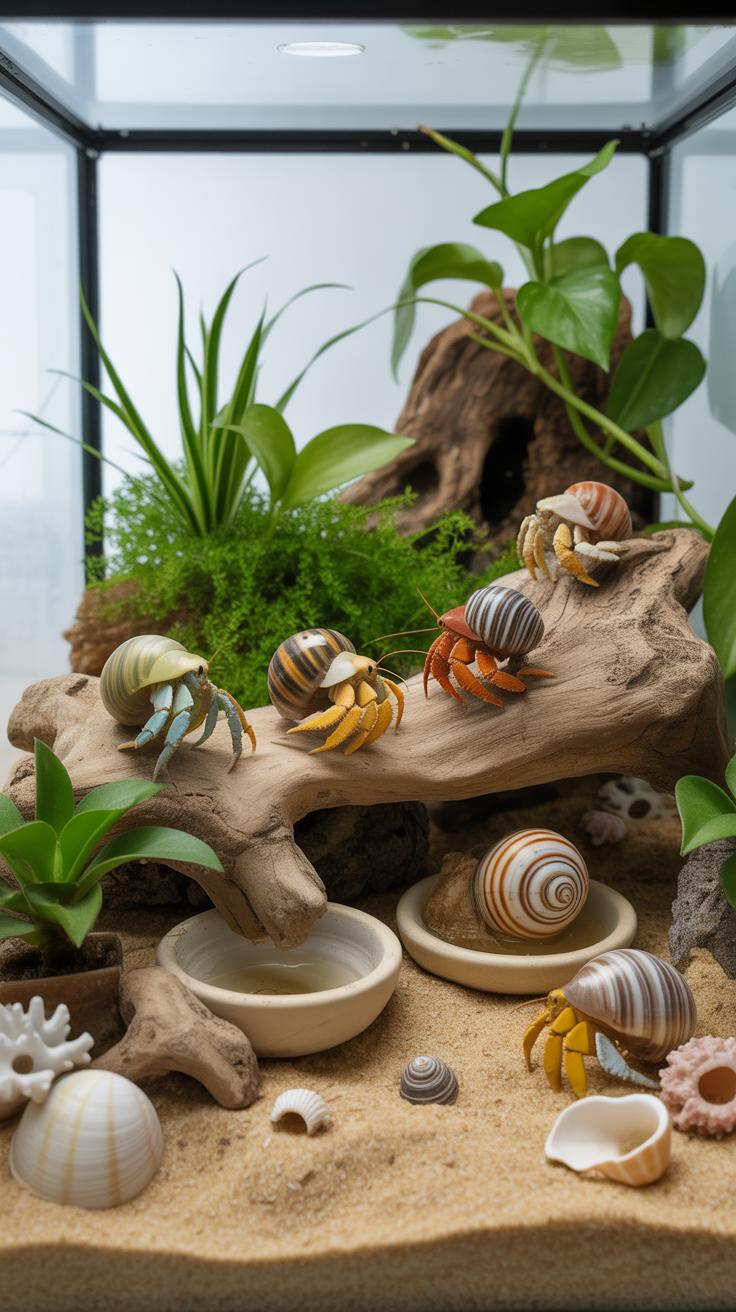
Temperature And Humidity Ranges That Mimic A Natural Hermit Crab Habitat
Hermit crabs are tropical crustaceans that require specific climate controls to survive. You must provide a consistent temperature between 75 and 85 degrees Fahrenheit. Low temperatures slow their metabolism and eventually cause death. High temperatures can cook them within their shells. Use an under tank heater mounted on the back or side of the glass. Never place heaters under the substrate because it dries out the sand.
Humidity is the most critical survival factor for these animals. They possess modified gills that require moisture to breathe oxygen from the air. You must maintain a relative humidity level of at least 70 to 80 percent. If the air stays too dry, the crabs will suffocate slowly over time. Use a digital hygrometer to monitor these levels. Seal the enclosure lid with plastic wrap to trap the moisture.
Building a sanctuary of sand and sea for a tiny traveler is like crafting a small piece of home for a wandering heart. Every shell and sponge is a promise that even the smallest creatures deserve a place where they belong.
Why Hermit Crabs Need Both Land And Water Areas In Their Habitat
A functional habitat requires two distinct water sources and a large land mass. Crabs need enough deep substrate to bury themselves completely for molting. This land area provides safety and security during their most vulnerable life stages. Without deep soil, the crabs cannot shed their exoskeletons properly. This failure leads to limb loss or total organ failure. Use a mixture of play sand and coconut fiber.
You must provide two separate water pools for hydration and shell regulation. One pool must contain fresh water and the other must contain saltwater mixed with marine grade salt. Crabs enter these pools to fill their shells with water. This fluid keeps their gills wet and balances their internal chemistry. Each pool must be deep enough for the crab to submerge fully. Provide a ramp for easy exit.
Substrate Selection The Base Of Every Great Hermit Crab Habitat Ideas Tanks DIY Build
The Best Substrate Mix Of Sand And Coconut Fiber For Burrowing Hermit Crabs
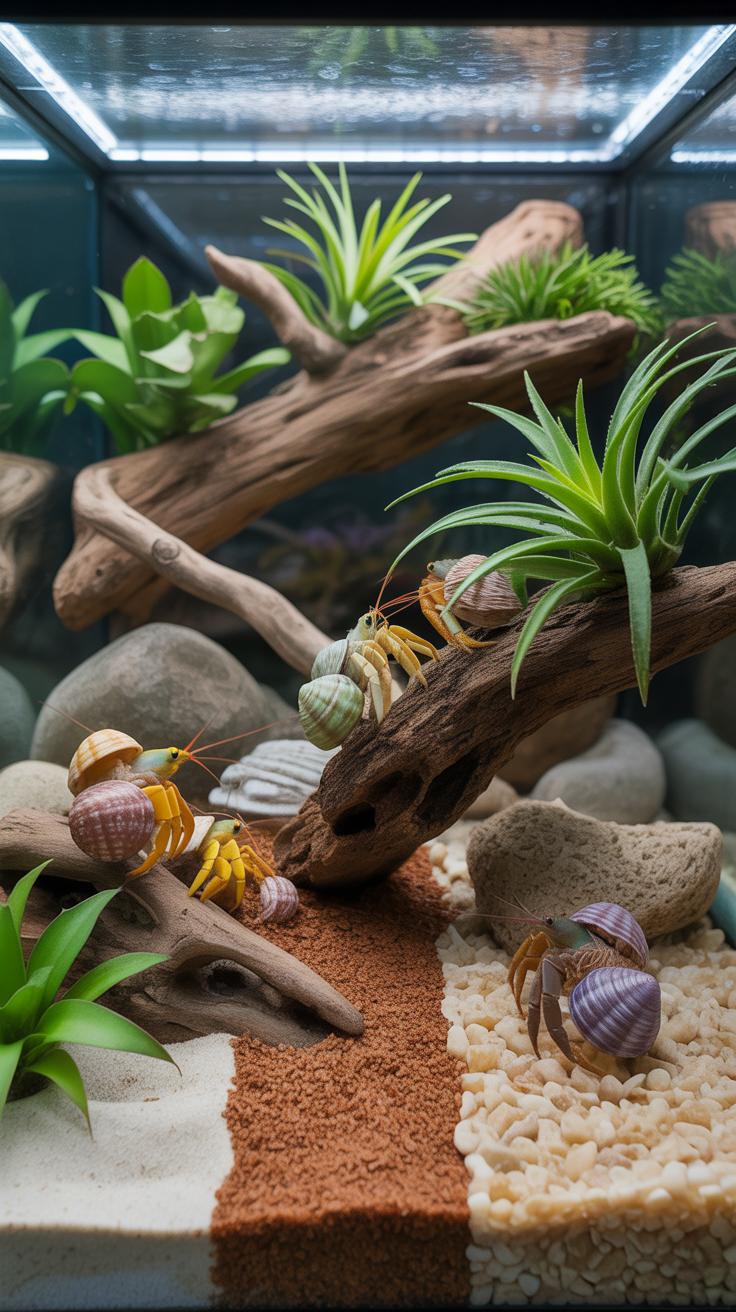
The foundation of a successful crabitat relies on a specific ratio of play sand and coconut fiber. Professional keepers use a five-to-one ratio of sand to fiber. This combination mimics the natural soil density found in tropical coastal regions. Clean play sand provides the necessary structural integrity for tunnels. Coconut fiber retains the moisture required to maintain high humidity levels inside the tank environment.
Dry substrate causes tunnel collapse and endangers the crab. You must mix the sand and fiber with saltwater until it reaches sandcastle consistency. This texture allows the crab to excavate stable burrows for resting and molting. Avoid using calcium sand or gravel as they can harden and trap the animal. Stick to the five-to-one mix to ensure the substrate remains pliable and safe for long-term use.
How Deep The Substrate Should Be To Support Safe Molting
Substrate depth is a critical safety requirement for the molting process. Hermit crabs bury themselves completely to shed their exoskeletons in private. The depth must be at least six inches or three times the height of your largest crab. Insufficient depth leads to surface molting which is often fatal. Deep substrate provides the darkness and pressure the crab needs to trigger its natural growth hormones effectively.

A thick base also acts as a thermal buffer for the habitat. It stabilizes temperatures and protects subterranean crabs from sudden fluctuations in the room. You must never disturb the substrate if a crab is buried. Shifting the sand can collapse tunnels and suffocate the molting crab. Prioritize depth over aesthetics to ensure your crabs survive their regular growth cycles. Build a deep foundation to support the entire lifecycle.
Heating And Lighting Essentials For Your Hermit Crab Enclosure Ideas
Using Under Tank Heaters Vs. Overhead Lamps To Warm A Hermit Crab Enclosure
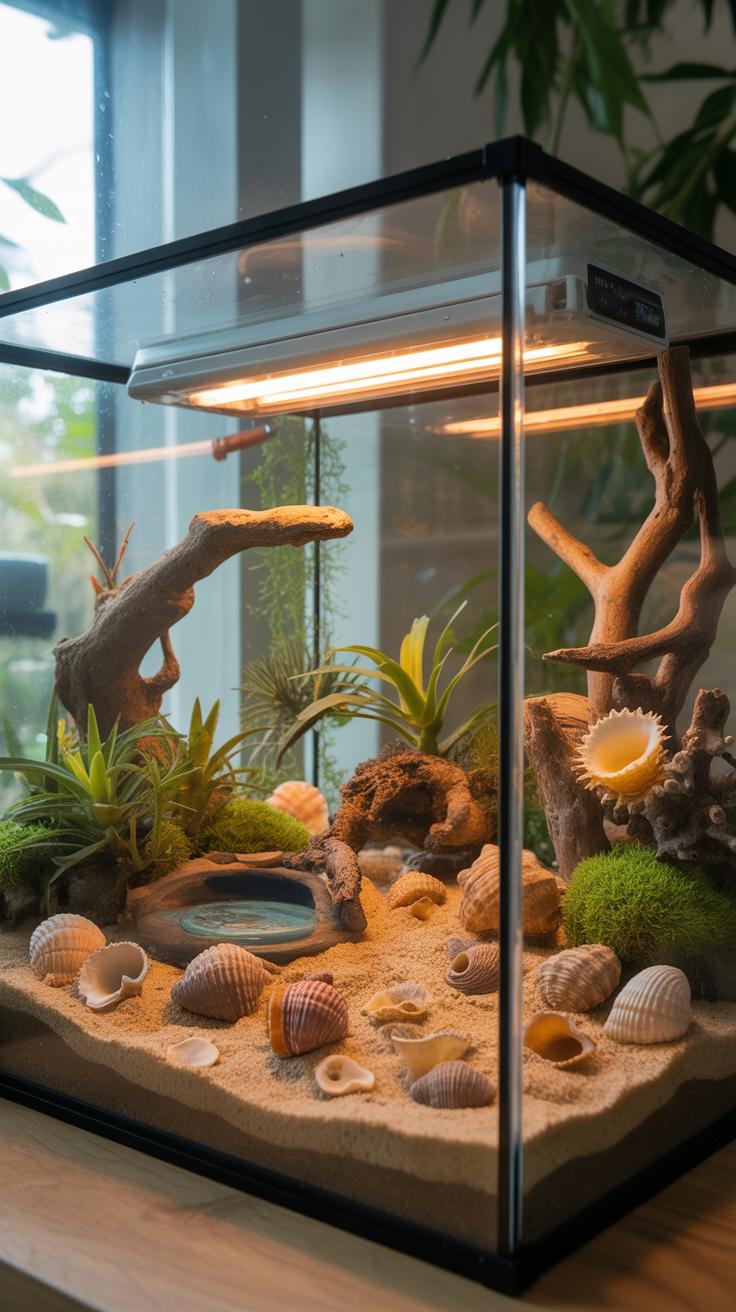
Hermit crabs require a consistent temperature between 75 and 85 degrees Fahrenheit. Under-tank heaters provide the best primary heat source for these tropical scavengers. Mount the heater on the back or side of the glass above the substrate line. Placing it underneath the tank dries out the deep sand and can burn buried crabs. This side-mounted method warms the air effectively.
Overhead lamps often cause humidity levels to drop rapidly in the enclosure. Use them only if your room stays exceptionally cold and the side heater cannot maintain the target temperature. Avoid white light bulbs at night because they disrupt the natural behavior of the crabs. Choose ceramic heat emitters instead if you need extra warmth. Monitor the environment with a reliable digital thermometer for accuracy.
Why UVB Lighting Is Beneficial And How To Set A Day And Night Light Cycle
UVB lighting supports the natural metabolic processes and shell growth of your crabs. While they are nocturnal, a cycle of light and dark regulates their circadian rhythm. Install a low-output UVB bulb to mimic natural sunlight during the day. This setup helps them process nutrients and maintain health. It also allows you to see the crabs clearly during their peak morning activity.

Establish a strict 12-hour light and 12-hour dark cycle for the enclosure. Use an automatic timer to ensure the lights turn on and off at the same time daily. Consistency prevents stress and encourages normal molting patterns. Total darkness at night is essential for their safety and comfort. Do not use colored night bulbs as they interfere with the vision and sleep of the crabs.
Water Dishes And Humidity Management In A DIY Hermit Crab Habitat
Setting Up Freshwater And Saltwater Dishes In Your DIY Hermit Crab Habitat
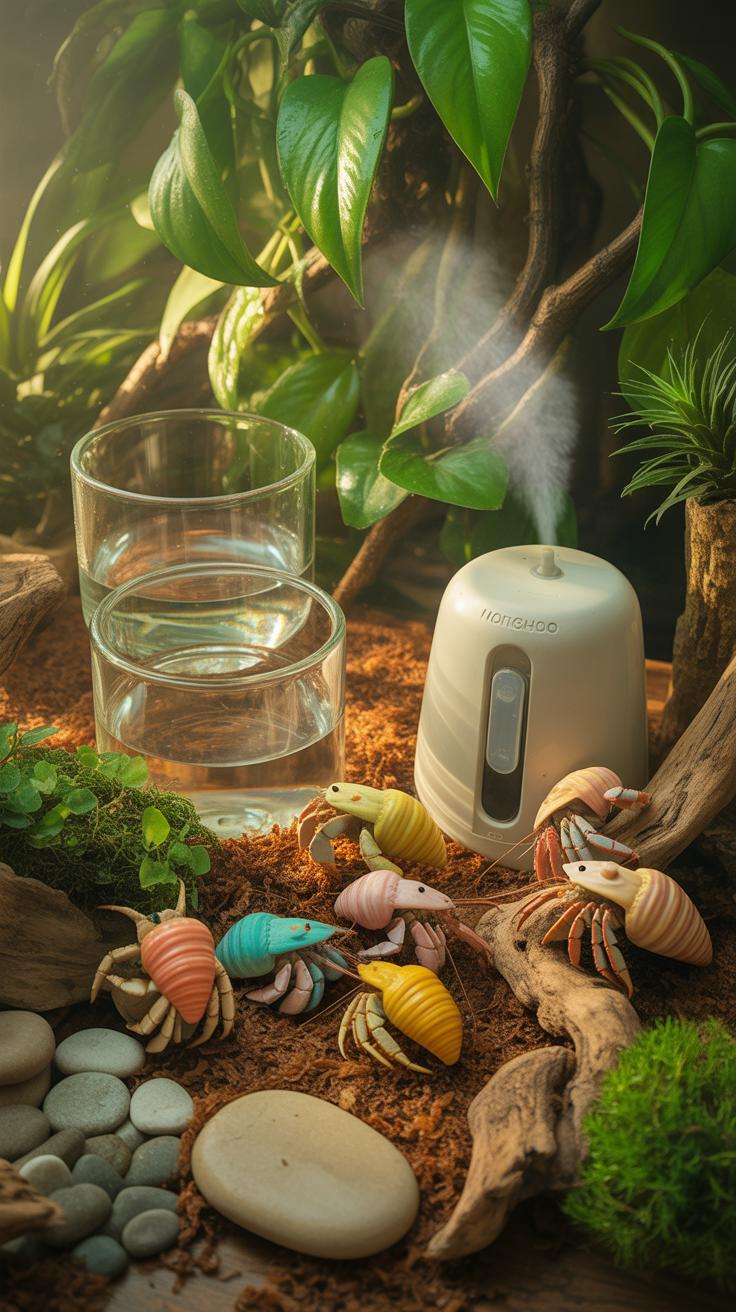
Hermit crabs require two distinct water sources to survive. You must provide one pool of fresh water and one pool of salt water. These pools must be deep enough for the largest crab to submerge its shell completely. Proper submersion allows the crab to regulate the salinity of the water stored inside its shell. This shell water keeps their modified gills moist.
Use non-porous containers like heavy plastic or ceramic to prevent leaks. You must place a ramp or sturdy ladder in each pool. This ensures the crabs can climb out easily to prevent drowning. Change the water every two to three days to stop bacterial growth. Do not use metal bowls. Metal reacts with salt and releases toxins that harm the crabs.
How To Safely Dechlorinate Water And Mix Marine Grade Salt For Hermit Crabs
Tap water contains chlorine and heavy metals that damage hermit crab gills. You must use a water conditioner to neutralize these chemicals. Look for products that specifically remove chlorine, chloramine, and heavy metals. Follow the manufacturer instructions for precise dosing per gallon. Never use bottled water as a shortcut because it may still contain harmful elements or lack necessary minerals.

Creating salt water requires a specific marine-grade salt mix used for saltwater aquariums. Do not use table salt or aquarium salt intended for freshwater fish. Table salt contains iodine and anti-caking agents that are toxic to crabs. Mix the marine salt according to the package directions to reach the correct salinity. This salt provides essential minerals that support the molting process and overall health.
Decorating And Enriching Your Hermit Crab Cage Ideas For A Natural Feel
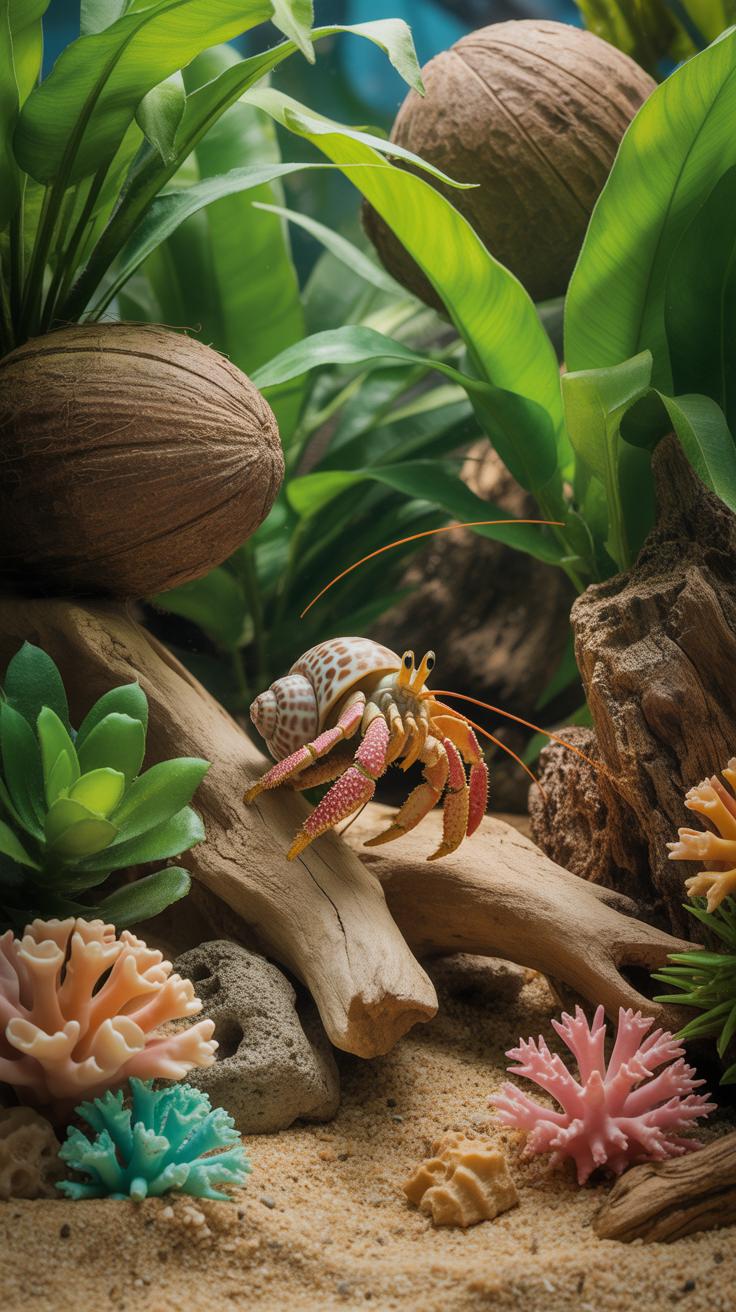
Safe Natural Decorations Like Cholla Wood, Cork Bark, And Coconut Huts To Use
Natural decorations serve as more than visual appeal. These materials provide essential textures for climbing and surfaces for beneficial microbial growth. Hermit crabs interact with their environment through physical touch and foraging. Choosing organic materials mimics their natural habitat in the wild. Avoid painted items or chemically treated woods. These toxins kill crabs over time through gradual ingestion and respiratory failure.
- Cholla Wood: This dried cactus skeleton has a porous structure that facilitates easy gripping. Crabs use the holes to climb and hide small food scraps. It is calcium-rich and safe for crabs to consume as a dietary supplement.
- Cork Bark: This lightweight bark resists mold in high-humidity environments. It provides a rough surface for molters to climb after they surface. You can wedge it against glass to create vertical territory without adding significant weight to the tank.
- Coconut Huts: These shells offer a dark and secure place for crabs to retreat during daylight hours. The hard exterior withstands high moisture levels and does not rot easily. Crabs often congregate inside these huts to maintain their body temperature and moisture.
- Mopani Wood: This dense African driftwood is very heavy and sinks in water pools. It provides a sturdy base for larger crabs that might tip over lighter decorations. Its natural tannins help condition the environment and resist fungal growth in the substrate.
- Sea Beans and Pods: Dried seed pods offer variety in texture and serve as natural foraging toys. Crabs move these items around the tank to customize their living space. Ensure all pods are pesticide-free and boiled before you place them in the crab habitat.
Sterilize all natural items before use to prevent pest infestations. Boil wood or bake it at low temperatures to kill mites and bacteria. Position these items to create a diverse landscape with varying heights. This strategy maximizes the footprint of a small enclosure. Natural materials also hold humidity better than plastic alternatives. Replace any items that show signs of deep rot or invasive black mold.
Why Climbing Structures And Hiding Spots Reduce Stress In Hermit Crabs
Hermit crabs are prey animals that live in constant fear of predators. Intense light and open spaces trigger a flight response that exhausts their energy. Hiding spots allow crabs to retreat and feel secure. This security lowers their cortisol levels and prevents shell flipping or aggression between tank mates. A crab that feels safe will move more often and eat better.

Climbing is a core biological requirement for these scavengers. They explore vertical spaces to find food and escape ground-level threats. Providing nets and branches increases the usable living area in your setup. Movement keeps their joints limber and supports healthy molting cycles. Without these structures, crabs become lethargic and weak. Active crabs show brighter coloration and live longer than those kept in bare tanks.
Feeding Stations And Diet Basics For Your Hermit Crab Tank Ideas DIY Setup
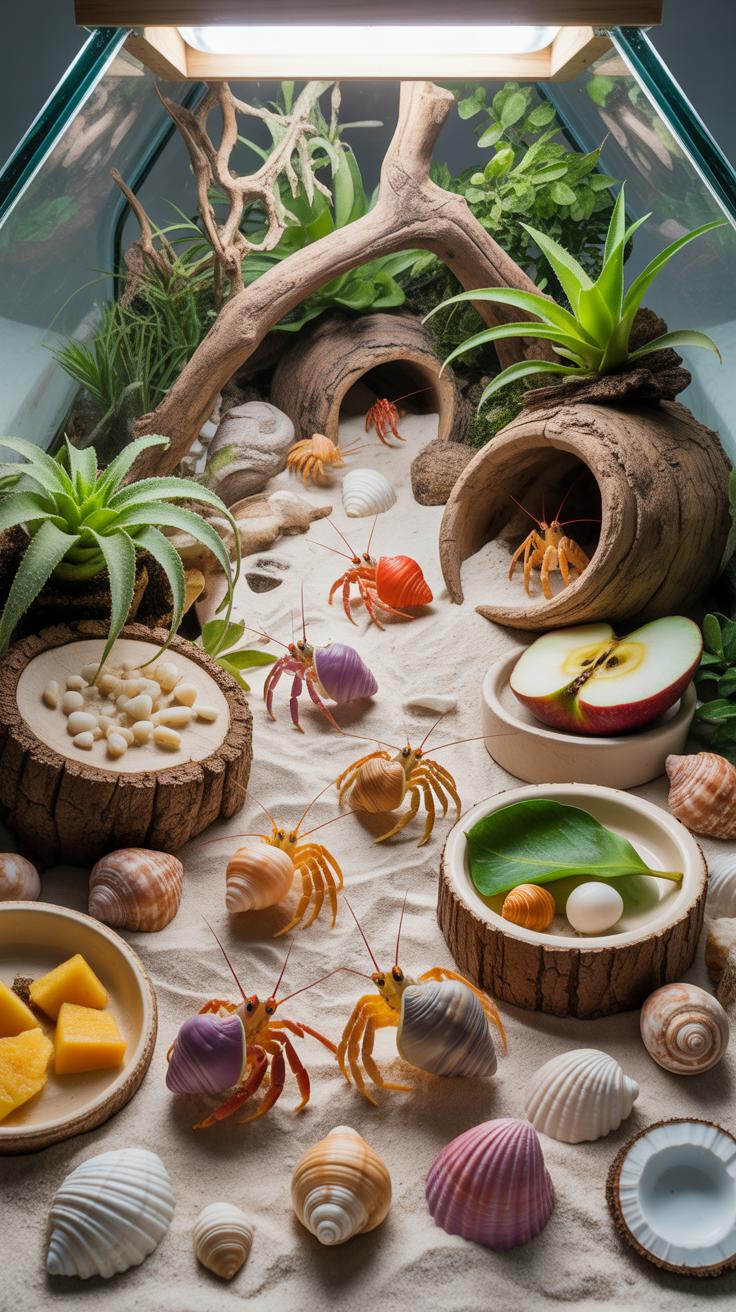
What Hermit Crabs Eat: Fruits, Vegetables, Proteins, And Calcium Sources
Hermit crabs are scavengers that require a varied diet to thrive in captivity. They need a mix of animal protein and plant matter every day. High protein sources include dried shrimp, mealworms, and unseasoned eggs. Fresh fruits and vegetables provide essential vitamins. You must avoid processed foods containing copper or chemical preservatives. These additives are toxic to crustaceans and cause long-term health failure.
Calcium is the most critical component for a successful molt. Crabs use calcium to harden their new exoskeleton after shedding their old one. Provide constant access to crushed oyster shells or cuttlebone. Chitin is another vital nutrient found in dried insects or shrimp tails. This material helps the crab build a strong shell structure. Always offer a diverse selection of natural foods to prevent nutritional deficiencies.
How To Set Up A Safe And Accessible Feeding Station Inside The Tank
Locate the feeding station on a flat, dry area of the substrate. Place food dishes away from the water sources to prevent contamination. Use low-profile bowls made of non-porous materials like ceramic or heavy plastic. This allows crabs of all sizes to climb in and out easily. Stable dishes prevent the crabs from tipping food into the sand. Spilled food rots quickly in high-humidity environments.

Effective feeding stations separate dry foods from fresh produce. Use small, shallow dishes to keep the setup organized and clean. Remove any uneaten fresh food within twenty-four hours to stop mold growth. Clean the dishes with hot water only. Avoid using soap or harsh chemicals because residues harm sensitive crabs. Strategic placement ensures every crab has access to nutrients without competing for space or climbing over obstacles.
Shell Selection And Molting Support Within Your DIY Hermit Crab Habitat Ideas
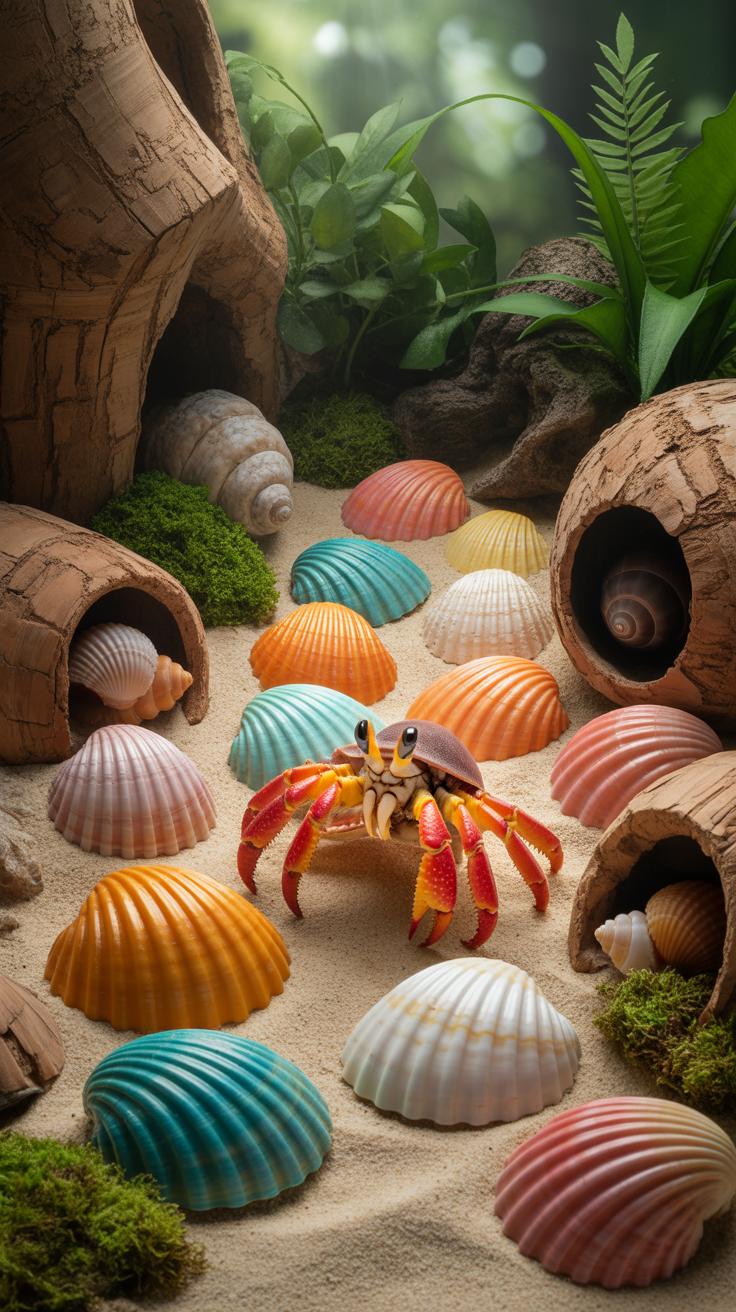
How To Choose The Right Extra Shells To Place Inside The Hermit Crab Habitat
Hermit crabs require a constant supply of growth options to survive. They do not grow their own shells and rely on scavenged gastropod shells. Without proper spares, crabs will fight or stress. You must provide at least three to five extra shells per crab. These shells must be clean, natural, and free of toxic paints or glazes that peel off.
- Shell Opening Shape: Match the species requirements for opening types. Purple Pincher crabs prefer round openings like Turbo shells. Ecuadorian crabs typically choose D-shaped openings. Providing the wrong shape leads to shell evacuation and vulnerability.
- Proper Sizing: Offer a variety of sizes for each crab in the tank. Include shells slightly smaller, equal to, and slightly larger than their current fit. This range allows the crab to find the exact internal volume needed for its body mass.
- Natural Materials: Use only unpainted and unglazed shells. Painted shells contain lead and other toxins that harm the crab as it grows. Choose shells like Mexican Turbo, Petholatus Turbo, or Magpie shells that are durable and lightweight for the animal.
- Structural Integrity: Inspect every shell for cracks, holes, or sharp edges before placement. A compromised shell cannot maintain the humidity levels needed to keep the crab’s gills moist. Discard any shell that shows signs of thinning or significant calcium breakdown.
- Cleanliness Standards: Boil all new shells in dechlorinated salt water before adding them to the habitat. This process removes debris and parasites while depositing a scent that attracts the crabs. Avoid using soap or chemical cleaners during this vital preparation stage.
Select shells based on the specific species in your tank. Purple Pinchers almost exclusively use Turbo shells due to their round bodies. If you use the wrong shell type, your crabs will stay in cramped housing. This stunts growth and causes physical damage. Always place the spare shells on the substrate surface in a dry area to prevent mold growth inside the openings.
Understanding The Molting Process And How To Protect Molting Crabs In The Tank
Molting is a critical biological phase where a crab sheds its exoskeleton to grow. The crab buried in the substrate is not dead or stuck. It is building a molting cave to undergo a hormonal change. Never dig up a buried crab. Moving a molting crab can kill it instantly due to stress or physical collapse of its soft new body.
Substrate depth is your primary tool for molting safety. You need at least six inches of a sand and coco fiber mix. This depth allows the crab to create a stable chamber that holds moisture and excludes light. Darkness triggers the molting hormone. If other crabs find a molter, they may attack it. Maintain deep, damp substrate to ensure every crab has its own private space.
Monitoring And Maintaining Your Hermit Crab Enclosure Ideas Long Term
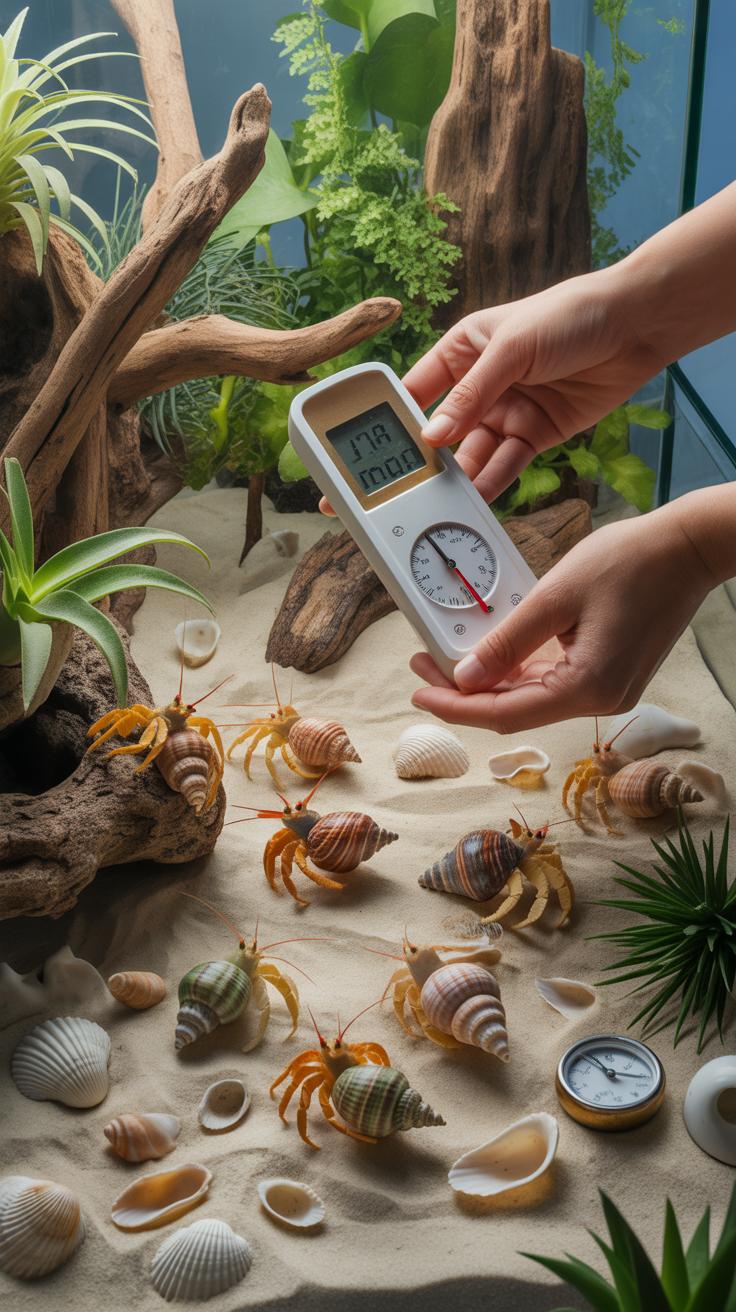
Essential Tools Like Hygrometers And Thermometers For Tracking Tank Conditions
Precision instruments dictate the survival of your hermit crabs. These animals possess modified gills that require high humidity to function. You must install a digital hygrometer and thermometer to monitor the air. Analog gauges often fail or provide false readings. Mount the sensors in the middle of the tank. Do not place them directly next to heaters or misting systems to avoid skewed data.
Maintain temperature between seventy-five and eighty-five degrees Fahrenheit. Keep humidity levels at seventy to eighty percent consistently. Lower levels cause suffocation over time. High heat can lead to heat stroke or stress. Check these levels twice every day. Calibration is necessary for all new sensors. Salt tests verify hygrometer accuracy. Reliable data allows you to adjust heat mats and lid seals before the environment becomes lethal.
A Practical Routine For Cleaning And Refreshing Your Hermit Crab Enclosure
Daily maintenance prevents waste buildup and disease. Remove uneaten fresh food every morning to stop mold growth. Scoop out visible waste and track the water levels in both basins. Replace treated fresh and salt water every forty-eight hours. Ensure the substrate stays at a sandcastle consistency. Poke the sand with a chopstick to check for stagnant air pockets. Never disturb a crab that is molting underground.
Deep cleaning occurs only when necessary. Replace the top layer of substrate if it becomes soiled. Wipe the glass walls using only warm water and a clean cloth. Avoid chemical cleaners or soaps because they poison the crabs. Boil new shells and wood decor before adding them to the tank. Stable environments foster long lives. Routine checks ensure the microclimate remains perfect for these sensitive tropical crustaceans.
Frequently Asked Questions

What are the absolute essentials for a beginner hermit crab habitat?
To create a healthy environment, you need a glass terrarium, a heat mat with a thermostat, and a hygrometer to monitor humidity. Proper substrate is vital; use a mix of play sand and coconut fiber that is deep enough for burrowing. Your hermit crab starter kit setup should also include two water bowls—one for fresh and one for saltwater—as well as natural hides and climbing branches.
How do I properly arrange a hermit crab starter kit setup for the first time?
Start by layering at least six inches of moistened substrate at the bottom of the tank. Place your water bowls on one side and the heaters on the back wall above the substrate line. Include various sizes of natural sea shells for growth and add driftwood or nets for exercise. A well-organized hermit crab starter kit setup ensures your new pets have distinct areas for climbing, hiding, and molting.
Is it possible to build a high-quality hermit crab enclosure on a budget?
Absolutely! You can save money by purchasing a secondhand glass aquarium and using sterilized play sand from a hardware store as your base. Instead of expensive decor, use food-grade plastic containers for water pools and clean coconut shells for hiding spots. Focus your budget on essential electronics like a reliable heater and hygrometer, which are the most critical components for keeping your crabs active and healthy long-term.