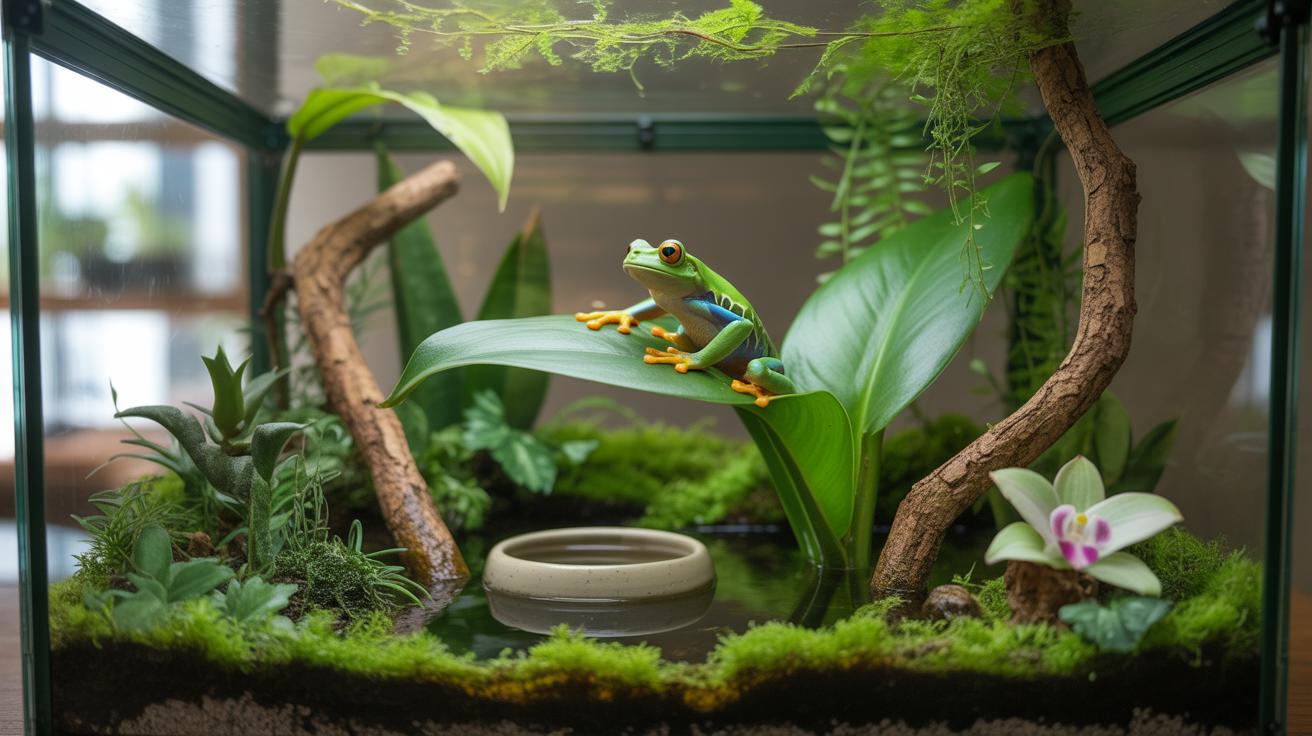
Understanding The Tree Frog Habitat Before You Build
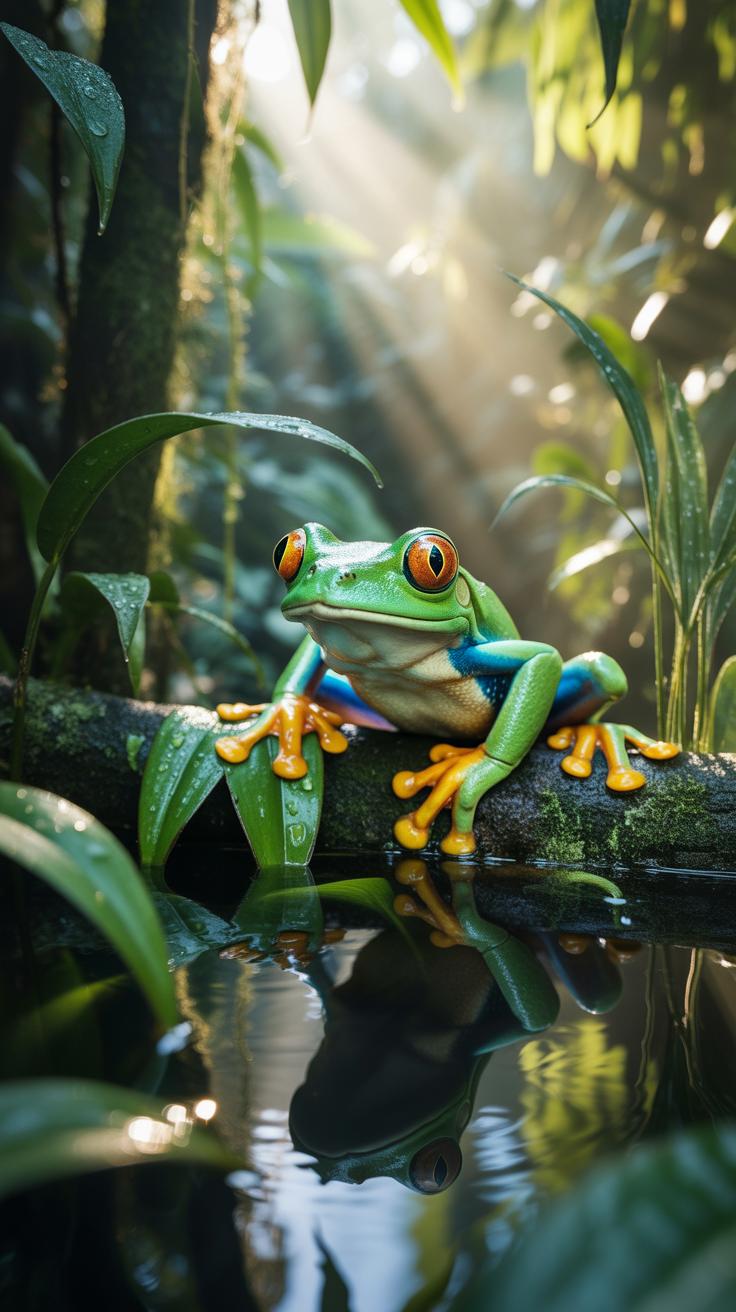
Natural Habitat Of Tree Frogs And Why It Matters For Your Setup
Tree frogs live in humid regions across the globe. They thrive in tropical rainforests and temperate woodlands. These environments offer high humidity and vertical space. Frogs use trees to escape ground predators. They need moisture to breathe through their skin. Your setup must mimic these conditions to keep the frog alive. Failure to match their natural home causes stress and death.
A proper build focuses on verticality and microclimates. Wild frogs move between different levels of the forest canopy to regulate heat. They hide under leaves to stay wet. You must provide climbing structures and dense foliage. This allows the frog to follow its natural instincts and feel secure. Every branch and plant serves a functional purpose. Do not prioritize aesthetics over the biological needs of the animal.
Key Differences Between Tree Frog Species And Their Housing Needs
Not all tree frogs share the same requirements. Tropical species like the Red-Eyed Tree Frog need constant warmth and high humidity. They belong to the Hylidae family and rely on rainforest heat. In contrast, temperate species like the North American Green Tree Frog handle cooler nights. You must research the specific origin of your frog. Climate settings that work for one species will kill another.
Size and behavior also dictate your enclosure choice. Large species require more cubic inches of space to move. Small frogs need tight enclosures to find their food easily. Some frogs are bold and sit on glass while others hide in deep cover. Pick a tank size that matches their adult dimensions and activity levels. Consult species specific data before buying any glass or screened cages. Use facts, not guesses.

Choosing The Right Tree Frog Terrarium Size And Style

Vertical Vs. Horizontal Terrariums: Which Works Best For Tree Frogs
Tree frogs are arboreal animals that spend their lives climbing above the ground. They possess specialized toe pads for gripping vertical surfaces like bark and glass. A vertical terrarium is the only logical choice for these species. High ceilings allow for the necessary placement of climbing branches and tall live plants. This setup mimics their natural canopy environment and promotes healthy movement.
Horizontal tanks fail to meet the biological needs of climbing amphibians. A wide, shallow tank wastes valuable floor space that tree frogs rarely use. Limited height prevents the establishment of a proper heat gradient from top to bottom. This lack of verticality causes stress and limits natural hunting behaviors. Always prioritize height over length when selecting an enclosure for any tree frog species you plan to keep.
Glass Vs. Screen Enclosures: Pros, Cons, And What To Consider
Glass terrariums provide the best environmental control for tropical species. These enclosures hold high humidity levels that are vital for amphibian skin health. Solid walls also prevent rapid heat loss in cooler rooms. Most modern glass units feature front-opening doors for easy maintenance and secure locking mechanisms. High humidity is a non-negotiable requirement for tree frogs, making glass the industry standard for most hobbyists.

Screen enclosures offer maximum airflow but struggle to maintain consistent internal conditions. They are only suitable for species that require constant ventilation or for keepers living in very humid climates. Rapid evaporation in screen cages can lead to dehydration and respiratory issues for the frog. Unless you have an automated misting system and a humid room, avoid full screen kits. Stick to glass with a mesh top for balanced airflow.
Essential Materials For Your Tree Frog Terrarium Setup
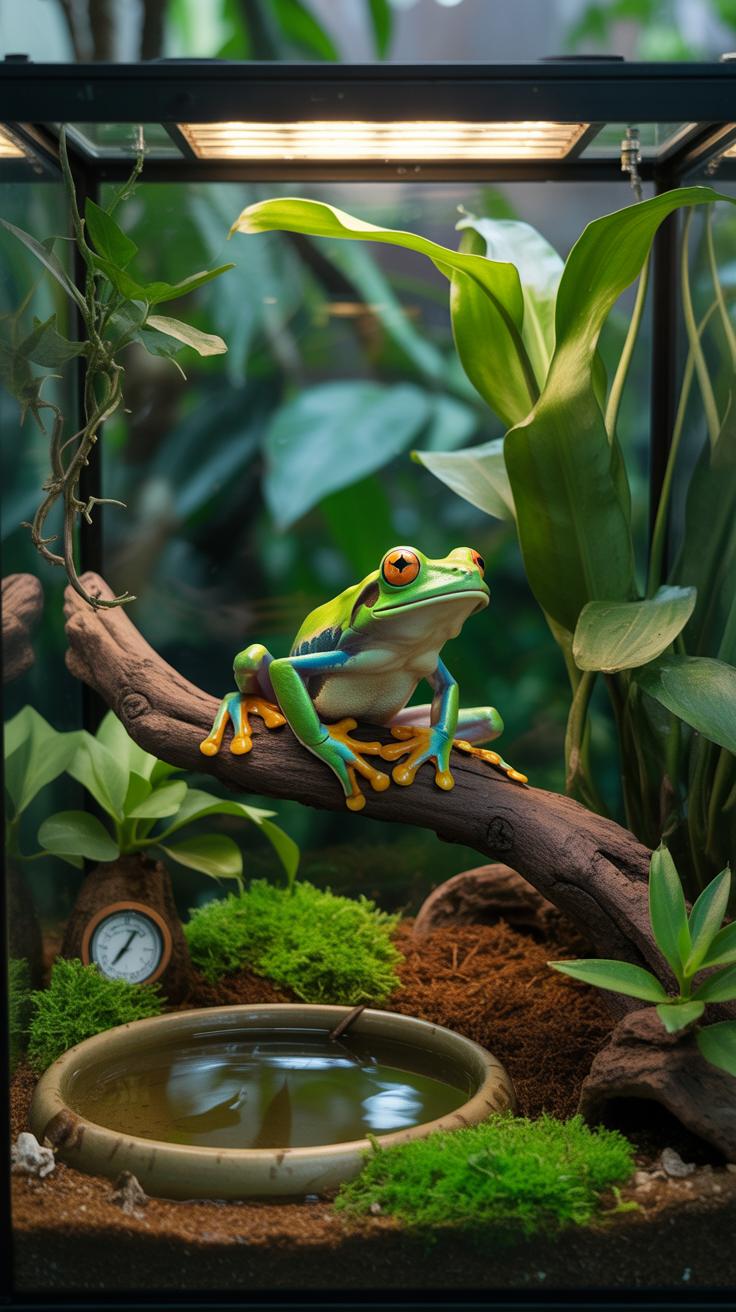
Must Have Supplies To Build A Functional And Safe Tree Frog Enclosure
Successful tree frog keeping starts with a glass terrarium. You need a vertical enclosure because these species live in the canopy. Most keepers choose front-opening tanks for easier cleaning and feeding. A secure mesh lid is vital for airflow and prevents escapes. You must balance ventilation with humidity to keep the frog healthy. High air quality stops mold growth and respiratory issues.
- Glass Terrarium: Select an enclosure with more height than width. Tree frogs are arboreal and require vertical space to climb. Front-opening doors allow you to perform maintenance without startling the animal from above.
- Pressure Sprayer: Humidity is the most critical factor for amphibian survival. A high-quality pressure sprayer or automated misting system keeps the enclosure wet. You must use dechlorinated water to protect the sensitive skin of the frog.
- LED or UVB Lighting: Frogs need a day and night cycle to regulate their biological clocks. While some species survive without specialized UV, low-level UVB helps with calcium absorption. Ensure the light does not overheat the small space.
- Digital Hygrometer and Thermometer: Analog gauges are often inaccurate and fail over time. Digital sensors provide real-time data on temperature and moisture levels. You need these tools to ensure the environment stays within specific safe physiological limits.
- Climbing Decor: Use cork bark tubes and PVC pipes to create structure. These materials provide hiding spots and rest areas high off the ground. Real or silk plants offer cover and help the frog feel secure during daylight hours.
Lighting and heating elements sit on top of the mesh screen. Use a thermostat to control any heat sources. Overheating kills amphibians quickly because they cannot regulate their own body temperature. Aim for a gradient so the frog can move to cooler areas. Every item in the tank serves a purpose for health or security. Avoid excessive decorations that make the habitat hard to clean.
Choosing The Right Substrate For Moisture Retention And Hygiene
The substrate layer manages the humidity and waste in the enclosure. You need a material that holds water without rotting. Coconut fiber is a standard choice for most tropical setups. It resists mold and allows for natural digging behavior. Some keepers use a drainage layer of clay balls beneath the soil. This prevents the substrate from becoming a saturated, swampy mess.
Hygiene is the next priority for your bottom layer. Organic soil mixes work well if they contain no fertilizers or pesticides. Change the substrate regularly to prevent ammonia buildup from waste. If you choose a bioactive setup, you add insects to clean the soil. This mimics a natural ecosystem and reduces manual labor. Always prioritize materials that safe-guard the absorbent skin of your tree frog.
Tree Frog Terrarium Ideas Designing A Natural And Enriching Environment
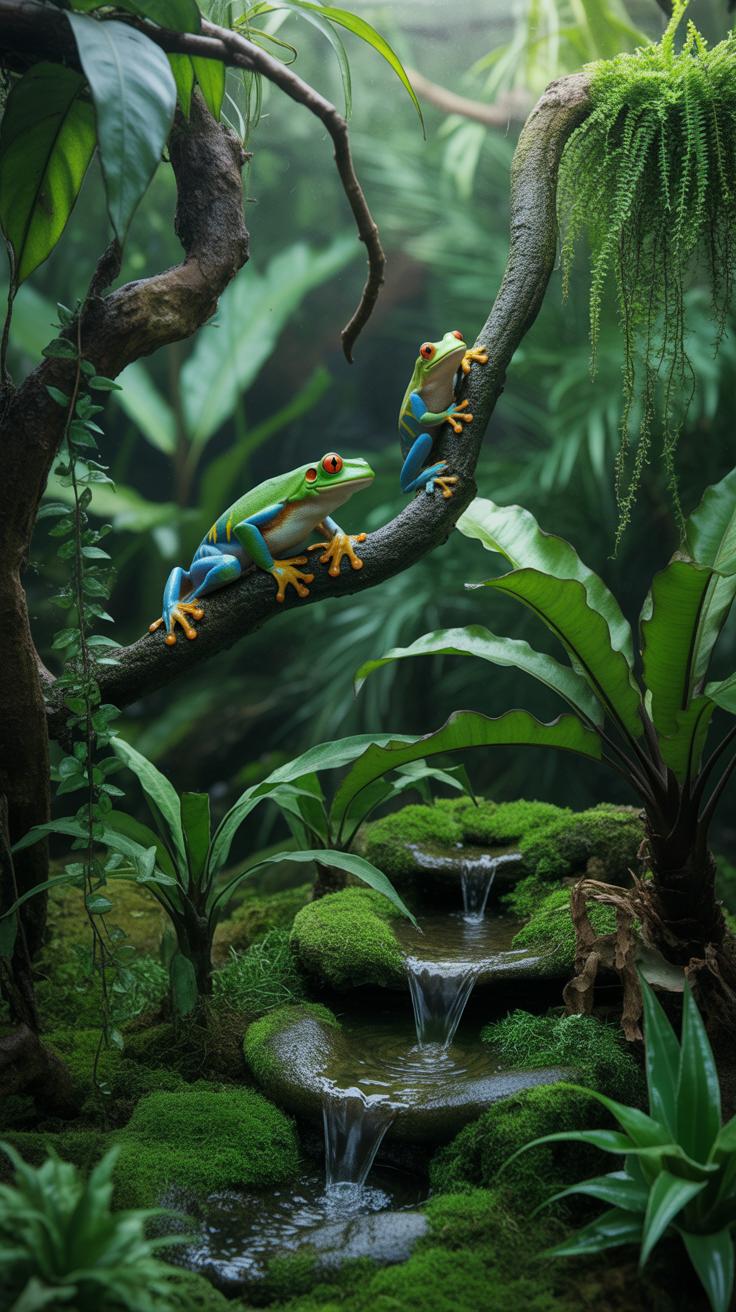
Live Plants Vs. Artificial Plants: What Works Best Inside A Frog Terrarium
Live plants maintain humidity levels through natural transpiration. They provide oxygen and help break down nitrogenous waste in the soil. Species like Pothos and Bromeliads offer sturdy surfaces for frogs to rest. These plants tolerate the high moisture and low light found in most enclosures. Natural growth creates a dynamic space that changes over time. Real foliage supports the bioactive cycle and promotes a stable microclimate.
Artificial plants require less maintenance and zero lighting. They do not die or introduce pests into the habitat. High-quality silk or plastic versions are easy to disinfect during deep cleans. They provide immediate cover without waiting for growth. However, they do not assist with humidity control or waste management. Choose artificial options for quarantine tanks or for keepers who prefer a sterile environment over a bioactive one.
Bringing a piece of the rain forest into your home is like capturing a fragment of nature’s magic to watch it thrive every day. Creating a wild space for a small creature reminds us that we are all interconnected in this beautiful, living world.
Adding Climbing Branches, Cork Bark, And Hides For Enrichment
Tree frogs live in a three-dimensional world. Utilizing vertical space is mandatory for their health and psychological well-being. Climbing branches must support the weight of the frog without sagging. Manzanita or ghost wood works well because it resists rot in humid conditions. Position these at various angles to create different temperature zones. Proper placement allows the frog to regulate its body temperature by moving between different heights.

Cork bark serves as a lightweight and mold-resistant tool for creating hides. Pressing bark slabs against the glass creates secure crevices where frogs feel safe from predators. Hollow cork rounds mimic natural tree holes found in the wild. These structures reduce stress and encourage natural hunting behaviors. Place hides at both elevated and ground levels. This variety ensures the frog has a dark place to rest during its daylight sleeping hours.
Setting Up The White Tree Frog Terrarium A Species Specific Guide
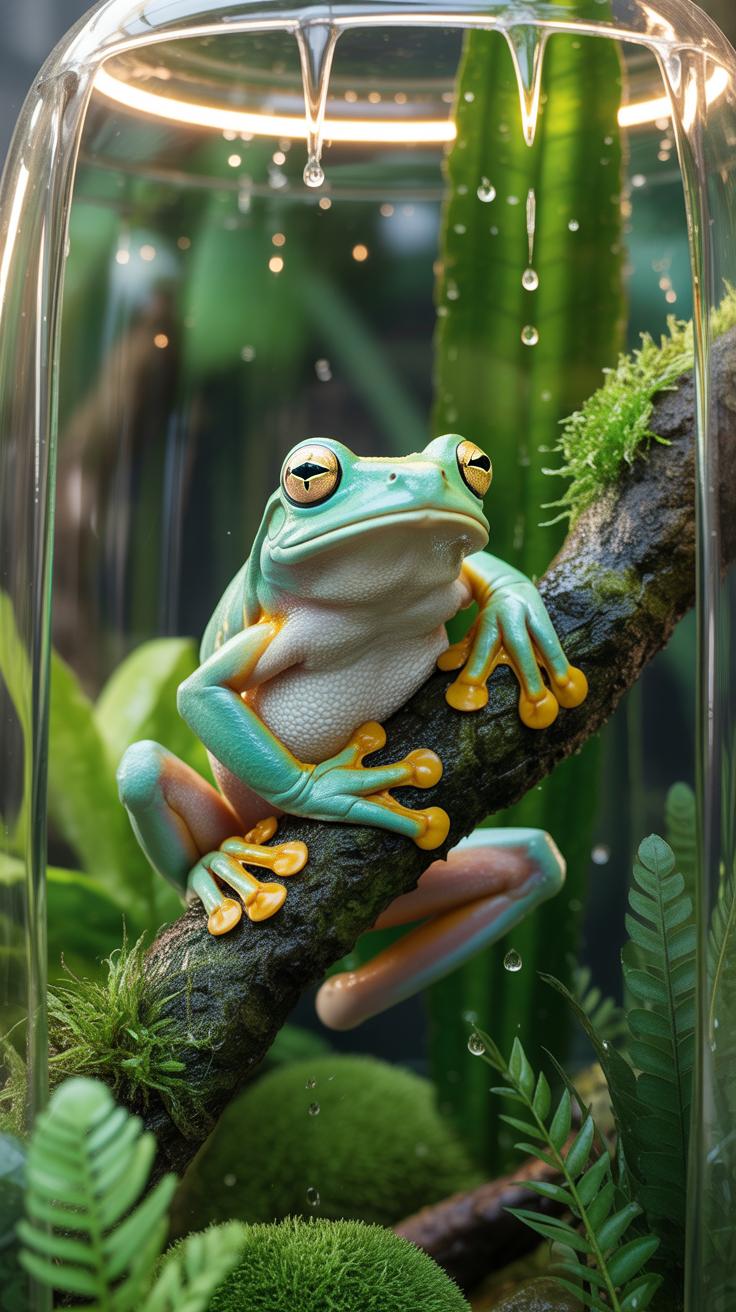
White Tree Frog Tank Size, Temperature, And Humidity Requirements
White Tree Frogs reach four inches in length and require vertical space for climbing. Start with a twenty-gallon tall glass terrarium for a single adult. Use larger enclosures for groups to prevent stress and aggression. Screen tops are mandatory to ensure proper airflow and prevent respiratory infections. These frogs produce significant waste. Efficient ventilation helps maintain a clean environment and keeps the glass clear.
Maintain a daytime temperature between eighty and eighty-five degrees Fahrenheit using a heat lamp. Keep the cool side near seventy-five degrees to allow for thermoregulation. Set relative humidity between fifty and seventy percent. Use a digital hygrometer for accuracy. Mist the enclosure twice daily with treated water. Avoid constant saturation because it leads to bacterial skin rot. Dry periods are necessary for health.
Whites Tree Frog Terrarium Ideas: Decor And Layout Tips For This Species
Focus on structural strength when selecting décor for this species. White Tree Frogs are heavy and will collapse flimsy foliage. Use thick PVC pipes, large cork bark rounds, and sturdy driftwood branches. Secure these items at various heights to create usable vertical space. Provide at least one large water bowl on the floor. The frog must fit its entire body inside to hydrate properly.

Choose live plants with broad, thick leaves like Pothos or Sansevieria. These species survive the weight of the frogs and high humidity. Use a bioactive substrate or simple damp paper towels for easier cleaning. Change paper towels daily to manage high nitrogen waste levels. Position perches near the heat source to facilitate digestion. Avoid jagged stones or sharp plastic plants that can tear delicate frog skin.
Lighting And Heating Your Frog Habitat Correctly
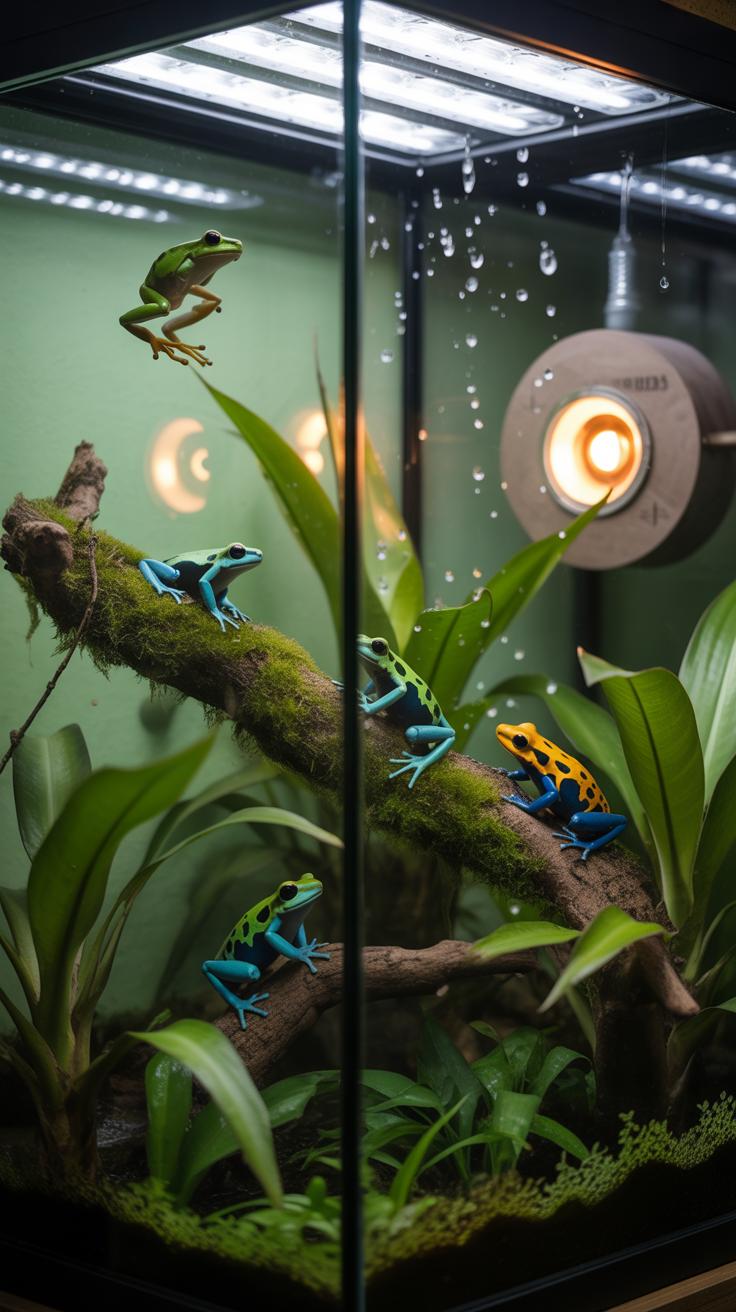
How To Create A Proper Day And Night Lighting Cycle For Tree Frogs
Tree frogs require a strict twelve-hour light and dark cycle to maintain their biological rhythms. Use a digital timer to automate this process and ensure consistency. Most species benefit from low-level Ultraviolet B lighting to help synthesize vitamin D3 and process calcium. This prevents metabolic bone disease. High-intensity bulbs are unnecessary and can dehydrate the skin. Position your light sources above the screen mesh.
Nighttime requires total darkness to stimulate natural hunting behaviors. Standard white lights must stay off during this period. If you need to observe your pet at night, use a very dim red or blue lamp specifically designed for reptiles. These wavelengths do not disturb their rest cycles. Do not leave these on all night. Persistent light exposure causes stress and weakens the immune system over time. Keep the schedule predictable.
Heating Options That Keep Your Pet Frog Habitat Terrariums At Safe Temperatures
Most tree frogs thrive between seventy-five and eighty-five degrees Fahrenheit. Use an under-tank heating pad or a low-wattage ceramic heat emitter to maintain these levels. Place the heat source on one side of the glass to create a thermal gradient. This allows the frog to move between warm and cool zones as needed. Always connect your heating devices to a thermostat. This prevents overheating and protects the enclosure.

Monitor internal temperatures using a digital thermometer with a probe. Analog dials are often inaccurate and lead to dangerous errors. Position the probe in the warmest area where the frog spends its time. Heat lamps can quickly zap the humidity from the air. You must balance heat output with regular misting to keep the skin moist. Avoid using hot rocks because they cause severe contact burns. Stick to overhead or external sources.
Water Features And Humidity Control In Your Frog Terrarium

How To Set Up A Water Dish Or Water Feature Safely In A Tree Frog Enclosure
Tree frogs do not drink water with their mouths. They absorb moisture through their skin. You must provide a shallow water dish that allows the frog to soak without drowning. Select a heavy ceramic or resin bowl that the frog cannot flip over easily. Place the dish on the floor of the enclosure away from the heat lamp to prevent rapid evaporation.
Use only treated tap water or bottled spring water for the dish. Chlorine and chloramines damage sensitive frog skin and cause chemical burns. Clean the water bowl every single day to remove waste and bacteria. If you use a mechanical water feature like a waterfall, clean the internal pump weekly. Stagnant water leads to infections. Keep the setup simple for better hygiene.
Top Methods For Maintaining Humidity Levels In A Tree Frog Terrarium
Most tree frogs require humidity levels between sixty and eighty percent to survive. Low humidity causes dehydration and respiratory failure. You must track these levels with a digital hygrometer placed in the center of the tank. Manual misting remains the most common way to raise moisture. Spray the glass walls and leaves twice daily. This creates droplets for the frogs to drink.
- Misting Systems: Automated nozzles spray a fine fog at set times. This ensures consistency when you are away from home. These systems reduce labor and maintain high humidity in large screen enclosures effectively.
- Substrate Choice: Moisture-retaining soils like coconut husk or sphagnum moss hold water well. These materials release humidity slowly into the air. Damp substrate prevents the air from becoming too dry between misting sessions.
- Foggers: Ultrasonic foggers create a thick cloud of water vapor. This method mimics a rainforest environment and raises humidity levels rapidly. Foggers work best for species that live in high-altitude cloud forests.
- Screen Covers: Solid glass or acrylic lids trap moisture better than mesh. If your tank has a screen top, cover part of it with plastic wrap. This reduces airflow and keeps the humid air inside the habitat longer.
- Live Plants: Broad-leafed plants release water vapor through a process called transpiration. They create microclimates where frogs can hide and stay moist. Live greenery provides a natural boost to the overall humidity of the tank.

Airflow is just as important as moisture. Stagnant air allows mold and fungus to grow on the wood and soil. Ensure your enclosure has enough ventilation to let the glass clear occasionally. You want a balance between wet air and clean air. Watch your frog for signs of distress. If the skin looks dull or shrunken, increase your misting frequency immediately.
Ongoing Maintenance And Health Monitoring Of Your Frog Habitat
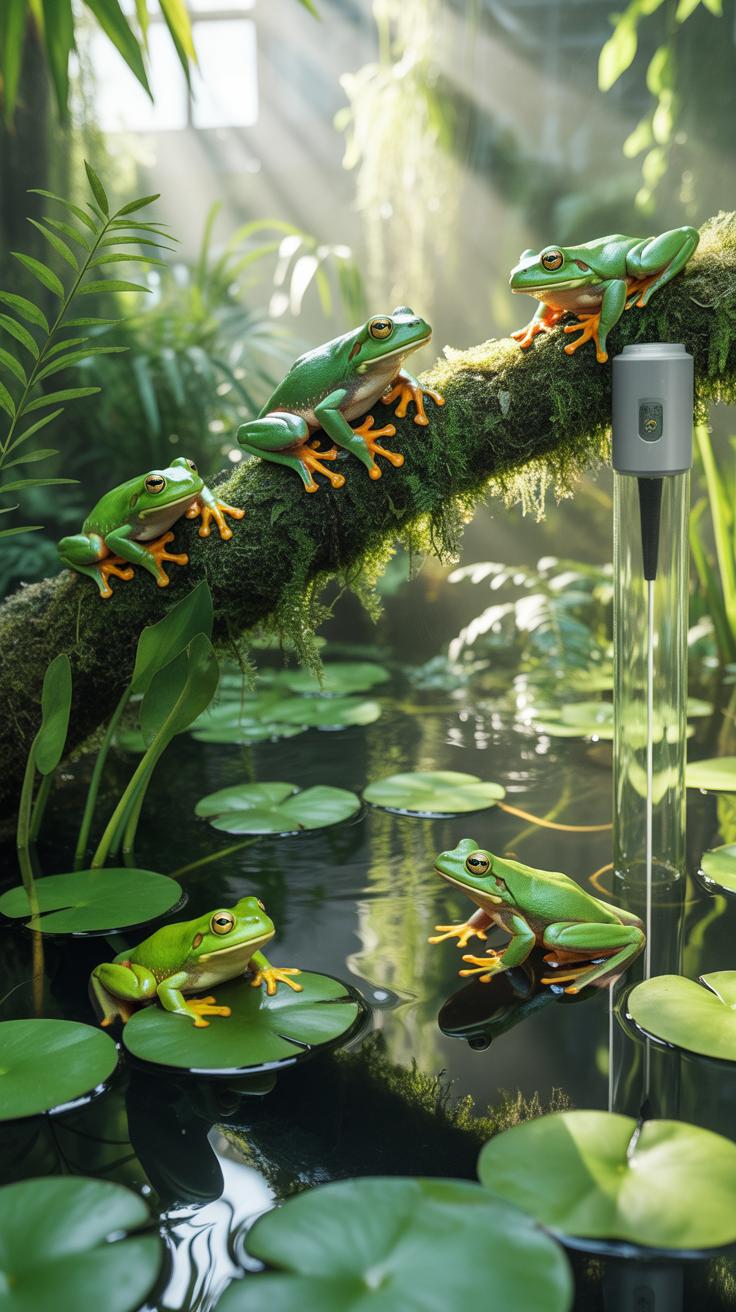
Cleaning Schedules And Hygiene Practices To Keep Your Terrarium Safe
Daily spot cleaning prevents waste buildup and bacterial growth. Remove feces and uneaten prey immediately to stop ammonia spikes. Change water bowls every twenty-four hours using dechlorinated water. Scrub the glass with a damp paper towel to maintain visibility and airflow. Use only distilled water for misting systems to prevent mineral deposits. Proper daily upkeep reduces the risk of skin infections in sensitive amphibians.
Deep clean the entire enclosure every month to eliminate pathogens. Remove all decor and sanitize items with a five percent bleach solution or specialized terrarium cleaner. Rinse everything thoroughly until no chemical odor remains. Replace substrate if you use organic materials like coco coir or moss. Bioactive setups require less frequent substrate changes but need regular monitoring of the cleanup crew. Consistent hygiene limits the spread of chytrid fungus.
Signs Of A Healthy Vs. Stressed Tree Frog And When To Consult A Vet
A healthy tree frog displays bright eyes and reactive movements. It should have a sturdy weight and clear skin without lesions. Normal behavior includes active hunting at night and retreating to shaded areas during the day. Monitor breathing patterns for consistency and check for a strong feeding response. Track weight monthly to ensure the frog maintains proper mass. Healthy frogs remain alert when they are awake.
Stressed frogs often show dark skin colors or lethargic behavior. Watch for cloudiness in the eyes or visible bones around the hips and spine. Red patches on the belly or legs indicate systemic infections like red leg syndrome. Seek a qualified exotic veterinarian if the frog stops eating for more than a week. Isolate sick animals immediately to prevent cross-contamination. Labored breathing or bloating requires professional medical intervention to prevent death.
Frequently Asked Questions

What are the most important things for a beginner to consider when getting started?
The most critical factors for a successful tree frog habitat setup are vertical space and humidity control. Unlike ground-dwelling species, tree frogs need tall enclosures to climb and feel secure. You must prioritize a glass terrarium that retains moisture while providing adequate ventilation. Beginners should also focus on maintaining a consistent temperature and a misting schedule to mimic the frog’s natural tropical environment for optimal health and comfort.
How do I choose the right plants and decor for my frog’s home?
When completing your tree frog habitat setup, choose sturdy, broad-leafed live plants like Pothos or Philodendrons that can support your frog’s weight. You should also incorporate sterilized driftwood, cork bark, and bamboo poles to create various climbing levels. Ensure all decor is free of sharp edges and chemical pesticides. Arranging these elements vertically allows your frog to find its preferred thermoregulation spot and provides plenty of natural hiding places.
Is it possible to create a high-quality habitat on a limited budget?
Absolutely! You can save money by repurposing safe household items or sourcing materials from nature, provided they are properly sterilized. Instead of expensive automated systems, a simple hand-misting bottle works perfectly for maintaining moisture levels. Decorative elements like PVC pipes can serve as excellent climbing structures. Focusing on the essentials—a secure enclosure, proper lighting, and organic substrate—allows you to build a functional and beautiful home without overspending.