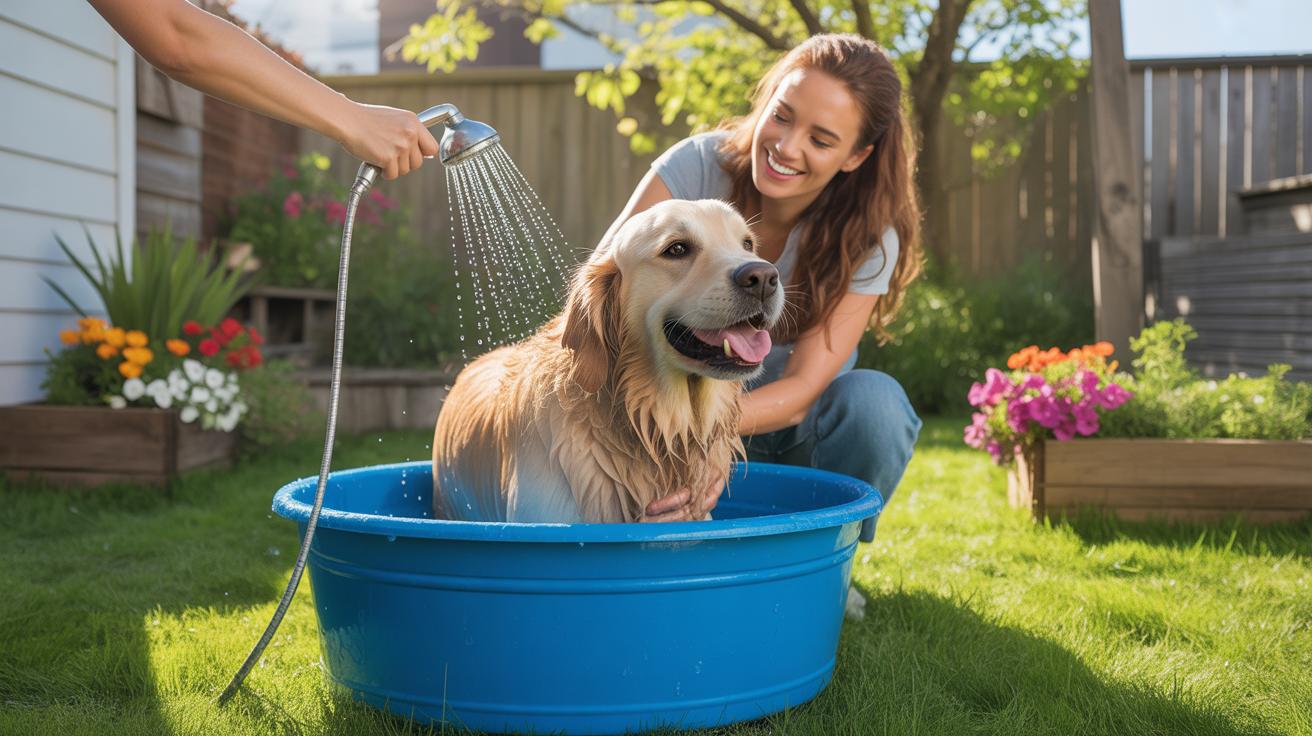
Why Skipping The Bathtub Can Actually Be Better For Dog Bathing
The Common Challenges Dog Owners Face When Using A Standard Bathtub
Standard bathtubs create high physical stress for both owners and pets. Most residential tubs sit low to the ground. This requires owners to kneel or hunch over for long periods. These awkward positions lead to back strain and joint pain. Large breeds often struggle to enter high-walled tubs. This creates a fall risk on slick porcelain surfaces. Lifting a heavy, wet dog is dangerous and inefficient.
Residential plumbing often lacks the filtration needed for heavy animal hair. Dog fur clogs standard drains quickly. This leads to expensive plumbing repairs and standing dirty water during the wash. Porcelain also lacks grip. Dogs feel insecure on slippery surfaces and often panic. This anxiety makes the bathing process longer and more difficult. Trapping a stressed animal in a small, slick space is a poor technical strategy.
How Alternative Dog Bath Without Tub Options Can Be More Ergonomic And Efficient
Alternative bathing methods prioritize proper height and water control. Elevated wash stations or outdoor setups allow owners to stand upright. This position improves leverage and reduces physical fatigue. Portable basins and specialized sprayers offer better access to the underbelly and paws. You control the environment instead of fighting a fixed structure. This modular approach speeds up the process and ensures a more thorough clean.
Efficiency increases when you remove the barrier of the bathtub wall. Many alternative options use high-pressure, low-flow nozzles that penetrate thick fur faster than a standard faucet. This saves water and reduces rinsing time significantly. Using a dedicated space also keeps bathroom surfaces dry and sanitary. High-grade materials like stainless steel or heavy-duty plastics provide better traction. This keeps the dog calm and steady throughout the entire procedure.

Using Your Walk In Shower For A Shower Dog Wash At Home
How To Set Up Your Walk In Shower As A Safe And Comfortable Dog Washing Space
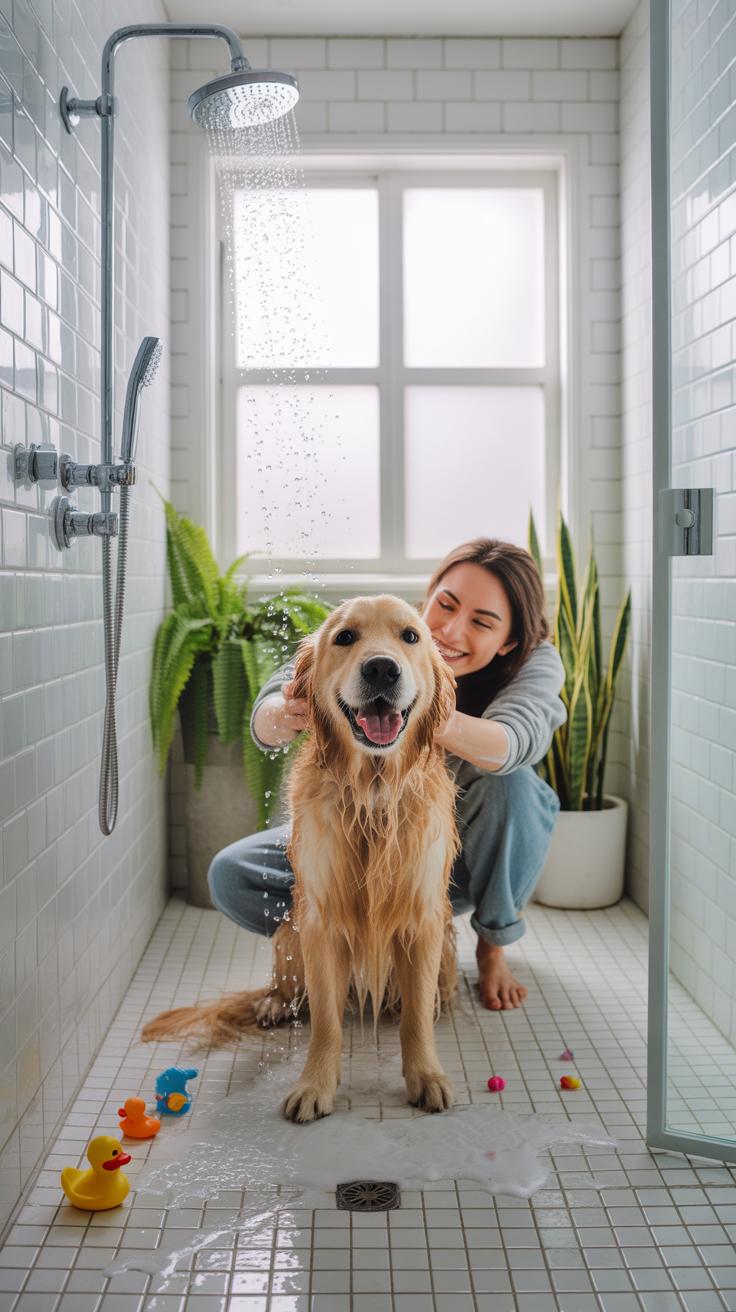
A walk-in shower removes the physical barrier of a tub wall. This reduces stress for heavy dogs and owners with limited mobility. Clear the floor of all glass bottles and loofahs before starting. These items create trip hazards and can break during the wash. Ensure the drain is free of debris to prevent immediate flooding. Proper preparation prevents accidents before the water even runs.
Position your dog so their head faces away from the shower opening. This keeps water inside the stall and prevents escapes. Use lukewarm water to avoid burning sensitive skin. Maintain a firm grip on the collar or use a suction tether for stability. High-traffic tile surfaces become slick when wet, so control movements carefully. A controlled environment ensures the washing process remains efficient and safe for everyone involved.
Non Slip Mats, Handheld Showerheads, And Other Accessories That Make Shower Dog Wash Easier
Standard shower floors lack traction for paws. Use a heavy-duty rubber mat to give your dog a secure grip. This prevents slipping and lowers the animal’s anxiety during the process. A handheld showerhead attachment is the most critical tool for a thorough clean. It allows you to direct water to the underbelly and paws without splashing the eyes. These tools cut washing time in half.
Install a hair trap over the drain to protect your plumbing. Dog fur is thick and clogs pipes quickly. Keep all shampoos and brushes within arm’s reach before you bring the dog inside. If you must leave the stall, the dog will follow you and soak the bathroom floor. Strategic placement of gear ensures you stay dry. Efficient accessories turn a difficult chore into a fast and manageable routine.
Setting Up A Dog Washing Station In Bathroom Without A Tub
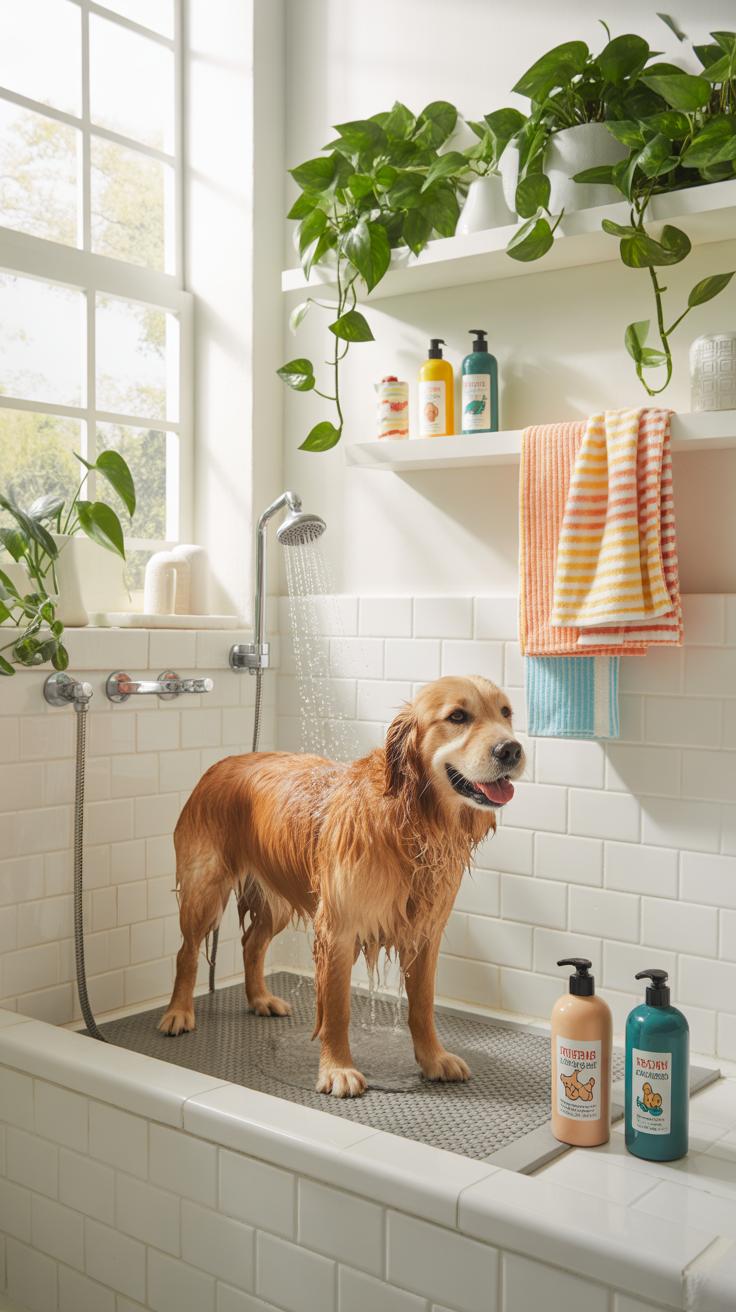
Guidance On Repurposing A Bathroom Corner For Dog Washing
Identify a corner with direct access to a floor drain or proximity to the shower area. Remove all fabric rugs and soft items that absorb water. Clear the floor space to allow total 360-degree access to the animal. Secure the perimeter with water-resistant barriers to keep spray contained. A corner location provides two natural walls to lean the dog against during scrubbing.
Install waterproof wall panels if the existing surface is drywall. Use non-slip rubber matting to cover the entire floor work zone. This prevents the dog from sliding and reduces anxiety during the process. Ensure the lighting is bright enough to see the skin through thick fur. Strategic placement near existing plumbing simplifies the installation of any temporary water lines or drainage hoses needed for rinsing.
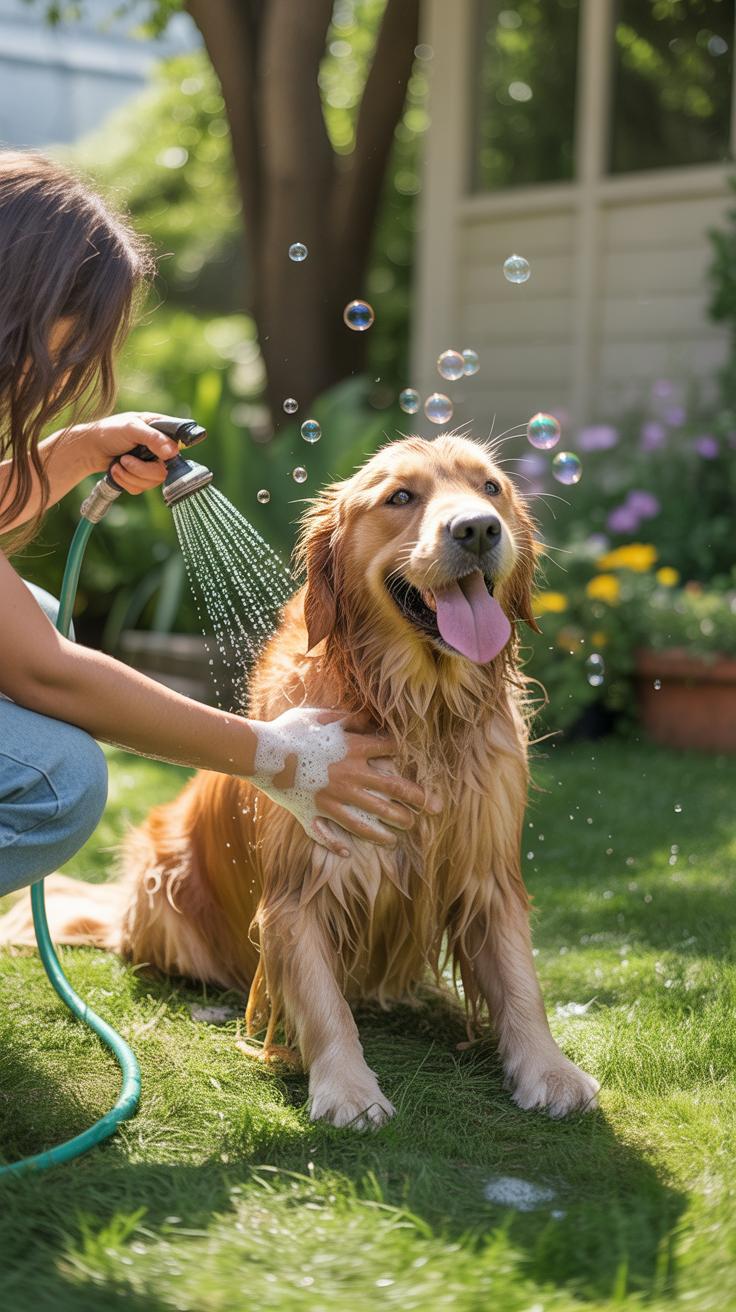
A backyard hose and a patch of green grass are all you need to turn a simple bath into a joyful memory of summer. The best way to wash a dog is with a little water and a lot of love.
Essential Fixtures And Add Ons For A Functional Space
A functional wash station requires specific hardware to manage water flow and animal restraint. Standard bathroom faucets often lack the reach needed for thorough rinsing. You must modify the existing plumbing to include high-pressure sprayers and drainage control. These additions stop water from migrating to the rest of the house. Proper fixtures turn a standard floor space into a professional-grade cleaning zone.
- Handheld Showerhead Extension: Attach a long-hose sprayer to your existing shower arm or sink faucet. This allows you to reach the underbelly and paws without moving the dog. Choose a model with a pause button to save water while you apply shampoo to the coat.
- Suction Cup Tether: Secure this anchor to a tiled wall or glass door at the dog’s shoulder height. Use a waterproof grooming loop to keep the dog from jumping out of the station. This ensures safety for both the handler and the pet during the wash.
- Silicone Drain Hair Catcher: Place a fine-mesh or silicone trap over the floor drain. Dog fur quickly clogs standard residential pipes and causes expensive plumbing backups. This tool catches loose hair before it enters the drainage system and allows for easy disposal in the trash.
- Raised Non-Slip Grates: Position perforated plastic floor tiles over the washing area. These grates lift the dog’s paws out of the dirty suds and rinse water. This prevents the animal from standing in a pool of filth and speeds up the drying process significantly.
- Splash Guards or Curtains: Install temporary tension rods with heavy-duty plastic liners around the washing corner. These barriers contain overspray when the dog shakes its coat. Keeping the water confined to the station reduces the cleanup time required for the rest of the bathroom.
Organize all cleaning supplies in a wall-mounted caddy within arm’s reach. Keeping shampoos and brushes off the floor prevents accidental spills and tripping hazards. Use heavy-duty hooks to store towels and blow dryers nearby. Systematic organization ensures you never have to leave the dog unattended to grab supplies. Proper setup minimizes stress and maximizes the efficiency of every wash session.
The Dog Wash Station In Mudroom A Practical Solution For Active Dogs
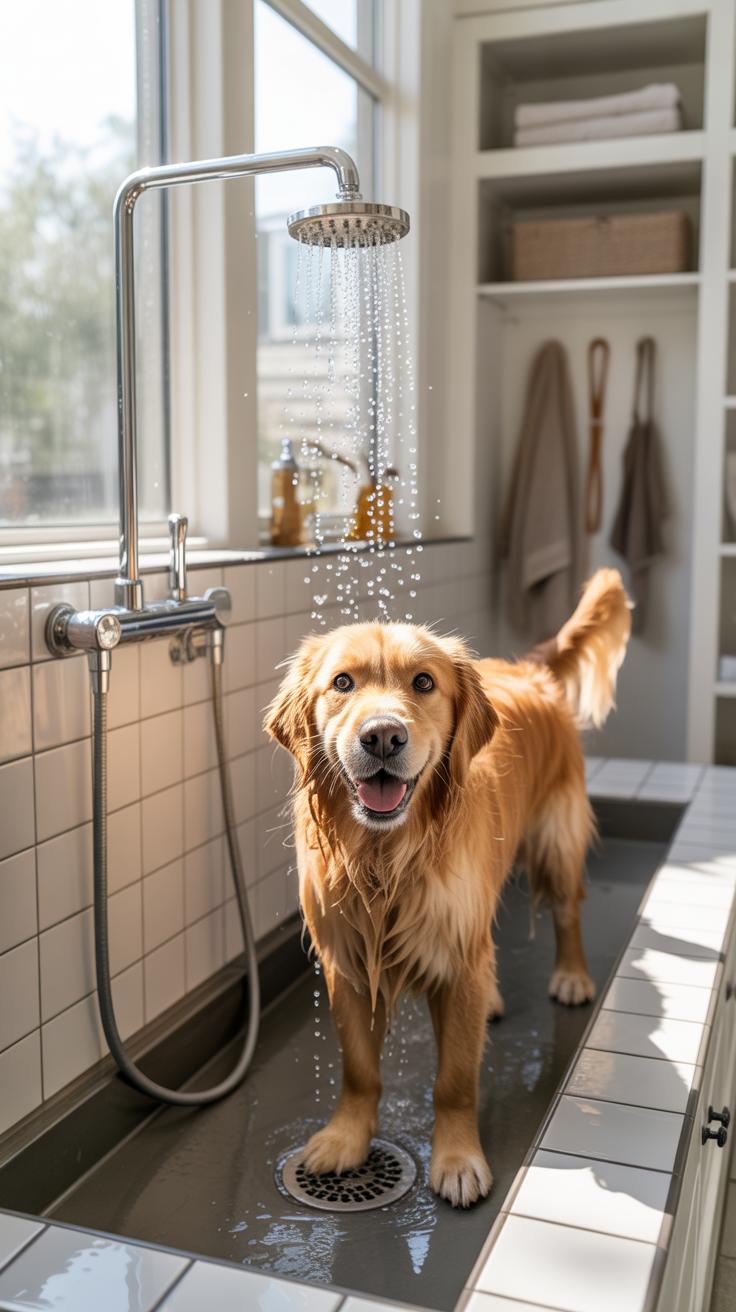
Why The Mudroom Is One Of The Most Practical Spots For A Dog Wash Station In Mudroom Setup
The mudroom serves as a transition zone between the outdoors and the rest of the home. Placing a dog wash station here stops dirt and allergens at the door. You prevent mud from reaching your carpets and furniture. This location maximizes efficiency by keeping the mess contained. It utilizes a space already designed for heavy foot traffic and outdoor gear.
Active dogs require frequent cleaning after walks or park visits. A mudroom setup allows for immediate decontamination. This saves the owner from leading a wet pet through several rooms to reach a traditional bathroom. You reduce house maintenance costs by protecting flooring from water damage and mud stains. The layout also provides an ideal environment for drying tasks before the dog enters the living areas.
Plumbing, Drainage, And Storage Considerations When Building A Mudroom Dog Wash Area
Building a mudroom station requires strategic plumbing placement. You must install a floor drain with a hair trap to prevent clogs. Use a professional grade P-trap and oversized piping to manage high water volume. Choose a hand-held sprayer with a long hose for full coverage. Professionals often recommend wall mounted faucets to keep the floor clear and reduce the risk of physical damage.

Proper drainage demands a sloped floor toward the drain. Use non-porous materials like tile or stainless steel for the basin walls. Storage must keep chemicals and towels within reach but away from the dog. Use moisture resistant cabinetry to prevent mold growth in the humid environment. Strategic shelving organizes shampoos and brushes to speed up the washing process. Elevated stations reduce back strain for the owner during long sessions.
How To Create A Dog Shower In Garage For A Dedicated Pet Cleaning Space
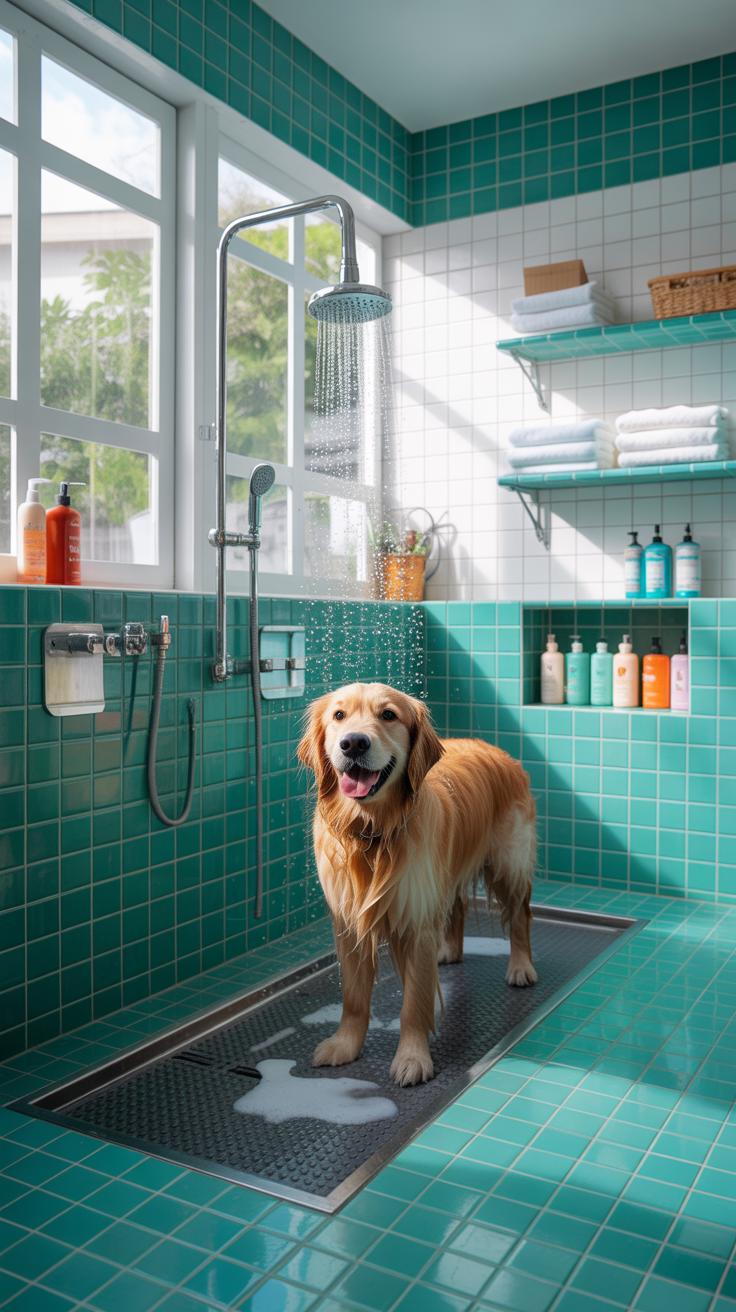
Why The Garage Is An Ideal Location For A Dog Shower In Garage Setup
Garages provide a transition zone that keeps outdoor mess away from your main living areas. Most garages feature concrete floors that handle water spills better than indoor hardwood or carpet. This space offers the square footage needed for large breeds that cannot fit in standard sinks. You gain a controlled environment that contains hair and odors while providing direct access from the yard.
Plumbing access makes the garage a strategic choice for a permanent wash station. Many garages house water heaters or utility sinks that simplify the installation of hot and cold water lines. You can install heavy-duty drainage systems more easily through concrete slabs than through finished indoor flooring. This setup allows for industrial-grade materials that withstand claws and chemical cleaners better than standard home bathroom fixtures.
What You Need To Install A Functional And Waterproof Dog Shower In Your Garage
A successful garage dog shower requires a waterproof enclosure and a reliable drainage system. You must install a raised basin or a sloped floor pan to direct water into the sewer line. Use fiberglass or stainless steel walls to prevent moisture from rotting the garage studs. These materials resist mold and withstand the high-pressure water flow required to penetrate thick canine coats.
Select a commercial-grade spray hose with a high-flow nozzle for efficient rinsing. Temperature control valves are necessary to ensure the water stays safe for the dog. You must also include a heavy-duty hair trap in the drain to prevent plumbing clogs. Proper lighting and a non-slip floor surface are the final requirements to ensure the safety of both the pet and the handler.
Outdoor Dog Shower Ideas For Warm Weather Bathing
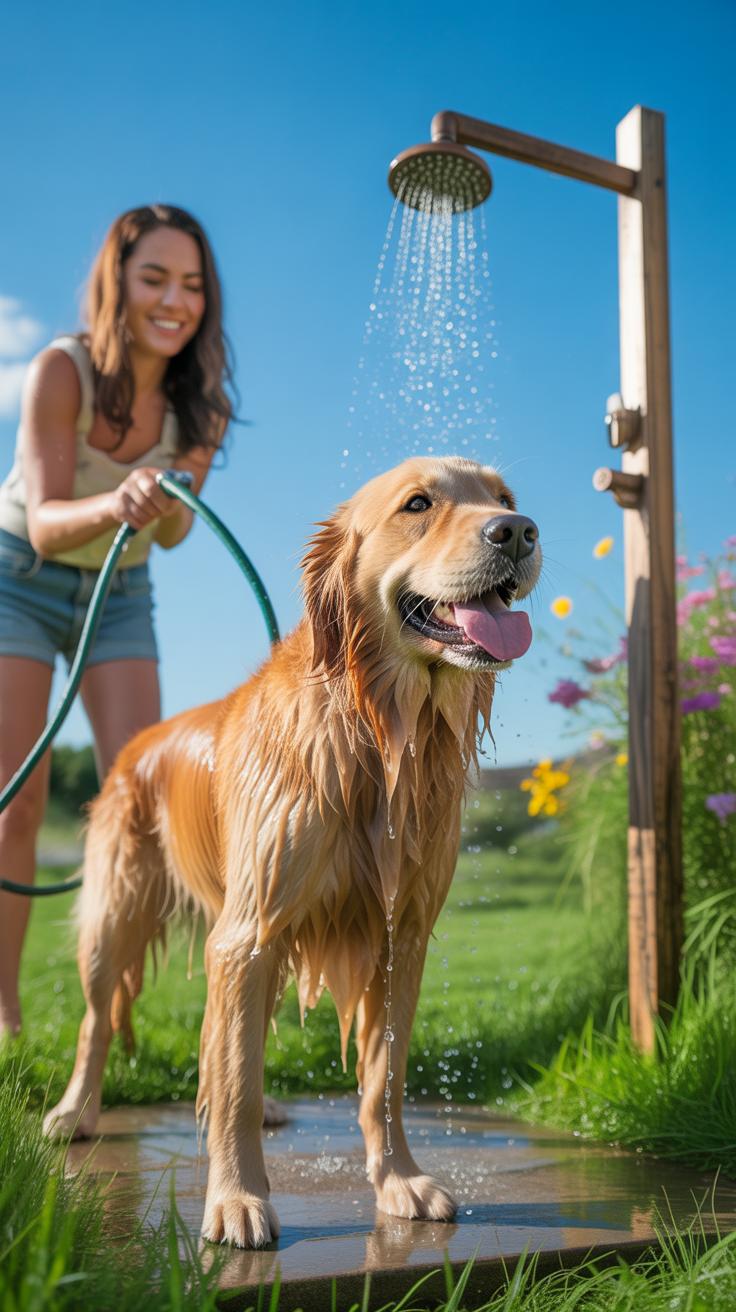
How To Set Up A Simple And Effective Outdoor Dog Shower Using Your Garden Hose Or Plumbing
Standard garden hoses provide high water pressure but lack temperature control. Connect a spray nozzle with a thumb trigger to manage flow with one hand. This setup leaves your other hand free to secure the dog. Use a rubber hose splitter to keep the shower line separate from your main garden supply. Position the station on a sloped concrete pad to prevent mud.
Plumbing upgrades offer better results for frequent washing. Install a frost-proof outdoor faucet that mixes hot and cold water lines. This provides a comfortable temperature for the animal during the wash. Mount a heavy-duty bracket to hold the shower head at shoulder height. Use stainless steel hardware to prevent rust. Ensure the drainage area leads away from the house foundation to avoid moisture damage.
Seasonal Tips For Making The Most Of An Outdoor Dog Shower Year Round
Maximize the outdoor utility by adjusting to the sun cycle. Wash the dog in the morning or late afternoon during peak summer heat. Direct sunlight on a wet coat can cause skin irritation or overheating. Check the water temperature in the hose before starting the wash. Water sitting in a hose under the sun reaches dangerous temperatures. Flush the line until the water feels cool.

Extend the washing season into autumn by using insulated pipes. Drain the system completely before the first hard freeze to prevent pipe bursts. Use a portable propane water heater for cleaning in cooler weather. These units connect to a standard hose and provide instant warm water. Always dry the dog immediately with a high-velocity dryer or heavy towels. This prevents the dog from getting a chill when the air temperature drops.
Doggie Wash Station Options Portable Tubs Utility Sinks And More
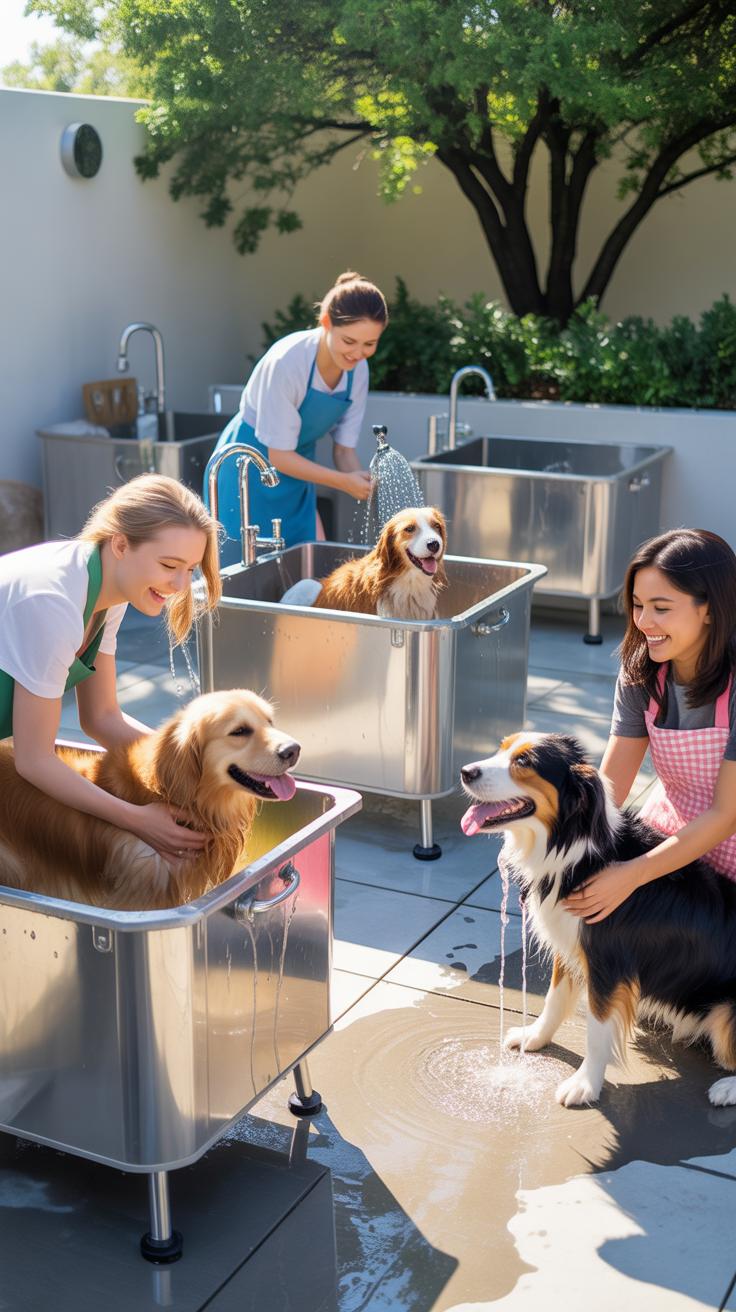
Portable Dog Tubs And Inflatable Basins As A Flexible Doggie Wash Station Alternative
Portable dog tubs provide a dedicated cleaning space without permanent plumbing needs. These units use heavy-duty PVC or galvanized steel to hold water weight. Most designs feature a drain plug at the base for easy disposal. You can set them up in a yard or garage. This setup keeps the mess outside your primary living areas. It offers better containment than a standard hose.
Inflatable basins offer a storage-friendly option for apartment dwellers. These basins use air chambers to create soft walls that contain splashes. They work well for senior dogs who need cushioned surfaces during the bath. They are lightweight and easy to move when empty. Always check the material thickness to prevent punctures from dog claws. Use these on flat surfaces to ensure stability and proper drainage flow.
Using A Utility Or Laundry Sink As A Convenient At Home Dog Wash For Small To Medium Dogs
Utility sinks offer a high-access cleaning point for smaller breeds. These basins sit at waist height to reduce physical strain on the owner. Most laundry rooms feature these sinks near water lines. You can easily attach a spray nozzle to the existing faucet. This setup provides controlled water temperature and pressure. It is a permanent solution that uses existing home drainage systems for efficiency.
Stainless steel or heavy-grade plastic utility sinks resist scratches and chemical damage. The deep basin design prevents water from splashing onto the floor. You must install a hair trap in the drain to prevent plumbing clogs. This method works best for dogs under thirty pounds. Ensure the sink is securely bolted to the wall or floor. A stable basin prevents the dog from slipping or tipping the unit during the wash.
Pet Bathroom Ideas Designing A Multi Purpose Space That Works For Both Pets And People
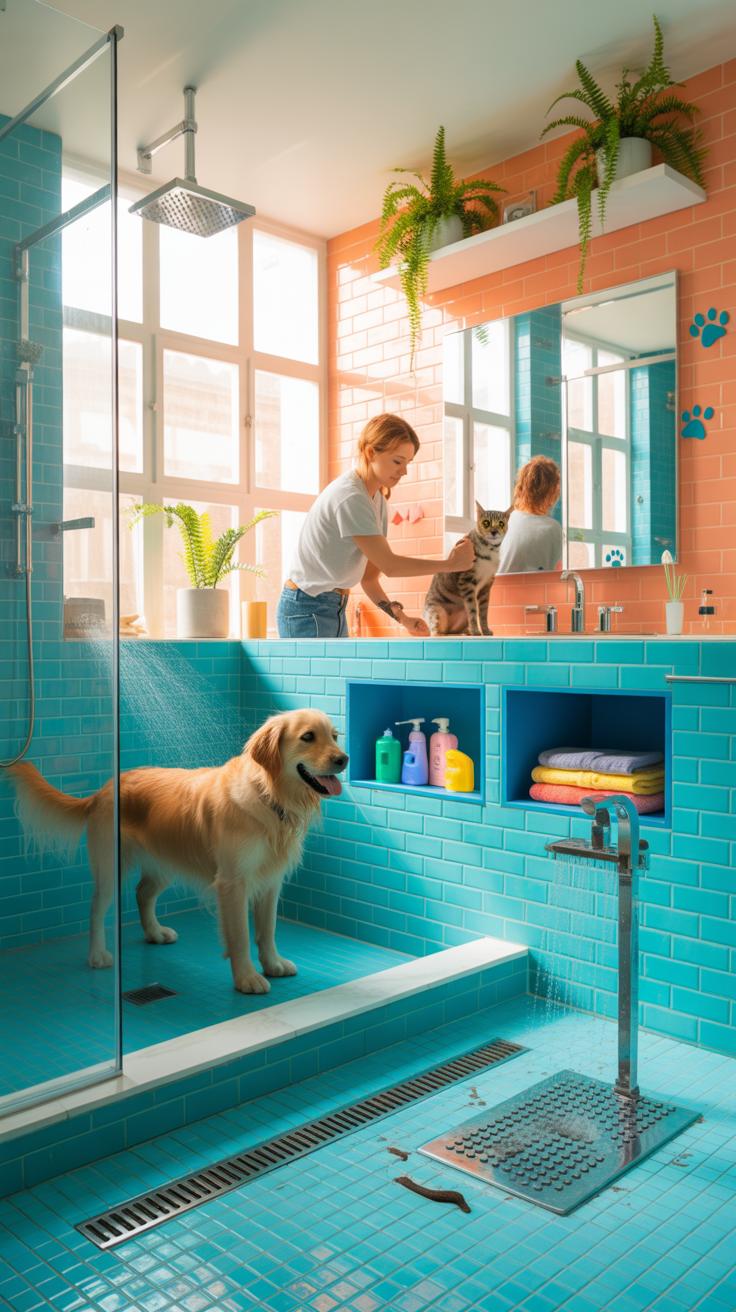
Smart Pet Bathroom Ideas For Integrating A Dog Washing Area Into Your Home Without Major Renovation
Convert existing utility spaces to save on plumbing costs. A laundry room or mudroom often contains necessary water lines and floor drains already. Install a pull-out spray nozzle on a deep utility sink to create a functional washing station. This setup handles small to medium dogs easily. You avoid the high expense of tearing out walls or installing new dedicated drainage systems.
Position your washing area near an entry point to contain messes. Place a wall-mounted handheld showerhead at waist height to reduce back strain. Use waterproof backsplash panels to protect your drywall from splashes. These panels install quickly over existing surfaces. High-quality hardware ensures the system lasts through frequent use. This strategic placement keeps mud and water out of the main living areas of the home.
Flooring, Wall, And Drainage Materials That Hold Up To Regular Dog Bath Routines
Select surfaces based on moisture resistance and durability. Standard drywall fails quickly when exposed to frequent pet bathing. You must use materials that repel water and resist scratches from dog claws. Proper drainage prevents standing water which leads to structural rot or mold growth. Commercial-grade materials offer the best lifespan for high-traffic pet zones. These choices ensure your home remains clean and structurally sound.
- Porcelain Tile: This material offers extremely low porosity and high scratch resistance. It survives heavy paws and constant water exposure without staining or cracking. Choose textured finishes to prevent your dog from slipping during the wash process.
- PVC Wall Panels: These panels provide a waterproof barrier for your walls. They are easier to clean than grout lines and resist mold growth. The interlocking tongue-and-groove system creates a seamless surface that keeps water from reaching the studs.
- Epoxy Flooring: Use industrial-grade epoxy to create a slip-resistant and waterproof floor. This seamless coating eliminates seams where bacteria or odors usually hide. It handles chemical cleaners and hot water better than most residential flooring options.
- Linear Drains: Install a linear drain to move water away from the washing area quickly. These drains handle higher volumes of water than standard circular drains. Their flat profile reduces tripping hazards for both humans and pets in multi-purpose rooms.
- Stainless Steel Sinks: Heavy-duty steel resists scratches and does not harbor bacteria. It withstands the impact of large dogs and heavy grooming tools. This material also provides a neutral aesthetic that fits into modern laundry or bathroom designs.

Focus on the installation quality of your chosen hardware. A high-flow drain prevents overflow during heavy rinsing sessions. Seal all joints with silicone to stop leaks before they start. Waterproofing membranes behind your tiles add an extra layer of protection for the subfloor. Durable materials reduce long-term maintenance costs and keep the space functional. These tactical upgrades turn a standard room into a professional-grade washing station.
Dog Bath Best Practices How To Wash Your Dog Safely And Effectively Any Setup
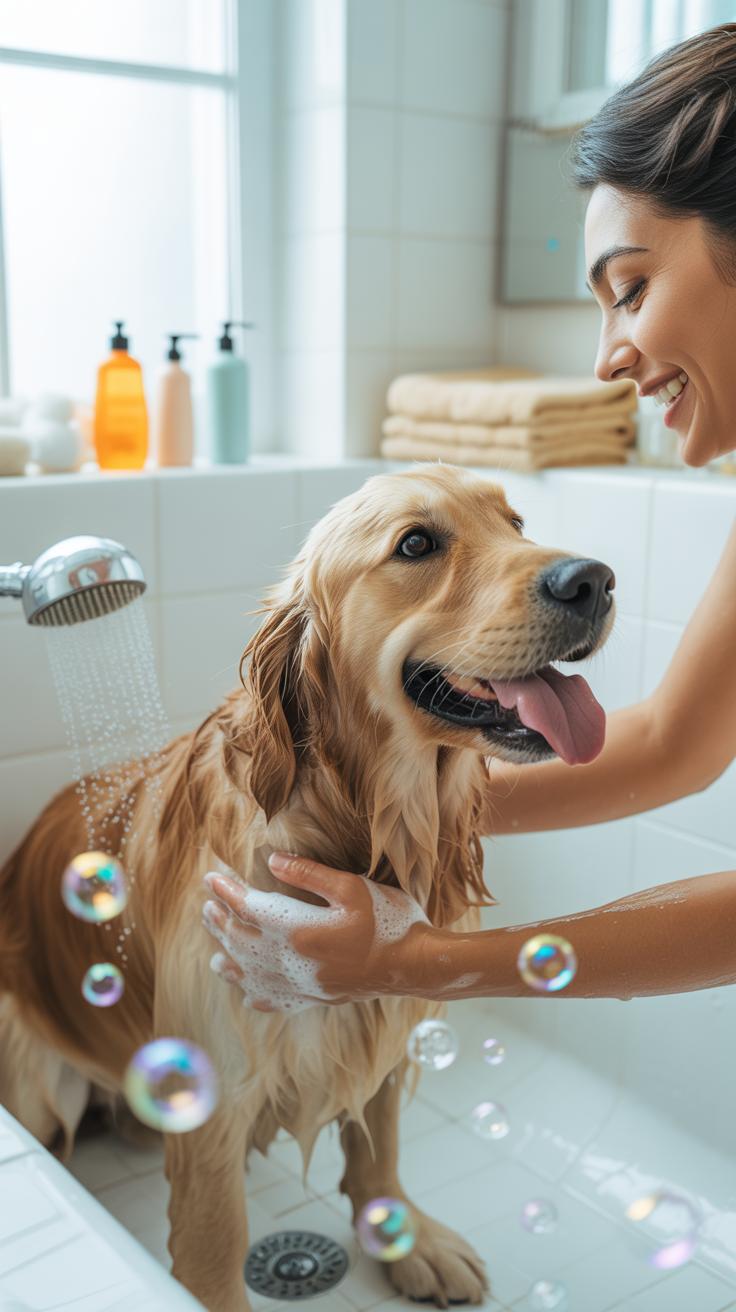
How Often Should You Give Your Dog A Bathtub And What Products Are Safe To Use
Most dogs require a wash every four to six weeks. Frequent washing strips natural oils from the skin and causes irritation. Highly active dogs or those with skin folds may need more frequent care. Always use a shampoo specifically formulated for canine pH levels. Human products are too acidic and damage the protective acid mantle. This lead to infections and dryness.
Check labels for natural ingredients like oatmeal or aloe vera. Real soap chemicals can be harsh on sensitive areas. Use lukewarm water regardless of the setup. Hot water burns the skin while cold water causes shock. Rinse the coat until the water runs clear. Residual soap causes itching and hot spots. Focus on the paws and underbelly where bacteria and dirt collect most.
How To Keep Your Dog Calm And Cooperative During A Dog Bath Regardless Of The Location
Preparation prevents panic. Gather all tools before bringing the dog to the wash station. Sudden movements or stopping to find a towel creates anxiety. Use a non slip surface like a rubber mat or a towel. Dogs feel insecure when they lose traction. Secure the dog with a short lead if using an outdoor or elevated station. This prevents jumping and injury.
Use high value treats to create positive associations. Deliver rewards during the soaking and rinsing phases. Speak in low and steady tones to maintain a neutral environment. Avoid spraying water directly into the ears or eyes. This causes immediate distress and middle ear infections. Use a washcloth for the face instead. Keep sessions short and efficient. End the process with a vigorous towel dry.
Frequently Asked Questions

Is it really possible to get my dog clean without using a traditional bathtub?
Absolutely! Many pet owners find that traditional tubs can be stressful for dogs and difficult for humans. You can achieve a professional-level clean using various dog bath without tub options such as portable basins, walk-in showers, or even specialized waterless shampoos. These methods often reduce anxiety for your pet while allowing you more flexibility in where and how you choose to scrub your furry friend.
How do I properly use a waterless shampoo or grooming foam as a bath alternative?
To use waterless grooming solutions, start by thoroughly brushing your dog to remove loose fur. Apply the foam generously, massaging it deep into the coat to break down dirt and odors. Since these are popular dog bath without tub options, they require no rinsing. Simply let the product sit for a minute, then towel dry and brush again to leave the fur soft, clean, and smelling fresh.
What are the most affordable DIY ways to wash a dog if I don’t have a tub?
If you are on a budget, a simple plastic storage bin or an inflatable kiddy pool works perfectly as a makeshift station. Alternatively, you can use a garden hose with a gentle spray nozzle in the yard or a handheld showerhead in a walk-in stall. These accessible solutions ensure your dog stays groomed and healthy without requiring expensive grooming equipment or a permanent bathtub installation in your home.