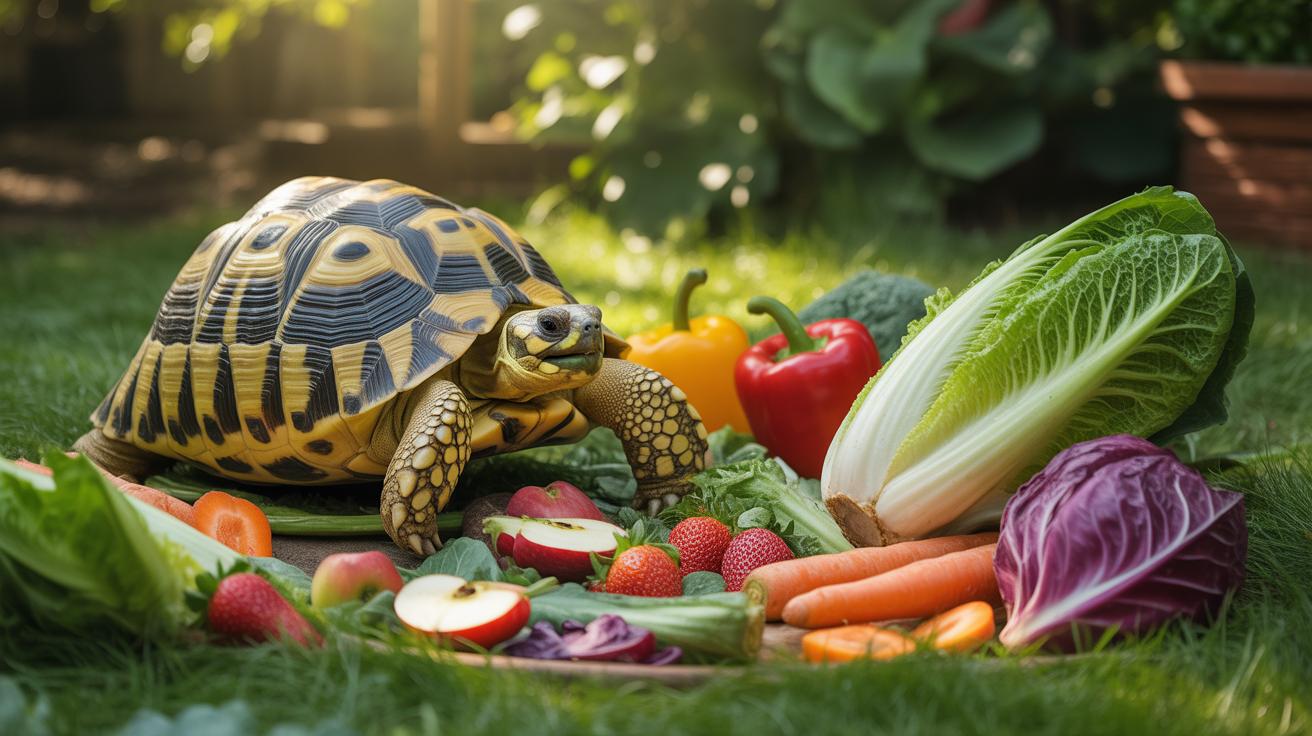
Understanding The Tortoise Staple Food List And Why It Matters For Tortoise Care
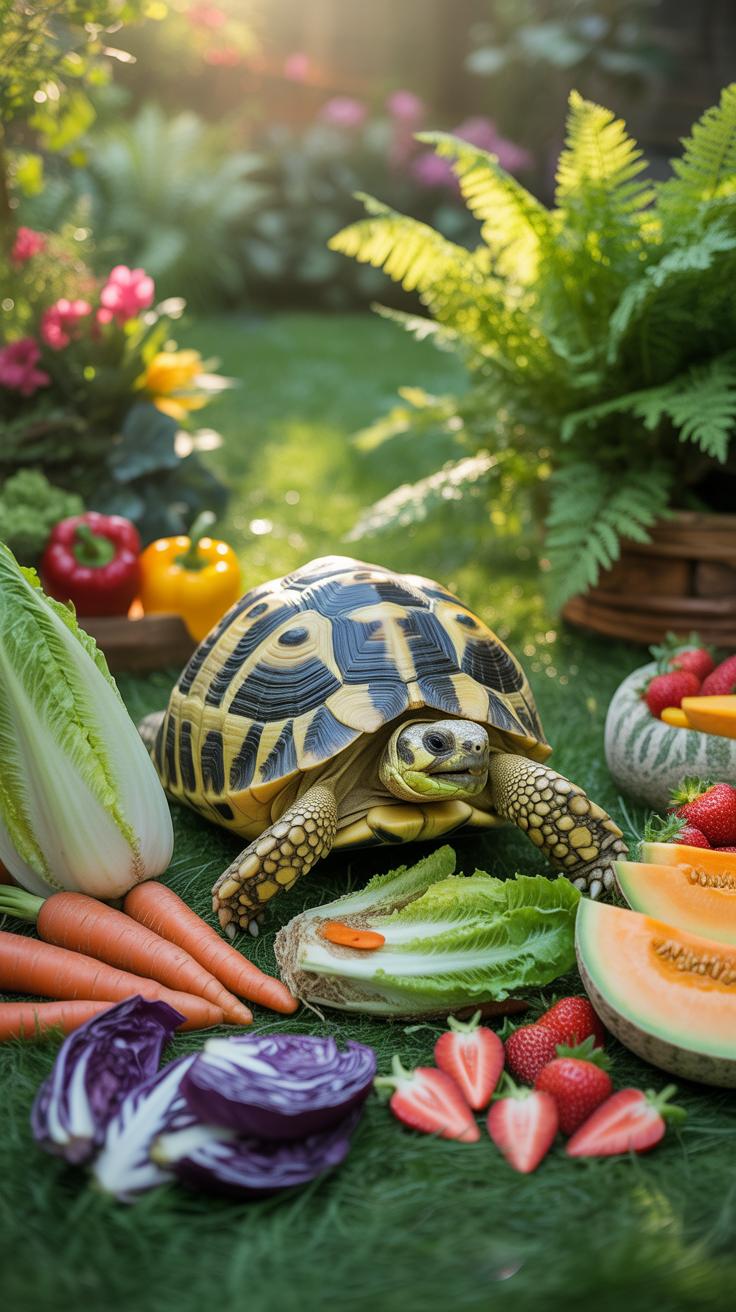
What Makes A Food A True Staple For Tortoises
A true staple food must provide high fiber and low protein. Most tortoises evolved to process tough, fibrous vegetation found in arid or grassland environments. High fiber content ensures proper gut motility and prevents digestive stagnation. You must avoid foods high in oxalates or sugars. These interfere with calcium absorption or disrupt the gut flora. A staple is safe for daily consumption.
The calcium to phosphorus ratio is the most critical metric for any staple food. You need a ratio of at least 2:1 to support bone growth and shell integrity. Foods that meet this criteria allow the tortoise to build a solid skeletal structure without metabolic complications. Always prioritize dark leafy greens and weeds that mimic a wild diet. These plants provide the necessary micronutrients without dangerous fillers.
How A Consistent Weekly Diet Supports Long Term Tortoise Health
Feeding the same high quality staples every week prevents metabolic bone disease. This condition occurs when a tortoise lacks calcium or vitamin D3. A consistent diet stabilizes the blood chemistry and supports organ function. It also helps maintain the correct growth rate. Fast growth from high protein causes shell pyramiding. Slow and steady growth is the only way to ensure a healthy life.
Predictable nutrition simplifies monitoring. You will notice health changes faster when the baseline diet is stable. Consistent intake of fiber keeps the beak trimmed through natural wear. It also ensures the tortoise stays hydrated through the moisture found in fresh greens. Proper nutrition reduces stress on the kidneys and liver over decades. Reliable feeding habits are the foundation of successful long term captive tortoise management.

Dandelion Leaves The Gold Standard Of Tortoise Food For Weekly Feeding
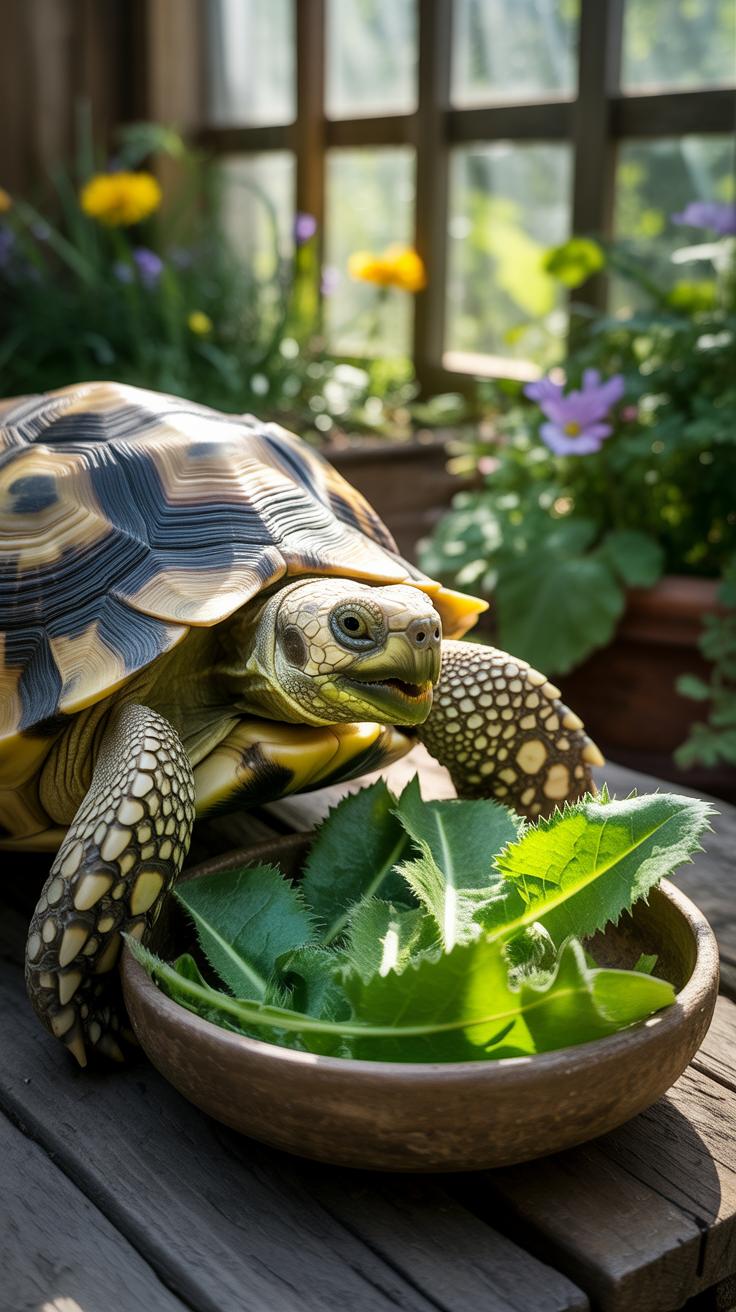
Nutritional Benefits Of Dandelion Leaves For Tortoises
Dandelion leaves lead the tortoise staple food list due to their exceptional calcium-to-phosphorus ratio. Tortoises require high calcium intake to maintain shell density and prevent metabolic bone disease. These greens provide vital nutrients without excess sugar or protein. This balance mirrors the natural diet of wild tortoises in Mediterranean and arid regions. It ensures steady growth and prevents common captive health issues.
These leaves contain high levels of Vitamin A and Vitamin K. Vitamin A supports ocular health and respiratory function in reptiles. Vitamin K aids in bone mineralization and blood clotting. The fibrous texture of the leaf also promotes healthy digestion and gut motility. Feeding dandelions weekly ensures your tortoise receives these essential micronutrients in a highly bioavailable form. This plant is a nutritional powerhouse for all species.
How To Source And Prepare Dandelion Leaves Safely Every Week
Safety is the priority when sourcing wild dandelion leaves for your tortoise. Only harvest plants from areas known to be free of chemical pesticides and herbicides. Avoid roadsides where vehicle exhaust contaminates the soil and foliage. If you buy from a grocery store, choose organic options to minimize toxin exposure. Toxic chemical buildup in a tortoise liver can cause long-term organ failure or death.

Clean all leaves thoroughly before offering them to your tortoise. Submerge the greens in a cold water bath to remove dirt, parasites, and small insects. Shake off any excess water but keep the leaves slightly damp. This adds extra hydration to the tortoises diet during feeding. Serve the leaves whole to encourage natural foraging and biting behaviors. Proper preparation prevents illness and maximizes the health benefits of this staple green.
Leafy Greens And Grasses That Belong On Every Tortoise Feeding Guide
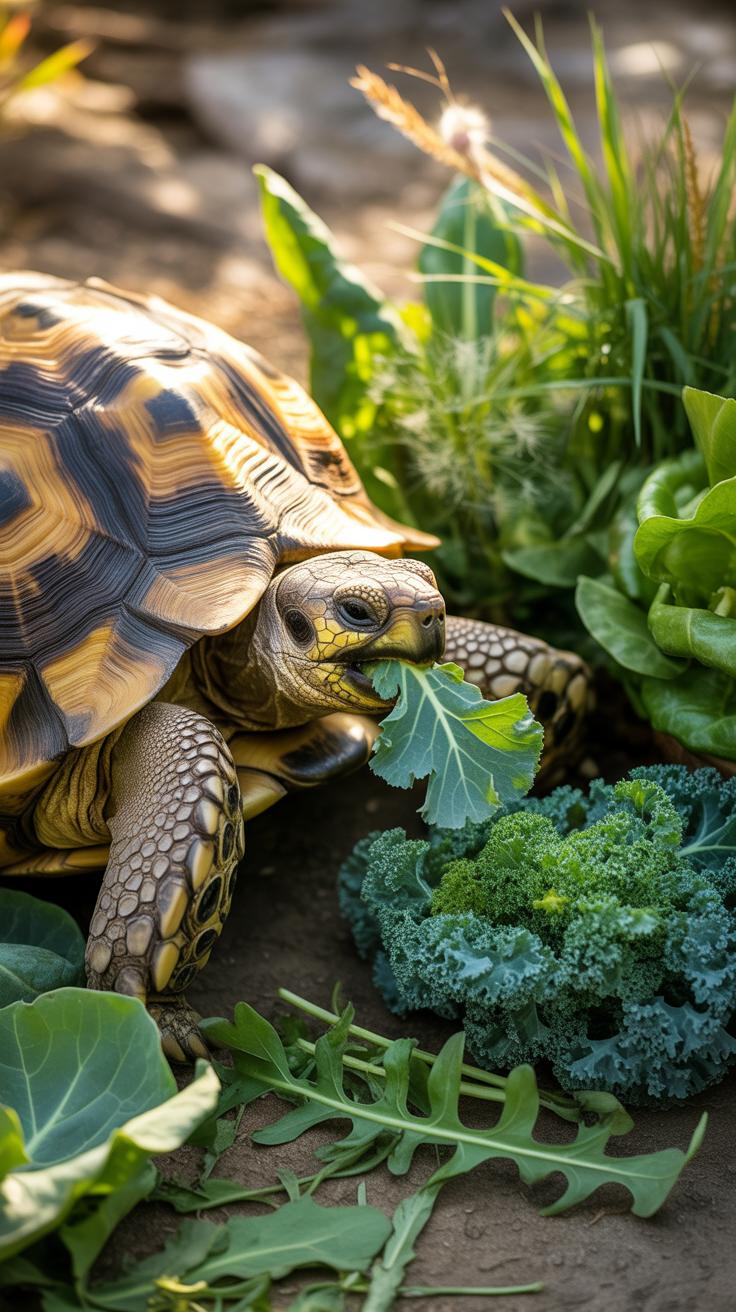
The Best Grasses And Hay Options To Offer Tortoises Regularly
Grasses and hays provide the essential fiber required by grazing tortoise species. High fiber content maintains gut motility and prevents soft stools. These materials mirror the natural diet of species like Africans Spurs and Leopards. You must provide these daily to ensure long term digestive health and prevent obesity. Fresh grass and dried hay keep the beak trimmed through natural wear during chewing.
- Timothy Hay: This standard forage provides high fiber and low protein. It suits most adult tortoises perfectly. Long strands encourage natural foraging behavior and keep the digestive tract moving. Always select green hay with a fresh scent to avoid mold issues.
- Orchard Grass: This grass offers a softer texture than Timothy hay. It works well for stubborn eaters who refuse coarser stalks. It contains the necessary fiber levels for healthy growth. Many keepers mix this with other hays to increase dietary variety and palatability.
- Bermuda Grass: This hardy grass grows well in many climates and provides excellent nutrients. It resists heavy grazing and foot traffic in outdoor enclosures. Most grazing tortoises find it highly palatable when fresh. It serves as a reliable base for a year round outdoor feeding strategy.
- Alfalfa Hay: Use this hay sparingly because it contains high protein and calcium levels. It benefits growing juveniles and nesting females. Excessive use in adults causes kidney issues and shell deformities. Treat it as a supplement rather than a primary daily food source for mature tortoises.
- Oat Hay: This hay contains crunchy stalks and tasty seed heads. Tortoises enjoy the varied texture and flavor profile. It provides a different nutrient set compared to standard meadow grasses. Ensure the hay is free of dust and debris before offering it to your animals.
Dry hay works best when chopped into manageable pieces for smaller tortoises. Hydrate the hay by soaking it in water to increase fluid intake. This tactic prevents bladder stones and dehydration. Always source pesticide free grasses to avoid chemical poisoning. Consistent access to these roughage sources prevents shell pyramiding and ensures a steady metabolic rate across all life stages.
Dark Leafy Greens That Provide Essential Vitamins And Minerals
Broadleaf greens mimic the weeds and shrubs tortoises find in the wild. These plants offer high levels of Vitamin A and Calcium. You must focus on the calcium to phosphorus ratio. A positive ratio ensures strong bone development and shell integrity. Avoid greens high in oxalates as they bind calcium and cause deficiencies. Rotate these greens weekly to prevent nutrient gaps.

Consistency in green selection determines the health of the tortoise. Use greens like collards, turnip tops, and mustard greens as the foundation of the diet. These items are available in most stores and provide dense nutrition. Remove any wilted or yellowing leaves to prevent bacterial growth. Feed these items on a flat slate to keep the beak sharp and the food clean from substrate.
Sulcata Tortoise Diet Staple Foods Tailored For The African Spurred Tortoise
Why High Fiber Grass Based Diets Are Critical For Sulcata Tortoises
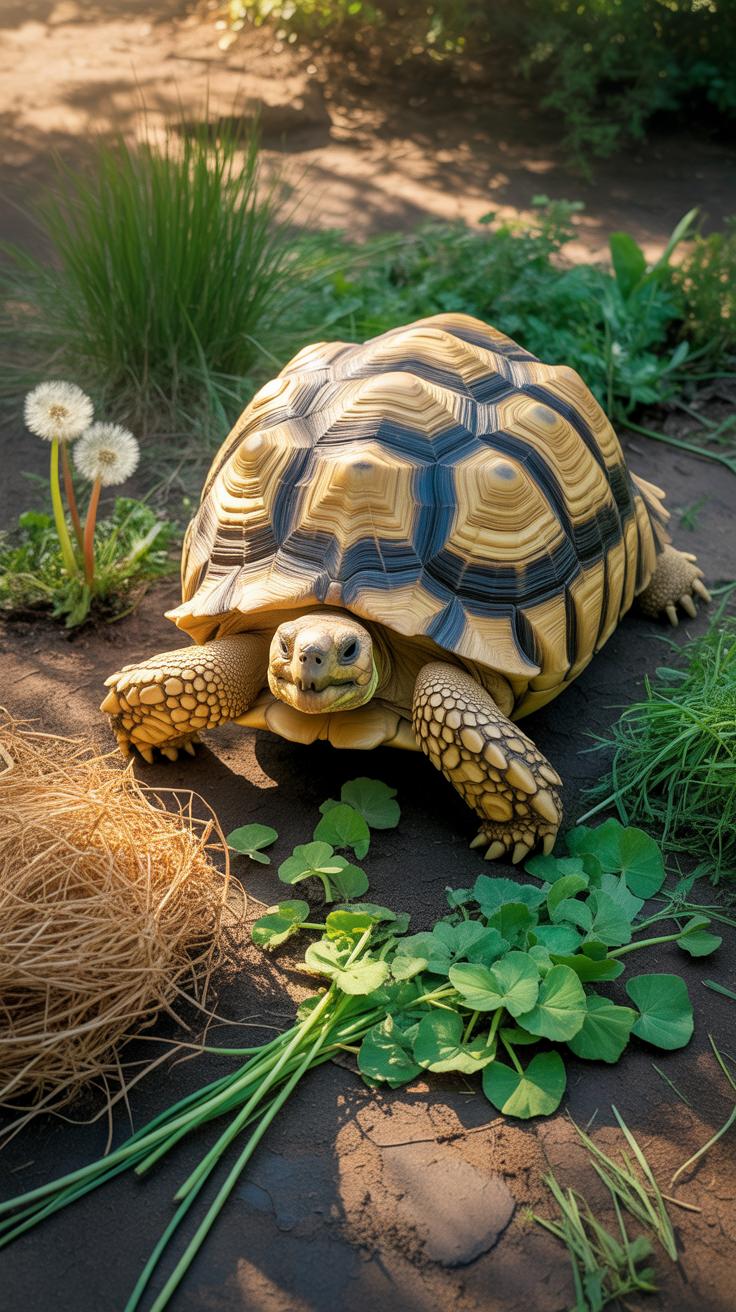
Sulcata tortoises originate from the harsh Sahel region of Africa. Their bodies evolved to process tough, dry vegetation with very little moisture. High fiber intake ensures the digestive tract functions properly. Without enough roughage, these tortoises develop soft stools and internal parasites. Fiber helps control growth rates to prevent shell metabolic diseases. You must focus on cellulose and lignin found in mature grasses.
Low fiber diets cause rapid, unhealthy growth. This leads to pyramiding, where the shell scutes grow into unnatural peaks. High sugar foods like fruit disrupt the gut pH scale. This disruption kills beneficial bacteria needed for fermentation. Stick to a diet that is at least seventy percent grass. This mimics their natural dry environment and keeps the tortoise lean. Constant access to hay prevents boredom and digestive stagnation.
Weekly Feeding Portions And Frequency For Sulcata Tortoises
Feed adult Sulcatas every single day. Provide a pile of hay or grass that matches the size of the animal. They are grazing machines that need food available throughout the daylight hours. Monitoring weight helps you adjust portions accurately. If the tortoise leaves food behind, reduce the amount next time. Maintaining a consistent schedule prevents stress. Focus on quantity of fiber over variety of treats.

Younger tortoises require smaller, more frequent meals of soft weeds. As they age, transition them to eighty-five percent grass and hay. Limit dark leafy greens to twice a week to manage calcium ratios. Supplementing with calcium powder twice weekly ensures bone density stays high. Watch for clear eyes and steady movement to gauge health. Adjusting portions based on activity levels prevents obesity. Expert keepers track consumption to notice early health changes.
Russian Tortoise Diet Choosing The Right Staple Foods For This Hardy Species
Native Plants And Weeds That Mirror The Russian Tortoise Natural Diet
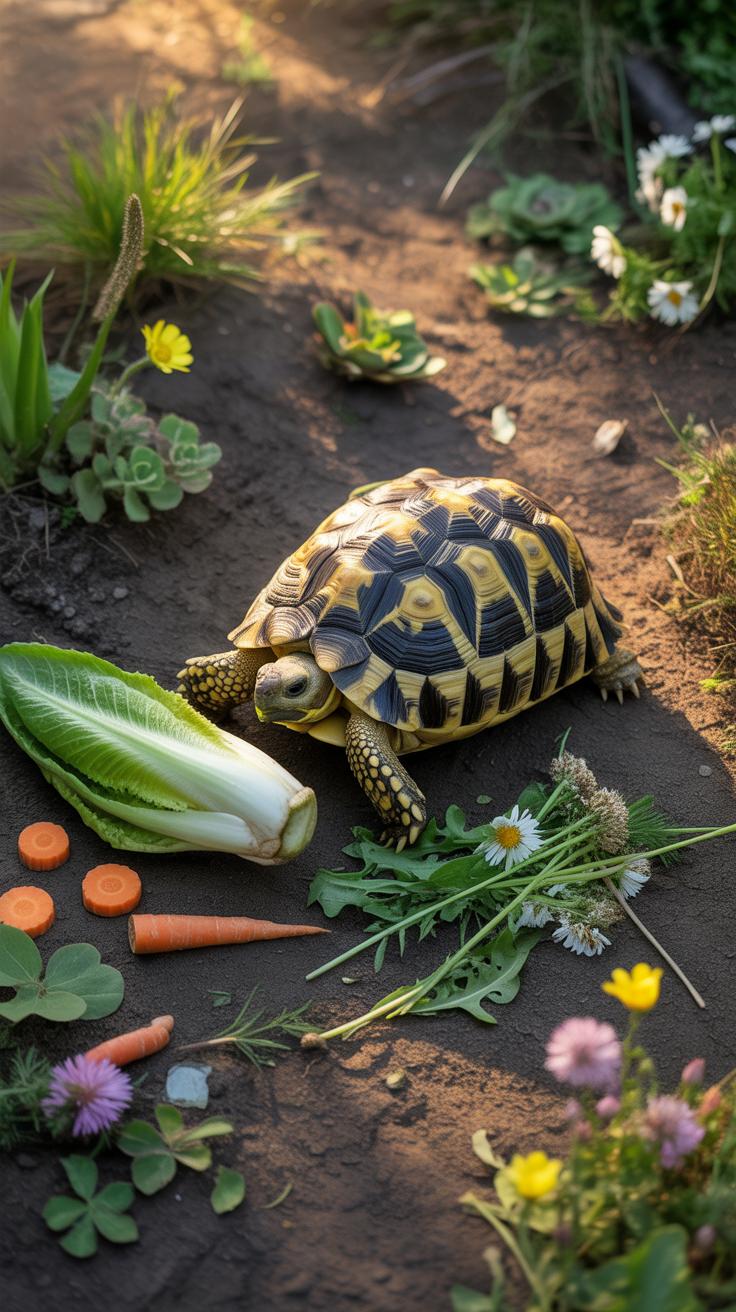
Russian tortoises originate from arid regions in Central Asia. They survive on tough and fibrous vegetation found in dry grasslands and rocky steppes. Mimicking this diet requires a focus on weeds rather than commercial vegetables. Broadleaf weeds provide the high fiber and low protein levels necessary for their digestive health. These plants often contain calcium ratios that support healthy shell development.
Direct foraging provides the best nutrient density for this species. Dandelion greens and plantain weeds serve as primary sources of nutrition. These plants offer the gritty texture required to keep the beak trimmed naturally. You must ensure all collected plants are free from pesticides and heavy metals. Use these weeds as the foundation of the diet to prevent the obesity common in captive reptiles.
Foods To Prioritize And Avoid In A Russian Tortoise Weekly Meal Plan
Prioritize dark leafy greens like escarole and endive when wild weeds are unavailable. These greens provide adequate moisture and essential vitamins without excessive sugar. Rotate these items daily to ensure a broad spectrum of micronutrients. High fiber intake maintains gut motility and prevents metabolic bone disease. Always dust food with calcium powder twice a week to verify mineral intake matches their physiological needs.

Avoid feeding fruit or starchy vegetables to Russian tortoises. Their digestive systems cannot process high glucose levels effectively. Excess sugar leads to parasitic blooms and serious kidney issues in this species. Do not offer iceberg lettuce or meat products. These items lack nutritional value or contain dangerous protein levels. Stick to a strict herbivorous plan focused on leafy vegetation to guarantee long term health.
Edible Weeds And Wildflowers To Rotate Into Your Tortoise Food Weekly Routine

Common Backyard Weeds That Are Safe And Nutritious For Tortoises
Dandelions serve as the primary fuel source for many tortoise species. They contain high levels of calcium and vitamin A. You must harvest the leaves and the flowers for maximum nutrition. These plants grow in most temperate regions and resist drought well. Use them as a base for your daily feeding routine. They provide the fiber necessary for proper gut motility and health.
Plantain weeds offer another critical resource for your tortoise staple food list. The broadleaf and narrow-leaf varieties are both safe. They contain essential minerals and help prevent soft shell issues. Thistle is also an excellent option if you remove the largest spines first. These wild plants mimic the natural diet found in the wild. Always verify your yard is free from chemical pesticides before harvesting any weeds.
How To Rotate Wildflowers And Weeds To Prevent Dietary Monotony
Monotony leads to nutritional deficiencies and picky eating habits. You must change the weed selection every three days. Mix different textures and colors to stimulate the tortoise. Use mallow and clover in small amounts alongside your main weeds. This variation ensures a broad spectrum of trace minerals. Diversified feeding prevents the buildup of oxalates found in certain plants. Consistency in rotation builds a stronger immune system.

Wildflowers like hibiscus and pansies provide high fiber and moisture. Integrate these petals into the greens twice per week. Do not rely on one single plant type for more than forty percent of the diet. Foraging for different species keeps the animal active and engaged with its food. High variety mimics the opportunistic feeding patterns seen in nature. Track the intake of each weed to ensure your tortoise maintains a healthy growth rate.
Calcium And Supplementation Essential Tortoise Care Tips To Pair With Staple Foods
Why Calcium Is Non Negotiable In A Weekly Tortoise Feeding Plan
Tortoises require high levels of calcium to build and maintain bone density and shell structure. Their skeletal system makes up a large portion of their body mass. Without enough calcium, their bodies draw minerals from their own bones. This leads to Metabolic Bone Disease. This condition causes soft shells, deformed limbs, and eventual death. Calcium is the foundation of tortoise health.
A proper tortoise staple food list often lacks the perfect calcium-to-phosphorus ratio. Phosphorus blocks calcium absorption if levels are too high. Most grocery store greens contain some phosphorus. You must add supplemental calcium to balance this ratio. This ensures the tortoise absorbs what it needs for growth. Consistent supplementation prevents long-term health failures. It keeps the shell hard and the tortoise mobile.
How To Use Cuttlebone And Calcium Powder As Weekly Supplements
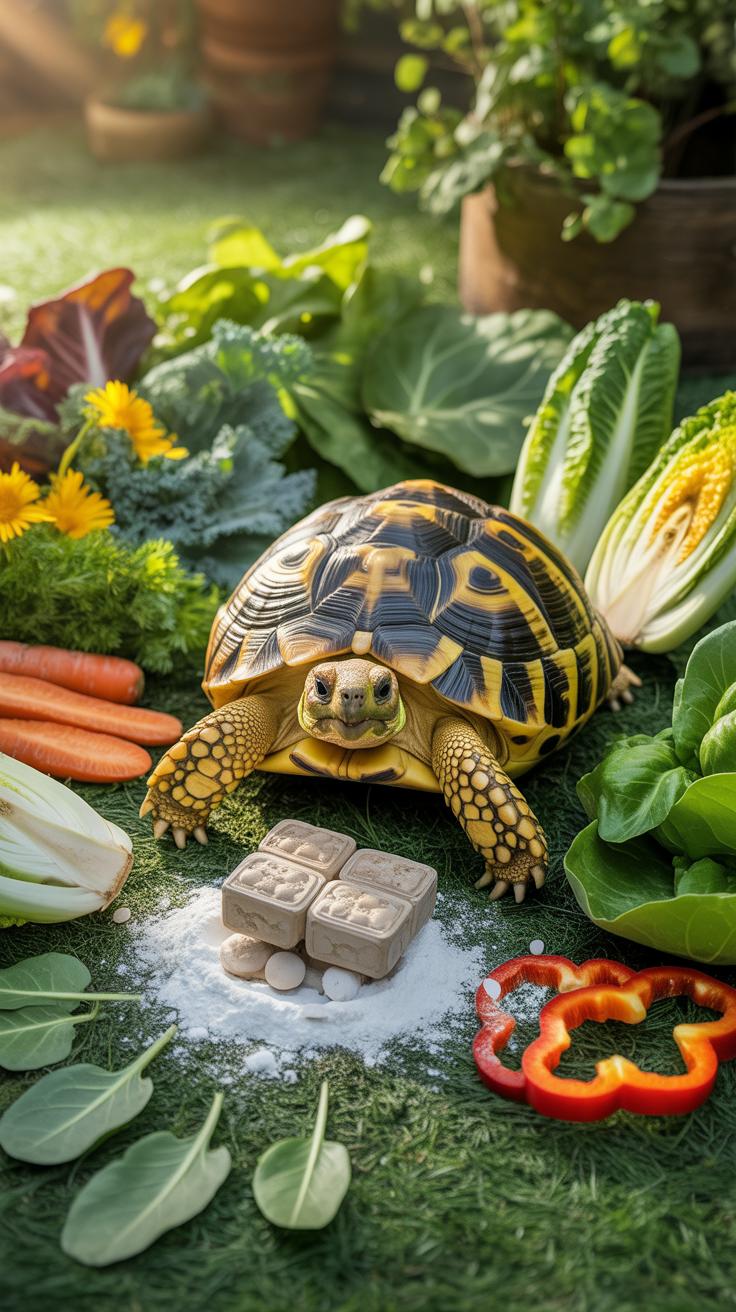
Apply supplements directly to the wet greens you serve. Use a fine powder without added Vitamin D3 for tortoises kept outdoors. Indoor tortoises require Vitamin D3 to process the calcium since they lack natural sunlight. Dust the food lightly twice per week for adults. Growing hatchlings need more frequent dusting. This method ensures the tortoise consumes the mineral while eating its regular meal.
- Cuttlebone: Place a whole cuttlebone in the enclosure at all times. This allows the tortoise to self-regulate its calcium intake. Biting the hard bone also helps trim the bird-like beak naturally.
- Calcium Carbonate Powder: Use a pure calcium carbonate powder for most feedings. This fine dust sticks well to leafy greens and flowers. It is the most bioavailable form of calcium for easy digestion and absorption.
- Vitamin D3 Supplementation: Use calcium with D3 only for indoor tortoises. These animals do not receive unfiltered UVB rays from the sun. D3 acts as a key to unlock calcium absorption within the gut.
- Frequency for Juveniles: Dust every meal for tortoises under three years old. Rapid growth phases demand constant mineral supply to prevent shell pyramiding. Early intervention ensures a smooth and strong shell for the duration of its life.
- Frequency for Adults: Supplement adult meals two or three times per week. Fully grown tortoises have lower mineral requirements than hatchlings but still need maintenance doses. Over-supplementation can cause kidney stones, so follow a strict weekly schedule.

Monitor the tortoise for signs of over-supplementation or deficiency. White, gritty urates in the waste indicate too much calcium or dehydration. Soft shell margins indicate a serious lack of minerals. Keep the cuttlebone clean and replace powder if it becomes damp. Consistent application turns a basic tortoise staple food list into a complete nutritional program. Follow these steps to ensure your tortoise lives for decades.
Foods To Avoid What Should Never Appear On Your Tortoise Staple Food List
Fruits, Proteins, And High Sugar Foods That Can Harm Tortoise Digestion
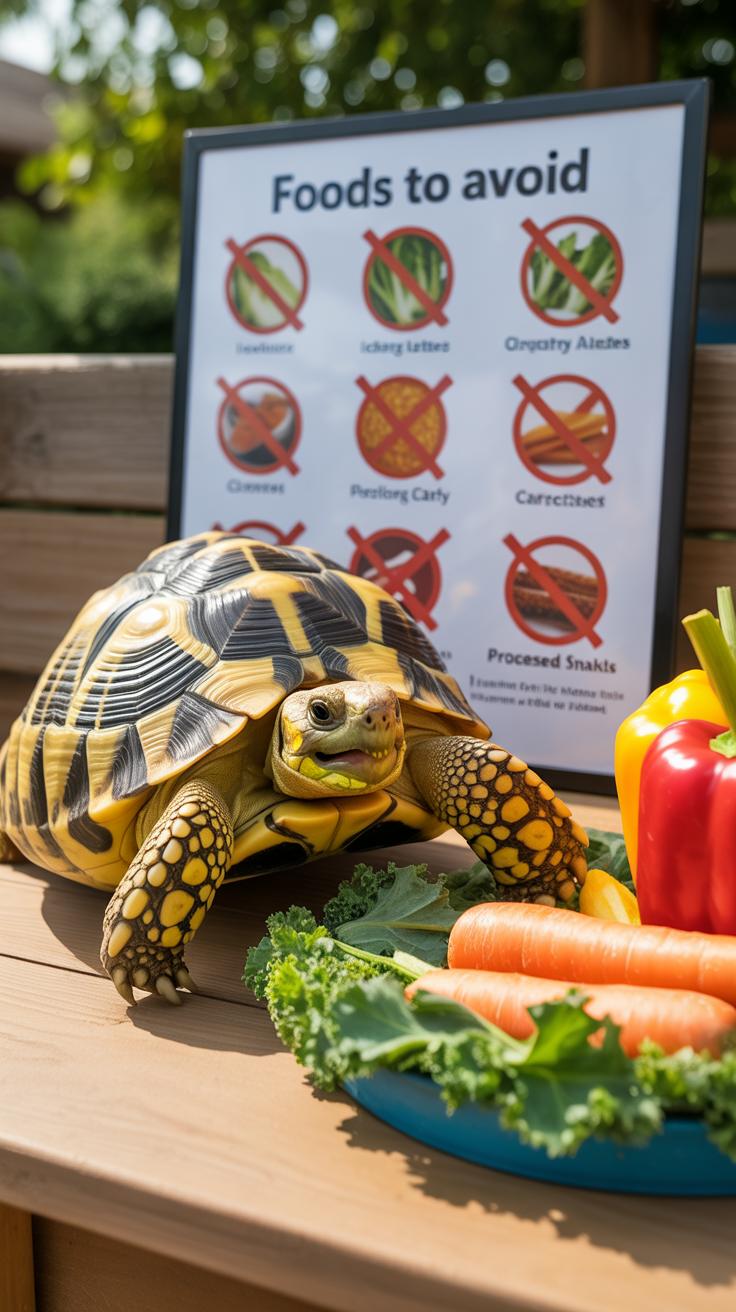
Most tortoises are hindgut fermenters designed to process low-quality fiber. High-sugar fruits disrupt their delicate gut flora immediately. Rapid fermentation of sugars causes painful gas and severe bloating. These spikes in sugar levels can also lead to parasitic blooms within the digestive tract. You must prioritize tough weeds and grasses over sugary treats. Any food with high natural sugar risks causing long-term organ failure.
Protein-heavy diets are equally dangerous for these reptiles. Excess protein causes the shell to grow too fast. This results in permanent shell deformities known as pyramiding. Soft shells and metabolic bone disease often follow high-protein intake. Never feed cat food, dog food, or animal proteins to herbivorous tortoises. Their kidneys cannot process these dense nutrients. Stick to a low-protein and high-fiber diet to ensure a flat and healthy shell.
Like the gentle gardens of my childhood, a tortoise thrives when we offer the quiet strength of leafy greens and the simple nourishment of the earth.
Toxic Plants And Common Household Foods That Are Dangerous To Tortoises
Many common garden plants contain lethal toxins for tortoises. Oxalic acid is a primary threat in vegetables like spinach and rhubarb. This acid binds to calcium and prevents absorption in the body. Without calcium, tortoise bones and shells become weak and brittle. Azaleas and rhododendrons contain grayanotoxins that can kill a tortoise quickly. Always verify every plant in your yard before allowing your tortoise to graze freely.

Avoid all processed human foods and dairy products entirely. Tortoises lack the enzymes necessary to digest lactose and complex grain structures. Items like bread and pasta provide zero nutritional value and cause severe internal inflammation. Brassicas like broccoli and kale should only appear in small amounts. These plants contain goitrogens that interfere with thyroid function. Tactical feeding requires you to exclude these hazards to prevent chronic illness or sudden death.
Hydration And The Turtle Enclosure How Environment Supports A Healthy Tortoise Diet
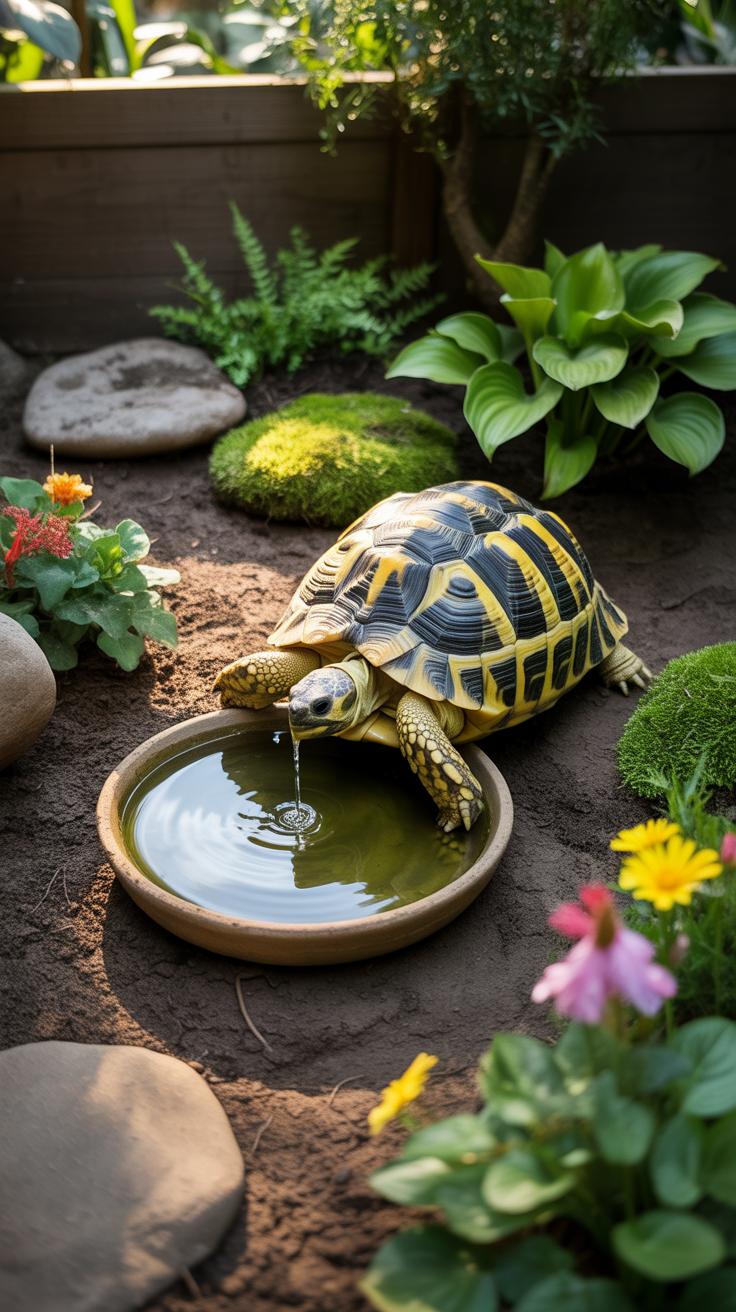
How Proper Soaking Routines Complement A Tortoise’S Weekly Staple Diet
A tortoise absorbs most fluids through food, but dietary moisture is rarely enough for total health. You must soak your tortoise at least two to three times per week. Use shallow, lukewarm water that reaches the chin. This routine stimulates the digestive tract and ensures the kidneys process fiber efficiently. Without external hydration, high-calcium staple greens can lead to bladder stones.
Regular soaking also encourages the tortoise to void its bowels and bladder. This prevents waste buildup from obstructing the metabolism. A hydrated tortoise maintains a stronger appetite for the fibrous greens on your staple list. Monitor the water temperature to prevent cooling their core body temperature. Consistent hydration turns dry plant matter into usable energy. It is a mandatory part of any feeding strategy.
Setting Up The Turtle Enclosure To Encourage Natural Foraging Behavior
The enclosure layout must force movement to mimic natural survival patterns. Place food at the opposite end of the heat source to drive physical activity. Use flat rocks or slate tiles as feeding platforms to keep the substrate out of the gut. This method also wears down the beak naturally. Foraging increases the metabolic rate and improves how the tortoise processes raw nutrients.
Incorporate sightline breaks like logs or plants to prevent a direct path to the food bowl. This setup encourages the tortoise to search for its meal. Scatter pieces of the staple diet throughout different zones. Movement promotes healthy shell growth and prevents obesity from sedentary behavior. Proper design turns a simple meal into a physical workout. A smart enclosure makes your dietary plan more effective.
Building A Practical Weekly Tortoise Feeding Guide Around Proven Staple Foods
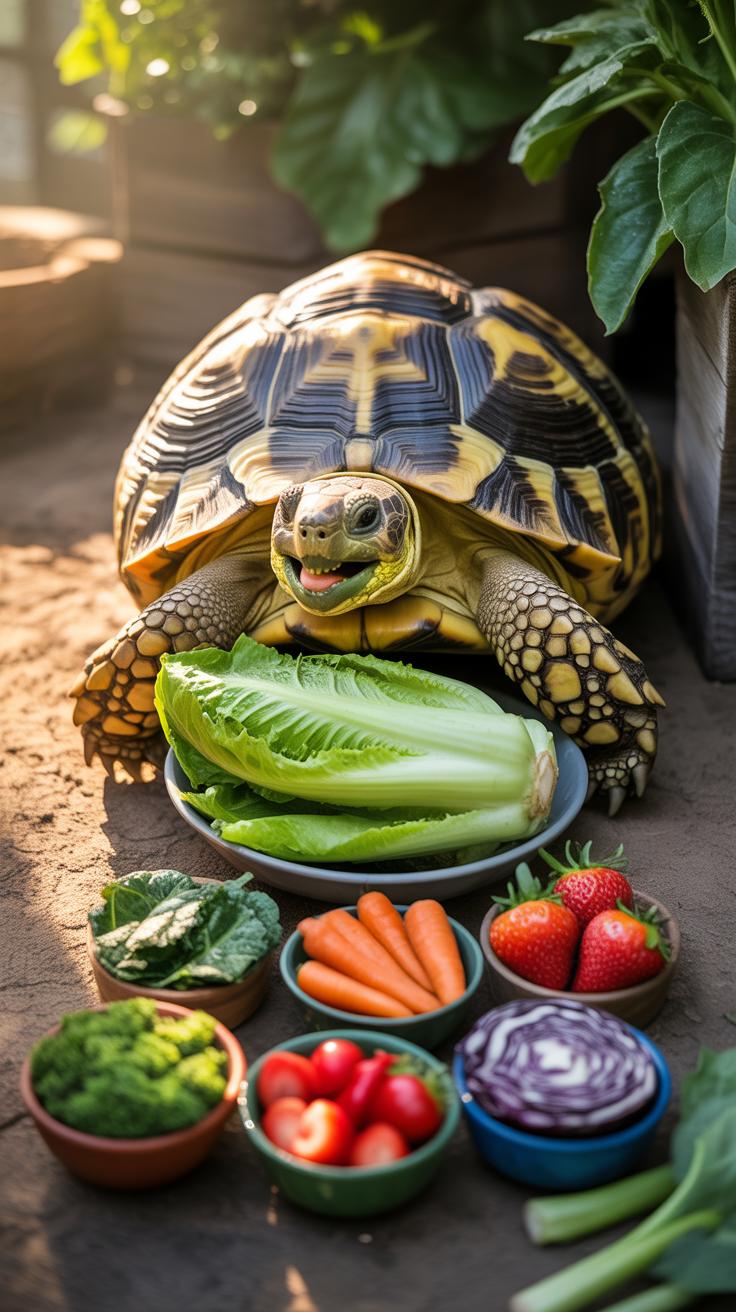
How To Structure A 7 Day Tortoise Feeding Schedule Using Staple Foods
A successful feeding schedule relies on high-fiber greens as the base. You must rotate these staple foods to ensure a wide nutrient profile. Feed your tortoise once per day at a consistent time. Morning is best because they need heat to digest food properly. Offer a portion size that equals the shell size of the animal. This prevents overfeeding and shell deformities.
Do not feed the same single leaf every day. Mix two or three different staples from your list. This prevents your tortoise from becoming a picky eater. Remove uneaten food after thirty minutes to keep the habitat clean. Hydration is vital alongside solid food. Soak the greens in water before serving to increase fluid intake. Systematic feeding builds a healthy growth rate.
Adjusting Your Tortoise Staple Food List As Your Tortoise Grows And Seasons Change
Juvenile tortoises need more frequent feeding to support rapid bone growth. They require higher calcium levels and smaller leaf sizes. As the tortoise matures, you must increase the fiber content. Mature adults can handle tougher stalks and dried grasses. Shift the focus from soft greens to coarse forage as they age. This mimicry of natural life cycles ensures long-term gut health and activity.
Seasonal changes dictate food availability and tortoise metabolism. In winter, many keepers rely on store-bought greens like escarole or endive. During spring and summer, transition to fresh weeds and hibiscus leaves. These wild plants often provide superior nutrition compared to grocery store produce. Always identify wild plants with total certainty before feeding. Adjust the moisture content of the diet based on the humidity of the season.
Frequently Asked Questions

What are the most important greens to include in my tortoise’s daily diet?
For most species, leafy greens should make up about 80% of their intake. Dark, calcium-rich greens like dandelion greens, mulberry leaves, and turnip greens are essential components of a healthy tortoise staple food list. These provide necessary fiber and micronutrients that mimic their natural grazing habits. Always ensure a variety of leaves are offered to prevent nutritional deficiencies and keep your reptile interested in their meals throughout the week.
How often should I rotate the items on my tortoise staple food list?
Consistency is helpful, but variety is vital for long-term health. You should rotate through three to five different leafy greens every week to ensure a broad spectrum of vitamins. When following a tortoise staple food list, try introducing one new seasonal weed or floral treat alongside their regular favorites. This practical approach prevents your tortoise from becoming a picky eater while ensuring they receive balanced levels of calcium and phosphorus daily.
Can I find healthy tortoise food at a regular grocery store on a budget?
Absolutely! You don’t need expensive specialty shops to nourish your pet. Many affordable items like collard greens, mustard greens, and endive are readily available at local supermarkets. To save even more, look for “naturally grown” edible weeds in your own pesticide-free backyard, such as clover or plantain. Prioritizing these accessible, nutrient-dense greens makes maintaining a healthy lifestyle for your tortoise both simple and highly cost-effective for any budget.