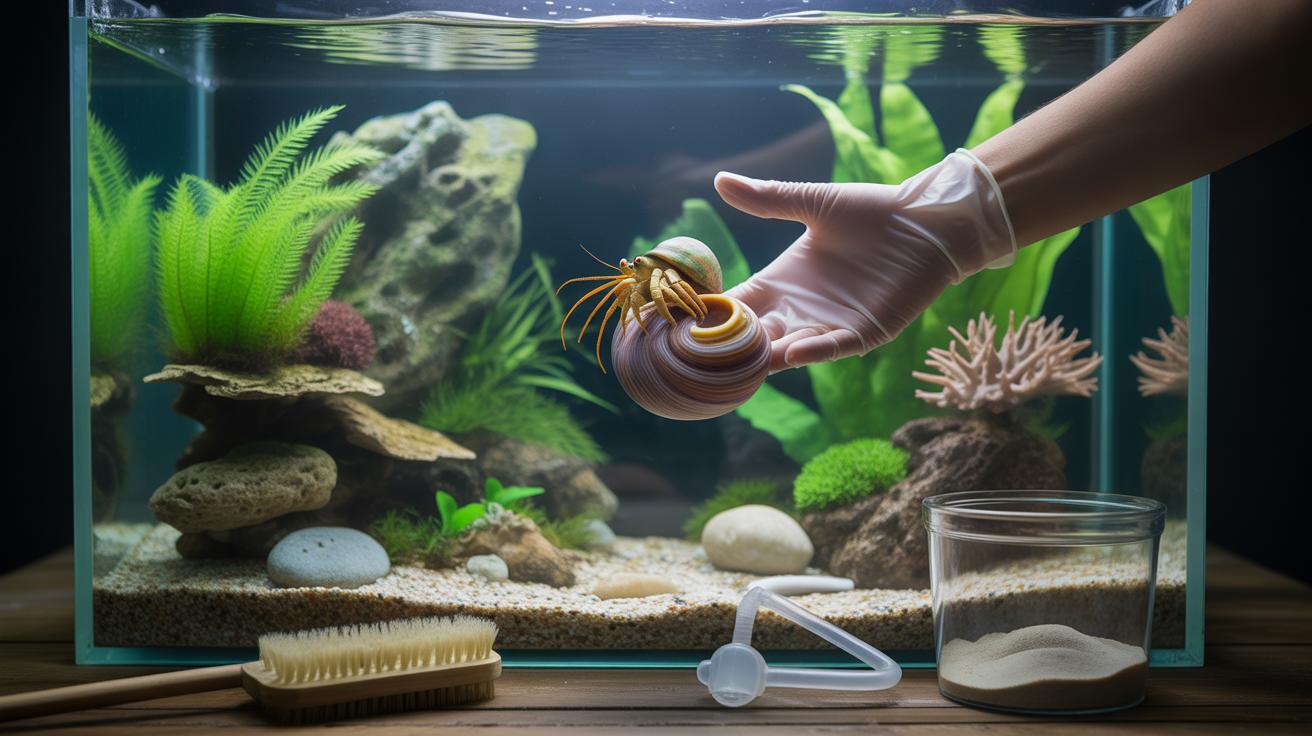
Understanding What Makes A Hermit Crab Tank Setup Dirty Over Time
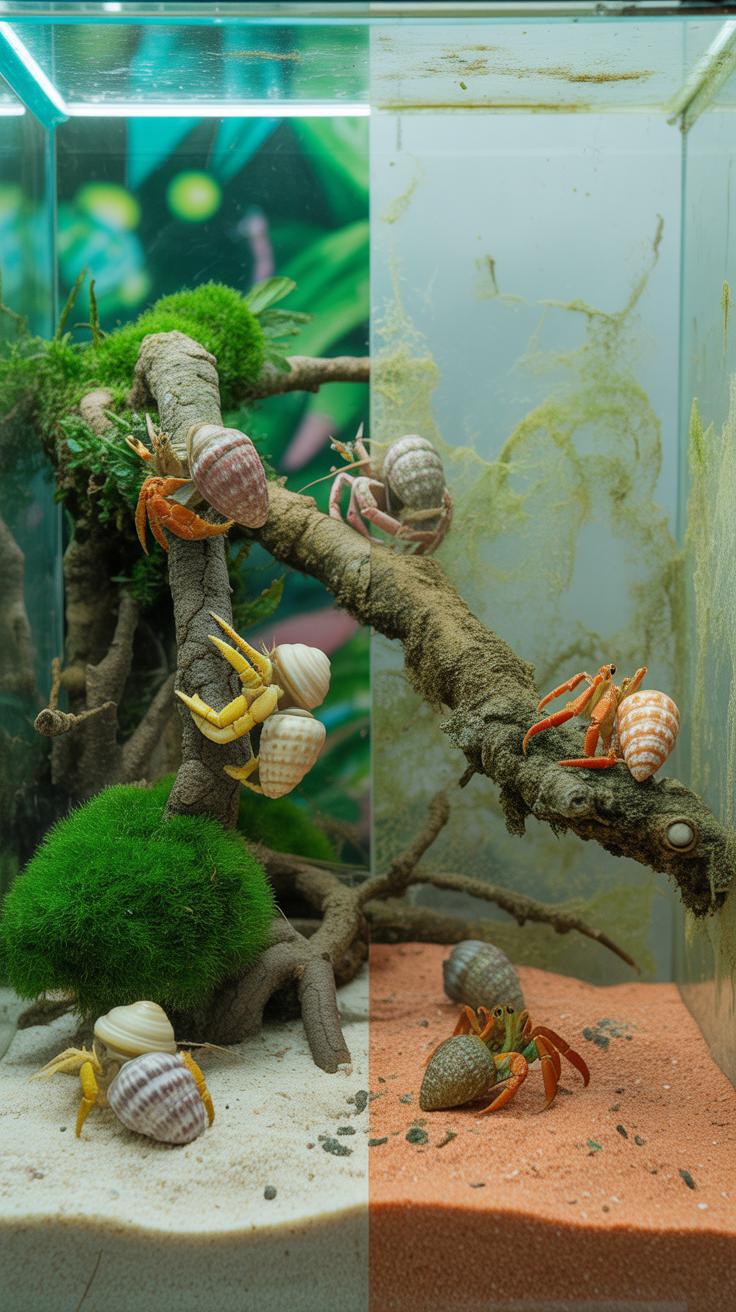
Common Sources Of Bacteria And Waste In A Hermit Crab Enclosure
Hermit crabs produce physical waste that accumulates in the substrate and corners of the tank. Dragged food remains pose the most immediate threat to water quality and air hygiene. These scraps rot quickly in warm environments. Leftover protein and fruit particles invite bacterial blooms. Surface waste often gets buried by digging crabs. This creates hidden pockets of decaying matter below the top layer.
Exoskeletons shed during molting also add organic bulk to the environment. While crabs eat parts of their shed, remaining pieces can decompose. Waste from salt and freshwater pools spills into the surrounding sand. This moisture accelerates the breakdown of droppings. Over time, these combined elements create a high bio-load. The closed system cannot process this volume naturally. Regular spot cleaning often misses these deep-seated contaminants.
How Humidity And Substrate Contribute To Mold And Odor Buildup
High humidity is vital for crab respiration but fuels fungal growth. Stagnant air trapped inside a glass enclosure creates a greenhouse effect. This environment allows mold spores to colonize wood decor and porous climbing toys. Natural materials like moss and Cholla wood absorb excess moisture. Once saturated, these items become breeding grounds for spores. This leads to persistent musty odors and potential respiratory issues for the crabs.
The substrate acts as a massive filter for the entire enclosure. Sand and coconut fiber hold onto liquids that seep down from the surface. Without proper drainage or air circulation, the bottom layers become anaerobic. These oxygen-deprived zones produce sulfur gases that smell like rotten eggs. This chemical buildup indicates a dangerous environment for molting crabs. Total substrate saturation necessitates a full deep clean to restore safety.

How Often Should You Deep Clean A Hermit Crab Tank
Recommended Deep Cleaning Frequency Based On Tank Size And Crab Population
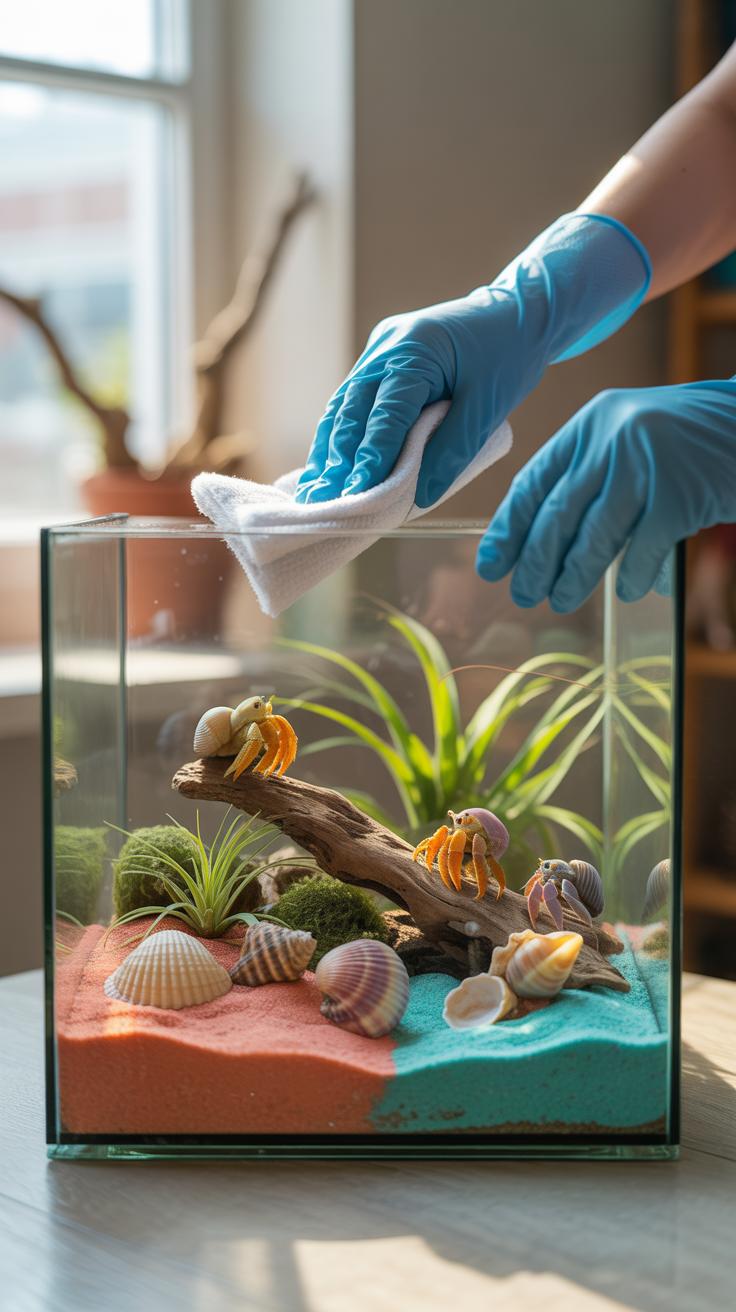
A standard hermit crab tank requires a deep clean once or twice every year. Large enclosures with a low crab density maintain biological balance longer than small, crowded spaces. This process involves a total substrate replacement and equipment sterilization. You must never perform this task while a crab is molting underground. Disturbing a molting crab can cause physical trauma or death.
Small tanks under twenty gallons need more frequent monitoring. Waste builds up quickly in confined areas. If you keep more than three crabs in a ten gallon tank, schedule deep cleans every four months. High populations increase the nitrogen load in the substrate. Larger habitats over forty gallons remain stable for twelve months if you perform regular spot cleans. Focus on waste removal to extend the time between deep cleans.
Signs That Your Hermit Crab Habitat Needs An Immediate Deep Clean
Odor is the first indicator of a failing environment. A healthy tank smells like clean earth or salt water. A sharp or sour scent indicates bacterial growth or rotting food. If you detect a fishy smell, a crab may have died underground. This requires an immediate but careful investigation of the substrate. You must locate the source of the rot to prevent mass colony illness or death.

Visual cues also dictate the cleaning schedule. Excessive mold growth on wood or substrate signals poor air circulation and high moisture. Look for flooding at the bottom of the glass. Standing water in the substrate creates anaerobic pockets that produce toxic gases. Pests like grain mites or ants require a total tank reset. Do not wait for a scheduled date if you see active infestations or standing water pools.
Supplies And Tools You Need Before Starting A Hermit Crab Tank Deep Clean
Safe Cleaning Agents That Won’T Harm Your Hermit Crabs
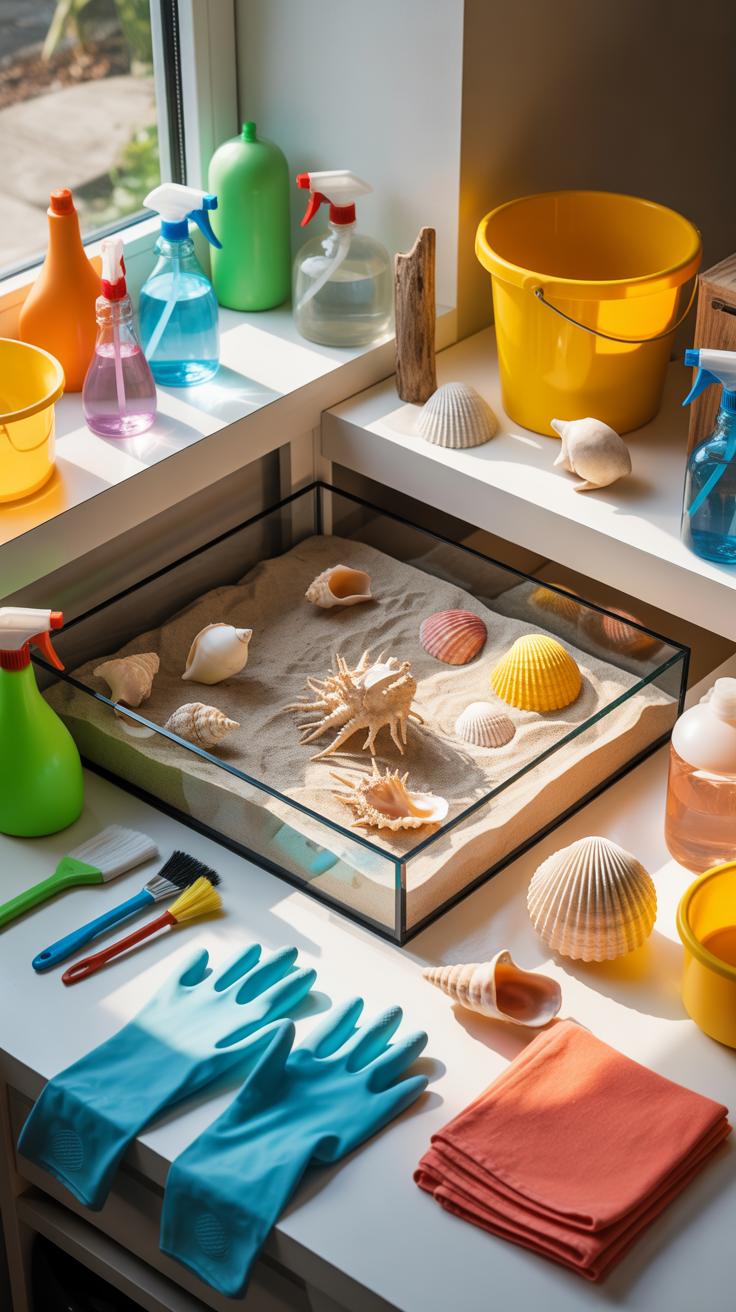
Hermit crabs possess sensitive modified gills and chemoreceptors. Using the wrong substances during a deep clean causes irreparable respiratory damage or death. You must utilize inert agents that break down organic waste without leaving toxic residues. Specialized reptile-safe cleaners or simple household staples provide effective sanitation. These options ensure the glass and hard decor remain clean while keeping the environment safe for inhabitant re-entry.
- Distilled White Vinegar: This acidic liquid cuts through calcium deposits and mineral buildup on glass walls. It is a natural disinfectant that evaporates completely without leaving harmful chemical films. Always rinse surfaces with dechlorinated water after application to remove the strong scent.
- Dechlorinated Water: Fresh water treated with a quality water conditioner is your primary cleaning tool. Use it to scrub resin decor and rinse all surfaces. It prevents the introduction of heavy metals and chlorine found in most municipal tap water supplies.
- Isopropyl Alcohol: Use a high-percentage rubbing alcohol to sanitize glass exterior surfaces or tools. It kills bacteria and evaporates rapidly. Never spray this inside the tank while crabs are present. Ensure all fumes dissipate before placing your crabs back into the enclosure.
- Hot Water: Boiling water serves as an excellent sterilization tool for heat-resistant items like rocks or ceramic bowls. High temperatures kill most pathogens and mold spores without the need for additives. Always allow items to cool completely to room temperature before returning them to the tank.
- Reptile-Safe Enzyme Cleaners: These specialized products use beneficial bacteria or enzymes to eat away organic waste and odors. They are specifically formulated for sensitive exotic pets. Ensure the product label explicitly states it contains no phenols or synthetic fragrances before purchasing for your hermit crab.
Prepare your workspace by gathering these supplies before you move the crabs. Tactical preparation prevents mistakes and reduces the time your crabs spend in temporary holding. Use clean microfiber cloths or new sponges that have never touched soap. Keep a dedicated bucket for rinsing decor as you work. This organized approach maintains a sterile chain of command during the cleaning process.
Tending to these small wonders with care ensures their seaside sanctuary remains a place of joy and health. By refreshing their world safely, we honor the quiet magic of the life we have been entrusted to protect.
Why You Must Avoid Bleach, Soap, And Chemical Based Cleaners Near Hermit Crabs
Hermit crabs thrive in a delicate equilibrium within their enclosure. Standard household cleaners contain ammonia, bleach, or synthetic fragrances that irritate their respiratory systems. These chemicals linger in porous materials like wood, sand, or cork. Even trace amounts of soap film can disrupt the surface tension of the water in their gills. This leads to suffocation or chemical burns on their soft abdomens.
Avoid any product containing phenols or pine oils as these are toxic to invertebrates. Traditional glass cleaners often contain ammonia which produces lethal fumes in enclosed spaces. If a chemical scent lingers, the tank is not ready for the crabs. Stick to mechanical scrubbing and safe acidic agents. Protecting their sensitive sensors is your top priority during this maintenance phase. Turn off any nearby air fresheners until the clean is complete.
How To Safely Relocate Your Hermit Crabs Before Deep Cleaning Their Hermit Crab Habitat

Setting Up A Temporary Holding Tank That Mimics Their Natural Environment
A temporary tank must keep crabs stable during the cleaning process. Use a plastic tote or a smaller glass aquarium for this purpose. Ensure the container has a tight lid with small air holes to prevent escape. Line the bottom with a thin layer of damp coconut fiber or sand. This substrate holds moisture and provides a familiar texture for the crabs.
Maintain high humidity levels inside the temporary bin. Spray the walls with dechlorinated water before adding the crabs. Place a small water dish and a hiding spot inside to reduce stress. Keep the container in a warm room away from direct sunlight or drafts. Temperature and humidity must stay within the safe range of seventy-five to eighty-five degrees and percent.
Handling Hermit Crabs Safely During The Transfer Process
Move crabs only when they are active on the surface. Never dig up a molting crab to clean the tank. Digging up a crab in a molt cell can cause fatal stress or injury. Gently pick up the crab by the back of its shell. Avoid touching the soft abdomen or the walking legs. Use a firm but light grip to prevent dropping the animal.

Place the crab directly into the prepared holding area. Minimize the time the crab spends in the open air to keep its gills moist. Check each crab for signs of mites or lethargy during the move. Keep the lid secure once all crabs are inside the temporary habitat. Fast movement and loud noises will scare them. Work quickly and quietly to finish the transfer.
Step By Step Guide To Deep Cleaning A Hermit Crab Terrarium Setup
How To Remove, Clean, And Replace Substrate Without Stressing Your Crabs
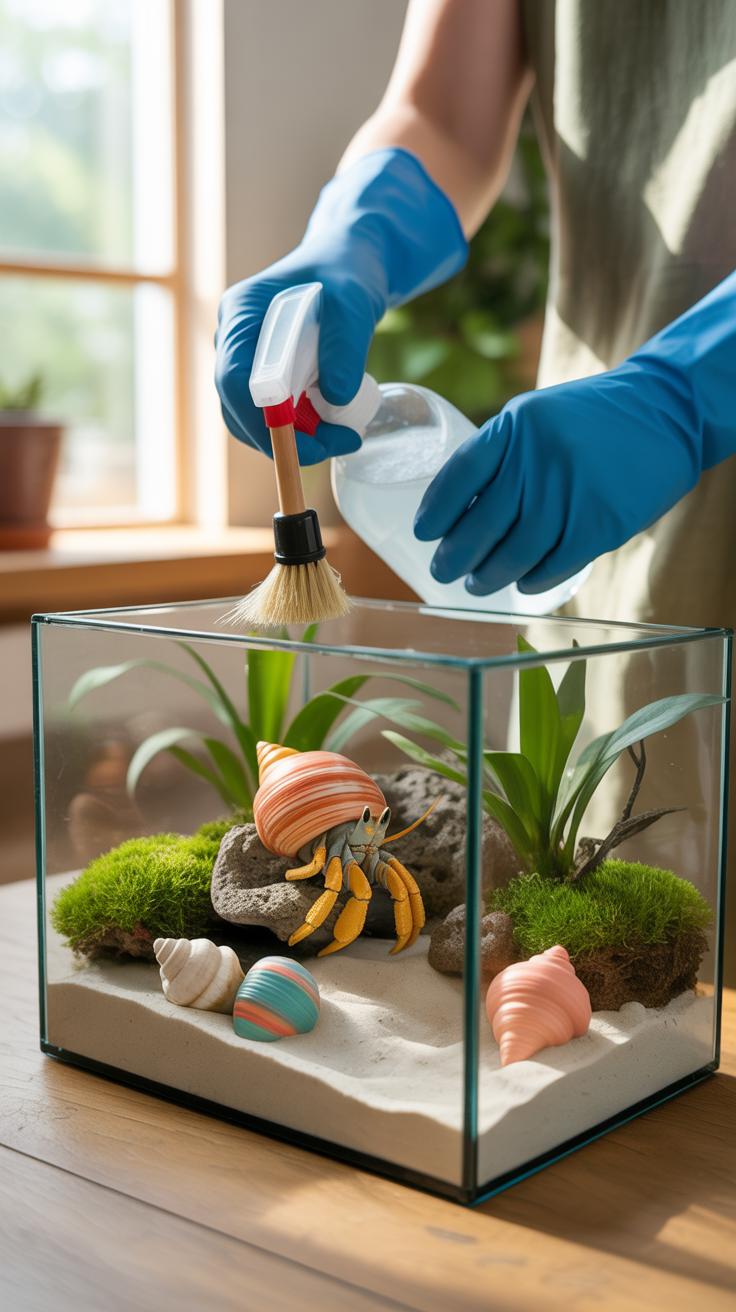
Check for molters before removing any substrate. Never dig up a crab that is underground. You must wait for all crabs to surface naturally before starting a deep clean. Use a plastic scoop to remove the old sand and coconut fiber mixture. Dispose of all substrate if you smell sulfur or see heavy mold growth. This prevents the spread of harmful bacteria in the tank.
Mix new substrate using a ratio of five parts play sand to one part coconut fiber. Use dechlorinated saltwater to achieve sandcastle consistency. This texture allows crabs to dig tunnels that do not collapse. Pack the substrate at least six inches deep or three times the height of your largest crab. Proper depth is vital for safe molting and reduces stress levels for the entire colony.
Scrubbing The Tank Walls, Lid, And Base Thoroughly And Safely
Empty the glass tank completely once you remove the substrate and crabs. Use a solution of organic white vinegar and warm water to cut through grime. Avoid all chemical cleaners and soaps because they leave toxic residues. Use a soft sponge to scrub away dried salt creep and waste buildup. Focus on the corners and the bottom seal where bacteria often hide and multiply.
- White Vinegar Solution: Mix equal parts distilled water and white vinegar. This natural acid breaks down calcium deposits and salt buildup without introducing synthetic toxins. It is the safest way to sanitize glass walls effectively.
- Distilled Water Rinse: Wipe all surfaces with distilled water after scrubbing with vinegar. This removes the acidic scent and ensures no streaks remain. Residual vinegar can irritate a hermit crab’s sensitive gills and abdomen if left on the glass.
- Non-Abrasive Scrubber: Use a new sponge or microfiber cloth specifically for the crab tank. Avoid metal scouring pads that scratch the glass surface. Scratches harbor bacteria and weaken the structural integrity of the terrarium over long periods of time.
- Lid Sanitation: Wipe down the lid or mesh cover to remove dust and salt. This improves ventilation and prevents debris from falling into the new substrate. Clean lids also ensure that lighting fixtures operate at maximum efficiency for the crabs.
- Corner Detail: Use a soft toothbrush to reach into the silicone seals. Waste particles often get trapped in these small gaps. Thorough cleaning here prevents the growth of anaerobic bacteria which produce dangerous hydrogen sulfide gas in the tank.

Dry the tank surfaces with a clean paper towel before adding new substrate. Ensure no puddles remain in the bottom corners. Check the silicone seals for any signs of peeling or damage during this process. A dry base prevents the bottom layer of sand from becoming oversaturated immediately. Maintaining a clean foundation ensures the long-term health of your hermit crab terrarium environment.
Cleaning Decorations And Accessories In Your Hermit Crab Habitat Ideas Tanks
How To Clean Shells, Climbing Structures, And Food Dishes Without Harsh Chemicals
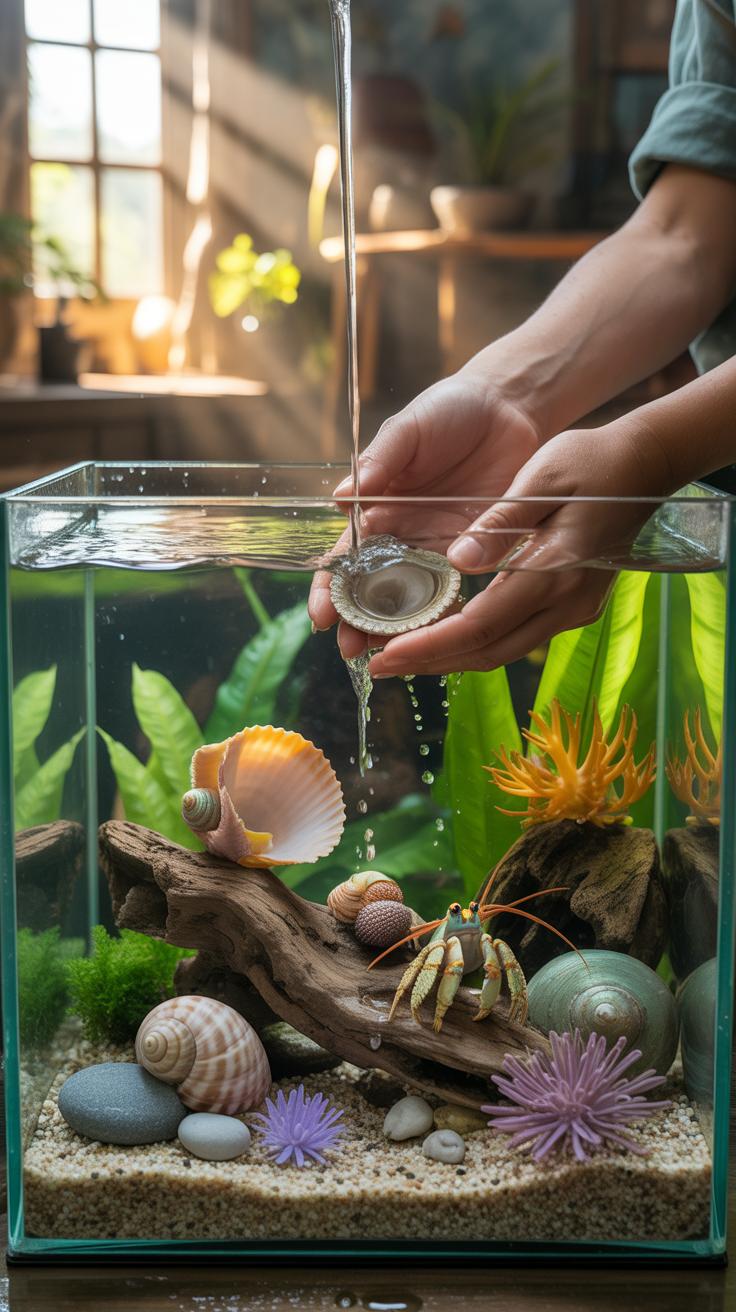
Chemical cleaners leave toxic residues that kill hermit crabs. Use only dechlorinated water and heat for sanitation. Boil empty shells and ceramic dishes for ten minutes to eliminate harmful bacteria and mold. Scrub resin climbing structures with a stiff brush and hot water. These methods remove waste and salt buildup without introducing synthetic poisons into the sensitive environment. Rely on heat and friction rather than chemical agents.
Organic items require a different approach to avoid structural damage. Soak wood and choya in a salt water solution to prevent mold growth. Bake these items at a low temperature to kill pests or mites. Inspect every crevice for trapped debris or waste. Rinse all items thoroughly with treated freshwater before placing them back. Clean tools frequently to maintain a sterile workflow during the maintenance process.
Which Decorations Are Safe To Reuse And Which Should Be Replaced After A Deep Clean
Non-porous materials like ceramic, glass, and high-quality resin last for years. You can reuse these items indefinitely if they show no cracks or structural failure. Thorough cleaning restores these surfaces to a safe state. Examine plastic plants for fraying edges or exposed wires that could injure the crabs. Discard any synthetic item that leaches color or gives off a strong chemical odor when exposed to heat.

Porous organic materials eventually break down and require replacement. Replace grapevine and cork bark if you detect deep-seated rot or persistent fungal growth. Check natural sponges for foul odors and swap them for fresh ones frequently. Discard painted shells immediately as the coating chips and poisons the crabs. Invest in natural Turbo shells to replace any damaged or outgrown housing options. Solid maintenance extends life, but safety dictates replacement.
How To Restore And Reassemble Your Hermit Crab Tank Ideas Diy Setup After Cleaning
Correctly Layering Substrate Depth To Support Molting And Burrowing Behavior
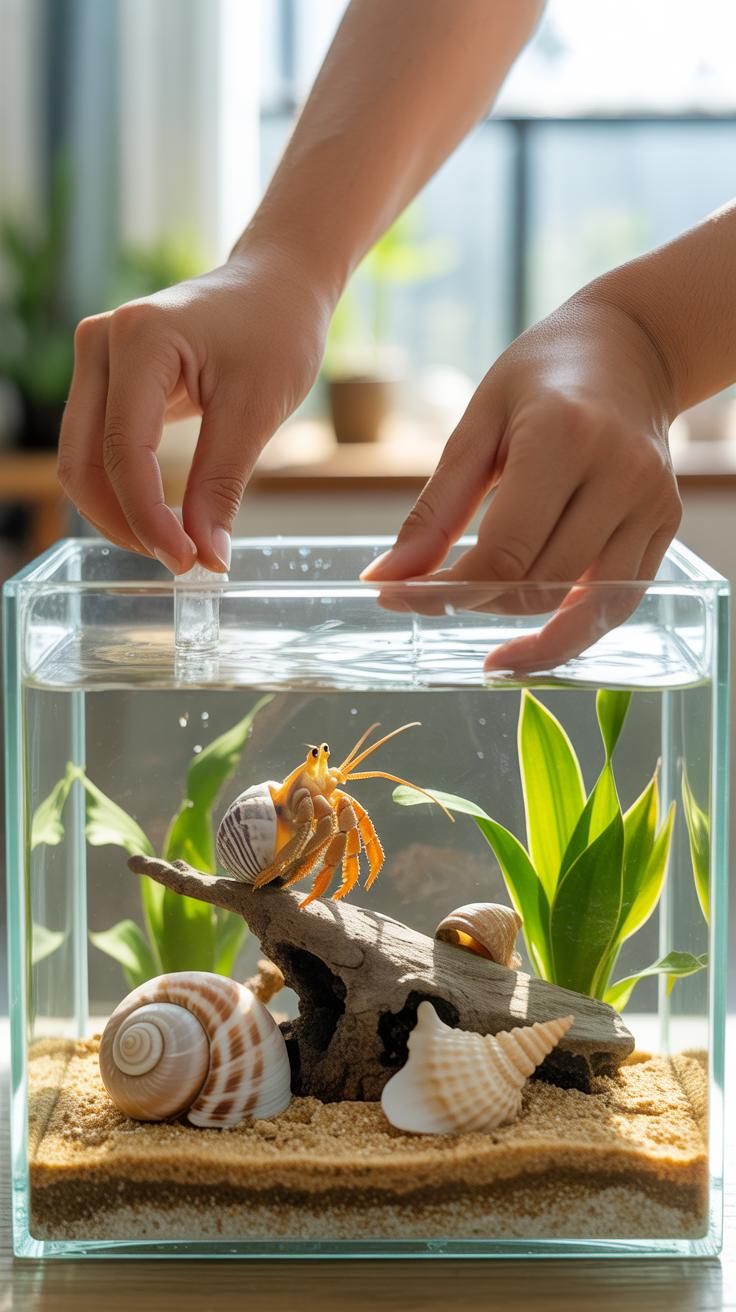
Successful substrate restoration requires a specific mix ratio and depth. Combine five parts play sand with one part coconut fiber. This mixture mimics natural coastal soil and retains the right amount of moisture. Ensure the substrate is sandcastle consistency so tunnels do not collapse. If the mix is too dry, it will cave in on molting crabs and cause death.
Maintain a minimum depth of six inches or three times the height of your largest crab. Use the higher measurement of the two. This depth provides necessary insulation and pressure for the molting process. Pack the substrate down firmly as you fill the tank to remove large air pockets. Solid substrate allows crabs to create stable underground chambers for their multi-week molting cycles.
Re Establishing The Right Temperature And Humidity Levels After A Deep Clean
Stabilizing the environment is the final step before returning crabs to the tank. Aim for a consistent temperature between 75 and 85 degrees Fahrenheit. Position under-tank heaters on the back of the glass above the substrate line rather than underneath. This placement prevents the substrate from drying out too quickly. Heat the air, not the sand, to maintain a safe metabolic rate.

Humidity is the most critical factor for crab survival because they breathe through modified gills. Keep humidity levels between 75 and 85 percent. Use a calibrated hygrometer to monitor these levels accurately. Seal the tank with a glass lid to trap moisture inside. If levels are low, add damp moss or move the water pools closer to the heat source to increase evaporation.
DIY Hermit Crab Habitat Ideas To Make Future Deep Cleans Easier
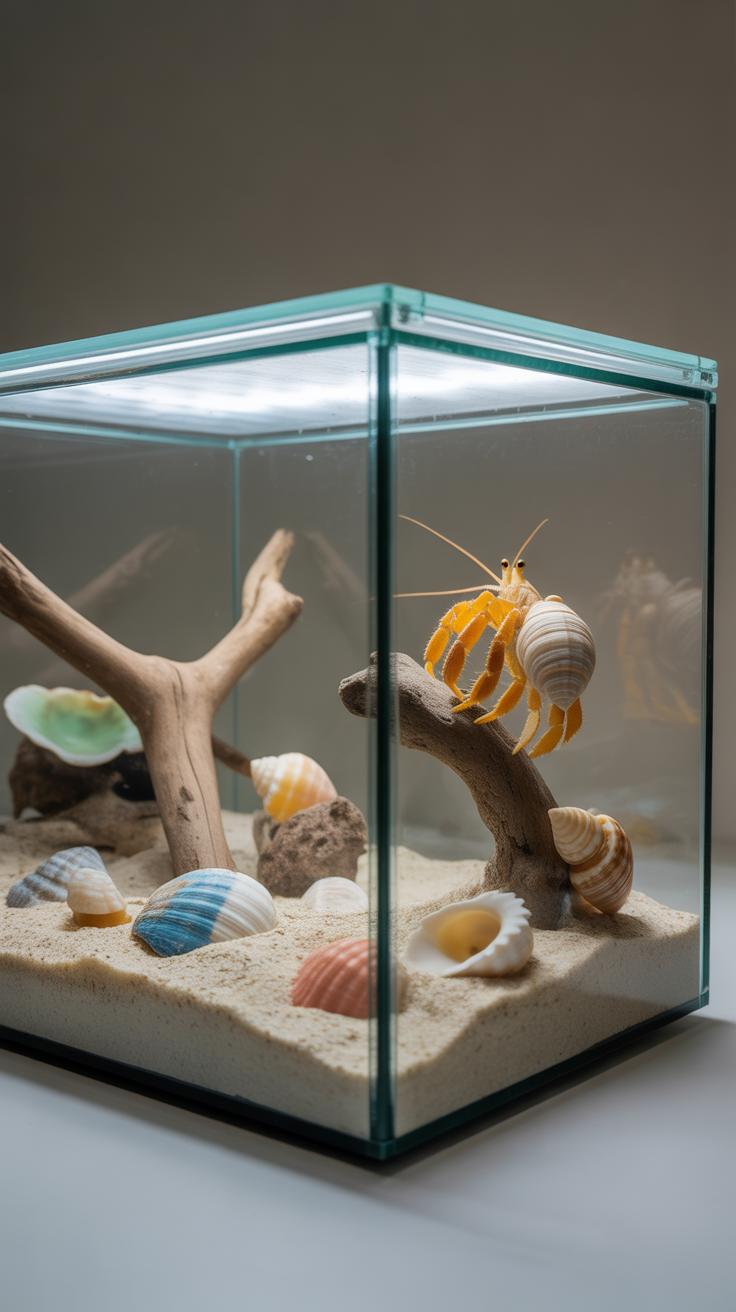
Smart Hermit Crab Habitat Ideas Tanks Diy Layouts That Simplify Ongoing Maintenance
Strategic placement of heavy decor prevents substrate compaction and saves time during a total teardown. Use a false bottom or plenum system to manage excess moisture at the lowest levels of the tank. This setup creates a drainage layer that stops stagnant water from pooling. Proper drainage prevents the growth of anaerobic bacteria. A managed moisture level keeps the habitat stable and extends the life of the substrate.
Arrange climbing structures to be easily removable without disturbing the lower sand levels. Use vertical space with hanging hemp nets or lightweight plastic grids attached with suction cups. This keeps the floor clear for easier spot cleaning and visual inspections. Design your layout so you can reach every corner without moving bulky ornaments. Efficient designs minimize stress for the crabs and reduce manual labor for the keeper.
Using Natural And Non Toxic Materials In Your Diy Hermit Crab Habitat Ideas To Reduce Bacterial Growth
Select non-porous materials like high density polyethylene or tempered glass for food and water stations. These surfaces do not absorb organic waste or harbor harmful pathogens between cleanings. Avoid soft woods like pine or cedar which release toxic phenols when damp. Instead, use cork bark or mopani wood because they resist rot in high humidity. These materials stay structurally sound and safe for much longer periods.

Sealing porous surfaces with food grade silicone prevents mold colonies from taking root. Use stainless steel hardware for any structural DIY projects to stop rust from contaminating the sand. Natural fibers like coconut husk or cholla wood provide enrichment while maintaining a neutral pH. Swapping out cheap plastics for these durable items lowers the risk of chemical leaching. Reliable materials ensure the environment remains sterile and safe for molting.
Maintaining A Clean And Healthy Hermit Crab Enclosure Between Deep Cleans
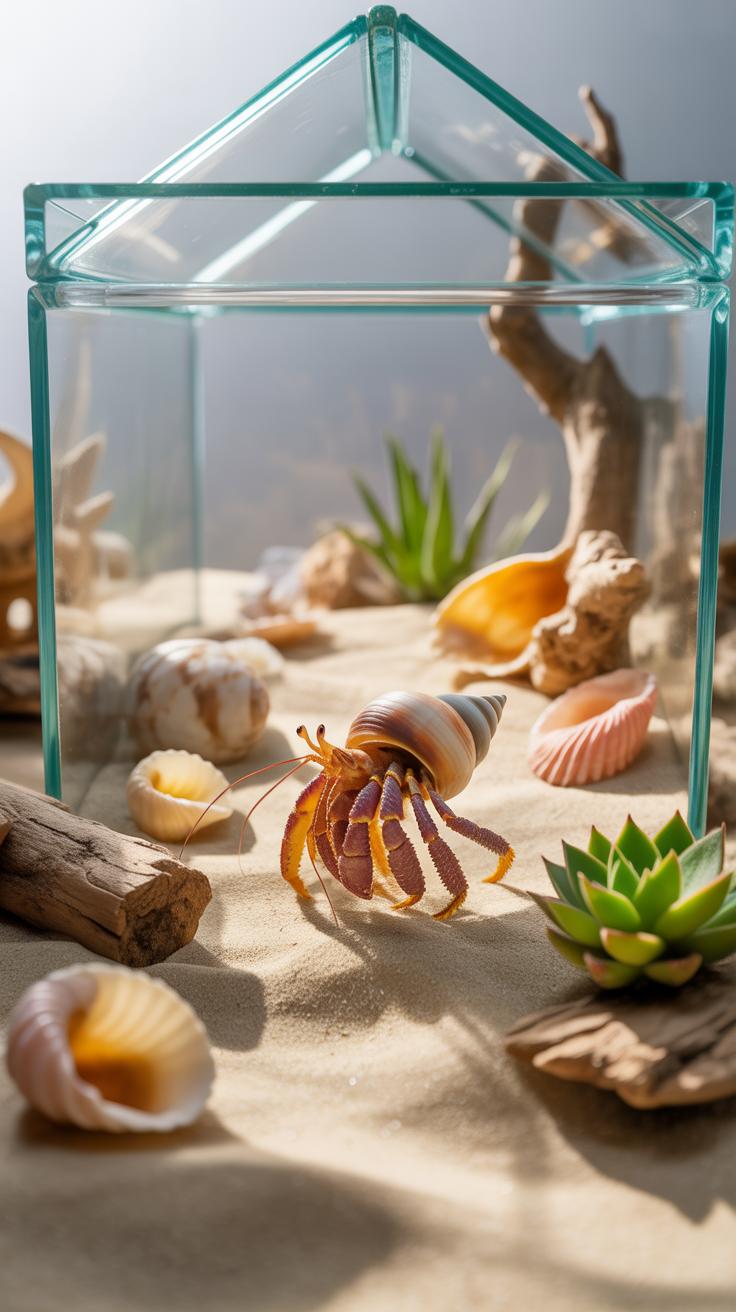
Daily And Weekly Spot Cleaning Habits That Extend The Time Between Full Deep Cleans
Daily spot cleaning prevents bacteria from overtaking the substrate. Remove waste and buried food scraps immediately to stop mold growth. Check common hiding spots like hollow logs and corners. Use a small scoop to lift out soiled sand or coconut fiber. This simple habit keeps the environment stable. It reduces the need for frequent and stressful substrate changes for your crabs.
Weekly maintenance involves wiping down the glass and checking decor for grime. Use a damp cloth to clean salt spray and mineral deposits off the walls. Inspect climbing branches and shells for any signs of decay or mite activity. Rotate toys to keep the area active. Constant vigilance ensures the humidity stays clean. Proper upkeep keeps the substrate deep and safe for molting.
Monitoring Water Quality And Food Freshness To Keep Your Hermit Crab Tank Setup Thriving
Water quality is the foundation of crab health. Replace both fresh and salt water every day to prevent stagnant buildup. Scum and slime layers harbor harmful pathogens. Rinse water bowls with hot water before refilling them. Always treat tap water with a proper dechlorinator. This protects the delicate gills of your crabs. Clean water also helps maintain the tank humidity levels.
Food freshness dictates the hygiene of the habitat. Remove dry food after twenty-four hours and fresh food after twelve hours. Hermit crabs often drag food into tunnels or under decor. Locate these hidden piles to prevent rot. Use small bowls to contain the mess and keep items off the substrate. Fresh nutrition supports strong exoskeletons. Consistent feeding habits stop pests from entering the enclosure.
Frequently Asked Questions

How often should I perform a deep clean on my hermit crab habitat?
Generally, you should perform a hermit crab tank deep clean every six months, but this depends on your tank size and how many crabs you have. If you notice a sour smell, an insect infestation, or signs of mold, you must act sooner. Regular spot-cleaning and changing food daily help extend the time between deep cleans, ensuring your pets stay healthy in a fresh, bacteria-free environment.
What is the safest way to clean the substrate and decor?
Safety is paramount when you perform a hermit crab tank deep clean. Remove all old substrate and replace it with a fresh mix of play sand and coconut fiber. For decor like wood or stones, boil them in dechlorinated water to kill bacteria without using harsh chemicals. Avoid soaps or detergents, as hermit crabs have sensitive modified gills that can be easily damaged by chemical residues left behind on surfaces.
Can I use household items to clean the tank without buying expensive kits?
Absolutely! You don’t need pricey specialty products for a hermit crab tank deep clean. Plain white vinegar diluted with water is an excellent, budget-friendly way to scrub glass walls and remove hard water stains safely. For cleaning tools, a brand-new toothbrush or a clean sponge works perfectly. Just ensure any household items you use are dedicated solely to your crabs to avoid cross-contamination with kitchen cleaners or residues.