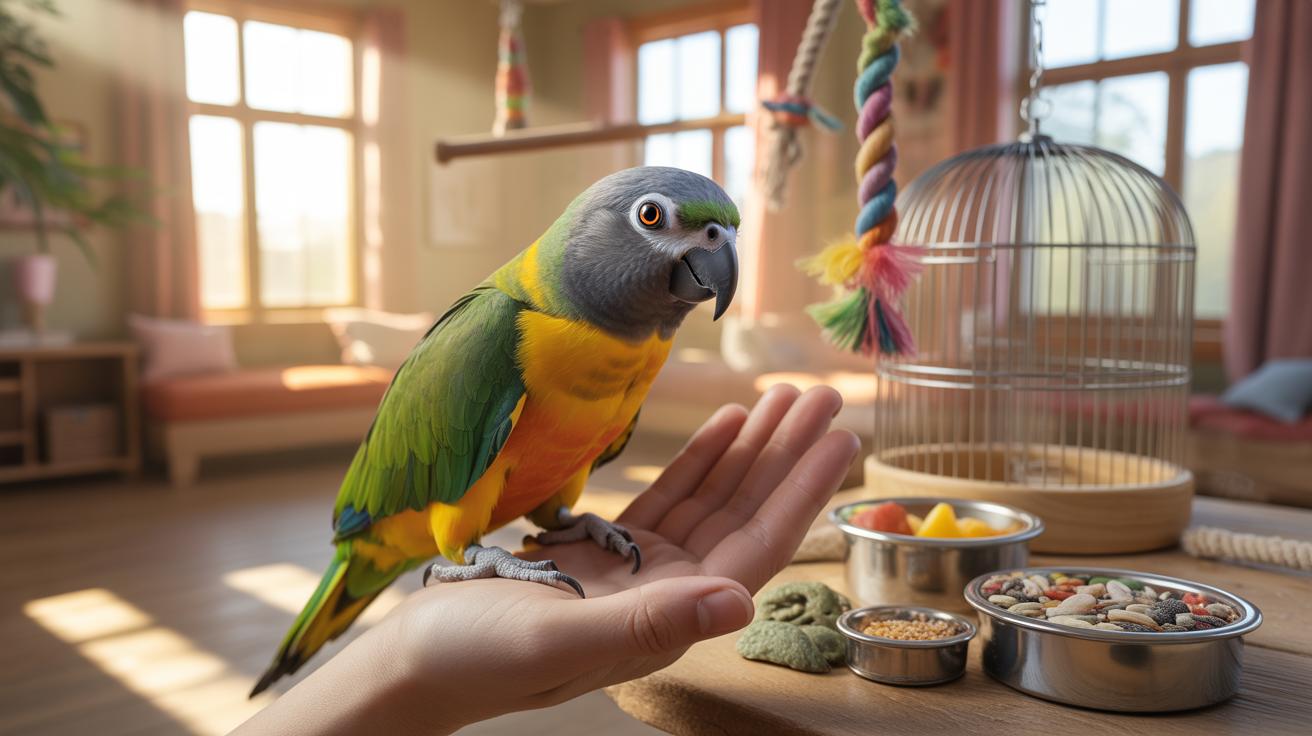
What Is A Senegal Parrot An Introduction To This African Parrot
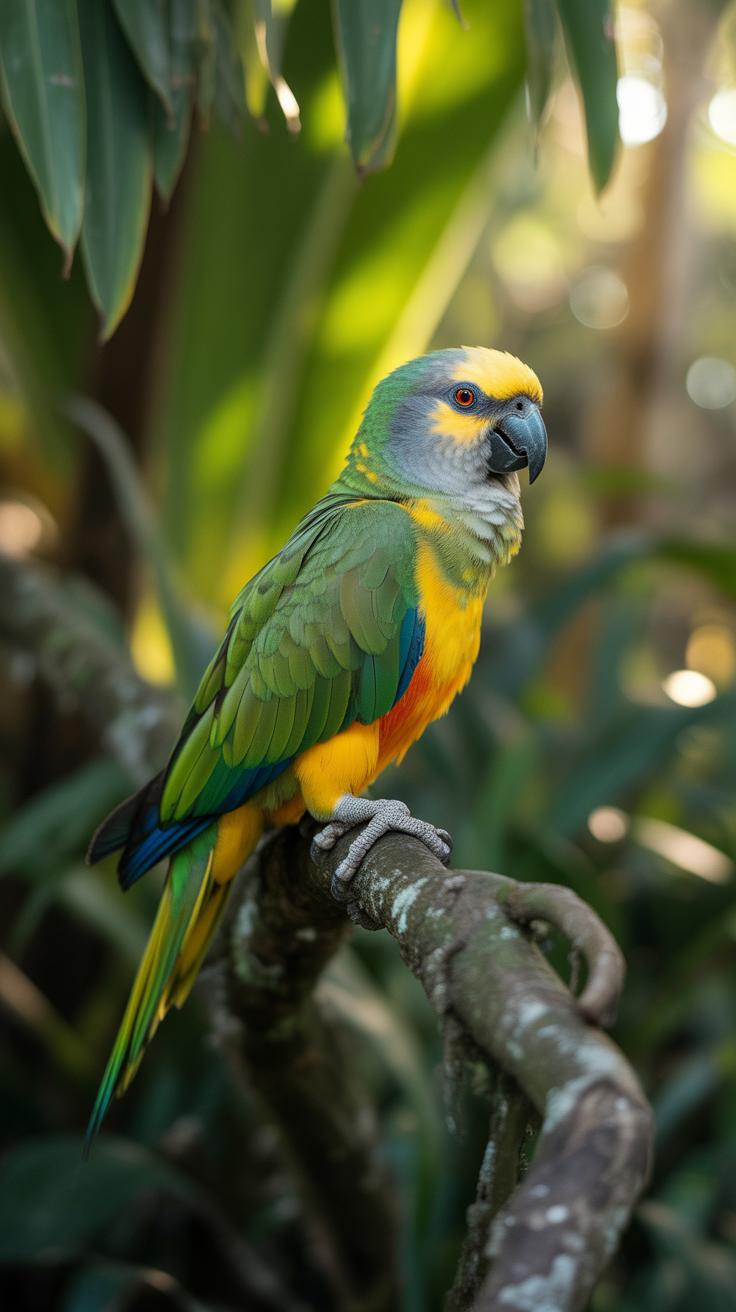
Origins And Natural Habitat Of The African Senegal Parrot
The Senegal parrot belongs to the Poicephalus genus. This bird group includes nine species native to the African continent. Taxonomists first documented the species in the eighteenth century. They identified it as a small parrot with a distinct charcoal gray head and bright yellow or orange chest. This physical coloring serves as natural camouflage within the leafy canopies of West African forests.
In the wild, these parrots rely on specific tree species for survival. They prefer open woodlands and savannas over dense rainforests. This environment provides the light and space they need for flight and foraging. They feed mostly on seeds, grains, and native fruits like figs. Understanding these origins helps owners emulate their dietary and environmental needs in a domestic home setting.
Where Do Senegal Parrots Live In The Wild?
Senegal parrots occupy a wide range across West Africa. Their territory extends from Senegal and Gambia in the west to Chad and the Central African Republic in the east. They avoid massive desert regions and high mountains. Instead, they congregate in areas with stable water sources and fruit-bearing trees. Farmers often see them in agricultural fields where they feed on cultivated crops and grains.
The birds nest in existing tree hollows high above the ground. They do not build nests from twigs. They look for natural cavities in old trees or holes left by other animals. This behavior protects the flock from ground predators and harsh weather. Owners should note this preference for enclosed spaces. It explains why these birds often seek out dark corners or bird tents in captivity.

Senegal Parrot Colors Markings Plumage And Physical Features
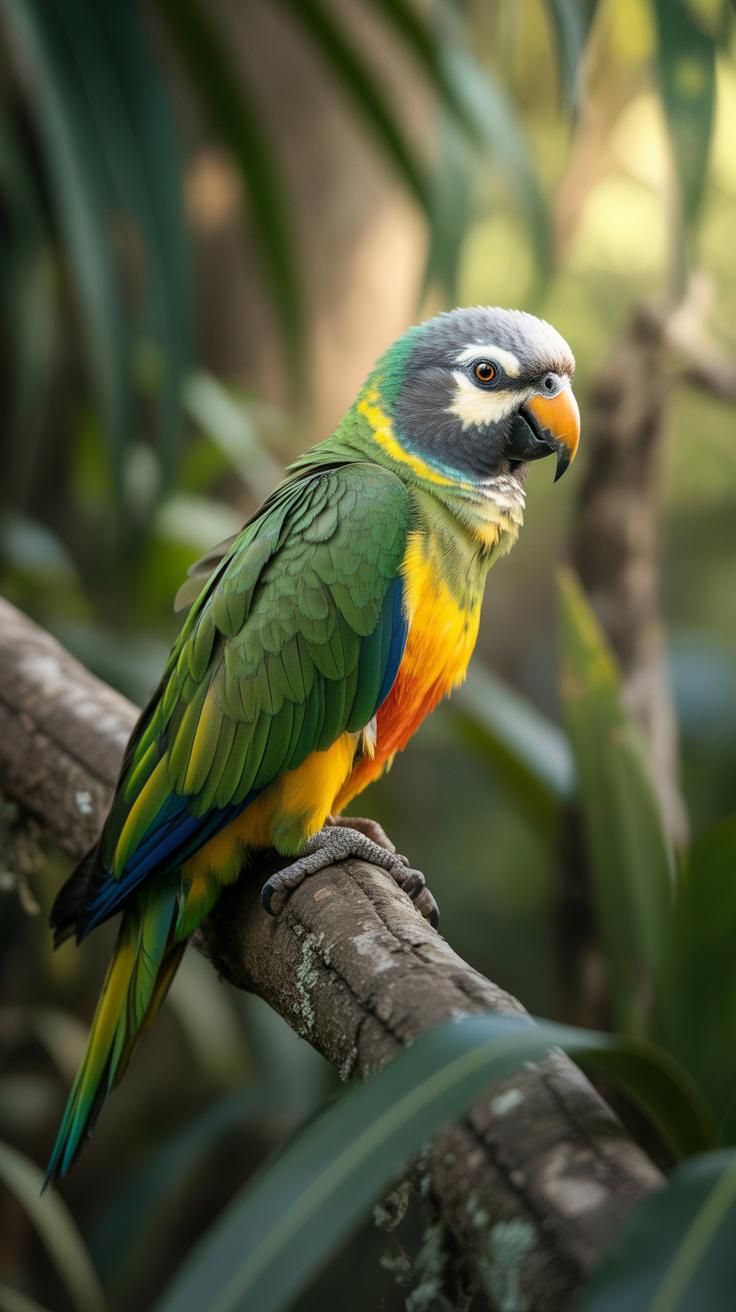
Understanding The Distinctive Green, Grey, And Orange Coloring Of Senegal Parrots
The Senegal parrot displays a specific tri-color pattern. A charcoal grey mask covers the head and extends down the throat area. This gives the bird a hooded appearance. The back and wings feature a deep forest green. This green extends across the upper chest in a distinct V shape. This sharp line separates the upper body from the lower belly.
The belly provides the most vivid contrast with shades ranging from bright yellow to deep orange. This variation depends on the specific subspecies of the bird. These colors serve as camouflage in their native African canopy. The stark contrast between the grey head and bright belly makes identification simple. Owners must recognize these markings to ensure they have a true Poicephalus senegalus.
To own a Senegal is to hold a fragment of the wild in your hand, a bond built through the gentle patience of understanding their quiet spirit. Their love is a quiet song that grows richer with every day of careful devotion.
Do Senegal Parrot Colors Change With Age Or Health?
Juvenile Senegal parrots have duller plumage compared to mature adults. Young birds possess dark brown or black irises. These eyes change to a bright yellow or orange tint as the bird matures. The plumage brightness increases after the first several molts. Adult feathers should appear tight and glossy. Faded or bronzed feathers often indicate a lack of proper nutrition or sunlight.

Health issues manifest directly through feather quality and color. Stress bars or black smudges on green feathers signal past nutritional gaps or high cortisol levels. Sudden color changes can indicate liver dysfunction or localized skin infections. A healthy bird maintains vivid saturation in its orange belly and deep greens on its wings. Monitor any loss of pigment immediately to track internal health shifts.
Senegal Parrot Male Vs Female How To Tell The Difference
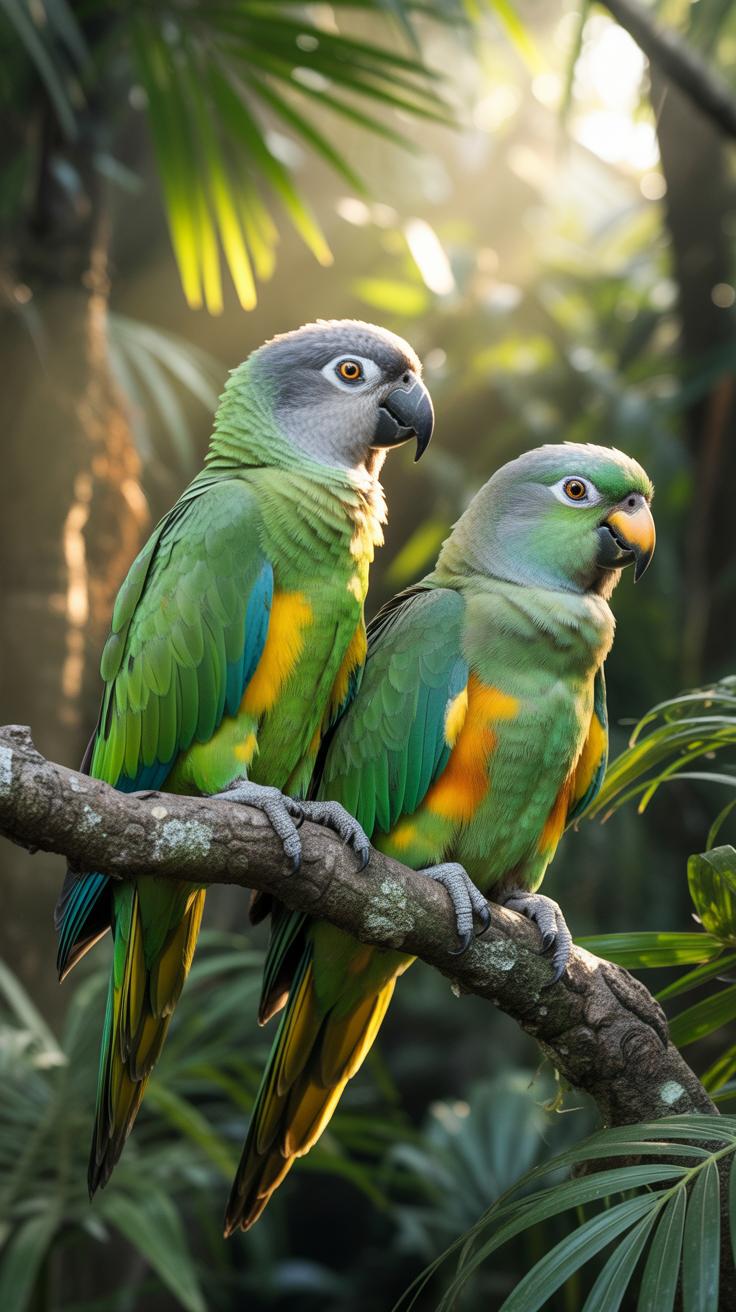
Physical Differences Between Male And Female Senegal Parrots
Senegal parrots are monomorphic birds. This means males and females look nearly identical to the naked eye. Traditional visual identification focuses on the V-shape of the green feathers on the chest. In males, this V-shape usually extends lower down toward the legs. Females often display a shorter V-shape that ends higher on the breast. These visual markers are not definitive evidence.
Professional breeders examine the head and beak structure for subtle clues. Males typically possess a larger head and a broader beak than females. Some keepers also look at the under-tail coverts. Females generally have green feathers under the tail while males show pure yellow feathers. These physical traits provide guesses but remain unreliable. Only a DNA blood test or surgical sexing guarantees a correct result.
Behavioral Differences: Does Gender Affect Temperament In Senegal Parrots?
Gender does not strictly determine a Senegal parrot’s personality. Both sexes are known for being quiet, loyal, and territorial. Individual temperament depends more on early socialization and environment than on being male or female. You will find both affectionate and independent birds of either sex. Do not choose a bird based on gender if you want a specific personality. Focus on the bird’s unique history.
Hormonal cycles cause the most visible behavioral gaps. Males may become more aggressive or protective of their cage during breeding seasons. Females can become obsessed with finding nesting sites and may eventually lay eggs without a mate. This process places a high calcium demand on the female body. Manage these behaviors through diet and light control. Both genders remain prone to becoming one-person birds without proper training.
Senegal Parrot Personality What To Expect From Your New Bird
Affectionate Yet Independent: The Core Traits Of Senegal Parrot Personality
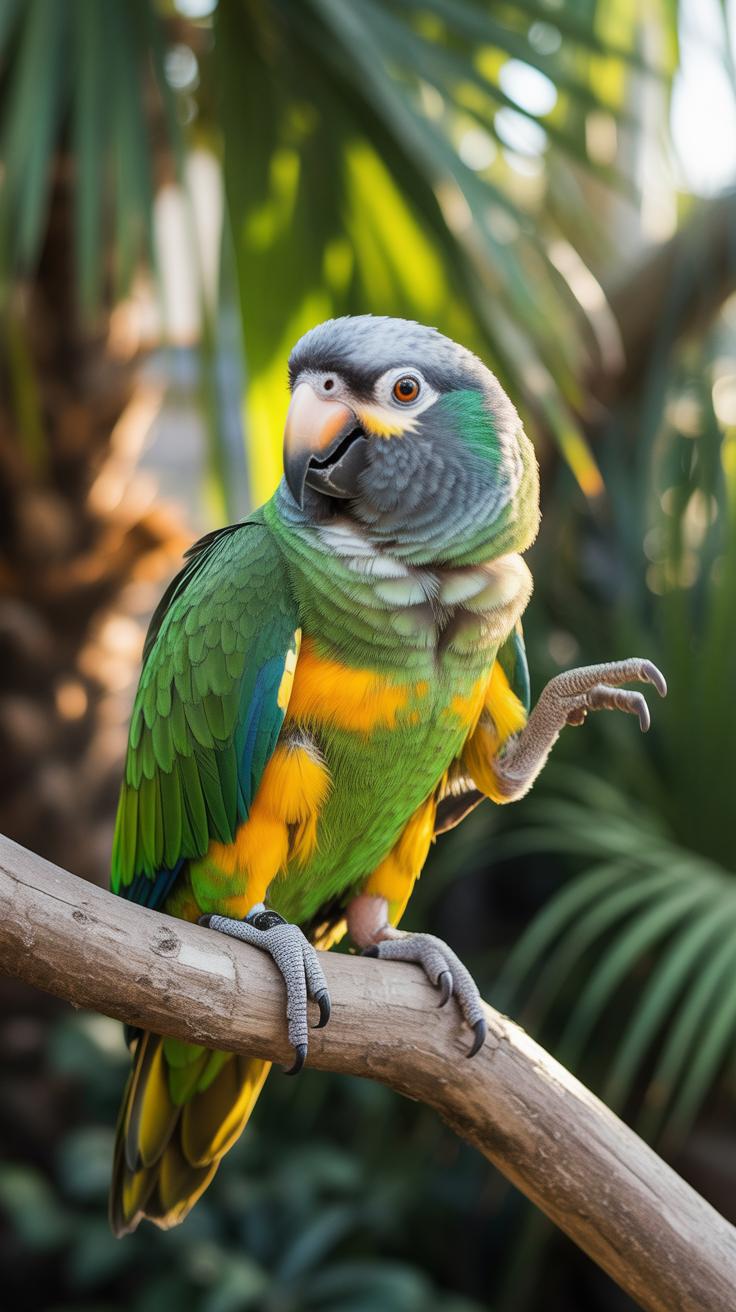
Senegal parrots possess a balanced temperament that distinguishes them from more demanding species. They enjoy physical contact and head scratches from trusted handlers. Unlike cockatoos, they do not require constant attention to remain stable. This species stays calm and observes its environment with high intelligence. They spend significant time playing with toys or foraging without needing owner intervention. These birds value their personal space.
Owners must respect their boundaries to avoid aggressive nips. A Senegal will signal when it wants interaction and when it prefers solitude. This independence makes them suitable for working professionals. They rarely scream for attention. However, they still need daily structured social time to prevent boredom. Understanding this push and pull between affection and autonomy is the foundation of a successful relationship with this parrot species.
How Senegal Parrots Bond With Their Owners And Households
These birds typically form a strong bond with one specific person. This “one person bird” reputation is a factual trait of their social structure. They show intense loyalty to their primary caregiver while becoming indifferent or aggressive toward others. Early socialization helps mitigate this behavior. You must encourage every family member to handle the bird. This prevents the parrot from becoming overprotective of a single individual.

The bonding process requires time and consistent positive reinforcement. Senegal parrots communicate through subtle body language like eye pinning and wing fluffing. Learning these cues allows you to build trust. Avoid forcing contact during the initial transition period. A bond built on choice rather than force lasts longer. Once trust is established, the bird becomes a quiet and devoted companion. Their loyalty is unmatched when the owner provides a predictable routine.
Green Parrot Behavior Guide Understanding Your Senegal ParrotS Actions
Common Senegal Parrot Behaviors And What They Mean
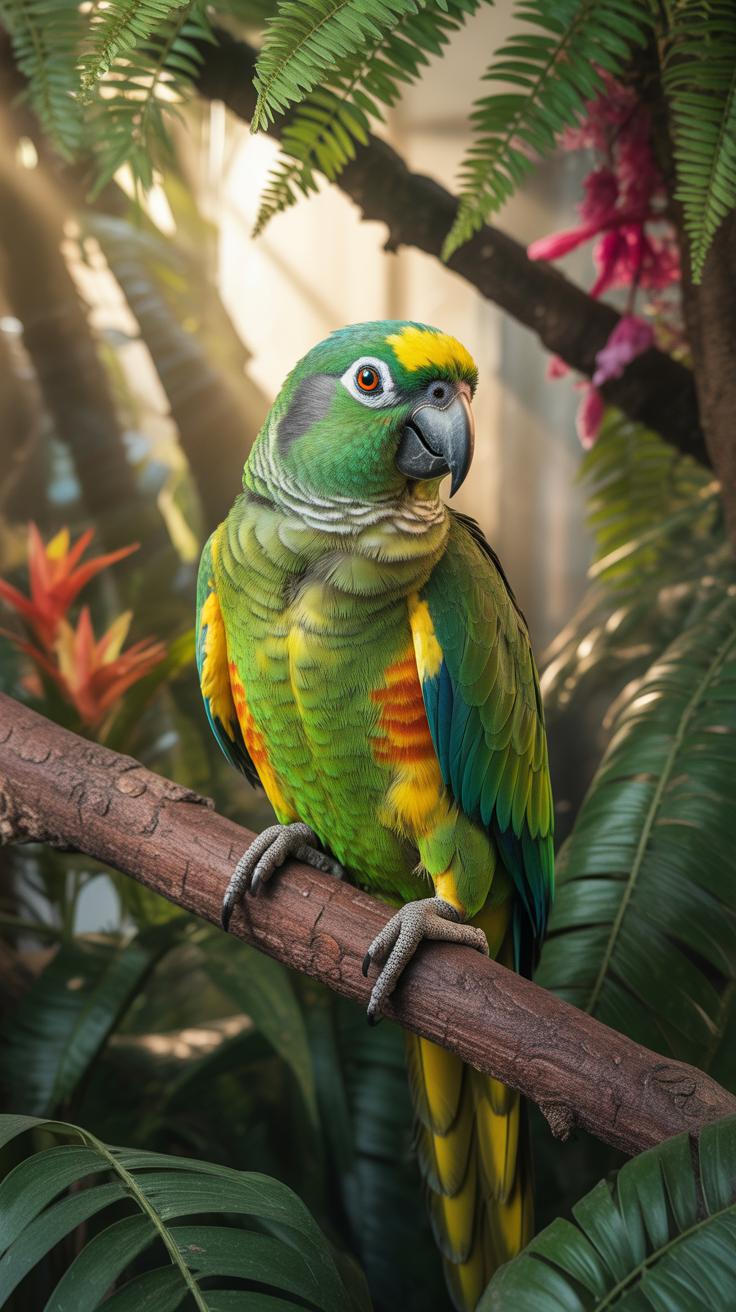
Senegal parrots use specific physical movements to communicate their needs and mental state. Beak grinding often occurs when the bird feels secure and ready for sleep. Tail fanning and wing flipping indicate high excitement or a desire for attention. Watch for the eye pinning behavior where the pupils dilate and contract rapidly. This signal means the bird is processing intense information or preparing to react to a stimulus.
Head dipping and regurgitation are social bonding actions directed at perceived mates or trusted owners. These behaviors show deep affection but can lead to hormonal issues if encouraged. High pitched whistling usually signals a call for social interaction or a search for the flock. Understanding these daily cues prevents common misunderstandings between you and the bird. Consistent observation allows you to predict their next move and respond with appropriate training techniques.
How To Recognize Stress Happiness And Aggression In Your Parrot
A happy Senegal parrot displays relaxed feathers and engages in self preening or playing with toys. This bird stands on one foot and moves with confidence around its enclosure. Soft chirping and clicking sounds confirm a state of contentment during quiet times. You can identify a healthy bird by its clear eyes and steady posture. These signs prove that the environment meets the bird’s psychological and physical requirements for a stable life.

Identify stress through repetitive behaviors like pacing or feather picking. A stressed bird often remains silent or hides in the corner of the cage. Aggressiveness appears as lunging, a hooked neck, or a fanned tail. This species often chooses one favorite person and may bite others to protect that bond. Watch for stiff body language and pinning eyes before an attack. Immediate intervention through distraction or distance prevents bites and maintains safety.
Senegal Parrot Care Setting Up The Ideal Living Environment
Choosing The Right Cage Size, Bar Spacing, And Placement For A Senegal Parrot
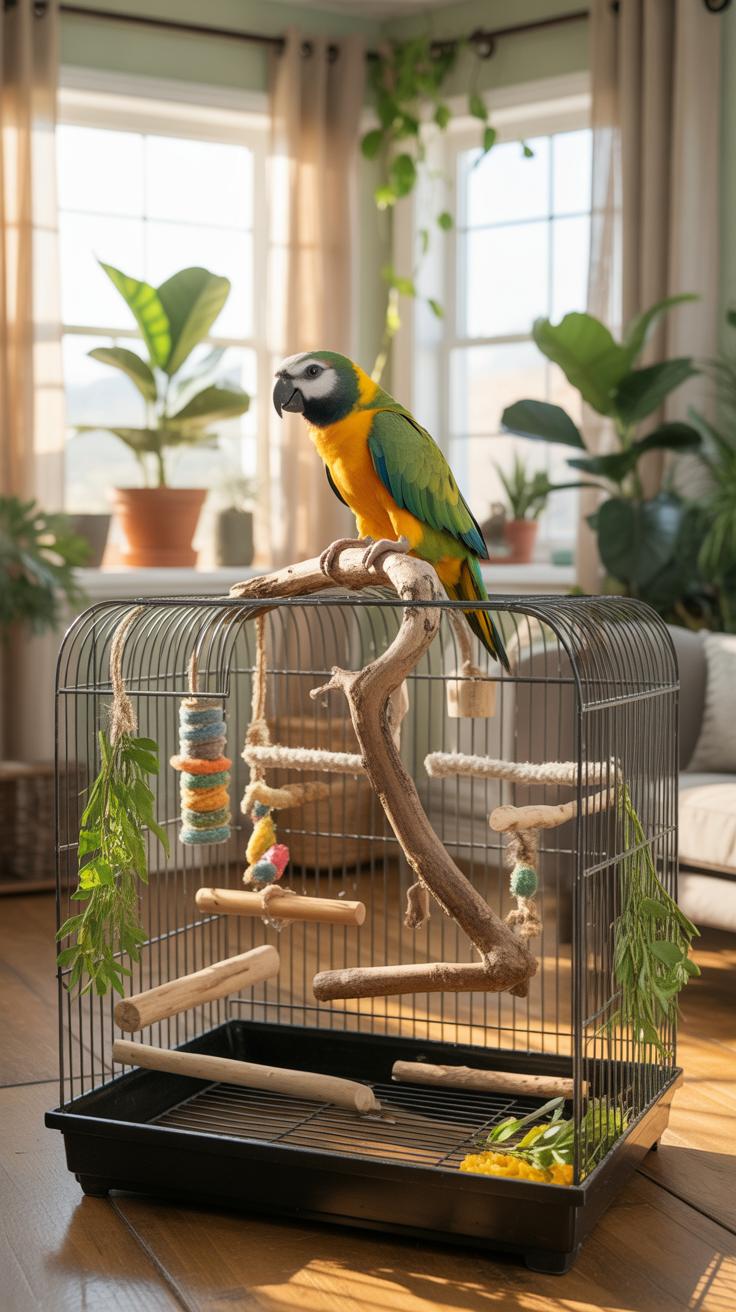
Senegal parrots require a minimum cage size of 20x20x28 inches. Smaller enclosures lead to muscle atrophy and psychological stress. You must prioritize width over height to allow for natural horizontal movement. Ensure the bar spacing is strictly between 1/2 inch and 3/4 inch. Incorrect spacing allows the bird to get its head stuck or escape. Use powder coated steel or stainless steel materials for safety.
Place the cage in a corner of a frequented room like the living area. This provides two solid walls for security while allowing social interaction. Keep the enclosure away from kitchen Fumes and drafty windows. Rapid temperature swings or toxic gasses kill birds quickly. Position the cage at eye level so the parrot feels confident. Avoid low ground placement which triggers a natural fear of predators.
Essential Cage Accessories And Enrichment Items Every Senegal Parrot Needs
The internal environment dictates the mental health of your Senegal parrot. You must provide various perch diameters to prevent bumblefoot and arthritis. Natural wood perches like manzanita or dragonwood work best because they mimic wild textures. Avoid sandpaper perch covers as they cause painful foot sores. Strategic placement of food and water bowls ensures easy access without contaminating the contents with droppings or debris.
- Natural Branch Perches: Install at least three different diameters of natural wood. These varied surfaces exercise the feet and trim claws naturally. Avoid uniform plastic or smooth dowels which cause pressure sores over time.
- Foraging Toys: Use cardboard boxes or specialized acrylic feeders to hide food. Senegal parrots are intelligent and need to work for their meals. This activity mimics wild behavior and prevents boredom and destructive feather plucking.
- Destructible Toys: Provide soft wood, bird-safe leather, and paper for chewing. Parrots have a biological drive to groom and modify their environment. Providing these materials protects your furniture and keeps the beak trimmed and healthy through constant use.
- Beak Conditioners: Install a cuttlebone or mineral block on the side of the cage. These items provide essential calcium and a hard surface for the bird to scrape its beak. This maintenance prevents overgrowth and ensures the parrot can eat properly.
- Stainless Steel Bowls: Use bolt-on metal dishes for food and water. Parrots easily flip plastic bowls, creating a mess and wasting resources. Stainless steel is non-porous and resists bacterial growth, making it the most hygienic choice for daily feeding.

Rotate toys every week to keep the bird engaged and prevent neophobia. Introduce new textures and colors to stimulate their vision and tactile senses. Always inspect toys for frayed ropes or small parts that pose choking hazards. A stagnant environment leads to lethargy and aggression. Control the layout to ensure your parrot remains active and mentally sharp throughout its long lifespan.
Feeding Your Parrot Nutrition And Diet For A Healthy Senegal Parrot
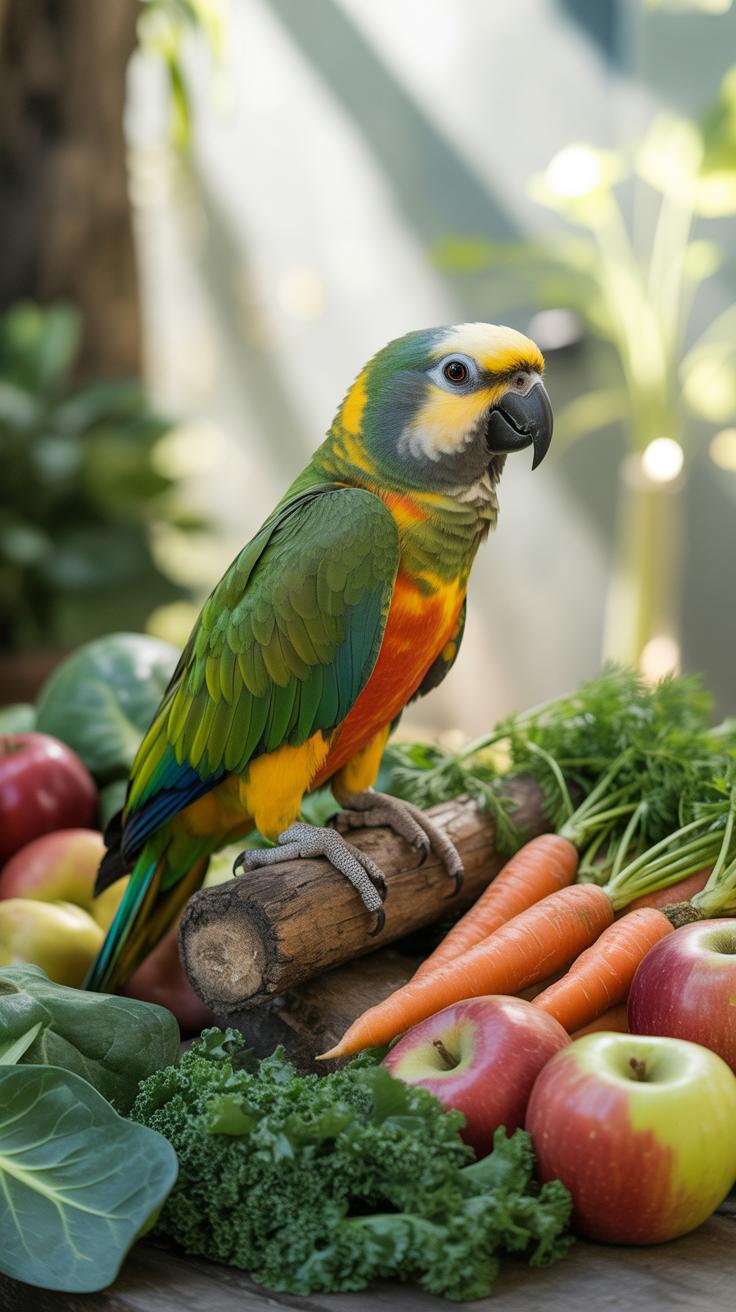
What Do Senegal Parrots Eat? Safe Foods And Dietary Staples
A Senegal parrot requires a structured diet to prevent obesity and vitamin deficiencies. High-quality formulated pellets must provide sixty to seventy percent of their daily intake. Pellets offer consistent nutrition that seeds cannot match. Seeds contain too much fat and lead to liver disease if fed as a primary meal. Supplement the pellets with fresh vegetables like kale, carrots, and broccoli daily to ensure proper health.
Fruit serves as a healthy treat but limited sugar intake is necessary. Offer small portions of berries, apples, or papaya two to three times per week. Always remove pits and seeds before feeding fruit to your bird. Fresh water must be available at all times in a clean bowl. Change the water twice a day to prevent bacterial growth. Monitoring food intake helps you track your parrot’s overall physiological condition.
Foods That Are Toxic Or Harmful To Senegal Parrots
Certain common household foods cause immediate physiological distress or death in Senegal parrots. Birds possess a fast metabolism and a unique respiratory system that makes them highly sensitive to toxins. You must scan every ingredient before offering human food to your pet. Avoid any items containing high levels of salt, sugar, or artificial preservatives. Stick to whole, raw ingredients to ensure safety and long-term health.
- Avocado: This fruit contains persin which acts as a potent toxin to bird heart tissue. Ingesting any part of the fruit, skin, or pit causes respiratory distress and rapid heart failure within hours.
- Chocolate: Theobromine and caffeine in chocolate stimulate the avian nervous system to dangerous levels. Consumption leads to seizures, hyperactive behavior, and eventual cardiac arrest. Darker chocolate poses a higher risk due to concentration.
- Onions and Garlic: These vegetables contain sulfur compounds that destroy red blood cells in parrots. Chronic ingestion leads to hemolytic anemia. Cooking these items does not remove the threat, so keep all seasoned table scraps away.
- Fruit Pits and Apple Seeds: Seeds from apples and pits from stone fruits contain trace amounts of cyanide. While humans tolerate these levels, parrots succumb to poisoning quickly. Always slice fruit and remove all seeds manually.
- Caffeine and Alcohol: These substances cause immediate organ failure and central nervous system collapse in small birds. Even small sips of coffee or soda lead to lethal toxicity. Keep all open beverages out of reach during out-of-cage time.

Cleanliness is just as vital as the food itself to prevent disease. Remove uneaten fresh produce from the cage after two hours to stop mold growth. Wash all bowls with hot soap and water daily. Bacteria thrive in moist food remnants and lead to digestive infections. Create a strict feeding schedule to help the bird feel secure. A healthy diet extends the lifespan of your Senegal parrot significantly.
Senegal Parrot Care Routine Daily Handling Grooming And Hygiene
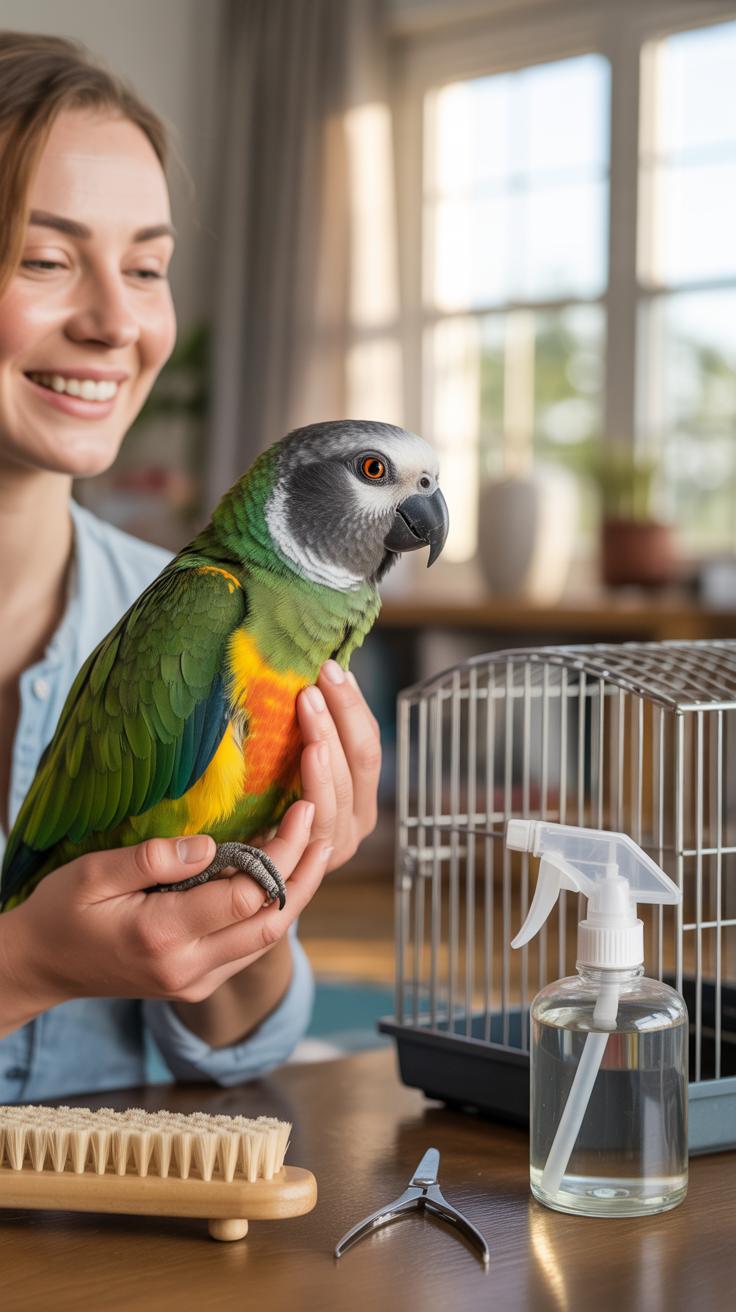
How To Safely Handle And Socialize Your Senegal Parrot Every Day
Senegal parrots demand consistent daily interaction to remain tame. These birds are prone to becoming one-person pets if not socialized with multiple family members. You must handle your bird for at least one hour every day. Use steady, confident movements to avoid triggering their flight response. Forceful grabbing will ruin the bond. Instead, use a firm step-up command to establish your leadership.
Establish a predictable routine for out-of-cage time. This creates a sense of security for the bird. Focus on head scratches and perched interaction during quiet hours. Avoid overstimulating the bird during late evening. Respect their boundaries when they retreat to a corner or pin their eyes. Consistent positive reinforcement builds trust. A well-socialized Senegal parrot remains manageable and less likely to develop aggressive biting habits.
Bathing, Nail Trimming, And Feather Care For Senegal Parrots
Hygiene is critical for feather health and respiratory function. Offer your Senegal parrot a shallow bowl of water or a light misting three times per week. They originate from West Africa and thrive with moisture. Proper bathing prevents dry skin and reduces feather dust. Ensure the bird dries in a warm room away from drafts. Clean feathers allow for better insulation and flight performance.
Monitor nail growth every month to prevent injury. Long nails snag on fabric and cause toe alignment issues. Use bird-safe clippers or a dremel tool to trim the sharp tips. Avoid the quick to prevent bleeding. Keep styptic powder nearby for emergencies. Check the beak for overgrowth, though natural chewing usually maintains it. Clean the cage bottom daily to prevent bacterial buildup on the feet and feathers.
Training Your Senegal Parrot Building Trust And Teaching Commands
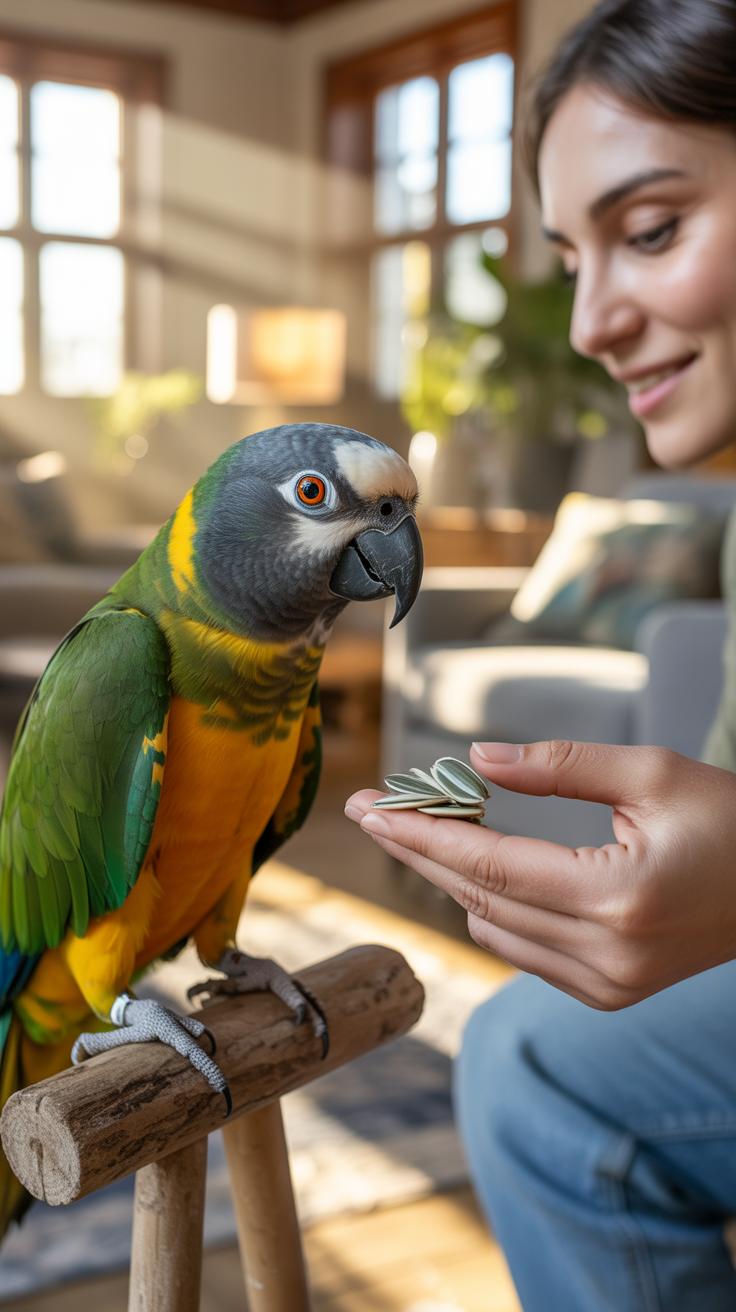
Step By Step Approach To Taming A New Or Shy Senegal Parrot
Begin by sitting near the cage without making eye contact. Senegal parrots are prey animals and view direct stares as threats. Read aloud or work quietly to desensitize the bird to your presence. Avoid sudden movements or loud noises that trigger the flight response. Once the bird remains calm while you stand near the bars, offer a high-value treat like a sunflower seed through the cage wire.
Transition to hand-feeding inside the cage once the parrot accepts treats reliably. Use a perch or your finger for the step-up command. Press your finger gently against the lower chest just above the legs. Use a firm and consistent verbal cue like step up. Reward success immediately with a preferred food item. Keep sessions under ten minutes to prevent mental fatigue. Consistency builds a predictable environment for the bird to thrive.
Can Senegal Parrots Talk? Speech And Vocalization Training Tips
Senegal parrots possess the physical ability to mimic human speech but focus more on sounds. They have a lower volume than larger parrots which makes them ideal for apartments. Most individuals learn a few dozen words or common household noises like microwave beeps. Clarity depends on frequent repetition and the specific bond with the owner. Do not buy this species if you require a bird that talks clearly every day.
Start speech training by associating specific words with concrete actions or objects. Say the word apple when offering a slice of the fruit. Use an enthusiastic tone to grab the bird’s attention during these sessions. Repeat the target word during the peak activity hours of morning and late afternoon. Reward any vocal attempt that resembles the target sound. Patient reinforcement yields better results than forcing the bird to vocalize through constant pressure.
Senegal Parrot Health Common Illnesses And Veterinary Care
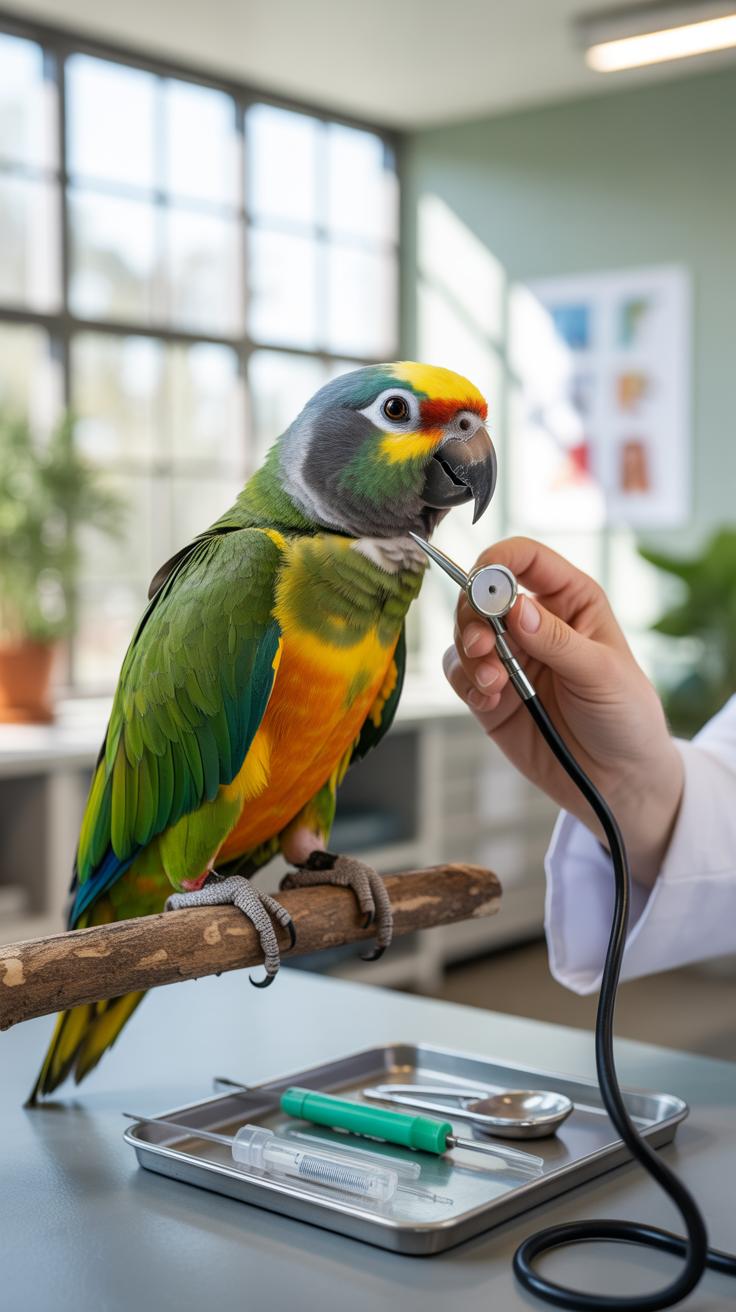
Common Health Issues That Affect The Senegal Parrot And Early Warning Signs
Senegal parrots frequently hide symptoms of illness until a condition becomes severe. You must monitor for respiratory infections, Aspergillosis, and Psittacine Feather and Beak Disease. Keep a sharp eye on their droppings for changes in color or consistency. Watch for labored breathing or discharge from the nostrils. Any change in vocalization or activity levels often signals an underlying medical problem that requires immediate professional intervention.
Weight loss is a primary indicator of poor health in these birds. You should weigh your parrot weekly on a gram scale to track trends. Significant drops in weight suggest metabolic issues or internal parasites. Look for fluffed feathers, lethargy, or drooping wings during the day. If the bird stays on the cage floor for long periods, it is an emergency. Act quickly when you notice these subtle physiological shifts.
How Often Should You Take Your Senegal Parrot To An Avian Vet?
Schedule a comprehensive wellness exam with a certified avian veterinarian once every year. Standard feline or canine vets lack the specialized training to treat exotic birds effectively. Use your annual visit to conduct blood work and fecal smears. These tests detect subclinical infections before they kill your bird. A proactive medical baseline allows the vet to identify dangerous deviations in health early in the parrot’s life.
New owners must schedule an initial post-purchase exam immediately. This visit confirms the bird is healthy before you introduce it to your home environment. The vet will check for nutritional deficiencies and ensure the bird has a proper beak and wing trim if needed. Regular professional checkups prevent expensive emergency room visits. Consistency in clinical care extends the lifespan of your Senegal parrot and ensures total peak physical performance.
Frequently Asked Questions

Are Senegal parrots suitable for first-time bird owners?
Yes, Senegal parrots are often considered one of the best introductory species for beginners due to their manageable size and relatively quiet nature. Unlike larger macaws or cockatoos, they are less demanding and adapt well to apartment living. Following a comprehensive senegal parrot care guide will help you understand their unique body language and social needs, ensuring a smooth transition as you welcome a feathered companion into your home.
How do I properly set up a diet for my new Senegal parrot?
A healthy diet is the foundation of longevity for these birds. You should provide a high-quality organic pellet mix supplemented with fresh vegetables like kale, carrots, and bell peppers. Occasional fruits and seeds serve as great treats. This senegal parrot care guide recommends avoiding avocado, chocolate, and caffeine, as these are toxic. Always ensure fresh, dechlorinated water is available daily to keep your parrot hydrated and thriving in its new environment.
What are the typical costs involved in keeping a Senegal parrot?
Beyond the initial purchase price of the bird, you should budget for a spacious cage, high-quality nutrition, and stimulating toys. Annual avian vet check-ups are essential for preventative health. While they are more affordable to maintain than large parrots, expect ongoing monthly expenses for fresh produce and toy replacement. Investing in quality supplies early on prevents health issues, making the long-term commitment both affordable and rewarding for any dedicated lifestyle enthusiast.