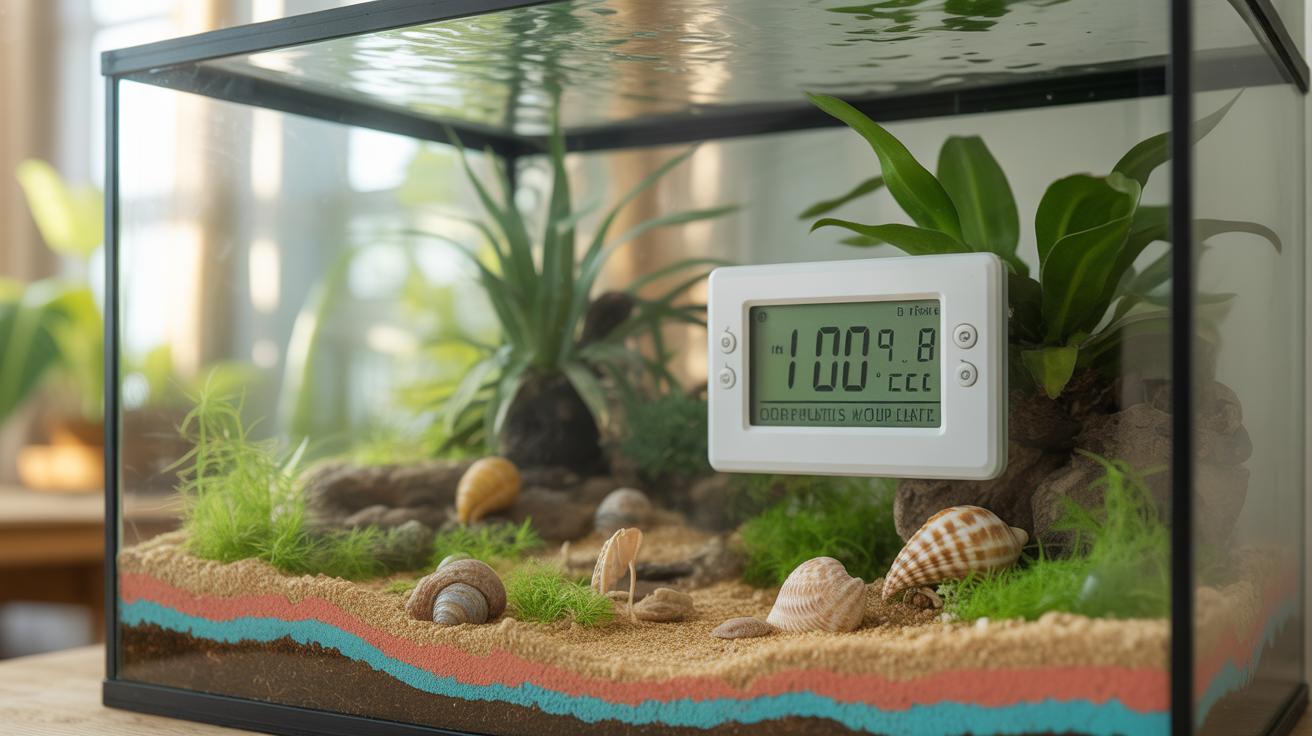
Understanding Why Humidity Matters In A Hermit Crab Enclosure
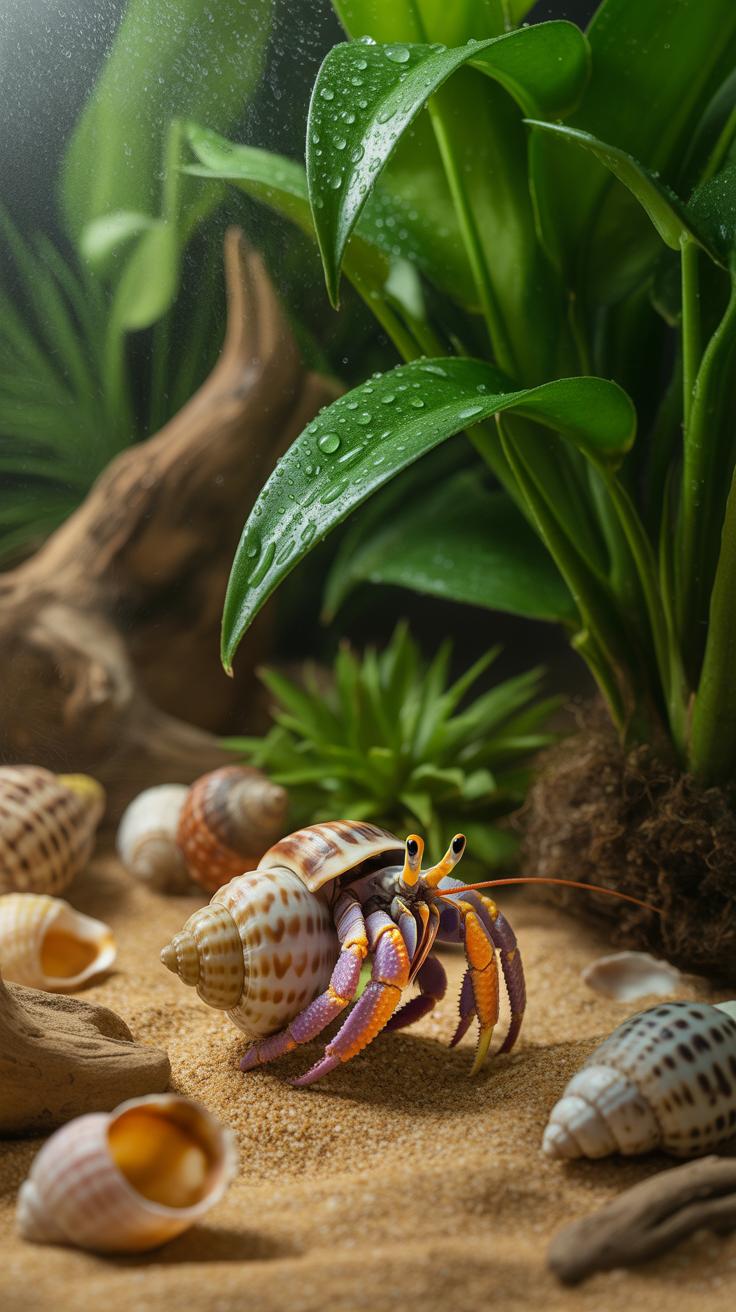
How Hermit Crabs Breathe And Why Moisture Keeps Them Alive
Hermit crabs do not have lungs like mammals. They breathe through modified gills located near their abdomen. These gills require constant moisture to function. If the air stays too dry, the gill membranes harden. This stops the oxygen exchange process immediately. The crab cannot pull oxygen from dry air. Moisture acts as the medium that allows oxygen to enter the bloodstream.
Maintaining high humidity is a biological necessity for survival. Without a humid environment, the crab effectively suffocates in open air. This process is slow and painful. Permanent gill damage occurs before the crab dies. You cannot fix damaged gills by adding water later. A proper hermit crab humidity meter setup ensures the air stays wet enough to keep these vital organs soft and functional.
The Dangers Of Low And High Humidity Levels In A Hermit Crab Habitat
Low humidity levels lead to rapid desiccation and death. When the air drops below eighty percent humidity, the crab begins to struggle. It will seek out water bowls or bury itself to find dampness. Prolonged exposure to dry air causes the gills to dry out completely. This leads to a slow death through oxygen deprivation. You will see decreased activity and lethargy as the first warning signs.
High humidity above ninety percent presents different tactical risks. Excessively wet air promotes the growth of mold and harmful bacteria in the substrate. This can lead to shell rot or respiratory infections. Saturated air also causes flooding at the bottom of the tank. This ruins the molting environment and can drown buried crabs. You must balance the levels to avoid these two extremes and maintain a healthy habitat.
What Is A Hygrometer And How Does It Work In A Hermit Crab Setup
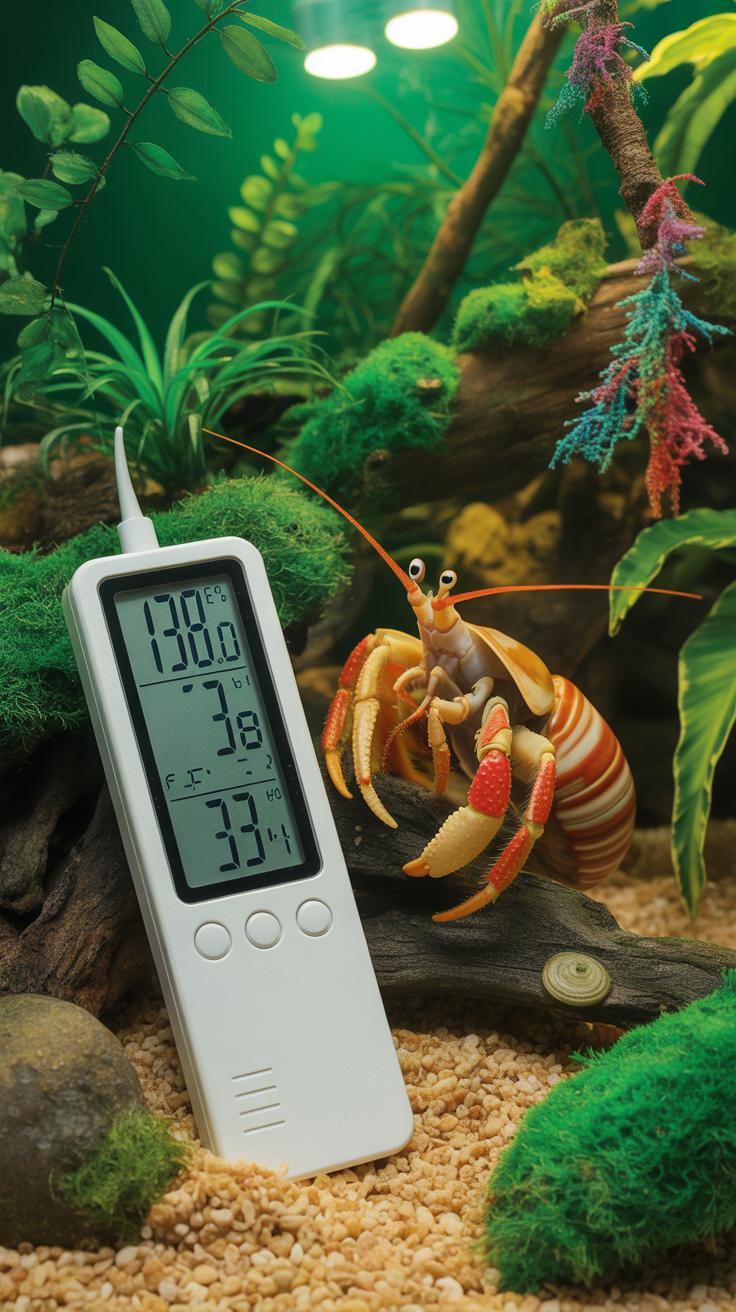
The Science Behind Hygrometer Readings: Relative Humidity Explained
Relative humidity measures the amount of water vapor in the air compared to the maximum amount the air can hold at a specific temperature. Hermit crabs possess modified gills that require constant moisture to function. If the air is too dry, these gills stiffen and fail. This leads to slow suffocation. You must maintain a relative humidity level of at least seventy-five percent.
Temperature directly impacts these readings because warm air holds more moisture than cold air. If your tank temperature drops, your relative humidity percentage will rise even if the actual water volume stays the same. You need a hygrometer to track these shifts in real time. Accurate monitoring ensures the environment stays saturated enough for the crabs to breathe without gasping or suffering permanent tissue damage.
Analog Vs. Digital Hygrometers: Which Is More Reliable For Your Hermit Crab Tank
Analog hygrometers use a coil or a spring that expands and contracts based on moisture levels. These devices are often inaccurate and slow to react to changes. Constant high humidity can cause the internal metal components to rust or lose calibration. Many keepers find these dial gauges off by ten percent or more. This margin of error is dangerous for your pets.
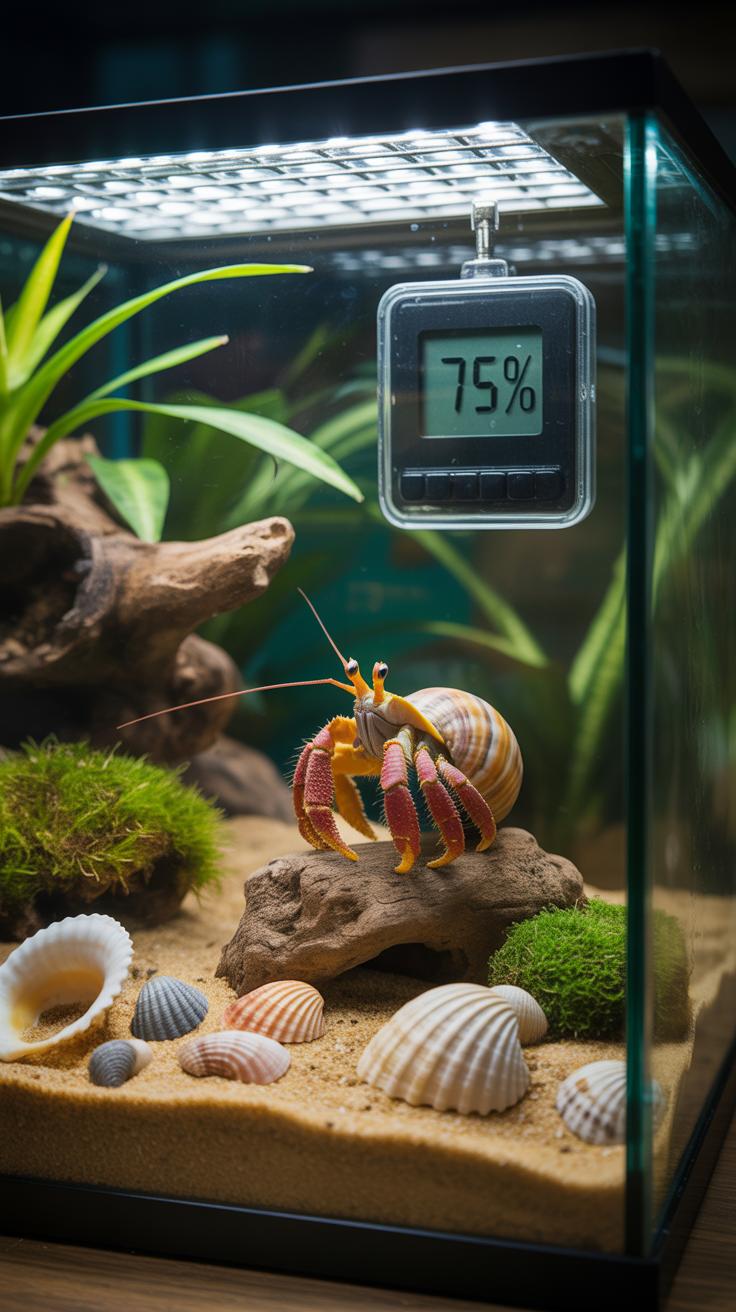
Digital hygrometers use electronic sensors to provide faster and more precise readings. These devices often include a probe that you can place directly at the substrate level where crabs spend their time. High-quality digital units allow for easy calibration and display both temperature and humidity. Choose digital models to get the raw data needed for a survival-grade environment. Reliability is the only metric that matters here.
Choosing The Right Hygrometer For Your Hermit Crab Tank Ideas And Budget
Key Features To Look For When Selecting A Hermit Crab Humidity Meter
Hermit crabs require a consistent humidity level of at least 70 to 80 percent to breathe through modified gills. High moisture environments are corrosive to sensitive electronics. You must select a device that withstands constant saturation without failing. Accuracy is the primary metric for success because incorrect readings lead to respiratory distress or death. Prioritize sensors designed for high-humidity enclosures over standard household units.
- Digital Display: Digital sensors provide faster and more precise readings than analog dials. They allow you to see decimal changes in moisture levels instantly. Avoid old needle gauges because they often stick in high humidity environments and give false data.
- External Probes: Probes allow you to keep the main display unit outside the tank. This protects the screen and battery from salt and moisture damage. You can place the probe exactly at the substrate level where crabs spend most of their time.
- Calibration Capability: Accurate meters allow for manual calibration using a salt test. This feature ensures the device stays precise over months of heavy use. Without calibration, your sensor drift could lead to dangerously low or high humidity levels without your knowledge.
- Memory Functions: High and low memory logs track humidity swings while you sleep or work. This data reveals if your tank stays stable throughout a full 24-hour cycle. Tactical keepers use these logs to identify when misting or lid adjustments are necessary.
- Battery Life and Type: Choose units with long-lasting batteries that are easy to replace. High humidity drains power faster in poorly sealed units. Ensure the battery compartment is secure to prevent acid leaks from contaminating the crab habitat if the unit fails.
Reliability determines the survival of your crabs. A meter that fails at 90 percent humidity is useless for this hobby. Look for sensors with a low margin of error, typically plus or minus 2 or 3 percent. Durable housing prevents internal corrosion from salt spray and mist. Strategic placement of the sensor ensures you measure the air the crabs breathe, not just the glass surface.
Budget Friendly Vs. Premium Hygrometer Options For Hermit Crab Keepers
Low-cost digital hygrometers are effective for keepers on a tight budget. These basic units often come in packs, allowing you to monitor multiple zones in the tank simultaneously. They provide decent accuracy but lack advanced features like calibration or historical data logging. You must replace these units more frequently as moisture eventually kills the internal circuits. Use these for secondary checks rather than a primary monitor.
Premium hygrometers offer superior durability and long-term accuracy. These units often feature professional-grade sensors and external probes that keep the electronics dry. Wireless and smart models connect to your phone to send alerts if humidity drops below a set threshold. While the initial cost is higher, the reliability prevents costly mistakes. Investing in a high-quality meter ensures the safety of your crabs and provides peace of mind.
Where To Place A Hygrometer In Your Hermit Crab Terrarium Setup
Ideal Placement Zones Inside The Tank For Accurate Humidity Readings
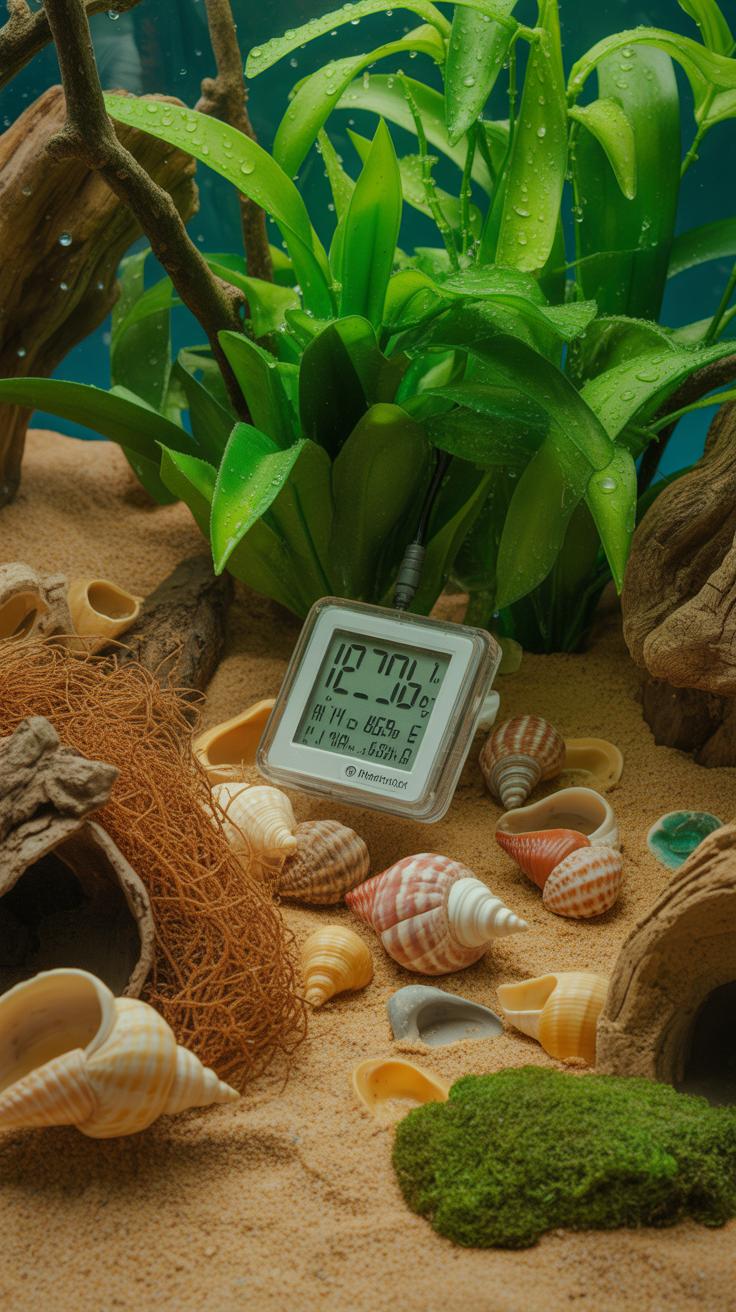
Mount your hygrometer in the center of the tank about three inches above the substrate level. This location provides a representative sample of the air your crabs actually breathe. Avoid the very top of the enclosure because heat rises and traps moisture there. This leads to false high readings that do not reflect the environment on the ground. You need data from the crab activity zone.
Positioning the sensor too close to the substrate can also skew results. Wet sand or moss emmits localized moisture that pushes readings to one hundred percent. This prevents you from seeing the actual ambient humidity across the entire habitat. Secure the device to the back glass using suction cups or silicone. Ensure the sensor remains visible so you can check levels without opening the lid and losing humidity.
Why You Should Avoid Placing The Hygrometer Near Heat Sources Or Vents
Do not place your hygrometer directly next to under tank heaters or overhead heat lamps. High heat dries out the air immediately around the sensor. This creates a localized dry spot that triggers a false low reading. You might over-mist the tank based on this bad data. Over-misting floods the substrate and kills your crabs. Keep the device away from direct contact with any heating elements.

Proximity to screen lids or ventilation holes also ruins your data accuracy. Incoming room air is usually much drier than the air inside a crabitat. Placing a sensor near a vent captures external air conditions rather than the internal environment. This creates a draft effect that makes your humidity appear lower than it is. Move the sensor to a neutral area where the air stays stable and consistent.
How To Calibrate Your Hygrometer For A Precise Hermit Crab Tank Setup

The Salt Test Method: A Simple Way To Calibrate Your Humidity Meter At Home
Accuracy is the only metric that matters for hermit crab survival. Most digital and analog meters leave the factory with a margin of error. You must verify the sensor before trusting it with your pets. The salt test creates a fixed environment at exactly seventy five percent humidity. This standard chemical reaction allows you to find the offset of your device under controlled conditions.
Mix one half cup of table salt with a small amount of water in a bottle cap. The salt must be damp but not dripping wet. Place the cap and your hygrometer inside a sealed zip lock bag or airtight glass jar. Wait twelve to twenty four hours for the air inside to stabilize. Your meter should read exactly seventy five percent if the sensor is perfect.
Watching the needle on a hygrometer is like guarding a tiny tropical memory, ensuring the mist of their native shores never fades from their breath. By keeping their air soft and damp, we honor the ancient rhythm of the tide in the comfort of our homes.
How Often You Should Recalibrate And What To Do If Readings Are Off
Recalibrate your humidity meter every six months to ensure peak performance. Electronic sensors drift over time due to dust and moisture exposure. High humidity environments like crabitats accelerate this degradation. You should also retest the device after dropping it or changing the batteries. Frequent checks prevent silent equipment failure. Constant accuracy keeps the crabs breathing through their modified gills without any physical stress.
If your meter shows a different number than seventy five during the test, calculate the difference. Physical dials often have a screw on the back for manual adjustment. Modern digital units may feature a calibration button to reset the baseline. If your cheap digital meter lacks an adjustment feature, tape a note to the device. This note should list the percentage you must add or subtract from every future reading.
Target Humidity Ranges For A Healthy Hermit Crab Habitat
The Recommended Humidity Range For Land Hermit Crabs And Why It Matters
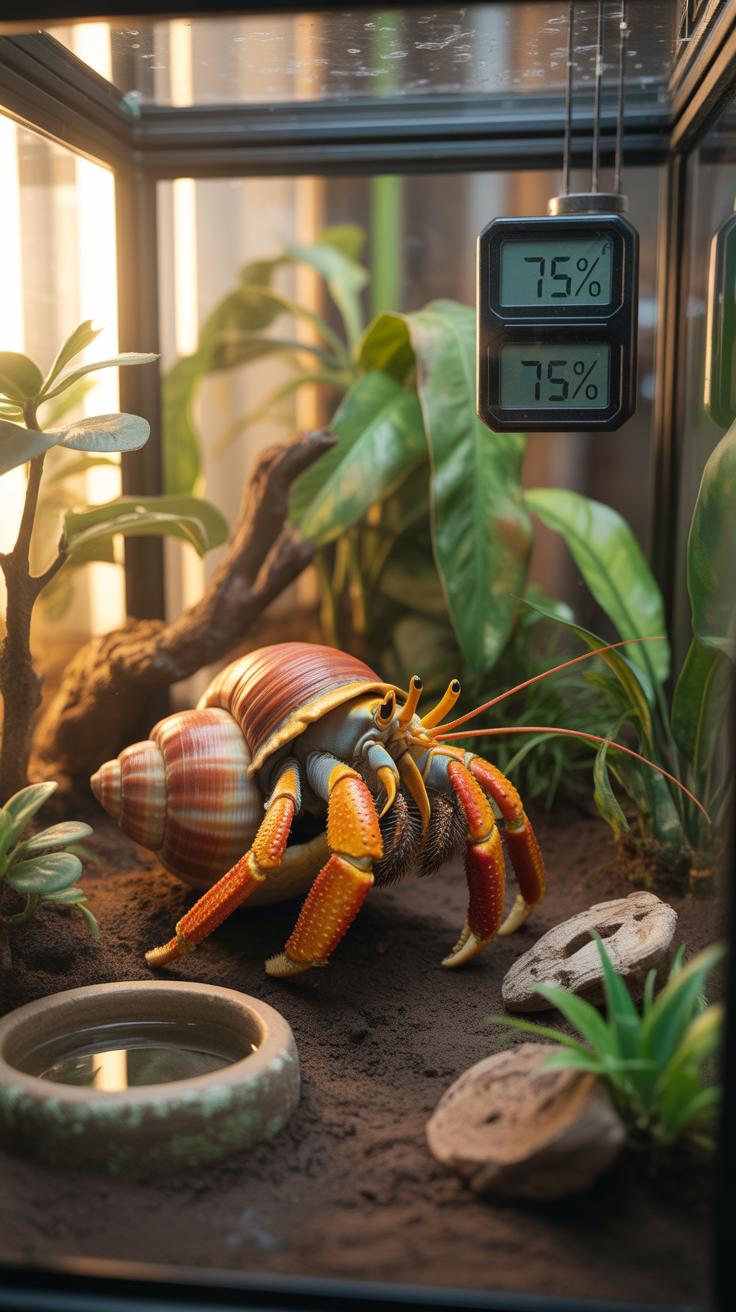
Land hermit crabs require a constant relative humidity level between 75 and 85 percent. These animals possess modified stiff gills located inside their branchial chambers. They must pull oxygen from the air through a thin layer of moisture on these gills. If the air becomes too dry, the gill tissue dries out. This creates a slow and painful death by suffocation.
Consistency is the primary goal for your humidity meter setup. You must avoid large swings below the 75 percent threshold. Higher humidity levels near 90 percent are generally safe if the enclosure has proper airflow to prevent mold. Maintaining this specific range allows the crab to breathe without stress. Correct moisture levels also ensure the crab can successfully complete the molting process under the substrate.
How Temperature And Humidity Work Together Inside The Hermit Crab Enclosure
Temperature and humidity are physically linked within your tank environment. Warm air holds more water vapor than cold air. You must maintain your enclosure temperature between 75 and 85 degrees Fahrenheit to stabilize moisture levels. If the temperature drops suddenly, the air loses its ability to hold water. This causes condensation on the glass and a sharp decline in available breathable humidity for your crabs.

Your hygrometer readings will fluctuate based on your heat source placement. Under-tank heaters or heat tape increase evaporation from damp substrate to boost humidity. You must monitor both metrics simultaneously to find the equilibrium point. If the tank is too hot, the air dries out too fast. If it is too cold, the air stays damp but the crabs become lethargic. Balance both for a healthy habitat.
How To Raise Humidity Levels In A Hermit Crab Habitat Ideas Tanks DIY
Natural And DIY Methods To Increase Moisture Inside The Tank
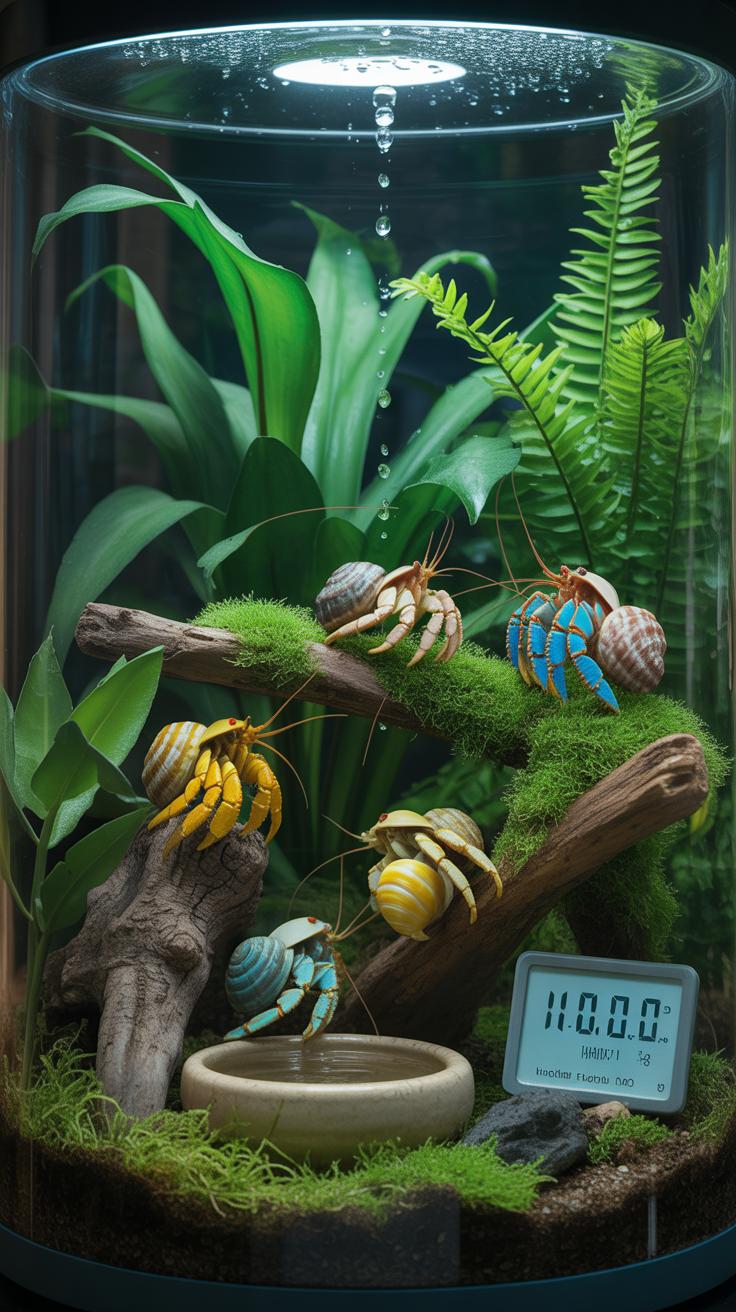
Establish a sealed environment to prevent moisture loss. Glass lids outperform screen covers because they trap evaporated water effectively. If you use a mesh top, seal it with plastic wrap or waterproof tape immediately. This creates a closed loop system. Internal air must stay saturated to protect the modified gills of the crabs. Use accurate digital hygrometers to verify these DIY modifications.
- Moistened Moss Pits: Place organic sphagnum moss in a plastic caddy or corner area. Soaking the moss in declorinated water provides a localized humidity boost. Crabs will also use these pits for hydration and molting preparation.
- Sealed Glass Lids: Replace standard screen tops with custom-cut glass or acrylic panels. This prevents the chimney effect where warm moist air escapes the tank. A tight seal is the most effective way to maintain high humidity levels permanently.
- Bubbler Stones: Install air stones connected to an air pump inside the deep water pools. The breaking bubbles release a fine mist into the air. This active evaporation method raises humidity levels faster than standing water alone.
- Internal Misting: Spray the enclosure walls with treated water manually if levels drop below 70 percent. This provides an immediate but temporary spike in moisture. Use this method as a backup while you fix permanent sealing issues in the tank.
- Natural Sponge Placement: Place sea sponges in water dishes to increase the surface area for evaporation. You must clean these sponges daily to prevent bacterial growth. They act as natural wicking agents that pull water into the air column.
Position heat mats on the back of the tank above the substrate line. This warms the air and accelerates evaporation from damp moss and water bowls. Avoid placing heat sources under the tank as this dries out the substrate too quickly. High humidity requires a balance of heat and trapped moisture. Monitor the sensor daily to ensure the air remains thick and breathable.
Using Substrate Depth And Water Dishes To Maintain Stable Humidity Passively
Maintain a substrate depth of at least six inches or three times the height of your largest crab. Use a ratio of five parts play sand to one part coconut fiber. Mix this substrate with dechlorinated saltwater until it reaches sandcastle consistency. This massive volume of damp material acts as a primary humidity reservoir. It releases moisture slowly and steadily into the air.

Large water dishes provide the necessary surface area for passive evaporation. Place one pool for fresh water and one for saltwater near the heat source. Deep pools allow for more water volume which stabilizes the internal microclimate. Ensure the crabs can exit the pools safely using plastic mesh or stones. Stable humidity relies on these consistent water sources rather than frequent manual spraying or misting.
How To Lower Humidity When Levels Are Too High In Your Hermit Crab Enclosure Ideas
Ventilation Strategies That Reduce Excess Moisture Without Drying Out The Tank
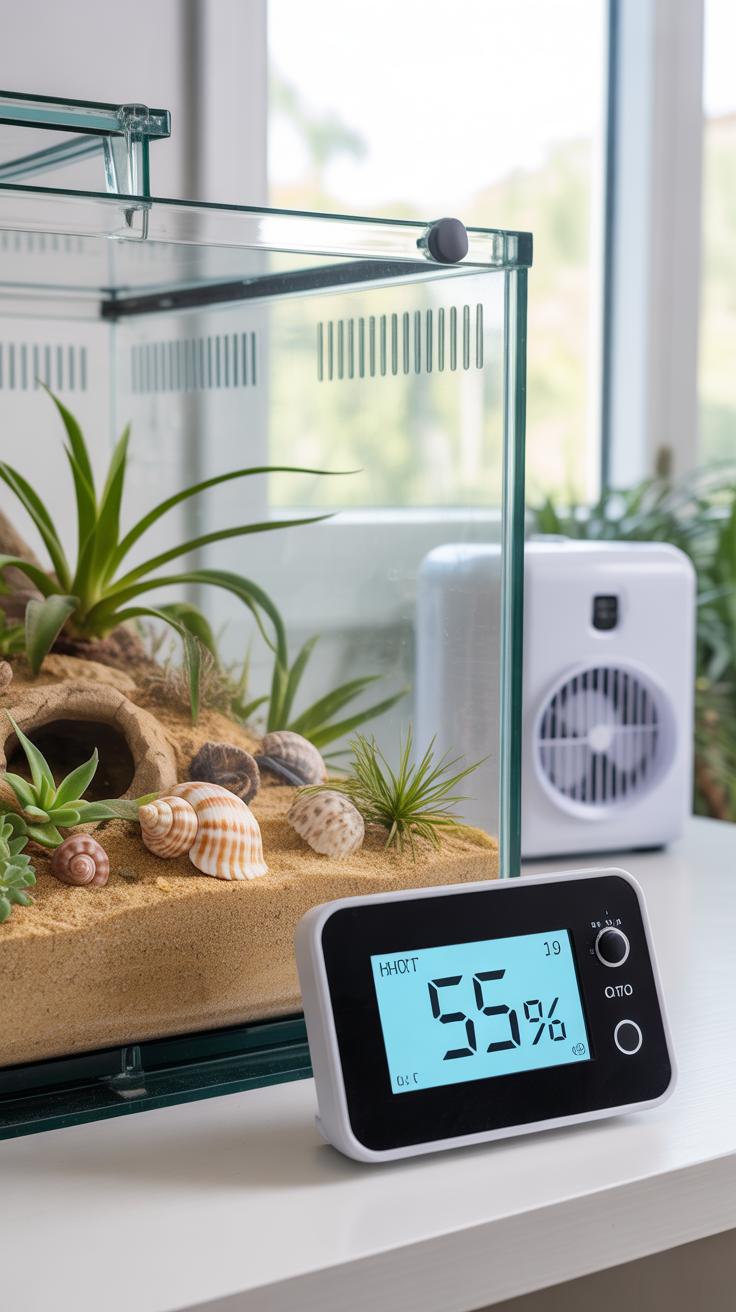
High humidity promotes mold growth and breathing issues for crabs. Adjust your tank lid to release trapped vapor. If you use a glass top, slide it open a few millimeters. This creates a small gap for air exchange. Start small to avoid a rapid drop. Monitor the meter every hour. Small adjustments prevent shock to the crabs while stabilizing the air.
Mesh screen lids allow too much moisture to escape. Use plastic wrap or glass to cover most of the mesh. Leave a small corner uncovered to vent excess steam. Increase the size of the opening if the percentage stays above eighty five. Proper airflow removes stagnant air. This prevents condensation from building on the glass. Balance ventilation with insulation to keep temperatures steady.
Identifying And Fixing Common Causes Of Humidity Spikes In A Hermit Crab Tank
Over-saturated substrate is the primary cause of humidity spikes. Excess water pools at the bottom of the tank and evaporates constantly. Check the sand for standing water or a muddy consistency. Move the water bowls away from heat sources. Heat lamps cause rapid evaporation from open pools. Professional keepers place bowls in cooler zones to slow down the release of moisture.

Leaking misting systems or over-spraying also drive levels too high. Stop all manual misting if the gauge reads above ninety percent. Damp moss holds significant water and releases it slowly. Remove some wet moss to dry out the environment. Check for spilled water under the substrate surface. Dry sand can be added to absorb moisture. Fixing the source works better than venting alone.
Reading And Logging Hygrometer Data As Part Of Your Hermit Crab Tank Ideas DIY Routine
How To Build A Simple Humidity Log To Track Patterns Over Time
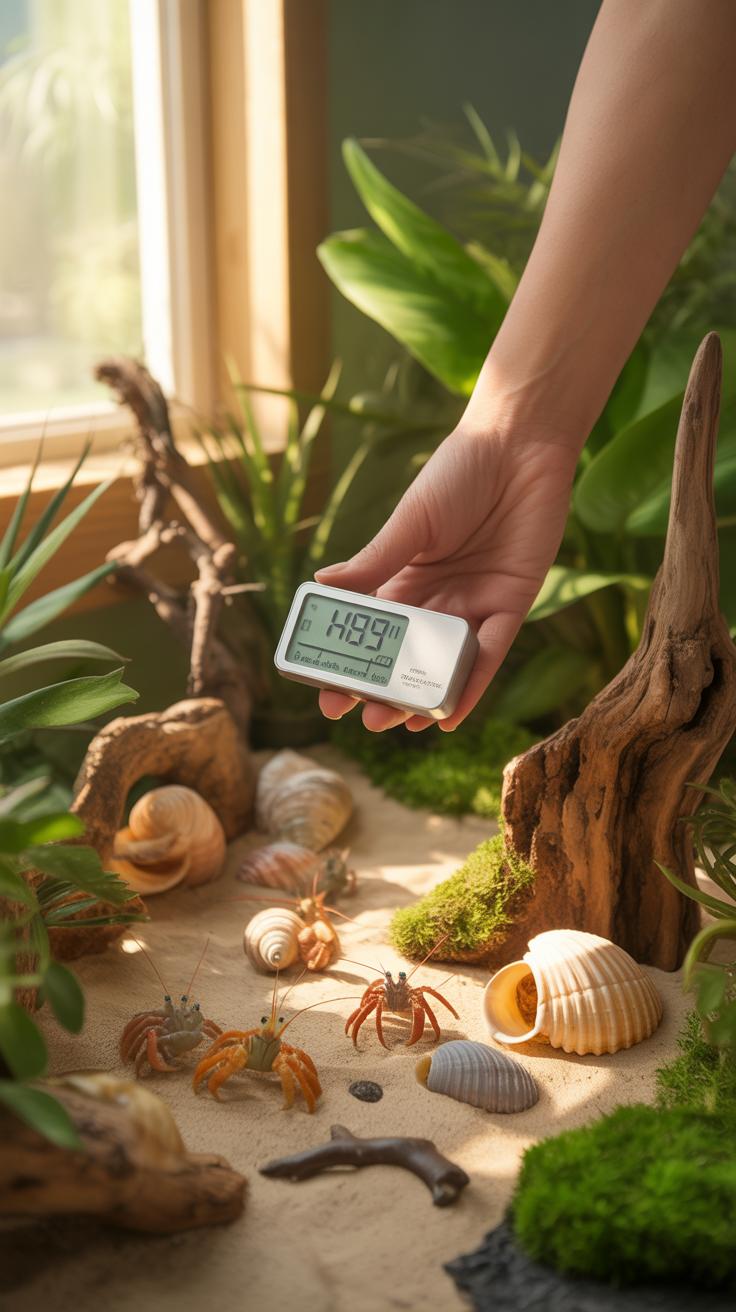
Establish a digital or paper log to record humidity twice daily. Take the first reading in the morning when the lights turn on. Take the second reading at night before the lights turn off. Consistency creates a baseline for your tank performance. You must see how the enclosure reacts to room temperature changes. Tracking these shifts prevents sudden spikes or dangerous drops.
Record the date, time, and percentage on a simple grid. Note any physical changes like misting or adding fresh water. This data reveals if your substrate holds moisture or if the lid leaks air. Long-term records prove the effectiveness of your equipment. A written log helps you spot trends before they become lethal. Strategic monitoring ensures your crab habitat stays within the safe range.
Warning Signs In Your Humidity Data That Indicate A Problem In The Habitat
Sudden humidity drops indicate a failure in the tank seal. Check the lid for gaps or holes if levels fall below eighty percent. Rapid fluctuations suggest your room air conditioning is fighting the tank heater. Constant high humidity above ninety percent attracts mold and bacteria. You must identify these patterns to protect the crab gills. Watch for steady declines that signal your substrate is drying out.
Look for stagnant readings that do not change during misting. This behavior often means your hygrometer sensor is wet or broken. Salt buildup on the probe also causes inaccurate data. If the numbers stay identical for days, calibrate the device immediately. Persistent low readings require action like adding a glass top. Reactive adjustments based on data keep your environment stable. Precision prevents the stress that leads to shell shedding issues.
Maintaining Your Hygrometer For Long Term Accuracy In Your Hermit Crab Setup
Cleaning And Storing Your Hygrometer To Extend Its Lifespan And Reliability
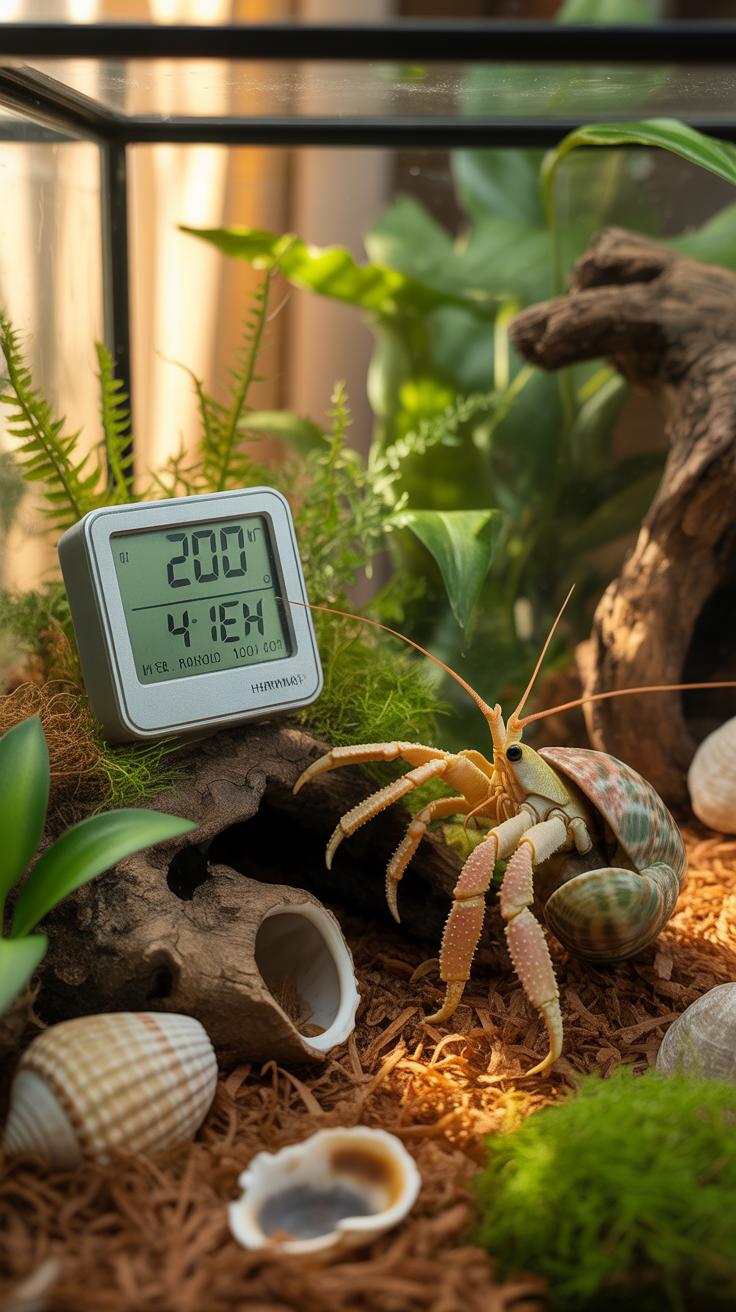
Hermit crab enclosures require high humidity levels which cause salt creep and mineral buildup on sensor probes. You must wipe the exterior of digital sensors with a dry or slightly damp microfiber cloth once every week. Avoid submerged water contact or harsh chemical cleaners. These substances corrode the internal circuitry and destroy the precision of the reading. Clean equipment ensures the device detects air moisture without interference.
Store spare hygrometers in a cool dry place inside a sealed bag to prevent sensor degradation. External air contains dust and pollutants that settle on the sensitive components over time. If you use a wired probe keep the wire straight to avoid internal breaks. Proper storage prevents the sensor from drifting out of calibration while it is out of the tank. Reliable data requires a clean and protected sensing unit.
When To Replace Your Hygrometer And Signs That It Is No Longer Accurate
Digital hygrometers lose accuracy as the sensors age and oxidize in moist environments. You should salt test your device every six months to verify its calibration. If the reading fluctuates wildly or stays stuck on one number the sensor is broken. Most consumer grade sensors last twelve to eighteen months in high humidity. Replace the unit immediately if the display fades or shows erratic data points unexpectedly.
Physical damage to the casing or mold growth on the probe indicates its life has ended. You cannot fix a water damaged sensor once the internal components corrode. Compare the readings from two different devices to identify a failing unit. If one device shows a ten percent difference from the other it is time for a replacement. Do not gamble with your crabs health by using old and faulty hardware.
Frequently Asked Questions

Why is it so important to monitor the humidity in a hermit crab tank?
Hermit crabs breathe through modified gills that must stay moist to function properly. If the air in their enclosure becomes too dry, they can experience respiratory distress or even suffocate. Using a reliable hermit crab humidity meter setup allows you to maintain the ideal 70% to 80% range, ensuring your pets can breathe comfortably and remain active while preventing the long-term health complications associated with low moisture levels.
Where is the best place to position a hygrometer for an accurate reading?
For a successful hermit crab humidity meter setup, place the sensor in a central location about two or three inches above the substrate. Avoid putting the device directly next to a water bowl or under a heat lamp, as these spots provide skewed readings. Mounting it in a neutral area ensures you are measuring the ambient air quality throughout the entire tank rather than just one specific microclimate or moisture source.
Are inexpensive analog hygrometers accurate enough for hermit crab care?
While analog gauges are budget-friendly and widely available, they are often less precise than digital versions and can lose calibration over time. For the most accurate monitoring, it is generally better to invest in a digital hygrometer. If you do choose an analog dial, be sure to perform a salt test before installation to calibrate it, ensuring your crabs stay safe despite the lower price point of your equipment.